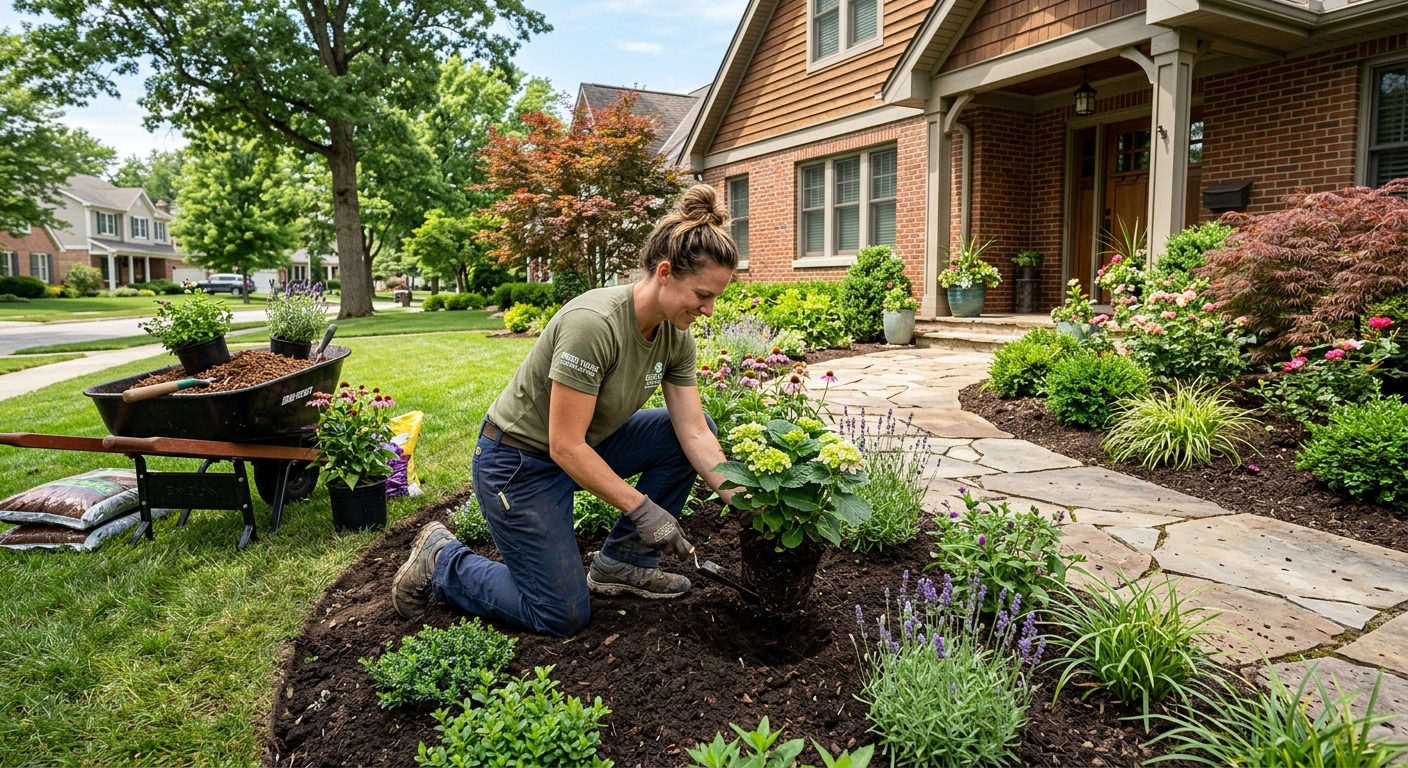
Landscaping options and costs in Christie Park
Christie Park, Alberta is a great place to invest in your outdoor space, especially when you have the yard area that often comes with the community’s housing mix—homeowners typically have enough outdoor frontage to justify a full upgrade rather than quick cosmetic fixes. With a total population of 1,880 (Statistics Canada, 2021 Census), the local contractor base is smaller than in Calgary proper, so crews can book out faster in peak season. That matters for pricing because availability and scheduling influence labour costs and how quickly your project can start.
In the Calgary area, landscapes are shaped by Prairie plant hardiness zones 3–4, late-spring frosts and early fall cold snaps, and severe freeze–thaw cycles. That short, demanding season means the ground has to be ready before we can excavate, compact bases, and install hardscape or irrigation. It also means freeze protection is non-negotiable: patios, walkways, and retaining wall footings need deep, well-compacted bases and drainage to avoid heaving and failure. Compared with coastal regions, we also lean toward cold-hardy, drought-tolerant species and smart irrigation design rather than high-water turf.
This trade tends to be busiest around newer developments and family-focused pockets near the established commercial corridors where homeowners commonly refresh entryways and backyard usability. If you’re comparing approaches, the quickest way is to look at realistic cost bands side-by-side—then tailor your plan based on your yard size, drainage needs, and finish level.
| Service |
Description |
Season |
Price Range |
| Full landscape design and installation |
On-site consultation, grading/drainage plan, plant palette, hardscape/softscape build, and irrigation coordination |
Apr–Oct |
$12,000–$50,000 |
| Sod installation (supply, grade, lay, roll) |
Final grade, soil amendments where needed, sod delivery and placement, rolling and first watering |
May–Sep |
$1,500–$6,000 |
| Lawn seeding (grade, seed, starter fertilizer) |
Light regrading, seed mix selection for zone 3–4, starter fertilizer, raking and initial watering plan |
Apr–Jun / Aug–Sep |
$900–$3,500 |
| Interlocking patio or walkway |
Excavation, compacted base, edging, jointing sand, paver/stone install |
Apr–Oct |
$8,000–$28,000 |
| Retaining wall (interlocking block) |
Terraced or straight wall, reinforced base prep, drainage gravel, weeping/weep provisions |
May–Sep |
$12,000–$40,000 |
| Tree and shrub planting |
Soil prep, staking where required, planting holes, mulching, initial watering strategy |
Apr–Jun / Sep–Oct |
$800–$15,000 |
Prices are estimates only and vary by project scope, site access and material selection.
What affects the price of landscaping in Christie Park
In Christie Park and across the Calgary region, quotes for the “same” job can vary by about 30–50% because the real cost drivers aren’t the visible finishes—they’re the invisible prep work: excavation depth, base compaction, drainage corrections, soil quality, and how complex the access is. Two contractors can price a backyard patio and planting differently simply because one includes proper base depth for freeze–thaw durability, while the other uses a thinner base or skips drainage details. Labour also plays a big role locally; materials are only part of the total, because crews in the Calgary area often work to the same limited frost-window schedule.
Plant hardiness zones 3–4 and the timing of freezes directly affect both what grows and how long we can work on site in Christie Park. Prairie regions need drought-tolerant, wind-hardy species and more winter protection planning than coastal zones, but also require that retaining wall and hardscape bases reach below the frost line with proper drainage. By contrast, coastal BC (Zone 7–8) allows a longer growing season and more lush palettes, though heavy rainfall makes drainage engineering essential. Southern Ontario (Zone 5–6) may have a more moderate season, with different irrigation emphasis during dry spells.
Concrete examples in our area: (1) if your yard is sloped toward a foundation, grading and drainage work can shift a “mid-band” softscape project into the higher range—often pushing a full landscape toward the $12,000–$50,000 band once we add base corrections and drainage beds; (2) replacing mature, wind-exposed trees with smaller stock can reduce the $800–$15,000 planting line item, but only if the plan matches what can survive prairie winters and chinooks. In Christie Park, even backyard upgrades for homes built in older neighbourhood phases frequently need soil amendment and re-compaction before sod or pavers perform well.
| Price Factor |
Why It Matters |
Cost Impact |
| Yard size in sq ft — the primary cost driver for softscape |
More area means more soil work, more planting stock, and more labour hours |
Can shift total costs by 15–40% depending on site size |
| Grading and drainage work — slope corrections add significant cost |
Fixing low spots or correcting runoff affects foundations and prevents pooling |
Often adds $2,000–$12,000 on top of basic planting or paving |
| Drainage bed or French drain installation |
Freeze–thaw durability requires clean drainage and correct discharge planning |
Typically increases hardscape and softscape packages by $1,500–$8,000 |
| Plant material tier — native shrubs vs. ornamental vs. mature specimen trees |
Hardiness, size at planting, and growth expectations drive the true material cost |
Mature specimens can double a planting line item |
| Hardscape vs. softscape ratio — walls and patios cost more per sq ft than lawn |
Pavers, block, and excavation require heavier equipment and deeper bases |
High hardscape jobs commonly land in the mid five-figure range |
| Irrigation system design and installation |
Zoning, controllers, and head placement prevent watering waste and freeze damage |
Can add $1,000–$7,000 depending on zones and layout complexity |
| Soil amendment and topsoil required |
Compacted or clay-heavy soils need conditioning for root establishment and drainage |
May add $500–$6,000 based on volume and haul distance |
| Tree removal or stump grinding before new planting |
Roots and stumps can undermine new bases and restrict proper spacing |
Often adds $300–$3,500 per tree depending on size and access |
Permits & regulations in Alberta
In Alberta, many landscaping and softscape tasks—like planting trees and shrubs, laying sod, installing mulch, and most non-structural grading—generally do not require a building permit. However, retaining walls are the common exception. In most municipalities, a retaining wall above a height threshold (typically 1.0 m / 3.3 ft) usually requires a permit, and you may be asked for engineered drawings depending on height, soil conditions, and wall design.
Also confirm approvals when you’re changing lot grading in a way that affects drainage toward a neighbour’s property or toward storm sewer connections. If water runoff patterns change, additional review may be required to protect drainage and prevent nuisance impacts.
Before anyone digs for planting holes, trenching for drainage, or wall footings, request utility locates (for buried power, low-voltage, gas, and telecom). A good contractor will coordinate this and schedule around locate results.
To verify your contractor in Christie Park, start with an Alberta business and contractor search online for licensing status (where applicable for the work). Next, ask for a current Certificate of Insurance naming you as an additional insured—make sure it’s active at the start date, and that it includes general liability appropriate for excavation and hardscape work. Then ask for proof of coverage and clearance for worker-related protection (WSIB/WCB) if the contractor uses employees. Finally, request a written scope and warranty terms so you can confirm what is included (disposal, base prep depth, and any permit handling) before work begins.
Planning a landscape that thrives in Christie Park's climate
To plan a yard that thrives in Christie Park, build around zone-appropriate choices, realistic frost timing, and Calgary’s freeze–thaw reality rather than fighting it. Christie Park sits in Prairie zones 3–4, so prioritize cold-hardy, drought-tolerant plants, and design for wind exposure and winter desiccation. Start with plant selection: native-leaning shrubs, hardy perennials, and structured grasses typically establish better with less watering than tender ornamentals. Where you can, use mulch and winter-friendly spacing so roots are insulated and crowns are protected.
Sod versus seed is the next decision point. Sod gives instant curb appeal and faster initial coverage, but it’s more expensive—often about 3–4x the cost per square foot compared with seeding when you include grade prep and the roll-and-water steps. In a project that lands in the $1,500–$6,000 sod band for a typical yard area, seeding may keep you closer to the lower end of the lawn improvement range, while still filling in over the season.
Drainage and grading are where Calgary jobs win or fail. Pooling or foundation-adjacent runoff can turn small issues into major repairs, so we typically correct slopes, then install drainage where needed. For hardscape, patio and walkway base preparation must be deep and well-compacted so slabs don’t heave during repeated freeze and thaw.
For low-maintenance design, a xeriscape approach works well in Christie Park: groundcovers, mulched shrub borders, and drip irrigation where appropriate. If you’re planning a rain-garden in a slightly low corner, it can manage runoff while reducing irrigation demand—especially helpful during summer dry spells.
| Element |
Climate Consideration |
Maintenance Level |
Price Band |
| Sod lawn installation |
Best when installed in the frost-safe window; needs consistent early watering to root before cold snaps |
Medium (watering establishment, then routine mowing) |
$1,500–$6,000 |
| Native perennial garden |
Cold-hardy structure survives winter; established roots handle drought and wind better |
Low to medium (spring cleanup, occasional weeding in year one) |
$2,000–$10,000 |
| Mulched shrub border |
Mulch insulates roots through freeze–thaw and reduces moisture loss during chinooks |
Low (annual mulch top-up) |
$1,500–$8,000 |
| Interlocking stone patio |
Requires deep base and proper drainage to prevent heaving in severe freeze–thaw cycles |
Low (occasional joint sand top-up) |
$8,000–$28,000 |
| Retaining wall (block) |
Needs reinforced base prep and drainage gravel; wall performance depends on below-frost support |
Low (periodic inspection of weep/drainage) |
$12,000–$40,000 |
| Drip irrigation system |
Targets zone-appropriate plants with less water; helps manage watering within short seasons and restrictions |
Medium (seasonal adjustments and winterization) |
$1,000–$7,000 |
How to choose a landscaping contractor in Christie Park
Choosing the right contractor in Christie Park comes down to verification, clarity, and accountability. First, confirm Alberta licensing status where it applies to the scope, then request proof of liability insurance and worker coverage. For insurance, ask for a current Certificate of Insurance (and, if digging and hardscape are involved, verify coverage amounts are appropriate). For worker protection, request proof of WSIB/WCB clearance or coverage documentation if they employ workers. If you don’t get clear answers, that’s a red flag.
Next, get 2–3 itemised written quotes, not just one lump sum. Each quote should break down labour and materials by line item (excavation, base material, drainage, pavers/block, plant list, irrigation components, topsoil/soil amendments). Make sure the scope states what’s included: permit pulling (if required for a retaining wall), disposal/haul-away, compaction level expectations, and whether contractors are responsible for utility locate coordination.
Warranty matters, too. Ask for the workmanship warranty length (and what it covers—base settlement, workmanship failures, drainage problems caused by installation). Also ask whether product warranties apply to plant material and whether they’re through the manufacturer and transferable to you.
For payment schedule, never pay more than 10–15% upfront; hold back a portion until completion and final cleanup. Finally, ask for a realistic start date and completion estimate in writing, aligned with frost windows so your project isn’t dragged into winter.
- Ask for a written scope of work and confirm the exact square footage and plant quantities.
- Verify Alberta business details and licensing status relevant to the work.
- Request Certificate of Insurance and confirm you’re listed as additional insured.
- Get proof of WSIB/WCB coverage/clearance if they use employees.
- Ensure utility locates are included or clearly coordinated before digging.
- Confirm base preparation depth and compaction expectations for patios/walkways.
- For any retaining wall, confirm drainage gravel and weep details are included.
- Ask whether grading will meet a defined slope plan away from the house/foundation.
- Check that disposal and haul-away of excess soil is specified.
- Look for an irrigation design with zones and a controller, if irrigation is part of the plan.
- Review warranty terms: workmanship duration, plant warranty terms, and exclusions.
- Confirm payment terms and retainage—avoid large upfront deposits.
Red flags specific to Christie Park landscaping contractors include: vague quote wording that doesn’t specify drainage/base prep, refusal to provide insurance/WSIB/WCB documentation, omission of utility locate coordination, pricing that seems too low for the required frost-ready base depth, and contracts that demand high upfront payment with no written schedule.
Frequently asked questions — landscaping in Christie Park
What trees grow best in Christie Park's climate zone?
In Christie Park and the Calgary region (Prairie zones 3–4), you’ll generally have the best success with cold-hardy trees that handle wind and short growing seasons. Many homeowners do well with species like Manitoba maple, Saskatoon/Amelanchier (as smaller tree/shrub form), and hardy conifers such as spruce or pine types suitable for Alberta. The exact recommendation depends on your site—full sun vs shade, how close the tree is to a foundation, and whether drainage is staying too wet. If you’re replacing an older tree near a walkway or patio, we also factor in root space and future heave risk. A good planting plan typically falls into the $800–$15,000 band depending on size and number of specimens.
How much does sodding a yard cost in Christie Park?
Sodding cost in Christie Park is usually driven by lawn size, how much regrading is needed, and whether soil amendment is required for drainage and root establishment. As a realistic band, most sod installs land in the $1,500–$6,000 range for typical residential properties, with the higher end common when the crew needs significant grading, delivery logistics, and a larger connected lawn area. If there’s a slope toward the house, we often need extra base and grading steps to keep water moving away—this can push the job toward the top end even if the sod quantity isn’t huge. Always ask for an itemised quote that separates base prep from sod supply and installation.
How do I prevent weeds in my Christie Park garden?
Weed prevention in Christie Park starts before planting. The biggest improvements come from soil preparation—removing established weeds and their roots, loosening compacted soil, and using the right soil amendments so plants establish quickly. For planted areas, use a thick, consistent mulch layer and keep mulch pulled back from crowns. For beds with shrubs, a mulched shrub border with proper spacing reduces light reaching weed seeds and slows emergence. If you’re establishing a new garden, a weed barrier can help, but it must be installed correctly and paired with good planting density; otherwise, weeds can still show up at edges. In the first season, expect some weeding until perennials fill in. Choosing zone-appropriate plants also reduces stress, meaning fewer openings for weeds.
How do I design a low-water yard in Christie Park?
A low-water yard in Christie Park works best with xeriscape principles adapted to Calgary’s freeze–thaw and winter conditions. Start with drought-tolerant, cold-hardy plants, then group them by water need so you’re not overwatering. Use mulched shrub borders, groundcovers, and perennials that can handle summer dryness and windy chinooks. For irrigation, many homeowners get better results with a zoned system and drip irrigation on the areas that truly need it, paired with a smart controller. You can also include a rain-garden or graded depression where appropriate to capture runoff and reduce irrigation demand. If you’re comparing budgets, sod-heavy plans often land around $1,500–$6,000 for typical areas, while a mulched, planted approach may shift budget toward planting and a smaller irrigation footprint within the $800–$15,000 tree and garden planting band.
How do I find a licensed landscaper in Christie Park?
To find a qualified landscaper in Christie Park, start with documentation you can verify. Ask the contractor for their Alberta business/contractor licensing status relevant to the work, a current Certificate of Insurance, and proof of WSIB/WCB coverage or clearance if they use employees. Next, request itemised quotes so you can compare scope—labour, materials, drainage/base prep, disposal, and any irrigation components. If the plan includes a retaining wall, confirm whether a permit is required (often above about 1.0 m / 3.3 ft) and whether the contractor will handle the permitting steps. Before digging, require that utility locates are coordinated. A reputable contractor will answer questions clearly and provide a written timeline, warranty terms, and payment schedule with limited upfront payment (typically 10–15%).
How much does landscaping cost in Christie Park?
Landscaping cost in Christie Park depends heavily on yard size, grading/drainage needs, and how much of the project is hardscape versus planting. In the Calgary market, many comprehensive projects once you include grading, hardscape, planting, and irrigation land in the mid five-figure range, but smaller upgrades can be far less. For example, sod installation commonly fits the $1,500–$6,000 band for typical residential areas, while interlocking patios and walkways often fall into an $8,000–$28,000 range depending on area and base prep. Tree and shrub planting commonly sits in the $800–$15,000 band based on the number of plants and size. Retaining walls are higher-risk work due to freeze–thaw and drainage requirements and typically land in the $12,000–$40,000 band. If you share your yard measurements and goals, you’ll usually get the most accurate estimate with an itemised quote.