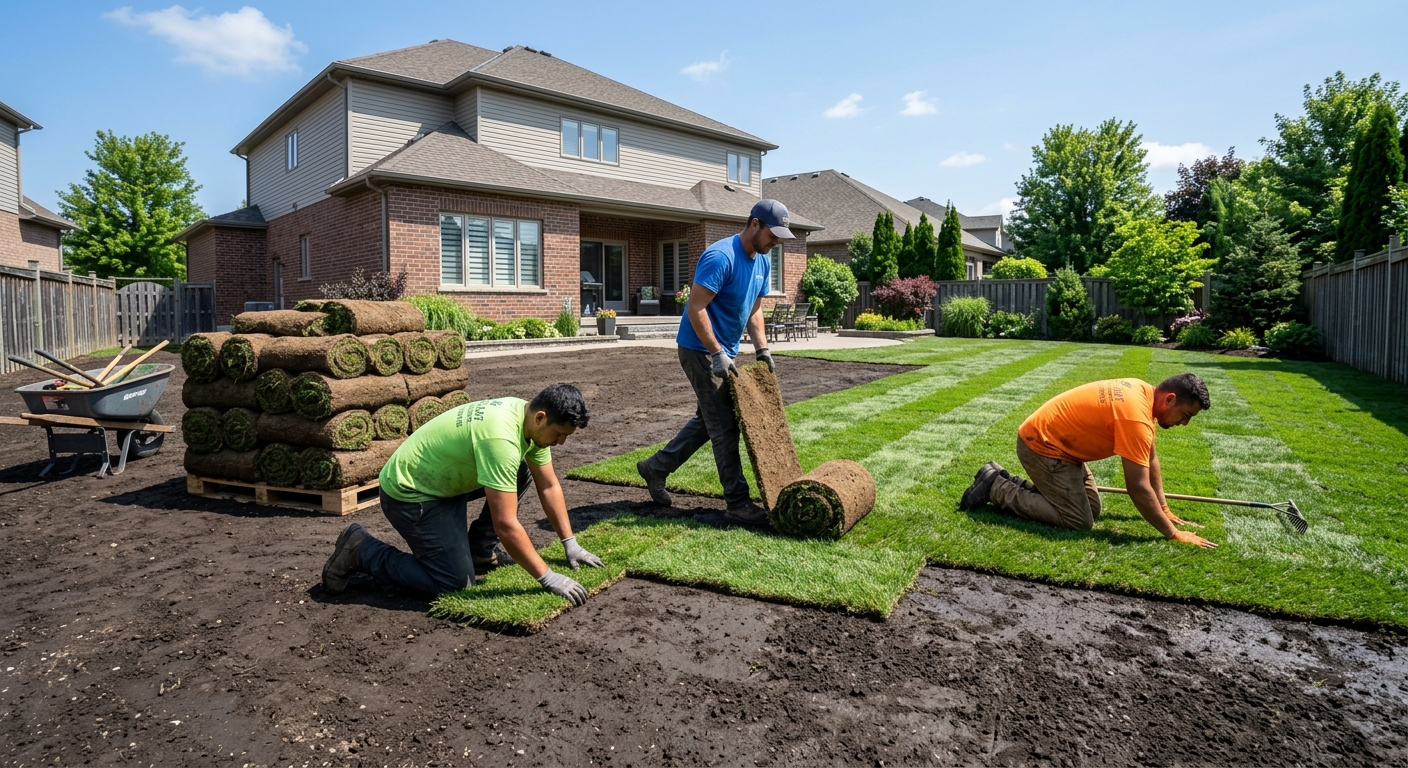
Landscaping options and costs in Falconridge
In Falconridge, landscaping choices typically revolve around three realities: prairie hardiness, freeze–thaw stress, and a shorter working season. With a population of 10,325 (Statistics Canada, 2021 Census), the area sees steady demand from homeowners who want curb appeal that still performs through Alberta winters. Falconridge is also shaped by detached home ownership patterns—every detached property usually has enough yard space to justify softscape improvements, but it also means more grading, more drainage consideration, and more plant beds to maintain. That combination is part of why comprehensive projects often land in the mid five-figure range when hardscape, planting, and irrigation are bundled.
Calgary-area pricing is affected by severe freeze–thaw cycles, which raise the importance of deep, well-compacted bases for patios, walkways, and retaining walls. Contractors also plan around late-spring frost and early fall cold snaps, so timing can influence labour availability and scheduling. In neighbourhoods like Hawkwood and the broader north Calgary corridor where many yards are being refreshed, demand for drainage-correcting work and durable, drought-tolerant planting solutions stays consistently high.
Below is a quick comparison of common landscaping options you’ll see quoted for Falconridge properties, with realistic price bands to help you benchmark proposals before you sign.
| Service |
Description |
Season |
Price Range |
| Full landscape design and installation |
Concept + layout, grading plan, base prep, hardscape, planting, mulch, and irrigation coordination where applicable |
May–October (best window for planting and curing bases) |
$9,500–$38,000 |
| Sod installation (supply, grade, lay, roll) |
Soil prep, grading to drainage direction, sod supply and installation, rolling and initial watering guidance |
Late April–August (sod needs stable temperatures to root) |
$2,000–$5,800 |
| Lawn seeding (grade, seed, starter fertilizer) |
Light grading, seed selection for prairie conditions, starter fertiliser, and protective tack/mulch if needed |
May–June or late August (when temperatures are calmer) |
$1,500–$3,800 |
| Interlocking patio or walkway |
Excavation, geotextile, compacted base, edge restraints, and interlocking stone installation |
May–September (curing and compaction work) |
$8,000–$25,000 |
| Retaining wall (interlocking block) |
Excavation, wall base depth, drainage layer, weeping tile option, and block installation |
May–September (best for base prep and drainage layers) |
$10,000–$32,000 |
| Tree and shrub planting |
Soil amendment, planting holes, staking (as needed), mulch rings, and watering plan guidance |
Early spring or fall (before deep freezes) |
$900–$14,000 |
Prices are estimates only and vary by project scope, site access and material selection.
What affects the price of landscaping in Falconridge
Even when two homeowners ask for the “same” backyard update in Calgary’s broader north corridor, quotes can differ by 30–50% because the hidden work is rarely the same. Freeze–thaw here is intense, so contractors must account for how deeply they need to excavate, how much base they must rebuild, and how drainage will be handled below grade. In practice, that means two yards with identical patio sizes can still price differently if one requires extra slope corrections, deeper base, or additional drainage layers.
Falconridge sits in Prairie plant hardiness zones 3–4, where late spring frosts and early fall cold snaps affect both plant survival and the install window. That’s why drought-tolerant, wind-hardy species typically cost less to maintain long term—but the up-front design work can still raise costs if you need soil improvement and a smart irrigation layout. Retaining wall base depth must reach below the frost line; if a wall’s footprint overlaps utilities, access is tight, or the soil is poor, your costs climb fast (and that’s where the retaining-wall band of $10,000–$32,000 becomes a realistic range).
Local conditions also raise or lower price based on practical site factors: how much topsoil is needed to reach final grade, whether the yard drains toward a foundation, and whether you need to correct standing water. For example, a small backyard that slopes toward the house often requires a drainage bed or French drain before any turf or beds go in, while a flatter yard may allow a simpler seeding approach in the $1,500–$3,800 range. If you’re dealing with older housing-stock yards that have had years of freeze heave or repeated patchwork, expect more labour and materials devoted to base rebuilding rather than “just planting.”
| Price Factor |
Why It Matters |
Cost Impact |
| Yard size in sq ft — the primary cost driver for softscape |
More area means more excavation, topsoil, mulch, seed/sod, and labour hours |
Can swing 20–40% depending on whether turf and planting are both expanded |
| Grading and drainage work — slope corrections add significant cost |
Calgary requires directing water away from foundations; wrong slopes cause pooling and heave risk |
Often adds $2,000–$8,000+ on top of base landscaping scope |
| Drainage bed or French drain installation |
Subsurface control protects walls, patios, and basements from moisture |
Commonly increases cost by 10–25% for yards with persistent water |
| Plant material tier — native shrubs vs. ornamental vs. mature specimen trees |
Large caliper trees and premium cultivars cost more and require careful placement and staking |
Can add $1,500–$10,000 depending on size and number |
| Hardscape vs. softscape ratio — walls and patios cost more per sq ft than lawn |
Interlocking stone and wall systems require deeper bases and more structural prep |
Shifts many projects from “upper softscape” into the mid five-figure bracket |
| Irrigation system design and installation |
Zoned, efficient layouts reduce water waste and help plants establish before cold snaps |
Typically adds several thousand dollars, especially with multiple zones |
| Soil amendment and topsoil required |
Compacted or poor native soil often needs reconditioning for rooting and drainage |
Can add $500–$4,000+ based on haul volume and amendments |
| Tree removal or stump grinding before new planting |
Site clearance can expose buried roots and complicate excavation and edging |
Often adds $300–$2,500 per tree depending on access and stump size |
Permits & regulations in Alberta
In Alberta, most typical backyard landscaping—like planting, sodding, and most softscape work—generally does not require a permit. You can usually proceed without a building permit for tasks such as installing mulch beds, laying sod or seed, planting trees and shrubs, and building simple borders. That said, retaining walls above certain height thresholds typically require a permit and sometimes engineered drawings, and requirements can vary by municipality.
Changes to lot grading also deserve extra attention in Falconridge. If your planned grading affects how water drains—especially directing runoff toward a neighbouring property or storm sewer connection—it may trigger approval steps. For safety and compliance, homeowners should ensure utility locates are completed before any digging for planting holes, drainage lines, or wall footings. Irrigation and water-use bylaws are another key consideration; even when you’re not in coastal conditions, Alberta drought restrictions and watering limits can still affect installation timing and how systems are programmed.
To verify a contractor’s legitimacy step-by-step in Falconridge: (1) ask for their Alberta contractor details and check their status through the appropriate provincial business registry information; (2) request a certificate of liability insurance naming you as an additional insured where possible; (3) confirm worker coverage (WSIB/WCB) clearance for their crews before work begins; and (4) keep a copy of the contractor’s clearance letter or proof for your records. If they won’t provide documentation up front, treat that as a serious warning sign.
Planning a landscape that thrives in Falconridge's climate
Planning in Falconridge is about working with the zone 3–4 reality: cold winters, late spring frosts, and damaging freeze–thaw around edges and foundations. Start with plant selection—choose native or proven zone-appropriate perennials, shrubs, and grasses that handle wind and periodic drought. Then plan how the yard will establish before the first hard cold snaps, so roots can lock in rather than heave. Next, compare sod vs. seed with clear expectations. Sod gives instant visual coverage, but it costs more because turf supply and labour are intensive and sod needs consistent conditions to root. Seeding takes longer to look “finished,” but it’s more flexible for smaller areas or when budget matters most.
Drainage and grading are the make-or-break items for Calgary-area yards. Pooling water near a house or along a fence line can lead to foundation moisture issues and seasonal soil movement, so patios and walkways must sit on deep, well-compacted bases. If you’re adding hardscape like an interlocking patio or a block retaining wall, base prep for frost protection and proper drainage layers is where the longevity comes from. Finally, low-maintenance design matters in a climate where winter cleanup is unavoidable: groundcovers, mulch, and well-spaced perennials reduce annual upkeep while keeping curb appeal strong.
For example, if a homeowner wants an instant lawn and is choosing between sod and seeding, upgrading a typical turf area from seeding to sod might move the budget into roughly $2,000–$5,800 versus $1,500–$3,800. That difference is justified when you need quick usability, have a high-visibility front yard, or can’t tolerate a longer “seed recovery” period.
| Element |
Climate Consideration |
Maintenance Level |
Price Band |
| Sod lawn installation |
Roots need stable warmth; later planting windows reduce establishment success |
Medium in year one (watering guidance and light rolling/checking) |
$2,000–$5,800 |
| Native perennial garden |
Cold-hardy species reduce winter damage and spring replanting |
Low to medium (mulch refresh, occasional weed control) |
$900–$4,500 |
| Mulched shrub border |
Mulch buffers soil from freeze–thaw and helps manage drought and wind exposure |
Low (pruning light, weed mat/top-up) |
$1,200–$5,000 |
| Interlocking stone patio |
Requires frost-safe base, compacted layers, and edge restraints to prevent movement |
Low (occasional cleaning and sand/edge checks) |
$8,000–$25,000 |
| Retaining wall (block) |
Base depth below frost line + drainage layer prevents heaving and washout |
Low (periodic inspection of weep holes and drainage) |
$10,000–$32,000 |
| Drip irrigation system |
Zoned delivery reduces water stress during dry stretches while supporting cold-hardy establishment |
Low (seasonal winterization and controller updates) |
$2,500–$8,500 |
How to choose a landscaping contractor in Falconridge
Choosing the right contractor in Falconridge starts with proof, not promises. First, verify Alberta licensing/registration details they provide for their business, then request liability insurance and confirm the certificate is current. For coverage of workers, ask for their WSIB/WCB clearance or proof of coverage status before any digging begins—this matters when teams are operating equipment and working around foundations and drainage trenches. If you’re comparing multiple bidders, use the same document checklist for each so you’re not comparing “fast talk” against real compliance.
Next, get 2–3 itemised written quotes with labour and materials separated (not a single lump sum). Look specifically for what’s included: base depth and compaction method for hardscape, soil type and depth for planting beds, irrigation parts and zoning, and whether waste disposal is included. Also confirm if permits (where required) are pulled by the contractor or by you—especially for retaining walls above typical height thresholds. Warranties should be clear: ask for the workmanship warranty length, the manufacturer warranty on plant material or specific products (and whether it’s transferable if you sell the home), and any exclusions for weather or late-season planting.
For payment, never pay more than 10–15% upfront. Use a staged schedule tied to milestones, and keep a holdback until completion and cleanup are verified. Finally, insist on a start date and completion estimate in writing so you’re protected if weather compresses the planting window.
- Ask for insurance and WCB/WSIB clearance before signing.
- Require itemised scope: excavation depth, base materials, and drainage layers.
- Confirm whether disposal/haul-away is included.
- Ask who supplies topsoil and what type/quality.
- Confirm plant list and sizes (height, caliper where applicable).
- Get irrigation details: zones, controller type, and coverage map if included.
- Verify any retaining wall permit handling (and design/engineer needs if applicable).
- Check that they include utility locates before digging footings.
- Confirm warranty terms in writing (workmanship + product).
- Use milestone payments and keep at least a small holdback.
- Request a construction schedule with weather contingencies.
- Ask for references from similar Calgary-zone projects (wind + drought tolerance).
In Falconridge, common red flags include contractors who (1) won’t provide insurance or WSIB/WCB proof, (2) quote a deep-base hardscape without specifying base thickness and compaction, (3) avoid discussing drainage and grading plans, (4) ask for large upfront payments (beyond 10–15%), and (5) give only a verbal warranty with no written terms.
Frequently asked questions — landscaping in Falconridge
How do I design a low-water yard in Falconridge?
In Falconridge, low-water design starts with selecting cold-hardy, drought-tolerant plants suited to Alberta’s prairie conditions (zones 3–4) and wind exposure. Replace high-water turf with a mix of native perennials, mulched shrub borders, and groundcovers that hold soil stability through freeze–thaw. For water efficiency, plan for targeted irrigation (typically drip or bubbler-style delivery) rather than broad sprinklers—especially during establishment. If you’re keeping grass, consider a smaller seeded lawn area and combine it with xeriscape beds to reduce overall irrigation needs. Cost-wise, homeowners often compare seeding in the $1,500–$3,800 range against sod at $2,000–$5,800; choosing seeding for lower-traffic zones can fund larger drought-friendly bed areas. Always build drainage correctly first, so you’re not “irrigating” a problem caused by pooling.
How do I find a licensed landscaper in Falconridge?
Start by asking contractors directly for proof of Alberta registration/licensing details for their business, plus current liability insurance and WSIB/WCB coverage. In Falconridge, don’t rely on word-of-mouth alone—ask for the certificate of insurance and the clearance/coverage documentation before work begins. Next, request an itemised quote and confirm the scope matches what they described on site (especially excavation depth, base materials, irrigation parts, and drainage work). If retaining walls are involved, ask whether permits will be required and who handles the paperwork. You can also check whether the contractor has documentation for utility locates and work safety processes. A reputable landscaper will be comfortable providing documents and answering questions about warranties and exclusions. If they refuse or pressure you to sign before you receive proof, that’s a strong sign to keep looking.
How much does landscaping cost in Falconridge?
Landscaping costs in Falconridge vary widely because yards often need different amounts of grading, drainage correction, and frost-safe base preparation. As a practical benchmark, many mid-scope updates that include hardscape + planting + some irrigation land in the mid five-figure range once you total the work. For individual line items, you can use common local price bands: sod installation typically runs about $2,000–$5,800, while seeding is commonly $1,500–$3,800 depending on area and soil prep. Patios and walkways can move into the $8,000–$25,000 range depending on size and base requirements, and retaining walls often fall around $10,000–$32,000 when drainage layers and frost considerations are included. If you’re working in a neighbourhood with frequent yard grading issues, drainage upgrades can be the biggest cost driver. The best way to confirm is to get itemised proposals so you can compare apples to apples.
What plants thrive in Falconridge's climate zone?
Falconridge homeowners generally do best with plants proven for prairie hardiness (zones 3–4) that tolerate cold winters, late spring frosts, and drying winds. Look for native or well-adapted shrubs and perennials that are drought-tolerant once established, and consider wind-tolerant grasses for structure. Common approaches include layered planting: hardy shrubs for year-round form, perennials for long seasonal colour, and mulch/groundcovers to stabilise soil through freeze–thaw. If you want tree cover, mature specimens can look great but should be selected carefully for root hardiness and placed where the soil drains well. The biggest success factor is not just species—it’s soil preparation and drainage direction. A yard that pools water in spring will struggle regardless of plant choice. A good contractor will also plan planting timing and watering so roots are established before cold snaps, which is where labour and irrigation design can affect long-term survival.
Sod vs seed — which is better for a Falconridge lawn?
Sod is usually better when you want immediate curb appeal and a faster “finished look,” but it comes with higher upfront cost and needs good installation timing so roots grip before cold weather stresses the new turf. In Falconridge, sod installation typically sits around $2,000–$5,800. Seeding is often more budget-friendly and flexible for patching or smaller areas, commonly in the $1,500–$3,800 range, but it takes longer to thicken and may require more attention during germination and early growth. In practice, I often recommend seeding where foot traffic is lower or where you’re also doing major drainage/grading work, then using sod for high-visibility zones like a front lawn. Either way, ensure grading directs water away from the house, because freeze–thaw heave and pooling can undermine both sod and seed. Ask for a watering and maintenance plan specific to the season your installer will seed or lay.
How much does a retaining wall cost in Falconridge?
Retaining wall pricing in Falconridge depends heavily on wall height, length, base depth, and drainage design. Because Alberta’s freeze–thaw cycles are severe, walls need deep, well-compacted base preparation and often a drainage layer to prevent water pressure and washout. That’s why the “same-looking” wall can vary significantly between bids. As a general benchmark, interlocking block retaining wall projects commonly fall in the $10,000–$32,000 range when including proper excavation, base build-up, and drainage elements. If a wall requires permits (often for taller walls above typical thresholds), engineered drawings, or additional utility coordination, costs can move toward the higher end. Ask your contractor to spell out base depth, whether a weeping tile/French drain is included, and how they’ll handle drainage discharge. A detailed scope is the fastest way to compare quotes fairly.