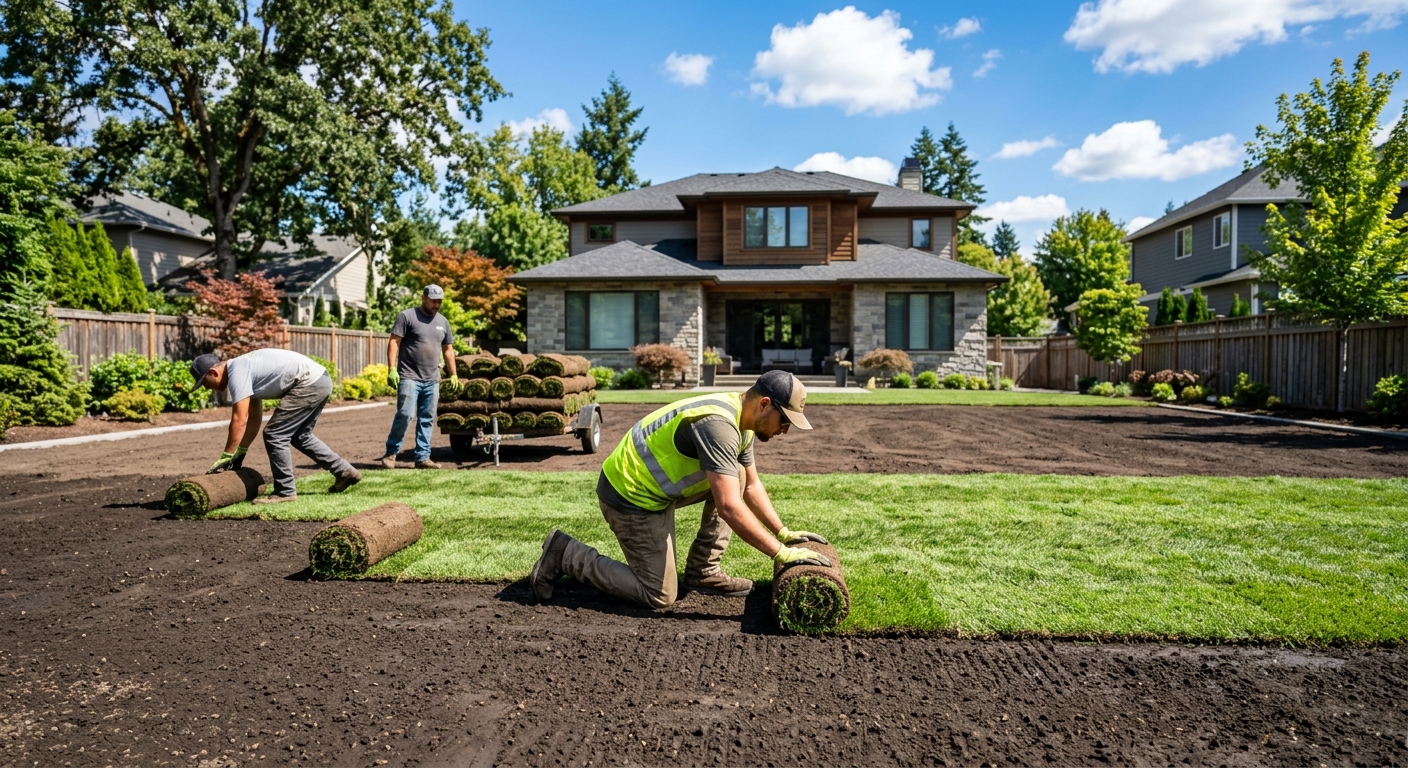
Landscaping options and costs in Fort Saskatchewan
Fort Saskatchewan is a great place to invest in landscaping, because the area has a strong base of homeowners—75.7% of households own—and many properties are single-detached homes (63.9% of dwellings). That matters in practice: detached yards tend to be larger, and the owner-occupant mix typically supports longer-term improvements like better drainage, more durable paving, and established planting beds. With 27,088 residents (Statistics Canada, 2021 Census), you also see consistent demand for contractors who can balance curb appeal with buildable, winter-proof details.
In the Edmonton region, pricing is shaped by a short prairie growing season, frequent freeze-thaw cycles, and generally drier conditions. You’re often paying for the “invisible” work—proper excavation, base compaction, and drainage layers—so hardscape doesn’t heave and plants survive winter lows and summer moisture stress. Labour availability can be tighter in spring and early fall, which is why early scheduling affects cost. In areas of Fort Saskatchewan with heavier traffic and more visual upgrades—commonly around the newer residential pockets near the city’s east side—front-yard patios, walkways, and low-maintenance planting are especially in demand.
If you’re budgeting for the full project, the easiest way to compare bids is to map your needs to a clear scope. Use the table below as a practical guide before you start pricing options like sod, seeding, patios, and retaining walls.
| Service |
Description |
Season |
Price Range |
| Full landscape design and installation |
On-site design, grading/drainage coordination, softscape and hardscape build (typical includes beds, sod/seed, edging, and basic irrigation planning) |
May–Sep (best scheduling windows: May–Jun and Aug) |
$8,000–$45,000 |
| Sod installation (supply, grade, lay, roll) |
Site prep, minor grading, soil amendments as needed, delivery and roll-down, starter fertilizer, compaction, and establishment watering plan |
Late Apr–Sep (most reliable: May–Aug) |
$3,000–$8,000 |
| Lawn seeding (grade, seed, starter fertilizer) |
Rake/smooth, grade adjustments, seed blend suited for prairie conditions, starter fertilizer, light topdress if required |
Apr–Jun and Aug–Sep |
$2,000–$6,000 |
| Interlocking patio or walkway |
Excavation, base course, compaction, edge restraint, interlocking stone or pavers, sand setting bed, jointing |
May–Oct |
$6,000–$28,000 |
| Retaining wall (interlocking block) |
Layout, excavation, properly drained wall base, block installation, geotextile and weeper drainage as required |
May–Sep |
$6,500–$24,000 |
| Tree and shrub planting |
Soil loosening, amendment, planting, staking where needed, mulch rings, and post-plant watering guidance |
May–Jun and Sep (early Oct if conditions allow) |
$500–$5,000 |
Prices are estimates only and vary by project scope, site access and material selection.
What affects the price of landscaping in Fort Saskatchewan
In Fort Saskatchewan and the wider Edmonton region, it’s common to see quotes for the “same job” vary by 30–50%. The difference is usually scope details and site conditions rather than contractor intent. A 500 sq ft lawn refresh can become a full base rebuild if drainage is failing; a small patio can expand into a retaining solution once excavation exposes frost-unstable subsoil. Also, labour and equipment costs move with seasonality—spring starts after thaw can be busier, while late-fall planting and cleanup can reduce scheduling pressure.
Local climate fundamentals drive both what grows and what can be done. The plant hardiness zone and frost timing influence your planting palette and the contractor’s work window. In Prairie conditions (often Zone 2–4 for Edmonton-area planting), the season is short, and plants must handle wind and summer moisture stress—so drought-tolerant species and wind-resistant forms tend to be selected. For retaining walls, base depth must reach below the effective frost line with proper drainage, which increases excavation and material costs. In coastal BC (typically Zone 7–8), the longer growing season supports lush palettes, but heavy-rainfall drainage detailing can raise costs through different system choices; in contrast, Edmonton projects often lean harder into efficient establishment watering and soil structure to avoid poor rooting.
Concrete examples that raise or lower cost in Fort Saskatchewan: (1) If a yard has standing water, grading plus drainage corrections can shift a “seeding job” into a drainage-bed scope; that’s one reason sod or seeding alone can sit near the lower end of $3,000–$8,000 for sod, while full installs can climb toward the $8,000–$45,000 range when drainage and beds are included. (2) Soil quality matters—if you need hauled-in topsoil and compost because the subgrade is compacted or sandy, material and delivery fees add up. (3) Home age also affects readiness: with 31.2% of homes built before 1981 (Statistics Canada, 2021 Census), older lots sometimes have older drainage patterns, buried services, or root structure that can increase excavation time and tree prep costs.
| Price Factor |
Why It Matters |
Cost Impact |
| Yard size in sq ft — the primary cost driver for softscape |
More area means more labour hours, materials (seed, sod, mulch), and often more equipment time |
Can change the total by several thousand dollars, especially for sod and topsoil |
| Grading and drainage work — slope corrections add significant cost |
Fixing pooling and redirecting water away from foundations requires excavation, re-profiling, and careful compaction |
Often increases project totals by 15%–40% versus “flat yard” scenarios |
| Drainage bed or French drain installation |
Proper under-surface drainage reduces frost-susceptible movement and foundation moisture issues |
Adds substantial material and excavation time; can push budgets toward full-install pricing bands |
| Plant material tier — native shrubs vs. ornamental vs. mature specimen trees |
Smaller, hardy natives cost less; larger trees require bigger equipment and more careful soil prep |
May double planting line items when switching from small stock to mature specimens |
| Hardscape vs. softscape ratio — walls and patios cost more per sq ft than lawn |
Pavers, base layers, and block walls require thicker, engineered build-up layers |
Shifts your budget quickly toward the higher end of design/install ranges |
| Irrigation system design and installation |
Efficient zoning, controller programming, and head placement reduce water waste but add components and labour |
Typically adds a noticeable percentage to sod/bed conversions |
| Soil amendment and topsoil required |
Edmonton-area soils often need structure and organic content for rooting and drought tolerance |
Delivery and spreading costs can be a major line item on challenging lots |
| Tree removal or stump grinding before new planting |
Roots and stumps affect grading and planting layout; grinders and disposal increase time |
Can add days to the schedule and add several thousand dollars depending on access |
Permits & regulations in Alberta
In Alberta, most landscaping and planting work does not require a permit. Typical examples that generally do not need permits include sodding and seeding, planting trees and shrubs, installing mulch beds, building garden edging, and most small-scale softscape upgrades. Routine lawn restoration and backyard planting are usually considered maintenance/improvement rather than structural construction.
Work that may require a permit includes retaining walls above a local threshold—commonly around 1.0 m (3.3 ft) in many municipalities—and any associated engineered or structural requirements. Also, if your project involves significant changes to lot grading that redirect drainage toward neighbouring properties or toward storm sewer connections, approvals can be required. Before any digging for wall footings or planting holes, confirm utility locates so you don’t hit gas, power, or low-voltage lines.
For irrigation, confirm Alberta and local water-use rules (and any seasonal watering limits). Even though BC interior restrictions are often discussed more in media, Edmonton-area communities still expect water-smart practices—especially when establishment watering is needed after sod or new planting.
To verify your Fort Saskatchewan contractor, follow a simple process: (1) Ask for their Alberta business registration and any applicable trade/licensing details relevant to the scope (especially electrical work if any is involved). (2) Request a current certificate of liability insurance. (3) Confirm WSIB/WCB coverage where applicable—ask for proof of clearance. (4) If they refuse to provide documentation, treat that as a red flag and get a second quote.
Planning a landscape that thrives in Fort Saskatchewan's climate
Planning for Fort Saskatchewan means designing with the right hardiness zone and a realistic view of frost and moisture stress—rather than trying to force plants that struggle in prairie winters and intermittent summer dryness. Start with plant selection: choose zone-appropriate, hardy species and local-ready perennials/shrubs that can handle winter burn and spring thaw conditions. For lawns, your approach matters: sod gives instant coverage but demands careful establishment watering and soil readiness; seeding is more forgiving when you can schedule spring or late-summer sowing, but it still needs proper grading.
Drainage and grading are the non-negotiables in the Edmonton market. If water pools near foundations, freeze-thaw pressure can worsen soil movement and increase the risk of settling under patios and steps. For hardscape, base preparation should be built for the local freeze-thaw cycle—correct granular base depth, compaction, and edge restraint are what keep interlocking stone from shifting.
For low-maintenance design, use mulch rings, repeatable shrub groupings, groundcovers, and perennials that establish quickly and return reliably. Xeriscape-style planting and rain-garden concepts can work well even in drier conditions when paired with smart grading that directs roof downspouts and surface runoff to a controlled planting area. For irrigation, drip systems with zoned timing are typically more efficient than sprinklers for beds.
Dollar-wise, here’s where the choice is justified: if you’re comparing sod to seeding on a similar footprint, sod can be roughly 3–4x the per sq ft cost of seeding. For example, if sod for a yard section comes in around $3,000–$8,000, seeding may land significantly lower, but sod is often worth it when you need quick erosion control or you want faster curb appeal while your beds mature over the next season.
| Element |
Climate Consideration |
Maintenance Level |
Price Band |
| Sod lawn installation |
Establishment must handle spring thaw and early summer moisture stress; soil prep affects winter survival |
Medium (regular watering/monitoring first season) |
$3,000–$8,000 |
| Native perennial garden |
Hardy plants tolerate prairie winds and temperature swings; deeper roots handle dry spells better |
Low to medium (mulch refresh and seasonal weeding) |
$1,500–$6,500 |
| Mulched shrub border |
Mulch moderates soil temperature through freeze-thaw and reduces evaporation during heat periods |
Low (pruning once established, weed suppression) |
$2,000–$7,500 |
| Interlocking stone patio |
Needs a properly engineered base for freeze-thaw stability to prevent heaving |
Low (occasional joint sand/top-up; minimal repairs) |
$6,000–$28,000 |
| Retaining wall (block) |
Drainage behind the wall is essential so water doesn’t build up and shift materials through winter cycles |
Low (inspection after spring melt; minor adjustments if needed) |
$6,500–$24,000 |
| Drip irrigation system |
Zoned drip supports drought-tolerant planting with less water waste in prairie conditions |
Medium (seasonal checks, winterization) |
$1,500–$6,500 |
How to choose a landscaping contractor in Fort Saskatchewan
Choosing the right contractor in Fort Saskatchewan starts with proof, not promises. For Alberta work, verify licensing or business registration where applicable, then confirm liability insurance and WSIB/WCB coverage. To check liability insurance, request a certificate of insurance listing you as an additional insured if possible (or at least verifying active coverage). For WSIB/WCB, ask for proof of clearance or coverage documentation before work begins—this matters when workers are on-site with heavy equipment and when you want protection if an injury happens.
Next, get 2–3 itemised written quotes. Look for a labour + materials breakdown rather than a single lump sum, especially for base prep, drainage, and planting quantities. A strong quote should specify what’s included: topsoil supply, excavation depth, disposal of excess soil, edge restraint, weed barrier (if used), and whether the contractor will handle permit pulls if a wall threshold or grading approval is required.
Warranty matters on both sides: ask for the workmanship warranty length, and confirm how product/manufacturer warranties work for stone, block, and plant material. If the warranty is not transferable, clarify what happens if you sell the home soon after installation.
For payments, never agree to more than 10–15% upfront. Use a holdback until completion and final walk-through. Finally, get a start date and completion estimate in writing—Fort Saskatchewan projects often hinge on thaw timing, material deliveries, and crews being available for freeze-sensitive base prep.
- Ask for itemised labour and materials (don’t accept “one number” quotes).
- Confirm who supplies topsoil/compost and what soil amendments are used.
- Require a written scope of work: grading, drainage, excavation, and base layers.
- Check whether disposal/hauling is included or billed separately.
- Confirm interlocking base specifications (granular base depth and compaction method).
- Ask about weed control plan for seed vs. sod vs. beds.
- Verify plant sourcing, sizes, and substitutions policy if stock is unavailable.
- Confirm warranty terms: workmanship coverage dates and exclusions.
- Confirm product warranties for stone/block and return policy for dead plant material.
- Use a clear payment schedule with holdback (retain until final acceptance).
- Check insurance dates are current and request proof before work starts.
- Get start/completion timelines tied to weather windows.
Red flags I often see in Fort Saskatchewan: (1) no certificate of liability insurance or no WSIB/WCB documentation, (2) “we’ll sort out permits later” without specifying responsibility, (3) quotes that omit drainage/grading details, (4) requiring large upfront payments beyond 15%, and (5) vague warranty language like “best effort” instead of stated coverage periods.
Frequently asked questions — landscaping in Fort Saskatchewan
How much does professional landscape design cost?
In Fort Saskatchewan, design pricing usually depends on how complex your yard is and whether you’re pairing design with installation. Many homeowners choose a design-and-install approach, which can be a larger bundle but often reduces change orders. For budgeting, professional landscape design and installation commonly falls within $8,000–$45,000 for a full-scope project, especially when drainage coordination and hardscape are included. If you want design only, the cost is still driven by site measurements, grading notes, and a planting plan that fits prairie hardiness and frost limitations. A good design also reflects older-lot realities—many properties here include sections built before 1981 (Statistics Canada, 2021 Census), which can mean more hidden drainage and service considerations.
How do I compare landscaping quotes?
To compare landscaping quotes in Alberta (including Fort Saskatchewan), insist on itemised scopes. Compare apples to apples: labour hours, excavation and base build-up, soil amendments, disposal/hauling, and whether drainage work is included. Check the quantities for seed/sod, the number and size of plants, and whether the quote specifies edging and geotextile layers where needed. Quotes can vary significantly—often 30–50%—because one contractor may include proper grading fixes and the other might only propose surface work. Also confirm what season the work targets: sod and planting are time-sensitive with freeze-thaw and thaw windows. A practical method is to verify that each bid includes similar drainage details; otherwise the low bid may simply defer costly grading corrections into the future.
How long does a landscaping project take in Fort Saskatchewan?
Timing depends on scope and weather, but most Fort Saskatchewan landscaping projects follow predictable windows. Softscape work like planting and sod installation is usually completed in the May–Sep window when soil is workable and before colder nights affect establishment. Hardscape and wall work often needs stable conditions for base compaction and stone setting. A small front walkway or patio can take about a few days to a week including site prep and curing/sanding, while a full landscape design and installation can take several weeks across multiple visits. If drainage and grading are included, excavation and base build-up can extend the schedule—especially if hauling and disposal are significant. Ask each contractor for a start date and completion estimate in writing, and make sure they describe how they’ll respond if weather delays the base stage.
What is the best grass type for a Fort Saskatchewan lawn?
For Fort Saskatchewan lawns, the “best” grass is typically a hardy blend designed for Alberta prairie conditions—often including fine fescues and/or drought-tolerant turfgrass types that can handle temperature swings and shorter growing seasons. Because freeze-thaw can stress lawns, your success also depends on grading and soil prep more than the label alone. If you’re comparing options, sod may deliver faster visual coverage with a controlled turf roll, commonly budgeted around $3,000–$8,000 depending on area and prep. Seeding can be more economical but requires good seed-to-soil contact and timing. A reputable contractor should recommend seed blends suited to your sun exposure and traffic and explain the establishment watering plan for your microclimate.
When should I aerate and overseed my lawn in Fort Saskatchewan?
Aeration and overseeding usually work best when the grass can recover quickly during active growth—commonly spring to early summer or late summer into early fall in Fort Saskatchewan. The goal is to avoid extreme winter stress by ensuring new seedlings and roots establish before the cold sets in. If your lawn is compacted (common on older yards or areas with heavy foot traffic), aeration first helps water and nutrients penetrate. Overseeding should match your existing turf type or use a compatible prairie blend so the lawn matures evenly. After overseeding, keep consistent light watering until germination, then transition to a less frequent, deeper schedule. Ask your contractor to check soil conditions—if drainage is poor, simple aeration may not fix the root cause.
What trees grow best in Fort Saskatchewan's climate zone?
In Fort Saskatchewan and the Edmonton region’s prairie climate, trees that handle winter cold, wind, and freeze-thaw are the usual winners. Many homeowners do well with hardy, locally proven species such as Manitoba maple (in suitable sites), green ash, and some ornamental forms that have demonstrated resilience in Alberta landscapes. You can also choose conifers like spruce types for year-round structure, but selection should consider sun, soil moisture, and salt/wind exposure from nearby roads. The “best” tree is site-specific: older-lot drainage patterns and soil compaction affect how well roots establish. If you’re budgeting planting, tree and shrub installation commonly falls within $500–$5,000 depending on number and size of trees. A good contractor will recommend stocking sizes that match your yard’s space, not just what’s available at the nursery that week.