Landscaping options and costs in McKenzie Lake
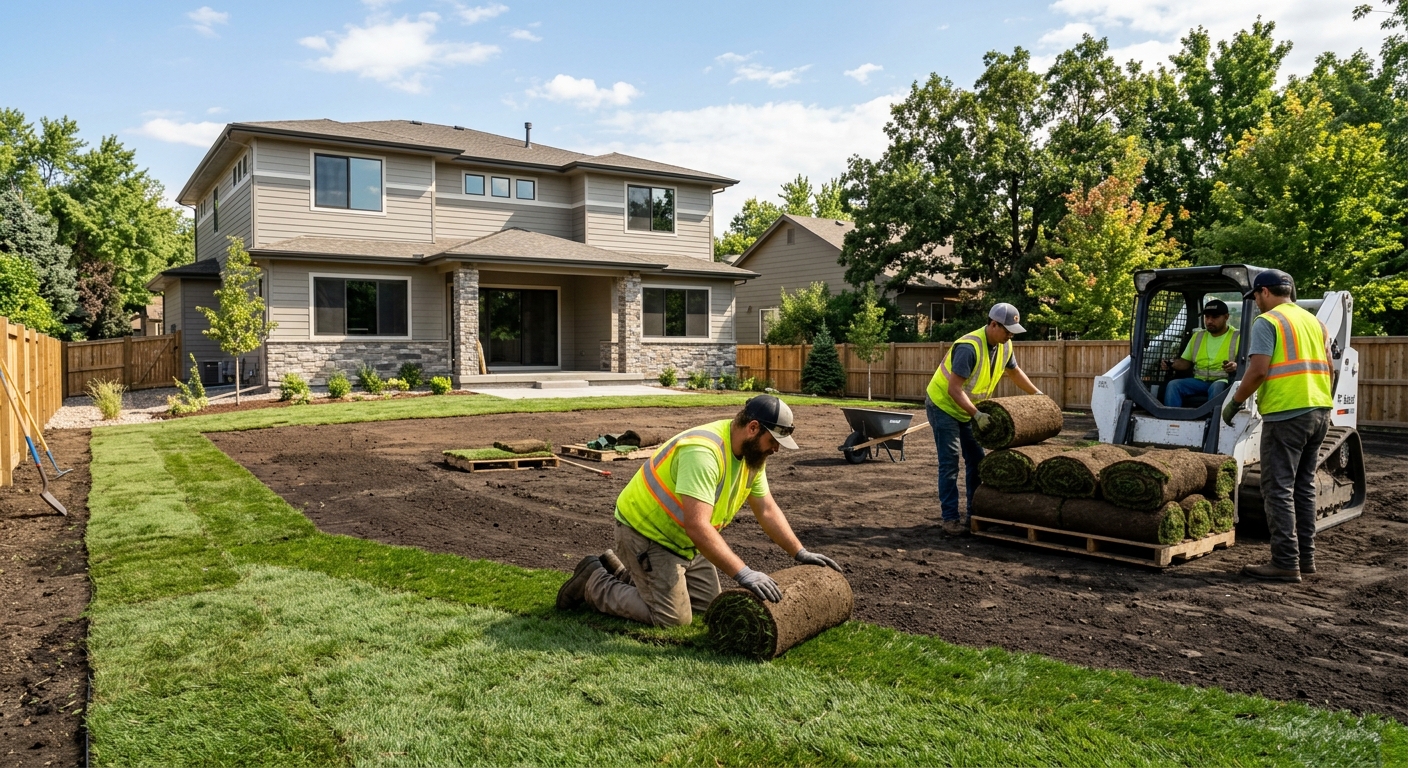
In McKenzie Lake, homeowners usually plan landscaping around a short, punchy working season and the reality of Prairie freeze–thaw cycles. With McKenzie Lake’s population at 13,290 (Statistics Canada, 2021 Census), demand stays steady for curb appeal upgrades—especially where detached homes create larger yard footprints and stronger motivation to invest in improvements. You’ll also see steady interest in front-yard redesigns near busier local corridors, where snow-management access and winter sightlines matter. In Calgary’s broader market, landscaping costs are shaped by intense winters (chinook swings followed by hard freezes), late-spring frosts, and early fall cold snaps that limit how long contractors can safely set base material, pour concrete, or lay sod without risking heaving. Labour availability can tighten in peak weeks, so scheduling early often protects both design timelines and pricing.
Projects are also priced around what must be done to stop water from moving the wrong way. In McKenzie Lake, even small grade corrections and deep base prep for patios, walkways, and retaining walls can make the difference between a stable, long-lasting installation and one that shifts after a couple of freeze–thaw seasons. Neighbourhood upgrades in McKenzie Lake frequently concentrate along entryways and driveway-adjacent areas, where walk paths and hardscape tie into daily use.
Below is a practical comparison of the most common options and typical price ranges, so you can benchmark quotes before you compare contractor line-by-line.
| Service |
Description |
Season |
Price Range |
| Full landscape design and installation |
Concept + layout, grading/drainage, hardscape, planting, and irrigation design/installation where applicable |
Late April to October (base prep and planting depend on frost dates) |
$15,000–$45,000 |
| Sod installation (supply, grade, lay, roll) |
Site grading, soil prep, topsoil/compost blend as needed, sod delivery, laying, rolling, and start-up watering plan |
May to early September (avoid laying on frozen/overly wet subgrade) |
$2,500–$6,000 |
| Lawn seeding (grade, seed, starter fertilizer) |
Minor grade corrections, seed selection for Prairie conditions, starter fertilizer, light raking, and initial watering guidance |
Late April to early June; or late summer to early fall if soil temps cooperate |
$1,500–$3,800 |
| Interlocking patio or walkway |
Excavation, deep base, compaction, edge restraints, pavers/interlocking stone, and joint sand |
May to September (best weather window for curing and compaction) |
$8,000–$35,000 |
| Retaining wall (interlocking block) |
Excavation, drainage gravel/weep system, geotextile, block installation, and proper compaction |
May to September (cooler temps preferred for base handling) |
$12,000–$40,000 |
| Tree and shrub planting |
Soil improvement, planting layout, staking, mulch rings, and aftercare watering schedule |
Spring and fall (when plants are established and soil isn’t frozen) |
$1,500–$12,000 |
Prices are estimates only and vary by project scope, site access and material selection.
What affects the price of landscaping in McKenzie Lake
In Calgary and surrounding communities, two quotes for the “same” landscaping scope can vary by 30–50% because the real driver is not just the look—it’s the hidden work: grading, drainage depth, base prep, soil amendments, and labour intensity for freeze–thaw durability. In Prairie hardiness zones 3–4, late-spring frosts and early fall cold snaps restrict the installation window, which increases scheduling pressure. Contractors also need the right cold-hardy, drought-tolerant plant palettes and efficient irrigation design, especially when yards include windswept areas and exposed slopes.
Working season limits and frost-protected base depths can also swing pricing dramatically. A retaining wall base and drainage gravel layer must be installed and compacted thoroughly to a depth that accounts for severe freeze–thaw movement; if the base is too shallow, you risk heaving or uneven settlement. By contrast, coastal BC (Zone 7–8) typically has a longer planting season and lush palettes, but heavy rainfall there means drainage design is a different cost profile. Southern Ontario (Zone 5–6) usually has a more moderate frost pattern, so base prep may be slightly less aggressive—while dry spells still require irrigation planning.
Concrete examples that commonly raise cost in McKenzie Lake: (1) a yard that needs slope correction to redirect water away from a foundation adds excavation and haul/disposal; (2) installing interlocking patio or walkway pavers on unstable soils requires deeper, well-compacted granular base, pushing patios into the mid-range of the $8,000–$35,000 band. If you’re staying in the “softscape-first” approach—tree and shrub planting at $1,500–$12,000—cost can be lower, but only if drainage and soil quality don’t require extensive rebuilds. Housing-stock matters too: older properties with compacted, uneven backfill often need more soil improvement than newer builds, which can add thousands before planting ever begins.
| Price Factor |
Why It Matters |
Cost Impact |
| Yard size in sq ft — the primary cost driver for softscape |
More area means more topsoil, amendments, planting quantity, and labour hours |
Higher area can add several thousand dollars quickly (especially lawns and borders) |
| Grading and drainage work — slope corrections add significant cost |
Fixing pooling or changing runoff direction requires excavation, compaction, and re-topsoiling |
Often a major swing factor (commonly 10–30% of total) |
| Drainage bed or French drain installation |
Helps manage groundwater and prevents heaving under hardscape |
Can move a project from the lower to upper band in the patio/walkway or wall range |
| Plant material tier — native shrubs vs. ornamental vs. mature specimen trees |
Specimens and specialty ornamentals cost more and require careful handling and staking |
“Same look” designs can differ by thousands (especially tree replacements) |
| Hardscape vs. softscape ratio — walls and patios cost more per sq ft than lawn |
Hardscape needs excavation, base layers, compaction, and higher material costs |
Shifting emphasis can increase budgets substantially within the $8,000–$40,000 bands |
| Irrigation system design and installation |
Zoned, cold-ready systems reduce winter risk and improve survival rates |
Typically adds meaningful cost but prevents rework of struggling turf and beds |
| Soil amendment and topsoil required |
Poor native soils reduce rooting; Prairie soils may need compost blending and proper texture |
Small amendments are inexpensive; full rebuilds add up |
| Tree removal or stump grinding before new planting |
Clearing affects disposal, access, and timing for base prep |
Often pushes the project higher if removal is extensive or stumps are near new foundations |
Permits & regulations in Alberta
In Alberta, most routine landscaping work—planting shrubs and trees, sodding, seeding, mulching, and typical softscape—usually does not require a permit. However, retaining walls can trigger permits depending on their height and the specifics of the site. While thresholds vary by municipality, a common rule of thumb is that retaining walls above about 1.0 m (3.3 ft) typically require a building permit, and some situations may also call for engineered drawings. If your project involves changing lot grading in a way that affects stormwater flow (for example, directing water toward neighbouring properties or toward a storm sewer connection), approvals can be required because drainage protection and runoff control are safety issues.
Before any digging—whether for a planting hole or a wall footing—have utility locates completed. Even “small” excavation can strike buried services near driveways, patios, or established lawn areas. Also confirm irrigation and water-use rules if you’re adding irrigation. While McKenzie Lake is in Alberta, these considerations are still important during drought-stress periods when watering restrictions may be tightened.
To verify your contractor in McKenzie Lake, follow a simple step-by-step:
- Ask for their Alberta licence details (and confirm against the relevant online registry if applicable for their trade scope).
- Request a certificate of liability insurance showing adequate coverage for landscaping/hardscape work.
- For the contractor’s workforce, confirm WSIB/WCB coverage documentation (ask for the clearance letter or current account proof).
- Get everything in writing: the permit responsibility (pulling/fees), utility locate responsibility, and who handles disposal.
Planning a landscape that thrives in McKenzie Lake's climate
Designing for McKenzie Lake means working with Prairie freeze–thaw patterns and wind exposure, not against them. Start with plant selection: choose species proven in Calgary’s Zone 3–4 conditions and lean toward native or region-appropriate shrubs and perennials that tolerate cold and drought once established. Next, be realistic about sod vs. seed. Sod gives instant curb appeal, but it costs roughly 3–4x more per sq ft than seeding and can struggle if the underlying base is compacted or drainage is poor. In Calgary pricing, a sod project in the $2,500–$6,000 band makes sense for smaller lawns or when timing is critical, while seeding in the $1,500–$3,800 band is a more budget-friendly way to rebuild turf across a larger area—assuming you manage early-season watering.
Drainage and grading are the real foundation of long-term success. Pooling water can freeze, expand, and push pavers upward; that’s why deep, well-compacted bases and correct slopes matter for patios, walkways, and interlocking block retaining walls. For low maintenance, use mulched shrub borders, groundcovers, and a perennial structure that fills gaps without constant replanting. Consider xeriscape strategies too: grouping drought-tolerant plants together, adding mulch to reduce evaporation, and using rain-garden elements in downspout or low areas to slow and soak stormwater.
A practical dollar example: if you’re deciding between seeding and sod for a similar lawn footprint, switching from sod to seeding can keep the lawn portion closer to the $1,500–$3,800 range rather than the $2,500–$6,000 band—often money better spent on soil amendment and drainage fixes that protect the whole landscape.
| Element |
Climate Consideration |
Maintenance Level |
Price Band |
| Sod lawn installation |
Best when soil isn’t frozen and drainage is solid; cold snaps after laying can stress sod if underprepared |
Low–medium (watering during establishment, then normal mowing) |
$2,500–$6,000 |
| Native perennial garden |
Zone-appropriate species handle cold; deeper rooting helps survive dry winds |
Low (mulch refresh and seasonal pruning) |
$3,000–$10,500 |
| Mulched shrub border |
Mulch protects soil temperature through freeze–thaw and cuts down evaporation |
Low (weeding reduction, occasional edging) |
$2,500–$8,500 |
| Interlocking stone patio |
Needs deep base and correct slope to prevent frost heave and pooling |
Low (periodic joint sand/top-up as needed) |
$8,000–$35,000 |
| Retaining wall (block) |
Drainage gravel and proper compaction are critical for freeze–thaw durability |
Low (inspection of drainage/weep holes) |
$12,000–$40,000 |
| Drip irrigation system |
Zoned drip helps manage Prairie water stress and supports hardy plant establishment |
Low–medium (seasonal check and winterization) |
$2,000–$8,000 |
How to choose a landscaping contractor in McKenzie Lake
Start by verifying coverage and credentials the same way every contractor should be verified. In Alberta, ask for their liability insurance certificate (make sure it lists your property or at least shows adequate coverage for landscaping/hardscape risks). For workers, confirm WSIB/WCB coverage—request the clearance letter or current proof and keep it with your contract documents. Next, insist on a written quote that separates labour and materials (for example: excavation hours, base materials, paver square footage, geotextile, drain rock, plants/trees, and any irrigation components). Lumping everything into a single number makes it hard to compare bids and hard to argue changes.
Get 2–3 itemised written quotes with the scope clearly defined: what’s included in grading, whether topsoil and compost are supplied and in what volume, whether disposal is included, and whether a permit is pulled if the design triggers one (commonly retaining wall permits). Confirm the warranty terms: ask for the workmanship warranty length, whether product/manufacturer warranties apply, and whether warranties transfer to you if you sell. For payment schedule, never pay more than 10–15% upfront; use progress payments and hold back until key milestones are complete (base inspections, wall backfill/drainage, final cleanup, and plant establishment checks). Finally, get a start date and completion estimate in writing—especially in Calgary where late-spring frosts and early fall cold snaps can affect the safe window for planting and base compaction.
- Confirm liability insurance and that it’s active during your project dates.
- Confirm WSIB/WCB clearance or current account proof for workers.
- Ask what exact frost-safe base method they use for patios/walkways and how they compact.
- Require an itemised quote (labour + materials) rather than a lump sum.
- Clarify disposal: soil removal, excess rock, and packaging—what’s included?
- Verify topsoil/compost depth targets and whether they’ll test/adjust if base is weak.
- Confirm plant sourcing (native/zone-appropriate varieties) and warranty/replace policy.
- Ask how they handle utility locates before digging (ticket/confirmation in writing).
- Request a schedule tied to weather risk (frost/heat window planning).
- Confirm edging restraints and geotextile usage under pavers and walls.
- Ask about winterization for irrigation (main shutoff/blowout) if installing.
- Get warranty details in the contract, including what constitutes “rework” vs. “service call.”
Red flags in McKenzie Lake: contractors who won’t provide itemised pricing; vague base-prep descriptions (“we’ll get it level” with no compaction/specs); refusing to show proof of insurance and WSIB/WCB coverage; rushing payment beyond 15% upfront; or skipping written scope details like disposal, drainage provisions, and permit responsibility.
Frequently asked questions — landscaping in McKenzie Lake
When is the best time to landscape in McKenzie Lake?
In McKenzie Lake, the safest window for most landscaping depends on frost and site dryness. Typically, spring work starts once the ground thaws enough to excavate without smearing—then runs through late summer, when temperatures help pavers set and soils establish. Sod and seeding are best when soil temperatures support germination and the subgrade isn’t frozen or overly wet. For planting trees and shrubs, many homeowners have good success in spring and fall, because plants can establish roots before winter stress. Because Calgary-area freeze–thaw cycles are severe, contractors often avoid major base work if the base material can’t be compacted properly. If you’re comparing budgets, sod projects often land in the $2,500–$6,000 band, while seeding is frequently lower at $1,500–$3,800, but both depend on a properly prepared base and timing.
Do I need a permit for a retaining wall in Alberta?
In Alberta, many landscaping activities don’t require permits, but retaining walls can. While exact thresholds vary by municipality, a common guideline is that retaining walls above about 1.0 m (3.3 ft) usually require a building permit and sometimes engineering depending on the site conditions. Also, if your retaining wall project changes grading in a way that affects drainage toward neighbouring lots or storm connections, approvals may be required. The practical step for a homeowner in McKenzie Lake is to ask your contractor whether the wall height and design trigger a permit, and who is responsible for pulling it. Before digging, confirm utility locates are completed for wall footings and drainage trenches. A responsible contractor will include permit responsibility in the scope and will not treat approvals as “optional” if the wall is above the local threshold.
How do I improve drainage in my yard?
Drainage improvements in McKenzie Lake usually start with correcting grading so water flows away from foundations, then adding targeted drainage where the low spots or wet areas are. Common solutions include re-sloping the yard, installing a drainage bed, or adding a French drain with proper outlet direction. The key is that any drainage work must be designed to handle freeze–thaw: if water gets trapped in soil under a patio or near a wall, it can contribute to heaving and settlement. Ask your contractor to explain where the water goes and how they’ll achieve a consistent slope, not just where they’ll “add gravel.” If you’re planning hardscape, drainage bed work can be a make-or-break cost that prevents costly repairs later—especially when your patio is in the $8,000–$35,000 range and needs a stable base.
What is xeriscaping and does it suit McKenzie Lake?
Xeriscaping is a water-smart landscaping approach that uses drought-tolerant plants, efficient irrigation where needed, and soil/water management (mulch, proper grading, and grouping plants by water needs). It suits McKenzie Lake well because Calgary’s climate is semi-arid with wind exposure and strong freeze–thaw cycles; watering large areas of turf can be expensive and stressful for plants if the soil isn’t prepared correctly. In Alberta, you can still create a lush-looking yard, but it tends to work best with cold-hardy species, mulch, and practical irrigation zoning—often drip for beds rather than widespread sprinkling. The design cost can be similar to traditional landscaping, but the long-term maintenance usually drops because plants require less replacement and fewer repeated watering adjustments.
How do I plan a low-maintenance yard?
A low-maintenance yard in McKenzie Lake is usually the result of three things: the right plants, the right soil and drainage, and a design that limits ongoing tasks. Start with native or zone-appropriate shrubs and perennials so winter survival and summer drought tolerance are baked in. Use mulch to control weeds and protect soil temperature through freeze–thaw. Choose fewer plant varieties but more consistent spacing, and add groundcovers to reduce bare soil that weeds love. If you’re rebuilding lawn, seeding in the $1,500–$3,800 band can be a lower-cost route to turf, but ensure drainage and soil are corrected so you don’t end up re-seeding repeatedly. For hardscape, proper base prep and correct slopes reduce the chance of paver movement, which keeps maintenance from turning into recurring repairs.
How deep should a retaining-wall base be for local frost?
The exact depth depends on wall height, soil conditions, and drainage design, so there isn’t one universal number. In Calgary-area conditions, though, the guiding principle is that the base and drainage system must be built below the zone where frost movement can disrupt it, with deep, well-compacted granular layers and proper compaction. A typical best practice is to excavate to suitable base depth, install geotextile where appropriate, create a drainage gravel layer and weep provision behind the wall, then set the block system on properly compacted base material. Because freeze–thaw cycles are severe, contractors who only “set it on topsoil” are a risk. This is also why retaining walls often sit in the $12,000–$40,000 band—robust base prep and drainage details are not optional if you want long-term performance.