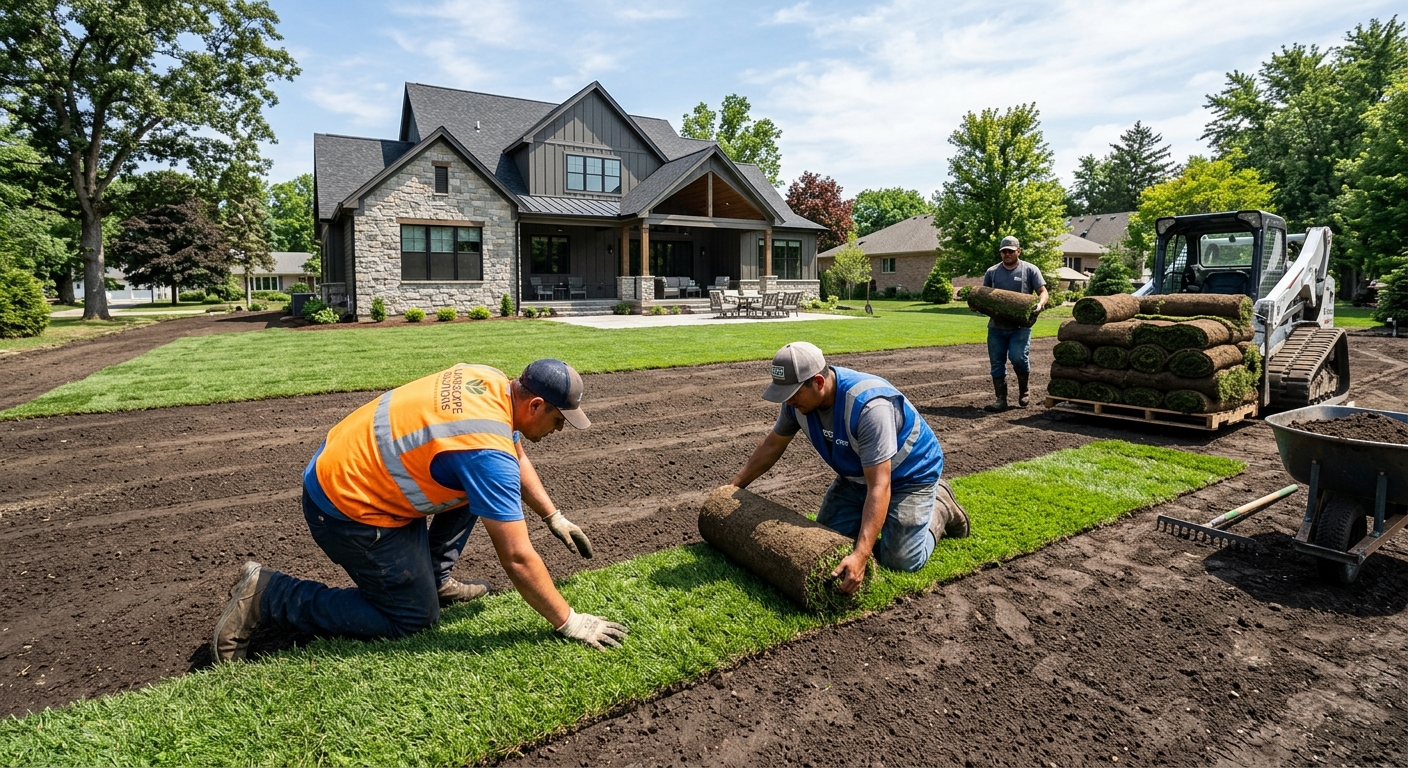
Landscaping options and costs in Ramsay Heights
In Ramsay Heights, Alberta, homeowners typically choose landscaping based on how quickly they want curb appeal and how well the yard can handle Calgary’s freeze–thaw winters. With a population of 3,349 (Statistics Canada, 2021 Census), the area has enough turnover and owner investment to keep landscaping trades busy—especially when spring work ramps up after late-season frosts. Most residential properties here are detached-family oriented, so yards are often large enough to justify a full plan, including grading, turf, and hardscape.
Calgary-area pricing is shaped by Prairie plant hardiness zones 3–4, severe freeze–thaw cycles, and a shorter workable season. That means contractors price base preparation (deep, well-compacted layers and proper drainage) carefully—patios, walkways, and retaining walls can fail if footing depth and drainage aren’t right. Labour costs also reflect on-site scheduling and access, because projects often need extended windowing around thaw conditions and equipment availability. In Ramsay Heights and nearby communities like Signal Hill–type hillside pockets where slopes are common, demand is especially high for drainage work, retaining walls, and wind-protected planting schemes.
Below is a practical comparison of common options you’ll see in Ramsay Heights quotes, with realistic price bands based on typical Calgary scopes.
| Service |
Description |
Season |
Price Range |
| Full landscape design and installation |
Concept + grading/drainage plan, soil amendment, turf/hardscape/planting coordination, and irrigation where needed |
Late April to October (best results with irrigation timing) |
$12,000–$38,000 |
| Sod installation (supply, grade, lay, roll) |
Site grading, topsoil/compaction, supply and install sod rolls, rolling and initial watering plan |
Mid-May to early September (avoid extreme heat and wet ground) |
$2,500–$6,000 |
| Lawn seeding (grade, seed, starter fertilizer) |
Light grading, seed + starter fertiliser, seed-to-soil contact, and post-seed care guidance |
May (spring) or early September (cooler germination) |
$1,300–$3,500 |
| Interlocking patio or walkway |
Excavation, deep base (well-compacted), bedding sand, interlocking stone placement, edging |
May to October (freeze protection needed if late installs) |
$8,000–$28,000 |
| Retaining wall (interlocking block) |
Block wall build with proper backfill, drainage gravel, and weep/drainage layer where required |
May to October (and only when subgrade can be compacted) |
$10,000–$40,000 |
| Tree and shrub planting |
Soil prep, planting holes, staking, mulch, and cold-hardy plant selection |
Spring and fall planting windows |
$1,200–$14,000 |
Prices are estimates only and vary by project scope, site access and material selection.
What affects the price of landscaping in Ramsay Heights
In Ramsay Heights, you can see quotes for the “same” landscaping job vary by roughly 30–50% across Calgary and surrounding Alberta communities because the biggest costs aren’t just materials—they’re time, excavation, and risk management. A shallow excavation might look similar on paper, but when you’re dealing with Prairie freeze–thaw cycles, deep, well-compacted base work and drainage determine whether your patio or wall survives the first few winters. Availability also matters: after late-spring frosts clear, scheduling pressure rises, and that shifts labour costs.
Calgary’s prairie plant hardiness zones 3–4 affect what grows and when. Early fall cold snaps shorten planting windows, so contractors often price in longer coordination and more plant protection labour. Retaining wall base depth must reach below the frost line, and drainage bedding has to be built correctly to reduce heaving—this adds equipment time compared with purely cosmetic work.
If you compare with coastal BC, where Zone 7–8 supports lush palettes and longer growing seasons, the workload is different: BC clients still need drainage in heavy-rainfall areas, but the schedule and plant choices shift. In Alberta’s semi-arid conditions (and periodic restrictions), irrigation design is usually more targeted with zoned controls and efficient delivery.
Two concrete examples in Ramsay Heights that commonly raise cost: (1) Adding a French drain or drainage bed under a walkway usually increases scope before any stone is laid; (2) Upgrading soil amendment for lawns and shrubs (rather than dumping topsoil) adds labour, but reduces transplant shock and patchy turf. If your plan includes an interlocking patio and wall, you’re typically in the $8,000–$40,000 retaining/hardscaping band depending on height and footage, whereas a focused tree and shrub install often sits more in the $800–$15,000 planting band. Some older housing stock can also mean more buried services or tighter grades, adding excavation complexity that pushes budgets upward in the real world.
| Price Factor |
Why It Matters |
Cost Impact |
| Yard size in sq ft — the primary cost driver for softscape |
More turf/soil and more planting bed area means more excavation, materials, and installer time |
Usually the largest swing factor; can change total cost by 20–40%+ |
| Grading and drainage work — slope corrections add significant cost |
Proper slope prevents pooling and foundation moisture; freeze cycles punish mistakes |
Often adds the equivalent of 10–25% of project cost |
| Drainage bed or French drain installation |
Under heavy-rain events and melt season, drainage systems protect bases and root zones |
Can add several thousand dollars depending on run length |
| Plant material tier — native shrubs vs. ornamental vs. mature specimen trees |
Specimens cost more upfront and require careful handling, staking, and larger soil volumes |
Commonly shifts planting portion by 30–60% |
| Hardscape vs. softscape ratio — walls and patios cost more per sq ft than lawn |
Stone and block require deeper bases, edging, and precise levelling |
Total can jump 15–30% as you move from lawn-led to stone-led design |
| Irrigation system design and installation |
Zoned heads, controllers, and freeze-protected setup reduce waste and failures |
Often adds 5–20% depending on zones and complexity |
| Soil amendment and topsoil required |
In Calgary clays and disturbed subgrade, amended blends improve root establishment |
May add 5–15% but can prevent recurring patchwork |
| Tree removal or stump grinding before new planting |
Access, disposal, and stump size affect excavation and replanting layout |
Frequently adds 1–10%+ depending on quantity and site constraints |
Permits & regulations in Alberta
In Alberta, most planting, sodding, and typical softscape work does not require a permit. That usually includes installing sod, seeding lawns, building mulched shrub borders, planting trees and perennials, and laying patios or walkways when the work is staying within established site conditions. Permits commonly come into play when the project changes structural elements, affects drainage in a way that impacts neighbouring lots or servicing, or involves work that needs engineering review.
What DOES typically require a permit: retaining walls above a threshold—often around 1.0 m (3.3 ft) in many municipalities—can trigger a building permit and sometimes engineered drawings. Also, changes to lot grading that alter drainage direction toward adjacent properties or toward storm connections may require approvals, because drainage needs to be managed responsibly in freeze–thaw climates. Before you dig for wall footings or planting holes, always have utility locates completed so you don’t hit buried lines.
For Ramsay Heights homeowners, a practical step-by-step verification process is: (1) ask for the contractor’s Alberta business registration details and confirm licence status if applicable to their trade scope; (2) request a current certificate of liability insurance showing adequate coverage for landscaping activities; (3) for workers, confirm WSIB/WCB coverage through their clearance letter or proof document (ask directly); (4) document approval needs by asking whether their wall/patio scope requires a permit pull and who will handle it. Finally, confirm irrigation and water-use expectations with current local bylaws; even when watering is permitted, smart controllers and zoned irrigation reduce waste and help stay compliant.
Planning a landscape that thrives in Ramsay Heights's climate
To plan a landscape that thrives in Ramsay Heights, Alberta, design around Calgary’s prairie hardiness zones 3–4, the reality of late-spring frosts, and early fall cold snaps. The goal isn’t just “survival”—it’s predictable performance after freeze–thaw cycles. Start with (1) plant selection: prioritise native or proven zone-appropriate shrubs, grasses and perennials that tolerate wind and shorter seasons, then add winter protection strategies like proper mulching and windbreak placement rather than forcing tender species. (2) Choose sod vs. seed based on your timeline: sod gives instant results but costs more—often about 3–4x the per-sq-ft cost of seeding once labour and materials are included—while seeding is more budget-friendly and flexible for establishment. (3) Build drainage and grading correctly: pooling around foundations or low points increases foundation moisture risk and can heave sub-bases. (4) For hardscape like patios and retaining walls, base preparation matters as much as aesthetics; the base must be deep and compacted so it doesn’t shift during winter. (5) Use low-maintenance design: groundcovers, mulch, and resilient perennials can reduce annual upkeep without losing curb appeal.
In Calgary’s semi-arid pattern (with periodic watering restrictions), consider xeriscape-inspired layouts: efficient drip irrigation to high-value beds, drought-tolerant groundcovers, and a rain-garden pocket to absorb roof runoff and melt-season flow. For example, if you’re deciding between a sod-led lawn install versus seeding as part of a broader plan, a typical sod budget might land around $2,500–$6,000 for a standard yard portion, while seeding might be $1,300–$3,500. The price difference is justified when you need immediate play/usage or have erosion-prone slopes—otherwise seeding plus soil improvement often gives better long-term value.
| Element |
Climate Consideration |
Maintenance Level |
Price Band |
| Sod lawn installation |
Works best in mid-season thaw windows; requires careful watering to root before cold weather |
Medium (watering + early mowing/rolling checks) |
$2,500–$6,000 |
| Native perennial garden |
Zone-appropriate roots establish faster and handle winter swings better than many non-hardy ornamentals |
Low to medium (seasonal pruning and topping mulch) |
$800–$4,500 |
| Mulched shrub border |
Mulch buffers freeze–thaw and wind drying; choose hardy shrubs for zones 3–4 |
Low (weed control early, then annual refresh) |
$1,200–$6,500 |
| Interlocking stone patio |
Deep base and drainage keep stones from heaving during freeze cycles |
Low (occasional joint sand replenishment) |
$8,000–$28,000 |
| Retaining wall (block) |
Requires engineered-style drainage/backfill for stability in Alberta freeze conditions |
Low (visual inspections and weed control) |
$10,000–$40,000 |
| Drip irrigation system |
Zoned, freeze-protected delivery improves efficiency and supports drought-tolerant plantings |
Medium (seasonal system checks + controller adjustments) |
$1,500–$7,500 |
How to choose a landscaping contractor in Ramsay Heights
Choosing the right contractor in Ramsay Heights starts with verifying coverage and then demanding clear, itemised paperwork. First, ask for current liability insurance: obtain the certificate of insurance and confirm the coverage applies to landscaping activities (not just general business). Next, confirm WSIB/WCB coverage for their workers—request the clearance letter or proof document and ensure it’s not expired. For the job scope they’re bidding (excavation, hardscaping, irrigation, retaining walls), make sure they have the experience and documented safety practices to match the risk.
Then get 2–3 itemised written quotes. You want line items for labour and materials: excavation volume, base material depth/quantities, drainage components, plant list, and irrigation parts (if included). Avoid lump-sum quotes with vague descriptions, because you can’t compare apples to apples. Read the scope carefully: is permit pulling included for any retaining wall height threshold work? Who disposes of excess soil and packaging? Are frost-date constraints and re-visits for seeding/sod care included or excluded?
Warranty matters too. Ask for the workmanship warranty length and whether it covers settling, base failure symptoms, and planting establishment (and for how long). Product/manufacturer warranties can be separate—confirm what’s transferable and what’s not. For payment, plan a schedule where you never pay more than 10–15% upfront; hold back the remainder until installation and cleanup are complete. Finally, lock a written timeline with a start date and realistic completion estimate, based on weather windowing in Calgary.
- Provide a certificate of liability insurance (verify expiry date and coverage limits).
- Provide WSIB/WCB clearance or proof for all workers assigned to the project.
- Confirm whether any retaining wall scope triggers a permit and whether they manage the process.
- Use itemised quotes (base prep depths, drainage components, stone/block quantities).
- Include protection for irrigation and sod/seed establishment in the schedule.
- Get a written materials list (plant names/sizes, turf type, stone specs, block system).
- Ask who does utility locates before digging wall footings or planting holes.
- Verify warranty terms for workmanship and for plants/irrigation components.
- Clarify disposal and cleanup: where soil goes and whether stump grinding/topsoil is included.
- Agree on a payment schedule with only 10–15% upfront and a holdback until completion.
- Require a start date and weather-dependent milestone plan in writing.
- Request a site visit or grading plan so the quote reflects your actual slopes and drainage.
Red flags in Ramsay Heights: a contractor who won’t show proof of insurance/WSIB/WCB, quotes that omit base depth and drainage details for patios or walls, a refusal to provide an itemised scope, pushing full upfront payment, or vague “we’ll take care of it” promises with no written warranty and no timeline.
Frequently asked questions — landscaping in Ramsay Heights
When should I aerate and overseed my lawn in Ramsay Heights?
In Ramsay Heights, your best results usually come from aerating and overseeding in spring after the ground thaws and temperatures stabilise, or again in early September before nights turn persistently cold. In Calgary’s Zone 3–4 conditions, timing matters because late frosts can slow germination, while a hard freeze before seedlings root can leave bare patches. If you’re considering overseeding with new seed, plan to keep traffic off the area for establishment and use starter fertiliser as recommended in the seeding scope (often included in seeding quotes in the $1,300–$3,500 band). If your lawn is very patchy, full renewal via seeding may cost less than sod, but you need patience for germination and mowing adjustments.
What trees grow best in Ramsay Heights's climate zone?
For Alberta’s prairie conditions around Calgary (hardiness zones 3–4), homeowners in Ramsay Heights generally do best with cold-hardy, wind-tolerant trees suited to semi-arid conditions and Alberta winters. Common choices include upright spruces (for wind structure), hardy pines, and certain cultivars of Manitoba maple and other proven local selections. The best pick depends on your microclimate—sun exposure, drainage, and wind exposure near fences or open lots matter as much as zone labels. A good contractor will also account for freeze–thaw and soil condition: in compacted areas, planting prep and soil amendment can be the difference between quick establishment and long-term stress. Because mature trees cost more, many projects fall within the $800–$15,000 planting range depending on size and number.
How much does sodding a yard cost in Ramsay Heights?
For typical Ramsay Heights projects, sod pricing usually depends on how much grading and topsoil/compaction prep is needed, plus the sod area size. Many homeowners land in the $2,500–$6,000 range for a standard turf portion, assuming proper site prep and clean edges. If your yard has drainage issues, additional work (like regrading or drainage bed prep) can push the budget higher because sod won’t fix pooling problems—freeze–thaw failures can show up quickly. If you’re comparing options, seeding is often less expensive (commonly $1,300–$3,500), but it takes longer to look “finished.” A contractor who includes a clear initial watering plan and establishment guidance helps you protect the investment.
How do I prevent weeds in my Ramsay Heights garden?
Weed control in Ramsay Heights is mostly won before plants go in. Start with good site prep: remove established weeds and roots, then address soil quality so your desired plants can compete. A mulched shrub border is effective in Alberta’s freeze–thaw climate because mulch buffers temperature swings and reduces weed germination. Using a proper weed-control fabric can help in low-traffic bed areas, but it must be applied correctly and with correct mulch depth so it doesn’t tear or become a maintenance problem. Spacing matters too—dense, zone-appropriate planting reduces bare soil exposure. If you’re starting from scratch, a shrub border or perennial install typically fits within the broader $800–$15,000 planting band depending on plant count and bed size. Avoid “thin mulch” and you’ll spend less each spring on spot-weeding.
How do I design a low-water yard in Ramsay Heights?
To design a low-water yard in Ramsay Heights, focus on plant selection, efficient irrigation (where needed), and soil improvement. Choose hardy, drought-tolerant plants proven for zones 3–4, and group plants with similar water needs into zones so you don’t overwater everything. Consider drip irrigation with a smart controller, using fewer, slower applications targeted at high-value beds—this typically reduces waste even during seasonal restrictions. Pair that with mulch-heavy designs (mulched shrub borders and groundcovers) so bare soil doesn’t bake in Chinook wind and dry spells. If your site has low spots, a rain-garden approach or improved drainage bed helps manage melt-season runoff without turning the entire yard into “wet ground.” Many low-water projects combine planting and limited hardscape within the $12,000–$38,000 full-install band when grading/drainage and irrigation design are included.
How do I find a licensed landscaper in Ramsay Heights?
To find a reliable landscaper in Ramsay Heights, don’t rely only on social media photos—verify credentials and coverage. Start by asking for proof of current liability insurance (a certificate with coverage limits and expiry date). Next, confirm WSIB/WCB coverage by requesting the clearance letter or proof document. Many landscaping scopes don’t need special municipal permits, but retaining walls above the typical 1.0 m threshold often do—so ask whether permits (and any engineering needs) are included. Then compare 2–3 itemised quotes that clearly separate labour and materials. For accountability, ensure the written scope lists base preparation and drainage requirements (especially for patios and walls), plus the warranty and payment schedule (ideally no more than 10–15% upfront). If someone can’t provide documents or won’t itemise the job, keep looking—your risk rises fast in Alberta’s freeze–thaw conditions.