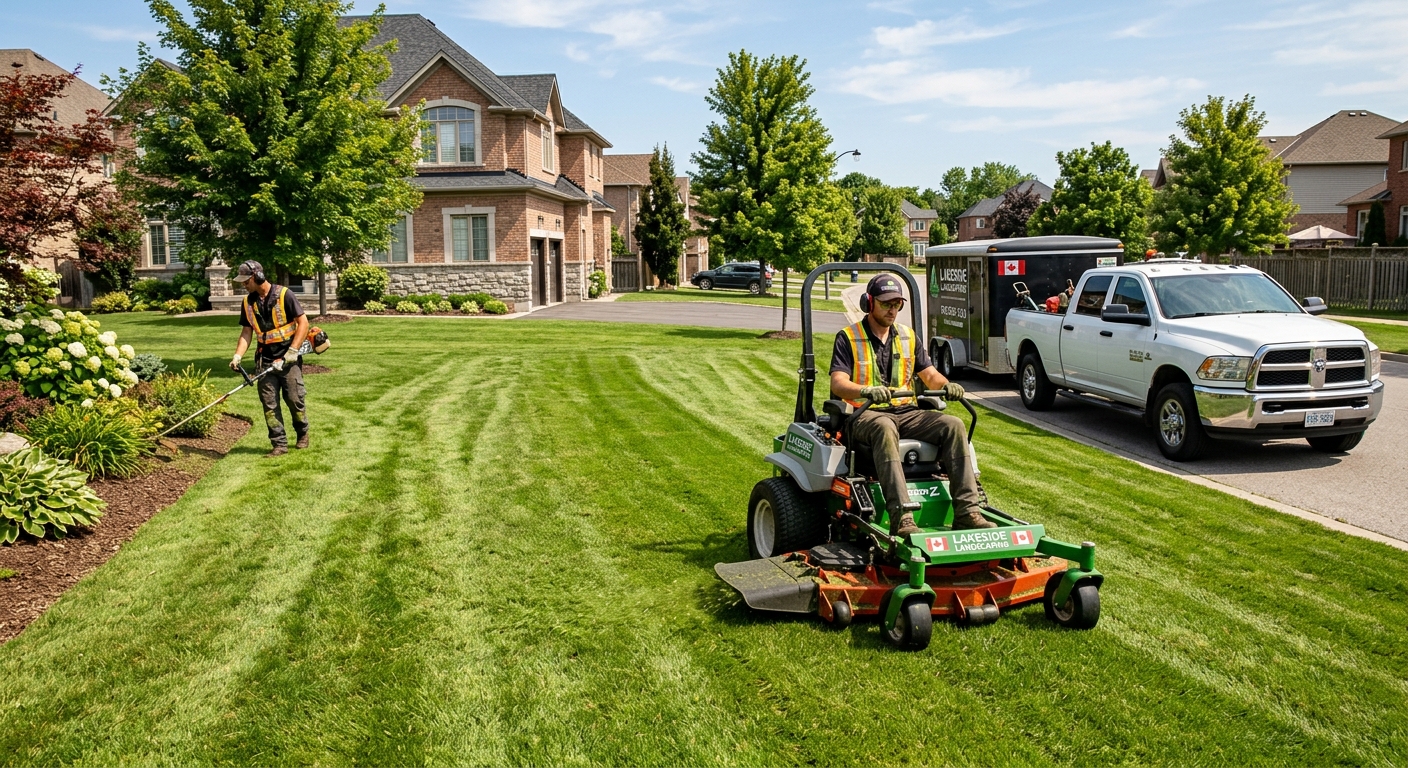
Landscaping options and costs in Stony Plain
In Stony Plain, Alberta, homeowners typically have enough yard space to justify real curb-appeal upgrades—especially since single-detached homes make up 58.1% of dwellings, and 73.0% of households own their homes (Statistics Canada, 2021 Census). That ownership mix helps explain why you’ll see steady demand for sod, patios, and shrub borders in established pockets where properties are larger and gardens are being refreshed. With 22.1% of homes built before 1981 (Statistics Canada, 2021 Census), many yards also need regrading, drainage tuning, and updated planting beds to better match today’s foundation and surface-water realities.
Cost in the Edmonton region is shaped by a short prairie growing season, freeze-thaw cycles, and generally drier conditions. Those factors affect both material selection and how long crews can work before frost shuts things down. In practice, most projects are timed around Edmonton-area frost dates, with sod and plant installation focused on the stable shoulder windows. Availability of crews can tighten in peak summer, and that’s one reason comparable scope can price differently between neighbourhoods. For example, work around downtown Stony Plain and the nearby commercial/residential mix tends to be busier because access is tighter and homeowners often want clean timelines around existing walkways and driveways.
Below is a practical cost comparison table to help you benchmark quotes before you discuss scope details like grading depth, soil amendments, and irrigation.
| Service |
Description |
Season |
Price Range |
| Full landscape design and installation |
Site visit, design plan, layout, grading & drainage coordination, hardscape/softscape build-out, cleanup |
May–October (best planting and sodding windows) |
$8,000–$45,000 |
| Sod installation (supply, grade, lay, roll) |
Remove old turf (as needed), base prep, topsoil and amendments, lay sod, roll and initial watering guidance |
Late May–early August (plus a fall window in some cases) |
$3,000–$8,000 |
| Lawn seeding (grade, seed, starter fertilizer) |
Light grading, seed blend selection, starter fertilizer, rake-in and establishment plan |
April–June, or early fall depending on frost timing |
$2,000–$5,500 |
| Interlocking patio or walkway |
Excavation, base (crushed stone/sand), edging, pavers, compaction, finishing touches |
May–September (weather dependent) |
$4,500–$18,000 |
| Retaining wall (interlocking block) |
Base depth for freeze-thaw stability, granular backfill, drainage management, block install |
May–September |
$5,500–$22,000 |
| Tree and shrub planting |
Plant selection by zone, digging, planting, soil amendments, staking/anti-desiccant care as needed |
May–June and September (depending on stock availability) |
$500–$5,000 |
Prices are estimates only and vary by project scope, site access and material selection.
What affects the price of landscaping in Stony Plain
In Stony Plain and the wider Edmonton region, quotes for the “same” landscaping job can swing by 30–50% because scope details are rarely identical—especially in prairie conditions where freeze-thaw and dry summers influence how much prep work is required. Two yards can look similar on day one, but if one needs heavier regrading, more topsoil, or a drainage bed to prevent foundation moisture, the labour and hauling change quickly. The plant hardiness zone and frost dates also matter: they determine what can be installed when, how long crews can work, and how robust the planting palette must be in Edmonton’s cold winters and moisture-stressed summers. Prairie regions (commonly Zone 2–4) typically need drought-tolerant, wind-hardy options and better establishment plans; short growing seasons can also mean more handholding for watering and aftercare.
By comparison, coastal BC (Zone 7–8) often supports a longer season and more lush design choices, but it demands careful drainage in heavy-rainfall areas—so costs can shift toward drainage and soil handling there. Water restrictions in dry BC interior markets push irrigation design toward efficient zoning and lower-water plant palettes; in Edmonton, water-smart planning is still common because new sod and plantings require consistent establishment watering. Southern Ontario (Zone 5–6) can feel easier for scheduling, but dry summer spells still call for irrigation planning.
Concrete Stony Plain examples: (1) A small sod replacement can jump from the typical sod band into the high end when grading and topsoil build-up are needed to smooth low spots—especially near garage entries. (2) A retaining wall can land higher because base depth and drainage must extend below the frost line logic; it’s not just “stack blocks,” it’s stability for freeze-thaw. With 22.1% of homes built before 1981 (Statistics Canada, 2021 Census), older drainage patterns sometimes require more correction. Finally, yards that need both softscape and hardscape often move you from lawn/seeding pricing into full landscape design & installation budgets (and sometimes beyond the $8,000–$45,000 range) depending on how much excavation and hardscape is involved.
| Price Factor |
Why It Matters |
Cost Impact |
| Yard size in sq ft — the primary cost driver for softscape |
More area means more excavation prep, soil, seed/sod, and labour time. |
Often the biggest swing factor; can change totals by thousands of dollars. |
| Grading and drainage work — slope corrections add significant cost |
Fixing low spots and adjusting fall affects water movement and foundation moisture. |
Commonly adds substantial labour and hauling charges; can push a project 20–40% higher. |
| Drainage bed or French drain installation |
Freeze-thaw-safe drainage prevents washouts and spring pooling. |
Can add several thousand dollars depending on length and outlet tie-in. |
| Plant material tier — native shrubs vs. ornamental vs. mature specimen trees |
Mature stock costs more and requires more labour for planting and staking. |
Shifts total spend toward the upper end of the tree/garden planting band. |
| Hardscape vs. softscape ratio — walls and patios cost more per sq ft than lawn |
Stone, base prep, and compaction time are labour-intensive. |
Can move a “lawn job” into interlocking patio/walkway pricing quickly. |
| Irrigation system design and installation |
Zone design, piping, heads, and trenching vary by layout and water needs. |
Often a meaningful add-on; improves establishment for sod and beds. |
| Soil amendment and topsoil required |
Edmonton-area soils vary; poor native soil needs amendments for root development. |
Additional delivery and spreading can raise costs materially on bigger builds. |
| Tree removal or stump grinding before new planting |
Clearance is required for safe excavation and long-term growth. |
Can add time and equipment fees; may affect scheduling. |
Permits & regulations in Alberta
For most landscaping in Alberta, routine planting and turf work typically does not require a permit. In general, softscape like planting trees and shrubs, sodding, seeding, mulching, and installing most garden borders can usually proceed without a permit. However, retaining walls are where homeowners need to pay closer attention: in many Alberta municipalities, a retaining wall above a height threshold—often around 1.0 m (3.3 ft)—requires a building permit and sometimes engineered documentation depending on the location and design.
Also watch for grading and drainage changes. If the work meaningfully changes how water drains toward a neighbour’s property or connects toward a storm sewer, approvals may be triggered. Before any digging—whether for planting holes or wall footings—have utilities located through a call-before-you-dig service so you don’t hit buried services.
To verify a contractor in Stony Plain step-by-step: (1) check the contractor’s Alberta licence/registration credentials that apply to their scope; (2) request a certificate of liability insurance showing coverage limits for the work; (3) confirm WSIB/WCB coverage status (or clearance, where applicable) and ask for the latest clearance letter or account proof; and (4) keep copies of these documents with your contract paperwork. If a contractor can’t provide proof quickly, that’s a serious scheduling and risk red flag.
Planning a landscape that thrives in Stony Plain's climate
Planning for Stony Plain means working with Edmonton-area hardiness, precipitation patterns, and frost timing instead of fighting them. First, build around plant selection: choose zone-appropriate shrubs, perennials, and grasses that tolerate winter cold and wind, and that don’t rely on constant moisture. In Edmonton’s prairie conditions, drought-tolerant and hardy species usually outperform “looks great in summer” plants that struggle through establishment. Second, compare sod vs. seed: sod gives instant visual coverage and helps limit erosion, but it costs roughly 3–4x more per sq ft than seeding once you include labour and prep. Third, prioritize drainage and grading. Water pooling near a foundation in spring can lead to soil movement, while poor drainage can also shorten the life of pavers and blockwork.
Fourth, for hardscape (patios and retaining walls), proper base preparation tied to freeze-thaw movement is non-negotiable. The right granular base depth and drainage layer help stop shifting and heaving. Fifth, use low-maintenance design strategies—mulched beds with groundcovers, perennials that come back reliably, and layered planting heights—to reduce annual upkeep without sacrificing curb appeal.
If you want a more water-smart approach, consider xeriscape-style groupings and a rain-garden pocket where downspout water can soak in slowly (with proper overflow). In practical budgeting: if you have a 1,000 sq ft lawn area, moving from a seed-based start to sod can push totals from a typical seeding band toward the sod band—worth it when you need fast erosion control or a “ready for summer” yard. If the goal is long-term cost control, seeding plus targeted amendments and establishment watering is often the better fit for Stony Plain schedules.
| Element |
Climate Consideration |
Maintenance Level |
Price Band |
| Sod lawn installation |
Establishment needs consistent watering during hot spells; freeze-thaw prep and good base prevent winter heave. |
Medium during first season (watering, light rolling/spot care), lower after establishment. |
$3,000–$8,000 |
| Native perennial garden |
Zone-appropriate plants handle cold winters; deep roots reduce summer moisture stress. |
Low to medium (spring tidy, occasional weeding, mulching). |
$1,500–$6,500 |
| Mulched shrub border |
Mulch buffers freeze-thaw and wind; well-spaced shrubs reduce competition for water. |
Low (mulch refresh and trimming as needed). |
$800–$4,500 |
| Interlocking stone patio |
Needs proper compaction and base drainage so pavers don’t shift under freeze-thaw. |
Low (occasional joint sand refresh, weed control). |
$4,500–$18,000 |
| Retaining wall (block) |
Base depth and backfill drainage are critical to resist winter expansion and settling. |
Low (inspection of drainage outlets; minor panel/block replacements if ever required). |
$5,500–$22,000 |
| Drip irrigation system |
Efficient watering helps established planting survive drier stretches; zone design supports smart scheduling. |
Medium (season start-up/adjustments, controller management). |
$1,500–$7,500 |
How to choose a landscaping contractor in Stony Plain
Choosing a contractor in Stony Plain starts with verification. Ask for proof of Alberta licensing/registration relevant to their scope, and request a certificate of liability insurance showing current coverage. Next, confirm WSIB/WCB coverage—ideally via a recent clearance letter or proof tied to the company name you’re contracting with. For itemised quotes, insist on 2–3 written proposals that break out labour and materials (e.g., excavation, base supply, pavers, sod/seed, topsoil, hauling, and irrigation components), not a single lump-sum figure with vague allowances.
Read the scope carefully: what’s excluded (tree removal, disposal, subbase for hardscape, soil testing, permit responsibilities), what’s included (utilities locates, compaction/leveling, edging), and who handles disposal of removed sod/soil. Warranty details matter too—confirm the workmanship warranty length, the product/manufacturer warranty (and whether it transfers to you), and what happens if settling or weed growth occurs due to prep issues.
Payment schedule should be conservative: never pay more than 10–15% upfront. Use a holdback until the work is complete and punch-list items are addressed. Finally, get a clear timeline: start date, weather-dependent pauses, and a completion estimate in writing.
- They provide an itemised quote (labour + materials), including quantities where possible.
- They confirm excavation and base specs for hardscape (not “standard base”).
- They address drainage explicitly (grading, outlets, weeping ties if needed).
- They list soil amendments/topsoil volumes and whether amendments are included.
- They include disposal/haul-away details for sod, debris, and excess soil.
- They explain establishment watering for sod and new plantings.
- They show proof of liability insurance and WCB/WSIB coverage before you sign.
- They provide a workmanship warranty and what it covers (and in what timeframe).
- They include an interim payment schedule with clear milestones.
- They confirm utility locates are ordered before digging.
- They align your planting/sod dates to Edmonton-area frost timing and your access constraints.
- They document any permit responsibility for retaining walls above thresholds.
Concrete red flags in Stony Plain: (1) quotes that exclude grading/drainage but price like they include it; (2) refusal to provide insurance/WCB/WSIB proof; (3) vague language like “we’ll fix it later” instead of a written scope and warranty; (4) asking for large upfront payments (well beyond 10–15%); and (5) no written timeline or reliance on “we’ll see when the weather clears.”
Frequently asked questions — landscaping in Stony Plain
What plants thrive in Stony Plain's climate zone?
In Stony Plain (Edmonton region), you’ll generally get the best results with zone-appropriate, cold-hardy plants that can handle winter wind and spring melt, plus summer moisture stress. Contractors here commonly lean toward hardy shrubs and perennials that establish quickly and don’t require constant irrigation. Good choices often include drought-tolerant ornamentals, native perennial mixes, and shrub borders that keep their structure year-round. If your yard has drainage challenges, pick plants that can tolerate short wet periods but still perform in dry stretches—because freeze-thaw cycles can shift soil and change how water sits.
When planning, we also time planting to Edmonton-area frost windows and build mulch and soil amendments into beds to support root growth before winter. If you’re working on a budget, start with resilient foundation plants and layer perennials rather than stocking a lot of high-maintenance specimens.
Sod vs seed — which is better for a Stony Plain lawn?
For Stony Plain lawns, sod is usually better when you need fast coverage, want quicker erosion control, or you’re replacing turf damaged by construction or foot traffic. It’s also more forgiving visually during the first season. The trade-off is cost: typical sod installation budgets land around $3,000–$8,000, largely because prep, base, supply, and labour are intensive. Seeding is often the better long-term value when you can wait for establishment and can maintain consistent watering during germination; it’s commonly less expensive in the $2,000–$5,500 range depending on grading and site prep.
In Edmonton-area prairie conditions, the biggest success factor is prep and water scheduling—whether you seed or sod. A contractor should show you how they’ll grade for even drainage and how they’ll guide establishment watering around heat and dry spells.
How much does a retaining wall cost in Stony Plain?
Retaining wall pricing in Stony Plain depends heavily on wall length, height, access, and how much base and drainage work is required for freeze-thaw stability. A properly built block wall isn’t just materials—it’s the excavation depth, granular backfill, and drainage management that prevent movement as the ground expands and contracts. For most typical residential block retaining projects, homeowners commonly see budgets around $5,500–$22,000, with small walls and shorter runs sitting closer to the low end and longer or taller walls climbing fast.
If your yard has poor drainage or needs regrading to direct water away from foundations, the cost can rise because French drains or drainage bedding are added. Always ask for the base depth and drainage plan in writing.
When is the best time to landscape in Stony Plain?
In Stony Plain, timing is crucial because freeze-thaw cycles and frost dates limit when soil and plants can be worked successfully. Most sod installation happens in late spring through early summer when temperatures are stable—typically late May to early August—with some fall work possible depending on the weather. Tree and shrub planting commonly goes in spring (once ground is workable) and again in early fall, when plants can establish roots before winter.
Interlocking stone patios, walkways, and most retaining wall projects are usually scheduled for May through September, when crews can excavate and compact base materials properly. The best practice is to book early because Edmonton-area summer demand can tighten availability, especially for neighbourhoods with lots of established home refresh work.
Do I need a permit for a retaining wall in Alberta?
Often, yes—depending on height and how your municipality classifies it. In Alberta, routine landscaping like planting and sodding typically does not require a permit, but retaining walls above a threshold—commonly around 1.0 m (3.3 ft) in many municipalities—may require a building permit and sometimes engineered drawings. Also consider that any significant lot grading changes affecting storm drainage or direction toward neighbouring properties may trigger approval requirements.
For your Stony Plain project, the safest route is to ask your contractor to confirm the permit responsibility during quoting. A reputable contractor will either handle it (if included in the scope) or clearly explain what you must arrange. In all cases, confirm utility locates are done before digging wall footings.
How do I improve drainage in my yard?
Improving drainage starts with diagnosing where water is going: do you have pooling near the foundation, soggy spots, or run-off that erodes topsoil? In Stony Plain, drainage is especially important because spring melt and freeze-thaw can move soil and create new low areas. Common fixes include regrading to restore slope away from structures, installing a drainage bed or French drain where water collects, and ensuring downspouts discharge to a controlled soakaway or appropriate outlet rather than soaking into foundations.
For hardscape work, good base preparation is part of drainage—pavers and block walls need proper granular layers so water doesn’t sit under surfaces. If you’re budgeting, drainage changes can raise the overall project because of excavation and hauling, but they often prevent bigger problems later. Ask your contractor for a written drainage plan before you approve the scope.