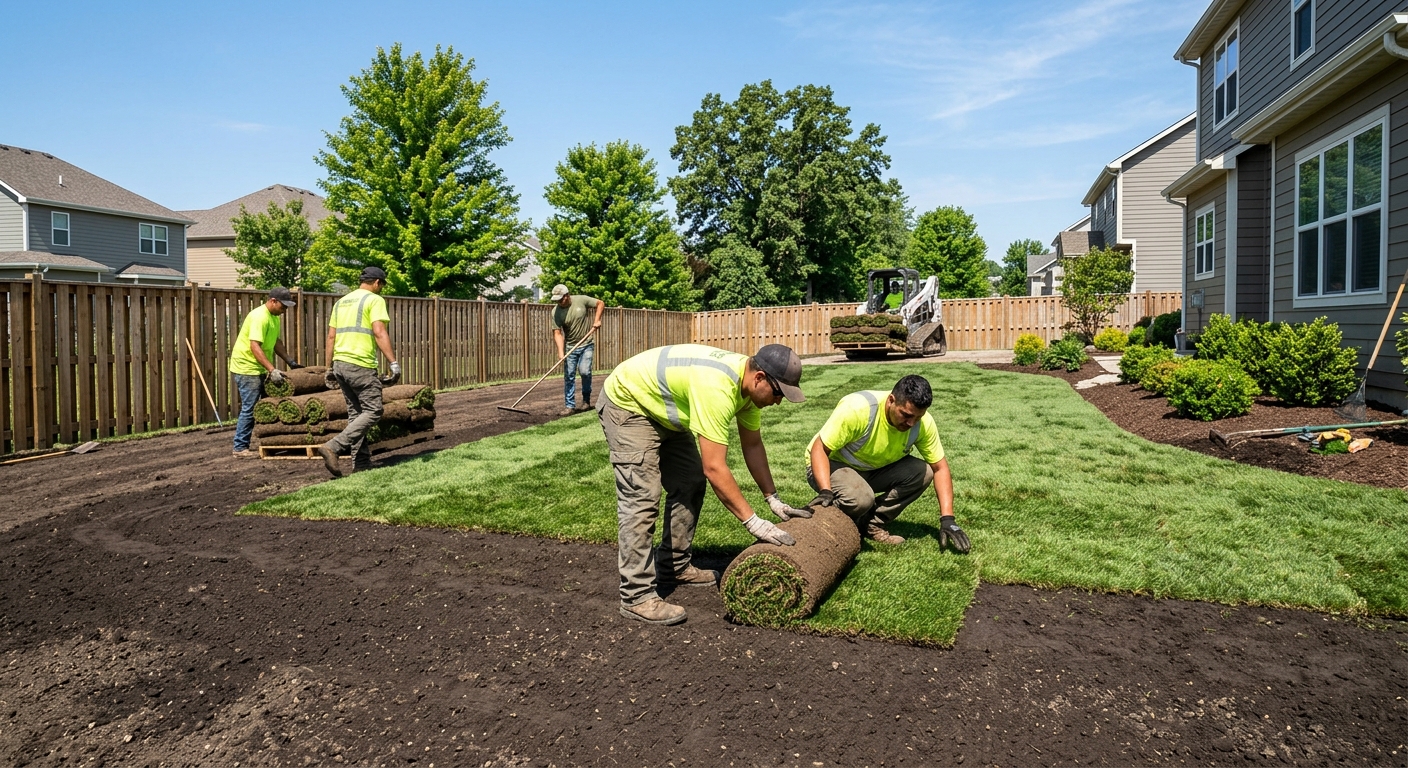
Landscaping options and costs in Enderby
Enderby is a great place to invest in outdoor living, especially with nearly 59.9% of homes being single-detached—each property typically has the yard space where landscaping pays off in comfort, curb appeal, and usable outdoor time. Homeownership is also high (1,060 homeowner households, or 73.9% of households), which usually means homeowners are more willing to fund the longer-life upgrades like proper drainage, mature planting, and hardscape that holds value for years.
In the Thompson–Okanagan (plant hardiness zones ~5–6), costs are shaped by a working season that’s longer than the Prairies but shorter than coastal BC. Frost-free time is generally mid-April/May to mid-October, so spring and fall can book up quickly, and labour availability often tightens as temperatures swing. Freeze–thaw cycles and variable soils also push pricing upward for projects involving retaining walls, patios, steps, and any grading—contractors need deeper bases, compaction control, and drainage layers to prevent heaving and movement.
In Enderby, these trades are especially in demand around the south end and near the downtown/core area where properties often have mature trees, older yards, and established garden beds that need renewal. Once you start planning, the next step is comparing typical ranges for common services so you can match your goals to the right scope.
| Service |
Description |
Season |
Price Range |
| Full landscape design and installation |
Site visit, concept + layout, plant palette, grading/drainage plan, hardscape/softscape build, cleanup |
Spring or fall |
$8,000–$40,000 |
| Sod installation (supply, grade, lay, roll) |
Light grading, base prep, soil amendments as needed, sod supply + install, rolling and initial watering plan |
Late spring to early fall |
$6–$14 |
| Lawn seeding (grade, seed, starter fertilizer) |
Grade/leveling, seed selection, starter fertilizer, light cover, first watering guidance |
Spring or early fall |
$3–$7 |
| Interlocking patio or walkway |
Excavation, compacted base, geotextile, interlocking pavers, edge restraints, joint sand |
Spring or fall |
$80–$220 |
| Retaining wall (interlocking block) |
Wall layout, base preparation to suit frost/soil conditions, block installation, drainage layer/backfill |
Spring or late summer |
$80–$220 |
| Tree and shrub planting |
Planting holes, amendments, staking as needed, mulching, watering plan, species selection for zone 5–6 |
Spring or fall |
$250–$8,000 |
Prices are estimates only and vary by project scope, site access and material selection.
What affects the price of landscaping in Enderby
In Enderby and across the Thompson–Okanagan, the same “type” of landscaping job can land 30–50% apart between quotes—and that gap is usually explained by risk and scope, not brand-name markup. Labour and equipment rates in BC landscaping often fall in the 50–100/hour range for firms (with crew labour commonly around 20–30/hour), while the tighter spring/fall schedule in zone ~5–6 can increase minimum charges and scheduling premiums. Also, yard conditions vary wildly: some lots need only topsoil and planting, while others need drainage correction, deeper base work, or regrading to manage freeze–thaw and runoff.
Climate and plant hardiness directly influence what’s viable and when. With hardiness zones ~5–6, you get the benefit of a workable season (typically mid-April/May to mid-October), but plants must tolerate winter lows and deep cold snaps. In Prairie zones (2–4), tighter frost and shorter seasons often push crews toward drought-tolerant, wind-hardy selections and deeper wall base work; in coastal BC (zone 7–8), the growing season is longer and palettes can be lush, but heavy-rainfall sites still require robust drainage. In the BC interior, water-use limits influence irrigation design—efficient drip and smart controllers often add cost up front but reduce ongoing water stress.
Two practical examples from Enderby: (1) A yard built before 1981 (45.6% of homes) may have older drainage patterns and foundation grading that require extra rework; (2) If a retaining wall or patio is over frost-susceptible soils, deeper excavation and engineered drainage layers can move a wall from a basic build into the higher band of retaining wall/hardscaping pricing (for reference, that work typically sits within the $80–$220 per unit range). On the softscape side, expanding lawn area can raise the project quickly—moving from $6–$14 sod pricing considerations into a larger, more supply-heavy installation.
| Price Factor |
Why It Matters |
Cost Impact |
| Yard size in sq ft — the primary cost driver for softscape |
Lawn, planting beds, and topsoil quantities scale directly with area |
High; can change total cost by 25–60% |
| Grading and drainage work — slope corrections add significant cost |
Freeze–thaw and pooling issues require correct slope and compaction |
Medium to high; often +15–40% depending on site |
| Drainage bed or French drain installation |
Manages water movement away from foundations and hardscape |
Medium; can add several thousand dollars |
| Plant material tier — native shrubs vs. ornamental vs. mature specimen trees |
Inventory cost, size/grade, and transplant complexity vary widely |
High; large trees can dominate the budget |
| Hardscape vs. softscape ratio — walls and patios cost more per sq ft than lawn |
Pavers/blocks require base prep, compaction, and materials |
High; swapping lawn for pavers boosts cost materially |
| Irrigation system design and installation |
Efficient layouts for zone 5–6 heat/dry summers plus controller programming |
Medium; often increases project by 5–20% |
| Soil amendment and topsoil required |
Soil quality affects rooting and long-term stability |
Medium; depends on haul/off-haul and volume |
| Tree removal or stump grinding before new planting |
Access, debris handling, and root structure add time and equipment |
Medium to high; can be a major add-on |
Permits & regulations in British Columbia
In British Columbia, planting, sodding, and most softscape work typically do not require a permit. That includes work like laying sod, planting shrubs and trees, adding mulch, and installing standard garden paths where you’re not materially changing engineered site drainage. For most homeowners in Enderby, the permit conversation usually starts with the “site-altering” items: retaining walls and grading.
Retaining walls above a height threshold—commonly around 1.0 m (3.3 ft) in many BC municipalities—often require a building permit and may need engineered drawings. Changes to lot grading that affect drainage direction (for example, pushing runoff toward a neighbouring property or tying into a storm connection) can also trigger approval requirements because of how water will move during spring melt and heavy rain events.
Before digging holes for trees, drainage, or wall footings, call for utility locates. Utility strikes are the most avoidable job-stoppers and can create safety hazards and expensive rework. Finally, confirm local irrigation and water-use bylaws, especially during drought conditions across the BC interior—meters, restrictions, and enforcement expectations can affect what irrigation components and run schedules are allowed.
To verify a contractor in Enderby: (1) confirm they’re licensed where required by checking relevant provincial business/contracting listings; (2) request a current certificate of insurance showing general liability coverage; (3) confirm whether the contractor and any required workers are covered under applicable workplace insurance coverage—ask for clearance documentation or proof; and (4) keep the paperwork with your signed contract so scope and compliance are auditable later.
Planning a landscape that thrives in Enderby's climate
To plan a landscape that thrives in Enderby, you design around zone ~5–6 conditions and the local frost cycle—rather than fighting it. Start with plant selection: choose native and zone-appropriate species that can handle winter lows and partial sun/shade needs, and that won’t collapse under hotter, drier Interior summers. In Thompson–Okanagan, efficient irrigation matters because summer dry spells can be long. Pair plants with the right site conditions (sun, soil moisture, and wind exposure) so they don’t depend on constant watering.
Next, decide on sod vs. seed. Sod gives instant curb appeal, but it’s usually more expensive per square foot than seeding—often cited as roughly 3–4x more. If your goal is quick visual payoff for a front lawn, sod can be worth it, but if budget is tighter, seeding is a smart way to get coverage while you fix grading and drainage first. For example, a 500 sq ft front lawn: seeding may fit a lower band while sod installation tends to sit in the $6–$14 supply-and-install style range (suitability depends on soil prep needs and weed pressure).
Drainage and grading are non-negotiable in this region to prevent pooling, foundation moisture, and winter heaving. Ensure correct slope away from foundations, and use a drainage bed or French drain where low spots persist. For hardscape like patios and retaining walls, base preparation should be built for frost susceptibility—adequate depth, geotextile separation, compacted granular base, and proper outlet/drainage planning are what keep the surface stable for years.
Finally, add low-maintenance design strategies: mulch, groundcovers, and perennials reduce annual upkeep while still looking intentional. Xeriscape and rain-garden elements can work well in the Thompson–Okanagan context by capturing stormwater where it lands and directing it to deep-rooted planting zones.
| Element |
Climate Consideration |
Maintenance Level |
Price Band |
| Sod lawn installation |
Needs good soil prep and consistent initial watering through hot/dry stretches |
Medium (watering + early mowing) |
$6–$14 |
| Native perennial garden |
Better tolerance for zone ~5–6 winters and summer dryness when placed correctly |
Low (weeding first season, then mulch + cutback) |
$250–$8,000 |
| Mulched shrub border |
Mulch insulates roots through cold snaps and reduces evaporation during Interior heat |
Low to medium |
$250–$8,000 |
| Interlocking stone patio |
Must manage water runoff and frost movement with proper base and drainage |
Low (occasional joint sand + cleaning) |
$80–$220 |
| Retaining wall (block) |
Freeze–thaw requires deeper base and drainage behind the wall to prevent pressure build-up |
Low (inspection + drainage monitoring) |
$80–$220 |
| Drip irrigation system |
Efficient watering during hot/dry summers supports drought-tolerant planting |
Medium (seasonal checks + controller updates) |
$1,500–$6,000 |
How to choose a landscaping contractor in Enderby
Choosing the right contractor matters in Enderby because site drainage, frost-safe construction, and plant selection have to be done correctly the first time. Start with licensing and coverage checks. In British Columbia, ask for proof of liability insurance (certificate of insurance) for the company, and confirm workplace insurance coverage where applicable for workers—request clearance or proof documents and ensure the certificate includes your address as an additional insured if the contract requires it. For peace of mind, request names of key staff who will be on-site and their credentials (not just the sales rep).
Then, get 2–3 itemised written quotes. You want a breakdown that separates labour, equipment, materials (including sod/seed types or paver/block specs), and disposal/hauling. Avoid “lump sum” only pricing unless the scope is fully detailed. Ask what’s excluded: permit fees, utility locates, topsoil haul-in, rock removal, stump grinding, irrigation tie-ins, and any required drainage outlets. Confirm whether disposal is included (and where debris goes) so you’re not surprised by extra load fees.
Warranty is another deal-breaker. Require a workmanship warranty length (often a defined period for installation), confirm whether product warranties apply to plant/stone/manufactured components, and ask if coverage is transferable if you sell your home.
For payments, never pay more than 10–15% upfront. Use a holdback until the job is complete and surfaces are inspected (especially grades, downspout discharge routes, and drainage around walls). Finally, lock in a written start date and completion estimate—spring weather in the Thompson–Okanagan can shift quickly, and a clear schedule prevents cost creep.
- Verify insurance documents before any work starts; confirm coverage is active.
- Confirm workplace insurance coverage for workers and request clearance/proof.
- Ask for examples of recent Enderby-area work with similar frost/drainage conditions.
- Get itemised quotes (labour, materials, excavation, base, irrigation, disposal).
- Ensure the scope lists exact products: sod/seed type, paver thickness, wall block system.
- Clarify what’s included for grading, compaction, and drainage outlets.
- Confirm whether utility locates are arranged prior to digging.
- Ask about base depths and geotextile/drainage layers for patios/walls.
- Confirm plant sizing (B&B vs. container), spacing, and replacement policy.
- Request written warranty terms for workmanship and key materials.
- Use a payment schedule with a 10–15% upfront limit and a completion holdback.
- Get start date, weather contingencies, and completion timeline in writing.
Red flags in Enderby include: refusing to provide proof of insurance/coverage, quoting without site drainage questions, vague scope language (no measurements or product specs), demanding large upfront payments, and skipping written timelines or warranty details. If they can’t clearly explain frost-safe base preparation and drainage, walk away.
Frequently asked questions — landscaping in Enderby
What trees grow best in Enderby's climate zone?
In Enderby (Thompson–Okanagan, typically zone ~5–6), many homeowners do well with hardy trees that can handle winter cold snaps and summer dryness. Common choices include serviceberry (Amelanchier), chokecherry, and Saskatoon-type plantings for smaller sites, plus cold-tolerant ornamental trees like certain crabapples and lilac tree forms where spacing allows. For larger yards, contractors often consider hardier elms (disease-resistant selections), maples suited to dry summers, and conifers like spruce types that establish well with proper watering in the first season. Because 45.6% of local homes are built before 1981, some sites may have older drainage patterns—so tree placement and root space (and whether you need drainage correction) can affect success. (Statistics Canada, 2021 Census)
How much does sodding a yard cost in Enderby?
Sodding costs in Enderby generally depend on how much site prep you need—especially grading and soil amendment—before the sod goes down. As a planning benchmark, sod installation is commonly estimated in the $6–$14 range per square foot (supply, grade, lay, and rolling), with higher outcomes when the base needs correction or when edging, disposal, or irrigation tie-ins are included. If your lawn area is only slightly uneven and weed pressure is manageable, you may stay closer to the lower end. If the yard has compaction, drainage issues, or requires significant topsoil/haul-in, the total rises quickly. Getting an itemised quote is key so you can see what’s included in prep—not just the sod itself.
How do I prevent weeds in my Enderby garden?
Weed prevention starts before planting. In Enderby’s interior climate, the first growing season after installation is critical—if weeds establish then, they often rebound through warmer spells and return during the next frost-free window (generally mid-April/May to mid-October). Ask your contractor to remove existing weed roots thoroughly, then use a layered approach: correct soil depth, install a weed-suppressing fabric only where appropriate (for example, certain borders), and always apply a thick mulch layer (typically 2–4 inches) around shrubs and perennials. Dense planting also reduces bare soil, which is where weeds take hold. If you’re doing a new planting bed as part of a full install, it can align with a broader design budget like $8,000–$40,000 when drainage and grading are corrected—often preventing recurring weed issues by fixing underlying soil conditions.
How do I design a low-water yard in Enderby?
A low-water yard in Enderby works best when you combine plant selection, smart irrigation, and water-wise layout. In zone ~5–6, choose drought- and heat-tolerant plants suited to sunny, exposed spots and use groupings by water needs so you don’t overwater everything. Install efficient drip irrigation with a smart controller so watering doesn’t run during cool, rainy periods and can be adjusted during dry spells. Add mulch to reduce evaporation and consider xeriscape elements like gravel/rock borders (kept away from young plant crowns) and groundcovers to reduce bare soil. Where you get runoff during spring melt, a rain-garden or swale can capture water and slowly infiltrate it rather than letting it pool then dry out. If you want a “fast win,” sod can be expensive per square foot compared with seed, so consider seeding or replacing large lawn areas with planting beds.
How do I find a licensed landscaper in Enderby?
Start by requesting documentation before you sign anything. For British Columbia contractors, ask for a certificate of insurance (general liability) and confirm workplace insurance coverage for workers through clearance/proof documents. Then check whether they are properly registered/legitimate for contracting activities by using the relevant online business/registry sources and by verifying the company details match the quote and contract. Next, compare 2–3 itemised quotes so you can see labour and materials breakdowns, not just a lump sum. A reliable Enderby contractor should also explain how they handle frost-safe base prep, drainage, and utility locates before digging. Finally, confirm warranty terms and get the start date and timeline in writing. If they’re vague or can’t provide proof quickly, that’s a common problem sign.
How much does landscaping cost in Enderby?
Landscaping cost in Enderby varies widely based on whether you’re doing design + installation, adding drainage, building patios/walls, or just planting. For many homeowners, a full landscape design and installation package is often estimated in the $8,000–$40,000 range, especially when grading/drainage and hardscape are included. If your focus is turf, sod installation tends to sit around $6–$14 per square foot, while seeding is typically cheaper but takes longer to fill in. Hardscape such as interlocking patios or retaining walls generally falls in the $80–$220 style range depending on complexity and base preparation requirements. Site access, yard size, and older drainage patterns (many homes were built before 1981) can also increase prep and labour needs. (Statistics Canada, 2021 Census)