Landscaping options and costs in Gold River
Gold River homeowners often start with small improvements, but the town’s housing make-up strongly supports longer-term yard upgrades. With single-detached houses making up 68.9% of dwellings and 84.4% of households owning, many property owners have both the space and the incentive to invest in landscaping that improves privacy, drainage, and curb appeal. Planning is also helped by the Coast’s milder climate: Vancouver Island and the Coast sit roughly in hardiness zones 7–9, which means fewer weather delays than inland regions and a longer installation window for contractors—often from early spring through late fall.
That said, costs still rise quickly on sloped sites (common around the Gold River area) when grading and retaining work are required to protect foundations and keep soil from migrating. Heavy rainfall seasons on the coast also make drainage design non-negotiable, particularly if your home is older (77.0% of homes were built before 1981) and may have less modern surface-drainage patterns. Contractors in Gold River also price based on access and haul distances for stone, topsoil, and disposal, and that can push “same-scope” projects apart by thousands of dollars. Once you decide what you want—softscape only, or a mix of patios, walls, and planting—the next step is comparing common service packages and realistic price bands for this tier.
| Service |
Description |
Season |
Price Range |
| Full landscape design and installation |
Site walk, grading/drainage plan, planting layout, soil amendments, labour for install, and finishing touches (scope can include small hardscape) |
Early spring to late fall (best planting window typically May–October) |
$8,000–$32,000 |
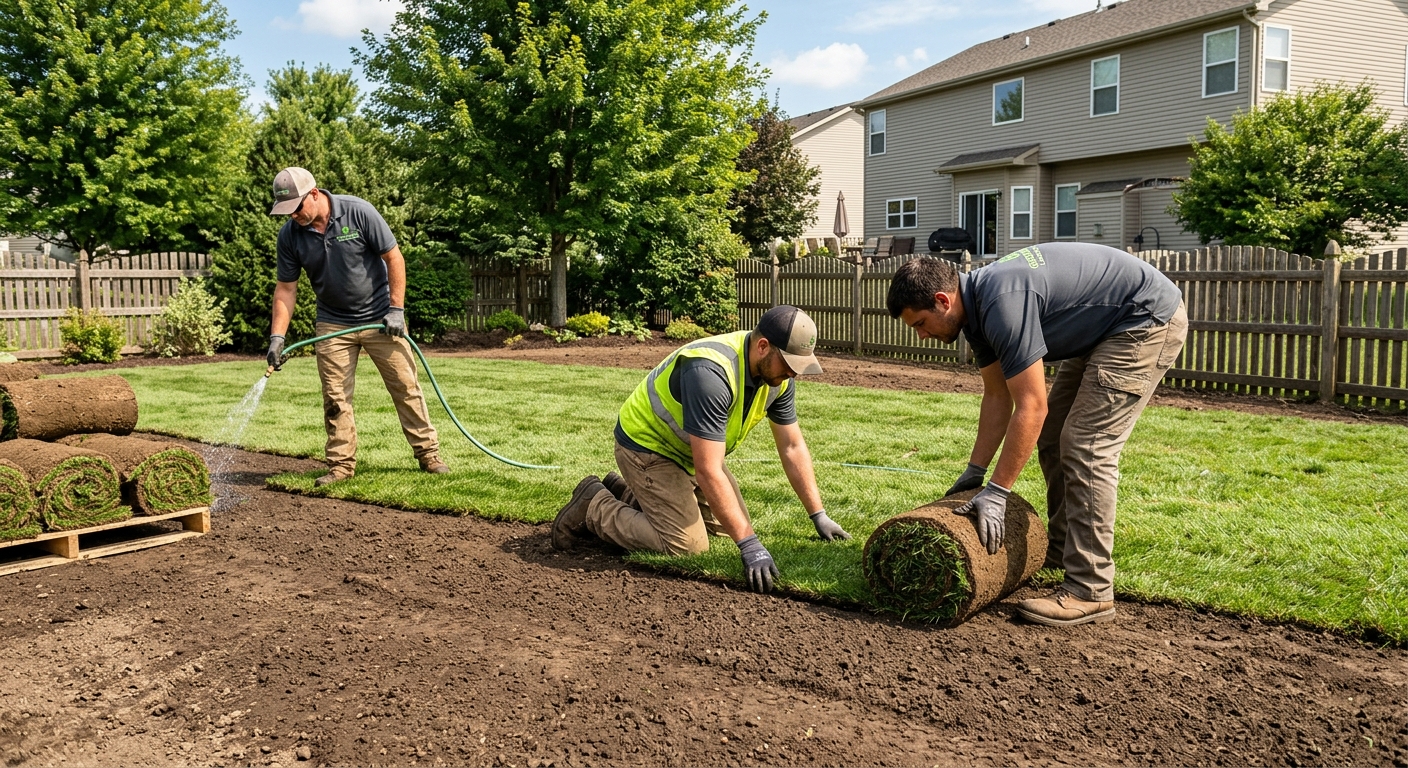
| Sod installation (supply, grade, lay, roll) |
Remove/prepare existing grade, weed control, add topsoil/compaction as needed, lay sod, roll, and first watering plan |
Spring through early fall (avoid heat stress) |
$2,500–$7,500 |
| Lawn seeding (grade, seed, starter fertilizer) |
Light grading, seed selection, starter fertilizer, raking and rolling; typically follow with watering schedule |
Spring or early fall |
$1,500–$4,500 |
| Interlocking patio or walkway |
Excavate, compact base, gravel/sand bedding, interlocking pavers, edging, and clean-up |
Spring through fall |
$4,500–$18,000 |
| Retaining wall (interlocking block) |
Block wall install with required base depth, compaction, drainage gravel/weep management, and steps/finish options |
Spring through fall (best before wet winter conditions) |
$6,000–$32,000 |
| Tree and shrub planting |
Plant selection, soil prep, planting labour, mulch rings/beds, staking as needed, and watering guidance |
Spring and fall for most bare-root/container stock; evergreen options available other times |
$1,200–$10,500 |
Prices are estimates only and vary by project scope, site access and material selection.
What affects the price of landscaping in Gold River
In Gold River and across Vancouver Island and the Coast, two quotes for the same “headline” project can differ by 30–50% because the real drivers are usually hidden in the details: soil condition, slope, drainage needs, access for equipment, and how much labour is required versus how much is outsourced to specialized crews. Even within British Columbia, crews may price differently based on travel time, lift requirements, disposal distance, and the availability of installers during peak spring planting and wall-building season.
Hardiness zone and frost timing influence both plant performance and working season. Coastal BC supports a lush palette with zones roughly 7–8, so you can typically plant more year-round-leaning evergreens and structure plants than you would farther north or in drier climates. However, coastal winter wetness makes drainage and soil prep the cost “skeleton” of the job—if pooling happens, you pay more upfront to prevent long-term foundation moisture. In contrast, Prairie regions (Zone 2–4) often need wind- and drought-tolerant choices and more careful irrigation scheduling because short, stressed seasons restrict planting and establishment. Southern Ontario (Zone 5–6) usually has a moderate growing season, but summer dry spells can still require irrigation for reliable lawn and plant establishment.
Concrete examples that change the number fast in Gold River: (1) a sloped front yard may push you from a $4,000–$60,000 retaining-wall category higher due to excavation, base depth, and drainage backfill; (2) if your soil is compacted or has poor infiltration, adding a French drain or drainage bed can move a planting-only job into the $5,000–$40,000 full-design band. With many local homes built before 1981, older grading patterns can also increase the amount of rework needed to redirect surface water, which shows up in costs as extra labour for regrading and additional topsoil/compost.
| Price Factor |
Why It Matters |
Cost Impact |
| Yard size in sq ft — the primary cost driver for softscape |
Larger areas increase soil, mulch, plant quantity, seeding/sod volume, and labour time |
Often the biggest swing; softscape scales directly with square footage |
| Grading and drainage work — slope corrections add significant cost |
Correcting runoff paths can mean extra excavation, moving soil, and re-compaction |
Can add thousands quickly when soil depth and slope are challenging |
| Drainage bed or French drain installation |
Improves infiltration and reduces standing water near foundations and walkways |
Major cost driver on wet lots; pricing includes stone, pipe, and labour |
| Plant material tier — native shrubs vs. ornamental vs. mature specimen trees |
Mature stock costs more to procure, move, and establish; specimens may require staking |
Usually increases overall budget; can shift a mid-range planting into premium territory |
| Hardscape vs. softscape ratio — walls and patios cost more per sq ft than lawn |
Pavers, block, base layers, and edging require excavation and compacted aggregate |
Hardscape-heavy designs commonly exceed typical lawn/planting budgets |
| Irrigation system design and installation |
Proper zoning, drip layout, and smart controllers improve efficiency and plant survival |
Adds cost, but prevents losses and reduces long-term maintenance |
| Soil amendment and topsoil required |
Good planting starts with quality soil volume and the right amendments |
Can be a hidden driver on compacted or sandy/waterlogged soils |
| Tree removal or stump grinding before new planting |
Removal affects disposal fees, access, and whether roots must be managed |
Often adds unpredictable costs based on stump size and access constraints |
Permits & regulations in British Columbia
In British Columbia, most typical yard work—planting beds, sodding, seeding, and most softscape installation—usually does not require a building permit. However, certain retaining-wall projects and lot-grading changes can trigger permitting depending on height and how the work affects drainage. As a homeowner in Gold River, the key distinction is this: softscape and planting are generally straightforward, while structural earth-retention or drainage-altering work often needs municipal review.
What typically DOES require a permit: retaining walls above a local height threshold (commonly around 1.0 m (3.3 ft) in many municipalities), any wall intended to support significant retained soil, and sometimes engineered drawings if conditions warrant. What typically does NOT require a permit: digging planting holes for shrubs/trees, installing mulch beds, laying sod or seed, and building small landscape features like low garden borders—so long as they aren’t functioning as structural retention.
Before any digging, call for utility locates to mark buried services for planting holes and any trenching for drains, irrigation, or wall footings. If you’re changing lot grading so runoff moves toward a neighbouring property or a storm connection, confirm approval requirements early, because drainage direction is a common trigger for review. Also check water-use rules in your area; while restrictions are typically less extreme than some other Canadian regions, efficient irrigation is still important for water conservation and plant health.
To verify a contractor’s credibility in BC: (1) check their licensing/business details through available online registries; (2) request a certificate of insurance showing general liability for the correct job site; and (3) confirm they have the appropriate worker coverage (WSIB/WCB) for their trade. Ask for the actual documents and ensure the certificate lists the correct company name, not just a “can cover” statement.
Planning a landscape that thrives in Gold River's climate
Planning in Gold River is about working with coastal conditions—zone-appropriate plants, wet winters, and gentle freeze–thaw—rather than fighting them. Start with plant selection: favour native or well-adapted, zone-appropriate species that handle winter damp and don’t demand constant watering once established. In Vancouver Island and Coast climates (often treated as hardiness zones 7–9), you can build lush, four-season structure with broadleaf evergreens, ornamental grasses, and hardy perennials, but the real “make or break” is choosing varieties that tolerate saturated soil periods.
Sod vs. seed is another decision point. Sod gives instant visual coverage and faster erosion control on bare soil, but it often costs about 3–4x per sq ft compared with seeding—so it’s usually best where you need quick results, walkable areas, or immediate stabilization. For Gold River lawns, many homeowners choose seeding in shoulder seasons when soils are workable, then top-dress and manage watering for establishment.
Drainage and grading come next. If your yard slopes toward your house, pooling after rain can raise foundation moisture risk and increase weed pressure. A properly shaped grade plus a drainage bed or French drain can protect both plants and your home. Hardscape also needs proper base preparation: patios and interlocking walkways require compacted aggregate layers, and retaining-wall base work should be planned to suit frost depth and local freeze conditions—so the wall doesn’t shift when wet and temperatures swing.
For low-maintenance design, use groundcovers, mulch, and repeatable perennial groupings to cut annual weeding. Add rain-garden features in areas that receive roof runoff, and consider xeriscape-style planting where sun is hottest (south-facing or exposed corners) using drought-tolerant species and drip irrigation.
Where does the money make sense? For example, spending an extra $2,000–$5,000 on drainage work may be justified if it prevents ongoing lawn failure and reduces replanting cycles. By contrast, upgrading everything to premium sod without addressing drainage often wastes money—because the grass can’t root where water collects.
| Element |
Climate Consideration |
Maintenance Level |
Price Band |
| Sod lawn installation |
Works well when grade drains properly; establishment depends on wet-weather timing and thaw cycles |
Medium (watering and weed management during establishment) |
$2,500–$7,500 |
| Native perennial garden |
Zone-appropriate plants handle winter damp and support long-term resilience on Vancouver Island |
Low to medium (spring cleanup, occasional dividing) |
$1,800–$6,500 |
| Mulched shrub border |
Mulch reduces evaporation and helps keep soil stable through wet/dry swings |
Low (light pruning, refresh mulch) |
$1,200–$5,800 |
| Interlocking stone patio |
Base preparation matters in freeze–thaw; proper compaction reduces heaving and shifting |
Low (occasional cleaning, joint sand/top-ups) |
$4,500–$18,000 |
| Retaining wall (block) |
Drainage gravel and correct base depth reduce movement during wet winters |
Low after installation (inspection of drainage outlets/weeps) |
$6,000–$32,000 |
| Drip irrigation system |
Drip and efficient zoning reduce water use while supporting roots through long damp seasons |
Medium (seasonal adjustments and controller checks) |
$1,200–$6,000 |
How to choose a landscaping contractor in Gold River
Choosing the right contractor is mostly about verification and clarity—especially in Gold River where travel, haul distances, and weather timing can affect both schedule and cost. In British Columbia, ask for their proof of coverage and status before you sign anything. For licensing, confirm what applies to their trade/business activities using available online registry tools, and don’t accept “we’re registered” without paperwork details. Request a current certificate of insurance showing general liability for the company doing the work (and confirm it matches the quote). Also ask for worker coverage documentation (WSIB/WCB) where applicable—contractors who lack coverage can create risk for you as the homeowner.
Get 2–3 itemised written quotes that break down labour and materials rather than a single lump sum. Look for scope specifics: what exactly is included for excavation, disposal, soil amendments, edging, compaction, and protection of existing plants. Confirm whether permits are included (where needed) and whether drainage connections or utility locates are part of the job. For warranty, ask for the workmanship warranty length in writing, and clarify whether product/manufacturer warranties apply (and whether they’re transferable to you). Payment schedule matters too: never pay more than about 10–15% upfront; use a holdback until completion and final clean-up. Finally, insist on a start date and a completion estimate in writing, because coastal weather can shift sequencing if crews are waiting on base material or drainage components.
- Provide a written scope with measurements (sq ft, linear ft, and height/tiers for walls).
- List materials and grades (topsoil type, base depth, paver/block sizes, drainage stone specs).
- State disposal/haul fees or confirm they’re included.
- Confirm utility locate responsibility before digging trenches or wall footings.
- Include erosion/sediment control steps for wet-season work.
- Identify what “grading” means in the quote (finish slope targets and drainage direction).
- Show irrigation design details (zones, drip line layout, controller model if applicable).
- Clarify who supplies plants and whether substitutions are allowed.
- Request a start/finish timeline with milestones (base, drainage, planting, finishing).
- Use a payment schedule with a holdback for deficiencies and final inspection.
- Provide warranty terms in writing for workmanship and plant establishment guidance.
- Ask for photo examples of similar Gold River-style projects (slopes, drainage, walls).
Red flags in Gold River: (1) quotes that ignore drainage/grading or treat it as “not included” on a sloped or wet lot; (2) no proof of insurance/worker coverage or refusal to provide documents; (3) payment requests that exceed 10–15% upfront; (4) vague scope language like “we’ll make it look nice” with no measurements; and (5) no written timeline or no clarity on substitutions and disposal.
Frequently asked questions — landscaping in Gold River
How do I improve drainage in my yard?
In Gold River, drainage improvements usually start with grading—then move to subsurface work if water still pools. If you’re seeing standing water after rain or water marks near a foundation, a contractor should assess runoff paths, soil infiltration, and the slope from downspouts and paved areas. For many coastal lots, a common solution is regrading plus a drainage bed or French drain that routes water to a safe discharge point. If drainage work is missing, even a good lawn installation can fail and increase maintenance. Budget-wise, drainage-focused changes often get pulled into larger project pricing; for example, full landscape design and installation commonly sits around $8,000–$32,000 depending on the yard area and hardscape involved.
What is xeriscaping and does it suit Gold River?
Xeriscaping is a planning approach that reduces water use by using drought-tolerant plants, efficient irrigation, and smarter groundcovers—without necessarily making the yard “rock-only.” In Gold River and coastal Vancouver Island, xeriscape principles can still fit for exposed, south-facing, or sunny corners where summer drying can be more pronounced and wind can dry soils quickly. That said, Gold River also has wet winters, so you want plants that tolerate both periodic moisture and seasonal dryness. A well-designed xeriscape-style area typically pairs mulch, climate-appropriate perennials, and drip irrigation rather than removing all soil structure. If you’re adding irrigation, drip systems often fall in the $1,200–$6,000 range, but it can prevent repeated plant loss and reduce water waste.
How do I plan a low-maintenance yard?
A low-maintenance yard in British Columbia usually comes from reducing the number of “high-interruption” tasks: fewer bare soil areas, controlled weeds, and plants that match the site. Start by grouping plants by sun and moisture conditions, then use mulch (for beds) and groundcovers to cover soil. Consider native perennials and shrubs that are zone-appropriate so they survive coastal wet seasons without constant intervention. For lawns, many homeowners compare seeding versus sod: sod gives instant coverage, but it can cost roughly 3–4x per sq ft compared with seeding. If drainage is handled correctly, a mixed approach—small seeded lawn zones plus perennial borders—often keeps maintenance manageable. If your project includes design, full landscape packages in this city tier commonly land around $5,000–$40,000 based on scope.
How deep should a retaining-wall base be for local frost?
For a retaining wall in Gold River, the base depth should be determined by the wall type, height, soil conditions, and local frost considerations—but the key is that the base must reach stable, properly compacted material and be installed with correct drainage backfill. In BC coastal areas, freeze–thaw cycles are generally gentler than in the interior, yet movement can still occur if drainage is poor or base prep is shallow. Because codes/requirements can differ, you should require your contractor to follow engineering guidance if the wall is above typical permitting thresholds or if soil conditions are questionable. As a homeowner, avoid DIY on structural walls: base depth and compaction directly affect whether you’ll see cracking or shifting after wet winters. Retaining-wall project budgets commonly fall in the $4,000–$60,000 band depending on length, height, access, and drainage complexity.
How much does professional landscape design cost?
Professional landscape design pricing depends on how many areas you’re changing and whether you want full turnkey installation. In Gold River and the surrounding Vancouver Island and Coast market, many contractors bundle design with installation as part of a broader landscape budget. For homeowners comparing quotes, a good reality check is the overall installation band: landscape design & installation commonly ranges from $5,000–$40,000. If you hire design-only, cost can vary, but the best way to compare is to ask what the design includes—site measurements, planting plan, drainage/grading concept, and whether it comes with a material list or a contractor-ready drawing. Given that 77.0% of homes here were built before 1981, older grading and drainage patterns can require more detailed planning, which can justify higher design effort.
How do I compare landscaping quotes?
Compare quotes like a homeowner and like a contractor: look past the total price and compare what you’re actually getting. In Gold River, the biggest differences often hide in grading and drainage scope, excavation depth, base prep, disposal, and irrigation details. Ask each contractor for an itemised quote with measurable quantities (sq ft/linear ft) and labour vs materials breakdown. Confirm whether utilities locates are included, whether drainage tie-ins are addressed, and what “substitutions” mean for plants. Also check warranty language and the payment schedule—nothing should require a large upfront payment beyond roughly 10–15%. Finally, use the local price bands as your guardrail: for example, sod installation often lands around $1,500–$8,000, while retaining walls and hardscaping can move into $4,000–$60,000 depending on complexity.