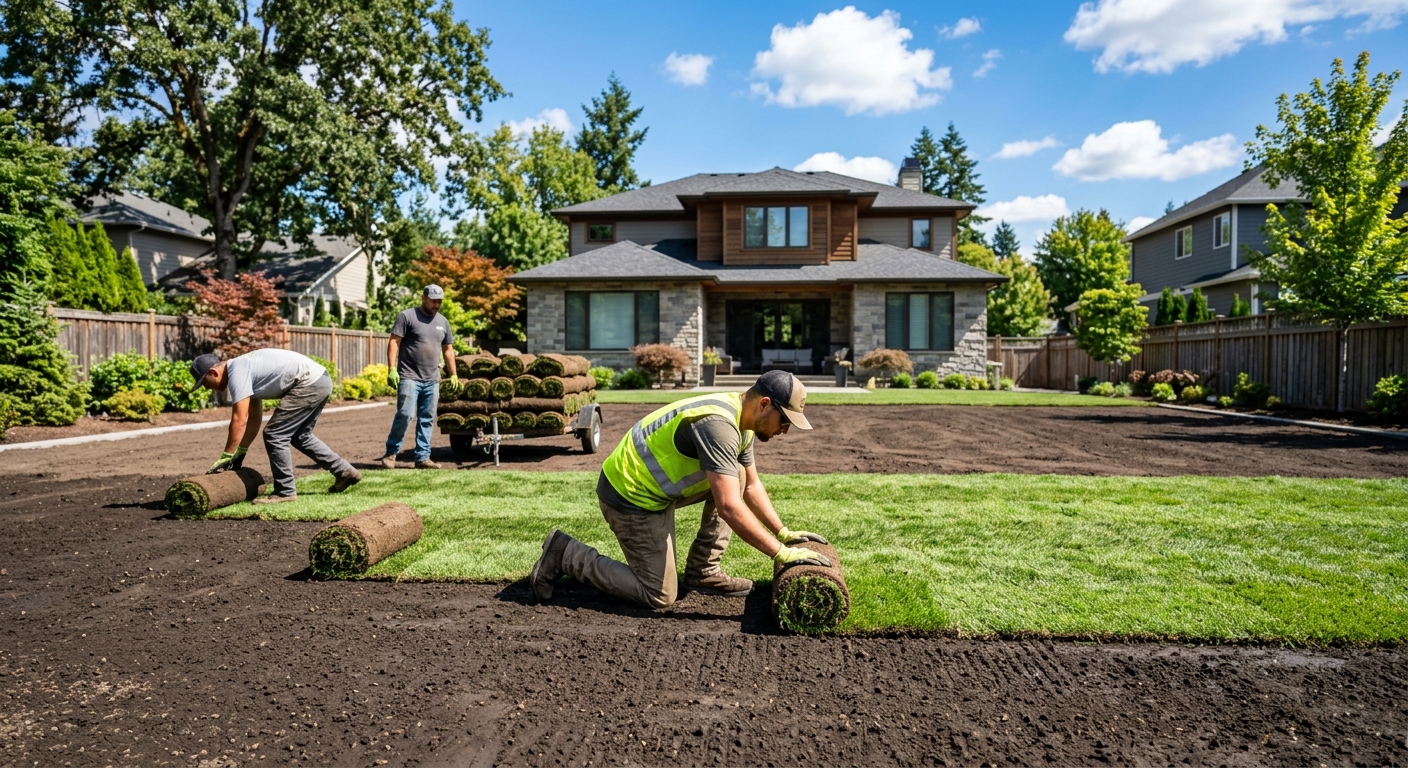
Landscaping options and costs in Maple Ridge
Landscaping in Maple Ridge is popular year-round, largely because the Lower Mainland–Southwest sits in plant hardiness zones 7–8, with mild, wet winters and long cool summers. With 90,990 residents (Statistics Canada, 2021 Census) and a strong base of homeowner households—26,205 households own their homes (79.1%, Statistics Canada, 2021 Census)—many detached properties have the yard space to invest in both curb appeal and long-term outdoor comfort. Maple Ridge also has a housing mix where 52.6% of dwellings are single-detached houses, which typically means bigger lots, more soil work, and more opportunities to build layered planting beds rather than small “foundation only” refreshes.
In this part of BC, costs are shaped by an extended working season and a competitive contractor supply compared with shorter-frost regions. However, projects still need to account for freeze–thaw cycles that can stress patios, steps, and retaining wall bases—so proper base depth, compaction, and drainage are built into “good” pricing. Areas like the Northeast/West Maple Ridge corridor (including around 240 Street and the Haney area) often see higher demand for interlocking walkways, front-yard planting, and drainage upgrades as homeowners improve older properties.
Below is a practical range you can use to compare quotes, then we’ll break down why the same scope can price differently from one contractor to another.
| Service |
Description |
Season |
Price Range |
| Full landscape design and installation |
Site walk, layout, planting plan, soil prep, planting, and selected hardscape/softscape installation |
Mar–Nov (weather permitting) |
$5,000 – $50,000 |
| Sod installation (supply, grade, lay, roll) |
Minor grading, soil amendments as needed, sod delivery and installation, rolling and start-up watering plan |
Mar–Nov (avoid waterlogged days) |
$2,000 – $8,000 |
| Lawn seeding (grade, seed, starter fertilizer) |
Light grading, seed selection, starter fertilizer, raking/rolling, and first-germination guidance |
Mar–May & Sep–Oct |
$1,200 – $4,500 |
| Interlocking patio or walkway |
Excavation, base prep, pavers/stone setting, edging, and compaction; includes basic drainage considerations |
Mar–Nov (winter structural base work depends on conditions) |
$3,500 – $25,000 |
| Retaining wall (interlocking block) |
Block wall build with granular base, drainage layer, and tied-in steps/walkway as specified |
Mar–Nov |
$10,000 – $80,000 |
| Tree and shrub planting |
Plant supply and installation, staking as required, mulching rings, and initial care instructions |
Mar–Nov (best results in spring/fall) |
$1,000 – $15,000 |
Prices are estimates only and vary by project scope, site access and material selection.
What affects the price of landscaping in Maple Ridge
In the Lower Mainland–Southwest, you can see wide quote differences—often 30–50%—for the same “headline” project, especially when comparing Maple Ridge to other parts of British Columbia and beyond. Contractors price for what actually happens on site: soil conditions, access, grading requirements, and how long drainage and base preparation take. The climate and frost calendar matter too. The Lower Mainland’s zones 7–8 typically allow a longer planting window and more lush palettes, but you still design for freeze–thaw cycles under patios and wall footings. In Prairie regions (Zone 2–4), short frost-free seasons often push clients toward drought-tolerant, wind-hardy plantings and compressed schedules—so labour timing and plant selection can change your total. Coastal BC supports a long growing season and can mean more perennials and broaderleaf evergreens, while the BC Interior’s water context can require more efficient irrigation and drought-tolerant designs. Southern Ontario (Zone 5–6) sits in between: a moderate season, but summer dry spells can increase watering and maintenance labour.
In Maple Ridge specifically, two local examples commonly drive cost up or down. First, older homes (28.6% built before 1981, Statistics Canada, 2021 Census) often have established roots, uneven grade, and less predictable subsoil—meaning extra excavation and soil amendment before sod or planting. Second, sloped lots common in some neighbourhoods can turn a “small retaining wall” into major grading: once drainage layers and proper compaction are included, retaining wall pricing can jump into the $10,000 – $80,000 band. Conversely, if your yard needs only fresh topsoil and a clean bedline, a tree-and-shrub install can stay closer to $1,000 – $15,000.
| Price Factor |
Why It Matters |
Cost Impact |
| Yard size in sq ft — the primary cost driver for softscape |
More area means more soil, labour hours, edging, and plant or turf quantities. |
Often the biggest swing in the total—small yards can be 2–3x cheaper than large lots. |
| Grading and drainage work — slope corrections add significant cost |
Pooling near foundations or along fences increases risk of foundation moisture and plant failure. |
Can add substantial excavation and labour; commonly moves projects into a higher price tier. |
| Drainage bed or French drain installation |
French drains manage water flow where soils stay saturated after BC rains. |
Material and trenching time can meaningfully increase labour costs. |
| Plant material tier — native shrubs vs. ornamental vs. mature specimen trees |
Mature trees and specialty ornamentals cost more and may require extra labour for installation and staking. |
Can change the “planting” portion by thousands of dollars. |
| Hardscape vs. softscape ratio — walls and patios cost more per sq ft than lawn |
Pavers and block systems require deep base prep, compaction, and precise elevation. |
Higher hardscape ratios typically increase total project cost faster than planting. |
| Irrigation system design and installation |
Drip zones and smart controllers improve efficiency and tolerate occasional restrictions. |
Not every yard needs full irrigation—adding it can raise costs mid-project if discovered late. |
| Soil amendment and topsoil required |
Compacted or poor-quality soil needs amendments for root growth, especially for turf establishment. |
Bulk material delivery and labour can add noticeable cost for larger amendments. |
| Tree removal or stump grinding before new planting |
Removal affects disposal, access, and the timeline for grading/bed creation. |
Often adds a separate line item and can delay planting and turf work. |
Permits & regulations in British Columbia
In British Columbia, most planting and softscape work typically does not require a permit. That usually includes tasks like planting trees and shrubs, sodding, lawn seeding, mulching, and installing many standard landscaping features such as garden bed edging and most walkways/patios (when built within typical small hardscape parameters set by municipal practice).
Where permits often do come into play is structural work. Retaining walls above the common municipal threshold—often around 1.0 m (3.3 ft), depending on the local municipality and conditions—frequently require a building permit and sometimes engineered drawings. Also, if you plan grading changes that alter drainage patterns toward neighbouring lots or storm connections, you may need municipal approval because it affects stormwater management and runoff. For any excavation, ask for utility locates before digging planting holes or wall footings.
How to verify your contractor in Maple Ridge (BC): Step 1—request their licence details (and confirm the validity online where applicable) before work starts. Step 2—ask for a certificate of insurance showing they carry liability coverage adequate for landscaping operations. Step 3—confirm worker coverage documentation (typically WSIB/WCB coverage, where required) so you aren’t responsible for workplace injuries. Step 4—request a clearance letter if your contractor provides one in your project type. Finally, keep a copy of everything in writing with your contract so the scope and protection are clear before the first shovel hits the soil.
Planning a landscape that thrives in Maple Ridge's climate
To plan a landscape that performs in Maple Ridge, work with our hardiness zone (7–8), the wet-season precipitation pattern, and a frost calendar that typically supports extended planting from early spring through fall. Start with plant selection: choose native and zone-appropriate species that tolerate cool, damp winters and don’t demand heavy seasonal winter protection. In practice, that means layered structure using broadleaf evergreens and longer-blooming perennials rather than fragile “northern” ornamentals that struggle in our shoulder seasons.
Decide between sod and seeding based on your timeline and budget. Sod gives instant results and can reduce erosion while establishing quickly, but sod usually costs about 3–4x more per sq ft than seeding. Seeding, paired with correct grading and starter fertilizer, is often the better value when you can manage early watering and temporary traffic restrictions.
Next, prioritize drainage and grading. In Lower Mainland–Southwest sites, pooling can happen even in “normal” yards after heavy rainfall. Correct grades, well-placed swales, and properly amended soil reduce foundation moisture risk and improve long-term plant health. If you’re adding hardscape like a patio or retaining wall, base preparation has to respect local freeze–thaw cycles—meaning deeper, well-compacted base layers and drainage layers so paving and blockwork don’t heave.
Finally, build a low-maintenance design: mulch, groundcovers, and perennials reduce annual upkeep without sacrificing curb appeal. Where water efficiency matters (even if Maple Ridge doesn’t face the same strict bans as BC’s drier Interior), consider rain gardens and drip irrigation for established beds. For example, spending an extra $1,000 – $5,000 on drainage correction and drip zoning may be justified if it prevents repeated plant loss and rework on a saturated slope.
| Element |
Climate Consideration |
Maintenance Level |
Price Band |
| Sod lawn installation |
Reliable establishment in cool shoulder weather; avoid installation on waterlogged ground. |
Medium at first (watering guidance), then low with proper mowing height. |
$2,000 – $8,000 |
| Native perennial garden |
Zone-appropriate species handle wet winters and cool summers; less winter damage risk than finicky ornamentals. |
Low to medium (spring cleanup and occasional weeding). |
$1,500 – $10,000 |
| Mulched shrub border |
Mulch improves moisture stability during rain cycles and reduces weed pressure. |
Low (top up mulch annually, light pruning). |
$1,000 – $7,500 |
| Interlocking stone patio |
Base prep for freeze–thaw and drainage prevents movement and trip hazards. |
Low (periodic joint sand top-ups as needed). |
$3,500 – $25,000 |
| Retaining wall (block) |
Proper granular base and drainage layer reduce pressure and frost movement on slopes. |
Low long-term (watch weep/drain points and keep drainage clear). |
$10,000 – $80,000 |
| Drip irrigation system |
Drip reduces wasted water and helps plantings tolerate occasional watering limits. |
Low (seasonal checks and controller programming). |
$1,500 – $9,000 |
How to choose a landscaping contractor in Maple Ridge
Choosing the right contractor in Maple Ridge comes down to proof: licensing/registration details where applicable, liability insurance, and worker coverage. Start by requesting their insurance certificate (liability coverage) and confirming it’s active. Next, ask how they handle worker coverage and request documentation related to WSIB/WCB coverage (where required), plus any clearance letter they can provide for your project type. For the “how” of verification, look for: (1) an online registry entry for their business credentials, (2) an insurance certificate dated within the last year (or current policy), and (3) the worker coverage documentation on company letterhead or through their standard clearance process. Don’t accept verbal confirmation—require written proof before a contract is signed.
Then get 2–3 itemised written quotes. You want a labour + materials breakdown (not a single lump sum) showing excavation quantities, base materials, plant quantities, and disposal. Read the scope carefully: is permit pulling included (if needed), is disposal of soil/debris included, and what’s excluded (tree removal, stump grinding, changing irrigation, or replacing dead sod areas after installation)?
Warranty matters too. Ask for a workmanship warranty length (and what it covers), plus the manufacturer warranty on key products (pavers, block, plants where applicable). Confirm whether warranties are transferable to the next homeowner.
On payment, avoid large deposits—never pay more than 10–15% upfront. Use a progress payment schedule tied to milestones, and hold back until the job is fully complete and final grading/clean-up is done. Get the timeline in writing: start date and completion estimate, plus weather clauses.
- Ask for itemised quantities (sq ft, linear ft, number of plants, drainage footage).
- Confirm disposal is included (or priced separately) for soil and construction waste.
- Require a written scope for irrigation: what’s included, what’s not, and who connects to your existing system.
- Get details on base preparation depth for patios/walkways and drainage layers for walls.
- Request product lists: block/paver thickness, geotextile type, soil amendment specs.
- Check insurance expiry dates and jobsite coverage amounts.
- Verify worker coverage documentation before work begins.
- Insist on a clear warranty statement for labour and workmanship.
- Ask how they protect trees during adjacent excavation and how they handle roots.
- Review payment schedule; keep a holdback for completion and defects.
- Confirm start date, weather delays procedure, and final inspection/cleanup expectations.
- Make sure the contract includes a contact person for changes and site instructions.
Red flags I see in the Maple Ridge area include: (1) quoting without a site visit or measurements, (2) offering only lump-sum pricing with no material breakdown, (3) skipping insurance documentation until after you pay, (4) no written timeline or unclear weather terms, and (5) a “minimal” base preparation plan for patios/steps/retaining walls that doesn’t address drainage and compaction.
Frequently asked questions — landscaping in Maple Ridge
How do I compare landscaping quotes?
To compare landscaping quotes in Maple Ridge, first make the scopes match. Ask each contractor to price the same items: excavation quantities, base materials, edging length, plant counts/sizes, irrigation work (if any), and disposal. Look for itemised line items rather than one total, and confirm what’s excluded—common surprises include stump grinding, replacing failing sod after a bad prep day, or rerouting irrigation lines. Second, compare in bands: if one quote for sod is far from the typical $2,000 – $8,000 range for supply, grade, lay, and roll, ask why (larger area, premium grade, more soil amendment, or extra drainage). Finally, judge the plan: good quotes explain grading/drainage logic and show a planting layout that matches zone 7–8 conditions.
How long does a landscaping project take in Maple Ridge?
Timelines in Maple Ridge depend on weather, soil saturation, and how much hardscape versus softscape you’re doing. With our long growing season, planting and turf work can run through spring and fall, but contractors still pause during the wettest windows to avoid rutting and poor seed/sod contact. Typical schedules: small planting updates (shrubs/perennials) can take 1–3 days on-site; sod installs often take 1–2 days depending on prep and area; patios/walkways usually take several days for excavation, base prep, paver laying, and finishing; retaining walls can take longer due to base/drainage layers and block courses. Ask for a start date and completion estimate in writing, plus how they handle rain delays and curing time.
What is the best grass type for a Maple Ridge lawn?
In Maple Ridge and the Lower Mainland–Southwest, many homeowners choose fine fescues or blends suited to cool-season growth, because they handle shade pockets and our cool, wet winters well. The “best” choice still depends on sun exposure, soil drainage, and how often you can mow. If your yard stays damp or has low spots, prioritize grading and drainage before you judge grass performance—otherwise even good seed will struggle. For most yards, a contractor-led seed blend plus correct topdressing and starter fertilizer gives more consistent results than trying to force sod on saturated ground. If you’re comparing options, remember sod can cost in the $2,000 – $8,000 band, while seeding is usually a lower-cost way to establish turf when you can manage the early establishment period.
When should I aerate and overseed my lawn in Maple Ridge?
For Maple Ridge, aeration and overseeding generally work best in the spring or early fall when soil temperatures are favourable but heat stress is low. Aerate when the lawn can recover quickly—typically in early spring through late spring, or again in fall before winter sets in firmly. In cool, wet conditions, aim for timing that avoids saturating your lawn for long periods; if the yard is repeatedly waterlogged, fix drainage first. Overseed should follow aeration with good seed-to-soil contact and a light topdressing if your contractor recommends it. If you’re seeing thinning, consider whether compaction, shade, or foot traffic is the real cause. A well-planned overseed can reduce the need for full replacement and the higher costs associated with sod.
What trees grow best in Maple Ridge's climate zone?
With Maple Ridge sitting in hardiness zones 7–8, many broadleaf trees and hardy evergreens perform well, especially when planted in properly drained soil and positioned for their mature size. Homeowners commonly do well with options like columnar forms of spruce or fir, plus durable ornamentals and native-leaning trees suited to Lower Mainland rainfall patterns. The “best” tree choice also depends on your yard’s drainage and sun—if your site stays wet, avoid species that dislike saturated conditions. Because 28.6% of homes were built before 1981 (Statistics Canada, 2021 Census), some older yards have established roots and compacted areas; selecting the right tree and amending soil around the planting spot becomes even more important. A proper planting and mulch ring approach helps reduce winter stress.
How much does sodding a yard cost in Maple Ridge?
For Maple Ridge, sod installation typically falls in the $2,000 – $8,000 range for supply, grade, lay, and roll, depending on yard size, access, and how much soil prep or drainage correction is needed. If your yard has uneven grade or poor soil structure, the cost can climb because contractors may add topsoil, amendments, and more careful grading to ensure good sod contact. Wet sites can also slow installation and increase labour. If you’re comparing solutions, seeding can be a lower-cost alternative when you can accept a longer establishment period. A good contractor will measure the area, discuss how they’ll manage watering after installation, and include a clear plan for edges and transitions (including around fences and downspouts).