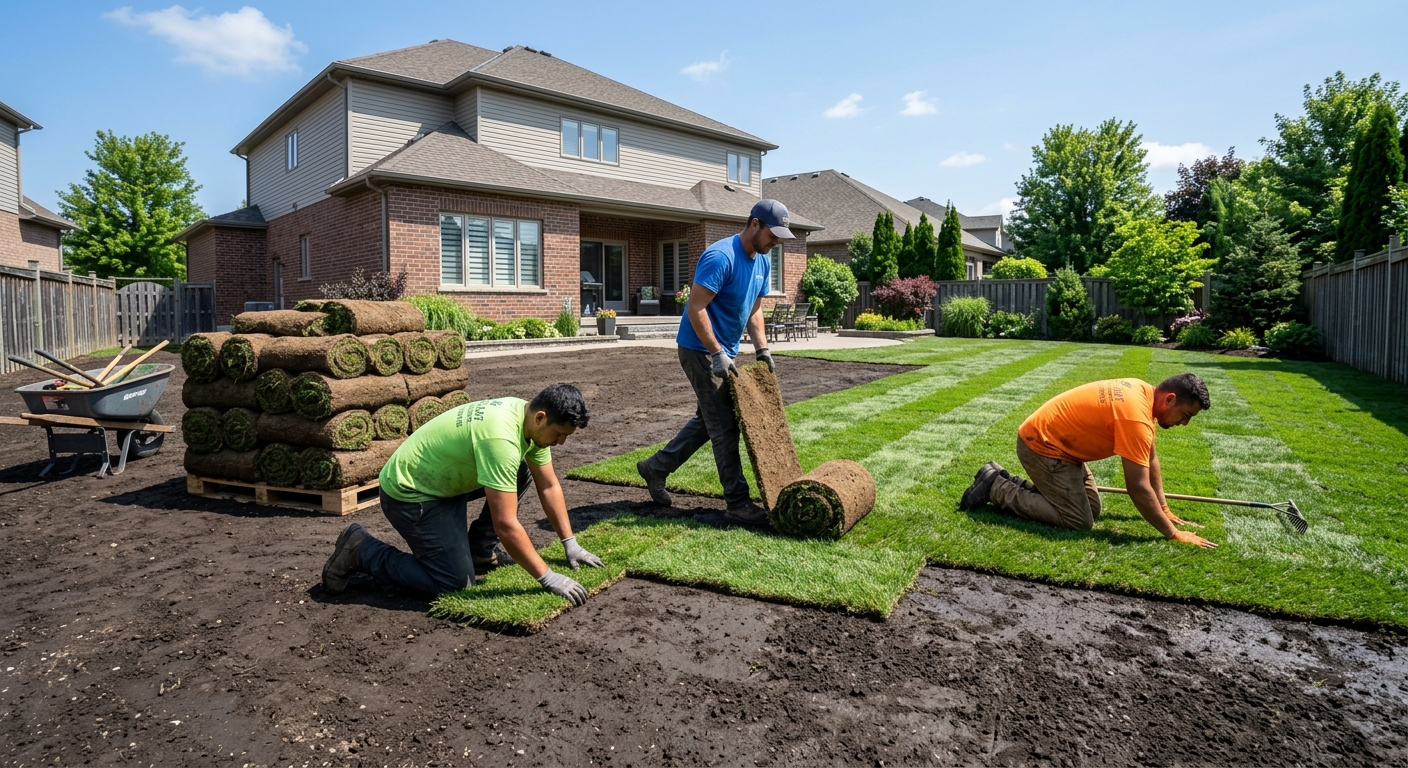
Landscaping options and costs in Osoyoos
Osoyoos homeowners often start with a simple goal—more curb appeal and a yard that stays green through our hot, dry summers. With 58.7% of homes in Osoyoos being single-detached and 80.9% of households owning their home (Statistics Canada, 2021 Census), there’s a strong incentive to invest in landscaping that actually fits day-to-day living—gardens, patios, and low-maintenance irrigation. In the Thompson–Okanagan (hardiness zones ~5–6), landscaping costs are shaped by a working season that’s typically mid-April/May to mid-October, plus freeze–thaw cycles that make drainage and deeper bases critical under patios, steps, and retaining walls.
We also see demand spike in specific areas—especially around the dryer, older-housing pockets and the fringes where yards are established and need refresh after summer heat stress. In Osoyoos, many projects are scheduled for spring and early fall, while summer tends to focus on maintenance, pruning, and irrigation troubleshooting (rather than full new installs). Labour availability can be tighter in peak planting months, which is one reason similar scopes can land in different price ranges—especially when drainage excavation, soil imports, or drip system design are part of the plan.
Below is a practical snapshot of what common landscape services typically cost in Osoyoos, so you can compare proposals apples-to-apples before selecting a design and build team.
| Service |
Description |
Season |
Price Range |
| Full landscape design and installation |
Site walk, concept + planting plan, grading/drainage coordination, soil/topsoil, hardscape/softscape builds, and install management |
Spring or fall (most efficient) |
$8,000–$40,000 |
| Sod installation (supply, grade, lay, roll) |
Fine grading, base prep, weed control, sod supply and layout, rolling, initial watering schedule |
Late spring through early fall |
$6–$14 |
| Lawn seeding (grade, seed, starter fertilizer) |
Minor grading, seed selection, soil amendments, seeding, starter fertiliser, and establishment care |
April/May or early fall |
$1,000–$4,000 |
| Interlocking patio or walkway |
Excavation, compacted base, edging, pavers/stone, bedding sand, and jointing (design varies) |
Spring/fall |
$80–$220 |
| Retaining wall (interlocking block) |
Drainage behind wall, geotextile, engineered-style base where required, block installation, cap/steps if applicable |
Spring/fall (best conditions) |
$8,000–$25,000 |
| Tree and shrub planting |
Soil amendments, planting pits, staking (as needed), mulch ring, watering plan |
Spring or fall |
$250–$8,000 |
Prices are estimates only and vary by project scope, site access and material selection.
What affects the price of landscaping in Osoyoos
In the Thompson–Okanagan, quotes for the “same” landscaping job can vary by 30–50% across different parts of British Columbia because the scope is rarely identical—especially once drainage, irrigation design, and soil correction are included. Compared with coastal BC’s long growing season and lush planting options, Osoyoos has a shorter, more seasonal working window and more freeze–thaw impact on foundations and hardscapes. That changes both what contractors can install at the right time and how deep they must build bases for patios, steps, and retaining features.
Our zone ~5–6 hardiness and frost timing dictate plant selection and protection, which affects labour and material costs. In Prairie climates (Zone 2–4), yards need very drought- and wind-hardy species and retaining wall base depth is planned for colder soil conditions. Coastal BC (Zone 7–8) can support denser, faster-growing palettes but requires disciplined drainage in heavier-rainfall areas. In the dry BC interior, water restrictions push homeowners toward drip irrigation and smart controllers—often raising upfront installation cost, but lowering ongoing water bills. Southern Ontario (Zone 5–6) is closer to our band, yet the summer drought pattern and irrigation frequency can differ, impacting how much irrigation infrastructure is recommended.
Two concrete Osoyoos examples: (1) If your yard needs a slope correction to stop water pooling near a driveway or foundation, excavation and regrading can shift a project from a typical design & installation range of $8,000–$40,000 to the higher end due to extra labour and imported soil. (2) Adding a drainage bed or French drain behind a block wall increases hardscape cost because it’s not just “more digging”—it’s controlled base prep, geotextile, and proper discharge routing. Also, homes built before 1981 can be more likely to have established drainage patterns (and mature root systems) that complicate trenching—small changes like removing a stubborn stump can add several hundred dollars and a full day of labour.
| Price Factor |
Why It Matters |
Cost Impact |
| Yard size in sq ft — the primary cost driver for softscape |
More area means more topsoil, labour time, and materials (seed, sod, mulch, or groundcover) |
Can multiply cost substantially; small yards may still approach minimum trip charges |
| Grading and drainage work — slope corrections add significant cost |
Interior freeze–thaw requires stable base and surface drainage away from structures |
Often shifts projects upward by thousands of dollars on sloped or pooling sites |
| Drainage bed or French drain installation |
Prevents water build-up behind walls and under paving |
Materials + deeper excavation can add a notable mid-project cost increase |
| Plant material tier — native shrubs vs. ornamental vs. mature specimen trees |
Starter plants are less expensive and easier to plant; larger specimens cost more and may require heavier equipment |
Range swings widely—from hundreds to several thousand per focal plant |
| Hardscape vs. softscape ratio — walls and patios cost more per sq ft than lawn |
Pavers/blocks include excavation, base compaction, and bedding/sand joints |
Higher hardscape ratios push the budget toward the higher end of typical installs |
| Irrigation system design and installation |
Dry summers in Osoyoos make efficient drip zoning and smart control important |
Adds line-item cost but can reduce long-term maintenance and water waste |
| Soil amendment and topsoil required |
Interior soils can be variable; amendments improve root development and reduce plant loss |
May increase costs based on volume needed and trucking distance |
| Tree removal or stump grinding before new planting |
Impacts staging, disposal, and sometimes drainage routing |
Can add hundreds to over a thousand depending on access and stump size |
Permits & regulations in British Columbia
In British Columbia, most planting and softscape work typically does not require a permit—things like planting trees and shrubs, sodding, lawn seeding, mulching, and standard ground-level garden installs are usually straightforward. However, retaining walls above a threshold—typically 1.0 m (3.3 ft) in many municipalities—may require a building permit, and complex designs can require engineered drawings. Also, changes to lot grading that affect drainage direction toward neighbouring properties or that alter how water connects to storm infrastructure can trigger approval requirements. Because requirements can vary by site and municipality, the safest approach is to ask your contractor to confirm in writing what (if anything) they plan to permit.
Before digging for planting holes, drip lines, or retaining wall footings, ensure utility locates are completed. Call for locates so crews know where power, telecom, gas, and irrigation lines are buried. During drought conditions, confirm local irrigation and water-use bylaws—BC interior jurisdictions commonly tighten watering schedules and restrict daytime watering.
To verify a contractor in Osoyoos, ask for three documents: (1) licence/registration confirmation through the relevant BC business/contractor listing (and ensure the specific trade credentials match the scope), (2) liability insurance certificate naming you as a certificate holder where possible, and (3) coverage for workers (WSIB/WCB clearance or equivalent proof). In practice, you’ll request the certificate of insurance before work begins and a clearance letter or policy confirmation for worker coverage—then keep copies with your signed contract.
Planning a landscape that thrives in Osoyoos's climate
Planning for Osoyoos means working with our hardiness zone ~5–6, the dry Interior water context, and the realities of frost and freeze–thaw. Start with plant selection: choose zone-appropriate trees, shrubs, and perennials that tolerate winter cold snaps and summer heat, and that don’t require constant watering. Incorporating native and zone-matched species usually reduces watering needs, and adding a thin layer of winter protection (like mulch depth and proper plant spacing) helps survival through temperature swings.
When it comes to turf, sod vs. seed is the classic trade-off. Sod gives instant curb appeal and immediate erosion control, but it costs roughly 3–4x more per sq ft than seeding once you include supply and installation. Seeding is slower to establish, yet it’s often the better value if you can commit to the establishment watering and early weed control schedule.
Drainage and grading are non-negotiable in the Thompson–Okanagan. Pooling water near foundations can lead to foundation moisture issues, and unstable ground can cause heaving around pavers. For patios and retaining walls, base prep has to be built for freeze conditions: proper excavation, compacted base, edge restraints, and drainage behind walls keep things stable year after year. Low-maintenance design strategies—mulched shrub borders, groundcovers, and drought-tolerant perennials—reduce annual upkeep without sacrificing a polished look.
If you want water-smart options, consider xeriscaping principles and rain-garden features where you can capture and slow down runoff. For example, if you’re deciding between a small sod refresh and a broader seeded lawn, a seeding approach in the $1,000–$4,000 band can justify the slower timeline when you redirect budget toward a drip irrigation upgrade and proper soil amendments—both of which improve plant performance through Osoyoos summers.
| Element |
Climate Consideration |
Maintenance Level |
Price Band |
| Sod lawn installation |
Quick establishment for erosion control, but needs efficient watering during establishment in dry Interior summers |
Medium (early watering + mow/tune-up) |
$6–$14 |
| Native perennial garden |
Better drought tolerance and winter hardiness in zones ~5–6 |
Low (mulch refresh + seasonal pruning) |
$1,500–$6,500 |
| Mulched shrub border |
Mulch moderates soil temperatures through freeze–thaw and reduces summer evaporation |
Low to medium |
$800–$4,000 |
| Interlocking stone patio |
Stable compaction and drainage base help prevent shifting during freeze cycles |
Low (occasional cleaning/joint maintenance) |
$80–$220 |
| Retaining wall (block) |
Needs drainage behind wall and proper base depth for winter movement |
Low (keep drains clear) |
$8,000–$25,000 |
| Drip irrigation system |
Dry summers and water efficiency priorities—zoned drip supports deep, targeted watering |
Low (seasonal checks + smart controller settings) |
$2,500–$10,000 |
How to choose a landscaping contractor in Osoyoos
Choosing a contractor in Osoyoos starts with proof. For British Columbia, verify that the business and any subcontracted trades align with the scope (especially when excavation, hardscape bases, and irrigation plumbing are involved). Ask for a certificate of liability insurance—confirm the policy is active and covers landscaping activities. For worker coverage, request evidence of WSIB/WCB clearance (or the appropriate provincial equivalent documentation) before work begins. Don’t accept verbal assurances; request documents you can keep.
Next, get 2–3 itemised written quotes. The best quotes break labour and materials into line items: excavation and disposal, topsoil/soil amendments, paver or block quantities, plant counts/sizes, irrigation components, and watering start-up. Avoid lump-sum only proposals unless you’re also provided a detailed scope.
Read the scope carefully. Does the quote include permit pulls if required (for example, retaining walls above the typical 1.0 m threshold)? Is disposal included for removed sod, soil, and debris? Are existing irrigation lines located and accounted for? Confirm warranty terms: ask for workmanship warranty length, product/manufacturer warranties, and whether warranties are transferable if you sell your home.
For payment, use a schedule that protects you: never pay more than 10–15% upfront. Hold back a portion until the job is complete and punch-list items are addressed. Finally, require a timeline in writing: start date, inspection/milestone dates, and a realistic completion estimate based on spring or fall planting windows.
- Request proof of liability insurance and keep the certificate on file.
- Ask for WSIB/WCB clearance documentation (or equivalent worker coverage proof).
- Confirm the contractor’s scope matches your project (hardscape vs. irrigation vs. planting).
- Get 2–3 itemised quotes with quantities (sq ft, linear ft, number of plants).
- Ensure drainage plans are described, not just “topsoil added.”
- Ask who handles utility locates before any digging.
- Confirm disposal haul-away is included (and where the material goes).
- Verify irrigation design includes zoning and an efficient layout for water restrictions.
- Review plant lists for size (e.g., container size), spacing, and survival guarantees.
- Check warranty duration for workmanship and product warranties for plants/materials.
- Use a payment schedule with no large upfront deposit (max 10–15%).
- Require a written start date and completion target with weather contingencies.
Red flags in Osoyoos: (1) a quote that doesn’t address drainage/grading around foundations or hardscapes, (2) no written scope for disposal and site clean-up, (3) refusal to provide insurance and worker coverage proof, (4) only lump-sum numbers with no breakdown of plants, pavers, or irrigation components, and (5) asking for most of the money upfront before any material is ordered or the base prep is inspected.
Frequently asked questions — landscaping in Osoyoos
When should I aerate and overseed my lawn in Osoyoos?
Aerating and overseeding in Osoyoos usually works best when the lawn is waking up but not under extreme heat. In practice, that means spring (often April/May depending on ground thaw) and early fall before nights stay cold for long stretches. Because we sit in Thompson–Okanagan zone ~5–6 with hot, dry summers, the seed needs consistent moisture during germination—so plan watering schedules around local water restrictions. If you’re comparing turf options, seeding is typically the most budget-friendly path (often in the $1,000–$4,000 band for many typical front-yard refresh projects), but it’s not instant like sod. If you overseed after midsummer heat peaks, you’ll risk thin germination and higher weed pressure.
What trees grow best in Osoyoos's climate zone?
In Osoyoos (hardiness zone ~5–6), you generally want trees that tolerate winter cold snaps and handle dry Interior summers. Many homeowners do well with hardy deciduous trees and well-selected drought-tolerant ornamentals, but the best picks depend on your soil, sun exposure, and how much irrigation you can support in the first establishment year. Before planting, it helps to test drainage and avoid low spots where water pools during seasonal thaws. If your home has mature trees from earlier landscaping eras (and many Osoyoos neighbourhood yards include older plantings), replacing or adding specimens can also involve root and drainage considerations. Tree & garden planting budgets vary widely, often starting around $250–$8,000 depending on species, size, and whether staking or amendments are included.
How much does sodding a yard cost in Osoyoos?
Sodding typically costs more than seeding because you’re paying for sod supply plus labour to grade, lay, roll, and establish. In Osoyoos, you can expect sod pricing in a band of $6–$14 (commonly per sq ft equivalent depending on quote structure and the level of site prep). Your total cost changes a lot based on grading complexity, weed control needs, and how much soil amendment is required. If your yard needs drainage correction for freeze–thaw stability, that can raise the budget beyond a simple “lawn-only” install. For homeowners comparing value, sod is best when you need quick coverage (erosion control or curb appeal right away), while seeding is usually more cost-efficient if you can manage the establishment period during the spring or early fall window.
How do I prevent weeds in my Osoyoos garden?
Weed prevention in Osoyoos is mainly about reducing opportunities for germination and improving soil competition. Start with proper soil prep: remove existing weeds with roots, loosen compacted areas, and add the right soil amendments so plants grow strongly instead of stalling. For beds, use a consistent mulching strategy (a proper mulch depth helps curb evaporation and suppress weeds). Consider landscape fabric only where appropriate (and don’t trap moisture where drainage is poor). If you use perennials and groundcovers, denser planting often reduces weed “openings.” Also, irrigation design matters: overwatering creates stressed plants and damp soil that favours weeds. Many homeowners in BC’s dry Interior benefit from drip irrigation with zoning, which supports targeted watering rather than wetting the whole bed.
How do I design a low-water yard in Osoyoos?
A low-water yard in Osoyoos starts with plant selection and efficient watering—then locks it in with drainage and maintenance simplicity. Choose drought- and heat-tolerant plants suited to zone ~5–6, and group plants by water needs so you don’t waste water on high-demand species in dry pockets. Use mulch heavily in shrub borders and add groundcovers where you want fewer weeds and less bare soil. For turf, consider whether you need full coverage; if not, mix seeded areas with mulched beds and drought-tolerant landscaping. Incorporate a drip irrigation system with smart zoning so watering matches how plants actually use water, especially under local drought conditions. If you’re budgeting, irrigation upgrades and deeper soil prep can raise upfront costs, but they support consistent performance during Osoyoos summer heat—so you’re not redoing plants mid-season.
How do I find a licensed landscaper in Osoyoos?
In Osoyoos and across British Columbia, the best way to find a reliable landscaper is to verify credentials directly and request documentation before signing. Ask for (1) the contractor’s BC business/trade registration details where applicable, (2) a current certificate of liability insurance, and (3) proof of workers’ coverage (WSIB/WCB clearance or equivalent policy documentation). You can also ask for past project references with similar conditions—sloped yards, drainage needs, or irrigation retrofits are common in the Thompson–Okanagan. Then compare 2–3 itemised quotes so you understand labour vs. materials and what’s included (like disposal and whether permit work is handled for retaining walls above the typical 1.0 m threshold). For pricing context, a full landscape can land anywhere from $8,000–$40,000, so detailed scopes matter.