Landscaping options and costs in Peachland
Peachland is a beautiful place to landscape, and it’s also a place where the details matter—because yards sit in a dry Interior climate with freeze–thaw swings. With about 69.0% of homes being single-detached, most properties have meaningful yard space to improve, and with 81.8% of households owning their homes, many homeowners invest in curb appeal, drainage fixes, and longer-lasting plantings. In the Thompson–Okanagan (hardiness zone ~5–6), winters can bring deep cold snaps even when the valley floor seems mild, so plant selection, soil preparation, and base depth for hardscaping all affect cost. Working season is typically concentrated in spring and fall; summer is more about irrigation tuning, weeding, and maintenance, which can push labour availability into those busier windows.
In Peachland, trades are especially busy around the lakeshore-adjacent areas and hillside neighbourhoods where sloped lots require grading, drainage, and careful retaining wall footing. On steep properties, deeper excavation and proper drainage beds are often required to prevent heaving and movement under patios, steps, and walls—adding both equipment time and skilled labour. That’s why two “similar” projects can land far apart within the region’s pricing bands (often $8,000–$40,000 for design/installation and higher when hardscape drainage is involved). Below is a quick, homeowner-friendly comparison to help you interpret quotes before you meet a contractor.
| Service |
Description |
Season |
Price Range |
| Full landscape design and installation |
Site walk, concept + layout, plant palette, grading/drainage plan, planting and hardscape coordination |
Spring or fall |
$8,000–$40,000 |
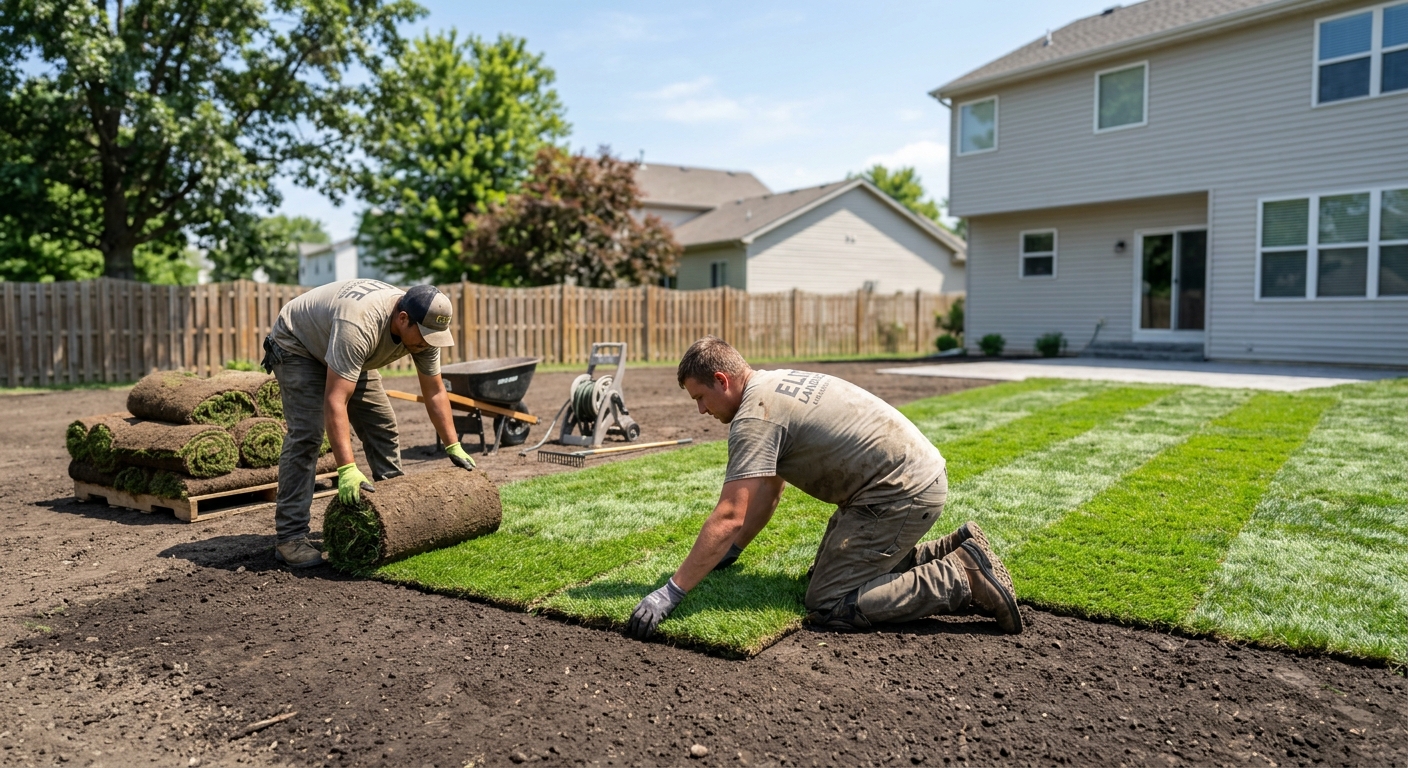
| Sod installation (supply, grade, lay, roll) |
Finish grading, soil prep, sod supply, lay and roll, initial watering plan |
Late spring to early fall |
$6–$14 |
| Lawn seeding (grade, seed, starter fertilizer) |
Light grading, seed/mixture, starter fertilizer, top-dress if needed |
Spring or early fall |
$2,000–$6,000 |
| Interlocking patio or walkway |
Excavation, compacted base, edge restraints, pavers, leveling bedding, sweep-in sand |
Spring to fall (best in dry periods) |
$10,000–$35,000 |
| Retaining wall (interlocking block) |
Block wall with proper base, drainage gravel, and weep provisions where required |
Spring to early fall |
$80–$220 |
| Tree and shrub planting |
Soil amendment, planting, staking as needed, mulching, initial watering setup |
Spring or fall |
$250–$8,000 |
Prices are estimates only and vary by project scope, site access and material selection.
What affects the price of landscaping in Peachland
In Peachland and the wider Thompson–Okanagan, it’s common to see the same “type” of landscaping project vary by 30–50% between quotes. The biggest reasons aren’t just brand names—they’re differences in grading and drainage design, how deep the base goes for hardscape, plant maturity, and how efficient the irrigation layout is. Across Thompson–Okanagan, contractor availability and working season can also shift pricing: labour demand spikes in spring and fall, and summer often trades back toward maintenance work due to irrigation limits. Compared with drier valley zones, coastal BC’s longer growing season supports lush palettes and year-round-like planning, but heavy-rain drainage engineering is still critical there; in practice, coastal projects can be cheaper on plant timing yet more complex on water management. In southern Ontario (zone 5–6), schedules and soil conditions differ, and frost depth/base preparation still drives cost, but summer irrigation is typically more about dry spells than peak water restrictions.
In the Interior (zones ~5–6), you’ll also see costs move because deeper bases and proper drainage are required under retaining walls and patios to reduce freeze–thaw heaving. For example: a yard with slopes that need re-grading can add major time to excavation and compacting—often pushing a project toward the higher end of the $8,000–$40,000 design/installation band. Homes built before 1981 make this more likely: older properties often have established drainage patterns, settled beds, and landscaping that no longer fits modern water flow, which can require additional soil removal and rework (and sometimes more than one pass of drainage correction). Conversely, a flatter lawn replacement with good existing soil can stay closer to the lower end of installation budgets—especially when you’re deciding between sod and seeding. The choice matters because sod installation carries supply and install labour immediately (commonly priced in the $6–$14 per area band), while seeding is generally lower cost but needs proper timing and follow-up watering.
| Price Factor |
Why It Matters |
Cost Impact |
| Yard size in sq ft — the primary cost driver for softscape |
More area means more labour hours, more topsoil/seed/sod, and more material handling |
Usually the largest swing; scales overall project totals |
| Grading and drainage work — slope corrections add significant cost |
Fixes pooling and redirects runoff; requires excavation, shaping, and compaction |
Commonly increases total cost substantially on sloped lots |
| Drainage bed or French drain installation |
Interiors soils and freeze–thaw need sub-surface drainage under hardscape |
Can push projects into a higher budget tier quickly |
| Plant material tier — native shrubs vs. ornamental vs. mature specimen trees |
Mature plants cost more and may require additional labour for proper handling |
Often shifts a “starter garden” into a premium landscape |
| Hardscape vs. softscape ratio — walls and patios cost more per sq ft than lawn |
Pavers/blocks involve excavation, base materials, and precise finishing |
Higher hardscape content increases unit pricing |
| Irrigation system design and installation |
Drip lines, zones, and smart controllers improve water efficiency and survival |
Moderate-to-high impact depending on complexity |
| Soil amendment and topsoil required |
Interior clay or poor topsoil may need importing amended soil and compost |
Can meaningfully raise costs on troubled sites |
| Tree removal or stump grinding before new planting |
Access, disposal, and equipment time add cost before ground prep |
Often adds a noticeable line-item increase |
Permits & regulations in British Columbia
In British Columbia, most routine landscaping work—like planting, sodding, lawn renovation, and typical softscape installation—does not require a permit. The work that commonly does require approval is retaining wall construction above a municipal height threshold, which is often around 1.0 m (3.3 ft) in many communities; engineered drawings may be required depending on wall length, soil conditions, and design. Also, if you’re changing lot grading in a way that affects drainage toward neighbouring properties or ties into storm connections, that may trigger review or permitting because water management has to be handled responsibly.
No matter what the scope is, call for utility locates before digging for planting holes or any wall footings; that’s essential for safety and to avoid damaging buried services. For Peachland homeowners, confirm current irrigation and water-use bylaws before installing new watering schedules—Interior drought rules and metered/water restrictions can change how and when you can irrigate.
To verify a contractor’s legitimacy in BC, check three things: (1) licence/registration status via the appropriate online registry links provided by the contractor or industry listings; (2) liability insurance—ask for a current Certificate of Insurance showing the contractor name, coverage limits, and your property address/location if possible; and (3) clearance for required worker coverage such as WCB (Workers’ Compensation Board) coverage. Be sure the clearance letter is current, not expired. Request these before signing, and keep copies with your contract.
Planning a landscape that thrives in Peachland's climate
To plan a yard that thrives in Peachland, you want to work with hardiness zone ~5–6, hot/dry summers, and frost timing that typically keeps active planting focused in spring and fall. Start with plant selection: choose zone-appropriate natives or well-adapted shrubs and perennials that can handle winter lows and occasional deep cold snaps, then design for efficient watering rather than daily summer soaking. Where possible, group plants by water needs so your irrigation isn’t “wasted” on drought-tolerant species.
Sod vs. seed is a common decision. Sod gives instant curb appeal and quick coverage, but it costs more because it includes supply and installation labour—commonly in the $6–$14 band per installation area depending on site conditions. Seeding is usually more economical because you’re paying mainly for grade prep and seed, but it requires consistent early watering and good timing. In Peachland’s climate, sod is often worth it for high-visibility areas where you want fast results; seeding makes sense for larger areas where you can manage follow-up.
Drainage and grading are non-negotiable in the Thompson–Okanagan. If you have slopes or clay-like pockets, plan grading to prevent pooling near foundations and under steps. For hardscape (patios, retaining walls), base preparation must account for frost and freeze–thaw cycles; deeper, compacted bases and drainage gravel help prevent heaving and movement. A smart low-maintenance approach uses mulch, groundcovers, and hardy perennials to reduce annual weeding—plus a drip irrigation system with zones and a smart controller to cut water use during restricted periods.
Example: if you’re debating a small interlocking patio to connect a front step, a higher up-front base and drainage correction can cost more, but it’s often cheaper than later settling and paver resetting after freeze–thaw. That kind of “do it once” planning is why design/installation budgets often fall within the $8,000–$40,000 range when drainage and hardscape are included.
| Element |
Climate Consideration |
Maintenance Level |
Price Band |
| Sod lawn installation |
Hot/dry establishment period; protect from drought stress during early root set |
Low to moderate during establishment, then low |
$6–$14 |
| Native perennial garden |
Choose hardy, water-wise perennials for zone ~5–6 and winter survival |
Low after establishment (mulch refresh and light pruning) |
$2,500–$8,000 |
| Mulched shrub border |
Mulch buffers freeze–thaw and reduces evaporation in dry Interior summers |
Low (weed control and seasonal mulch top-up) |
$250–$5,500 |
| Interlocking stone patio |
Base and drainage must resist heaving from frost cycles |
Low (sweeping, occasional sand top-up) |
$10,000–$35,000 |
| Retaining wall (block) |
Needs proper base depth and drainage gravel behind blocks |
Low (inspection for settlement and weep drainage) |
$80–$220 |
| Drip irrigation system |
Efficient watering during water-restriction periods; reduces fungal issues |
Low (seasonal checks, controller setup) |
$2,000–$7,500 |
How to choose a landscaping contractor in Peachland
Choosing the right landscaping contractor in Peachland comes down to verifying coverage, getting clean scope documents, and making sure the schedule and warranty are realistic for Interior conditions. In British Columbia, confirm liability insurance by requesting a current Certificate of Insurance (COI) showing active coverage limits. For worker coverage, ask for proof/clearance related to WCB (Workers’ Compensation Board) coverage—your contractor should be able to provide a current clearance letter and it should match their legal business name. Don’t accept verbal confirmation; request documentation before work starts.
Next, get 2–3 itemised written quotes. Ask for a labour + materials breakdown where possible (seed/sod type, paver/block size, base material, drainage gravel, topsoil, compost, and any irrigation components). Ensure the quote clearly states what’s included: permit pull responsibility (if required for a retaining wall), disposal/hauling, utility locating coordination, and whether they’re repairing existing irrigation or replacing broken lines. The most expensive disputes happen when “scope exclusions” aren’t spelled out.
Warranty matters for both workmanship and products. Ask: what is the workmanship warranty length, does it cover settlement or shifting, and is it tied to a maintenance schedule? For trees and shrubs, confirm whether the product warranty includes guarantee of replacement if a plant fails within a defined period. Ask whether warranties are transferable if you sell the home.
Payment schedule: never pay more than 10–15% upfront. Hold back a portion until completion and a final walk-through. For Interior projects, insist on a start date and a completion estimate in writing—spring and fall weather can affect timelines, but a professional should show how they’ll manage schedule risks.
- Provide COI for liability insurance before you sign.
- Provide current WCB clearance/coverage documentation.
- Show recent Peachland-area project photos (similar slopes/hardscape if applicable).
- Use a written contract with an itemised scope (not just a lump-sum total).
- Confirm who does disposal/hauling and whether debris is removed daily.
- Ask if utility locates are booked before any digging.
- Confirm grading goals: runoff direction and surface-water control near foundations.
- Ask for drainage details behind walls and under patios (base thickness + drainage gravel).
- Verify plant list or plant sizes (e.g., 5-gallon shrubs vs smaller).
- Confirm sod/seed type and establishment plan (watering frequency and duration).
- Get a workmanship warranty in writing (what it covers and how to claim it).
- Require a payment schedule with a holdback until final acceptance.
Red flags to watch for in Peachland: vague “we’ll handle everything” quotes without drainage/base specs; contractors who refuse to provide insurance/WCB documentation; no written timeline or no clear start/completion dates; asking for large deposits (well over 10–15%) before any work; and quotes that omit disposal/hauling or utility locate responsibility while still planning excavation.
Frequently asked questions — landscaping in Peachland
What is the best grass type for a Peachland lawn?
In Peachland and the wider Thompson–Okanagan (hardiness zone ~5–6), most homeowners have the best results with cool-season grass blends that handle irrigation-off periods and winter stress. Common choices are turf-type tall fescue blends, often paired with other cool-season components depending on sun exposure and traffic. The “best” mix also depends on whether your yard is more shade or full sun, and how quickly your soil drains. If your lawn area gets pooling after rain or snowmelt, grass choice alone won’t fix it—grading and drainage are still key.
When you compare options, pricing matters too: if you want fast coverage, sod installation is usually more expensive than seeding and is commonly estimated in the $6–$14 range per installation area. A good contractor will recommend a seed/sod blend that matches your sun and moisture profile, not just what’s cheapest.
When should I aerate and overseed my lawn in Peachland?
For Peachland lawns, aeration and overseeding are most reliable in spring or early fall—aim for periods when the soil is workable and temperatures support new root growth. Aerate first to relieve compaction, then overseed into prepared soil so seed-to-soil contact is strong. Because the Interior can swing from warm to cold quickly, avoid overseeding too late in the fall; you want the seedlings to get established before harsh winter weather and freeze–thaw cycles begin.
If you’re considering a full lawn reset, contractors often price renovation differently than simple overseeding. For example, a full sod installation project is commonly estimated using the $6–$14 per area band, while seeding projects can be positioned as lower-cost alternatives—often landing within a broader “seeded renovation” budget depending on prep work. A local contractor can match timing to Peachland’s typical frost/working season and your irrigation limits.
What trees grow best in Peachland's climate zone?
In Peachland’s zone ~5–6 conditions, you generally want trees that tolerate winter cold snaps and summer drought stress. Many homeowners do well with hardy, water-wise species and trees that are adapted to valley conditions. The best pick depends heavily on your microclimate: hillside yards may experience colder winter lows than the valley floor, and wind exposure changes how plants establish.
A good approach is to select a mix of small-to-medium and larger trees to stagger mature heights and reduce wind impact, while keeping the root zone away from downspouts and patios. Also consider how old the property landscaping is—homes built before 1981 often have mature trees and drainage paths that may need careful work before new planting. For planting budgets, tree and shrub installation is commonly estimated in the $250–$8,000 range depending on size and quantity.
How much does sodding a yard cost in Peachland?
Sodding costs in Peachland typically depend on yard size, grade, soil prep needs, and whether drainage work is required before sod goes down. Most estimates for sod installation fall within the $6–$14 band for supply and install, but your final number can move if there’s significant grading, soil importing, stump grinding, or drainage bed work. Sloped lots near foundations also tend to require additional base prep to ensure the sod surface stays level through freeze–thaw cycles.
If your existing lawn is patchy due to poor drainage, a cheaper sod quote that doesn’t address grading may fail sooner, and that often ends up costing more later. Ask for an itemised explanation of what’s included—topsoil depth, compaction, and how they’ll manage establishment watering in the Interior water-restriction context.
How do I prevent weeds in my Peachland garden?
Weed prevention in Peachland starts before planting. Good soil prep and proper plant spacing reduce weeds by limiting light to weed seeds. Use a weed-suppressing fabric only where it matches your planting method (some borders do better with a well-thickened mulch layer instead). Apply mulch at the correct depth and keep it from touching plant crowns—this helps with moisture retention in hot summers and reduces germination when conditions are favorable.
Also, design matters. Mulched shrub borders with groundcovers and perennials are usually lower-maintenance than open soil beds. If your garden has slope runoff, correct grading so water doesn’t bring weed seeds back in. For homeowners, a well-planned planting can sit in the $250–$8,000 range depending on plant quantity and size. Pair that with an irrigation plan (often drip) so you’re not overwatering bare soil.
How do I design a low-water yard in Peachland?
A low-water yard in Peachland should be built around three ideas: group plants by water needs, improve drainage and soil so plants aren’t stressed by wet/dry swings, and use efficient irrigation. Because Thompson–Okanagan summers are hot and dry, prioritize drought-tolerant plants that still survive zone ~5–6 winters. Add mulch and groundcovers to reduce evaporation and suppress weeds. Consider xeriscape-style layouts or a rain-garden approach in areas where runoff collects—this captures water instead of letting it blow past plantings.
Irrigation is often the difference between “pretty but wasteful” and “low-water that actually works.” Drip systems with smart controllers can reduce waste and support compliance during water-restriction periods common in the BC Interior. If you’re budgeting, drip irrigation system installations are frequently estimated in the $2,000–$7,500 range depending on zones and complexity, and design/installation packages commonly fall within the $8,000–$40,000 band when integrated with hardscape and drainage.