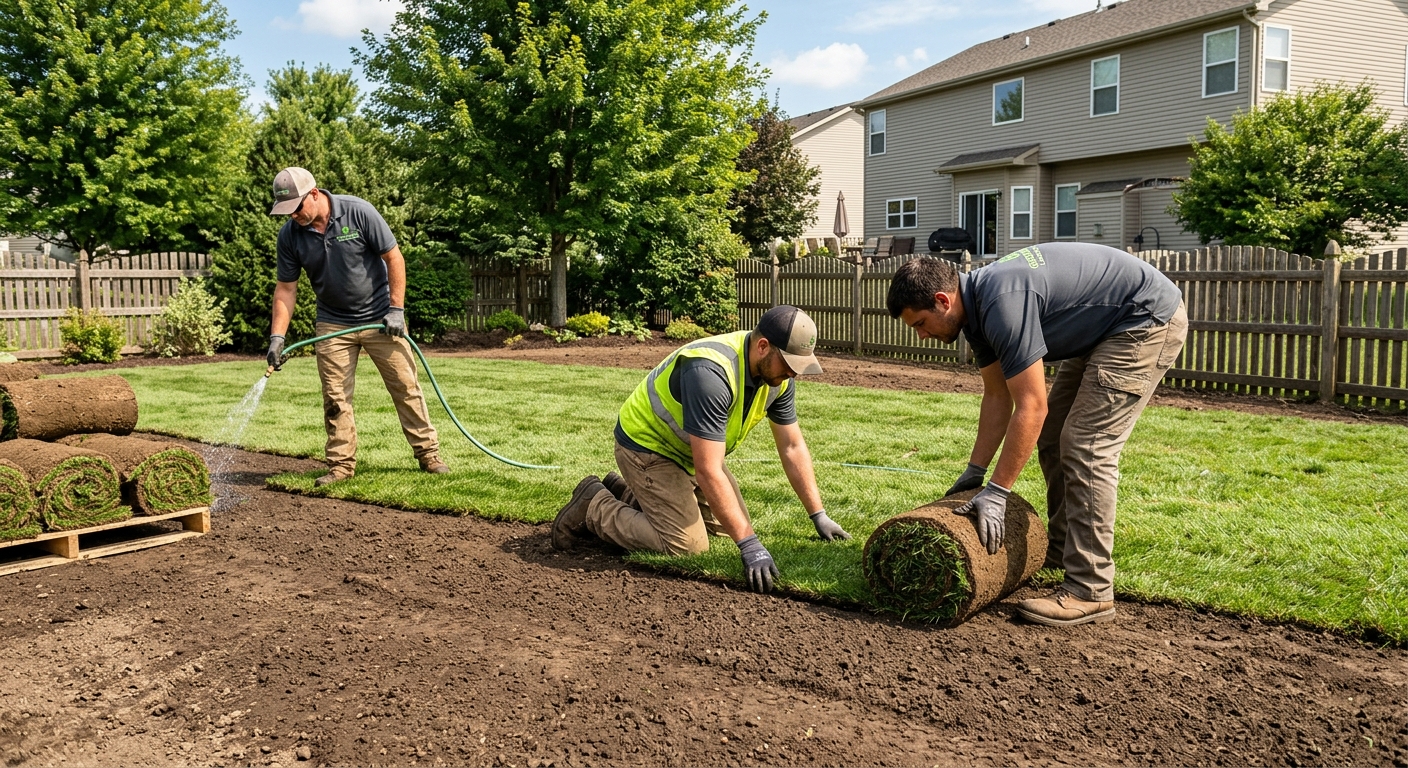
Landscaping options and costs in Queensborough
Queensborough is where homeowners often upgrade yards to match the area’s mix of older homes and newer builds—because once you’re investing in curb appeal, you usually want the improvements to look good for years. With a total population of about 11,000 (Statistics Canada, 2021 Census), contractor availability is strong in the Lower Mainland–Southwest, but demand can still spike around spring planting and dry-spell outdoor seasons. That matters for pricing and scheduling, especially in established residential pockets like the neighbourhoods closer to the newer waterfront-facing developments.
The cost you’ll see also depends on how much space you’re working with. In many Lower Mainland neighbourhoods around Queensborough, detached and larger-lot properties are common enough that owners frequently choose “whole-yard” transformations—full design and installation—rather than piecemeal upgrades. Meanwhile, the climate drives both labour and material choices: plant hardiness zones 7–8, mild wet winters, and a long cool-growing season mean you can plant broadly (shrubs, broadleaf evergreens, layered perennials) and keep construction moving most of the year, except during the wettest weeks. Retaining walls and patios still require careful freeze–thaw planning: bases are dug deeper, drainage is non-negotiable, and compaction needs to be done properly to reduce frost heave and future wall movement.
Below is a practical comparison of common landscaping scopes and typical cost ranges for Queensborough, so you can benchmark your quote before you book site measurement.
| Service |
Description |
Season |
Price Range |
| Full landscape design and installation |
Site visit, concept + planting plan, grading/drainage notes, hardscape/softscape layout, materials, and labour |
Almost year-round (most active spring to fall) |
$5,000–$50,000 |
| Sod installation (supply, grade, lay, roll) |
Topsoil preparation, grading, sod delivery and installation, rolling, and establishment care |
Late spring to early fall (avoid the wettest stretches) |
$2,000–$8,000 |
| Lawn seeding (grade, seed, starter fertilizer) |
Light grading, seed blend selection, starter fertilizer, raking, and initial watering plan |
Early spring to early fall |
$1,200–$4,500 |
| Interlocking patio or walkway |
Excavation, compacted base, edging, interlocking stones, and jointing sand |
Spring to fall (weather windows matter for base compaction) |
$7,000–$35,000 |
| Retaining wall (interlocking block) |
Block wall build with drainage gravel, weep management, base excavation and compaction |
Spring to fall |
$10,000–$80,000 |
| Tree and shrub planting |
Soil amendment, planting holes, staking where needed, mulch rings, and first-season watering plan |
Spring to early fall (best survivability window) |
$1,000–$15,000 |
Prices are estimates only and vary by project scope, site access and material selection.
What affects the price of landscaping in Queensborough
Even when two homeowners request the “same” landscaping job in Queensborough, it’s common to see quotes differ by 30–50% across the Lower Mainland–Southwest and other parts of British Columbia. The main reason is that landscaping pricing isn’t just materials—it’s the time spent on excavation, drainage, hauling, rework prevention, and the availability of crews during peak planting and construction windows. In a coastal zone 7–8 environment, you may have longer working and growing seasons, but contractors still need to manage wet soils and ensure compaction, which can add labour. Conversely, in Prairie regions (Zone 2–4) and other harsher climates, crews often price scheduling risk differently and focus on drought-tolerant, wind-hardy selections; retaining walls also require deeper base work below the frost line.
In Queensborough specifically, frost timing and freeze–thaw cycles influence the base depth and drainage strategy for hardscapes like patios and retaining walls—so proper compaction and a well-draining foundation can push costs upward even if the visible area is small. Coastal BC supports lush palettes and layered plantings because winter damage risk is lower, but heavy rainfall still means you may pay for better drainage bedding, French drains, or regrading. Water efficiency design also affects irrigation scope; while Queensborough doesn’t face the same aggressive routine watering bans as drier BC Interior regions, clients still want drip and smart controller setups to handle any municipal restrictions and rising water costs.
Concrete cost examples: a simple 300–500 sq ft lawn refresh is often closer to the $2,000–$8,000 sod band, but if drainage correction and soil amendment are required, you can see that move toward the upper end. A 40–60 ft retaining wall segment typically sits inside the $10,000–$80,000 range, but adding trench drainage and replacing unsuitable base material can increase labour and disposal costs significantly. Because many Queensborough homes are older (or renovated in phases), you may also pay extra for tree root barriers, stump grinding, and removing compacted soils—especially if the yard has settled around foundations.
| Price Factor |
Why It Matters |
Cost Impact |
| Yard size in sq ft — the primary cost driver for softscape |
More area means more labour time, more topsoil/compost, and more plant or turf material |
Small yards can run tight; larger yards often scale unevenly, adding 20%+ quickly |
| Grading and drainage work — slope corrections add significant cost |
Pooling near foundations triggers extra excavation, recontouring, and base materials |
Can add 15%–35% depending on how much soil must be moved |
| Drainage bed or French drain installation |
Underground drainage requires trenching, filter fabric, gravel, and outlet tie-in |
Often increases hardscape costs where drainage isn’t already present |
| Plant material tier — native shrubs vs. ornamental vs. mature specimen trees |
Mature stock costs more and may require extra labour for handling and staking |
Premium species can shift pricing by 20%+ in the same planting layout |
| Hardscape vs. softscape ratio — walls and patios cost more per sq ft than lawn |
Base prep, edging, and compaction are labour-heavy compared to turf or seeding |
Jobs that “look similar” can differ by 25%+ once stone area increases |
| Irrigation system design and installation |
Drip lines, zones, backflow preventers, and controller setup change both labour and materials |
Can add a meaningful line item even if plants are modest |
| Soil amendment and topsoil required |
Coastal heavy soils and previous compaction may need compost and correct texture |
Delivery and labour for haul/load can materially raise total costs |
| Tree removal or stump grinding before new planting |
Roots and stumps complicate grading and can delay installation timelines |
May add disposal + labour costs beyond the original planting budget |
Permits & regulations in British Columbia
In British Columbia, most landscaping and planting work typically does not require a permit. In Queensborough, homeowners can usually proceed with tasks such as sodding, lawn seeding, mulching, planting shrubs and trees, and routine grading for garden beds, as long as drainage isn’t redirected in a way that impacts neighbouring properties or storm connections.
Where permits are commonly required is structural change—especially retaining walls above the typical threshold of 1.0 m (3.3 ft) in many municipalities. In those cases, you may need a building permit, and sometimes engineered drawings depending on height, soil conditions, and design. Also consider approvals if the scope includes major lot grading changes that could alter how water flows toward adjacent lots or ties into storm sewer systems. Before any digging, always call for utility locates, particularly for planting holes, trenching, and wall footings.
To verify a contractor’s legitimacy in British Columbia, do it step-by-step:
- Check the contractor’s online licence status (use the provincial registry search).
- Ask for a certificate of insurance showing liability coverage and confirm it matches the legal business name.
- Confirm worker coverage documentation (WSIB/WCB) if subcontractors or crews are involved—request clearance or evidence where applicable.
- Have them provide permit-handling details in writing if your project triggers retaining-wall requirements.
- Save all documents with your contract so you can reconcile them if changes occur.
Planning a landscape that thrives in Queensborough's climate
Planning for Queensborough means working with hardiness zone 7–8, wet-winters, and a cool-but-long growth period—rather than trying to “push” plants that need very fast drainage or fragile winter conditions. Start with selection: choose native or zone-appropriate shrubs and perennials that handle coastal moisture, and layer in plants that tolerate short periods of soggy soil. This reduces the need for heavy winter protection and lowers your long-term maintenance.
When choosing turf, remember that sod gives instant curb appeal but costs more. As a rule of thumb, sod can be about 3–4x the per-square-foot cost of seeding in practice—so it’s worth it when you need immediate coverage, have high erosion risk, or want a quick timeline. For many Queensborough yards, seeding plus soil improvement is the better value if you can wait for full density. Your lawn budget often lands around the $2,000–$8,000 band for sod for typical suburban lots, while smaller seeding refreshes often sit closer to the lower end of the broader turf range.
Drainage and grading are critical in Lower Mainland–Southwest projects because pooling can encourage foundation moisture and winter plant stress. For patios and retaining walls, base preparation should be designed around freeze–thaw realities: compacted base layers, proper bedding depth, and drainage layers reduce frost heave and help walls stay true over time. Finally, low-maintenance strategies—mulch, groundcovers, perennial “anchors,” and drip irrigation for beds—keep your yard looking curated with less annual labour.
If you want a water-smart direction, consider rain gardens or strategically placed bioswale-style planting pockets to absorb runoff. This aligns with the region’s wet season patterns while keeping maintenance predictable.
| Element |
Climate Consideration |
Maintenance Level |
Price Band |
| Sod lawn installation |
Performs well in zone 7–8, but needs careful watering and avoidance of overly wet periods to prevent pooling |
Medium (initial establishment, then light mowing and seasonal care) |
$2,000–$8,000 |
| Native perennial garden |
Native species handle coastal moisture patterns better and typically need less winter protection |
Low to medium (weeding early; pruning as needed) |
$1,500–$10,000 |
| Mulched shrub border |
Mulch stabilizes soil moisture through wet winters and helps suppress weeds during cool summers |
Low (top up mulch and occasional shaping) |
$1,000–$8,500 |
| Interlocking stone patio |
Base must manage moisture and freeze–thaw; proper drainage and compaction are key |
Low (periodic sand top-ups and cleaning) |
$7,000–$35,000 |
| Retaining wall (block) |
Drainage gravel and weep control reduce hydrostatic pressure during heavy rain and seasonal thawing |
Low (inspection and vegetation management on the top edge) |
$10,000–$80,000 |
| Drip irrigation system |
Efficient watering supports healthy beds without waste; drip is helpful during any temporary restrictions |
Low (seasonal checks, filter cleaning) |
$1,200–$6,500 |
How to choose a landscaping contractor in Queensborough
Choosing the right landscaping contractor in Queensborough is about verification, clarity, and risk control. Start with British Columbia licensing: confirm the business is correctly registered and licensed for the scope being offered. Next, verify liability insurance—request a current certificate of insurance showing coverage amount and that the policy names the correct legal contractor. For worker coverage, ensure the contractor provides evidence of WSIB/WCB coverage or clearance documentation for their crews and subcontractors.
Then get 2–3 itemised written quotes instead of lump sums. The best quotes break labour and materials into lines you can compare: excavation, base materials, drainage components, stone or sod quantities, plant counts/sizes, disposal fees, and any irrigation components. Read scope exclusions carefully. Ask whether the quote includes permit handling (if a retaining wall triggers one), disposal of removed soil, and restoration of disturbed areas like fences or garden edges.
Warranty matters too. Look for a workmanship warranty (often covering installation defects for a set term) and separate product/manufacturer warranty details where applicable. For payment schedule, avoid heavy upfront payments: keep deposits around 10%–15% and negotiate a holdback until substantial completion and cleanup are verified. Finally, insist on a timeline with a start date and an estimated completion date in writing, since Queensborough projects can pause during the wettest weather windows.
- Confirm BC licence details match the contract name
- Request certificate of insurance and verify dates before work starts
- Ask for WSIB/WCB clearance or evidence of coverage
- Get itemised quotes (quantities, unit rates, and line items)
- Clarify what’s included for drainage and grading corrections
- Confirm plant sizes (container size, height/spread) and quantities
- Ask whether irrigation is supply-only or fully installed
- Verify disposal/hauling is included for excavation and sod removal
- Check if permits are included when retaining-wall thresholds apply
- Review workmanship warranty length and what triggers it
- Set payment milestones tied to inspections, not just “progress”
- Get a written start/completion schedule plus weather contingency note
Red flags to watch for in Queensborough: vague “all-in” pricing with no quantities, reluctance to provide insurance or coverage documentation, pressure to pay a large upfront deposit, no written scope for drainage/grading work, and starting without confirming utility locates for any digging.
Frequently asked questions — landscaping in Queensborough
How do I plan a low-maintenance yard?
In Queensborough (and across coastal British Columbia), the easiest low-maintenance wins come from designing around how the yard drains and how much plant diversity you can realistically maintain. Focus first on drainage and grading so water doesn’t pool near foundations—this often saves you from repeated plant failure and rework. Choose zone-appropriate, native-friendly shrubs and perennials for your main structure and add mulch to suppress weeds. For turf, consider seeding for less cost where timing allows, or sod if you need fast coverage. If irrigation is needed, drip with a smart controller helps manage efficient watering without overdoing it during cool, wet periods. If your yard includes sloped areas, plan erosion control early to reduce future repairs and labour.
How deep should a retaining-wall base be for local frost?
Retaining-wall base depth isn’t one universal number for Queensborough because it depends on wall height, soil type, and the engineered design requirements. That said, the freeze–thaw cycles in Lower Mainland–Southwest conditions mean the wall foundation should extend below the local frost-affected zone and be built on a well-compacted base with correct drainage. In coastal BC, frost impact is often less severe than Prairie zones, but it’s not “zero,” and poor drainage is a major cause of movement. When you’re budgeting, remember that drainage gravel, proper weep management, and excavation can be a large part of the job—so wall projects commonly fall in the $10,000–$80,000 band depending on site conditions. Always confirm base depth through the contractor’s design plan (and permit requirements if the wall meets local thresholds).
How much does professional landscape design cost?
Professional landscape design in Queensborough can range widely depending on whether you need concept-only ideas, a full planting plan, or a design-and-build package. If you’re hiring a design-and-install team for an entire yard refresh, total project pricing typically lands in the $5,000–$50,000 band for design plus installation, which includes labour and coordination. If you’re only seeking drawings and a planting layout, some contractors price design as a separate line item, but you’ll still want to confirm what’s included: site visit, measurements, planting quantities, and whether drainage or irrigation recommendations are part of the design.
How do I compare landscaping quotes?
To compare landscaping quotes in Queensborough, don’t just compare the total number—compare what’s actually included. Ask for itemised breakdowns for labour and materials (stone quantities, sod/seeding coverage, topsoil/compost amounts, drainage components, disposal). Check whether grading and drainage corrections are part of the scope or treated as an “extra” if problems appear. Make sure the quotes list plant sizes and quantities—“shrubs” is not the same as 1-gallon versus larger stock. Also confirm irrigation scope: is it drip only or full zones with a controller? For example, sod instal ranges often fall around the $2,000–$8,000 band, while interlocking patios and walkways can move higher once base prep and edging are added. A quote that looks cheaper can become more expensive if it excludes drainage, haul-away, or permit handling where required.
How long does a landscaping project take in Queensborough?
Typical project duration in Queensborough depends on weather, site access, and whether you’re doing softscape only or mixing in hardscape and drainage. Because the Lower Mainland–Southwest has a long growing season and mild winters, planting and turf work can often happen for more months than in colder regions, but wettest weeks can still slow excavation and base compaction. Simple installs like planting and mulching can take a day or two. Turf refreshes typically take longer once you include prep, base adjustments, and establishment planning. Patios and retaining walls take longer because you need excavation, compacted base layers, drainage/gravel work, and curing/setting time. If your yard includes drainage corrections, expect schedule impacts. For planning, ask your contractor for a start date and completion estimate in writing and confirm how rain days affect the timeline.
What is the best grass type for a Queensborough lawn?
For Queensborough and the surrounding Lower Mainland–Southwest, a cool-season turf is usually the most practical because summers are typically long and cool, and winters are mild but wet. Many lawn professionals recommend a blend rather than a single grass type to improve resilience to traffic, mowing habits, and variable moisture. The “best” option also depends on your sun exposure and how well your soil drains—poor drainage can cause repeated thinning regardless of the seed type. If you want faster results, sod is a common choice, often budgeting within the $2,000–$8,000 range for typical residential areas. If you’re cost-conscious and can manage establishment, seeding can be a strong option. Either way, insist on correct grading and soil prep so the turf can actually root and survive the region’s heavy rainfall periods and cool-season growth cycle.