Landscaping options and costs in Birchcliffe-Cliffside
Birchcliffe-Cliffside, Ontario homeowners typically have strong reasons to invest in landscaping: well-kept yards are part of how many detached property owners protect resale appeal and manage day-to-day comfort. In the area around Toronto, neighbourhood streets are also full of family housing—Toronto’s broader mix includes many single-detached homes, and in a community of 22,291 residents (Statistics Canada, 2021 Census) you’ll see plenty of demand for curb-appeal upgrades, privacy plantings, and practical drainage fixes. Pricing can swing significantly even when the “same” project sounds similar, because Toronto-area clay and fill soils often need excavation, soil amendment, and careful grading to handle freeze–thaw cycles. With frost-free conditions roughly May through October, most contractors prioritize installations during this window, which can tighten scheduling in spring and early summer.
In Birchcliffe-Cliffside—especially near the Kingston Road corridor and the bluffs-facing streets where grades can be uneven—landscape crews are in demand for steps, walkways, interlocking stone, and retaining-style edging. Deep winter frost and repeated freeze–thaw are structural cost drivers, so base prep and drainage details frequently determine whether a patio or wall settles a year later or stays stable. That’s why many homeowners compare a full-service design build approach versus smaller scope options like sod, patios, or planting packages.
Below is a practical cost comparison to help you set expectations before you request quotes and confirm site access, excavation needs, and material selections.
| Service |
Description |
Season |
Price Range |
| Full landscape design and installation |
Layout/design, grading & drainage plan, soil amendment, plantings, and select hardscape/softscape execution |
May–October (best) |
$8,000–$40,000 |
| Sod installation (supply, grade, lay, roll) |
Topsoil/grade correction, soil prep, sod supply, delivery, laying, edging, and initial watering guidance |
Late April–mid-June; late Aug–Sep |
$2,500–$8,000 |
| Lawn seeding (grade, seed, starter fertilizer) |
Reseed program, light soil raking, seed blend, starter fertiliser, and initial watering/maintenance plan |
April–May; Aug–September |
$1,800–$6,000 |
| Interlocking patio or walkway |
Excavate, compacted base with drainage provisions, geotextile, interlocking stone, edging and finishing |
May–October |
$6,000–$30,000 |
| Retaining wall (interlocking block) |
Block wall with proper base depth, drainage behind wall, backfill and stabilization for clay/fill soils |
May–October |
$7,000–$28,000 |
| Tree and shrub planting |
Soil prep, planting holes, amendments, staking where needed, mulch rings, and first-season care |
May–October (some spring/fall flexibility) |
$800–$6,000 |
Prices are estimates only and vary by project scope, site access and material selection.
What affects the price of landscaping in Birchcliffe-Cliffside
Even for the same “style” of project, quotes in Toronto and across Ontario can vary by about 30–50% because landscaping is rarely a straight materials exercise: it’s labour, excavation, drainage detailing, and risk management. Contractors priced to cover heavier clay soils, freeze–thaw settlement risk, and logistics (long driveways, tight side yards, stairs, or street access) will often be higher than companies that assume a flat, easy site. In Birchcliffe-Cliffside, winter lows around –23°C to –18°C in the plant hardiness band (Zone 6a–7a) shape what we can reliably install and when—plants and sod have windows, while hardscape base prep needs correct depths and compaction.
The market effect also matters: Toronto-area demand is steady, so schedule availability influences labour rates. That’s different from Prairie regions (shorter growing seasons and colder zones), where drought-tolerant, wind-hardy palettes and simplified grading become the priority, and working seasons may be several weeks shorter. Coastal BC can support lush planting palettes with a longer season, but heavy rain means drainage still drives costs; the dry BC interior adds irrigation and water-saving design requirements. Southern Ontario sits in between: moderate season length, but summer dry spells still mean irrigation decisions affect both the plan and the ongoing maintenance cost.
Two practical Birchcliffe-Cliffside examples: (1) if your yard has low spots near a foundation, we may need regrading plus a drainage bed or French drain—this pushes a lawn/small planting job from the $2,500–$8,000 range upward toward full design-and-install budgets in the $8,000–$40,000 range; (2) if you’re installing interlocking stone over compactable fill, base preparation and sometimes additional granular layers increase the hardscaping line items within the $6,000–$30,000 band.
Home age plays a role too. Older properties often have settled clay or altered grading from decades ago, which can force extra excavation and soil amendment before we can seed or lay sod successfully.
| Price Factor |
Why It Matters |
Cost Impact |
| Yard size in sq ft — the primary cost driver for softscape |
More area means more labour hours, more topsoil/seed/sod, and more material consumption |
Low to very high; can swing total project cost by $3,000+ on typical urban lots |
| Grading and drainage work — slope corrections add significant cost |
Toronto clay and fill often require re-slope so water doesn’t pool toward foundations |
Often adds substantial excavation and compacted base costs ($1,500–$8,000 depending on site) |
| Drainage bed or French drain installation |
Helps move groundwater away from hardscape and planting beds during freeze–thaw cycles |
Can increase budgets by thousands; frequently a top driver for patios/walkways |
| Plant material tier — native shrubs vs. ornamental vs. mature specimen trees |
Mature trees cost more and require heavier labour for planting, staking, and protection |
Can move planting work from the $800–$6,000 band toward the upper end quickly |
| Hardscape vs. softscape ratio — walls and patios cost more per sq ft than lawn |
Interlocking stone and blocks include excavation, base layers, and careful compaction |
Shifts the project from lawn/planting budgets into $6,000–$30,000 and beyond |
| Irrigation system design and installation |
Sprinkler/drip layout, water pressure considerations, and controller work add labour and parts |
Often increases overall cost by a noticeable margin; especially for full-yard installs |
| Soil amendment and topsoil required |
Clay/fill may need compost, better topsoil depth, and sometimes re-blending for turf/plant health |
Commonly adds measurable material and labour costs; prevents “looks fine now, fails later” outcomes |
| Tree removal or stump grinding before new planting |
Removal work and stump grinding require extra equipment and disposal planning |
Can push planting/softscape projects up by $1,000–$5,000 depending on access |
Permits & regulations in Ontario
In Ontario, most everyday landscape work—like planting beds, sodding, and installing typical softscape (mulch, shrubs, perennials, and lawn)—usually does not require a permit. However, there are two common “permit-trigger” categories homeowners should watch for in Birchcliffe-Cliffside. First, retaining walls above a municipal threshold—often around 1.0 m (3.3 ft), depending on local rules—commonly require a building permit and, in some cases, engineered drawings. Second, any change to lot grading that meaningfully affects drainage (for example, redirecting runoff toward a neighbour or connecting into storm infrastructure) can require approvals.
Before digging for planting holes, fence footings, or wall bases, do utility locates. This is critical for safety and to avoid utility strikes. Also confirm irrigation and water-use rules—while drought restrictions are most talked about in the dry BC interior or Alberta, Ontario municipalities can still tighten water use during hot periods.
How to verify your contractor’s credentials (step-by-step): (1) Licence/registrations: check Ontario contractor listings or the company’s registration details where applicable; (2) Liability insurance: ask for a current certificate of insurance showing adequate coverage and the insured parties; (3) WSIB/WCB coverage: request proof of coverage and, if applicable, a clearance letter or evidence matching the jobsite work. Then confirm these documents cover the exact scope you’re hiring for (excavation, hardscaping, and any work that involves equipment). Don’t rely on verbal statements—get the certificates in writing before work starts.
Planning a landscape that thrives in Birchcliffe-Cliffside's climate
Planning in Birchcliffe-Cliffside means working with Ontario’s Zone 6a–7a conditions, freeze–thaw cycles, and the way Toronto clay holds moisture. Start with plant selection: choose zone-appropriate, hardy trees, shrubs, and perennials—ideally native or well-adapted species—so plants need less winter protection and bounce back after spring thaw. For lawns, decide early: sod gives instant coverage but typically costs 3–4 times more per sq ft than seeding when you compare labour and material. Sod is worth it if you need fast visual results for curb appeal, while seeding can be more cost-effective if you can maintain consistent watering through germination.
Drainage and grading are critical in Toronto. We aim to prevent pooling near foundations and to protect both softscape roots and hardscape bases during the thaw seasons. For hardscape like patios and retaining-style blockwork, base preparation must reach below frost-impacted movement areas, with proper compacted granular layers and drainage provisions. If you skip this, even a beautiful interlocking stone patio can develop unevenness after winter.
Low-maintenance design strategies—mulched shrub borders, groundcovers, and layered perennials—reduce annual upkeep without sacrificing curb appeal. To adapt to water realities, consider rain gardens or xeriscape-inspired planting in drier pockets (though in Toronto we still plan for spring saturation and summer dry spells). For example, if you spend more on grading and drainage up front, you may avoid repeating repairs or re-sodding weak areas later—an improvement that’s often more justified than buying the cheapest turf product.
If your goal is a small front lawn refresh, seeding can be a smarter value than full sod when the yard is accessible; you might spend closer to the $2,500–$8,000 sod band only where instant coverage truly matters.
| Element |
Climate Consideration |
Maintenance Level |
Price Band |
| Sod lawn installation |
Needs correct grade and soil prep to survive freeze–thaw; best installed in spring/fall windows |
Medium initially (watering and establishment), then low |
$2,500–$8,000 |
| Native perennial garden |
Zone-appropriate plants handle winter lows; mulch helps moderate soil temperature |
Low to medium (weeding first year, then stable) |
$1,800–$6,000 |
| Mulched shrub border |
Clay soils benefit from amendments and consistent mulch depth for root insulation |
Low (seasonal pruning, top-ups) |
$800–$4,500 |
| Interlocking stone patio |
Freeze–thaw requires deeper, well-compacted bases and correct drainage |
Low (occasional joint sand/inspection) |
$6,000–$30,000 |
| Retaining wall (block) |
Backfill and drainage behind wall protect against winter water expansion |
Low after installation |
$7,000–$28,000 |
| Drip irrigation system |
Helps manage summer dry spells while keeping root zones supplied efficiently |
Medium (seasonal adjustments, winter blowout/maintenance) |
$1,500–$7,000 |
How to choose a landscaping contractor in Birchcliffe-Cliffside
Choosing a contractor in Birchcliffe-Cliffside is mostly about proof and process. Start with Ontario-required coverage checks: ask for a current certificate of liability insurance and confirm it covers the work being done (excavation, stone placement, equipment use). Next, verify WSIB/WCB status—request proof of coverage or clearance documentation that matches the business performing the landscaping work. If a contractor can’t provide current documents promptly, treat that as a serious risk signal.
Then get 2–3 itemised written quotes, not one-page lump sums. A good quote breaks out labour and materials separately (excavation, base materials, geotextile, stone/block units, topsoil/compost, plant quantities, irrigation parts, and disposal). Make sure it states what’s included: permit pull (if required), utility locates, site protection, and grading/drainage scope. Confirm whether demolition and disposal are included for old sod, existing stones, or tree stumps.
Warranty matters twice: for workmanship (how long the contractor stands behind labour) and for products/manufacturers (plants, stone, interlocking systems, irrigation parts). Ask if warranties are transferable if you sell your home. For payments, never pay more than 10–15% upfront; use a holdback tied to completion and punch-list items. Finally, insist on a timeline in writing with start date and completion estimate—seasonal scheduling in Toronto can shift, but the plan should still be documented.
- Request proof of liability insurance (certificate of insurance) before any work.
- Verify WSIB/WCB coverage with current clearance/proof documents.
- Ask for licence/registration details where applicable and confirm business name matches the invoice.
- Get itemised quotes with labour vs. materials and quantities for each line item.
- Confirm disposal/removal of sod, soil, and old hardscape is included (or priced separately).
- Check whether utility locates are included and who schedules them.
- Require written scope for grading/drainage and slope targets (not “we’ll fix it”).
- Ask for an erosion/sediment control plan if excavation is involved.
- Confirm base specs for patios/walkways (compaction, geotextile, granular layers) are stated.
- Clarify plant counts, sizes (gallon or burlap spec), and whether substitutions require approval.
- Review warranty length for workmanship and product warranty terms.
- Use a payment schedule with a holdback until final walkthrough and sign-off.
Red flags in Birchcliffe-Cliffside: (1) quotes that don’t mention drainage/grading details but price patios as “standard,” (2) refusal to provide insurance/WSIB/WCB documents, (3) no written scope for what’s excluded (disposal, locates, permit pulls), (4) asking for large upfront payments (more than 15%), and (5) vague timelines like “sometime in summer” without dates or completion targets.
Frequently asked questions — landscaping in Birchcliffe-Cliffside
How do I prevent weeds in my Birchcliffe-Cliffside garden?
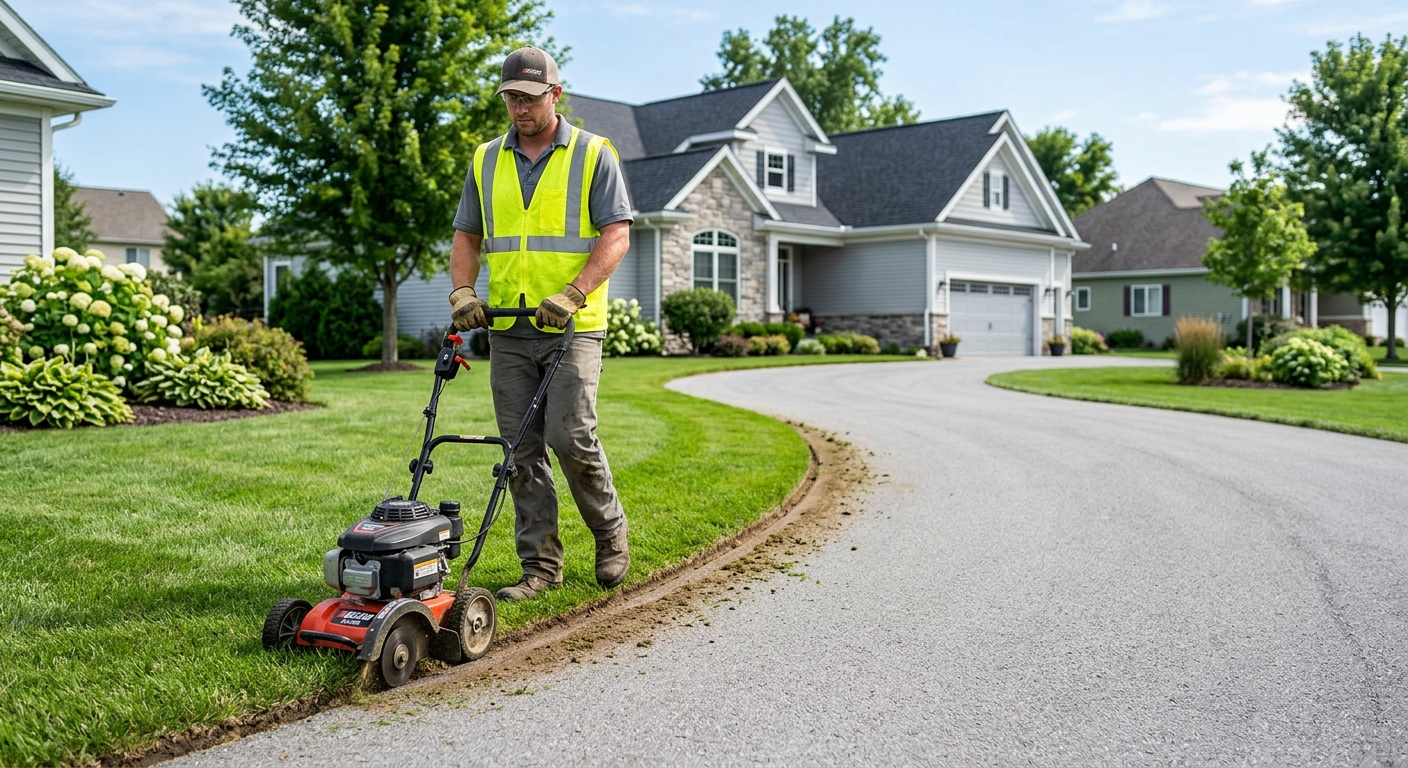
Weed prevention in Birchcliffe-Cliffside starts before planting: remove perennial weeds at the roots, then avoid burying them under fresh soil. Use a weed-suppressing fabric under mulch only where appropriate (for example, not directly under every perennial bed where roots need a looser soil structure). The highest impact steps are correct soil depth, clean mulch (typically maintained and refreshed as it decomposes), and spacing plants so bare soil doesn’t stay exposed. For established beds, edging helps reduce “creeping” grass into garden areas. If you’re seeding a lawn, a healthy turf canopy reduces weeds over time, but that requires proper grade and consistent watering during establishment. If weeds are already entrenched, ask your contractor about targeted spot treatments and re-mulching after the soil is prepped—more reliable than covering everything and hoping.
How do I design a low-water yard in Birchcliffe-Cliffside?
Even in Ontario, summer dry spells can stress lawns and shallow-rooted ornamentals, so a low-water yard in Birchcliffe-Cliffside focuses on efficient plants and smart layout. Choose drought-tolerant, zone-appropriate perennials and shrubs (native species tend to establish well with less fuss). Prioritize mulch thickness to reduce evaporation and manage Toronto clay moisture swings. Instead of fighting turf everywhere, use islands of lawn only where you’ll actually walk/play, and turn the rest into mulched beds or groundcovers. A drip irrigation system can be worth it if you’re converting larger areas—targeting root zones rather than broad spray can significantly reduce water waste. For example, while sod installation is commonly in the $2,500–$8,000 range, converting portions to a planted border with drip can deliver curb appeal with less ongoing watering, especially once plants are established. We’ll also grade to avoid runoff that bypasses your irrigation entirely.
How do I find a licensed landscaper in Birchcliffe-Cliffside?
In Ontario, you’ll typically confirm a landscaping contractor by checking documentation rather than relying on a single “landscaper licence” label. Start by requesting their proof of liability insurance and verifying it matches the company name on the quote. Next, ask for WSIB/WCB coverage proof or clearance documentation that corresponds to the work being performed. For job scope that includes excavation, patios, or drainage work, these credentials are especially important. Then get 2–3 itemised written quotes so you can compare labour and materials line items (stone quantities, base specs, plant counts, and disposal). Finally, ask for references from similar Birchcliffe-Cliffside projects and—if they’re doing anything that might require permits—ask how they handle the approval process. If a contractor won’t provide certificates promptly or provides only a lump sum without scope details, that’s a practical sign to keep looking.
How much does landscaping cost in Birchcliffe-Cliffside?
Landscaping cost in Birchcliffe-Cliffside depends mostly on site conditions (clay/fill, drainage needs, access) and the balance of hardscape vs. softscape. A full design-and-install project commonly ranges from $8,000–$40,000, especially when grading, drainage beds, and multi-zone planting are included. For lawn work, sod installation is typically $2,500–$8,000, while smaller planting packages can land within $800–$6,000. Interlocking stone patios and walkways frequently fall into the $6,000–$30,000 range depending on size and base requirements, and retaining walls can push higher when excavation and proper drainage behind the wall are required. Birchcliffe-Cliffside’s older lots and uneven grades can add excavation and soil amendment costs, so two neighbours may get different numbers for the same “type” of job.
What plants thrive in Birchcliffe-Cliffside's climate zone?
Birchcliffe-Cliffside sits in a hardiness zone where many hardy woody plants and perennials do well, especially when they’re chosen for winter tolerance and summer humidity. We typically recommend shrubs and perennials that handle Toronto-area freeze–thaw cycles and that establish reliably in clay-modified soils. In practice, this means selecting plants that don’t need constant winter protection and can survive late spring frosts. For example, native or well-adapted shrubs and sturdy perennials often outperform “look great for a season” ornamentals that struggle after a harsh winter. If you’re adding trees, staking and mulch rings matter—proper planting depth and drainage around the root zone are crucial in heavy soils. The best selection is also site-specific: sunny versus shaded areas, wet spots near drainage paths, and any areas affected by roof downspouts should guide your plant list.
Sod vs seed — which is better for a Birchcliffe-Cliffside lawn?
For Birchcliffe-Cliffside lawns, sod and seed can both work, but the better choice depends on how fast you need results and how well you can manage establishment. Sod gives instant coverage and stronger curb appeal right away, but it generally costs more; sod installation is typically in the $2,500–$8,000 range, and the price rises with grading and soil prep. Seed (with grade correction, seed, and starter fertiliser) is often more budget-friendly, but it requires consistent watering and care during germination and early growth. In Toronto’s seasonal rhythm, timing is everything: seeding is best when conditions support steady germination, while sod is usually installed in spring or early fall windows. If drainage or grading issues are the real problem, fix those first—otherwise both sod and seed can thin out in the same spots.