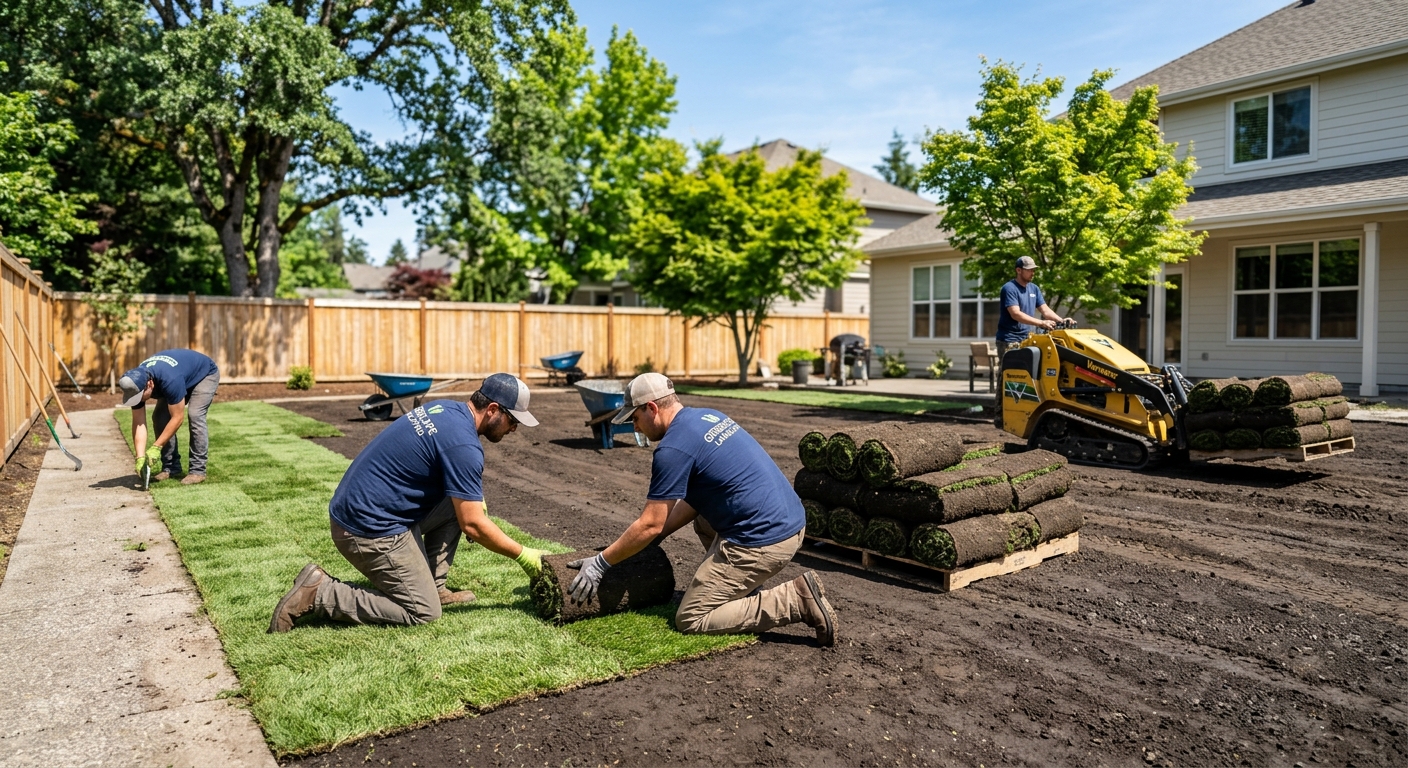
Landscaping options and costs in Greenway-Chaplin
Greenway-Chaplin, Ontario is a yard-investment kind of neighbourhood: with a population of 14,146 (Statistics Canada, 2021 Census), most improvements are done by homeowners who want their exterior to handle real winter cycles and summer humidity. Toronto’s housing stock also matters—where there’s detached property ownership, there’s typically more space to regrade, add drainage, build patios, and establish trees that will pay back for years. In practice, that demand pulls contractors toward “whole-yard” packages, which can raise costs for certain scopes because skilled crews stay busy during peak season.
Pricing in the Toronto area is shaped first by climate and soil. Greenway-Chaplin falls in hardiness zones 6a–7a, so we can grow a wide range of woody plants and perennials, but we still plan around winter lows near –23 to –18°C and frequent freeze–thaw. Those freeze–thaw cycles increase the structural requirements for patios, steps, and retaining wall bases, which often means deeper granular layers, better compaction, and more attention to drainage. On the materials side, local clay and fill soils frequently require excavation and soil amendment before we can safely add sod, seed, or interlocking stone.
Contractor availability is strongest in late spring through early fall, with a particularly high focus in family-friendly pockets like the Lakefront/Don Valley corridor area where homeowners commonly upgrade curb appeal and add backyard living spaces. With that context, here’s a clear comparison of common landscaping scopes and the typical price ranges you’ll see in Greenway-Chaplin.
| Service |
Description |
Season |
Price Range |
| Full landscape design and installation |
On-site consultation, concept + layout, plant list, grading/drainage coordination, softscape and hardscape scheduling, installation management |
Spring to early fall (often May–September) |
$8,000–$40,000 |
| Sod installation (supply, grade, lay, roll) |
Topsoil/grade correction, soil prep, sod delivery and lay, rolling, starter fertilizer, first watering plan |
Late spring to early fall (best when the ground is workable) |
$2,500–$8,000 |
| Lawn seeding (grade, seed, starter fertilizer) |
Light grading, seed selection, starter fertilizer, coverage/rolling, watering schedule |
Spring or early fall |
$1,800–$6,000 |
| Interlocking patio or walkway |
Excavation, base course and compaction, edge restraint, interlocking stones, levelling, joint sand, sealing (optional) |
Spring to early fall |
$6,000–$30,000 |
| Retaining wall (interlocking block) |
Wall layout, excavation, geogrid/backfill where needed, block installation, drainage rock and weeping/weep system, compaction |
Spring to early fall |
$6,000–$30,000 |
| Tree and shrub planting |
Plant selection (zone-appropriate), digging and backfill, staking, mulch ring, watering plan, optional stump grinding coordination |
Spring to fall (often after frost-risk eases and before deep freezes) |
$800–$6,000 |
Prices are estimates only and vary by project scope, site access and material selection.
What affects the price of landscaping in Greenway-Chaplin
In Greenway-Chaplin and across the Toronto area, two homeowners can receive bids for the “same” landscaping idea that differ by 30–50%—mostly because the scope assumptions aren’t identical. One contractor may price only visible finishes (sod, pavers, planting), while another accounts for the hidden work that keeps everything stable in Toronto’s freeze–thaw climate: excavation depth, subbase type, drainage corrections, and soil amendment. Even within Ontario’s Zone 6a–7a band, hardscape and drainage details often drive labour and equipment time, and that’s where bids diverge.
Climate and timing set the boundaries for what’s feasible. Plant hardiness and frost dates determine what can be installed reliably and what needs protection, but in the GTA the bigger cost driver is how winter frost affects soil movement. When we build with retention walls, patios, steps, and edging, base depth and drainage must be designed to perform through near –23 to –18°C lows. Prairie regions (Zone 2–4) face colder, shorter seasons and more frequent drought pressure, so crews often simplify layouts and choose ultra-hardy, drought-tolerant species; retaining wall base depth may need to reach below the frost line there too, but the overall “working window” can be shorter. Coastal BC (Zone 7–8) allows lush palettes and a longer season, but heavy rainfall areas still require strong drainage details; dry interior BC frequently brings water restrictions that change irrigation from conventional spray to drip and smart controllers.
Greenway-Chaplin pricing can rise quickly with a sloped driveway tie-in, buried services access, or clay that holds water. For example, if you need full grading and re-establish a lawn, sod installation typically sits in the $2,500–$8,000 range, but if the contractor discovers poor drainage and adds topsoil plus drainage correction, the project can move toward the upper band. Likewise, a small interlocking patio can land in the $6,000–$30,000 range; adding proper subbase thickness and edge restraint for freeze–thaw stability can be the difference between “cheap pavers” and a patio that doesn’t heave or shift.
| Price Factor |
Why It Matters |
Cost Impact |
| Yard size in sq ft — the primary cost driver for softscape |
More area means more labour hours, more topsoil/top-dress, more materials (seed, sod, mulch) |
Directly scales the bill; small changes in sq ft can shift totals noticeably |
| Grading and drainage work — slope corrections add significant cost |
Toronto clay and fill can trap water; correcting surface slope protects foundations and keeps lawns alive |
Often adds hours and equipment; commonly a major driver of 30–50% bid variation |
| Drainage bed or French drain installation |
Weeping tile, stone trenching, and tie-ins reduce pooling; required for many backyards near foundations |
Can move a “softscape-only” job into full landscape design territory |
| Plant material tier — native shrubs vs. ornamental vs. mature specimen trees |
Mature specimens cost more and require careful handling, staking, and often additional crew time |
Can shift planting from a lower-cost refresh to a premium curb-appeal build |
| Hardscape vs. softscape ratio — walls and patios cost more per sq ft than lawn |
Pavers and retaining wall work include excavation, base engineering, and compaction |
Higher hardscape ratios can push total cost toward the upper price bands |
| Irrigation system design and installation |
Humidity and summer dry spells mean reliable watering; smart scheduling reduces waste |
Adds equipment/material costs but can protect new sod and plantings |
| Soil amendment and topsoil required |
Clay soils often need structure and nutrients; poor soil increases failure risk for sod and seed |
Material delivery and labour can be substantial for larger corrections |
| Tree removal or stump grinding before new planting |
Stumps complicate grading and new sod; roots may interfere with drainage and hardscape bases |
Often increases time, disposal requirements, and may require separate subcontracting |
Permits & regulations in Ontario
In Ontario, most everyday landscaping work—like planting new trees/shrubs, sodding, seeding, and typical softscape installs—generally does not require a permit. Where permits most often come into play is with structural elements and significant grading changes. For Greenway-Chaplin homeowners, think of it this way: if the work is mainly vegetation and surface finishing, it’s usually permit-free; if it’s changing load-bearing conditions or how water drains, it may require approvals.
Work that typically DOES require a permit: retaining walls above a height threshold (often 1.0 m in many Ontario municipalities), especially if the wall is near fences, slopes, or structures; and any work that triggers engineered requirements. Work that typically does NOT: mulch/top-dress, planting beds, installing sod/seed, building small garden borders, and most patio/walkway installs that don’t involve major drainage reconfiguration.
Before digging: call for utility locates so you don’t hit buried hydro, gas, or communications lines while setting planting holes, drainage trenches, or wall footings. Also confirm water-use bylaws for irrigation timing and restrictions—Ontario summers can be wet, but watering rules still apply, and neighbourhood expectations often tighten during drought-like conditions.
To verify contractor legitimacy, ask for:
- Ontario licence details (as applicable) and the business information used for contracting.
- Liability insurance certificate (clear project coverage amounts and effective dates).
- WSIB/WCB coverage evidence—look for a current clearance letter or active account status.
- Where to look: contractor registry/verification pages and the certificates they provide (don’t rely only on the quote).
- Confirm that disposal of excavated materials (if needed) is either included or specifically excluded in the written scope.
Planning a landscape that thrives in Greenway-Chaplin's climate
Designing for Greenway-Chaplin’s hardiness zone means working with the reality of Zone 6a–7a winters, humid summers, and freeze–thaw soil movement—not against it. Start with plant selection: choose native and zone-appropriate shrubs and perennials that tolerate winter lows near –23 to –18°C, and group them by sun exposure so they don’t struggle in dense shade. This reduces winter burn risk and lowers watering needs.
Next, compare sod vs. seed. In the Toronto market, sod gives instant curb appeal and erosion control, but it’s typically 3–4x the cost per sq ft versus seeding. If your goal is “usable lawn this season” after a gentle grade correction, sod can be justified. If your lawn damage is moderate and you can water consistently, seeding often wins on cost and long-term resilience.
Drainage and grading are the non-negotiables in Toronto. Even a well-selected plant palette will fail if water pools near foundations. Ensure surface slope directs water away from the house and consider adding a drainage bed or French drain where you see persistent dampness. For hardscape—patios, steps, and retaining walls—base preparation needs to account for frost line movement: deeper granular bases, correct compaction, and proper edge restraint help prevent settling and cracking.
For low-maintenance curb appeal, use groundcovers, mulched shrub borders, and hardy perennials that close gaps and suppress weeds. In the Toronto context, rain gardens and strategically placed xeriscape-like zones (drought-tolerant planting in sunny, fast-draining spots) can help manage stormwater and reduce summer watering without sacrificing visual quality.
Example of when price differences are justified: a $2,500–$8,000 sod installation may be worth it when you need quick winter-safety coverage and a smooth, family-use lawn. But if you only need to thicken thin areas, lawn seeding generally provides a more budget-friendly path toward long-term coverage.
| Element |
Climate Consideration |
Maintenance Level |
Price Band |
| Sod lawn installation |
Needs reliable early-season establishment before heavy freeze–thaw; works best when soil temps support rooting in spring/fall |
Medium (watering/monitoring early, then standard lawn care) |
$2,500–$8,000 |
| Native perennial garden |
Zone-appropriate plants handle winter lows and recover well after spring thaw |
Low (mulch + seasonal tidy-up; targeted watering in year one) |
$1,200–$6,000 |
| Mulched shrub border |
Mulch buffers soil moisture swings and reduces weed pressure during humid summers |
Low (weed control reduced; pruning as needed) |
$800–$4,500 |
| Interlocking stone patio |
Base depth and drainage matter to resist freeze–thaw heaving and shifting |
Low (occasional cleaning/sealing if desired) |
$6,000–$30,000 |
| Retaining wall (block) |
Needs drainage rock and compaction to manage water and prevent freeze-related movement |
Low (inspection after heavy winters; minor adjustments if needed) |
$6,000–$30,000 |
| Drip irrigation system |
Improves watering efficiency during summer dry spells and supports zone-appropriate planting establishment |
Low (set-and-forget with seasonal adjustments) |
$1,500–$7,500 |
How to choose a landscaping contractor in Greenway-Chaplin
Choosing the right contractor protects you from the most expensive problems in Ontario: drainage failures, uneven hardscape, and plant loss. First, verify Ontario licensing where applicable for the type of work being performed, then confirm liability insurance and WSIB/WCB coverage. How to check: ask for the certificate of insurance and a current WSIB/WCB clearance letter (or evidence of active coverage). Match the name/address on the insurance documents to the contractor’s legal entity on the quote and contract. Don’t accept photos of expired documents—request the current PDF or certificate number and check the dates.
Next, get 2–3 itemised written quotes that break out labour and materials separately (for example: excavation/base course, stone supply, drainage rock, geogrid, plant material, topsoil, and disposal). A lump-sum quote with vague “materials included” language usually hides cost drivers that become change orders. Read the scope carefully: is permit pull included if required for a retaining wall above the threshold? Is excavated soil disposal included, and where is it hauled to? If drainage tie-ins are needed, ask whether the contractor accounts for locating and restoration.
Warranty matters in the GTA where freeze–thaw can surface issues months later. Ask for workmanship warranty length, whether it covers labour for settlement or heaving, and whether product/manufacturer warranties apply and are transferable. Finally, keep payment practical: never pay more than 10–15% upfront; hold back a portion until completion and walkthrough sign-off. Get a clear start date and completion estimate in writing—seasonal schedules move quickly in spring.
- Ask who provides utility locates or confirms services clearance before digging.
- Confirm insurance limits and coverage dates for your project period.
- Verify WSIB/WCB clearance and that subcontractors are covered too.
- Require itemised pricing for excavation, base prep, and drainage components.
- Check whether geotextile/geogrid and proper base compaction are included (not “as needed”).
- Confirm plant counts, sizes, and whether substitutions are allowed (with pricing rules).
- Ask for hardscape edge restraint and joint-sand specifications.
- Clarify disposal: included or you pay tipping/hauling costs.
- Review grading targets: where runoff goes and how pooling near foundation is avoided.
- Get warranty terms in writing for both workmanship and materials.
- Set payment schedule: small deposit, mid-progress payments, final after walkthrough.
- Ensure timelines include weather buffers and rescheduling rules.
Red flags in Greenway-Chaplin include: a quote that skips drainage details for basements/low points; refusing to provide insurance/WSIB proof; vague scopes that don’t state disposal and grade outcomes; pushing a large upfront payment beyond 10–15%; and claiming “one-size-fits-all” for frost-proof base depths under patios or walls.
Frequently asked questions — landscaping in Greenway-Chaplin
Sod vs seed — which is better for a Greenway-Chaplin lawn?
In Greenway-Chaplin and the wider Toronto area, sod is the “instant results” option, and it’s often chosen when you need usable lawn quickly or you’re trying to prevent soil erosion on bare patches. It typically costs around $2,500–$8,000 depending on sq ft and prep work. Seeding is usually more budget-friendly, but it requires consistent watering and time to thicken. With freeze–thaw conditions in Ontario, sod can also give you better early ground cover going into cooler weather if installed in the right spring/fall window. If your lawn is only thin or patchy, seeding often beats sod on value; if your grade is off or drainage is failing, fix grading/drainage first—otherwise both sod and seed can struggle.
How much does a retaining wall cost in Greenway-Chaplin?
Retaining wall pricing in Greenway-Chaplin commonly falls in the $6,000–$30,000 range, with a wide spread because Ontario clay and freeze–thaw cycles demand proper excavation depth, drainage rock, and often geogrid/backfill reinforcement. Cost can rise if the wall is on a slope, if there’s limited access for hauling, or if additional drainage work is required to prevent water pressure behind the wall. Also, if the wall height crosses the municipal permitting threshold, the project may need a permit and sometimes engineered input, which increases cost and timeline. A good quote should show the wall height, total length, and what’s included for drainage and base construction, not just the block price.
When is the best time to landscape in Greenway-Chaplin?
The best time for most landscaping in Ontario is late spring through early fall. In Greenway-Chaplin, that typically means May to September for sod, patios/walkways, retaining walls, and major planting. Spring is ideal for establishing roots before summer heat, while early fall can be excellent for perennials and shrubs because cooler nights reduce watering stress. Hardscape installation is usually timed around frost risk and workable ground conditions; deep freeze and heavy ground saturation can cause compaction problems. If you’re planning drainage corrections or base work, contractors often prefer stretches of dry weather so granular layers can be placed and compacted properly. For lawns, installation windows also influence whether sod or seeding is the better value for your goals.
Do I need a permit for a retaining wall in Ontario?
Often, yes—when the retaining wall is above a height threshold, typically around 1.0 m in many Ontario municipalities. Since permitting rules can vary by situation (and sometimes by property details like proximity to structures or slopes), the safest approach is to confirm with your local municipality before work starts. In Greenway-Chaplin, a retaining wall permit can also affect the contractor’s schedule because inspections or documentation may be required. Meanwhile, typical softscape (mulch, planting, sod/seed) generally does not require a permit. If your contractor isn’t sure whether your wall triggers permitting, ask them to clarify in writing and include the permit responsibility in the quote—especially since permitting and timing can change the overall budget.
How do I improve drainage in my yard?
Drainage improvements in Greenway-Chaplin usually start with a simple site reality check: where does water pool after rain, and does it move toward the foundation or low corners? First, correct surface grading so runoff slopes away from the house. If you have persistent dampness, a drainage bed or French drain (often with drainage rock and proper tie-in considerations) is commonly the practical solution. Because Toronto-area clay and fill soils can hold water, soil amendment and topsoil placement alone may not be enough. Also, check downspout discharge locations and ensure any eavestrough extensions aren’t dumping water where it collects. A well-detailed drainage scope protects both landscaping and hardscape—especially patios and retaining walls—by reducing freeze–thaw movement risk.
What is xeriscaping and does it suit Greenway-Chaplin?
Xeriscaping is a water-wise landscaping approach that uses drought-tolerant plants, efficient irrigation (often drip), and soil improvements to reduce watering needs. In Greenway-Chaplin, it can suit parts of a yard—especially sunny, fast-draining areas—but it’s not a blanket solution for the entire property in Ontario’s humid growing season. The key is to zone your yard: keep water-loving beds where moisture is available, and use drought-tolerant shrubs/perennials and mulch where you want lower irrigation. If you’re installing sod, xeriscaping won’t replace it—sod still needs establishment watering. In practice, many homeowners get the best results by blending approaches: rain-garden style features for stormwater, plus drought-tolerant planting for lower-maintenance curb appeal and controlled irrigation design.