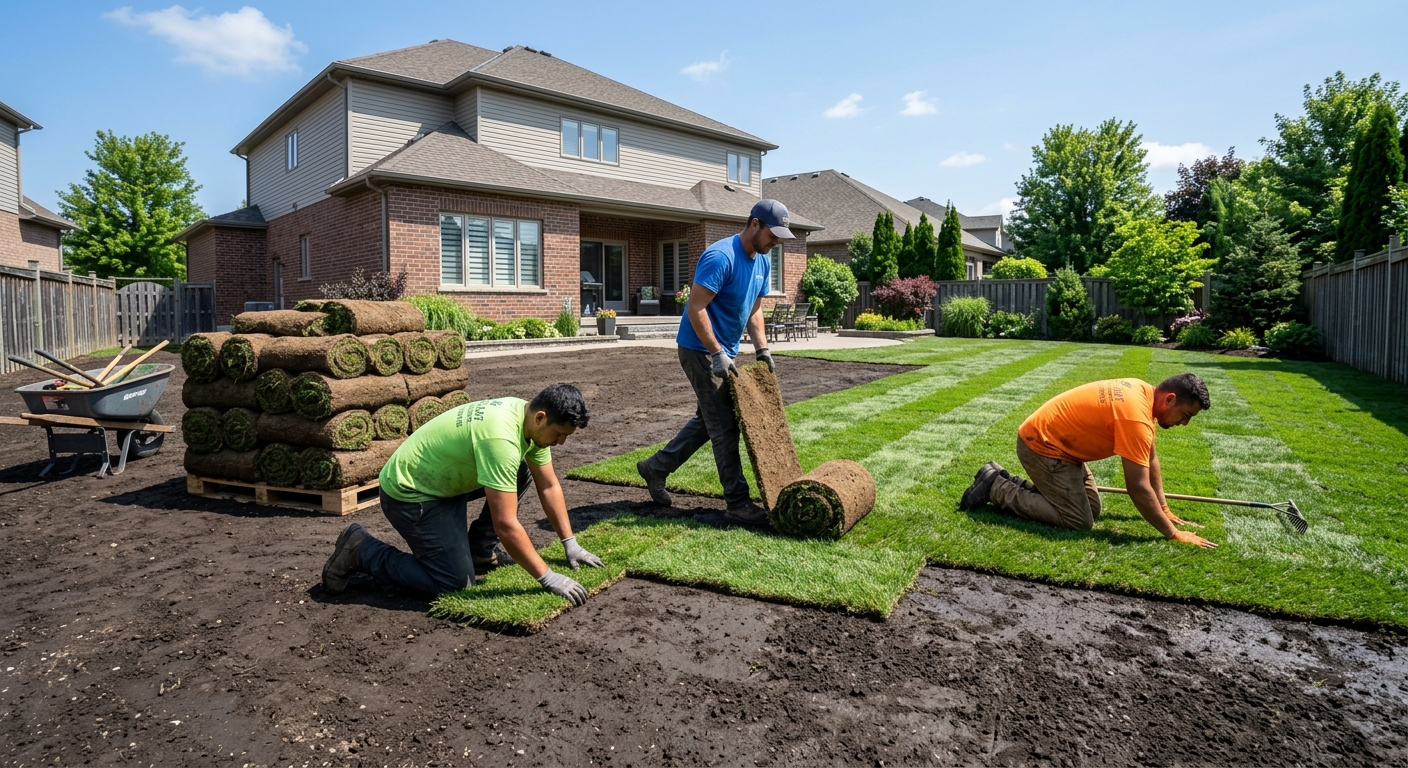
Landscaping options and costs in Kennedy Park
Kennedy Park, Ontario is a neighbourhood where homeowners tend to invest in their yards because the area’s housing stock is dominated by detached homes, and each detached property typically comes with the space to create real curb appeal. With 17,123 people living in the area (Statistics Canada, 2021 Census), you’ll also notice steady demand for seasonal work—especially around spring cleanup and early-summer planting. In the Toronto market, pricing is shaped by the mix of freeze–thaw cycles and clay/fill soils common to the GTA: patio and wall bases must be built on well-compacted granular material and often require drainage improvements to avoid settling and water pooling near foundations. That means similar projects can cost noticeably more here than in milder climates, and crews plan around frost dates and ground conditions rather than just “calendar spring.”
Contractor availability can also tighten in high-demand pockets near amenities and main local routes, and in Kennedy Park that demand is often especially strong in the older pockets where homeowners refresh mature plantings, expand driveways, or add interlocking walks. If you’re comparing options—like full design-and-install versus stand-alone lawn work—it helps to start with the typical Toronto-area price bands, then narrow scope to match your yard size, access, and material choices. Use the ranges below as your baseline, and we’ll refine them once we know your goals and site constraints.
| Service |
Description |
Season |
Price Range |
| Full landscape design and installation |
Site measurement, design plan, grading/drainage notes, plant list, sod/seed, hardscape layout, install coordination |
Spring to early fall (weather-dependent) |
$8,000–$40,000 |
| Sod installation (supply, grade, lay, roll) |
Remove existing grass/soil as needed, grade and topsoil, soil prep, sod delivery and rolling, light watering plan |
Late spring to early fall |
$2,500–$8,000 |
| Lawn seeding (grade, seed, starter fertilizer) |
Rake/loosen, grade and topdress, seed blend, starter fertilizer, light coverage and recommended watering |
Spring or early fall |
$1,500–$6,000 |
| Interlocking patio or walkway |
Excavation, base, geotextile/geogrid where needed, interlocking stone, edge restraints, jointing sand |
Late spring to fall |
$6,000–$30,000 |
| Retaining wall (interlocking block) |
Layout, excavation to stable depth, base/gravel, drainage provisions (weep holes/fill and filter), block placement and finishing |
Spring to fall |
$6,000–$30,000 |
| Tree and shrub planting |
Soil prep, planting holes, amendments, staking where needed, mulch, and first-season care plan |
Spring to early fall |
$800–$6,000 |
Prices are estimates only and vary by project scope, site access and material selection.
What affects the price of landscaping in Kennedy Park
In Kennedy Park and the wider Toronto area, quotes for the same general “landscaping” idea can land 30–50% apart because contractors price different site realities: yard size, soil condition, drainage needs, access for equipment, and the level of finish you want. Even when the plant list looks similar, Toronto’s climate zone (6a–7a) and freeze–thaw cycles mean we build to survive winter movement—so grading and base prep often drive cost more than the visible materials. In Prairie regions (Zone 2–4), shorter seasons and colder winters push designs toward drought- and wind-tolerant planting and simpler layouts, while retaining-wall footings must go below the frost line; that can reduce some “lush” options but increase structural costs. In coastal BC (Zone 7–8), the longer growing season supports broader palettes, but drainage is still critical—especially where heavy rain meets clay. In the dry interior of BC and parts of Alberta, water restrictions shape irrigation design: drip lines, lower-precipitation heads, and xeric planting can raise design complexity even if the planting is simpler.
For Kennedy Park specifically, two common examples explain big quote swings. First, a clay-heavy yard that needs a regrade and subdrain can turn a “patio + 2 beds” job into a larger excavation and hauling scope; in that case, you may be closer to the higher end of the interlocking patio band (up to about $30,000) rather than a smaller walk-up estimate. Second, choosing sod for a whole front yard is typically 3–4x higher per square foot than seeding, so your lawn budget can quickly move from the seeding band (as low as $1,500) toward the sod band (starting around $2,500 and scaling upward).
Finally, neighbourhood timing matters: older homes in the area often have settled yards, mature roots, or previous work that requires more careful excavation and soil amendment before we plant. On a $20,000-scale project, small changes—like adding proper drainage or moving from ornamental shrubs to a few larger, more established specimens—can move the total into the next price tier.
| Price Factor |
Why It Matters |
Cost Impact |
| Yard size in sq ft — the primary cost driver for softscape |
More area means more labour hours for prep, more soil/topsoil, more seed/sod, and more edging |
Can change total by 20–60% depending on lawn + beds footprint |
| Grading and drainage work — slope corrections add significant cost |
Toronto clay and freeze–thaw need proper surface grading to move water away from foundations |
Often adds several thousand dollars on “flat” yards that pool after rain |
| Drainage bed or French drain installation |
Subsurface drainage reduces frost heave and standing water under patios/walkways |
Commonly shifts jobs toward the mid-to-high end of hardscape budgets |
| Plant material tier — native shrubs vs. ornamental vs. mature specimen trees |
Hardy, native plants usually cost less upfront and perform well in zone 6a–7a with less winter protection |
Mature specimens can move a planting job closer to the upper band (up to ~$6,000+) |
| Hardscape vs. softscape ratio — walls and patios cost more per sq ft than lawn |
Concrete bases, stone edging, and base compaction require heavier materials and more labour |
Higher hardscape ratios can add significant cost quickly vs. lawn-only plans |
| Irrigation system design and installation |
Even in sprinkler-friendly months, correct zoning and coverage prevent dry patches and winter damage |
Can add thousands when adding valves, timers, and trenching |
| Soil amendment and topsoil required |
Compacted fill and clay often need replacement/amendment to support roots and reduce future settling |
Haul-and-spread costs can swing totals by 10–25% |
| Tree removal or stump grinding before new planting |
Access, disposal, and safety planning affect time and equipment needs |
Often increases scope before you even start laying sod or planting |
Permits & regulations in Ontario
In Ontario, most landscaping activities—like planting, sodding, seeding, mulch installs, and typical softscape work—usually do not require a permit. Where permits do commonly come into play is when you change structural elements and lot drainage in ways that could affect neighbours or municipal infrastructure. Retaining walls above a local threshold (often 1.0 m / 3.3 ft in many Ontario municipalities) typically require a building permit, and sometimes engineered drawings depending on height, design, and soil conditions. Also consider permits or approvals if you’re making substantial lot grading changes that alter drainage patterns toward neighbouring properties or toward a storm sewer connection.
Regardless of permit needs, always schedule utility locates before digging holes, trenches, or wall footings—this is essential even for garden upgrades. For homes in Kennedy Park, where many yards include older service lines and buried utilities, locates help prevent costly strikes.
Step-by-step contractor verification is where homeowners can protect themselves. First, confirm the contractor’s Ontario licence/registration where applicable and ensure they can provide current liability insurance (with adequate limits for landscaping work). Next, request proof of WSIB/WCB coverage (or provide a valid clearance letter). Finally, ask for written documentation and align your contract on what each item covers: excavation, disposal, and any permit responsibility. If a contractor can’t provide clear certificates and coverage details up front, that’s a red flag for schedule risk and liability exposure.
Planning a landscape that thrives in Kennedy Park's climate
Planning in Kennedy Park is about working with Ontario’s zone 6a–7a conditions—surviving winter lows (often around –23 to –18°C) and managing summer humidity—rather than forcing delicate plants to perform through stress. Start with plant selection: choose native and zone-appropriate species that establish quickly and don’t require heavy winter protection. If you’re aiming for curb appeal with less effort, build layers—groundcovers, mulch beds, and perennials—so weeds have fewer opportunities to take hold after spring cleanups.
Sod vs. seeding is a classic Toronto decision. Sod gives instant results but typically costs 3–4x more per sq ft than seeding because you’re paying for sod harvesting, delivery, and installation labour. For a front lawn where appearance matters immediately—before a home sale or a key season event—sod can be worth it; for a long-term lawn repair, seeding usually offers better value. In clay-heavy areas common in the GTA, drainage and grading are not optional: properly shaped slopes help prevent pooling and foundation moisture, which is critical in freeze–thaw weather.
For hardscape, base preparation matters for frost stability. Patios and walkway sub-bases should be built with adequate granular depth and compaction so the stone doesn’t heave or settle unevenly. If you’re adding a retaining wall, drainage behind the wall (filter fabric, weep provisions, and appropriate backfill) is what keeps the wall performing through winter cycles.
For water-wise options, consider rain gardens or smaller “xeriscape” pockets using drought-tolerant perennials, but keep them paired with Toronto-appropriate hardy species. A rain garden can reduce runoff loads while improving yard function after storms, especially on sloped lots. If you’re deciding where your budget is justified: moving from seeding into sod for a small feature strip (rather than the entire yard) often delivers the visual payoff without pushing the project toward the upper end of lawn budgets.
| Element |
Climate Consideration |
Maintenance Level |
Price Band |
| Sod lawn installation |
Best for quick coverage during late spring to early fall; needs good grading to prevent winter pooling |
Low to moderate (watering establishment period) |
$2,500–$8,000 |
| Native perennial garden |
Zone-appropriate plants handle –23 to –18°C winter lows; mulch helps stabilize root temperatures |
Low (spring tidy + occasional weeding) |
$1,800–$5,500 |
| Mulched shrub border |
Winter hardy shrubs plus 2–3 in. mulch reduce freeze–thaw stress and moisture swings |
Low (pruning and refresh mulch annually) |
$1,200–$4,200 |
| Interlocking stone patio |
Needs engineered frost-stable base and proper drainage slope for Ontario freeze–thaw cycles |
Low (occasional joint sand top-up) |
$6,000–$30,000 |
| Retaining wall (block) |
Drainage behind the wall and stable depth below frost line protect against winter movement |
Low after install (inspection of drainage points) |
$6,000–$30,000 |
| Drip irrigation system |
Helps manage summer humidity and drought spells; freeze-proof design required for winter shutoff |
Moderate (seasonal adjustments) |
$2,000–$7,500 |
How to choose a landscaping contractor in Kennedy Park
Start with credentials and coverage—especially important in Ontario where winter delays and excavation risks can create disputes. Verify Ontario licensing/registration where applicable for your project type. Next, ask for a current Certificate of Insurance showing liability coverage that’s appropriate for landscaping work (including property damage and on-site accidents). For worker protection, request proof of WSIB/WCB coverage: either a clearance letter or current account verification. Don’t accept verbal assurances; ask to see documents before the job starts.
Then get 2–3 itemised written quotes instead of one “all-in” number. You want line items for labour and materials (excavation, base materials, drainage, sod/seed, stone supply, edging, disposal) so you can compare like-for-like. Read exclusions carefully: is permit pulling included (for retaining wall projects that cross permit thresholds), is disposal included for soil/old stone, and what’s covered if rock is encountered during excavation?
Warranty matters in Ontario because freeze–thaw can reveal workmanship issues after winter. Ask for a workmanship warranty length and confirm whether product warranties apply to the specific manufacturer-supplied materials (sod, soil amendments, interlocking components). Also confirm if warranties are transferable to you as the homeowner.
For payment, avoid large upfront deposits: typically keep deposits around 10–15% and hold back the remainder until the job is complete and walk-through items are corrected. Finally, get a written timeline with a proposed start date and completion window that accounts for weather and curing/settling time on bases and sod establishment.
- Provide insurance certificate and WSIB/WCB clearance/coverage proof before signing.
- Use itemised quotes with quantities (sq ft, linear ft, or units) for every major scope.
- Confirm who handles permits for retaining walls above local thresholds.
- Ask about disposal: where does soil/old turf go and is hauling included?
- Check base specs: geotextile/geogrid, granular depth, and compaction method for hardscape.
- For grading/drainage, require a plan describing water direction away from the foundation.
- Ensure the quote lists sod seed varieties or plant sizes (container size, height, caliper).
- Confirm irrigation design includes winter shutoff/freeze protection if applicable.
- Ask how they protect existing shrubs, fences, and lawns during excavation.
- Get start and completion dates in writing, not only “weather permitting.”
- Clarify warranty terms for both workmanship and materials (and what voids coverage).
- Keep payments tied to milestones; don’t exceed 10–15% upfront.
Red flags specific to landscaping contractor sales in Kennedy Park: unusually low hardscape pricing that skips proper base depth, refusing to provide insurance/WSIB/WCB documents, vague quotes that don’t mention drainage and disposal, demanding large deposits early, and promising year-round “guaranteed sod installation” regardless of frost and ground saturation.
Frequently asked questions — landscaping in Kennedy Park
How much does landscaping cost in Kennedy Park?
In Kennedy Park, most homeowners typically budget based on the Toronto-area price bands for the scope they choose. A full design-and-install project is often the biggest variable, commonly landing between $8,000 and $40,000 depending on yard size, drainage complexity, and how much hardscape you add. If you’re focusing only on lawn replacement, sod installation often falls between about $2,500 and $8,000, while seeding is usually lower if your grade and soil prep are right. For patios and walkways, you may see budgets around $6,000 to $30,000 because the base must be frost-stable in Ontario’s freeze–thaw conditions. Local clay and access (whether a skid-steer or mini-excavator can reach) are also common cost drivers.
What plants thrive in Kennedy Park's climate zone?
Kennedy Park sits in southern Ontario’s plant hardiness range (zone 6a–7a), so the best performers are hardy woody plants and perennials that tolerate winter lows near –23 to –18°C and summer humidity. In practical terms, we often steer homeowners toward native shrubs and perennials that establish well in Ontario soils when planted with mulch and proper spacing. Choosing plants suited to the zone reduces the need for bulky winter protection and replacement costs. If you have a sunny front exposure, select plants that handle heat and wind; for shaded corners, pick species that don’t demand heavy summer watering. Your exact list should also account for drainage—pockets that stay wet in spring often need different choices than drier areas.
Sod vs seed — which is better for a Kennedy Park lawn?
Sod is usually better when you need instant coverage and a uniform look right away—especially in visible front-yard areas in Kennedy Park. It typically costs more, and many homeowners find sod installation runs roughly 3–4x the cost per sq ft compared with seeding because of sod supply and installation labour. Seeding can be the better value when you’re repairing a lawn over time, and when you can commit to the establishment watering plan for germination. In Toronto-area conditions, the bigger decision is grading and soil prep: if you have low spots that hold water after storms, both sod and seed can struggle unless drainage and topsoil are corrected. For many homeowners, a partial sod strategy (front visual areas) plus seeding elsewhere can deliver the look without the full sod budget.
How much does a retaining wall cost in Kennedy Park?
Retaining wall pricing in Kennedy Park typically follows Toronto-area hardscape pricing, with many block wall projects landing around $6,000 to $30,000 depending on length, height, and whether drainage and sub-base excavation are extensive. The reason retaining walls can vary widely is that Ontario frost effects require stable base construction, and clay soils often need additional excavation and drainage provisions behind the wall. If the wall is above the local permit threshold (commonly 1.0 m / 3.3 ft in many Ontario municipalities), plan for permit-related steps as part of the overall project process. A wall that includes proper weeping/drainage layers may cost more upfront than a basic wall, but it’s the difference between a wall that performs through winter cycles and one that shifts or gets damp.
When is the best time to landscape in Kennedy Park?
The best time for planting and most landscape installations in Kennedy Park is generally spring through early fall, when the ground is workable and roots can establish before winter. Sod and many planting projects are commonly timed for late spring to early fall, with weather and soil moisture driving the exact start. Hardscape work like patios and walkways is also usually done in late spring through fall to avoid compaction issues when the ground is frozen or overly saturated. Toronto’s freeze–thaw cycles mean we avoid rushing installs that can trap water under stone or leave bases under-compacted. If you’re planning a retaining wall or drainage improvements, schedule it when excavation is easiest—often spring or early fall—so the crew can complete base and drainage details correctly.
Do I need a permit for a retaining wall in Ontario?
In Ontario, many landscaping tasks don’t require permits, but retaining walls often do when they exceed a height threshold commonly around 1.0 m (3.3 ft) in many Ontario municipalities. Whether you need a permit can also depend on the wall’s design, location, and how it interacts with grading and drainage near buildings. In Kennedy Park, if you’re planning block walls that retain soil or change yard slopes substantially, it’s smart to confirm requirements early so scheduling isn’t interrupted. A reputable contractor should be able to tell you if permit pulling is required and whether it’s included in the quote. Also remember to call for utility locates before digging wall footings or drainage trenches—this is standard safety practice before any excavation.