Landscaping options and costs in L'Amoreaux
L’Amoreaux, Ontario is where a lot of homeowners want curb appeal that can handle both humid summers and the region’s freeze–thaw winters. With a community population of 43,993 people (Statistics Canada, 2021 Census), there’s steady demand for contractors—especially around older pockets of housing where yards were originally built with simpler grading and fewer mature plants. L’Amoreaux also has plenty of detached and semi-detached ownership patterns, meaning many properties have enough yard space to justify fuller makeovers rather than “patch-and-pray” upgrades.
Pricing here is strongly shaped by Toronto-area conditions: frost depths and repeat freeze–thaw cycles increase the cost of patios, steps, and retaining-wall foundations because bases need deeper granular layers, proper geotextile/geogrid use, and drainage detail. Many sites also have clay or mixed fill soils, so we often include excavation, soil amendment, and sometimes subdrains—work that’s less common in milder regions. On the supply side, the frost-free period (roughly May to October) concentrates labour and inventory scheduling, so spring and early fall can be busier and slightly higher.
In L’Amoreaux, the trade is especially active near community hubs and busier residential corridors where homeowners want visible upgrades—anecdotally, the “front-yard first” approach is common in pockets around McNicoll Ave and the Leslie/Finch area. That’s a big reason why design-and-install packages and interlocking projects move quickly, which brings us to a practical comparison of typical services and budgets.
| Service |
Description |
Season |
Price Range |
| Full landscape design and installation |
Site walk, concept plan, planting + grading plan, soil prep, softscape and hardscape build, finish cleanup |
May–Oct (flexible start dates) |
$8,000–$40,000 |
| Sod installation (supply, grade, lay, roll) |
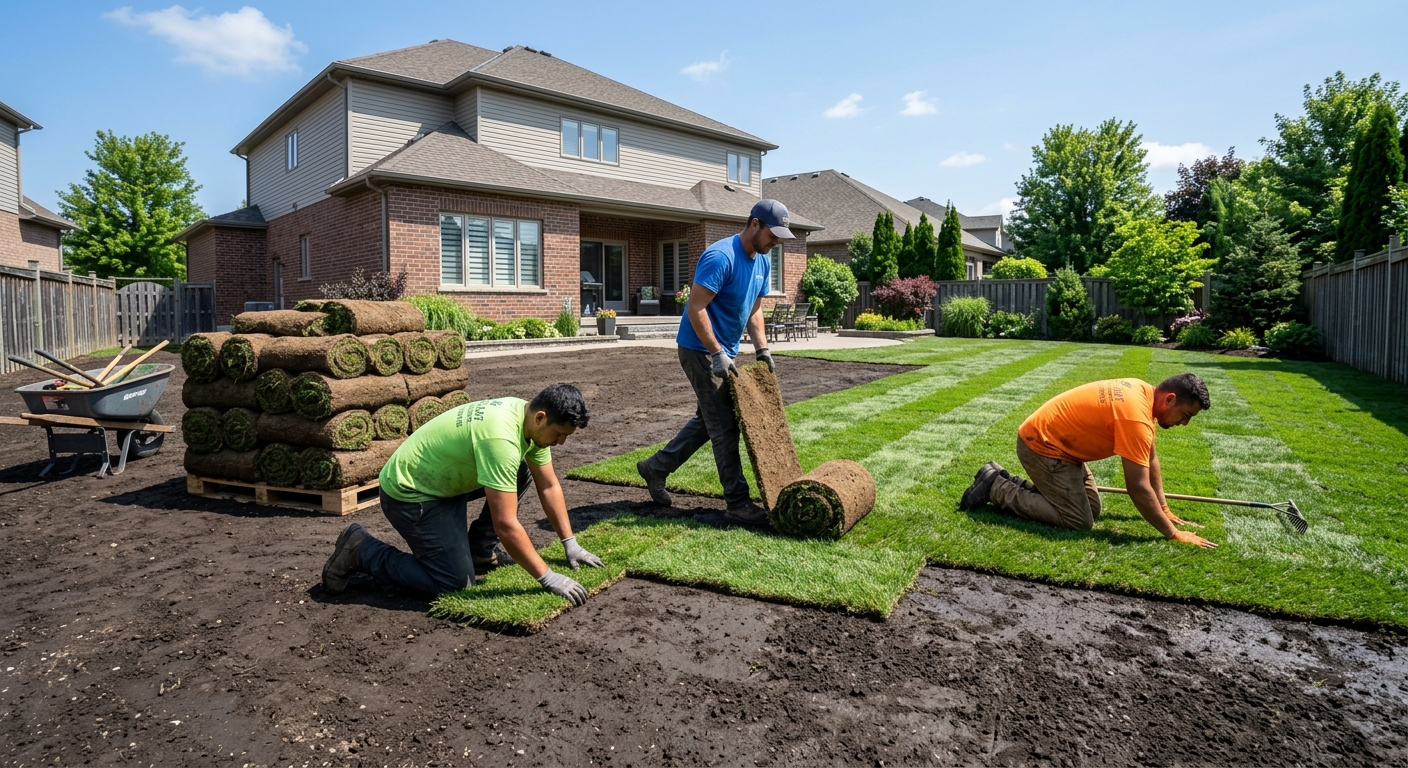
Remove old turf (if needed), grade/level, add topsoil/compost, install rolls, starter fertilizer, first watering plan |
Late Apr–Jun; Sep–Oct (best results) |
$2,500–$8,000 |
| Lawn seeding (grade, seed, starter fertilizer) |
Light soil raking, seed mix selection, starter fertilizer, tack/erosion control where needed |
Apr–Jun; Aug–Sep |
$1,500–$5,500 |
| Interlocking patio or walkway |
Base build (excavation + compacted granular), edge restraints, pavers, leveling, joint sand, clean-up |
May–Oct |
$6,500–$22,000 |
| Retaining wall (interlocking block) |
Excavation to footing depth, compacted base, block + caps, drainage gravel/geotextile, backfill |
May–Oct |
$6,000–$30,000 |
| Tree and shrub planting |
Soil prep, planting layout, staking (as needed), mulching rings, watering plan, initial care |
Spring or fall planting windows |
$800–$6,000 |
Prices are estimates only and vary by project scope, site access and material selection.
What affects the price of landscaping in L'Amoreaux
In Toronto and across Ontario, quotes for the same “size” of project can swing by 30–50% because the unseen work often changes: excavation depth, soil condition, drainage complexity, and the quality tier of materials. A simple patio can look similar on paper, but if your yard has clay that holds water, contractors must build a stronger base, add drainage layers, and sometimes include subdrains to prevent settlement during freeze–thaw cycles. The same is true for planting—hardiness and survivability dictate how many plants you’ll need to achieve a finished look, and how much labour goes into soil improvement.
Climate and plant hardiness zone matter because the Toronto-area growing season is concentrated (roughly May to October), and winter lows plus repeated freeze–thaw cycles define what survives and how quickly plants establish. Prairie regions (Zone 2–4) typically need more drought- and wind-hardy choices and often get fewer installation weeks; keeping a wall stable also means going below the frost line. Coastal BC (Zone 7–8) supports lush palettes longer, but heavy rainfall demands excellent drainage detailing. In the dry BC interior, water restrictions push designs toward drip irrigation and xeric planting. In southern Ontario (Zone 5–6), you still need irrigation planning for summer dry spells, but you’re not usually building the same “desert-grade” system.
In L’Amoreaux, two common cost drivers are (1) the slope and drainage pathway—adding grading or re-routing runoff can add thousands—and (2) whether you’re upgrading from seeding into full sod for speed. For example, a mid-size lawn refresh might land around the $2,500–$8,000 sod band, while seeding can be far lower, but it requires more time to look complete. For hardscape, a wall built with proper drainage and deeper base preparation typically fits the $6,000–$30,000 retaining-wall band; a “surface-level” approach can fail early and cost more later.
| Price Factor |
Why It Matters |
Cost Impact |
| Yard size in sq ft — the primary cost driver for softscape |
More area means more excavation, topsoil, stone, seed/sod, and labour hours |
Small yards may be priced at a minimum; large yards scale directly |
| Grading and drainage work — slope corrections add significant cost |
Fixing pooling near foundations requires re-profiling and often new catchment direction |
Can add several thousand dollars on clay/fill sites |
| Drainage bed or French drain installation |
Captures and redirects subsurface water to reduce winter heaving and summer saturation |
Typical add-on cost varies based on length and tie-in location |
| Plant material tier — native shrubs vs. ornamental vs. mature specimen trees |
Quality changes not only purchase price, but spacing, staking, and installation labour |
Mature specimens can move the job budget upward quickly |
| Hardscape vs. softscape ratio — walls and patios cost more per sq ft than lawn |
Concrete/stone bases need deeper compaction and more materials than turf |
Higher hardscape mix typically increases overall cost more than homeowners expect |
| Irrigation system design and installation |
Coverage, heads type, and layout labour increase with yard complexity |
Upgrades to automatic irrigation can be a major budget item |
| Soil amendment and topsoil required |
Clay and mixed fill often need compost/topsoil improvement for roots and drainage |
May add cost if quantities are large or hauled materials are required |
| Tree removal or stump grinding before new planting |
Removal often determines access time, waste disposal, and backfill needs |
Can shift a planting budget by a noticeable margin |
Permits & regulations in Ontario
In Ontario, most planting, sodding, and typical softscape work generally does not require a permit. Where you start to see approvals is with larger structural changes—especially retaining walls and any grading changes that affect how water leaves your property. In practice, a retaining wall above a common height threshold (often around 1.0 m or 3.3 ft, depending on municipal requirements) can require a building permit, and sometimes engineered drawings if the wall is taller or more complex. Also watch grading: if your project changes lot drainage toward a neighbour, a storm sewer connection, or alters existing water flow patterns, you may need approval before digging.
Before any digging for planting holes or wall footings, confirm utility locates (call to have underground services marked). This is about avoiding expensive damage and safety issues.
To verify a contractor in L’Amoreaux, homeowners should:
- Check their contractor licensing where applicable through the appropriate Ontario registry/record (the contractor should be able to provide their registration details).
- Request a Certificate of Insurance and confirm it includes general liability appropriate to the project scope.
- Ask for proof of WSIB coverage (or valid clearance/coverage status). If the contractor is required to carry WSIB and can’t show it, that’s a major red flag.
- Have them show their liability limits match the risk (excavation and hardscape work elevate risk).
- Confirm insurance effective dates cover your scheduled work window.
Finally, ask how they handle permit responsibility—who pulls it, who pays, and what happens if the permit timeline shifts.
Planning a landscape that thrives in L'Amoreaux's climate
Designing for L’Amoreaux means working with the zone and seasonality, not against them. This part of the GTA falls roughly in hardiness zones 6a–7a, so choose woody plants and perennials that can handle winter lows near –23 to –18°C and rebound after spring freeze–thaw. For best results, prioritize native or locally adapted species and build in mulch and thoughtful spacing so plants establish quickly during the May-to-October growing window. Well-chosen plants reduce winter dieback and cut down on watering and replacement costs.
Sod vs. seed is another decision that affects cost and expectations. Sod gives instant coverage and curb appeal, but it can cost about 3–4x per sq ft compared with seeding when you factor in labour and material. Seeding costs less, but it needs time and consistent moisture to fill in—so it’s a better fit when you can wait for the lawn to mature.
In Toronto’s clay-and-fill realities, drainage and grading often make or break the project. If water pools near your foundation, you’ll see foundation moisture issues and heaving in hardscape. For patios and retaining walls, base preparation must reach proper depth for frost stability, with geotextile/geogrid where needed, compacted granular layers, and drainage gravel behind walls. Those details are why “cheap” hardscape can become expensive later.
Low-maintenance strategy should still look full: use groundcovers, a mulched shrub border, and a planned perennial backbone that repeats year to year. If you want a water-smart element, incorporate a small rain-garden depression or targeted drip irrigation to reduce summer demand.
Example: upgrading from seeding to sod on a medium lawn area can push your budget into the $2,500–$8,000 range, and that spend is justified when you need immediate appearance (selling, kids/pets use, or bare spots after construction). If your priority is long-term value and you can wait, seeding is often the more economical path.
| Element |
Climate Consideration |
Maintenance Level |
Price Band |
| Sod lawn installation |
Establishes quickly in the frost-free window; needs good grading to avoid winter heaving and summer dry spots |
Low to moderate first season (watering until rooted) |
$2,500–$8,000 |
| Native perennial garden |
Better tolerance to local winters; designed to return reliably after –23 to –18°C lows |
Moderate (spring cleanup, occasional weeding) |
$1,500–$6,000 |
| Mulched shrub border |
Mulch buffers freeze–thaw and improves moisture stability during humid summers |
Low (annual mulch refresh, light shaping) |
$800–$4,500 |
| Interlocking stone patio |
Requires proper frost-stable base and drainage so it doesn’t settle or lift |
Low ongoing (joint sand top-ups as needed) |
$6,500–$22,000 |
| Retaining wall (block) |
Backfill drainage and correct footing depth reduce movement during freeze–thaw |
Low ongoing (inspection and drainage function check) |
$6,000–$30,000 |
| Drip irrigation system |
Targets root zones; useful for summer dry spells and for water-wise plantings |
Moderate (seasonal setup/blow-out in fall) |
$1,800–$7,500 |
How to choose a landscaping contractor in L'Amoreaux
Choosing the right contractor in L’Amoreaux starts with verification. First, ask for proof of Ontario licensing/registration where applicable and confirm it matches the type of work they’ll do (softscape, hardscape, and any structural elements). Next, request a Certificate of Insurance showing general liability coverage and effective dates that cover your scheduled start-to-finish window. For work that involves on-site labour, excavation, and subcontracting risk, you should also confirm WSIB coverage status and obtain a clearance letter if applicable. Don’t accept “it’s handled” without documents—get the paperwork.
Then get 2–3 itemised written quotes. You want labour and materials broken out (excavation, base materials, paver units, geotextile/geogrid, drainage rock, topsoil/compost, plants/sod/seed, delivery, disposal). Avoid vague lump sums with missing scope—Toronto-area soil and drainage details change the budget quickly. Ask: is disposal included? Is permit pulling included if a retaining wall requires it? Is site restoration included (sod touch-ups, leveling, debris removal)?
Warranty matters too. A workmanship warranty should state the duration and what it covers (settlement, drainage failures caused by incorrect base build, plant replacement terms). Manufacturer warranties apply to products, but clarify whether labour for replacements is included and whether the warranty transfers to you.
Payment schedule should be conservative: never pay more than 10–15% upfront. Use a holdback until the job is complete and the final site review is signed off. Finally, insist on a written timeline with a start date and an estimated completion window—especially because spring schedules in the GTA can move quickly.
- Request insurance documents before work starts and confirm coverage dates.
- Confirm WSIB coverage or receive a clearance letter (no paperwork, no start).
- Get 2–3 itemised quotes with measurable quantities (sq ft, linear ft, plant counts).
- Ask who pulls permits if your wall/grade changes require them, and whether it’s in the price.
- Verify disposal is included for excavated soil, broken concrete, and green waste.
- Demand a written scope for drainage (where water goes, tie-ins, and inspection access).
- Confirm base build requirements for patios/walls (geotextile/geogrid, compacted depth, drainage gravel).
- Ask about soil amendment type and amount (topsoil/compost rates) rather than “we’ll add soil.”
- Get a planting list with sizes (gallon count, trunk caliper, height/spacing) and hardiness notes.
- Clarify plant warranty terms: replacement policy for winter dieback and establishment period.
- Use a payment schedule with a holdback until final cleanup and review.
- Get an agreed start/completion schedule in writing, including weather contingency language.
Red flags in L’Amoreaux include: (1) refusing to provide insurance/WSIB documentation, (2) giving only a single lump sum without base/drainage details, (3) skipping utility locates before digging, (4) promising a retaining wall height/form without discussing permit requirements, and (5) asking for large upfront payments beyond 10–15%.
Frequently asked questions — landscaping in L'Amoreaux
What plants thrive in L'Amoreaux's climate zone?
In L’Amoreaux and much of the GTA, we plan around zones roughly 6a–7a, meaning plants must tolerate cold winter lows (often near –23 to –18°C) and bounce back after freeze–thaw. Homeowners usually do best with hardy, zone-appropriate shrubs and perennials such as compact conifers, serviceberry and other hardy foundation shrubs, plus perennials that return reliably and don’t demand heavy winter cover. If you want low-watering strength, we also lean on native and locally adapted varieties that handle humid summers and seasonal dry spells without constant replacement. When designing around your yard, we consider soil drainage first—if water pools, even the best plants struggle.
Sod vs seed — which is better for a L'Amoreaux lawn?
For L’Amoreaux lawns, sod is the faster route to a finished look because it establishes quickly during the frost-free period once properly graded. It typically fits the $2,500–$8,000 range depending on area and prep needs, and it’s often worth it when you need immediate curb appeal. Seeding costs less, but it takes longer to fill in and it demands consistent moisture during germination. The deciding factor is timing and how well your existing soil grades: if water runoff is creating bare patches, address drainage first—otherwise sod and seed both fail. A contractor who includes grading and soil amendment will usually produce better results than one who just “lays product.”
How much does a retaining wall cost in L'Amoreaux?
Retaining walls in L’Amoreaux commonly land in the $6,000–$30,000 range because proper installation depends on excavation depth, granular base, geotextile/geogrid use, and especially drainage behind the wall. Clay and mixed fill soils can increase cost since contractors may need more subdrain detail to prevent pressure build-up and movement through winter freeze–thaw cycles. Taller walls or complex corners can push the upper end. If you’re comparing quotes, ask each contractor to confirm the footing depth approach, drainage gravel requirements, and whether backfill is compacted in lifts. Those items are where “good walls” earn their price and “cheap walls” lead to rework.
When is the best time to landscape in L'Amoreaux?
The practical window for most landscape installation in L’Amoreaux is roughly May through October, because plants and turf need frost-free conditions to root and settle. Spring is strong for planting and patios when soil isn’t waterlogged, while late summer into early fall can be ideal for planting shrubs and trees—cooler days help roots establish. Sod and seeding are easiest in the cooler shoulder seasons: late spring and early fall usually provide more reliable growth conditions than midsummer heat. Weather can still shift timelines, so ask contractors for written start/completion targets and contingency plans. If your project includes hardscaping, scheduling before peak fall rains can help with base compaction and curing.
Do I need a permit for a retaining wall in Ontario?
Often, yes—retaining walls above a common threshold (frequently around 1.0 m or 3.3 ft, depending on the municipality and wall details) may require a building permit and sometimes engineering documentation. In Ontario, most softscape work (planting, sodding, and typical lawn work) usually doesn’t require a permit, but structural changes and certain grading alterations can trigger approval requirements. In L’Amoreaux, the key is whether your wall is intended to be structural and how it affects drainage. Ask your contractor whether they pull permits, or provide evidence that they’ll handle the process if needed. Also remember utility locates before any excavation for wall footings.
How do I improve drainage in my yard?
To improve drainage in a L’Amoreaux yard, start by identifying where water actually goes during heavy rain—pooling near foundations usually means grading and infiltration issues. A contractor should evaluate slope, soil type (clay often holds water), and whether surface runoff is being directed correctly. Common solutions include regrading, adding topsoil/compost to improve infiltration (where appropriate), and installing a drainage bed or French drain to redirect subsurface water. For retaining walls, drainage gravel and weeping layers behind the wall are critical to prevent pressure build-up during freeze–thaw seasons. If you’re planning major hardscaping, drainage design should be done before base stone is installed. A clear drainage plan in the quote is a good sign that the contractor understands the local soil conditions.