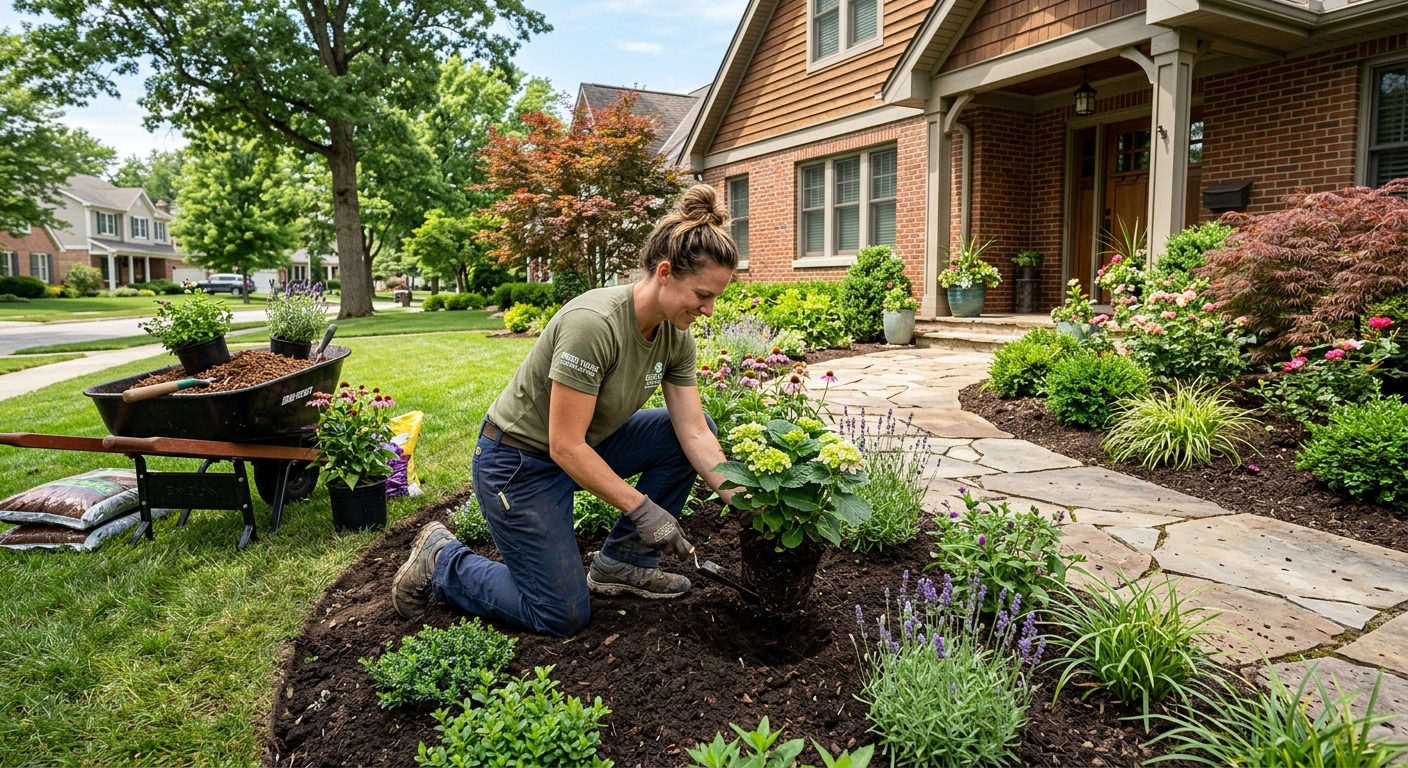
Landscaping options and costs in Rexdale-Kipling
In Rexdale-Kipling, homeowners often start with a “quick refresh,” then realize the yard’s layout, drainage, and planting plan are what determine whether the improvements last. With 10,529 residents in the area (Statistics Canada, 2021 Census), local demand is steady—especially where families own detached homes with dedicated yard space and the incentive to invest in curb appeal, play areas, and low-maintenance structure. That steady market also means you can find contractors, but availability can tighten in late spring and early fall, when everyone wants installs before the heavy freeze–thaw season begins.
Toronto’s climate also directly shapes cost. Landscaping here sits mainly in plant hardiness zones 6a–7a, so we can use a broader palette than in colder Prairie zones, yet winter lows near –23 to –18°C still require properly hardy trees and well-protected root zones. Freeze–thaw cycles and clay/fill soils drive structural prep costs: patios, steps, and retaining walls often need deeper granular base, geogrid where appropriate, and drainage detailing. In neighbourhoods around Islington–Kipling and the broader Etobicoke fringe, interlocking walkways, driveway-adjacent patios, and foundation-conscious grading are particularly in demand—often because homeowners want to reduce pooling near foundations and improve transitions to gardens.
Below is a practical cost comparison to help you budget for common projects before you call for an itemised quote.
| Service |
Description |
Season |
Price Range |
| Full landscape design and installation |
Site visit, concept + layout, planting plan, soil/grade recommendations, then supply and install of softscape and relevant hardscape |
Spring to early fall (typically May–October) |
$8,000 – $40,000 |
| Sod installation (supply, grade, lay, roll) |
Minor grading/levelling as needed, topsoil or amend, sod delivery and install, rolling and starter fertilizer |
Best in spring and early fall (avoid extreme heat) |
$2,500 – $8,000 |
| Lawn seeding (grade, seed, starter fertilizer) |
Final grading, seed selection, starter fertilizer, light top-dress where required, initial watering plan |
Spring or fall (cooler growth windows) |
$1,800 – $5,500 |
| Interlocking patio or walkway |
Excavation, granular base and jointing sand, pavers/stone, edge restraint, compaction, simple drainage tie-in if needed |
Spring to fall (dry conditions preferred) |
$6,000 – $25,000 |
| Retaining wall (interlocking block) |
Block retaining wall with proper base prep, geogrid where required, backfill, and weeping/drainage components |
Spring to early fall (freeze–thaw risk minimized) |
$6,000 – $30,000 |
| Tree and shrub planting |
Soil prep, digging, amendments as required, staking/anchoring, mulch beds, and initial watering plan |
Spring or fall planting windows |
$800 – $6,000 |
Prices are estimates only and vary by project scope, site access and material selection.
What affects the price of landscaping in Rexdale-Kipling
In Toronto and across Ontario, two contractors can price what looks like the same yard upgrade with a 30–50% difference, even when the end “look” is similar. The biggest reasons are how each quote handles unseen work: soil conditions, drainage repairs, granular base depth, and whether plant selection is built for zone-appropriate survival. In Rexdale-Kipling, that variation shows up most in the shoulder-to-shoulder tasks—grading, trenching for drainage, and proper base preparation for concrete/stone—because freeze–thaw cycles punish shortcuts. When excavation hits clay, fill, or poor compaction, labour and disposal increase quickly.
Climate and frost dates also shape what crews can do and when. With hardiness zones 6a–7a, we can install a wide range of hardy shrubs and perennials, but we still work within May to October for most installs to avoid winter kill and heaving. In Prairie regions (zones 2–4), shorter seasons and drought push designs toward ultra-hard strategies and simpler palettes, and retaining wall base depth must be taken below the frost line as well—so the structure rules are similar, but the planting palette differs. Coastal BC offers a longer growing season and lush options, yet heavy-rain conditions there make drainage planning essential; in the dry BC interior, water restrictions drive drip irrigation and xeric planting. For Southern Ontario (Zone 5–6), we’re in the middle: a moderate season with summer dry spells where irrigation design can affect ongoing costs.
Concrete Rexdale-Kipling examples:
- A modest sloped front yard may add $1,500–$6,000 in grading and topsoil depending on cut/fill and where water must be routed.
- Switching from a basic lawn seeding approach to sod can push costs into the $2,500 – $8,000 band; it’s often justified when you want instant usability or erosion control.
- A retaining wall package can move from small-basis work into the $6,000 – $30,000 band when excavation, geogrid, and drainage hardware are properly included.
| Price Factor |
Why It Matters |
Cost Impact |
| Yard size in sq ft — the primary cost driver for softscape |
More area means more excavation, materials, labour hours, and longer curing/verification time |
Can change total cost by several thousand dollars quickly |
| Grading and drainage work — slope corrections add significant cost |
Fixing pooling or directing runoff safely requires excavation, re-compaction, and sometimes retaining support |
Often a major driver behind 30–50% quote differences |
| Drainage bed or French drain installation |
Under-surface drainage prevents water from sitting in clay and undermining patios/sod |
Material + labour intensive, especially with tie-ins |
| Plant material tier — native shrubs vs. ornamental vs. mature specimen trees |
Hardiness and size at installation affect survival, watering needs, and labour for handling |
Mature specimens can raise project cost quickly |
| Hardscape vs. softscape ratio — walls and patios cost more per sq ft than lawn |
Stone/paver systems require deeper base, compaction, and edge restraint |
Shifts pricing toward the retaining wall & hardscaping bands |
| Irrigation system design and installation |
Heads, zones, trenching depth, and programming add cost but can protect investment |
Especially important during Toronto summer dry spells |
| Soil amendment and topsoil required |
Clay/fill soils often need amendment for rooting and stable lawns |
Depends on what the contractor finds during excavation |
| Tree removal or stump grinding before new planting |
Access limits, stump size, and disposal requirements increase labour and equipment time |
Can add a substantial, project-specific cost line |
Permits & regulations in Ontario
In Ontario, most planting and softscape work—like planting trees and shrubs, sodding, and laying topsoil/seed—typically does not require a permit. Retaining walls are where you need to pay attention: walls above a height threshold (often around 1.0 m / 3.3 ft, depending on the municipality) usually need a building permit, and sometimes engineered drawings, especially where the wall supports a slope or changes lot grade. Also consider grading changes: if your project alters lot grading in a way that redirects drainage toward a neighbouring property or connects toward a storm sewer in a regulated manner, approval requirements can be triggered.
Before any digging (planting holes, trenching for drainage, or wall footings), contractors should arrange utility locates. For homeowners in Rexdale-Kipling, the practical step is to ask for proof that locates are completed and that the contractor follows safe excavation practices.
To verify an Ontario contractor properly, do this in order:
- Check the Ontario business/contractor licensing status online (where applicable) and confirm the legal company name matches the quote and invoices.
- Request a Certificate of Insurance showing general liability and the correct insured party (you/your property owner details if requested).
- Ask for proof of WSIB/WCB coverage for workers (or a valid exemption/clearance letter where permitted). A reputable contractor won’t hesitate to provide this before work starts.
- Get the permit responsibility in writing: who pulls it, if required, and whether the cost is included in the quote.
Planning a landscape that thrives in Rexdale-Kipling's climate
For a Rexdale-Kipling yard that performs, plan around hardiness zone 6a–7a, typical precipitation swings, and Toronto’s freeze–thaw cycles rather than fighting them. Start with plant selection: choose zone-appropriate, hardy species (native or proven performers) that handle winter cold near –23 to –18°C and summer humidity without constant replacement. This reduces both labour and watering.
Sod versus seed is where many homeowners feel the trade-off immediately. Sod gives instant coverage, stabilizes soil quickly, and can be worth it when erosion is a concern; however, it typically costs around $2,500 – $8,000 for a typical lawn scope, while seeding is often less expensive for comparable coverage. In practical terms, if your goal is to prevent bare patches that wash during spring thaws, the sod cost can be justified. If your lawn just needs density and you can manage initial watering and time, seeding is usually the budget-friendly route.
Next, drainage and grading: Toronto yards often sit on clay or imported fill, so pooling near foundations is common after heavy rains. Proper grading slopes away from the home, and when needed, a French drain or drainage bed prevents water from undermining patios and causing heaving.
Finally, hardscape base preparation matters. Interlocking stone patios and retaining walls need adequate granular base depth and compaction to withstand frost movement. For low-maintenance design, use mulch beds, groundcovers, and a smaller set of perennials that repeat well—so you get curb appeal without constant weeding. Rain gardens and smart “soak-and-hold” planting areas can also work well in Toronto settings where you want to manage runoff rather than simply divert it.
Example: If you’re deciding between re-laying sod versus addressing a consistently damp low spot, fixing the drainage/grade may cost less over the long run than repeated lawn replacement. That’s the value of doing the structural prep first—especially in a freeze–thaw climate.
| Element |
Climate Consideration |
Maintenance Level |
Price Band |
| Sod lawn installation |
Needs early root establishment before winter; benefits from grading to reduce pooling in clay |
Low to moderate (watering until rooted, then routine mowing) |
$2,500 – $8,000 |
| Native perennial garden |
Zone-appropriate varieties handle cold snaps and return reliably after frost |
Low (mulch refresh, light pruning) |
$800 – $6,000 |
| Mulched shrub border |
Mulch buffers freeze–thaw impacts on roots and reduces weed pressure |
Low (occasional weed control and topping up mulch) |
$1,200 – $5,500 |
| Interlocking stone patio |
Requires deep, compacted base to avoid heaving during freeze–thaw |
Low (periodic joint sand/top-up if needed) |
$6,000 – $25,000 |
| Retaining wall (block) |
Backfill and drainage elements protect against water pressure in winter |
Low (visual checks, drainage inspection) |
$6,000 – $30,000 |
| Drip irrigation system |
Improves water efficiency during summer dry spells; supports targeted watering for hardy beds |
Moderate (seasonal adjustments, winterisation) |
$2,000 – $7,500 |
How to choose a landscaping contractor in Rexdale-Kipling
Choosing the right contractor in Rexdale-Kipling starts with proof, not promises. For Ontario work, confirm licensing/registration where applicable, and always verify insurance and worker coverage.
- Liability insurance: ask for a Certificate of Insurance and verify the coverage limits and that it covers your property during the work.
- WSIB/WCB (worker coverage): request proof of coverage (or a legitimate clearance/exemption document where permitted). This protects you if a worker is injured on your site.
- Check the company details: make sure the legal name on insurance matches the quote and invoice, and that the contact information is consistent.
Next, get 2–3 itemised written quotes. Itemised means labour + materials separated: excavation, base prep, drainage components, pavers/blocks, topsoil/amendments, plant sizes, delivery fees, and disposal/haul-away. Avoid “lump sum only” proposals for projects involving retaining walls or patios where base depth and drainage detailing should be clear. Ask:
- What is excluded (site conditions, tree removal, minor concrete removal, utility locates, extra excavation)?
- Is permit pulling included if your wall/grade change requires it?
- Is disposal/soil hauling included, or will you pay extra?
- What is the workmanship warranty length, and what does it cover (settlement, material defects, drainage performance)?
- Is the manufacturer warranty for plants/stone included, and is it transferable to you?
- What payment schedule is proposed—never pay more than 10–15% upfront, and hold back until the job is complete and verified?
- Can they give you a start date and completion estimate in writing, tied to weather windows?
- Checklist: license/registration confirmation; insurance certificate on request; WSIB/WCB proof; itemised breakdown; named products/plant sizes; base/drainage specs; permit responsibility in writing; disposal included or priced; clear warranty terms; payment schedule with a holdback; project timeline; site-protection plan (protecting lawns, drives, and fences).
Red flags in Rexdale-Kipling include quotes without drainage/base details, refusing to provide insurance/WSIB proof, vague scope wording (“as required” without quantities), asking for large deposits upfront, and starting work without confirming utility locates—especially before any trenching for drainage or wall footings.
Frequently asked questions — landscaping in Rexdale-Kipling
How do I improve drainage in my yard?
In Rexdale-Kipling, drainage problems usually show up because clay/fill holds water and the yard grade changes over time. The most reliable fixes are grading corrections (making sure runoff slopes away from the home) and installing a drainage bed or French drain where pooling occurs. During quotes, ask contractors to explain how they’ll route water: where it will go, how they’ll tie into existing weeping tile/drainage (if applicable), and whether they’ll adjust soil compaction under softscape or hardscape. A common mistake is adding sod or seed over a damp low spot—then replacing it again after each wet spring thaw. If drainage work pushes your project into the hardscape/reroute category, expect costs to align with the larger install bands like $6,000 – $30,000 when retaining or major base prep is involved.
What is xeriscaping and does it suit Rexdale-Kipling?
Xeriscaping is a water-wise approach that focuses on drought-tolerant plantings, efficient irrigation, mulching, and smarter grouping of plants by water needs. It can suit Rexdale-Kipling well, but we adapt it for Toronto’s zone 6a–7a winters and freeze–thaw cycles—so we don’t use ultra-arid “desert-only” palettes. In Southern Ontario, you still get humid summers and winter cold, so your xeric plan should rely on hardy shrubs and perennials that survive cold, plus thicker mulches and well-designed soak areas to manage occasional dry spells. If your yard is already prone to pooling, a rain garden or runoff-capture approach often performs better than pure xeriscape. If you’re adding irrigation for targeted watering, an efficient drip system may move the budget toward a dedicated irrigation range (often $2,000 – $7,500 depending on zones and trenching).
How do I plan a low-maintenance yard?
For a low-maintenance Rexdale-Kipling yard, plan in layers: reduce lawn area where it’s hard to keep perfect, build stable garden beds, and choose hardy plants that don’t need constant replacement. Start by solving drainage early so beds don’t stay wet (or lawns don’t fail in low spots). Then use mulch in shrub borders, groundcovers to suppress weeds, and a curated perennial plan so you’re not replanting every year. Maintenance drops further when hardscape is properly base-prepped, because settlement and heaving create ongoing repairs. As you compare options, sod may get you quick results but costs more than seeding; seeding plus good grade and soil amendment can be a better “set it and forget it” path for some homeowners. For smaller transformations, tree and shrub planting often lands in $800 – $6,000, especially when you avoid major excavation.
How deep should a retaining-wall base be for local frost?
Retaining-wall base depth should extend below the active frost movement and be designed for soil conditions and wall height. In Southern Ontario, freeze–thaw cycling is a major structural cost driver, so “shallow base” is a common cause of future leaning and bulging. The contractor should address this with proper excavation, granular base preparation, appropriate geogrid (when required), and correct backfill and drainage components such as weeping/drain lines. Don’t accept vague statements like “we’ll dig enough”—ask for the proposed build-up layers and how they’ll handle compaction testing and drainage. Because retaining walls often require permit review once above a typical height threshold (often around 1.0 m / 3.3 ft, depending on municipality), ask whether the permit (if required) is included in the quote. Budget guidance commonly falls within $6,000 – $30,000 depending on height, length, and drainage scope.
How much does professional landscape design cost?
Professional landscape design costs vary based on how comprehensive you want the plan to be—concept-only versus full design + planting layout + material guidance for installation. In Rexdale-Kipling and the broader Toronto market, many homeowners bundle design with installation, which can place the total project budget in the $8,000 – $40,000 range depending on the size of the transformation and whether hardscape is included. If you only need a design for a smaller planting refresh or a single area (like a front border), costs are typically lower than full turnkey installs, but you still pay for site measurement, plant selection for zone 6a–7a survival, and a practical approach to grading/drainage. When you ask for quotes, request whether design is stand-alone or included, and whether drawings/specs are provided for contractor comparison. That way you can avoid “apples-to-oranges” pricing across multiple bids.
How do I compare landscaping quotes?
To compare landscaping quotes in Ontario (including Rexdale-Kipling), insist on itemised written proposals. A fair comparison requires the same scope: excavation depth, base/granular build-up for patios or walls, drainage provisions (French drain/bed details), soil amendment/topsoil quantity, disposal/haul-away, and plant sizes. Confirm whether permits and utility locates are included where needed, especially for retaining walls and drainage/grade changes. Also compare warranties—workmanship coverage length and what “fixed at no cost” means—plus product/manufacturer warranty details for plants. Don’t ignore payment schedules: reputable contractors keep upfront payments modest (often 10–15%) and use a holdback until completion. Finally, verify insurance and WSIB/WCB documentation before signing. Price alone can be misleading; for example, one quote might land near $2,500 – $8,000 for sod work but exclude grading/drainage prep that another bid includes, which changes how long the lawn survives.