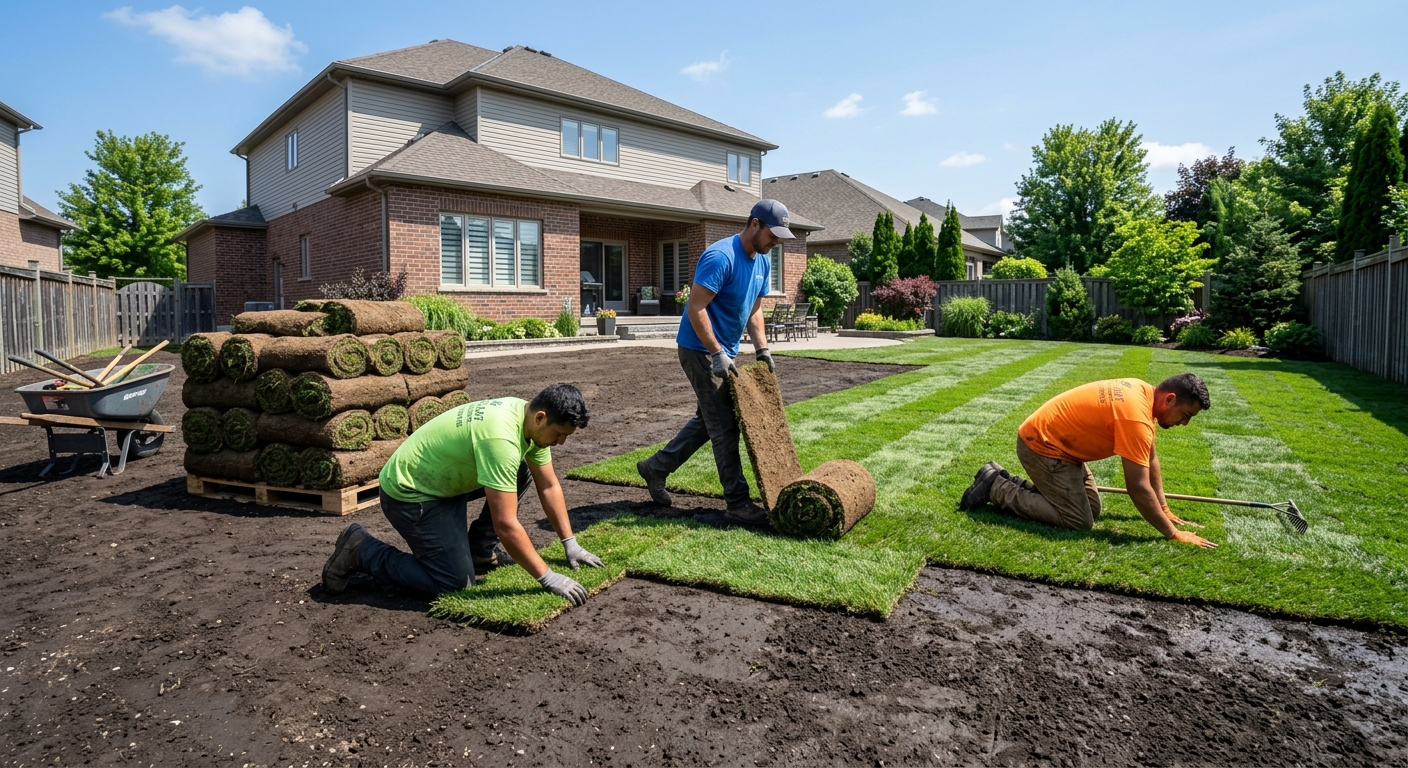
Landscaping options and costs in St. Catharines
Landscaping in St. Catharines can run the gamut from simple yard refreshes to full front-to-back transformations, and it’s especially worth it here because a large share of local housing is owner-occupied. In the 2021 Census, 64.4% of households own, and most homes also have enough yard space to justify long-term improvements. The housing stock is also heavily established—71.0% of homes were built before 1981—so many properties need upgrades for today’s drainage expectations, soil conditions, and winter performance around foundations and walkways.
On the Hamilton–Niagara Peninsula, your planting and installation costs are shaped by hardiness zones 6b to 7a and a working season that’s roughly from late April/early May to mid–October. That gives contractors time to install softscape and establish perennials, but freeze–thaw cycles and occasional saturated spring soils still affect excavation, base preparation, and drainage for patios and retaining walls. In practice, this is why similar jobs can quote differently across the city—access, how much base aggregate and grading is needed, and the availability of crews for busy spring and early fall installs (think higher demand around high-traffic residential corridors).
Trade demand is particularly noticeable in established, tree-lined neighbourhoods like Port Dalhousie and the older sections of West St. Catharines, where homeowners often upgrade curb appeal, add stonework, and rework drainage away from foundations. Below is a quick comparison table to help you budget before you request itemised quotes.
| Service |
Description |
Season |
Price Range |
| Full landscape design and installation |
On-site design + layout, grading/drainage allowances, plant beds, mulch/topsoil, hardscape where included, and setup to help plants establish |
Late April/May to October (weather-dependent) |
$5,000–$50,000 |
| Sod installation (supply, grade, lay, roll) |
Soil preparation, base correction as needed, sod supply, laying pattern, rolling, and initial watering guidance |
Spring and early fall (best rooting windows) |
$2–$7 |
| Lawn seeding (grade, seed, starter fertilizer) |
Light grading, seed selection for Southern Ontario conditions, starter fertiliser, seeding, and aftercare |
Spring (after frost) and early fall |
$0.30–$0.80 |
| Interlocking patio or walkway |
Excavation, compacted base, edging, pavers, and finishing at doors/steps to manage water away from the structure |
May to October |
$40–$150 |
| Retaining wall (interlocking block) |
Block wall installation with compaction, drainage backfill, and reinforcement options depending on height and site conditions |
May to September (weather- and frost-safe) |
$40–$150 |
| Tree and shrub planting |
Plant selection matched to zone 6b–7a, planting holes, amendments, staking/guarding, and mulching |
Spring and fall (best establishment) |
$50–$1,500 |
Prices are estimates only and vary by project scope, site access and material selection.
What affects the price of landscaping in St. Catharines
In St. Catharines, two contractors can quote the “same” landscaping scope and still land 30–50% apart—usually because the hidden variables aren’t identical. On the Hamilton–Niagara Peninsula, the zone 6b–7a climate and frost timing determine both what will survive the winter and how long crews can safely work without compromising base preparation. In practical terms, the frost-free window (roughly late April/early May to mid–October) influences installation schedules, which impacts labour availability and crew stacking—especially around spring tie-ins like patios, drainage corrections, and spring planting.
Zone context matters for the plant palette and the labour intensity. Prairie regions (Zone 2–4) often need drought-tolerant, wind-hardy species and deeper base/grading strategies to handle harsher freeze and short seasons. Coastal BC (Zone 7–8) may allow lush growth but still demands strong drainage where rainfall patterns push water inboard. Dry BC interior and parts of Alberta can add irrigation design complexity because of water restrictions. Here in Southern Ontario (Zone 5–6 regionally), we’re typically balancing rainfall and summer dryness—so irrigation may be optional or “targeted,” and that changes the cost.
Concrete St. Catharines examples: (1) If your lot slopes toward a foundation, drainage/grading corrections can shift a patio or walkway from a straightforward install into a rework that adds compaction layers and sub-drain detailing; this is where the price range for hardscape typically sits at the higher end of the $40–$150 band per unit area. (2) Older homes built before 1981 often have buried services and settled surfaces—excavation and disposal can increase the “full install” cost within the broader $5,000–$50,000 design-and-install band. (3) If you choose mature trees over smaller stock, your planting price rises because of larger root mass, equipment access, and staking/maintenance planning.
| Price Factor |
Why It Matters |
Cost Impact |
| Yard size in sq ft — the primary cost driver for softscape |
More area means more topsoil, mulch, seed/sod, labour hours, and waste handling |
Large yards can double labour/material totals vs. smaller properties |
| Grading and drainage work — slope corrections add significant cost |
Fixing pooling or redirecting water to storm systems often requires excavation and re-compaction |
Can add major cost beyond “standard” installation |
| Drainage bed or French drain installation |
Proper underdrainage reduces freeze–thaw heaving and foundation moisture issues |
Commonly one of the biggest add-ons for older properties |
| Plant material tier — native shrubs vs. ornamental vs. mature specimen trees |
Higher tiers cost more per plant and require more labour/equipment for planting |
Specimen trees can multiply per-plant cost |
| Hardscape vs. softscape ratio — walls and patios cost more per sq ft than lawn |
Excavation depth, base aggregate, pavers/blocks and edge restraint add up quickly |
Shifts the budget upward fast |
| Irrigation system design and installation |
Timers, backflow protection, trenching and head placement depend on layout and plant needs |
Can materially increase design/install totals |
| Soil amendment and topsoil required |
Clay or sandy soils often need amendment to support roots and prevent future settling |
Adds material delivery and labour for proper blending |
| Tree removal or stump grinding before new planting |
Removal/disposal time and equipment availability drive costs |
Often adds a separate equipment-based line item |
Permits & regulations in Ontario
In Ontario, most typical backyard work—such as planting beds, sodding, lawn seeding, mulch, and softscape installation—generally does not require a building permit. However, some projects do trigger approvals. Retaining walls above a height threshold—often around 1.0 m (3.3 ft) depending on the municipality and details—typically require a building permit and may need engineered drawings for safety and stability. Also, changes to lot grading that affect drainage toward neighbouring properties or storm connections can require review, especially when drainage patterns change.
Before any digging, homeowners should order or confirm utility locates. That means marking buried services before you have anyone dig for planting holes, trench drains, or retaining wall footings. In addition, confirm local irrigation and water-use rules if you’re planning automatic watering—St. Catharines doesn’t face the extreme restrictions seen in some dry regions, but rules can still tighten during drought-like periods.
How to verify contractor credentials step-by-step: first, ask for their Ontario licence or proof of eligibility where applicable (and validate it through the relevant Ontario online registry). Second, request a current certificate of insurance showing general liability; confirm it covers landscaping activities and has active dates. Third, ask for proof of coverage for worker-related liability (WSIB/WCB coverage documentation) and confirm it’s not expired. Finally, look for a clearance letter or direct proof of coverage that matches the work date and scope.
Planning a landscape that thrives in St. Catharines's climate
To plan a yard that performs through St. Catharines winters, design with zone 6b–7a in mind and respect the local frost calendar. Start with plant selection: choose native or proven zone-appropriate shrubs, perennials, and ornamental grasses that can handle freeze–thaw cycles with less “rescue effort.” That means adding proper mulch depth, avoiding overwatering in spring when soils can stay saturated, and selecting plants that don’t require constant summer moisture.
Next, decide on sod vs. seed. Sod gives instant results but typically costs 3–4x more per sq ft than seeding once you include prep, turf supply, and labour to roll and secure the edges. If you need quick curb appeal for a listing or an event, sod is worth it—especially in the spring and early fall rooting windows. If time is flexible, seeding is a better value for large lawns where you can manage watering and establishment.
Drainage and grading are non-negotiable in the Hamilton–Niagara Peninsula. Even a beautiful bed can fail if water pools near foundations. For patios and retaining walls, base preparation must account for frost movement: we build on properly compacted aggregate layers and include drainage backfill where needed to prevent heaving.
For low-maintenance design, layer groundcovers, mulched borders, and hardy perennials so weeds get less sunlight. Consider a rain garden in downspout catchments or bioswale-style planting along gentle slopes. If you’re comparing options, here’s a real budgeting mindset: if a 400 sq ft lawn refresh costs roughly “sod per sq ft” at the higher end (often within the broader lawn installation band) versus seeding at a fraction of the total, the savings can fund additional drainage corrections or better topsoil—work that supports everything else longer than a quick cosmetic change.
| Element |
Climate Consideration |
Maintenance Level |
Price Band |
| Sod lawn installation |
Fast establishment during spring/early fall; roots must be protected from freeze–thaw and late-season drying winds |
Low to moderate (initial watering and edge care) |
$2–$7 |
| Native perennial garden |
Zone-appropriate plants handle winters better and reduce replanting after freeze cycles |
Low (mulch refresh and seasonal cutback) |
$50–$1,500 |
| Mulched shrub border |
Mulch buffers soil temperature swings and helps prevent winter desiccation |
Low to moderate (weeding early, then thinning) |
$50–$1,500 |
| Interlocking stone patio |
Base depth and drainage protect against frost heave and water infiltration |
Low (occasional joint cleaning/edge checks) |
$40–$150 |
| Retaining wall (block) |
Drainage backfill and compaction are key for freeze–thaw stability |
Low (inspection after spring melt) |
$40–$150 |
| Drip irrigation system |
Targets root zones during summer dry spells while avoiding wasted water in clay soils |
Moderate (seasonal tune-ups) |
$5,000–$50,000 |
How to choose a landscaping contractor in St. Catharines
Choosing the right contractor matters in St. Catharines because winter performance depends on details: base prep depth, drainage choices, and planting establishment timing. Start by verifying Ontario credentials. Ask for their proof of liability insurance (certificate of insurance with active dates and coverage for landscaping-type work). Then confirm worker coverage such as WSIB/WCB if they have employees—request documentation and verify it’s current. If they mention being licensed or registered for specific work, ask for the reference number and confirm it through the appropriate Ontario online registry.
Next, get 2–3 itemised written quotes. Look for labour and materials breakdowns (not just one lump sum). Good quotes spell out what’s included: topsoil and amendments, aggregate depth assumptions, disposal, protection of lawn areas during work, and whether utility locates are booked before trenching.
Read the scope line-by-line: Are permits required and included if needed? Is disposal of sod/soil included? Who restores any disturbed areas? For warranty, ask for the workmanship warranty length, what it covers (settling, workmanship-related drainage issues, labour for plant replacement), and whether product warranties transfer to the homeowner. For payment, avoid paying more than 10–15% upfront. Use a holdback until the work is complete and inspected. Finally, request a start date and a completion estimate in writing, tied to reasonable weather conditions for our late April/May to October window.
- Ask for proof of insurance and WSIB/WCB coverage before signing.
- Get an itemised quote with separate lines for labour, materials, and disposal.
- Confirm whether utility locates are included for digging.
- Verify drainage/grading assumptions (where water will go after the job).
- Require base prep details for patios/walkways/retaining wall blocks.
- Check plant list specifics (species, size/canopy, and hardiness fit).
- Ask who supplies topsoil, mulch, and soil amendments (and the quantities).
- Ensure the scope states what’s excluded (site cleanup, removing old beds, tree work).
- Confirm warranty terms for workmanship and plant replacement timeframes.
- Agree on a payment schedule with a holdback until completion and final grading checks.
- Request a timeline with start and completion dates, plus weather contingency.
- Look for a clear contact person for day-of questions and change orders.
Red flags in St. Catharines include: quoting by the “estimate” only (no itemisation), refusing to provide insurance/WSIB/WCB documentation, vague drainage claims like “we’ll fix it” without describing how, demanding a large upfront payment, and missing timelines or putting everything “subject to weather” without a practical plan. If you see two or more of these, keep looking.
Frequently asked questions — landscaping in St. Catharines
How do I compare landscaping quotes?
In St. Catharines, compare quotes by scope and line items, not just the total. Ask each contractor to itemise labour and materials (topsoil, mulch, aggregate/base depth, plant list with sizes, sod vs. seed quantities) and to confirm what’s included for grading, disposal, and utility locates. For drainage-related work, look for specifics about where water will be directed after the job—especially important for older properties built before 1981, where grading and drainage often need correction. If one quote offers a lower price but excludes base prep or drainage bed work, it may cost more later. As a quick anchor, hardscape items often land in the $40–$150 band per unit area, while full design-and-install projects commonly sit within $5,000–$50,000 depending on scope.
How long does a landscaping project take in St. Catharines?
Timing depends on weather windows and how much excavation and drainage work is involved. Most planting and mulching can be done quickly once materials are on site, but patios, walkways, and retaining walls take longer because they involve excavation, compacted base layers, and careful staging to avoid exposing bare subgrade before it rains. In Ontario, many homeowners schedule work between late April/May and October; that window fits planting establishment and avoids frost-sensitive base issues. A small sod lawn or a simple border may take a few days, while drainage correction plus interlocking can stretch to one to three weeks including curing/compaction time and finishing. Ask your contractor for a written schedule with weather contingencies so you can plan around the working season in St. Catharines.
What is the best grass type for a St. Catharines lawn?
For Ontario lawns in the St. Catharines area, a blend typically performs best—often a mix of fine fescues for shade and durability plus some improved turfgrass for traffic, depending on your sun exposure and soil condition. The right seed or sod choice depends on whether you get full sun, partial shade, or areas that stay damp after spring melt. If you’re seeding, your contractor should recommend a seed blend appropriate for Southern Ontario and confirm it’s suited to our freeze–thaw cycles and local mowing habits. If you’re sodding, ask what cultivar they use and whether it matches the sun pattern of your yard. Your quote should reference turf quantities and prep steps, because poor grading matters as much as grass type.
When should I aerate and overseed my lawn in St. Catharines?
In St. Catharines, the most reliable approach is aeration and overseeding in the early fall, when temperatures cool but the soil still supports germination. Spring can work too, but it’s more sensitive to wet soils and late frost. Your contractor should base the schedule on actual ground conditions—if the lawn is waterlogged, aeration can do more harm than good. After aeration, follow with overseeding and starter fertiliser, then keep moisture consistent through establishment (usually short, frequent watering rather than deep drought-like cycles). If your lawn is thin from drainage issues, correct that first—otherwise you’ll spend money to reseed a problem you didn’t fix. A well-prepped lawn also improves results regardless of whether your plan started with sod or seeding.
What trees grow best in St. Catharines's climate zone?
In Ontario’s zone 6b–7a conditions around St. Catharines, many hardy deciduous trees establish well when matched to your yard’s sun and soil drainage. Common selections include species like serviceberry (Amelanchier), eastern white pine as a conifer option, and various hardy native and ornamental trees that tolerate freeze–thaw. The “best” tree also depends on your space constraints: older neighbourhood lots often have narrower yards and buried services, so mature canopy size must be planned early. Ask your contractor to recommend tree sizes (measured canopy/height at planting) and staking needs, and to check drainage so the root zone isn’t staying wet in spring. If you’re replacing mature trees, budget for removal or stump grinding as a separate line item in the quote.
How much does sodding a yard cost in St. Catharines?
Sodding cost varies mainly by yard size, how much grading is needed, and whether drainage corrections are part of the scope. For budgeting, many projects fall within a typical per-square-foot range for sod installation when you include supply, grade correction, lay, and rolling; in our cost bands, sod installation is often referenced around $2–$7 (with the total depending on area). If you have low spots that collect water or a lot of base prep is required, the “sod” line item can expand into a broader lawn-and-drainage scope, increasing total project cost. Request an itemised quote so you can see how much is truly sod versus excavation, topsoil, and compaction work. Also confirm initial watering instructions for our spring/fall establishment windows.