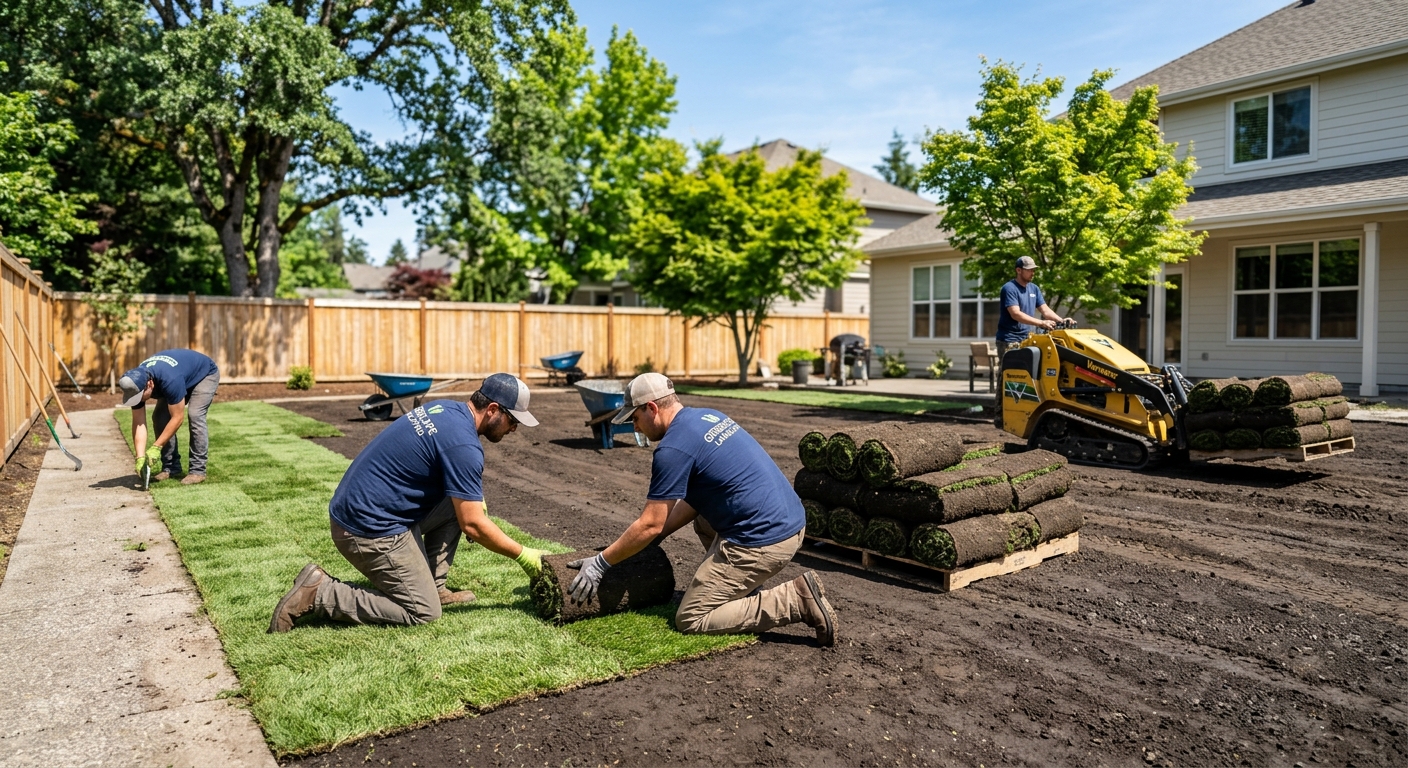
Landscaping options and costs in West Humber-Clairville
Landscaping in West Humber-Clairville is shaped by how the neighbourhoods grew and what homeowners can realistically afford to do with their yards. With a population of 33,312 (Statistics Canada, 2021 Census), contractor demand is steady, especially around busier retail corridors where curb appeal matters. At the same time, West Humber-Clairville has plenty of detached and semi-detached properties, and that yard space often creates a practical incentive to upgrade: when you have room, homeowners tend to invest in both softscape and hardscape—patios, garden beds, and planting along walkways.
In the Toronto area, costs typically track climate risk. We work in plant hardiness zones 6a–7a, where winter lows near –23 to –18°C and frequent freeze–thaw cycles demand correct bases and drainage for patios, steps, and retaining walls. That’s why the same “look” can cost noticeably more here than in milder coastal climates: you’re paying for deeper granular base preparation, proper geogrid/footings, and clay soil correction. Availability also varies by season—spring and early summer book up quickly for sod, seeding, and planting because the frost-free window (roughly May to October) controls what can be installed reliably.
Work is especially in demand in the Humber College–to–Steeles corridor and along major collector roads, where many homeowners want a clean, finished front yard before the peak growing season. Below are common landscaping packages and typical price ranges, so you can compare quotes apples-to-apples before calling contractors.
| Service |
Description |
Season |
Price Range |
| Full landscape design and installation |
Site visit, concept plan, grading/drainage coordination, planting plan, hardscape/softscape installation, and cleanup. |
Spring–early fall |
$8,000–$40,000 |
| Sod installation (supply, grade, lay, roll) |
Remove old turf, minor grading, topsoil/compaction as required, supply and lay sod, roll and water plan. |
Late spring–summer |
$2,500–$8,000 |
| Lawn seeding (grade, seed, starter fertilizer) |
Grade/level, loosen soil, apply seed mix, starter fertilizer, light covering/rolling. |
Late spring or early fall |
$1,500–$5,000 |
| Interlocking patio or walkway |
Excavation, base (granular layers), geotextile, paver installation, edging, jointing sand, sealing optional. |
Spring–summer |
$6,000–$30,000 |
| Retaining wall (interlocking block) |
Excavate/footings, block system, drainage behind wall (weep holes/drainage stone), re-soil and finish. |
Spring–fall |
$8,000–$25,000 |
| Tree and shrub planting |
Soil amendment, planting, staking, mulch rings, initial watering plan; excludes removal unless stated. |
Spring or early fall |
$800–$6,000 |
Prices are estimates only and vary by project scope, site access and material selection.
What affects the price of landscaping in West Humber-Clairville
In West Humber-Clairville and across the GTA, you can see the same landscaping job quoted 30–50% differently between contractors because the “hard parts” aren’t just the visible materials. Labour intensity, site preparation (especially with clay/fill soils), and how much risk a contractor is taking on with drainage and frost stability all change the final number. Design complexity also matters: a simple refresh with topsoil and shrubs costs less than a plan that includes grading corrections, a drainage bed, and a wall that must be built to resist Ontario’s freeze–thaw cycles.
Toronto’s plant hardiness zones 6a–7a and local frost timing (working is mainly May to October) influence both what survives and when crews are available. In Prairie regions (Zone 2–4), shorter seasons and colder, drier stretches typically push designs toward drought-tolerant, wind-hardy species, and crews often have fewer install weeks. Coastal BC (Zone 7–8) can support lush planting palettes, but heavy rainfall demands careful drainage details. Dry BC interior communities often require drip irrigation approaches due to water restrictions, which affects irrigation design and ongoing maintenance. Southern Ontario gives a moderate season, but we still schedule irrigation planning because summer dry spells can stress lawns and newly planted beds.
Concrete examples for West Humber-Clairville: (1) If your yard slopes toward the house or pool of water forms near a foundation, drainage fixes (French drain/grading) can move a project from the lower part of the $8,000–$40,000 design-and-install band into the higher range. (2) If you need a retaining wall with proper base depth and drainage behind it, that’s where the $6,000–$30,000 hardscaping band becomes more likely due to deeper excavation, compaction, and materials. Housing-stock also plays a role—older lots often have mismatched fill, buried debris, or settled areas that require more excavation and soil amendment before sod or pavers will perform.
| Price Factor |
Why It Matters |
Cost Impact |
| Yard size in sq ft — the primary cost driver for softscape |
More area means more topsoil, labour time, seed/sod, mulch, and cleanup. |
Can change total cost by 2–4x depending on scope. |
| Grading and drainage work — slope corrections add significant cost |
Correct slope prevents pooling and foundation moisture. |
Often adds substantial labour and machine time. |
| Drainage bed or French drain installation |
Under pavers or in problem zones, drainage controls water movement. |
Material + excavation can raise the project by thousands. |
| Plant material tier — native shrubs vs. ornamental vs. mature specimen trees |
Size and species change digging time, transplant costs, and survival risk. |
Mature trees can disproportionately increase budget. |
| Hardscape vs. softscape ratio — walls and patios cost more per sq ft than lawn |
Pavers/blocks require deeper bases and compaction layers. |
Shifting 200 sq ft from lawn to patio can add major cost. |
| Irrigation system design and installation |
Heads, routing, and controls must match bed layout and grades. |
Can meaningfully increase design-and-install budgets. |
| Soil amendment and topsoil required |
Clay soils often need structure and fertility upgrades for roots. |
Freight and placement increase total expense. |
| Tree removal or stump grinding before new planting |
Stumps and roots slow excavation and can damage base work. |
Adds specialized labour and disposal costs. |
Permits & regulations in Ontario
In Ontario, most typical landscaping work—planting, sodding, seeding, mulching, and installing softscape—generally does not require a permit. That means common projects like shrub borders, perennial gardens, and lawn renovations are usually straightforward approvals-wise. The work that more often triggers permitting is retaining wall construction above the height threshold used by many municipalities; commonly, a building permit is required when retaining walls are about 1.0 m (3.3 ft) or higher, and engineered drawings may be requested depending on wall height and conditions. Another category to watch is any grading change that meaningfully affects how water drains, especially if it shifts drainage toward neighbouring properties or storm sewer connections.
Before digging, arrange utility locates (call before you dig) so you don’t hit buried services when installing drain lines, planting holes, or wall footings. Also confirm irrigation and water-use bylaws—while those restrictions are more widely discussed in dry regions, Ontario municipalities can still have seasonal limits or enforcement during dry spells.
To verify a contractor for West Humber-Clairville homeowners, ask for documentation and check it in order: (1) Ontario business licensing or relevant registration where applicable, (2) proof of liability insurance showing adequate coverage and active dates, (3) proof of WSIB/WCB coverage, and (4) a clearance letter if required by your project type. Where to look: insurer certificate pages for the policy details, and WSIB’s online tools for employer coverage status. For licensing, use the contractor’s public registry presence and request their business number and insurance certificate directly—then cross-check the certificate details match the company on the contract.
Planning a landscape that thrives in West Humber-Clairville's climate
A landscape that thrives in West Humber-Clairville works with Toronto’s hardiness zone (6a–7a) and the reality of freeze–thaw cycles, rather than fighting them. Start with plant selection: use hardy, zone-appropriate natives and perennials, and choose woody plants that can handle winter lows near –23 to –18°C without winter burn or heaving. Many homeowners underestimate winter survival—staking, proper planting depth, and mulch are what protect roots when the ground cycles between frozen and thawed states.
Next, decide between sod and seed. Sod gives instant visual results, but it costs roughly 3–4x more per sq ft than seeding because you’re paying for turf removal and the sod product itself. For example, if you budget toward $2,500–$8,000 for sod installation, you’re typically choosing speed and uniformity over cost. If time is less critical, seeding (often lower in the project budget range) can be a better fit—especially in late spring or early fall.
Drainage and grading are critical in Toronto. Low spots and clay soils can pool water, stress lawns, and shorten the life of interlocking stone. For hardscape—patios and retaining walls—base preparation must be built for local freeze depth risk: correct granular layers, proper compaction, and adequate subdrainage help prevent movement and shifting. Finally, keep annual upkeep manageable with groundcovers, thick mulch rings, and layered perennials so weeds get shaded out.
If you want a lower-water approach, consider rain gardens in downspout catchment areas or xeriscape-style planting in portions of the yard that dry out quickly. Those designs reduce reliance on manual watering while still meeting the look many West Humber-Clairville homeowners want for curb appeal.
| Element |
Climate Consideration |
Maintenance Level |
Price Band |
| Sod lawn installation |
Instant coverage before summer stress; base needs correct grading to avoid winter heave. |
Medium (watering plan first season) |
$2,500–$8,000 |
| Native perennial garden |
Zone-appropriate plants tolerate Toronto winters and handle humid summers better. |
Low–medium (weeding first year) |
$1,200–$5,500 |
| Mulched shrub border |
Mulch moderates soil temperature through freeze–thaw and limits evaporation in dry spells. |
Low (annual refresh) |
$1,000–$4,000 |
| Interlocking stone patio |
Needs frost-stable base and drainage so pavers don’t settle or lift. |
Low (occasional joint sand) |
$6,000–$30,000 |
| Retaining wall (block) |
Footings and drainage behind wall control water pressure during freeze–thaw cycles. |
Low (periodic inspection) |
$8,000–$25,000 |
| Drip irrigation system |
Targets root zones efficiently; helpful for zone-appropriate plants and low-water beds. |
Medium (seasonal winterisation) |
$2,000–$7,500 |
How to choose a landscaping contractor in West Humber-Clairville
Choosing a contractor well matters in West Humber-Clairville because Toronto projects live or die by prep work: correct bases, drainage, and plant handling. Start by verifying Ontario licensing (ask which municipal business requirements apply), then confirm liability insurance and WSIB/WCB coverage. How to check each: request their WSIB/WCB clearance letter or employer coverage confirmation number; then verify it using the WSIB/WCB online search tool. For insurance, ask for a current certificate of insurance and ensure the named insured matches the contracting company on the proposal and contract.
Get 2–3 itemised written quotes, not a single lump sum. Itemisation should show labour vs. materials: excavation and disposal, topsoil/topdress amounts, stone base layers, paver/block quantities, drainage components, planting quantities, and any irrigation line items. Reading the scope carefully is crucial—confirm what’s included for permits (if required), whether disposal/haul-away is part of the price, and whether excavation is limited to a certain depth. Also clarify what happens if the contractor finds unsuitable clay/fill or buried debris.
Warranty matters: ask for a workmanship warranty length (often tied to the soil/hardscape installation) and separate product/manufacturer warranties for trees, shrubs, sod/turf, and irrigation components. Confirm whether warranties are transferable if you sell the home. For payment, never agree to more than 10–15% upfront; hold back the remainder until the job is substantially complete and cleanup is finished. Finally, require a written timeline with a start date and an estimated completion window.
- Verify WSIB/WCB clearance and insurance certificate match the company name on the contract.
- Confirm the scope includes disposal/haul-away (not “allowance only”).
- Ask for itemised labour and materials quantities (sq ft, units, linear feet).
- Clarify whether grading ties into downspouts and swales safely.
- For hardscape, require base-layer details and compaction approach.
- Confirm drainage behind retaining walls (weep holes and drainage stone) is included.
- Ask how they protect plants and lawn from freeze damage during transitions.
- Get a clear irrigation plan if you’re upgrading to watering automation.
- Request product lists (sod variety, seed mix, mulch type, paver/block brand).
- Confirm warranty terms for workmanship and whether it’s in writing.
- Do a site walk-through and verify measurements against the proposal.
- Avoid “cash discount” pressure—keep payments tied to milestones.
Red flags I see in West Humber-Clairville include: refusal to provide a current insurance certificate, quotes that omit drainage/base details (especially for interlocking and retaining walls), vague allowances for topsoil or excavation depth, missing timelines, and payment schedules that ask for large upfront deposits. If any of those show up, slow down and ask for clarification in writing.
Frequently asked questions — landscaping in West Humber-Clairville
When should I aerate and overseed my lawn in West Humber-Clairville?
In West Humber-Clairville, the safest timing is typically late spring after soil warms up and the lawn is actively growing, or in early fall when nights cool but grass still grows well. If you’re overseeding, aim to aerate first (to open the soil and improve seed-to-soil contact), then apply your seed mix and a light starter fertilizer. For lawns that are thin or patchy, you’ll usually get stronger results from overseeding than from trying to “fix” bare areas with minimal topdressing. If you’re planning a full sod replacement, keep in mind sod installation commonly falls in the $2,500–$8,000 range, while seeding is typically lower—so choose based on how fast you want coverage.
What trees grow best in West Humber-Clairville's climate zone?
For Toronto-area zone 6a–7a, homeowners generally have better success with cold-tolerant, disease-resistant selections that can handle humidity and winter stress. Common picks include serviceberry (Amelanchier), littleleaf linden, and hardy ornamental cherries, along with native-leaning species where appropriate. If you’re planting near foundations or walkways, the key is to match mature size to the space and avoid shallow-root competition in tight yards. For larger yards and curb-appeal goals, you can also plan a small understory layer of shrubs and groundcovers to reduce maintenance after the tree establishes. Tree and shrub planting budgets commonly land around $800–$6,000 depending on container sizes and quantity, with mature specimens costing more due to handling and staking needs.
How much does sodding a yard cost in West Humber-Clairville?
Sodding typically depends on the sq ft area and how much prep is needed (removal of old turf, grading, and soil conditioning). In West Humber-Clairville, homeowners commonly see sod installation in the $2,500–$8,000 band for typical residential front/back yard renovations. If your yard has slope issues, clay compaction, or drainage concerns near the foundation, costs can rise because preparation work must be done correctly for winter freeze–thaw stability. Also consider the timeline: sod is usually installed late spring through summer when soil temperatures support rooting. If you’re aiming to minimize cost but can accept a slower green-up, seeding is often the more budget-friendly option compared with sod.
How do I prevent weeds in my West Humber-Clairville garden?
Weed control starts before plants go in. In Ontario, the most reliable approach is to remove existing weeds and roots, loosen compacted clay where you’ll plant, and then use a thick mulch layer (often 2–3 inches) around shrubs and perennials to block light. Choose dense, zone-appropriate groundcovers where weeds are persistent—groundcover spacing reduces open soil where weeds germinate. Hand-weeding once or twice in the first season after planting is usually worth it, because that’s the period when new beds establish. If you’re building new borders, use proper bed edging so mulch and soil don’t wash into lawn areas. For weed-prone zones, many homeowners also benefit from addressing drainage: pooled water and stressed plants invite weeds. Well-prepped beds reduce ongoing labour and protect your investment.
How do I design a low-water yard in West Humber-Clairville?
A low-water yard in West Humber-Clairville is less about extreme xeriscape and more about choosing the right plants and improving how water reaches roots. Use zone-appropriate natives and drought-tolerant perennials (once established), and group plants by water needs so you’re not watering everything at the same rate. Replace high-maintenance turf areas with mulched shrub borders, groundcovers, and curated perennials—especially where lawns struggle due to shade or clay drainage. Where you still need turf, plan a smart watering schedule and consider targeted irrigation for beds. If you’re adding irrigation, drip systems often fall around $2,000–$7,500 depending on coverage. Also consider a rain garden in downspout catchment areas to manage runoff and reduce watering during dry spells while still handling Toronto’s rain events.
How do I find a licensed landscaper in West Humber-Clairville?
Start by asking the contractor for (1) proof of liability insurance, (2) WSIB/WCB coverage or a clearance letter, and (3) their business/registration details applicable in Ontario. Then verify each document: for WSIB/WCB, use the online employer search or request the clearance format they provide; for insurance, check that the certificate matches the exact company name on the proposal. Next, request 2–3 itemised written quotes showing labour and materials breakdown—especially for hardscape base work and drainage—rather than only totals. Confirm what’s included: permits (if required), disposal/haul-away, excavation depth, and cleanup. Finally, check workmanship warranty terms in writing and keep the deposit modest (typically no more than 10–15%). A reputable contractor will answer questions clearly and put timelines in writing.