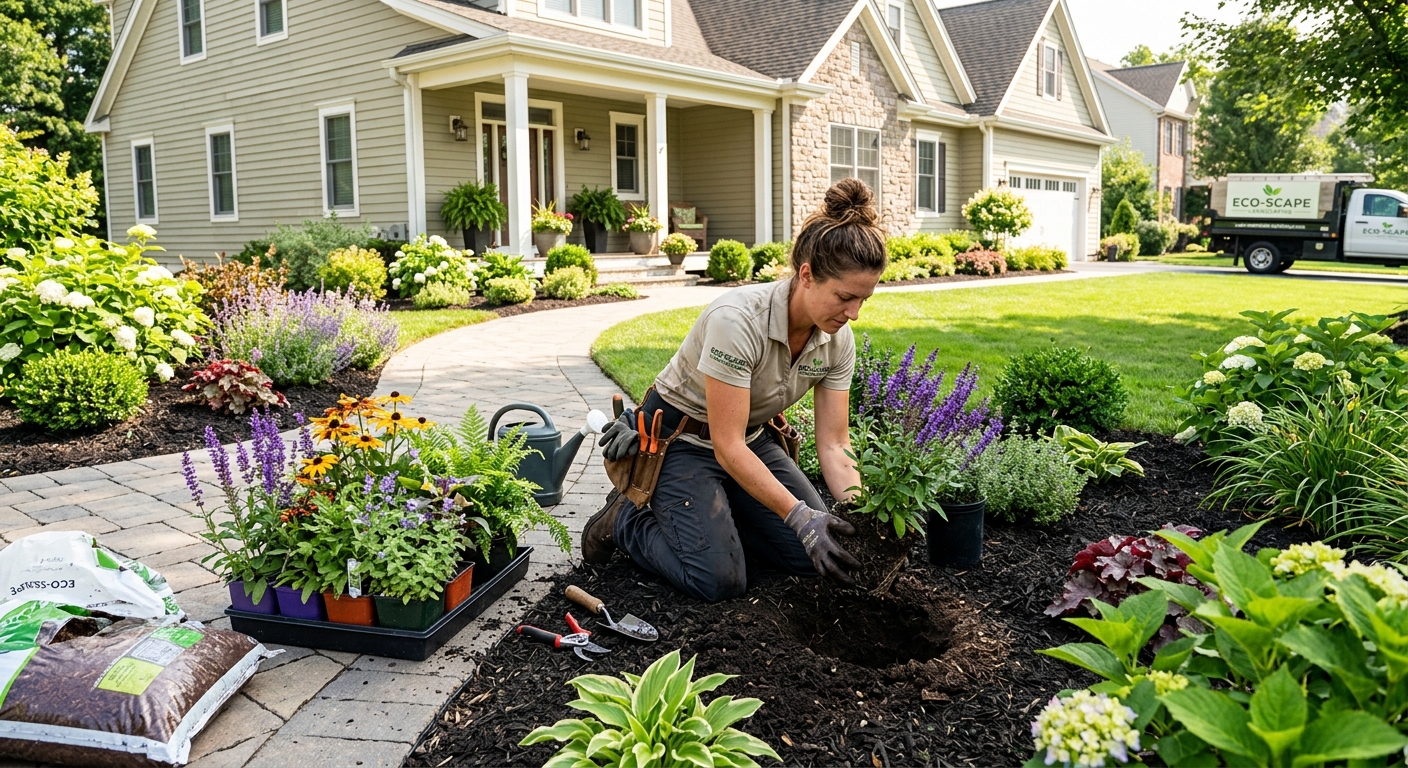
Landscaping options and costs in Applewood Park
In Applewood Park, Alberta, homeowners typically start by deciding between a full landscape refresh, lawn improvements, or targeted hardscape upgrades. With a population of 6,830 (Statistics Canada, 2021 Census), the neighbourhood market is active but not oversized—so scheduling can depend heavily on seasonal weather and trade availability. Many properties are detached homes, which often means you have the yard space to justify investing in drainage, patios, and plantings rather than only patching turf (Statistics Canada, 2021 Census).
Calgary-area landscaping pricing is shaped by Prairie plant hardiness zones 3–4, where late-spring frosts and early fall cold snaps shorten the window for planting and foundation-adjacent work. Freeze–thaw cycles are severe, so contractors price in deeper, well-compacted bases for walkways and patios, plus drainage details to reduce heaving and settlement. Because labour commonly represents 40–60% of a full project in the Calgary region, the scope of grading, excavation depth, and how many crews are needed can move quotes noticeably—even when material costs look similar.
Demand is especially strong in family-oriented pockets where homes are older and backyards need regrading for water control; in Applewood Park, that often shows up around the most established residential streets where driveways, walkways, and mature trees are already in place.
Use the table below to compare common options, then align the scope to your frost-season realities and soil conditions.
| Service |
Description |
Season |
Price Range |
| Full landscape design and installation |
Site walk, concept + layout, grading plan, hardscape, planting, and irrigation (as applicable) |
Late spring to early fall (weather-dependent) |
$5,000–$50,000 |
| Sod installation (supply, grade, lay, roll) |
Soil prep, final grading, topsoil add-on if required, sod delivery and installation, starter fertilizer |
May–June and August–September |
$1,500–$6,000 |
| Lawn seeding (grade, seed, starter fertilizer) |
Reseed/overseed, light soil conditioning, seed + starter fertilizer application, light raking/rolling |
April–June and late summer |
$900–$4,000 |
| Interlocking patio or walkway |
Excavation, compacted base, edging, interlocking stone, jointing sand, clean-up |
May–October |
$8,000–$35,000 |
| Retaining wall (interlocking block) |
Drainage fabric + weeping, geo-grid (as needed), compacted base, block wall, caps, backfill |
May–October (base prep is weather-sensitive) |
$10,000–$40,000 |
| Tree and shrub planting |
Soil improvement, amendments, planting layout, watering plan setup, mulch rings, stakes (if needed) |
Spring and early fall |
$800–$15,000 |
Prices are estimates only and vary by project scope, site access and material selection.
What affects the price of landscaping in Applewood Park
Even when two homeowners ask for “the same job” in Applewood Park, Alberta, quotes in the Calgary region can differ by 30–50% due to the hidden parts: excavation depth, soil conditions, how much regrading is required, and how much hardscape support is needed to survive freeze–thaw. In southern Alberta, the short growing season (zones 3–4) means contractors must plan for frost windows and protect installations that can’t tolerate repeated cold snaps. Labour demand also shifts—so when weather delays set you back, crews may need overtime, rush materials, or resequencing.
Hardiness and frost timing influence both what survives and what can be installed. For example, retaining-wall base depth has to reach below the frost line, and that excavation plus disposal drives cost quickly. Prairie-region yards also tend to need drought-tolerant, wind-hardy species; plant choices can change the overall budget from the “native shrubs vs. ornamental vs. mature specimens” tier. Compare that with coastal BC’s long, mild growing season (where planting calendars are more forgiving but heavy rainfall requires excellent drainage design) or with southern Ontario’s moderate season (where summer dry spells are a key irrigation consideration). Calgary’s semi-arid climate and periodic watering restrictions still steer design toward zoned systems, smart controllers, and soil improvement rather than high-water turf.
Concrete examples from local bids: adding 4–6 inches of suitable base and compacting properly under an interlocking patio can add several thousand dollars, but it prevents post-install settling. Similarly, upgrading from basic topsoil to proper soil amendment and drainage bedding can raise the plant budget, yet it reduces future replacement costs—especially for shrubs near downspouts.
| Price Factor |
Why It Matters |
Cost Impact |
| Yard size in sq ft — the primary cost driver for softscape |
More area means more excavation/grade work, more topsoil or sod, and more planting materials |
Can change total cost by 20–60% depending on turf vs. planting coverage |
| Grading and drainage work — slope corrections add significant cost |
Controls water away from foundations and prevents pooling that damages lawns and shrubs |
Often adds several thousand dollars on older yards with low spots |
| Drainage bed or French drain installation |
Creates a reliable pathway for subsurface water |
May move a project up one price tier, especially under patios |
| Plant material tier — native shrubs vs. ornamental vs. mature specimen trees |
Availability, size, and planting success requirements vary widely |
Typically a mid five-figure project can swing by $2,000–$10,000 |
| Hardscape vs. softscape ratio — walls and patios cost more per sq ft than lawn |
Hardscape needs deeper base, edging, and heavier materials |
High hardscape ratios can push totals toward $8,000–$40,000+ bands |
| Irrigation system design and installation |
Zoning and coverage must account for wind, soil type, and sun exposure |
Can add a meaningful portion of the budget on full installs |
| Soil amendment and topsoil required |
Improves root growth and helps stabilize turf and shrubs through freeze–thaw |
Often impacts plant survival and long-term maintenance costs |
| Tree removal or stump grinding before new planting |
Access, debris handling, and protection of remaining roots affects labour |
Can add $1,000–$5,000+ depending on size and site access |
Permits & regulations in Alberta
In Alberta, most landscaping work—such as planting, sodding, seeding, and typical softscape upgrades—usually does not require a permit. That said, retaining walls are where permitting most often comes into play: if the wall is above the usual threshold of 1.0 m (3.3 ft) in many municipalities, a building permit is commonly required and engineered or structured drawings may be requested depending on height, soil conditions, and design.
Grading can also trigger approval. If your project changes lot grading in a way that affects drainage toward a neighbour’s property or toward a storm sewer connection, the city may require review to ensure surface water isn’t redirected improperly. Also, before any digging for planting holes, drainage beds, or wall footings, contractors should arrange utility locates so you avoid damaging buried services.
For Applewood Park homeowners verifying a contractor in Alberta, do it in a clear sequence:
- Confirm the company’s contractor licence status (where applicable for their scope) via provincial/registry resources used for business standing.
- Request a Certificate of Insurance showing general liability; it should match the project address and be current.
- Ask for WSIB/WCB coverage documents (or a clearance letter) and check the dates before work starts.
- Get a written scope for excavation limits, drainage direction, and disposal responsibilities.
- For any retaining wall over the typical height threshold, request the permit/engineering plan details in writing before the first block is set.
Planning a landscape that thrives in Applewood Park's climate
To plan a landscape that thrives in Applewood Park, design around Calgary’s zone 3–4 realities: late frosts, early cold snaps, and severe freeze–thaw. Start with plant selection—choose hardy, zone-appropriate species that can handle wind and short growing seasons, ideally incorporating native trees, shrubs, and perennials that establish reliably with less watering and fewer winter losses.
For turf, decide early between sod and seed. Sod gives instant curb appeal and can be worth it when you need a quick finish window, but it typically costs 3–4 times more per sq ft than seeding. In practice, seeding is often the better fit if you can tolerate a slower start and want to allocate budget to drainage or soil improvement that protects the entire yard.
Drainage and grading are where the Calgary market is unforgiving: pools near foundations can lead to foundation moisture concerns and weak turf. A properly built base for patios and walkways matters just as much as the surface finish—deep, well-compacted layers help prevent heaving. For walls, drainage fabric, proper backfill, and a functioning weeping system are essential to manage water pressure.
Low-maintenance strategies work best when they reduce annual tasks: mulch rings, groundcovers, and layered perennial borders limit weeds while keeping plants protected through winter. Consider a rain-garden or xeriscape approach along downspout routes—particularly if you’re already planning irrigation zoning and soil amendment.
Example of budget justification: if your lawn replacement is pushing you toward $1,500–$6,000 for sod, you may get better long-term value by choosing seeding and investing the difference into grading corrections and a compacted base where water collects—often the difference between “pretty for a year” and “stable for years.”
| Element |
Climate Consideration |
Maintenance Level |
Price Band |
| Sod lawn installation |
Best when the ground warms; avoid installation right before late-spring frost risk |
Medium (watering establishment, mowing schedule) |
$1,500–$6,000 |
| Native perennial garden |
Hardy to prairie winters; designs help survive chinook swings and cold snaps |
Low to medium (spring cutback, seasonal mulching) |
$2,500–$10,000 |
| Mulched shrub border |
Wind-hardy shrubs + mulch protect roots through freeze–thaw cycles |
Low (weed control, occasional pruning) |
$1,800–$8,000 |
| Interlocking stone patio |
Needs deep, well-compacted base and correct drainage slope to prevent heaving |
Low (occasional joint sand top-up) |
$8,000–$35,000 |
| Retaining wall (block) |
Base depth below frost line + drainage reduces water pressure damage |
Low (inspection for settling after heavy thaws) |
$10,000–$40,000 |
| Drip irrigation system |
Zoned drip supports drought-tolerant plants and matches semi-arid Calgary conditions |
Medium (winterization, controller settings) |
$2,000–$12,000 |
How to choose a landscaping contractor in Applewood Park
Choosing the right landscaping contractor in Applewood Park, Alberta starts with confirming the basics before you compare price. Ask for proof of liability insurance (and ensure the coverage is current and appropriate for the project’s scope). For worker protection, request documentation that they have WSIB/WCB coverage or provide a clearance letter—then verify it matches the timeframe of your installation. If you’re also doing any hardscape excavation, base work, or retaining-wall builds, these checks become even more important because risk increases with machinery and underground utilities.
Next, get 2–3 itemised written quotes. You want line items that separate labour and materials—especially for excavation, base materials, drainage rock, interlocking stone, edging, soil amendments, and plant material sizes. Avoid lump-sum quotes that don’t explain what’s included: ask whether permits (for retaining walls over typical thresholds), disposal of excess soil, utility locates, and topsoil sourcing are part of the scope.
Warranty matters too. Require a workmanship warranty length in writing, plus product/manufacturer warranties for any supplied items like irrigation components, block systems, or trees. Ask whether warranties are transferable if you sell the home.
For payment schedules, never pay more than 10–15% upfront. Use a holdback until the job is complete and the final grade/drainage plan is verified.
Finally, set a realistic timeline: request a specific start date and a completion estimate in writing, tied to weather and frost windows typical for Calgary-area installs.
- Provide insurance certificate (liability) and confirm it names your property/address.
- Show WSIB/WCB coverage or clearance letter before mobilization.
- Give a line-by-line quote (labour + materials), not a single number.
- State exactly what’s included for site protection (fencing/vegetation protection where applicable).
- Confirm whether utility locates are arranged and who pays.
- Clarify disposal: is excess soil hauled away and where to?
- For patios/walkways, specify base depth and compaction method (no vague wording).
- For retaining walls, confirm drainage fabric, weeping tile/aggregate, and backfill process.
- Ask about soil amendments and topsoil spec (source and thickness).
- Confirm plant sizes (e.g., caliper, height, root ball diameter) and replacement policy.
- Get a written warranty: workmanship + product warranties, and whether transferable.
- Use a payment schedule with a holdback until final cleanup and walkthrough.
Red flags in Applewood Park include: (1) quotes without drainage/grading details yet pricing “lower” than $8,000–$35,000 patio ranges; (2) no written scope for disposal or base prep; (3) refusal to provide insurance or WSIB/WCB documentation; (4) asking for large upfront deposits beyond 10–15%; and (5) vague promises like “we’ll fix it later” instead of tying work to written tolerances and a final walkthrough.
Frequently asked questions — landscaping in Applewood Park
How do I improve drainage in my yard?
In Applewood Park, drainage fixes usually start with finding where water is actually going after a storm—then matching the solution to the cause. If you have pooling near the foundation or along a low spot, you may need regrading plus a proper outlet path, not just additional topsoil. Where subsurface water is the issue, a drainage bed or French drain (with proper fabric and aggregate) often performs better than surface-only changes, especially through Calgary’s freeze–thaw cycles. If you’re adding hardscape like a patio, base prep and slope are critical to avoid water trapping under the surface. Expect drainage-focused work to influence your total budget within typical full landscape ranges of $5,000–$50,000, depending on excavation depth, disposal, and whether weeping drainage is added. A contractor should also confirm utility locates before digging to protect services.
What is xeriscaping and does it suit Applewood Park?
Xeriscaping is a design approach that reduces water use by using drought-tolerant plants, efficient irrigation, and smarter soil choices. In Applewood Park, where Calgary’s semi-arid conditions and periodic watering restrictions push homeowners toward zoned irrigation and soil improvement, xeriscaping often makes a lot of sense. It can look like a mix of hardy perennials, ornamental grasses, native shrubs, and well-mulched beds—paired with drip irrigation rather than high-water turf. That’s especially helpful for windy sites where evaporation is high and for yards where freeze–thaw stresses shallow-rooted plants. If your goal is fast curb appeal, you can still use sod strategically (for example, a smaller entrance area), while using xeriscape beds elsewhere. Costs vary widely, but many homeowners shift budget from large sod installations toward planting and irrigation design—aligning better with projects that fall within $5,000–$50,000 when done as a full install.
How do I plan a low-maintenance yard?
A low-maintenance yard in Applewood Park is usually built on three principles: resilient plant selection, weed-suppressing soil layers, and drainage that prevents recurring stress. Start with zone-appropriate, hardy shrubs and native perennials that can handle late-spring frosts and early fall snaps in Alberta’s prairie climate (zones 3–4). Layer in mulch and groundcovers to reduce weed pressure, and choose plants sized for your site so you’re not constantly pruning or replacing. On lawns, seeding often reduces cost and can be paired with better grading and soil amendment—while sod can increase upfront cost for instant results. Hardscape can also reduce upkeep: a properly built interlocking patio or walkway with correct base compaction usually requires less seasonal work than turf in harsh winters. If your scope is broad—grading, planting, and irrigation—many homeowners land in the mid five-figure range, consistent with local Calgary projects that can fall within $5,000–$50,000.
How deep should a retaining-wall base be for local frost?
For retaining walls in Applewood Park, the key isn’t a single magic number—it’s designing the wall with a base that sits below the frost influence and includes a properly compacted, well-draining backfill system. In practical contractor terms, you should expect excavation to reach below the frost line concept so the wall doesn’t heave during Calgary’s severe freeze–thaw cycles. The exact depth depends on wall height, soil type, and engineering requirements. If your wall is above the typical 1.0 m (3.3 ft) threshold used in many municipalities, permits and sometimes engineered drawings are commonly required, and the base depth is usually specified in those documents. Always ensure the contractor includes drainage fabric, aggregate behind the wall, and a weeping/relief pathway where needed—this helps manage water pressure that can otherwise undermine the wall. If you’re budgeting, retaining wall projects often fall around $10,000–$40,000 based on length, height, and site excavation.
How much does professional landscape design cost?
Professional landscape design in the Calgary region commonly starts as part of a full design-and-build package. For many Applewood Park homeowners, the most cost-effective approach is to bundle design with installation, since design time and layout decisions directly affect grading, material quantities, and plant success. In the local market, full landscape design & installation is often estimated within $5,000–$50,000, depending on hardscape scope (patios, retaining walls), planting complexity, and whether irrigation is included. If you only want design without installation, some contractors provide a standalone design fee, but the total project cost can still be higher when you later need to translate drawings into a contractor scope and pricing. For best value, ask for a clear breakdown of what the design includes (site survey, concept options, planting plan, irrigation plan if needed) and whether the design is revised after grading recommendations. Avoid paying for design that doesn’t lead to a buildable scope.
How do I compare landscaping quotes?
To compare landscaping quotes in Applewood Park, start by ensuring each quote describes the same scope. Look for line items that separate labour and materials: excavation quantities, base material specs, compaction requirements, drainage rock/fabric, edging, disposal, and the size tiers of plants. A quote that’s lower than expected may be omitting drainage beds, proper base depth, or soil amendments—costly omissions in Calgary’s freeze–thaw conditions. Confirm whether permits are included where required (commonly for retaining walls over the typical 1.0 m threshold) and whether utility locates and final cleanup are included. Check payment terms: reputable contractors generally keep upfront deposits modest (often 10–15%) and use a holdback until a final walkthrough. Finally, verify contractor credentials: current liability insurance and WSIB/WCB coverage (or clearance letter). For reference, if you’re bidding a patio, make sure the quote aligns with realistic interlocking ranges such as $8,000–$35,000; then compare the details, not just the total.