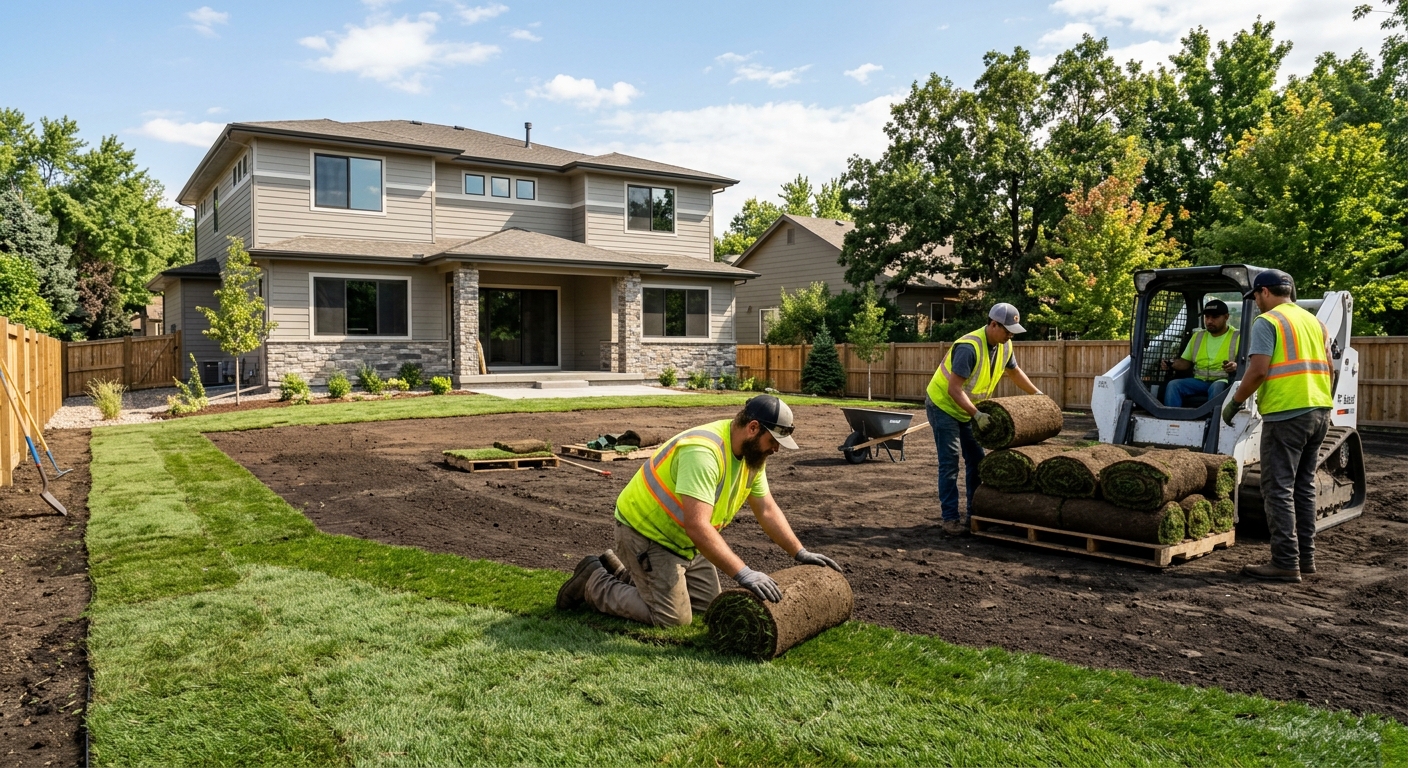
Landscaping options and costs in Bow Island
Landscaping in Bow Island is shaped by prairie conditions and a shorter working season, but the upside is that good design can transform a detached home yard with lower long-term upkeep. Bow Island has a housing mix where single-detached houses make up 83.0% of dwellings, and homeowner households represent 70.1% of households—so many upgrades focus on curb appeal, parking pads, and yard comfort rather than “one-off” fixes. If your home was built before 1981 (a common situation here), you may also be dealing with older grading patterns and mature tree spacing that affects drainage and planting choices.
In the Lethbridge–Medicine Hat region (Canadian plant hardiness zone 4b), landscaping crews plan around freeze–thaw cycles. Those cycles increase costs for retaining walls, paving, and base work because contractors price deeper excavation, well-compacted aggregates, and drainage to prevent heaving. Plant selection also matters: you’ll want prairie-hardy, drought-tolerant, wind-tolerant species that survive hot, dry summers and cold winters near −31.7°C. Trades availability is typically strongest in the May–September window, so complex installs—especially hardscape—often require earlier scheduling.
In Bow Island, neighbourhoods around the town core and established residential streets tend to see the fastest turnaround for patios, front-steps landscaping, and small retaining walls. If you’re comparing options, the table below gives realistic Bow Island price bands to help you discuss scope with contractors.
| Service |
Description |
Season |
Price Range |
| Full landscape design and installation |
Site visit, concept + layout, grading plan, plant palette, soil prep, hardscape/softscape install |
May–September |
$8,000–$35,000 |
| Sod installation (supply, grade, lay, roll) |
Existing topsoil/grade correction, supply and lay sod, roll, first watering setup |
Late April–August (best: May–June) |
$4–$8 |
| Lawn seeding (grade, seed, starter fertilizer) |
Light grading, seed mix, starter fertilizer, tack/mulch as needed |
April–June; some fall oversowing (weather dependent) |
$1.50–$3.50 |
| Interlocking patio or walkway |
Excavate, compact base, edge restraints, interlocking pavers, jointing sand |
May–September |
$120–$300 |
| Retaining wall (interlocking block) |
Block wall with engineered-style drainage approach, base prep, geotextile and backfill |
May–September |
$120–$300 |
| Tree and shrub planting |
Plant supply, digging, soil amendments, staking (where needed), watering plan |
May–June; early fall planting if soil conditions allow |
$500–$8,000 |
Prices are estimates only and vary by project scope, site access and material selection.
What affects the price of landscaping in Bow Island
Two homeowners can receive quotes that differ by 30–50% in Lethbridge–Medicine Hat for the same “basic” request because the big drivers aren’t always visible—excavation depth, drainage needs, soil conditions, and the kind of plants chosen for zone 4b survival. In Bow Island and across southern Alberta, the working window is tighter than in many milder regions, so labour and equipment get scheduled aggressively in May–September. That scheduling pressure can amplify cost differences when multiple trades overlap (e.g., skid-steer excavation and paver base work).
Climate and plant hardiness define both what grows and what crews can do safely. In Bow Island’s zone 4b, frost affects foundation moisture control and the base depth required for hardscape; that’s why retaining walls and paving often require deeper, well-compacted work before any finish surface goes down. In contrast, coastal BC (zone 7–8) allows a long growing season and lush palettes, but it also demands strong drainage strategies in heavier rainfall areas; the irrigation design differs because water availability and restrictions are different. Southern Ontario (zone 5–6) often faces a moderate season, but summer dry spells still drive irrigation—though the freeze–thaw intensity can be less punishing than in southern Alberta. Water restrictions in the dry interior BC further shape drip systems and drought-rated plantings.
Here are a few concrete Bow Island examples that move price up or down. If your yard needs regrading to correct slope away from a foundation, expect added excavation and topsoil/compaction costs—often the difference between a mid-range project and a full landscape build within the $8,000–$35,000 band. If you choose interlocking patio work or a retaining wall, pricing tends to follow heavier base work; that’s why hardscape line items can land near the $120–$300 band range per area/scope as quoted by contractors. Finally, homes built before 1981 can have older drainage patterns or mature root zones, which adds time for careful tree/shrub placement and soil amendment (especially if you’re trying to avoid relocating services).
| Price Factor |
Why It Matters |
Cost Impact |
| Yard size in sq ft — the primary cost driver for softscape |
Larger lawns, more planting beds, and more edging increase labour, materials, and disposal |
Often 20–60% of the total variation between quotes |
| Grading and drainage work — slope corrections add significant cost |
Proper slope prevents pooling and reduces freeze–thaw heaving around foundations and hardscape edges |
Can add substantial cost, pushing projects toward the higher end of the design/install band |
| Drainage bed or French drain installation |
Intercepts water where soil can’t drain fast enough; critical in freeze–thaw areas |
May double base-prep scope for affected zones |
| Plant material tier — native shrubs vs. ornamental vs. mature specimen trees |
Mature specimens cost more and require more careful installation and staking |
Often shifts “tree & planting” costs dramatically within the $500–$8,000 band |
| Hardscape vs. softscape ratio — walls and patios cost more per sq ft than lawn |
Interlocking pavers and block walls require excavation, compacted aggregates, restraint systems, and drainage layers |
Projects with patios/walls commonly land closer to the hardscape-heavy end of pricing |
| Irrigation system design and installation |
Drip lines, zones, and controllers improve efficiency and survival in hot, dry summers |
Can add meaningful cost if you’re retrofitting from a hose-and-water approach |
| Soil amendment and topsoil required |
Bow Island prairie soils can be variable; adding compost and proper topsoil supports rooting for sod/seed and new plantings |
Moderate cost, but can be essential for lawn success and plant establishment |
| Tree removal or stump grinding before new planting |
Removal changes access, excavation plan, and disposal; roots can affect drainage |
Often pushes the job into a higher labour/material bracket |
Permits & regulations in Alberta
In Alberta, most planting and softscape work in Bow Island typically does not require a permit—things like sodding, seeding, planting trees and shrubs, and installing mulch beds are generally considered normal property improvements. However, retaining walls and any work that changes grading to affect drainage may trigger approval requirements depending on your municipality’s rules. As a common threshold, retaining walls above about 1.0 m (3.3 ft) often require a building permit, and some designs may need engineered drawings.
What usually does require a permit (or at least an approvals check) includes: building or modifying retaining walls that meet or exceed the municipal height threshold; significant changes to lot grading that redirect water toward neighbouring properties or storm connections; and any project that raises concerns about drainage, slope stability, or proximity to property lines. Before you dig for planting holes, irrigation lines, or wall footings, call for utility locates to protect buried services.
To verify your contractor before work starts, ask for three things and check them yourself: (1) Alberta business/licensing details—look for the contractor listing through the relevant provincial online registry channels; (2) a certificate of insurance (liability) showing coverage amounts appropriate for landscaping excavation and hardscaping; and (3) proof of WSIB/WCB clearance or coverage status, plus the contractor’s workers’ coverage confirmation if employees are on site. Keep copies and confirm the certificate dates match your project timeline.
Planning a landscape that thrives in Bow Island's climate
Planning for Bow Island means designing around prairie winters, hot dry summers, and zone 4b hardiness rather than trying to force a “one-size-fits-all” palette. Start with plant selection: choose native or zone-appropriate species that handle wind and drought, and that don’t need constant watering or heavy winter protection. For lawns, decide early whether you want quick establishment or long-term resilience. Sod gives instant visual results, but in southern Alberta it often costs roughly 3–4x more per sq ft than seeding—so it’s best when you need fast curb impact or you’re working around timing constraints. If you can accept a slower start and you’re ready to manage the seedbed properly, seeding can be the smarter value.
Drainage and grading are the make-or-break elements in Lethbridge–Medicine Hat. Pooling near foundations can lead to foundation moisture issues, and standing water can worsen freeze–thaw movement under paving and blocks. For hardscape like patios or retaining walls, base preparation must be built for frost: deeper excavation, proper geotextile where needed, correct aggregate compaction, and drainage backfill behind walls reduce heaving and settlement.
For low-maintenance design, build your year-round structure with mulched shrub borders and groundcovers, then add hardy perennials for seasonal colour. Xeriscape concepts work well here: drought-tolerant grasses, layered rock/mulch, and drip irrigation where needed. A rain-garden-style depression can also help manage downspout runoff efficiently, as long as it’s designed for soil absorption and doesn’t sit against foundations.
A practical example: if you budget for a smaller sod lawn area to “anchor” a front entrance, you can stay efficient—while using seeding in less visible back sections to control cost. That balance often avoids spending heavily where it won’t improve day-to-day use.
| Element |
Climate Consideration |
Maintenance Level |
Price Band |
| Sod lawn installation |
Establishment needs consistent moisture during May–June; roots must knit before dry summer winds |
Medium (watering for establishment, mowing) |
$4–$8 |
| Native perennial garden |
Prairie-hardy plants handle frost and drought once established; better wind tolerance |
Low to medium (spring clean-up, occasional weeding) |
$1,200–$6,000 |
| Mulched shrub border |
Mulch buffers soil temperature swings and reduces moisture loss under zone 4b conditions |
Low (mulch refresh, light pruning) |
$800–$4,500 |
| Interlocking stone patio |
Needs frost-rated base and slope to prevent water pooling and freeze–thaw movement |
Low (occasional joint cleaning) |
$120–$300 |
| Retaining wall (block) |
Backfill, drainage, and base depth control heaving in freeze–thaw cycles |
Low (periodic inspection for movement) |
$120–$300 |
| Drip irrigation system |
Improves water efficiency during hot, dry stretches; protects new plantings |
Low to medium (seasonal check, winterization) |
$1,000–$6,500 |
How to choose a landscaping contractor in Bow Island
Choosing the right contractor in Bow Island starts with proof and process. First, verify Alberta business/licence information and make sure the contractor has the right liability insurance for excavation, paver/base work, and plant installation. Next, confirm WSIB/WCB coverage: request the contractor’s current coverage proof (often provided as a clearance or proof-of-coverage document) and check that dates align with your project start. If a contractor can’t provide clear documents promptly, that’s a major warning sign.
Then get 2–3 itemised, written quotes—not just a lump sum. You want labour and materials broken out (base aggregates, pavers/blocks, soil amendment, topsoil, geotextile, and plant supply). Read the scope for inclusions and exclusions: is disposal included, is sod/seed fully supplied, are utility locates included or the homeowner’s responsibility, and does the quote include edging and compaction testing/verification where needed? For permits, don’t assume—ask whether permit pulls are handled by the contractor if required for a retaining wall or grading changes.
Warranty matters: ask for workmanship warranty length and whether it’s tied to the installation crew. Also ask about manufacturer warranties on plant materials and any irrigation components; if plants are guaranteed, ensure the replacement terms are clear. For payment, avoid paying more than 10–15% upfront; use a holdback until the final walkthrough. Finally, get the timeline in writing: start date and an estimated completion date, especially because May–September scheduling in southern Alberta can shift quickly.
- Request Alberta licence/business information in writing before signing.
- Collect a current certificate of liability insurance showing the effective dates.
- Confirm WSIB/WCB coverage proof (clearance/proof document) matches your work dates.
- Demand 2–3 itemised quotes (labour + materials + equipment time).
- Ask for a written scope: grading, drainage, soil amendment, edging, and compaction details.
- Clarify disposal: is debris removal and dump fee included?
- Confirm utility locates: who orders them and when will they be done?
- Ask whether permits are required for your retaining wall/grading plan and who handles them.
- Get a workmanship warranty in writing (what’s covered and for how long).
- Confirm plant warranties and replacement terms (especially for trees/shrubs).
- Agree on a payment schedule: keep upfront to 10–15% and hold back until completion.
- Get a written start date and completion estimate; confirm weather contingency wording.
Red flags in Bow Island include: a contractor who won’t share insurance and WSIB/WCB documents; quotes that don’t specify base prep/compaction for patios or walls; vague scopes that omit drainage/grading work; pressure to pay large deposits upfront; and “cash-only” or no-contract arrangements that make warranties hard to enforce.
Frequently asked questions — landscaping in Bow Island
How long does a landscaping project take in Bow Island?
In Bow Island, most landscaping happens during the May–September window because zone 4b temperatures and freeze–thaw conditions limit when crews can excavate, compact base layers, or rely on fresh sod/seed establishment. Small installs—like shrub planting and mulching—can take a day to a couple of days. Lawn work depends on weather and soil readiness; sod installs are usually quicker on installation day, while seeding needs consistent early moisture. Patios and retaining walls typically take longer because base excavation, drainage layers, and proper compaction add time. For a full design-and-install project, many homeowners plan for several weeks to coordinate materials, hardscape scheduling, and plant delivery—especially if your home has older pre-1981 drainage patterns that require regrading. (Statistics Canada, 2021 Census)
What is the best grass type for a Bow Island lawn?
For Bow Island lawns, you generally want cool-season, drought-tolerant turfgrass choices that handle prairie wind and withstand cold snaps in zone 4b. Contractors commonly recommend mixes designed for Alberta conditions rather than ornamental “show” turf that needs heavy watering. The best option depends on sun exposure, foot traffic, and whether you’re seeding or sodding. If you’re working with a shorter season or want faster coverage, sod may help you establish roots before peak summer dryness. If you choose seeding, plan for better soil prep and careful early watering so the seedbed doesn’t crust. Pricing can differ: sod is typically quoted in the $4–$8 band per square foot area (supply/lay includes grade and installation steps), while seeding is often lower per square foot but needs patience for germination and thickening.
When should I aerate and overseed my lawn in Bow Island?
In Bow Island, aeration and overseeding are best timed to early-to-mid spring or early fall when the ground is workable but the lawn isn’t stressed by extreme heat or freezing. Aerate when temperatures are reliably mild enough for grass recovery; then overseed promptly so seedlings can take advantage of the remaining growing window. Because Lethbridge–Medicine Hat has a short season and variable weather, don’t schedule overseeding too late—late fall growth can fail before roots establish. If your lawn thins unevenly, aeration can also expose compaction issues that contribute to drought stress. A well-planned overseed often pairs with starter fertilizer and a light topdressing strategy. If you’re considering replacing turf entirely, compare the long-term effort: sod costs more upfront (often in the $4–$8 range per sq ft), while seeding costs less but requires follow-through.
What trees grow best in Bow Island's climate zone?
Bow Island sits in plant hardiness zone 4b, so the “best” trees are the ones known for winter survival, wind tolerance, and reliable establishment. Many homeowners do well with hardy selections such as Manitoba maple-type hardier cultivars (where appropriate), and certain prairie-adapted ornamentals depending on your site conditions. For privacy and structure, hardy shrubs paired with a smaller number of trees often look better and require less watering than dense, mixed plantings that struggle in dry wind. Tree planting success also depends on correct soil amendment, watering during establishment, and avoiding planting too close to foundations where drainage and roots can conflict. If you’re working around homes built before 1981, consider existing root zones and mature tree spacing before choosing additional specimens. Typical “tree and shrub planting” packages vary widely—often starting around $500 for small installs and reaching into $8,000 for larger mixes.
How much does sodding a yard cost in Bow Island?
Sodding costs depend on square footage, whether the contractor must correct grade, and how much topsoil/soil amendment is needed before the sod goes down. In Bow Island, sod installation is commonly quoted in the $4–$8 range for supply, grade preparation, and laying/rolling. If your existing base is uneven or compacted, expect additional costs for grading and soil amendment—those steps are crucial in freeze–thaw conditions because a bumpy lawn can settle or fail. Timing also matters: sod is most successful when installed during the part of spring that allows roots to knit before hot, dry winds. For many homeowners, comparing sod to seeding is about trade-offs: sod gives instant curb appeal, while seeding may be slower to establish but can lower upfront costs if you’re patient with the first season’s growth.
How do I prevent weeds in my Bow Island garden?
Weed prevention in Bow Island comes down to the foundation: soil prep, a correct weed barrier strategy, and mulch depth suited for prairie sun and wind. Start by removing established weeds and roots before planting, then loosen and amend soil where plants will establish. For shrub and perennial beds, apply 2–4 inches of quality mulch and keep it pulled slightly back from plant stems to reduce rot risk. Choose dense, zone-appropriate plants so bare soil doesn’t become a weed “landing zone.” If you’re adding a new garden area, discuss whether a geotextile/weed-control layer is appropriate for your specific plant layout and drainage plan. Avoid thick rock-and-sand mixes that don’t hold moisture well unless your irrigation supports it. Finally, build a simple seasonal routine: spring clean-up, spot-weed every 2–3 weeks early on, and refresh mulch before the hottest part of summer.