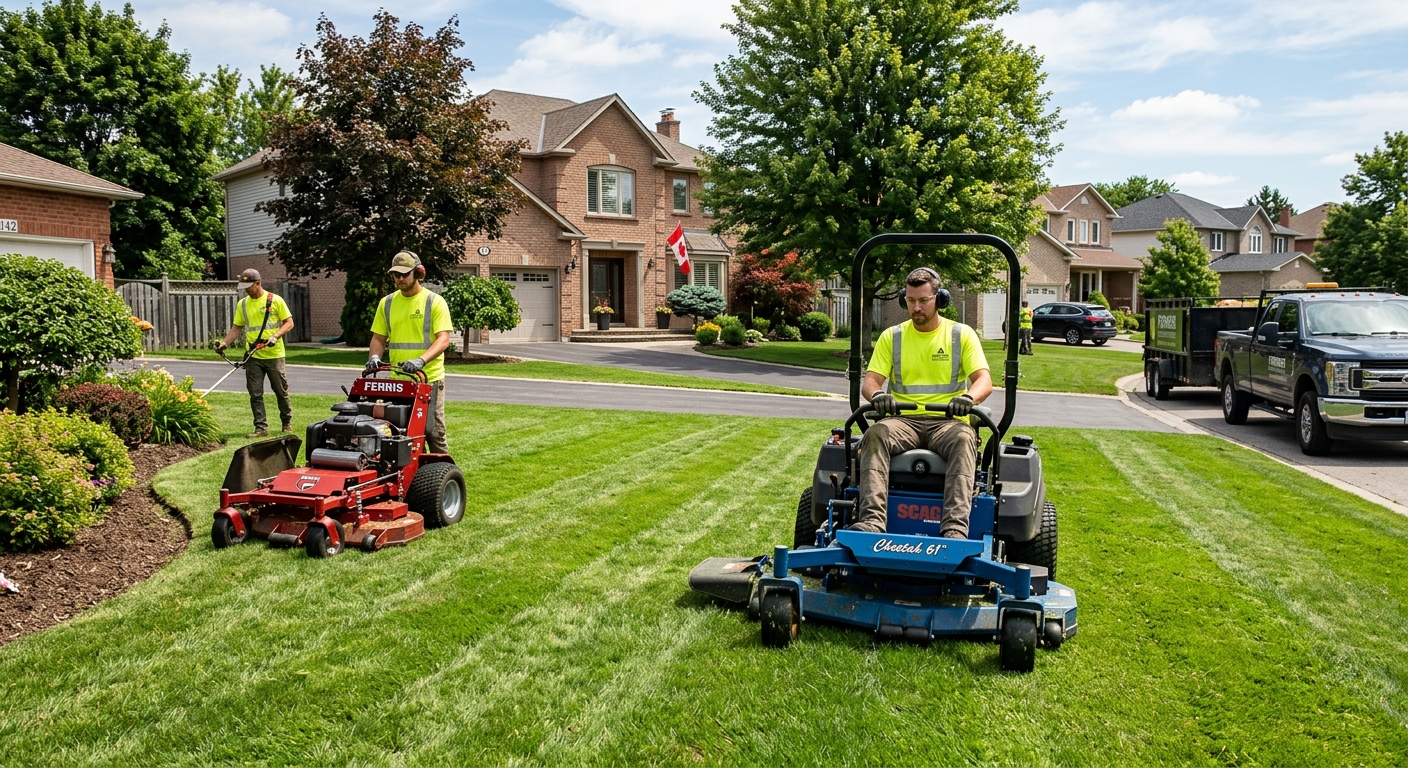
Landscaping options and costs in Canmore
Canmore homeowners have no shortage of landscaping ambition, but the cost of getting there depends on what you’re building and how the site behaves. With 15,990 residents and 4,505 homeowner households (Statistics Canada, 2021 Census), most detached properties in town have the yard space to justify upgrades. In fact, 37.8% of dwellings are single-detached homes, so driveways, patios, and softscape areas are a common “first call” for a contractor—especially in neighbourhoods like Bow Valley Trail and Valleyview where family-sized lots and mountain views make curb appeal a priority.
The Banff–Jasper–Rocky Mountain House corridor sits mainly in plant hardiness zones 3–4 with long, cold winters and pronounced freeze–thaw cycles. That means labour is concentrated into a shorter window (often May through September), while base preparation and drainage details must be built for frost heave. Access constraints—steep grades, rocky glacial soils, and longer trucking distances for materials—also raise costs compared with prairie cities.
As a result, “same-size” jobs can vary noticeably: a full design-and-install package typically includes soil assessment, grading, and plant selection for zone-appropriate, drought-tolerant species—whereas a narrow scope like sod or a small patio is priced more tightly. In Canmore, contractors often price around site preparation first, then apply the local rate for hardscape or planting. Use the table below as a budgeting starting point, then a site visit is the only way to tighten numbers.
| Service |
Description |
Season |
Price Range |
| Full landscape design and installation |
On-site consult, concept + plan, grading/drainage, soil amendments, planting, and hardscape coordination |
Late spring to early fall |
$8,000–$35,000 |
| Sod installation (supply, grade, lay, roll) |
Remove/level existing area, add topsoil/compaction base where required, lay sod and roll |
May to September (best before heat stress) |
$6–$14 |
| Lawn seeding (grade, seed, starter fertilizer) |
Fine grading, seed mix, starter fertilizer, light raking/rolling as needed |
Late spring to early fall |
$1,200–$3,000 |
| Interlocking patio or walkway |
Excavate, base + compaction, interlocking pavers, edge restraints, simple steps if needed |
May to September |
$80–$220 |
| Retaining wall (interlocking block) |
Excavation, geotextile, compacted granular base, block system, drainage gravel and weep control |
May to September (footings planned early) |
$80–$220 |
| Tree and shrub planting |
Plant selection for zones 3–4, soil amendment, staking/anchoring where needed, initial watering setup |
Spring and early fall planting windows |
$250–$1,500 |
Prices are estimates only and vary by project scope, site access and material selection.
What affects the price of landscaping in Canmore
In Canmore, you’ll often hear two very different quotes for the “same” landscaping concept—and it’s not unusual for pricing to swing by 30–50% across the Banff–Jasper–Rocky Mountain House corridor and across Alberta. The biggest reason is that Canmore projects are rarely purely cosmetic: the climate dictates what must be built (and how thick the base must be) to survive freeze–thaw cycles and short planting windows in zones 3–4. Contractors also manage higher overhead due to access challenges, and the need for durable, drought-tolerant species and higher-cost nursery stock sized for elevation and exposure.
How does that translate to real dollars? First, frost dates and hardiness zones limit the working season, which raises hourly labour demand during peak months. Second, freeze–thaw drives drainage and base requirements: retaining wall bases and hardscape bedding must be installed with proper granular layers and compaction so water doesn’t sit and expand under ice. For example, a basic interlocking walkway can feel affordable until grading and drainage are required—those site prep items can push a smaller patio into the broader design-and-install band (often closer to $8,000–$35,000 when included in a full plan). Conversely, a targeted planting refresh may stay nearer the $250–$1,500 per plant/shrub budget range when the soil is already in good shape and irrigation is already installed.
Concrete cost examples we see locally: (1) Rocky, glacial soils mean extra excavation time for patios and wall footings; (2) steep slopes often require hauling and regrading to prevent pooling against foundations; (3) older homes built before 1981—11.6% of the housing stock (Statistics Canada, 2021 Census)—may have established drainage patterns or compacted fill, so we add soil amendment and revised runoff routes instead of “just topping up.”
| Price Factor |
Why It Matters |
Cost Impact |
| Yard size in sq ft — the primary cost driver for softscape |
More area increases materials (topsoil, seed/sod, mulch) and labour hours |
Often the biggest variable; yard size can change totals dramatically |
| Grading and drainage work — slope corrections add significant cost |
Water must shed away from foundations; the wrong slope causes pooling and heaving |
Can add substantial line-items before any planting starts |
| Drainage bed or French drain installation |
Intercepts subsurface water in frost-prone soils |
Typical “hidden” budget item on wetter lots |
| Plant material tier — native shrubs vs. ornamental vs. mature specimen trees |
Mature specimens cost more and require better handling and staking |
Material tier can quickly widen the range of total project price |
| Hardscape vs. softscape ratio — walls and patios cost more per sq ft than lawn |
Hardscape needs excavation, base layers, pavers/blocks, and edge restraints |
Higher hardscape share generally pushes projects into higher bands |
| Irrigation system design and installation |
Even “low-water” designs require correct zoning and drought-tolerant coverage |
Adds equipment and trenching; can be essential for sod success |
| Soil amendment and topsoil required |
Compacted or rocky soils need improvement for root establishment in short seasons |
Can be a major cost driver on older or poorly drained areas |
| Tree removal or stump grinding before new planting |
Access, stump size, and disposal time determine equipment needs |
Can add cost even when the planting area is small |
Permits & regulations in Alberta
In Alberta, most routine landscaping work—planting beds, sodding, seeding, mulching, and most softscape installs—usually does not require a permit. The items that more often trigger permits are structural or drainage-altering changes. For example, retaining walls above a typical height threshold—often around 1.0 m (3.3 ft) in many Alberta municipalities—commonly require a building permit, and sometimes engineered drawings depending on height, soil conditions, and the wall’s design. Also, if you’re changing lot grading in a way that affects drainage toward a neighbour or connects toward storm infrastructure, approvals may be required.
Before digging for planting holes or wall footings, homeowners should call for utility locates to avoid accidental strikes (this is a safety and compliance step contractors follow as part of safe site work). Confirm water-use expectations with local bylaw guidance; while Canmore isn’t managed like the driest BC interior, irrigation rules and outdoor watering limitations still matter—especially during drought conditions elsewhere in the region.
To verify a contractor in Canmore, ask for: (1) their Alberta business details and proof they’re licensed/authorized for the work they’re claiming to do; (2) liability insurance—request a certificate and ensure it includes landscaping/contracting activities; and (3) WSIB/WCB coverage confirmation (workers’ compensation). A real clearance letter or verification document is better than a verbal claim—look for dates, coverage scope, and the contractor named on the policy.
Planning a landscape that thrives in Canmore's climate
Planning for Canmore’s climate means working with zones 3–4, cold winters, and frequent freeze–thaw—rather than treating the yard like a summer project. Start with plant selection: choose alpine-adapted, hardy, zone-appropriate species and prioritize natives or proven performers that handle wind and cold with less winter protection and less watering. For many homeowners, the next decision is sod versus seed. Sod gives instant visual results, but it costs about 3–4x more per sq ft than seeding, and it’s more dependent on consistent watering and soil contact to root before autumn frosts.
Drainage and grading are non-negotiable in the Banff–Jasper–Rocky Mountain House corridor. Pooling near foundations turns into foundation moisture risk and makes frost heave more likely, which is why grading corrections and granular drainage layers often come early in a proper plan. For hardscape—patio, steps, and retaining walls—base preparation must be built for the local frost line: excavate, add compacted granular base, use correct bedding, and ensure the system sheds water away from structures.
For low maintenance, use groundcovers, mulched shrub borders, and perennials with a clear winter plan (mulch depth, spacing, and repeatable pruning). If you want a “low-water” look, xeriscape-style designs and rain-garden features can work well here when paired with efficient irrigation zoning and drainage that’s designed for freeze–thaw. A practical budget example: if you’re comparing lawn options for a medium area, spending on seeding and putting the saved dollars into a better drainage swale and drip zones can be a better long-term value than replacing everything with sod.
| Element |
Climate Consideration |
Maintenance Level |
Price Band |
| Sod lawn installation |
Needs consistent moisture to root before late September frosts; compacted base can prevent uneven heave |
Medium (watering and monitoring during establishment) |
$6–$14 (per sq ft scale) |
| Native perennial garden |
Zone-appropriate plants handle cold and wind better; deeper roots improve drought tolerance |
Low to medium (seasonal trimming, mulch refresh) |
$250–$1,500 (per planting scope) |
| Mulched shrub border |
Mulch moderates freeze–thaw impacts and reduces winter soil drying; hardy shrubs reduce watering |
Low (weed control and annual mulch) |
$1,200–$3,000 (typical border budgets) |
| Interlocking stone patio |
Correct sub-base and edge restraints are critical under freeze–thaw to avoid settling |
Low (occasional cleaning, joint sand top-up) |
$80–$220 (per sq ft scale) |
| Retaining wall (block) |
Backfill, drainage gravel, and frost-tolerant base prevent movement from water expansion |
Low (visual checks after spring melt) |
$80–$220 (per sq ft scale) |
| Drip irrigation system |
Zoned drip supports drought-tolerant plantings and reduces overwatering during shoulder seasons |
Medium (winterization check) |
$1,000–$4,500 (typical system scope) |
How to choose a landscaping contractor in Canmore
Choosing the right contractor in Canmore starts with proof, not promises. First, confirm Alberta business licensing/authorization for the work being performed. Then verify liability insurance: ask for a current certificate of insurance listing the business name and coverage limits, and ensure landscaping contracting activities are covered. For worker protection, request WSIB/WCB documentation—your contractor should be able to provide a verification or clearance-style letter and show coverage dates. If they can’t provide documentation promptly, treat that as a red flag.
Next, get 2–3 itemised written quotes rather than one lump sum. Itemisation should show labour and materials separately (excavation, base, pavers/blocks, topsoil, seed/sod, plants, drainage components, and disposal). Carefully read exclusions: Is disposal included? Are utility locates included? Is permit work included where required (for example, certain retaining walls)? Clarify what happens if rock conditions or drainage problems are discovered after excavation—do they revise the price with a written change order?
Warranty matters in Alberta’s freeze–thaw environment. Ask for a workmanship warranty (how long, and what it covers) plus the manufacturer warranty for materials like pavers or block systems. Confirm whether warranties are transferable to you as the homeowner. For payment, never pay more than 10–15% upfront; use staged payments tied to milestones and a holdback until the job is complete and cleaned. Finally, get a start date and completion estimate in writing.
- Ask for proof of liability insurance and WSIB/WCB coverage before signing
- Request an itemised quote with line-items for base, drainage, and disposal
- Confirm whether utility locates are included and who books them
- Verify plant list is zone-appropriate for zones 3–4 (not just “full sun”)
- Check if sod is guaranteed to root and what watering schedule is provided
- Confirm grading/drainage approach and whether they address pooling
- Ask about geotextile, granular base specs, and compaction method for hardscape
- Clarify retaining wall engineering/permitting triggers for your wall height
- Get a written disposal plan for excavated material and old turf
- Review warranty length for labour and product separately
- Use a staged payment plan with a holdback until final walk-through
- Get timeline dates in writing, including weather contingency language
Red flags in Canmore: (1) only providing a verbal estimate or refusing itemisation; (2) skipping insurance/WSIB/WCB documentation; (3) promising sod “no watering required” or overconfident frost timing; (4) vague drainage answers (“we’ll see once it settles”); and (5) pushing for large upfront payments without milestone schedules.
Frequently asked questions — landscaping in Canmore
How much does sodding a yard cost in Canmore?
In Canmore, sod pricing depends on how much prep is needed—especially grading and soil amendments—because freeze–thaw shows any low spots. As a planning figure, sod installation typically lands around $6–$14 per sq ft (supply, grade, lay, roll). If your site has compacted ground, rock, or drainage issues, prep work can push totals higher before you ever lay turf. Most homeowners find that a simple, relatively flat lawn area prices closer to the lower end, while sloped areas or lots requiring drainage adjustments land closer to the top end. Timing also matters: sod is most successful when installed in late spring to early/mid-summer so roots establish before late September frosts.
How do I prevent weeds in my Canmore garden?
Weed prevention in Canmore starts before planting. Ask your contractor about base prep: removing weeds and roots, improving soil structure, and using a proper weed barrier under mulch only where appropriate (and not in a way that blocks drainage). Mulch depth is key in zones 3–4; a consistent layer helps reduce light to weed seeds and moderates freeze–thaw. Planting density matters too—gaps invite weeds, so a well-designed shrub border with perennials and groundcovers fills in naturally. For irrigation, avoid overwatering; wet edges and exposed soil create weed-friendly conditions. If you’re budgeting, it’s often more cost-effective to invest in grading, topsoil quality, and mulch during installation than to repeatedly “chase” weeds later—especially in older yards built before 1981 (11.6% of housing stock, Statistics Canada, 2021 Census).
How do I design a low-water yard in Canmore?
A low-water yard in Canmore usually combines three things: drought-tolerant planting, efficient irrigation (or minimal irrigation where feasible), and smart drainage so you’re not forcing plants to survive soggy then frozen conditions. Choose hardy, zone-appropriate plants for zones 3–4 and wind exposure, then group plants by watering need—don’t “one zone fits all.” Consider drip irrigation with proper zoning; it reduces water waste and helps establish new plantings without soaking everything. You can also build in xeriscape-style elements like decorative rock, groundcovers, and mulched borders to reduce evaporation. If you’re comparing sod versus seeding, sod can be $6–$14 per sq ft, so seeding often saves money that you can redirect into drip lines and a drainage plan, which usually delivers better long-term results here.
How do I find a licensed landscaper in Canmore?
To find a reputable landscaper in Canmore, start with documentation and transparent quoting. First, verify Alberta business authorization for the scope being offered and request a certificate of liability insurance that matches the contractor name and covers landscaping activities. Next, ask for WSIB/WCB coverage verification (often provided as clearance-style documentation). Then compare quotes: the best contractors provide itemised breakdowns—labour and materials separately—so you can see what you’re paying for (base, drainage, plants, disposal). Be cautious of bids that only include a lump sum without exclusions. Finally, confirm timeline and warranty in writing, including workmanship terms for hardscape and any plant establishment guidance, because winter conditions can expose workmanship issues during spring melt.
How much does landscaping cost in Canmore?
Landscaping costs in Canmore vary widely based on what’s being built: softscape refreshes are cheaper than hardscape and drainage-driven projects. For budgeting, a full design-and-install project often falls in the $8,000–$35,000 range, especially when grading, drainage, and a mix of planting and hardscape are involved. If you’re staying narrower—like a patio or walkway—pricing can follow the $80–$220 band for hardscape scope depending on materials and site prep. If your focus is planting, many homeowners spend roughly $250–$1,500 per planting package/planting scope depending on size and quantity. The key Canmore cost driver is usually site preparation: steep slopes, rocky soils, and frost-sensitive drainage details can raise costs even when the visible “finish” area looks similar.
What plants thrive in Canmore's climate zone?
In Canmore (zones 3–4), plants need cold tolerance, wind resilience, and the ability to handle short growing seasons. The best performers are typically hardy natives and proven alpines that don’t require intensive watering or long frost-free periods. In practice, you’ll see strong results with drought-tolerant perennials, hardy shrubs, and trees selected for cold tolerance and exposure (often with staking or protection when newly planted). The right palette also depends on sun and drainage: wetter pockets need different selections than raised, free-draining beds. A good contractor will match plant spacing and mulch strategy to reduce winter drying and weed pressure—rather than offering a generic list. If you’re working from a budget, start with the planting structure first, then add extra specimens; that’s where spending near the $250–$1,500 planting band usually builds long-term curb appeal.