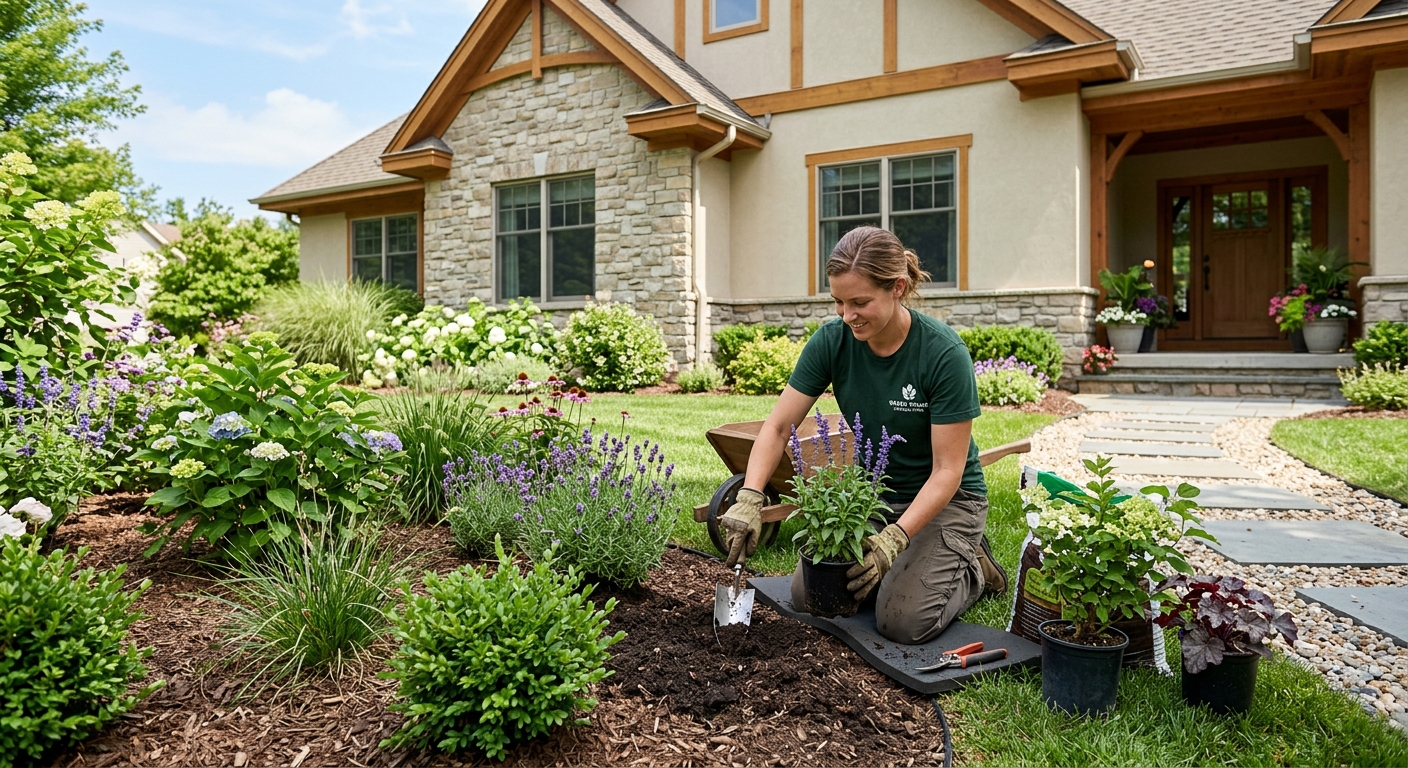
Landscaping options and costs in Red Deer
Landscaping in Red Deer has a different rhythm than many parts of Canada, mainly because the growing window is shorter and the freeze–thaw cycle is intense. With 53.1% of dwellings being single-detached homes, many properties come with the yard space that supports both softscape (plants and turf) and hardscape (patios, walkways, retaining walls). Add in the fact that 64.8% of households are homeowners, and it’s easier to justify investing in upgrades that hold value and look good through winter as well as summer.
In Red Deer, the climate—zones 3a–3b, cool nights, chinooks, and repeated ground movement—affects what contractors build and how they build it. Deep, well-compacted bases under stones and walls reduce heave, while cold-hardy, wind-tolerant, drought-resistant prairie species reduce ongoing watering. Prices also reflect that crews often have less time to install before temperatures drop, which can tighten scheduling around neighbourhoods like Evansdale, where many homes were built earlier and landscaping renewals are common.
To help you compare apples to apples, here are the most common service packages and typical Red Deer price ranges. Use the table as a starting point, then we can refine it once we know yard size, access, drainage issues, and the plant or stone tier you want.
| Service |
Description |
Season |
Price Range |
| Full landscape design and installation |
Site measurement, concept + final plan, grading considerations, base prep, installation of patio/walkway, lawn area, planting beds, and cleanup |
May–October |
$8,000–$35,000 |
| Sod installation (supply, grade, lay, roll) |
Minor grading, compacted base, sod supply, layout, cutting/edges, rolling, initial watering plan |
Late May–September |
$1,500–$6,000 |
| Lawn seeding (grade, seed, starter fertilizer) |
Grade correction, seed + starter fertilizer, light topdressing, establishment watering instructions |
May–early July |
$900–$4,000 |
| Interlocking patio or walkway |
Excavation, geotextile + base (depending on use), sand bedding, pavers, edge restraints, final jointing |
May–October |
$4,000–$22,000 |
| Retaining wall (interlocking block) |
Excavation to frost-resilient base depth, compacted granular layers, block system, drainage layer, backfill, finish grading |
June–September |
$4,000–$30,000 |
| Tree and shrub planting |
Soil improvement, planting holes, staking as needed, mulch rings, watering plan for establishment |
May–September |
$800–$8,000 |
Prices are estimates only and vary by project scope, site access and material selection.
What affects the price of landscaping in Red Deer
In Red Deer, two quotes for the “same” landscaping scope can differ by 30–50% because the price is driven by conditions you only see on-site: yard size, drainage, soil condition, and the level of base and irrigation engineering required. Even within Alberta, the weather and construction demands shift the budget. In prairie zones (roughly 2–4), cold winters and frost depth dictate deeper bases—so a wall footing or patio base can cost more than you expect. In contrast, coastal BC (zone 7–8) typically allows a longer working season and faster plant establishment, but it pushes other costs toward drainage and long-term wet-site performance. BC’s interior water restrictions also change irrigation design decisions, while southern Ontario (zone 5–6) often involves a moderate season where summer dry spells still require irrigation, but not to the same “freeze-safe” level as central Alberta.
Here in Red Deer, we regularly see cost swings for a few reasons. First, the same patio size can land in a different band depending on base depth and compaction requirements—especially if the lot is compacted poorly or has older fill. Second, planting costs rise when upgrading from native shrubs to ornamental or adding a mature specimen tree; you might move toward the upper portion of the $800–$8,000 tree and shrub range. Third, yards with drainage issues often require grading and a drainage bed or French drain, which adds labour and material even before we talk stone or plants. Finally, homes built before 1981 (34.1% in Red Deer) are more likely to have older service layouts and less-flexible grading, which can add rework and disposal.
For a practical sense of scale: a lawn-only refresh can sit near the lower end of the $1,500–$6,000 sod range, while a full design-and-install that includes grading, hardscape, and layered planting is commonly in the $8,000–$35,000 band.
| Price Factor |
Why It Matters |
Cost Impact |
| Yard size in sq ft — the primary cost driver for softscape |
More area means more material (soil, seed/sod), labour time, and maintenance inputs during establishment |
Low to very high; can shift the project into a higher band quickly |
| Grading and drainage work — slope corrections add significant cost |
Correcting ponding and directing runoff away from the foundation typically requires excavation and re-compaction |
Medium to high; often a top driver when downspouts discharge to low spots |
| Drainage bed or French drain installation |
Subsurface systems require trenched excavation, pipe, gravel gradation, and cleanouts |
Medium to high; especially noticeable on older lots with clay or compacted subsoil |
| Plant material tier — native shrubs vs. ornamental vs. mature specimen trees |
Higher tiers cost more per unit and may need larger excavation, staking, and longer establishment care |
Low to high; can swing the “planting” portion from modest to premium |
| Hardscape vs. softscape ratio — walls and patios cost more per sq ft than lawn |
Stones and paver systems include base, geotextile, cutting, edge restraints, and careful finishing |
High; a small increase in patio/wall area can raise the whole estimate |
| Irrigation system design and installation |
Even efficient systems need proper zoning, backflow considerations, and layout sized to water needs |
Medium to high; larger beds and lawns raise material and labour |
| Soil amendment and topsoil required |
Poor native soil often needs import/conditioning for root development and turf establishment |
Medium; depends on how much of the area is being rebuilt vs. left intact |
| Tree removal or stump grinding before new planting |
Tree work adds specialised labour, haul-away/disposal, and time for debris clearing |
Low to very high; can become a major line item on older yards |
Permits & regulations in Alberta
In Alberta, most typical homeowner landscaping work—planting beds, sodding, and most softscape installations—usually does not require a permit. The exception is when you start changing site conditions in ways that affect structures, drainage responsibilities, or require engineering. For Red Deer homeowners, the practical takeaway is to treat retaining walls over a common municipal threshold—often around 1.0 m (3.3 ft)—as the “permit zone.” In many cases, walls above that height require a building permit and sometimes engineered drawings, especially if loads or drainage conditions are involved.
Also consider permits/approvals if you plan grading changes that redirect water. If new grading sends runoff toward a neighbouring property or connects into storm infrastructure, you may need approval. Before digging planting holes or any wall footings, arrange utility locates so you don’t hit buried services. For irrigation and water use, confirm local irrigation practices and any water-use bylaws—drought conditions can tighten restrictions, and your irrigation design should be consistent with what’s allowed in your service area.
To verify contractor readiness in Alberta, follow a clear checklist:
- Ask for their Alberta licence details (if applicable for the scope) and check any public registry listings for status.
- Request a current certificate of insurance for general liability with adequate limits.
- Confirm WSIB/WCB coverage for their workers; they should provide proof on request.
- Keep copies of everything in writing before work starts.
- If a permit is required for your wall or drainage plan, ensure the contractor either pulls it or clearly states who is responsible.
Planning a landscape that thrives in Red Deer's climate
Planning a landscape for Red Deer means working with frost, wind, and the “short season” effect in zones 3a–3b. The goal is not just curb appeal—it’s survival and structure. Start with plant selection: choose prairie-appropriate, native or proven cold-hardy species, and build winter resilience with proper spacing, mulch, and wind-tolerant layouts. Next, decide between sod and seed. Sod looks finished immediately, but it’s typically 3–4x the cost per sq ft compared with seeding because you’re paying for the grow-and-harvest stage plus transport and installation.
Drainage and grading are also non-negotiable in central Alberta. Pooling water increases winter damage and foundation moisture. We typically design slopes to shed water away from the home and ensure downspout discharge doesn’t dump into low spots. Hardscape adds another layer: patio and walkway bases must be prepared to handle frost movement, which usually means proper excavation depth, compaction, and bedding materials.
For low-maintenance design, build with groundcovers, mulched shrub borders, and hardy perennials that don’t require constant replanting. Xeriscape principles—like grouping plants by water needs, using mulch, and keeping turf to practical areas—fit Red Deer well. Even better, consider a rain-garden or swale where you can safely absorb runoff, reducing stress on lawns during dry spells and preventing icy runoff problems in spring.
Where the price difference is justified: if you want instant appearance for a front yard before visitors arrive, sod can be worth it—moving from seeding-style budgets (often closer to the lower end of lawn seeding) toward the $1,500–$6,000 sod band. If the priority is long-term cost control and you can wait for establishment, seeding usually makes more sense.
| Element |
Climate Consideration |
Maintenance Level |
Price Band |
| Sod lawn installation |
Establishment needs consistent watering after install; freeze-thaw requires clean edges and proper base prep |
Medium in year one, low afterward if irrigation and mowing are consistent |
$1,500–$6,000 |
| Native perennial garden |
Cold-hardy roots handle zone 3 winters; wind and summer dryness favour deep-rooted plants |
Low; annual cleanup and occasional weeding |
$1,200–$6,500 |
| Mulched shrub border |
Mulch buffers temperature swings; proper spacing reduces winter dieback |
Low to medium; seasonal pruning and topping up mulch |
$800–$5,000 |
| Interlocking stone patio |
Base preparation must resist frost movement; drainage under pavers reduces heave |
Low; occasional joint sand top-up |
$4,000–$22,000 |
| Retaining wall (block) |
Requires frost-resilient base depth and drainage layer to prevent hydrostatic pressure |
Low long-term; periodic checks for settlement and drainage function |
$4,000–$30,000 |
| Drip irrigation system |
Zone 3 drying and wind-lifted evaporation make targeted watering more efficient |
Medium in season (monitoring), low overall after tune-up |
$1,000–$7,500 |
How to choose a landscaping contractor in Red Deer
Choosing the right landscaping contractor in Red Deer is mostly about verifying capability before you sign anything. First, confirm insurance and worker coverage. Ask for their certificate of insurance (general liability) and check that it’s current and matches the work value. For worker protection, request proof of WSIB/WCB coverage for the crew. If your project involves permit-required work (like a larger retaining wall), confirm how permits are handled. Contractors should also be able to provide clear documentation for their trade practices and jobsite safety.
Second, get 2–3 itemised written quotes. You want a breakdown that separates labour from materials and lists major items (excavation/base, stone, geotextile, drainage components, sod/seed, topsoil, and planting). Avoid “lump sum only” quotes that don’t show what’s included.
Third, read the scope line-by-line. Ask what’s excluded: disposal/haul-away, additional excavation for unsuitable subsoil, replacing damaged sprinkler heads, permit pulling, and any utility-marking or repairs. For workmanship, look for a warranty length and what it covers (settlement, paver movement, plant replacement timelines). Manufacturer warranties may apply to specific materials, but workmanship is the contractor’s responsibility—confirm whether warranties are transferable to future owners.
Finally, manage payments. In practical Alberta projects, never pay more than 10–15% upfront. Hold back payment until the job is complete and cleaned up, and get the start date and completion estimate in writing so your May–October window doesn’t get squeezed.
- Verify proof of liability insurance before any work begins.
- Confirm WSIB/WCB clearance for all workers assigned to your job.
- Use itemised quotes with labour and materials separated.
- Ensure the scope specifies grading targets and drainage direction away from the home.
- Confirm disposal/haul-away is included (or quoted separately).
- Ask who is responsible for utility locates if excavation is involved.
- Look for written base specifications (depth, compaction approach, geotextile use).
- Require a planting list or plant schedule by name and size class.
- Confirm irrigation scope: does it include controller, zoning, and start-up tuning?
- Ask about warranty terms for workmanship and plant material establishment.
- Get a written payment schedule tied to milestones (not just “progress”).
- Check the timeline includes curing/settling periods for bases and paver bedding.
Red flags I see in Red Deer: vague “no responsibility” warranty language; quotes that don’t specify drainage or base prep; starting without insurance/WSIB proof; requiring large deposits (over 15%) before any site work; and failing to provide an itemised breakdown for hardscape materials, sod/seed quantities, or plant sizes.
Frequently asked questions — landscaping in Red Deer
How much does a retaining wall cost in Red Deer?
Retaining walls in Red Deer commonly land in the $4,000–$30,000 range depending on height, length, soil conditions, and whether drainage work is required behind the wall. A straightforward interlocking block wall on stable ground can be closer to the lower end, while a longer wall, tougher access, or poor subsoil often pushes pricing higher because excavation and base depth must be done correctly for frost movement. For homes built before 1981 (34.1% of dwellings), we sometimes see older fill or drainage patterns that increase rework. If your wall needs a proper drainage layer (often essential), budget accordingly and don’t compare only the block price—ask what base, geotextile, and backfill are included.
When is the best time to landscape in Red Deer?
In Red Deer, the practical landscaping season runs roughly May to October due to cooler nights and the freeze–thaw cycle. For sod installation, late May through September usually works best so the turf can root before the first hard frosts. Tree and shrub planting is generally planned for spring and early fall when soil temperatures support establishment. Hardscaping (patios, walkways, and many retaining wall installs) should be done when subgrade conditions are workable and you can complete base prep and compaction without cold disruptions. Scheduling early in the window matters—neighbourhood renewals and new construction can fill calendars quickly.
Do I need a permit for a retaining wall in Alberta?
Often, yes—if the retaining wall exceeds the typical municipal threshold around 1.0 m (3.3 ft), a building permit is commonly required and engineered drawings may be requested depending on conditions. For smaller, lower walls, permits may not be triggered in many cases, but rules can vary by project specifics and how the wall changes site drainage or loads. In Red Deer, always treat retaining walls differently from planting beds: ask your contractor whether the project is permit-required before construction begins. Also confirm how grading changes will be handled so runoff is directed safely away from the home and not toward neighbouring properties or storm connections.
How do I improve drainage in my yard?
Drainage improvements usually start with observations: where water pools, where downspouts discharge, and whether the ground slopes toward your foundation. In Red Deer, addressing drainage is critical because spring melt and winter moisture can worsen freeze damage. Common solutions include re-grading to direct runoff away from the house, adding a drainage bed or French drain (with proper pipe and gravel gradation), and ensuring topsoil isn’t placed over compacted clay without amendments. If you’re adding a patio or wall, drainage under or behind those structures is often necessary to prevent hydrostatic pressure and heaving. Before digging, request utility locates and confirm the drainage plan aligns with local expectations.
What is xeriscaping and does it suit Red Deer?
Xeriscaping is a water-smart landscaping approach: grouping plants by water needs, using mulch, selecting drought-tolerant and cold-hardy species, and limiting turf to the areas that truly require it. In Red Deer’s zone 3a–3b climate, xeriscaping can suit your yard well because prairie plants and shrubs typically handle summer dryness and winter cold better than many high-water ornamentals. It can also reduce maintenance—less mowing if turf is reduced, and fewer plant replacements if you match species to site conditions like wind exposure. If you want a quick curb refresh, sod may be fine for a front display area, but for long-term efficiency you’d often balance that with xeriscape beds to keep the watering manageable.
How do I plan a low-maintenance yard?
A low-maintenance yard in Red Deer starts with “right plant, right place.” Use cold-hardy plants and mulch-heavy shrub borders, and choose perennials that don’t require constant division or replanting. Reduce high-maintenance turf by focusing lawn on functional zones and building the rest as groundcovers or hardy perennial beds. Pair that with strong drainage and correct grading so you don’t spend summers repairing muddy or stressed areas. Hardscape that’s built on proper bases—especially patios and retaining walls—tends to stay tidy with minimal work. If you’re comparing turf options, sod can cost more (often within the $1,500–$6,000 band), while seeding may be slower to establish but can reduce upfront spend—both can be low-maintenance once established.