Landscaping options and costs in Hinton
Landscaping in Hinton is shaped by two big realities: most homes here are detached, with 55.6% of dwellings being single-detached, and a majority of households are homeowners (71.8% own). That combination tends to support meaningful front- and back-yard upgrades—especially where you can clearly see the work from the street and where you can protect foundations with good grading. In the Banff–Jasper–Rocky Mountain House corridor, the climate drives both plant choice and labour planning. You’re typically working in a short window (spring planting often starts in May) and you’ll see freeze–thaw cycles that punish shallow bases, weak drainage, and low-quality materials—particularly for hardscapes like patios and retaining walls.
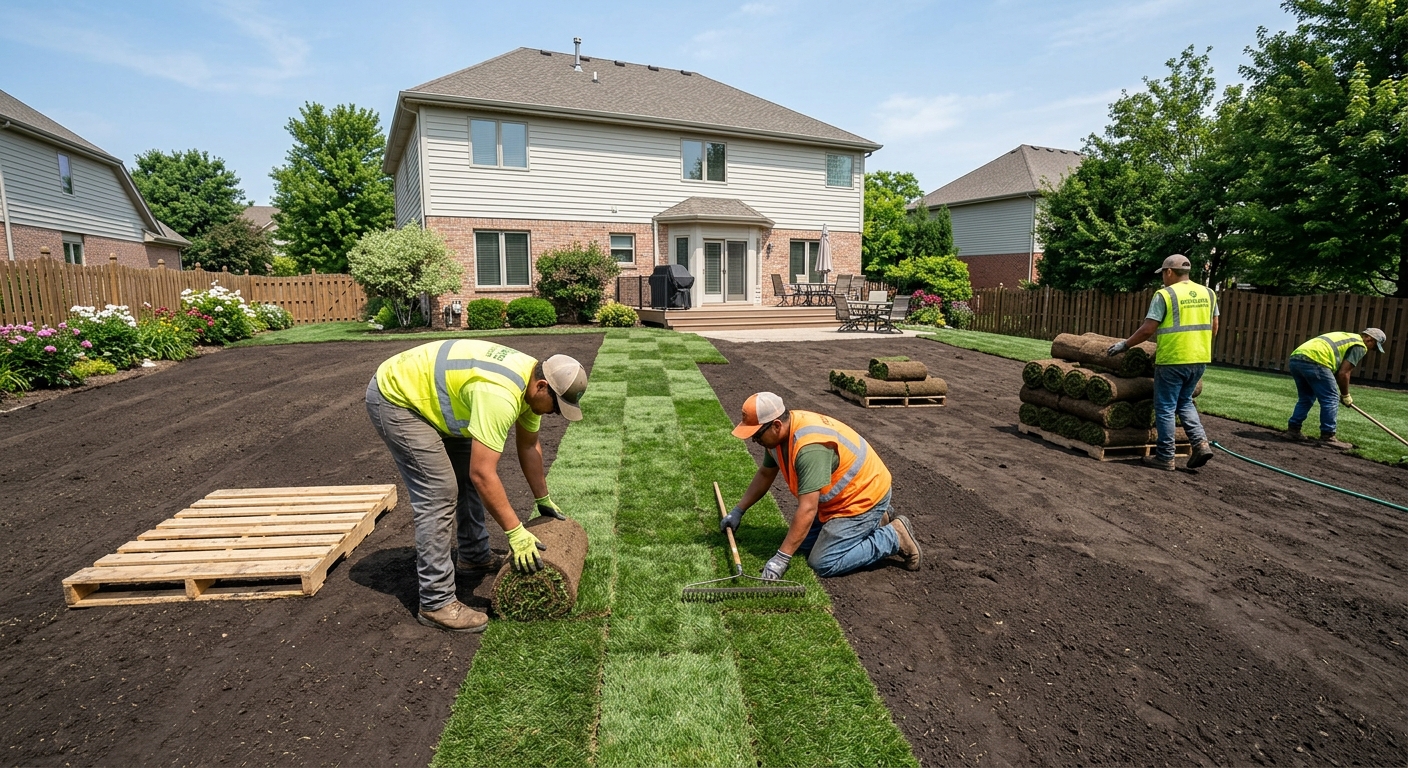
Access also matters in Hinton. Steep grades, rocky glacial soils, and trucking distances from major nurseries can increase hauling time and raise the effective cost of installation. Contractors also stock hardier, alpine-adapted, drought-tolerant options for zones 3–4, which can cost more up front but perform better through winter exposure. That’s why an “average yard refresh” can quickly split into softscape-only work (seeding/sod + planting) versus full landscape design & installation that includes drainage, soil amendments, and hardscape prep.
Below are realistic price bands homeowners commonly see in Hinton, so you can compare quotes apples-to-apples before you call for measurements and a site walk.
| Service |
Description |
Season |
Price Range |
| Full landscape design and installation |
On-site design, layout, grading notes, planting plan, soil prep, installation of softscape and selected hardscape |
May–September (best results) |
$8,000–$35,000 |
| Sod installation (supply, grade, lay, roll) |
Grade/leveling, topsoil or amendment, sod supply, rolling/compaction, starter fertilization |
Late May–August (avoid heat stress) |
$6–$14 |
| Lawn seeding (grade, seed, starter fertilizer) |
Light grading, seed blend for cold climates, starter fertilizer, watering plan |
May–early June or early fall (where frost timing allows) |
$1–$3 |
| Interlocking patio or walkway |
Base prep, compacted gravel, edging, pavers/stone, sand set, final leveling |
May–September |
$80–$220 |
| Retaining wall (interlocking block) |
Excavation, compacted base, drainage material/weep paths, block installation, backfill and finishing |
May–September |
$80–$220 |
| Tree and shrub planting |
Planting layout, soil amendment, staking where needed, mulch, initial watering setup |
May–June and August–September (weather-dependent) |
$250–$1,500 |
Prices are estimates only and vary by project scope, site access and material selection.
What affects the price of landscaping in Hinton
In Hinton, two quotes for the “same” landscaping job can differ by 30–50% because the underlying work is rarely identical. A bigger yard footprint, tougher grading, or a drainage system that actually fixes pooling issues will usually push the price up quickly. Conversely, a simple planting plan on already-flat, well-draining ground can be much cheaper—especially when homeowners don’t require extensive soil replacement or hardscape rebuilds.
Zone 3–4 conditions and local frost timing shape both what you can install and how long crews can work safely. Short growing seasons mean plants must be selected for cold tolerance and wind exposure, and drought-tolerant species are common in the Prairie-influenced valleys. For hardscapes, freeze–thaw cycles also matter: retaining-wall and patio bases need proper excavation depth and compaction to reduce heave. In Banff–Jasper–Rocky Mountain House, we typically design drainage so water moves away from foundations and doesn’t sit in low spots. In contrast, coastal BC (Zone 7–8) supports longer working and growing seasons with lush palettes, but heavy rainfall still requires strong drainage and soil structure; the dry BC interior pushes efficient irrigation design and often xeriscaping. Southern Ontario (Zone 5–6) usually has a more forgiving season, though summer dry spells can still increase irrigation demand.
Concrete examples that change price in Hinton: (1) If your yard needs re-grading so roof runoff no longer flows toward the house, you’re paying for excavation, haul-off, and re-compaction before any turf or planting. (2) Upgrading from basic topsoil to a drainage-capable soil amendment can raise material costs, but it prevents repeated failures that cost more later. (3) Building an interlocking patio or block retaining wall adds base prep and frost-safe construction; compared with softscape-only work, that’s why projects often sit closer to the $80–$220 per hardscape unit range or scale into the broader $8,000–$35,000 full-design band when grading and multiple components are included. Finally, many Hinton homes have older construction—53.6% were built before 1981—so existing drainage patterns may be less predictable, increasing site-prep scope.
| Price Factor |
Why It Matters |
Cost Impact |
| Yard size in sq ft — the primary cost driver for softscape |
More area means more turf, more seed/sod, more edging and more labour time |
Can swing costs dramatically; often the biggest multiplier |
| Grading and drainage work — slope corrections add significant cost |
Correct slope and away-from-foundation drainage prevents pooling and winter damage |
Commonly adds major labour and equipment days |
| Drainage bed or French drain installation |
Captures subsurface water and moves it to a safe discharge path |
Typically raises the quote versus planting-only work |
| Plant material tier — native shrubs vs. ornamental vs. mature specimen trees |
Larger stock costs more and may require extra labour for handling and anchoring |
Moderate to high increase depending on maturity |
| Hardscape vs. softscape ratio — walls and patios cost more per sq ft than lawn |
Hardscape needs base prep, compaction, materials, and often longer build time |
Shifts the project toward hardscape bands like $80–$220 |
| Irrigation system design and installation |
Zone-appropriate irrigation reduces plant loss and improves establishment in cold climates |
Often a noticeable add-on if not already installed |
| Soil amendment and topsoil required |
Rocky/compact soils may need replacement for root growth and turf success |
Can be the difference between “works first year” and repeated reseeding |
| Tree removal or stump grinding before new planting |
Removal affects access, disposal, and allows proper grading and drainage changes |
Can significantly increase cost and extend timelines |
Permits & regulations in Alberta
In Alberta, most soft landscaping work—like planting, sodding, and typical yard grading that does not impact approvals—often does not require a permit. In Hinton specifically, many homeowners can move forward with turf and shrub installation without a permit, as long as the work stays within normal landscaping parameters and does not change drainage in a way that affects service connections or neighbouring property impacts.
Where permits commonly do come into play is with retaining walls above the local threshold (often around 1.0 m in many Alberta municipalities) and any wall construction that needs enhanced structural consideration; engineered drawings may be requested depending on the situation and wall height/conditions. Also, changes to lot grading that direct drainage toward neighbouring properties or into storm sewer tie-ins can trigger approval requirements—so it’s worth confirming before excavation. Regardless of permit needs, always call for utility locates before digging any planting holes, French drain trenches, or retaining-wall footings.
To verify a contractor before you sign: (1) Check their Alberta business information and any relevant registration details through provincial online resources; (2) request a certificate of insurance showing liability coverage appropriate for the project; and (3) confirm Workers’ compensation coverage (WSIB/WCB) for their workers—ask for a clearance letter or proof matching the contractor name on the quote and invoice. A credible crew will provide these without pushback, and they should match the company that will actually be on site.
Planning a landscape that thrives in Hinton's climate
To make landscaping thrive in Hinton, design with zone 3–4 realities: cold winters, freeze–thaw cycles, and a short growing season. Plant selection comes first—choose hardy, zone-appropriate and native-leaning species that establish quickly and need less watering once rooted. Add winter structure: mulched shrub borders, sturdy groundcovers, and perennials that can handle wind exposure and early frosts. Where you want colour, focus on plants that perform reliably in Alberta’s climate rather than assuming a long growing season.
Second, be thoughtful about sod versus seeding. Sod gives instant curb appeal, but it’s typically about 3–4x more per sq ft than seeding in many Alberta projects once you include grade prep and establishment materials. If you’re correcting drainage issues anyway, seeding can be more budget-friendly while soil and grading settle. For a dollar example: if a 1,000 sq ft lawn refresh is priced at roughly $6–$14 for sod installation per sq ft (after base prep), you could often spend far less on seeding and redirect savings into drainage and soil amendment that improves long-term success.
Third, drainage and grading are non-negotiable in Banff–Jasper–Rocky Mountain House: prevent pooling away from foundations, and design surface flow so water doesn’t sit against walls. For hardscape, base preparation must reach frost-safe depth with proper compaction to resist heaving. Finally, keep it low-maintenance with mulch, groundcovers, and targeted perennials—so you’re not constantly weeding or redoing dead patches. If you want a water-smart layout, consider xeriscape principles and rain-garden-style beds that capture roof runoff during thaw periods, while using drought-tolerant plants for texture and seasonal interest.
| Element |
Climate Consideration |
Maintenance Level |
Price Band |
| Sod lawn installation |
Needs good grading and quick establishment before late-summer frosts; freeze–thaw can heave thin installs |
Medium during first season, then low |
$6–$14 |
| Native perennial garden |
Zone-appropriate plants reduce winter protection and watering needs |
Low to medium after establishment |
$250–$1,500 |
| Mulched shrub border |
Mulch buffers soil temps and helps roots during freeze–thaw |
Low (annual mulch refresh) |
$250–$1,500 |
| Interlocking stone patio |
Requires proper base compaction to resist heaving in Alberta winters |
Low (occasional sand/edge checks) |
$80–$220 |
| Retaining wall (block) |
Needs frost-safe base and drainage behind the wall to prevent water pressure |
Low (inspection after spring melt) |
$80–$220 |
| Drip irrigation system |
Helps establish drought-tolerant plants efficiently in a short season |
Medium (winterization/seasonal checks) |
$8,000–$35,000 |
How to choose a landscaping contractor in Hinton
Choosing a landscaping contractor in Hinton is mostly about verifying three things before you pay: licensing/registration (where applicable), insurance, and workers’ compensation coverage. Start with Alberta business registration details through provincial online resources. Next, ask for a certificate of insurance showing current liability coverage—verify it lists the same legal entity that will appear on the quote and invoice. Then confirm WSIB/WCB coverage for the contractor’s workers; request a clearance letter or equivalent proof so you know you’re not taking on risk if someone gets hurt on site.
For quoting, get 2–3 written, itemised proposals—not one lump sum. A good quote breaks down labour and materials separately (for example: excavation/haul-off, base gravel, block/pavers, drainage stone, soil amendment, mulch, plant list, and installation labour). Make sure inclusions are explicit: is disposal of excess material included? Are utility locates included? Is compaction testing mentioned where needed? Also confirm whether permits are included—if you’re building a retaining wall above the threshold, you want clarity on who pulls what and what happens if requirements change.
Warranty matters: ask for the workmanship warranty length (and what it covers), plus product/manufacturer warranties on paving products and plant material. Check whether warranties are transferable to future owners if you sell. For payment scheduling, avoid large deposits—never more than 10–15% upfront—and use holdback until substantial completion and cleanup are done. Finally, get a start date and realistic completion estimate in writing, because weather windows in Alberta Rockies can shift.
- Ask for proof of liability insurance before any site work begins.
- Request WSIB/WCB clearance (not just a verbal promise).
- Confirm the quote is itemised by labour, materials, and equipment.
- Verify utility locate responsibility before digging trenches or wall footings.
- Check whether base preparation depth and compaction steps are described.
- Confirm drainage approach (surface flow and/or French drain) is included where needed.
- Look for a clear plant list with quantities and mature sizes.
- Ask what happens to excess soil/rock (disposal included or not).
- Verify the warranty covers workmanship and includes timelines for correction.
- Ensure payment schedule is documented with a holdback amount.
- Get start/completion dates tied to seasonal windows (May–September).
- Be cautious if they won’t visit your site or measure elevations.
Red flags we see in Hinton include: (1) quotes that don’t mention drainage or base prep details, (2) refusal to provide insurance and WSIB/WCB proof, (3) “all-in” pricing with no plant list or material specs, (4) payment demands beyond 10–15% upfront, and (5) vague timelines that ignore the reality of freeze–thaw and short working seasons.
Frequently asked questions — landscaping in Hinton
How do I plan a low-maintenance yard?
In Hinton, the easiest low-maintenance yards start with drainage and plant selection, not decorations. Because the region sits in zone 3–4 with freeze–thaw cycles, we typically recommend grading that moves water away from the foundation and choosing drought-tolerant, wind-hardy plants that don’t require constant attention. For many homeowners, a mulched shrub border plus a native perennial garden gives strong curb appeal while cutting weeding time. If you want turf, consider seeding in areas where you can keep watering consistent during establishment, or sod only where you truly need instant coverage. Many Hinton homes are owner-occupied (71.8%), so planning for a design that lasts through winter pays off. Budgeting for good soil amendment up front—rather than repeatedly reseeding—can reduce long-term costs.
How deep should a retaining-wall base be for local frost?
Retaining-wall base depth should be set to reach frost-safe conditions, and the exact depth depends on wall height, soil conditions, and drainage details. In Hinton, we focus on excavation depth and proper compacted granular base so the wall and backfill don’t move during Alberta’s freeze–thaw cycles. A key part is also drainage behind the wall (weep paths and drainage stone), because trapped water can increase pressure and worsen movement at spring melt. For permit-sensitive walls above the threshold (often around 1.0 m in many Alberta municipalities), your contractor should confirm engineered requirements if applicable. When you compare quotes, don’t just compare the block price—ask how deep they excavate, what base materials they use, and whether they include drainage and backfill compaction.
How much does professional landscape design cost?
Professional landscape design in Hinton often ranges within the broader project bands once you’re doing more than a simple layout. Homeowners commonly see full design & installation come in around $8,000–$35,000 when the scope includes drainage, soil prep, planting, and hardscape coordination. If your goal is smaller—like a planting plan or layout for a single feature—design fees can be lower, but the value shows up when the design prevents common failures (like pooling, undersized drainage, and plantings that don’t match zone 3–4 conditions). Because Hinton’s housing stock includes many homes built before 1981 (53.6%), older yards may have unpredictable drainage patterns, which can increase the design and site-prep scope. Ask for a clear breakdown of what the design includes and whether installation is priced separately.
How do I compare landscaping quotes?
Compare quotes by scope and inclusions, not just total price. Ask for itemised labour + materials, including base prep depth for patios or retaining walls, whether drainage work is included (grading, French drains, drainage beds), and what soil amendment/topsoil is proposed. For sod vs. seeding, confirm the prep steps and the product/seed blend—sod at $6–$14 is only comparable if the grade prep and amendment approach match. For hardscape, make sure the quote reflects frost-safe base construction, not just pavers. Also check whether cleanup and disposal are included, whether utility locates are arranged, and who handles permits if a retaining wall crosses the typical threshold. Lastly, verify contractor insurance and WSIB/WCB coverage to protect yourself in Hinton when equipment is operating on site.
How long does a landscaping project take in Hinton?
Timing depends on weather windows and how complex the job is. In Hinton, crews usually plan for the main working period from late spring through summer, because freeze–thaw cycles and early frosts can limit what can be safely installed. A small planting job or shrub border can be completed in a day or two, while a full landscape design & installation may take several weeks due to drainage/earthworks, curing/settling time for base materials, and staged planting. Sod and seeding also depend on soil conditions—contractors aim to install when the ground is workable and temperatures support establishment. If your project includes interlocking patios or retaining walls, factor in excavation, base building, block/paver placement, and final grading/cleanup. When you request a quote, ask for a written start date, a completion estimate, and how delays due to weather will be handled.
What is the best grass type for a Hinton lawn?
For Hinton lawns, the “best” option is the grass type (and blend) designed for cold climates and reliable establishment in a short season. In practice, many Alberta homeowners get the best results with cold-tolerant seed blends suited to cool-weather growth and winter hardiness, rather than heat-loving turf. If you’re choosing between sod and seeding, sod can be faster for instant visual results, but you still need correct grading and enough establishment watering to root before winter. If you’re budget-conscious and can manage establishment, seeding is often more economical than sod; seeding projects commonly price well below the sod installation band of $6–$14, though total cost depends on prep and soil amendment. For an older yard (many homes were built before 1981), also check drainage and soil compaction—grass won’t thrive if water pools or the base is too compacted.