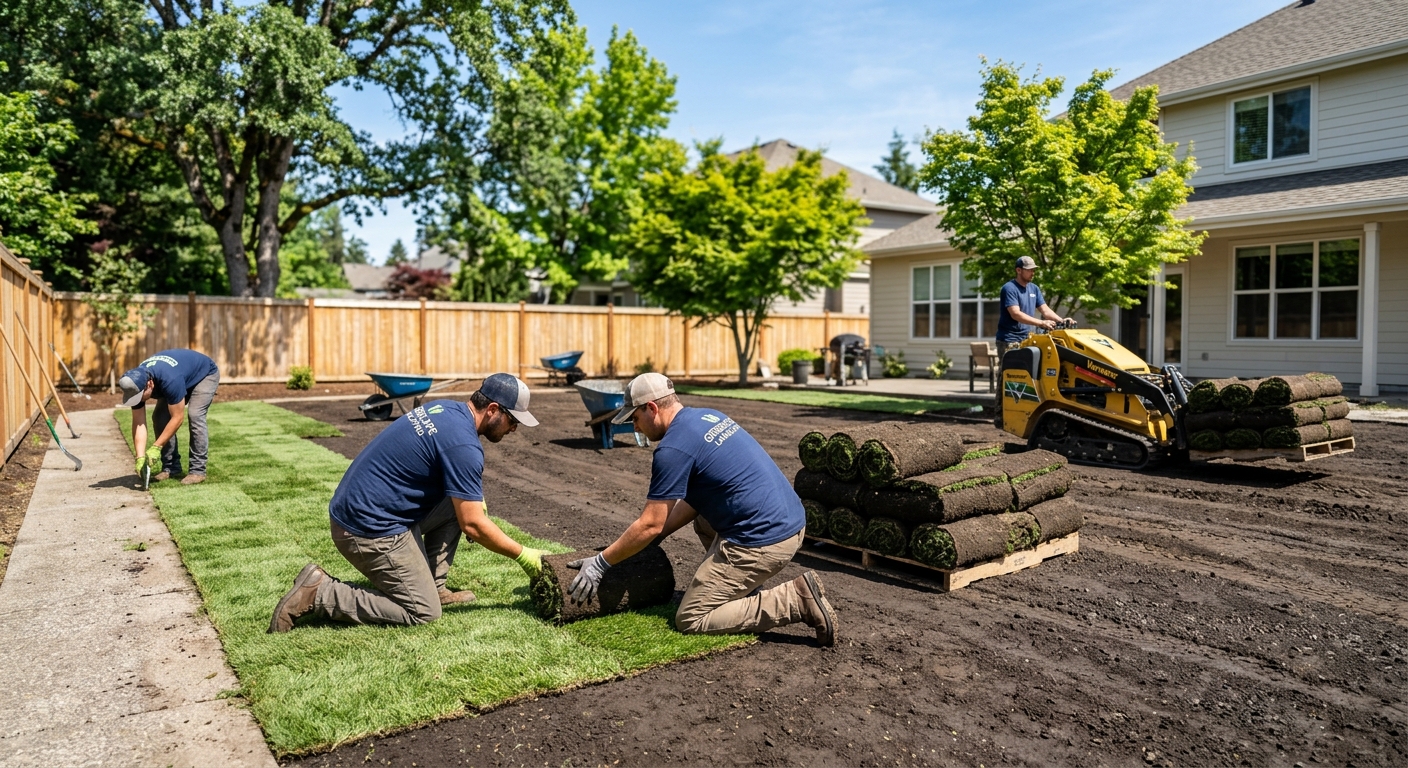
Landscaping options and costs in Innisfail
Innisfail, Alberta has a backyard design sweet spot: practical four-season appeal that can handle freeze–thaw cycles, chinook-driven thaws, and short frost-free summers. With 61.7% of dwellings in the area being single-detached homes, many lots have the yard depth for patios, walkways, and planting beds—so landscape upgrades are a frequent homeowner spend. Just as importantly, 70.3% of households are homeowners, which means budgeting for long-term value (soil prep, irrigation basics, and durable hardscape) is common rather than “quick fixes.”
In the Red Deer region, landscaping costs often land faster than you expect because the effective installation window is roughly May–October. Labour availability can tighten in spring, and project sequencing matters: grading and drainage must be done early, then base compaction for patios/retaining walls, then planting. Prices also reflect Alberta’s zone 3a–3b reality: you’ll pay to install robust bases under hardscape to manage winter heave, and you’ll often choose cold-hardy, drought-tolerant species over lush-but-frost-sensitive options.
Contractors also stay busy in established areas like Innisfail East, where many older properties built before 1981 (43.8% of homes) have shifting drainage patterns and need regrading, foundation-safe drainage, or refreshed front-yard curb appeal. If you’re planning a full refresh, start with a scope that matches your goals, then use the comparison table below to understand typical budget ranges for each service.
| Service |
Description |
Season |
Price Range |
| Full landscape design and installation |
On-site consult, layout design, grading/drainage plan, soil amendments, hardscape, sod/seeding, planting, and final cleanup |
May–October |
$8,000–$35,000 |
| Sod installation (supply, grade, lay, roll) |
Remove/prepare existing surface, grade for slope, supply and install sod, roll/compact, and water-in schedule |
Late April–August (best May–June) |
$1,500–$6,000 |
| Lawn seeding (grade, seed, starter fertilizer) |
Light grading, seed selection, starter fertilizer, seeding and light topdress where needed |
May–June or early fall (weather-dependent) |
$900–$3,500 |
| Interlocking patio or walkway |
Excavation, base (crushed stone/sand), edging, pavers, compaction, jointing and leveling for drainage |
May–September |
$4,000–$20,000 |
| Retaining wall (interlocking block) |
Layout, excavation to frost-safe footing depth, geotextile and base, block installation, backfill and drainage behind wall |
May–September |
$6,000–$30,000 |
| Tree and shrub planting |
Soil loosen/amend, planting holes, staking (if needed), mulch rings, and initial watering plan |
May–June and early fall |
$800–$8,000 |
Prices are estimates only and vary by project scope, site access and material selection.
What affects the price of landscaping in Innisfail
Innisfail homeowners often notice that two quotes for the “same” yard can vary by 30–50% across Red Deer and other parts of Alberta. The biggest drivers are the details that aren’t always obvious at the walkthrough: soil condition, drainage corrections, how deep hardscape bases must go for frost, and what level of plant maturity (or irrigation design) you’re actually getting. Even within the short May–October season, contractors schedule labour and equipment efficiently—so a delayed drainage task can cascade into a higher mobilization cost later.
Prairie climate (hardiness zone 3a–3b) defines both what can grow and what can be installed. Freeze–thaw cycles and cool nights mean retaining wall footings need to reach below the frost line, and base preparation is rarely optional. In contrast, coastal BC (zone 7–8) allows a longer growing season and lush palettes, but irrigation and drainage are handled differently due to heavy rainfall patterns; that’s why irrigation and drainage design are still cost items there. Water restrictions in the dry BC interior push irrigation efficiency forward. Southern Ontario’s (zone 5–6) moderate season reduces some frost-related construction complexity, but it still needs summer moisture management during dry spells.
In Innisfail specifically, cost can rise when you have poor drainage or older lot grading—43.8% of homes were built before 1981—and the contractor has to correct slope and add drainage bed or a French drain. It can also rise if you choose mature specimen trees, because the digging, soil volume, and aftercare are more intensive. Conversely, cost can drop if you keep the same hardscape footprint and focus on softscape—many full landscape installs fall into the broader $8,000–$35,000 band only because hardscape and grading add up quickly.
For a quick example: swapping a small seeded lawn for sod often moves a project from a “seed-focused” budget to a sod budget that can land in the $1,500–$6,000 range depending on yard size and prep quality. If the existing surface is already properly graded and weed-controlled, that price difference may be harder to justify; if it’s uneven or bare, sod can pay off by eliminating months of recovery.
| Price Factor |
Why It Matters |
Cost Impact |
| Yard size in sq ft — the primary cost driver for softscape |
More area means more topsoil/seed/sod, more edging, and more labour time for prep |
Typically the largest swing; can change the job by thousands |
| Grading and drainage work — slope corrections add significant cost |
Proper fall away from the house and toward drains/storm connections requires excavation and re-compaction |
Often adds major cost before any planting begins |
| Drainage bed or French drain installation |
Perforated pipe, clean stone, geotextile, and outlets must be installed to last through freeze–thaw |
Can turn a simple refresh into a mid-to-high five-figure project |
| Plant material tier — native shrubs vs. ornamental vs. mature specimen trees |
Mature trees cost more and require stronger rootballs, more labour, and often staking |
Small plant swaps can noticeably change the tree/shrub planting budget |
| Hardscape vs. softscape ratio — walls and patios cost more per sq ft than lawn |
Hardscape needs excavation, base layers, compaction, and paver/block material |
Shifts the project toward the retaining wall & hardscaping bands |
| Irrigation system design and installation |
Zone planning, heads, lines, and winterization add cost; it’s still cheaper than repeated manual watering for big lawns |
Often increases budgets, but improves plant survival in zone 3 |
| Soil amendment and topsoil required |
Clay-heavy or compacted soils may need engineered amendments and additional depth of good topsoil |
Can be a hidden “make or break” expense |
| Tree removal or stump grinding before new planting |
Hauling debris, stump grinding depth, and patching soil can delay planting work |
Can add labour hours and equipment fees |
Permits & regulations in Alberta
In Alberta, most planting and softscape work—like sodding, seeding, mulching, shrub and tree planting, and general garden bed installation—typically does not require a permit. The two common exceptions homeowners run into are (1) larger retaining wall projects and (2) drainage/grading changes that meaningfully affect how water leaves the property.
Work that DOES often require a permit: retaining walls that exceed a height threshold (commonly around 1.0 m (3.3 ft) in many municipalities), and sometimes walls that require engineered design due to height, load, or site conditions. Also, if you’re changing lot grading so water is redirected toward a neighbouring property or toward storm sewer connections, approvals may be required.
Work that typically does NOT require a permit: installing sod or seed, building small garden beds with landscape timbers, planting trees/shrubs, adding mulch, and installing many types of standard patios/walkways—unless they’re part of a permitted structural scope.
Before digging for any planting holes or retaining wall footings, request utility locates so you don’t damage buried services. For contractor verification in Innisfail, ask for: (1) your contractor’s Alberta licence/credentials as applicable, (2) liability insurance (certificate of insurance showing coverage), and (3) WCB/WSIB clearance where required. Look for certificates with current effective dates; if the contractor can’t provide documentation promptly, that’s a serious warning sign. Then confirm any irrigation and water-use bylaws locally—while the most stringent restrictions are often discussed for the BC interior, Alberta municipalities can also issue seasonal watering limits during dry periods.
Planning a landscape that thrives in Innisfail's climate
To plan a landscape that thrives in Innisfail, think “zone-appropriate structure first, then moisture-smart planting.” In this area’s hardiness zone 3a–3b, cool nights, wind exposure, and pronounced freeze–thaw cycles mean plant selection and base preparation matter more than chasing short-term visual perfection. Start with plants that match the climate: cold-hardy, winter-tolerant species with good establishment traits and reasonable water needs. Native and prairie-leaning shrubs and perennials usually reduce ongoing watering and winter protection costs versus delicate ornamentals.
Next, choose sod vs. seed with your timeline in mind. Sod gives instant curb appeal but costs roughly 3–4x more per sq ft than seeding because you’re paying for turf harvesting, transport, and installation time. With Innisfail’s relatively short effective growing season (generally May–October), sod can be worth it when the site is properly graded and you want faster establishment before summer stress hits. If you can tolerate a longer runway and your soil is being improved anyway, seeding often stretches your budget further.
Drainage and grading are critical in Red Deer–region weather swings. Even a small slope error can cause pooling near the foundation, raising foundation moisture risk. For hardscape—patios and retaining walls—base preparation must respect the frost line: excavate to spec, compact in lifts, and include proper edging/drainage so the base doesn’t heave and settle. For low maintenance, use mulch, groundcovers, and perennials with good winter structure, then keep irrigation targeted (and winterized if automated). Xeriscape concepts—like grouped drought-tolerant plants and deeper mulch—fit Alberta water realities, and rain-garden style swales can manage runoff while looking intentional.
Dollar example: If a seeded lawn estimate lands near the lower end of the sod-vs-seed budget gap, you might pay about $1,500–$6,000 for sod depending on prep and area, while seeding may sit closer to the lower “softscape” costs when you already have decent grade. Choose sod when you need fast coverage and the site is ready; choose seed when you can build soil quality and accept a slower start.
| Element |
Climate Consideration |
Maintenance Level |
Price Band |
| Sod lawn installation |
Establishment depends on proper grading and watering-in; frost-free window is shorter than coastal climates |
Medium (watering and first-season care) |
$1,500–$6,000 |
| Native perennial garden |
Better winter performance in zone 3a–3b and improved tolerance of wind and dry spells |
Low to medium (seasonal pruning and mulch top-ups) |
$1,200–$5,500 |
| Mulched shrub border |
Mulch reduces soil moisture loss and moderates temperature swings through freeze–thaw |
Low (weed suppression and occasional watering during establishment) |
$800–$4,000 |
| Interlocking stone patio |
Base compaction and drainage prevent heave and puddling during spring melt |
Low (occasional joint refill and cleaning) |
$4,000–$20,000 |
| Retaining wall (block) |
Backfill and drainage layers protect the wall through freeze–thaw cycles |
Low (visual checks and drainage monitoring) |
$6,000–$30,000 |
| Drip irrigation system |
Targeted watering supports drought-tolerant plants while reducing waste in Alberta conditions |
Low to medium (adjustments seasonally; winterization) |
$1,000–$7,000 |
How to choose a landscaping contractor in Innisfail
Choosing a landscaping contractor in Innisfail is less about finding the cheapest quote and more about verifying capacity and accountability. Start with insurance and workers’ coverage: ask for a current certificate of liability insurance and confirm it covers the work you’re hiring them to do. Then request proof of WCB/WCB clearance (or the applicable workers’ coverage documentation) so you’re not exposed if there’s an incident on site. Next, verify their Alberta business/contracting credentials as applicable—reputable firms should be able to provide their information without delay.
When you request pricing, ask for 2–3 itemised written quotes rather than a single lump sum. A good quote breaks labour vs. materials (stone, pavers/blocks, topsoil/soil amendments, sod/seed, irrigation parts) and lists unit quantities when possible (sq ft, linear ft, or number of trees). Carefully read the scope: what’s excluded (tree removal, disposal/haul-away, utility locates, additional drainage, extra topsoil)? Is a permit pull included if a retaining wall requires it? And who handles disposal and site restoration after excavating?
Warranty matters in Alberta. Ask for a workmanship warranty length and whether it’s tied to specific components (grading, base, irrigation performance, paver leveling). Product warranties (plants, sod/turf, materials) differ from workmanship warranties and may not be transferable—ask. For payment, plan a schedule where you never pay more than 10–15% upfront, and hold back a portion until completion and cleanup. Finally, request a written timeline: a start date and a realistic completion estimate for May–October scheduling.
- Ask for certificate of insurance and verify the effective dates
- Request WCB/WCB clearance documentation before work begins
- Confirm who pulls any required permits (and whether it’s included)
- Require an itemised quote (labour + materials) and clear quantities
- Ensure the quote states disposal/haul-away responsibility
- Check that grading and drainage are included if your yard slopes toward the house
- Ask for base construction details under patios/walkways (depth and material type)
- Confirm irrigation scope: lines, heads, and winterization notes
- Verify warranty length for workmanship and how claims are handled
- Review payment schedule; avoid large upfront deposits
- Get a written timeline with weather contingencies
- Ask for references from similar zone 3a–3b projects in the Red Deer region
Red flags to watch in Innisfail: (1) no proof of insurance or coverage, (2) refusing to itemise labour/materials, (3) vague grading/drainage promises (“we’ll fix it later”), (4) skipping base-compaction details for patios/retaining walls, and (5) asking for most of the payment upfront before excavation even starts.
Frequently asked questions — landscaping in Innisfail
How long does a landscaping project take in Innisfail?
In Innisfail, Alberta timelines depend on weather and how much excavation is included, because the practical install season is mainly May–October and frost/soil conditions can tighten scheduling. A focused planting-and-mulch refresh can be as quick as 1–3 days, while a sod or interlocking patio job usually takes about 3–7 days including prep and base work. A full landscape with grading, drainage, hardscape, sod/seeding, and planting often runs 2–6 weeks, partly because components need correct sequencing (drainage/base first, then turf and plants). If your yard is older (many homes built before 1981) and drainage must be corrected, expect more time for excavation and re-compaction before surfaces are restored.
What is the best grass type for a Innisfail lawn?
For lawns in Innisfail and the wider Red Deer region (zone 3a–3b), most homeowners do best with cool-season turf grasses that handle Alberta temperature swings and establish well in shorter growing windows. Common choices include hardy blends that include Kentucky bluegrass and/or perennial rye, selected for durability and recovery after freeze–thaw and spring stress. The “best” mix also depends on sun exposure (full sun vs. shade under mature trees) and whether you’ll seed or lay sod. If you’re budgeting, many sod installs in this area fall into $1,500–$6,000, and that’s often worth it for instant coverage while the grass roots establish.
When should I aerate and overseed my lawn in Innisfail?
In Innisfail, aeration and overseeding are typically timed to balance cool growth with enough warm days to recover. Most homeowners do best in late spring (after the ground has warmed and when grass is actively growing) or in early fall when nights are cooler but the lawn still has time to root before harder frosts. Avoid overseeding right before extreme cold snaps, because germination and root establishment can fail in dry, windy conditions. If you have heavy foot traffic or compacted soil, aeration first helps seed-to-soil contact. If your lawn is patchy from drainage issues, fix grading/drainage first—otherwise you’ll keep paying to re-seed.
What trees grow best in Innisfail's climate zone?
In Innisfail (zone 3a–3b), you’ll generally get the best results with cold-hardy, wind-tolerant trees that tolerate Alberta winters and spring melt. Many homeowners plant species like Manitoba maple, green ash (where appropriate), and hardy ornamental options such as Saskatoon/Amelanchier for smaller landscapes (often more shrub than tree), along with conifers such as white spruce for structure and wind buffering. The “best” tree depends on your site: soil moisture, space for roots, and whether you can protect young trees from winter desiccation. If your goal is screening along a yard line, a mix of trees and cold-hardy shrubs usually performs better than a single large specimen.
How much does sodding a yard cost in Innisfail?
Sodding costs in Innisfail usually come down to yard size, how much grading is needed, and whether weed/debris removal is required first. In the Red Deer region, a typical sod installation estimate commonly falls within $1,500–$6,000, especially when you include grade prep, supplying sod, laying, and rolling. If your existing soil is compacted or uneven, correcting grade can raise the cost because it requires excavation, re-compaction, and sometimes added topsoil/soil amendment. If you’re comparing options, seeding is usually less expensive per square foot, but it takes longer to visually “fill in.”
How do I prevent weeds in my Innisfail garden?
Weed prevention in Innisfail is mostly about stopping weeds at the soil surface and maintaining healthy plant coverage—especially in a climate with freeze–thaw cycles that can loosen soil. Start with proper site prep: remove existing weeds and roots, then improve soil so new plants establish quickly. Use a quality weed barrier only where appropriate (for example, under mulch in shrub areas), and always follow it with adequate mulch depth to shade the soil. Plant spacing matters: crowded plantings beat open ground where weed seeds can land and sprout. If your garden includes a lawn-to-bed edge, install edging so grass runners don’t creep in. Also plan for maintenance during the May–October season, because early-season spot weeding prevents weeds from re-seeding in Alberta winds.