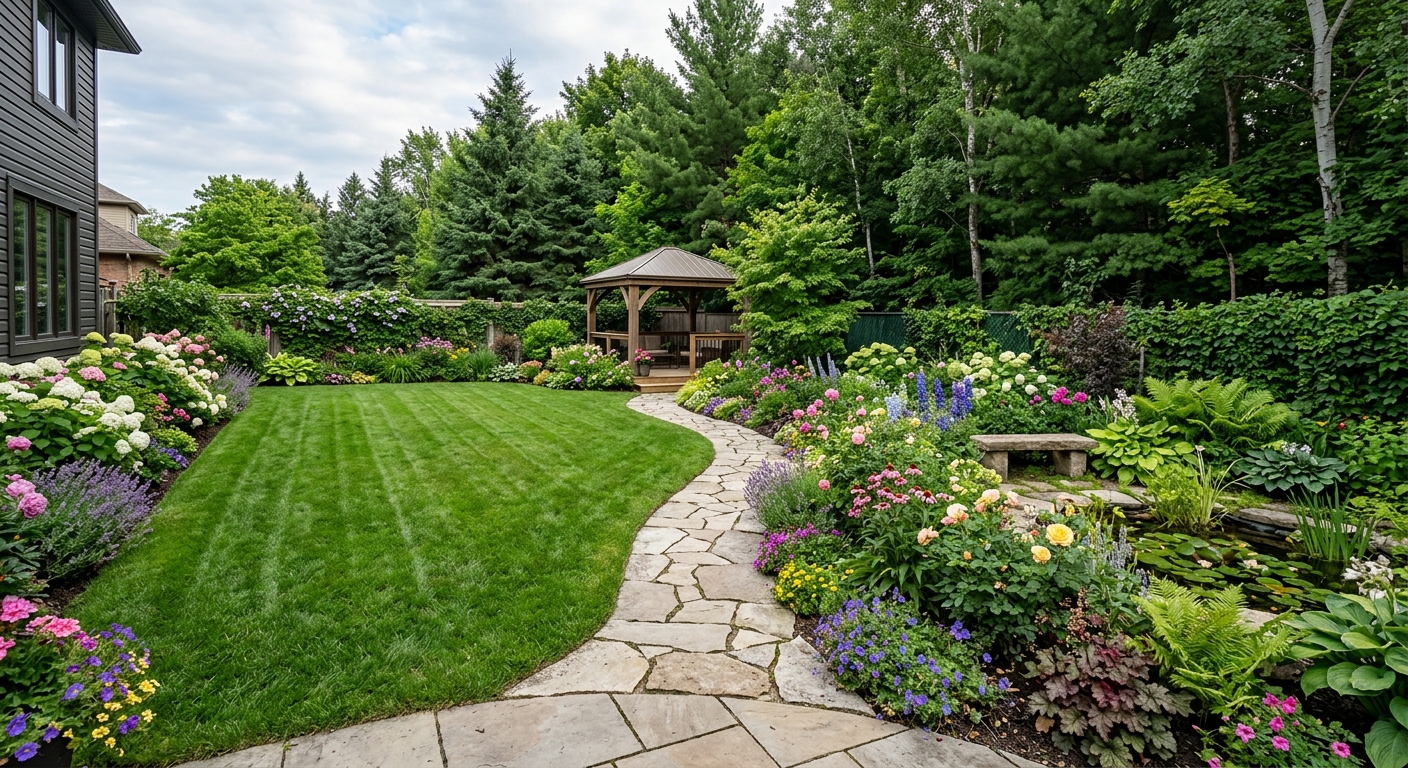
Landscaping options and costs in Redcliff
Redcliff homeowners typically have a lot of yard to work with—about 77.8% of dwellings are single-detached homes—so landscaping upgrades often feel practical rather than optional. With 1,685 homeowner households (77.1% of households own), many neighbours look for improvements that boost curb appeal, privacy, and usability of outdoor space (patios, walkways, and low-maintenance planting). In the Lethbridge–Medicine Hat region, we’re working in Canadian plant hardiness zone 4b, where winter lows can hover around −31.7°C to −28.9°C. That zone matters for both plant selection and the install window: most planting and turf work is concentrated roughly May to September because of late-spring frosts and early-fall frosts, which also affects contractor scheduling and pricing.
Cost in Redcliff also reflects structural realities of prairie freeze–thaw. Excavation, deeper base preparation, and drainage design for patios and retaining walls are priced more conservatively than in milder climates, because movement and heaving are real risks. There’s usually strong demand for hardscape and drought-tolerant front-yard landscaping in areas with more street-facing curb presence—properties around the downtown core and along busier residential blocks are often the first to get attention after winter.
To help you compare apples-to-apples, here are common Redcliff landscape scopes and the typical price ranges contractors build around, followed by what each package usually includes.
| Service |
Description |
Season |
Price Range |
| Full landscape design and installation |
Site walk, concept plan, grading/drainage allowance (if needed), soil amendments, plant & turf plan, hardscape allowance, labour for installation |
May–September |
$8,000–$35,000 |
| Sod installation (supply, grade, lay, roll) |
Minor grading/levelling, topsoil adjustments, sod supply and install, starter fertilizer, first watering plan |
Late May–August |
$4–$8 |
| Lawn seeding (grade, seed, starter fertilizer) |
Rake/grade, seed mix, starter fertilizer, light cover and initial watering schedule |
May–early July (best frost-safe window) |
$1,200–$3,000 |
| Interlocking patio or walkway |
Excavation, compacted base aggregates, polymeric sand, edging, paver installation |
June–September |
$3,500–$18,000 |
| Retaining wall (interlocking block) |
Footing/base prep, block installation, drainage gravel and weep provisions, cap/finish |
June–September |
$6,000–$20,000 |
| Tree and shrub planting |
Soil loosen/planting holes, amendments, staking (as needed), mulch rings, watering plan |
May–August |
$500–$8,000 |
Prices are estimates only and vary by project scope, site access and material selection.
What affects the price of landscaping in Redcliff
In Lethbridge–Medicine Hat and across southern Alberta, the same landscaping idea can land 30–50% apart between quotes because contractors price for site conditions, labour timing, and what’s actually included (or excluded). The biggest drivers are the zone 4b reality—what can survive and when the ground is workable—and the short, May–September install window. When a job needs to happen in a tight schedule, labour rates and crew availability can move quickly, especially for paving and wall work that depends on proper base compaction and drainage before installation.
Plant selection also drives cost. In prairie conditions, we favour drought-tolerant, wind-tolerant species and strong root systems, which can be more expensive upfront than basic nursery stock. Hardscape adds further cost because freeze–thaw cycles force deeper, well-compacted bases. For example, if you’re comparing lawn replacement, sod can be several dollars per sq ft, while seeding is usually less per sq ft but still needs correct grade and seed-to-soil contact. For retaining walls and interlocking patios, budgets often start in the hardscape bands (for instance, retaining wall projects commonly fall under the $120–$300 per linear foot type pricing assumptions and climb with base depth and drainage). Full design-and-install projects can be a very different line item—often within the $8,000–$35,000 backbone band—because they bundle planning, plant layout, and multiple trades.
Local Redcliff housing age matters too. With 54.7% of homes built before 1981, many yards have older drainage patterns and compacted soils near foundations. Fixing grade and drainage can add thousands versus a “clean” yard. If your scope includes soil amendment and deeper excavation for drainage or footings, that’s where the quote gap usually shows up.
| Price Factor |
Why It Matters |
Cost Impact |
| Yard size in sq ft — the primary cost driver for softscape |
More area means more labour time, more seed/sod/topsoil, and higher material handling and disposal needs |
Low-to-high; often the largest swing |
| Grading and drainage work — slope corrections add significant cost |
Correcting slope prevents pooling and foundation moisture; requires additional excavation and re-compaction |
Moderate-to-high; can add thousands |
| Drainage bed or French drain installation |
Includes trenching, filter fabric, gravel, and outlet routing—plus testing how water behaves after rain/snowmelt |
Moderate-to-high depending on outlet complexity |
| Plant material tier — native shrubs vs. ornamental vs. mature specimen trees |
Higher tiers cost more and may require larger holes, staking labour, and better soil support |
Low-to-high; mature trees can jump the budget |
| Hardscape vs. softscape ratio — walls and patios cost more per sq ft than lawn |
Pavers and retaining blocks require deeper base, compaction passes, and careful edging and jointing |
High for larger patios/walls |
| Irrigation system design and installation |
Zone-based drip/smart controller design increases water efficiency but adds components and labour |
Moderate; can increase overall project cost |
| Soil amendment and topsoil required |
Clay-heavy or compacted prairie soils need amendment depth; quality topsoil affects long-term turf success |
Low-to-moderate; becomes high if depth/volume is large |
| Tree removal or stump grinding before new planting |
Access, stump size, and disposal/clean-up add time and equipment costs |
Moderate; can affect the start date too |
Permits & regulations in Alberta
In Alberta, most landscaping work—planting new trees and shrubs, sodding, seeding, mulching, and typical softscape installation—usually does not require a permit. The permit conversation typically starts when you’re changing structural elements or lot drainage in a way that could affect neighbours or municipal systems. Retaining walls above a local threshold (commonly 1.0 m in many municipalities) often require a building permit, and in some cases engineered drawings depending on height, design, and soil conditions. Also, changes to lot grading that redirect water toward neighbouring properties or connected storm infrastructure may trigger approval requirements.
No matter what portion of the project you’re doing in Redcliff, start with utility locates. Call 811 before digging for planting holes, irrigation trenches, or wall footings so underground services are clearly marked. For irrigation, confirm water-use bylaws and any seasonal restrictions (southern Alberta can have summer limits during dry periods even when restrictions are generally less severe than some interior BC regions).
To verify a contractor in Alberta, do this step-by-step: (1) licence and business status—check the contractor’s registration status through relevant provincial/industry sources if applicable and confirm they are a legitimate operating business; (2) insurance—ask for a current certificate of insurance showing general liability coverage; (3) workers’ compensation—confirm WSIB/WCB coverage if workers are involved (request clearance or proof of coverage); (4) match the certificate dates to the scheduled start; and (5) ensure the quote references who is responsible for permits (if needed) and disposal. A credible contractor won’t hesitate to provide documentation before you sign.
Planning a landscape that thrives in Redcliff's climate
Planning for Redcliff means designing with zone 4b and a short workable season, not against it. Start with plant selection: choose prairie-hardy, winter-tolerant shrubs and perennials that can handle cold snaps down to roughly −30°C, plus wind exposure and dry summers. Native and zone-appropriate species typically need less watering once established and can be layered with mulch to stabilize soil moisture and temperature.
For turf, know the trade-off between sod and seed. Sod gives instant visual results and helps control erosion quickly, but it’s usually more expensive: sod often costs about 3–4× as much per sq ft as seeding, particularly once you include prep and delivery. In Redcliff, if you need “usable lawn” for kids or pets quickly, sod can be justified. A practical example: replacing a 500 sq ft strip with sod may cost you several thousand dollars, while seeding the same area is often closer to a smaller budget line item—meaning seeding makes sense when you can tolerate a slower start and commit to correct watering through establishment.
Drainage and grading are non-negotiable. Prairie soils and freeze–thaw cycles can create pooling that feeds foundation moisture. Direct downspouts away from the home, correct slope, and add a drainage bed or French drain where water naturally collects. For hardscape like patios and retaining walls, proper base preparation that respects the local frost movement reduces heaving and settling. Finally, low-maintenance design strategies—groundcovers, mulched shrub borders, and hardy perennials—reduce annual upkeep without sacrificing curb appeal. Consider xeriscape elements and rain-garden style beds (with check berms and amended soil) to manage snowmelt and limited irrigation efficiently.
| Element |
Climate Consideration |
Maintenance Level |
Price Band |
| Sod lawn installation |
Needs consistent watering during establishment; picks up quickly in the May–August window |
Medium (watering + first mow schedule) |
$4–$8 per sq ft (typical) |
| Native perennial garden |
Handles cold winters and prairie winds; once established, needs less irrigation |
Low to medium (weed control first year) |
$2,000–$7,000 |
| Mulched shrub border |
Mulch protects root zone through freeze–thaw and helps conserve moisture |
Low (annual mulch refresh) |
$1,500–$6,500 |
| Interlocking stone patio |
Requires well-compacted base to resist heaving; slope for drainage matters |
Low (occasional joint/surface maintenance) |
$3,500–$18,000 |
| Retaining wall (block) |
Footings and drainage gravel must be designed for frost movement |
Low (inspection after winter) |
$6,000–$20,000 |
| Drip irrigation system |
Efficient watering for hot, dry summers; works well with zone 4b plantings |
Low (seasonal checks) |
$1,200–$5,500 |
How to choose a landscaping contractor in Redcliff
Choosing the right landscaping contractor in Redcliff comes down to proof and clarity. First, verify Alberta coverage: ask for a current certificate of insurance (general liability) showing their coverage is active for your project dates and includes work at your address. If they’ll have employees on site, confirm WSIB/WCB coverage—request proof or clearance documentation. For licensing, ensure the contractor is properly registered for the business entity and that any required trades or design responsibilities are covered by qualified parties.
Next, get 2–3 itemised written quotes. You want a breakdown that separates labour from materials (e.g., excavation and base compaction, stone quantity and bedding, plant count and sizes, sod/seed quantities, topsoil and amendment volume, and disposal). Avoid “one-number” quotes that don’t explain what’s included. Read the exclusions: is demolition included? Is topsoil screening included? Is disposal haul-away included? Will they pull any required permits if your retaining wall height triggers one? Ask who is responsible for utility locate tickets and for any repairs to marked services if an issue occurs.
Warranty matters. Request workmanship warranty length (how long they stand behind installation) and understand product/manufacturer warranties for plants and materials. Confirm whether warranties are transferable if you sell your home. Keep payment controlled: never pay more than about 10–15% upfront; hold back a portion until key milestones are complete. Finally, get a start date and completion estimate in writing—prairie weather swings can affect timelines, but credible firms still schedule around the May–September window.
- Provide WSIB/WCB proof (clearance or coverage document) if workers are used
- Provide an up-to-date certificate of insurance (general liability) with your job dates
- Itemise labour and materials separately in the quote
- Show excavation depth and base specification language for patios/walls
- List disposal/hauling included or excluded
- Confirm soil amendment and topsoil type/volume (and whether it’s screened)
- Specify plant sizes (e.g., height/spread) and whether replacements are included
- Include irrigation scope clearly (drip vs. sprinkler, controller/smart options)
- State who pulls permits if a retaining wall triggers requirements
- Confirm warranty terms: workmanship length + plant/material warranty details
- Use a realistic payment schedule with a holdback until completion
- Get start date, completion estimate, and weather contingency plan in writing
In Redcliff, red flags include: (1) refusing to provide insurance or WSIB/WCB proof; (2) quoting hardscape without explaining base compaction, drainage slope, and freeze–thaw considerations; (3) vague plant specs (“assorted shrubs” with no sizes/count); (4) asking for a large upfront payment (well beyond 10–15%); and (5) no written scope for disposal, grading, or topsoil—leading to expensive change orders after excavation.
Frequently asked questions — landscaping in Redcliff
How do I compare landscaping quotes?
Start by putting all quotes on the same “scope list.” In Redcliff, the easiest way to compare is to match line items: excavation/haul-away, base prep depth for patios, drainage work (French drain or drainage bed), soil amendment/topsoil volume, plant quantities and sizes, and turf coverage (sq ft). If a quote only gives a lump sum, ask for an itemised labour and materials breakdown. Also compare inclusions: are permits required for your wall height handled, is utility locate coverage included, and is disposal included? Finally, align the season and schedule—May to September timelines can change crew availability. If one contractor can deliver a full package in a higher band (for example, full design and installation often sits around $8,000–$35,000), ask what’s included that others are leaving out.
How long does a landscaping project take in Redcliff?
Typical timelines in Redcliff depend on complexity and weather, but most crews plan around the practical growing window from late spring through summer. Small planting-only jobs can take a few days, while grading and drainage often take longer because base prep needs compaction and proper slope. Sod installs may take 1–3 days for mid-size yards, but you should expect extra time for grading and preparing topsoil and for establishment watering. Interlocking patios and retaining walls often require multiple phases—excavation, base and drainage setup, block/paver installation, and final finishing—so projects commonly run from 1 to 3 weeks. If you’re in an older housing area where drainage repairs are needed, plan for extra days. Ask your contractor for a written start date, completion estimate, and weather contingency plan.
What is the best grass type for a Redcliff lawn?
For Redcliff and the broader Lethbridge–Medicine Hat area (zone 4b), homeowners generally do best with cool-season, prairie-hardy turf types that handle winter dormancy and summer dry spells. Many contractors recommend blends that include hardier fescues (especially for sun/shade variability) because they stay resilient with less intensive maintenance than some high-water turf options. The “best” choice still depends on your yard exposure, soil quality, and how reliably you can irrigate during establishment. If your goal is fast curb appeal, sod is the quickest route, but it still requires a careful watering schedule right after install. If you’re seeding, choose a mix designed for prairie climates and ensure correct grade for drainage. For reference, sod installations commonly run about $4–$8 per sq ft depending on scope and site prep.
When should I aerate and overseed my lawn in Redcliff?
In Redcliff, timing should follow the frost-free portion of the year and focus on establishment before heat stress and before cool, late-summer nights slow growth. Typically, aeration and overseeding are done in late spring once soil is workable, or early fall if temperatures remain mild enough for germination and root development. The key is watering consistency—seed needs moisture to sprout, but prairie conditions can dry out quickly. If your lawn is compacted or has thinning patches, aeration helps seed-to-soil contact. If you installed sod or did seeding recently, wait until the lawn has fully established before aerating again. Ask your contractor about soil testing or a quick “walk-and-look” assessment of drainage and bare spots first, because repeated failure is often a grading or watering problem, not just a seeding schedule issue.
What trees grow best in Redcliff's climate zone?
In Alberta’s zone 4b prairie climate, aim for trees with proven hardiness and good wind tolerance. Many contractors do well with hardy, locally proven species such as Manitoba maple varieties (where appropriate for your site moisture), small- to medium-sized elms and some ash selections (depending on local disease resistance guidance at the nursery), and cold-tolerant conifers like spruce for structure and privacy. Selection should also match your site conditions: how much sun you get, whether the area is windy, and how your drainage behaves during snowmelt. In older yards built before 1981, compacted soils and poor drainage near foundations can restrict roots—so tree survival improves when planting pits are properly prepared with amendments. If you want a budget target, tree and shrub planting packages commonly fall within $500–$8,000 depending on counts, sizes, and whether staking and soil correction are included.
How much does sodding a yard cost in Redcliff?
Sodding cost in Redcliff depends on the total square footage, how much grading is needed, and whether topsoil and soil amendment are included. On a per-area basis, sod installation is commonly priced in the $4–$8 range (with final totals rising if there’s significant prep, disposal, or drainage correction). For many homeowners, the “hidden” cost isn’t the sod itself—it’s the labour to get the grade right so you don’t end up with low spots that freeze, thaw, and pool water. That’s especially important in freeze–thaw prairie conditions. If your yard needs more than minor levelling, ask for an itemised quote that shows topsoil volume and any drainage or edging work. A fair quote should also include watering guidance for the first few weeks after installation.