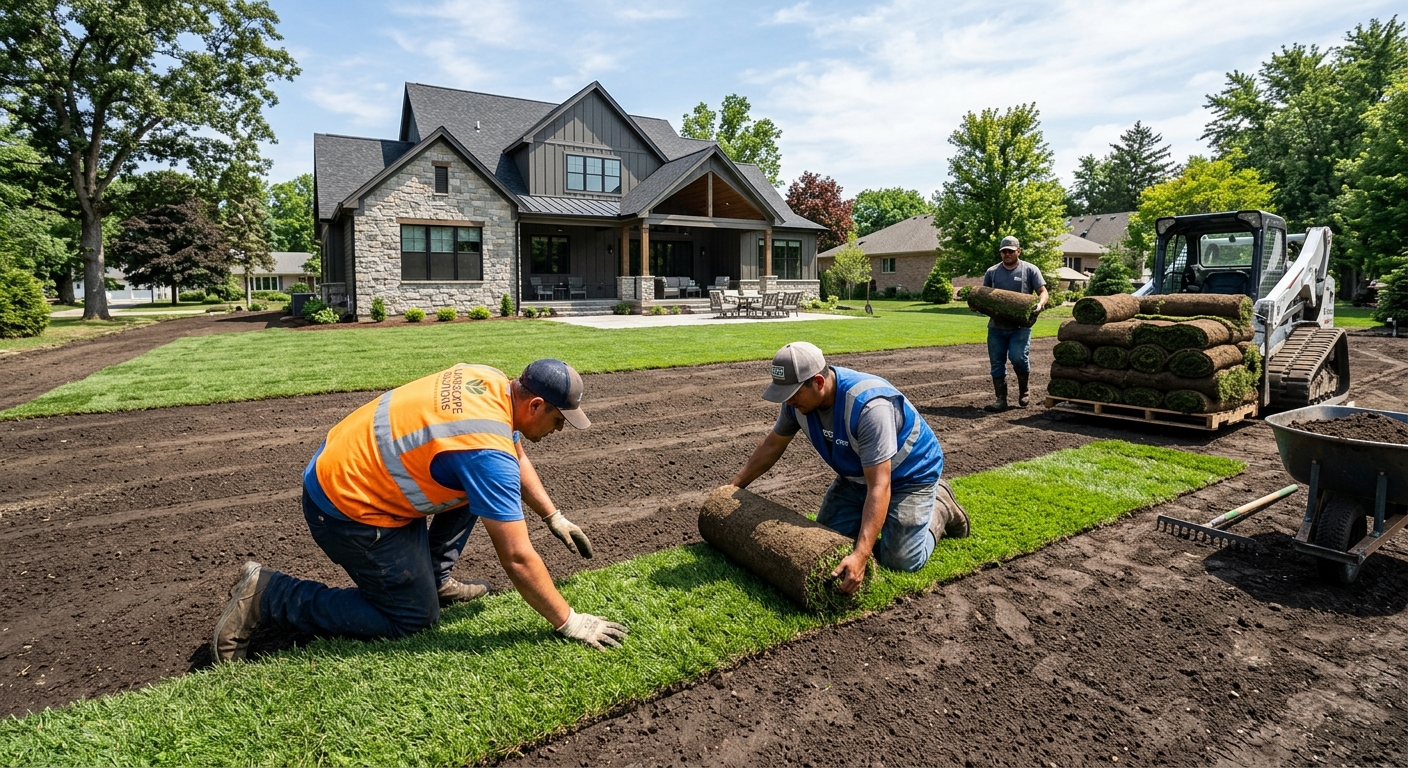
Landscaping options and costs in Bowen Island
Bowen Island landscaping choices often come down to how quickly you want results versus how much long-term maintenance you’re willing to manage. With 1,465 homeowner households in town (84.9% of households own) and 89.0% of dwellings being single-detached homes, many lots have enough yard area to justify layered planting, well-planned grading, and practical hardscaping—especially when you’re replacing older turf or renovating after property upgrades. (Statistics Canada, 2021 Census)
In the Lower Mainland–Southwest (plant hardiness zones 7–8), Bowen Island benefits from milder, wetter winters and a longer working and growing season than much of Canada. That usually means contractors can schedule more planting and softscape work through late fall, which helps keep labour availability steadier and reduces the “rush premium” you often see in shorter-season regions. That said, coastal rainfall and freeze–thaw cycles still affect costs: patio bases and retaining-wall footings need proper drainage and depth to prevent frost heave and wall movement on the sloped sites common on the island. Pricing also reflects growing demand near Snug Cove, where curb appeal updates and drainage fixes are frequent because many homes sit on varied grades and want low-upkeep planting.
To compare proposals more easily, use the price ranges below as a starting point for Bowen Island projects, then tailor your scope based on site access, slope, and material tiers.
| Service |
Description |
Season |
Price Range |
| Full landscape design and installation |
Concept + layout, grading/drainage plan, planting plan, hardscape coordination, installation (labour + materials) |
Year-round (softscape best spring–fall; structural focus avoids the wettest weeks) |
$15,000–$45,000 |
| Sod installation (supply, grade, lay, roll) |
Site prep, topsoil/leveling, sod supply, grading corrections, lay and roll, initial watering setup |
Late spring to early fall |
$4,000–$8,000 |
| Lawn seeding (grade, seed, starter fertilizer) |
Light grading, seed mix, starter fertilizer, raking/rolling as needed |
Early spring or fall (cooler temperatures) |
$2,000–$5,000 |
| Interlocking patio or walkway |
Excavation, base compaction, edging, pavers/stone, joint sand, finishing |
Spring–fall (avoid the wettest windows) |
$10,000–$35,000 |
| Retaining wall (interlocking block) |
Excavation, engineered-style base work where required, drainage gravel, geotextile, block installation |
Spring–fall |
$15,000–$60,000 |
| Tree and shrub planting |
Soil prep, planting holes, amendments, mulching, staking (if needed), watering-in plan |
Spring–fall |
$2,000–$12,000 |
Prices are estimates only and vary by project scope, site access and material selection.
What affects the price of landscaping in Bowen Island
In Bowen Island and the broader Lower Mainland–Southwest, it’s common to see quotes for the “same” job land 30–50% apart across contractors and even between different parts of British Columbia. The main drivers are yard complexity (slope, soil condition, drainage), the quality tier of materials, and how many hours of skilled labour are needed to get the base and irrigation right. Contractors pricing for a long season in zones 7–8 can still vary widely, because a well-drained, compacted base for hardscape and correctly bedded drainage for retaining walls can’t be rushed—especially when Bowen Island sees heavy rain and freeze–thaw cycles.
Plant hardiness and frost dates affect both what grows and how long crews can work. In coastal BC (zone 7–8), you can plan richer palettes and plant more often, but you still need proper drainage to keep soil from staying saturated. In drier BC Interior regions, irrigation design has to plan around water restrictions, while prairie zones (2–4) often require drought-tolerant, wind-hardy species and deeper retaining-wall bases because freeze depths and frost timing differ. Southern Ontario (zone 5–6) can be moderate but still faces summer dry spells that increase irrigation and turf replacement costs. The result: one contractor’s “easy lawn” estimate may not include soil amendment, erosion control, or French drains.
Concrete examples in Bowen Island: (1) a modest slope correction can add thousands to a sod project because grading and compaction are labour-heavy; (2) adding a drainage bed or French drain can shift a walkway/patio budget upward because it changes excavation depth and base material volumes. Also, older homes built before 1981 make up 36.8% of the housing stock, and renovations often uncover tired soil, altered drainage patterns, or mature roots that increase prep time—impacting budgets near the $10,000–$80,000 hardscaping band. Meanwhile, planting budgets typically sit closer to the $1,000–$15,000 range unless you’re adding larger, specimen-calibre trees.
| Price Factor |
Why It Matters |
Cost Impact |
| Yard size in sq ft — the primary cost driver for softscape |
More area means more topsoil, labour hours, and materials (seed, sod, mulch) |
Often the largest lever; can move the job price by several thousand dollars |
| Grading and drainage work — slope corrections add significant cost |
Correcting uneven grades prevents pooling and reduces future foundation moisture |
Can increase quotes by 15–30% depending on soil and slope |
| Drainage bed or French drain installation |
Needed where water collects or where downspouts direct runoff |
Typically adds a noticeable “hard” cost and more excavation |
| Plant material tier — native shrubs vs. ornamental vs. mature specimen trees |
Higher tier plants cost more and may require staking and additional labour |
Can double planting line items for the same layout |
| Hardscape vs. softscape ratio — walls and patios cost more per sq ft than lawn |
Stone and block require base prep, compaction, and precise installation |
Switching to more patio/wall area can shift budgets into the $10,000–$80,000 band |
| Irrigation system design and installation |
Coastal BC still needs efficient watering, especially for new turf and beds |
Can add several thousand when moving from manual to drip/smart control |
| Soil amendment and topsoil required |
Poor native soil increases failure risk and adds material delivery and labour |
Often adds cost even when plant quantity is unchanged |
| Tree removal or stump grinding before new planting |
Roots and stumps affect excavation safety and planting feasibility |
Can add significant labour and disposal costs depending on access |
Permits & regulations in British Columbia
In British Columbia, most planting, sodding and typical softscape work does not require a permit. You generally can do landscaping tasks like planting trees and shrubs, laying sod, seeding, mulching, and installing non-structural garden borders without a building permit. The work that does commonly require a permit includes retaining walls above local thresholds (often around 1.0 m, or 3.3 ft, in many municipalities), and in some situations engineered drawings may be requested—especially if the wall is tall, supports surcharge loads (like a driveway), or the site is steep.
Also, changes to lot grading that alter drainage pathways—such as redirecting runoff toward neighbouring properties or connecting directly to storm sewer systems—may trigger approval requirements. Before any digging for planting holes, wall footings, or drainage work, arrange utility locates to avoid damaging buried services.
For Bowen Island homeowners verifying a contractor: (1) confirm the business name and contact details match on their documentation; (2) ask for a certificate of insurance naming you (or your property address) as appropriate—verify general liability limits; (3) confirm worker coverage: request proof they have WSIB/WCB coverage appropriate for their employees/subcontractors; (4) if they claim to be licensed for restricted activities, check the relevant provincial registry and ask for the licence number; (5) get a written scope that states who is pulling any permits and when.
Planning a landscape that thrives in Bowen Island's climate
To plan landscaping that thrives on Bowen Island, build your yard around the realities of coastal British Columbia: plant hardiness zone 7–8, mild wet winters, and a frost calendar that typically allows a long planting and softscape season compared to shorter-season parts of Canada. Start with plant selection. Choose zone-appropriate shrubs and perennials (and where possible, native species) that handle cool, damp conditions without constant intervention. In practice, that means layered beds with mulch and groundcovers to suppress weeds and moderate soil temperature, rather than delicate plants that need shelter.
Next, compare sod vs. seed. Sod gives instant visual results and helps reduce erosion during establishment, but it costs more per square foot than seeding. A realistic rule of thumb is that sod installed can be about 3–4x the material-and-labour cost per sq ft versus seeding when you’re comparing similar timing and site prep. If you need quick coverage (for slope, foot traffic, or immediate curb appeal), the higher band can be justified—like moving from a $2,000–$5,000 seeding plan into a $4,000–$8,000 sod project for a small lawn area. If you can wait for germination, seeding often wins on value.
Drainage and grading are critical in the Lower Mainland–Southwest. Pooling water can soak foundations and keep soil saturated, which is why a small regrade, proper downspout routing, or a French drain may be cheaper long-term than repeated turf replacement. For hardscape, base preparation must consider freeze–thaw cycles: excavate to a depth that supports proper compaction, include drainage layers, and ensure runoff is directed away from structures. Finish with low-maintenance design strategies—perennials, mulch rings, and drip where needed—plus rain-garden concepts for handling roof and yard runoff efficiently while supporting healthy plants.
| Element |
Climate Consideration |
Maintenance Level |
Price Band |
| Sod lawn installation |
Needs good base prep to avoid winter saturation; established with efficient watering |
Low after establishment, higher during first few weeks |
$4,000–$8,000 |
| Native perennial garden |
Handles cool, wet winters; mulch helps prevent soil heave and weed pressure |
Low to moderate (seasonal tidy-up) |
$2,000–$10,000 |
| Mulched shrub border |
Mulch improves moisture stability in coastal soils and reduces erosion on slight slopes |
Low (top-up mulch as needed) |
$1,500–$8,000 |
| Interlocking stone patio |
Drainage and compacted base reduce freeze–thaw movement and puddling |
Low (occasional joint sand/inspections) |
$10,000–$35,000 |
| Retaining wall (block) |
Requires drainage gravel and proper footing depth to manage coastal moisture |
Low ongoing, higher accuracy during build |
$15,000–$60,000 |
| Drip irrigation system |
Targets root zones and supports plant establishment with efficient watering |
Low (controller adjustments/seasonal checks) |
$3,000–$12,000 |
How to choose a landscaping contractor in Bowen Island
When hiring a landscaping contractor in Bowen Island, verify three things early: licensing/credentials where applicable, general liability insurance, and worker coverage (WSIB/WCB) for employees or subcontractors. To check insurance, request a certificate of insurance and confirm coverage limits and that it’s current (not expired). For WSIB/WCB, ask for proof of coverage—contractors should be able to provide documentation quickly. If they advertise specialized services that require specific credentials, ask for the licence number and confirm it via the provincial online registry.
Next, insist on 2–3 itemised written quotes. You want a labour-and-materials breakdown (including excavation, base materials, drainage components, plant material tiers, and delivery/disposal). Avoid “lump sum” quotes that don’t explain what’s included. Carefully read the scope for exclusions: is permit pulling included (if required), is debris removal/disposal included, who handles topsoil import, and what’s the allowance for plant stock sizes?
For warranty, ask about workmanship (typical timelines can vary by company and product category), product/manufacturer warranties, and whether the warranty transfers if you sell the home. Finally, confirm payment scheduling. A common and safer approach is keeping upfront payment to 10–15% and using a holdback until completion and cleanup are verified. Get the timeline in writing with a start date and realistic completion estimate; in Bowen Island, heavy rain windows can affect schedule, so your contract should reflect that.
- Provides current insurance certificates (general liability) on request.
- Shows proof of worker coverage (WSIB/WCB) for employees/subcontractors.
- Provides itemised quotes with labour, materials, and allowances separated.
- States exactly what disposal/removal is included (site-clearing and excess soil).
- Includes drainage/grading scope in writing, not just “we’ll improve it.”
- Lists plant sizes and varieties (container size or height), not vague “shrubs.”
- Explains irrigation design if you’re installing new turf or beds.
- Specifies paver/block thickness, base depth concept, and compaction approach.
- Clarifies whether permits are required and who pulls them if applicable.
- Includes warranty terms for workmanship and any transferable product warranty.
- Uses a payment schedule with ≤10–15% upfront and a holdback until completion.
- Provides a written start date, completion estimate, and weather contingency note.
Red flags I see around Bowen Island: (1) “one-price-fits-all” quotes with no grading or drainage detail; (2) refusal to provide insurance/WSIB/WCB documentation; (3) no written scope about disposal or topsoil import; (4) pressure for large upfront deposits; (5) vague plant lists that don’t specify sizes or substitutions policy.
Frequently asked questions — landscaping in Bowen Island
What plants thrive in Bowen Island's climate zone?
Bowen Island’s coastal BC conditions (zone 7–8) generally suit plants that handle cool, moist winters and won’t look “burned” from harsh cold. Many homeowners do well with broadleaf evergreens, hardy shrubs, and layered perennial gardens—especially when paired with mulch and good soil structure. In practice, native-leaning palettes often perform well because they’re adapted to local rainfall patterns and don’t require constant watering once established. Also remember the housing-stock reality: with 36.8% of homes built before 1981, older lots often have more mature shade and altered soil, which can change what thrives. Aim for zone-appropriate spacing, and ask your contractor to confirm drainage and soil amendments before planting so you don’t pay for replacements.
Sod vs seed — which is better for a Bowen Island lawn?
For Bowen Island lawns, sod is best when you need instant coverage—like reducing erosion on a slope, covering foot-traffic areas quickly, or improving curb appeal right away. The downside is cost: sod installation commonly lands around $4,000–$8,000 for typical small-to-mid projects, whereas lawn seeding is often $2,000–$5,000 when grade prep is straightforward. Seed is a strong value option if you can wait a season and keep the area evenly moist during germination. Because Lower Mainland–Southwest winters are wet, seeding timing matters: fall or early spring usually gives better results. If your soil is compacted or draining poorly, fix grading first—otherwise both sod and seed can fail in the first establishment period.
How much does a retaining wall cost in Bowen Island?
Retaining walls on Bowen Island typically depend on wall height, length, site slope, and the required drainage system behind the wall. For interlocking block walls, many projects land in the $15,000–$60,000 range. Some jobs start closer to the lower end when the base is simple and excavation access is easy; costs move toward the upper end with longer runs, steeper grades, added drainage beds, and more complicated base prep to accommodate freeze–thaw movement. Coastal rainfall also reinforces the need for proper gravel, geotextile separation, and weep drainage. When you get quotes, make sure the proposal explains excavation depth, drainage components, and whether permit needs might affect timing.
When is the best time to landscape in Bowen Island?
In Bowen Island and the Lower Mainland–Southwest, you generally have a long landscaping season thanks to mild winters and a frost calendar that often allows planting and softscape work beyond spring. For most homes, the most reliable window is spring through early fall, when soil warms and plants establish quickly. Sod and seeding usually do best in cooler periods: sod in late spring to early fall, and seeding often in spring or fall. Structural work like patios and retaining walls can be scheduled in spring–fall too, but contractors still account for coastal wet weeks and freeze–thaw cycles by digging proper bases and ensuring drainage. If you’re planning a full redesign, booking earlier helps secure scheduling—especially around busier areas like Snug Cove where demand is steady.
Do I need a permit for a retaining wall in British Columbia?
In British Columbia, most planting and typical softscape work doesn’t require a permit. Retaining walls are different: a building permit is commonly required when the wall exceeds the local height threshold (often around 1.0 m, or 3.3 ft, in many municipalities), and engineered drawings may be requested depending on conditions. Also, permits can be triggered if the project involves changes to lot grading that affect drainage toward neighbouring properties or storm drainage connections. For Bowen Island homeowners, the practical step is to ask your contractor to confirm whether your specific wall height and location crosses the threshold. If they can’t answer, request they verify the requirement before work starts so you don’t get delays mid-project.
How do I improve drainage in my yard?
Improving drainage in Bowen Island usually starts with observing where water pools after heavy rain and how runoff moves toward foundations or neighbouring property lines. The most effective solutions are often combination approaches: regrading (slope corrections), managing downspout discharge, and installing drainage components like a French drain or drainage bed in problem zones. Because coastal soils can stay saturated, drainage work is more than “adding gravel”—it must be paired with correct excavation depth, geotextile separation, and proper outflow routing. If you’re also updating turf, consider irrigation efficiency (like drip) so watering-in doesn’t compound wet conditions. If your contractor is proposing hardscape changes, ensure the patio base preparation addresses freeze–thaw risks so water doesn’t undermine the stone over time.