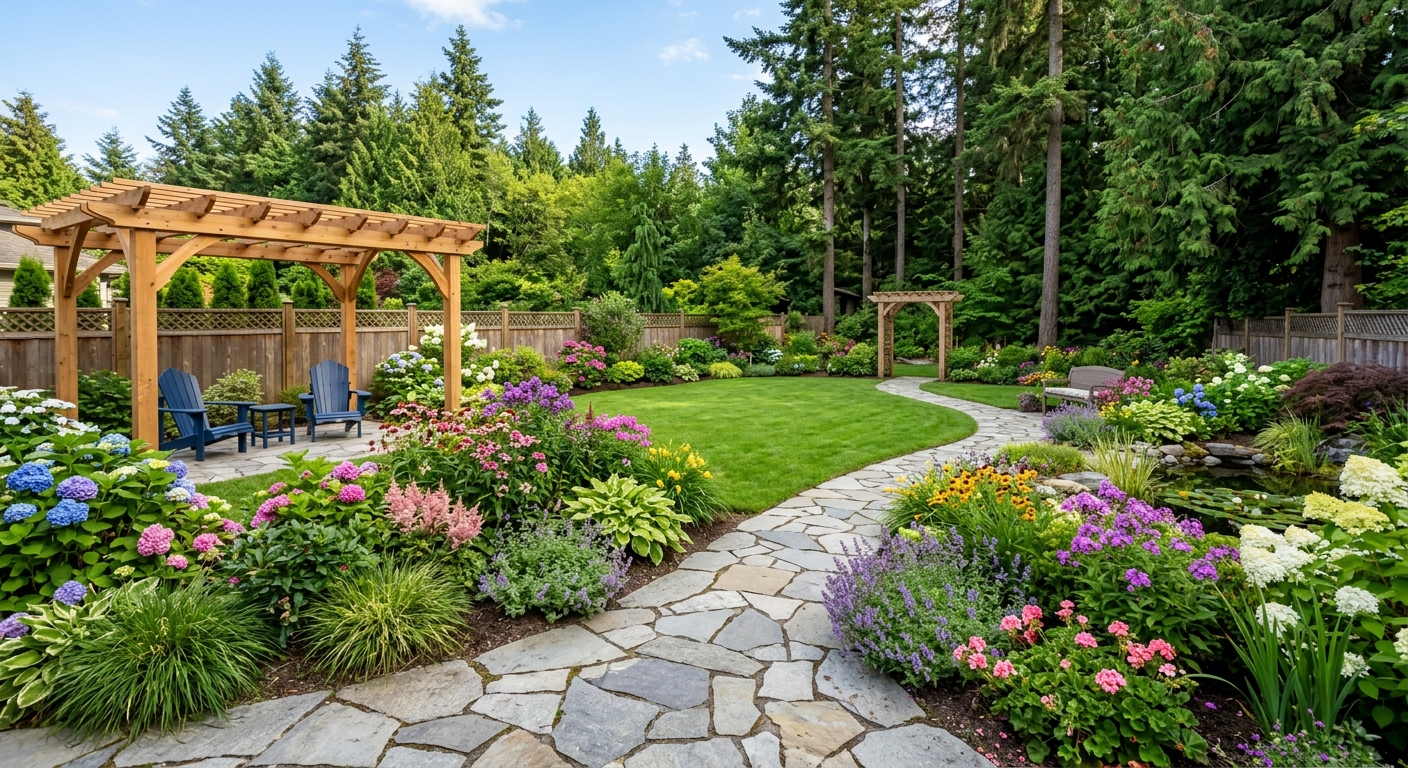
Landscaping options and costs in Coombs
In Coombs, homeowners often want a landscape that looks great and performs year-round, and that’s helped by the area’s coastal conditions and a long working window. With a population of 1,612 (Statistics Canada, 2021 Census), Coombs is small enough that contractor teams can move efficiently between nearby jobs, but you still see strong demand where properties have established front yards and larger lots—especially around the village core along Alberni Highway. In practice, that “inventory” of ready-to-improve homes influences pricing because design-build crews can book multiple projects during the drier months, smoothing labour availability.
Lower Mainland–Southwest sits mostly in plant hardiness zones 7–8, so you can grow broadleaf evergreens, layered shrubs, and long-blooming perennials with less winter loss than colder provinces. That said, mild winters don’t eliminate cost drivers: wet weather can slow installs, and freeze–thaw cycles still matter for patios, walkways, and retaining walls (proper depth, drainage, and compaction are essential). Compared with Prairie regions where frost-free windows are shorter and drought-tolerant planting is a must, coastal BC landscaping pricing can swing toward fuller, layered designs—often closer to the upper end of softscape installs—because more planting choices survive and crews can extend work beyond the “spring rush.”
To help you compare like-for-like, here are typical Coombs cost bands for common projects before you request a detailed site visit and measurement.
| Service |
Description |
Season |
Price Range |
| Full landscape design and installation |
Site assessment, concept + planting plan, grading/drainage allowance, soil prep, install of hardscape and softscape |
Mar–Dec (heavy rain weeks may shift) |
$8,000–$45,000 |
| Sod installation (supply, grade, lay, roll) |
Grade correction, topsoil/compost blend, sod supply, rolling and watering setup |
Apr–Jun, Aug–Sep |
$2,500–$7,500 |
| Lawn seeding (grade, seed, starter fertilizer) |
Light grading, seed + starter fertilizer, straw blanket as needed |
Apr–Jun, Aug–Oct |
$2,000–$4,500 |
| Interlocking patio or walkway |
Excavation, base compaction, sand setting bed, interlocking pavers, edging |
Apr–Nov |
$8,500–$28,000 |
| Retaining wall (interlocking block) |
Terrace/grading, block system, drainage gravel, weeping tile as needed, caps/finishing |
Apr–Nov |
$12,000–$55,000 |
| Tree and shrub planting |
Plant supply, planting holes, soil amendments, mulching, staking (if required), initial watering plan |
Mar–Jun, Sep–Nov |
$1,200–$14,500 |
Prices are estimates only and vary by project scope, site access and material selection.
What affects the price of landscaping in Coombs
In Coombs and across the Lower Mainland–Southwest, you can see quotes for the “same” project vary by 30–50% because the real cost is in the site conditions and allowances, not the surface finish. A simple lawn refresh can become a drainage and re-grade job once contractors discover low spots, compacted subsoil, or downspout runoff. Labour availability also shifts with the market—coastal BC has a longer growing season than many parts of Canada, so crews can schedule more installs, but wet stretches can push excavation and base work. When timing shifts, costs often rise due to resourcing and additional equipment days.
Plant hardiness zones 7–8 and local frost dates shape both what grows and what crews can do. In Prairie zones (2–4), short frost-free windows force drought-tolerant palettes and compressed schedules, often raising labour intensity even if material selections are simpler. In coastal BC, winter damage risk is lower, so you can choose more lush, layered planting, which can increase material spend—often nudging overall landscape design closer to the higher band of $5,000–$50,000. Still, good drainage in heavy-rainfall pockets keeps costs from getting “too low,” because addressing pooling, foundation moisture, or downspout discharge is non-negotiable.
Two common Coombs cost examples: (1) converting a muddy low lawn area into a usable grade with proper swales or a drainage bed typically pushes the project from a standard lawn seeding cost toward fuller softscape installation; (2) an interlocking patio that requires deeper base preparation for freeze–thaw performance often costs closer to the upper part of the retaining-wall and hardscaping band. Even with affordable access to supply, older homes with established landscaping may require extra soil amendments and more labour for root-safe planting, plus careful tie-in to existing grades—those site-specific hours add up quickly.
| Price Factor |
Why It Matters |
Cost Impact |
| Yard size in sq ft — the primary cost driver for softscape |
More area means more excavation, soil, seed/sod or plants, and installation labour time |
$500–$15,000+ difference depending on coverage |
| Grading and drainage work — slope corrections add significant cost |
Correcting low spots and directing runoff prevents pooling and foundation moisture |
$1,000–$12,000 typical uplift |
| Drainage bed or French drain installation |
Includes trenching depth, gravel, filter fabric, pipe, and tie-in points |
$2,000–$18,000 depending on length and outlets |
| Plant material tier — native shrubs vs. ornamental vs. mature specimen trees |
Mature trees cost more and often require additional handling, permits (where applicable) and staking |
$500–$10,000+ depending on size and quantity |
| Hardscape vs. softscape ratio — walls and patios cost more per sq ft than lawn |
Pavers/blocks require excavation, compaction, base, and edge restraint |
$5,000–$30,000 shift for modest area changes |
| Irrigation system design and installation |
Drip lines, zones, controllers, and trenching add labour and components |
$1,500–$9,000 uplift depending on zones |
| Soil amendment and topsoil required |
Improves structure and drainage for lawns and planting beds |
$800–$6,000+ depending on depth and quality |
| Tree removal or stump grinding before new planting |
Removal can be time-sensitive and sometimes requires extra equipment and disposal |
$300–$5,000+ depending on access and stump size |
Permits & regulations in British Columbia
In British Columbia, most typical yard work—planting new shrubs and trees, sodding, seeding, mulching, and the majority of softscape installations—generally does not require a permit. The main exceptions homeowners run into in Coombs relate to retaining walls, lot grading, and any work that could affect drainage patterns or neighbouring properties.
Work that typically DOES require a permit: Retaining walls above a local height threshold (commonly 1.0 m in many municipalities) often need a building permit, and sometimes engineered drawings, depending on height, soil conditions, and whether the wall is supporting fill or created substantial grade change. Work that commonly DOES trigger approval discussions: changes to lot grading that alter surface water flow toward a neighbouring lot or storm system can require approval. Before digging for wall footings or planting holes, always request utility locates—this is essential for safety and avoiding damage to buried services.
How to verify your contractor (BC-specific, step-by-step):
- Ask for their business details and confirm trades licensing if they are doing any regulated work (for landscaping firms, licensing/registration requirements can vary by scope).
- Request a current certificate of insurance for liability coverage; it should name your address or show proof the contractor is insured for the job.
- Confirm workers’ compensation coverage (WCB) if labour will be on-site; reputable contractors will supply clearance documentation on request.
- For engineered/permit-related retaining wall jobs, ask who will handle permit applications and whether drawings are included.
Also check local irrigation and water-use bylaws. Even though the coast typically avoids the strict summer bans seen inland, rules can still tighten during drought periods across BC, and a well-designed drip system keeps you compliant while protecting new plantings.
Planning a landscape that thrives in Coombs's climate
Planning a landscape that thrives in Coombs starts with working with the local growing rhythm—plant hardiness zones 7–8, wet winter seasons, and a frost calendar that supports planting for much of the year. Aim for a yard that drains well first, then “fills in” with plants selected for the climate’s temperature swings and moisture patterns. For plant selection, choose zone-appropriate natives and proven coastal species so you’re not fighting winter damage or over-watering; a thoughtful palette also reduces how much labour goes into winter protection.
Decide early whether you want sod or seed. Sod gives instant curb appeal, but in coastal BC it can be substantially more expensive—often 3–4 times the cost per usable square foot compared with seeding once you include base preparation and materials. Example: if lawn seeding in a typical area runs around $2,000–$4,500, sod for a similar footprint may land nearer $2,500–$7,500, mainly due to turf supply and installation labour.
Drainage and grading are critical in the Lower Mainland–Southwest. Pooling water can cause foundation moisture and plant failure, so use gentle slopes away from buildings and add swales where needed. For hardscape like patios and retaining walls, base prep must respect freeze–thaw cycles: excavate to a proper depth, compact base materials properly, and include drainage layers to limit frost heave risk. Finally, use low-maintenance strategies—mulch rings, groundcovers, and long-blooming perennials—to cut annual upkeep without sacrificing layered curb appeal. If water restrictions ever tighten, a rain-garden or a xeriscape-style approach with drought-tolerant selections and drip irrigation can reduce waste while keeping the yard attractive.
| Element |
Climate Consideration |
Maintenance Level |
Price Band |
| Sod lawn installation |
Works best during moderate, less-wet planting windows; needs stable grade and good topsoil |
Low to moderate (watering until established) |
$2,500–$7,500 |
| Native perennial garden |
Zone-appropriate species handle winter moisture better when planted with amended, well-drained soil |
Low (mulch refresh and seasonal pruning) |
$3,000–$12,000 |
| Mulched shrub border |
Heavy-rain seasons benefit from mulch to moderate moisture and suppress weeds |
Low (occasional weed control and topping mulch) |
$1,800–$7,000 |
| Interlocking stone patio |
Base and drainage must manage freeze–thaw; edge restraint prevents shifting |
Low (keep joints clean, occasional re-sanding) |
$8,500–$28,000 |
| Retaining wall (block) |
Needs drainage gravel and proper footing depth to handle local frost and wet seasons |
Low (inspection of drainage outlets) |
$12,000–$55,000 |
| Drip irrigation system |
More efficient for long coastal seasons and helps tolerate occasional watering constraints |
Low to moderate (seasonal checks and controller updates) |
$1,500–$9,000 |
How to choose a landscaping contractor in Coombs
Choosing the right contractor in Coombs is mostly about proof and process. Start with verification: in British Columbia, ask for (1) liability insurance—a current certificate of insurance showing coverage in effect for the job; (2) WCB workers’ compensation clearance (or proof of registration/coverage) before labour begins; and (3) any required trade licensing for the scope being performed. Don’t just accept a photo of a certificate—confirm the dates are current and that the coverage aligns with the project type (especially for hardscape excavation and retaining-wall work).
Next, get 2–3 itemised written quotes. A solid quote separates labour and materials, lists quantities (sq ft of sod, linear feet of edging, number/sizes of plants), and includes allowances for excavation, base materials, disposal, and any required soil amendment. Scope gaps create surprises, so read exclusions carefully: is permit work included for a retaining wall where required? Is disposal of excess soil included? Are topsoil and compost specified by depth?
Warranty matters for both workmanship and products. Ask for the workmanship warranty length (and what it covers), whether plant warranties are manufacturer-based, and whether warranties are transferable to future owners. For payments, never pay more than 10–15% upfront; hold back a portion until key milestones are complete (base inspection passed, pavers/blocks installed correctly, final grading, and cleanup). Finally, request a written start date and a completion estimate that reflects weather windows for Lower Mainland–Southwest.
- They visit your site (not just measurements by phone or photos).
- They provide itemised labour/material line items with quantities.
- They show a drainage plan where pooling is possible.
- They specify soil amendments/topsoil depth, not just “topsoil”.
- They include disposal and confirm where excavated material goes.
- They outline permit responsibility for retaining walls and engineered requirements.
- They list plant sizes, species names, and spacing—no “similar substitutes” without approval.
- They explain base build-up for pavers/blocks (excavation + compaction + sand setting layer).
- They include an irrigation plan if lawns or bed plants need it.
- They provide a workmanship warranty in writing (and warranty start date).
- They confirm insurance and WCB/clearance coverage before work begins.
- They set a realistic schedule considering wet weeks common on Vancouver Island coast areas.
Red flags to watch for: (1) quotes that are only lump sums with no quantities; (2) reluctance to provide insurance and WCB/clearance proof; (3) skipping drainage details while promising “guaranteed no settling”; (4) offering extremely low pricing compared with typical Coombs bands (for example, undercutting interlocking patio work well below $8,500 without explaining scope cuts); (5) demanding large upfront payments beyond 10–15% or refusing a written timeline.
Frequently asked questions — landscaping in Coombs
Do I need a permit for a retaining wall in British Columbia?
In British Columbia, many landscape tasks like planting and sodding typically do not require permits, but retaining walls often do—especially when they exceed a local height threshold (commonly around 1.0 m in many municipalities). For a retaining wall in Coombs, the permit need depends on height, how the wall supports soil or fill, and site conditions that influence stability. If your project includes major grading changes that alter how water moves toward a neighbour or a storm system, that can also trigger approval requirements. The safest approach is to ask your contractor to confirm the trigger before construction starts and to state clearly who applies for permits. Also request utility locates before any wall footings are dug.
How do I improve drainage in my yard?
For drainage improvements in Coombs, start by identifying where water pools after rain and whether downspouts are discharging onto low areas. In the Lower Mainland–Southwest, wet winters and long cool periods make “small” drainage problems show up as persistent soggy spots and plant failures. Common solutions include re-grading to slope away from the foundation, adding a drainage bed (or French drain) to intercept subsurface water, and installing swales to direct runoff. If you’re also planning lawn work, drainage usually affects whether sod can root properly and whether seeding will establish. Your contractor should be able to explain outlet points and how they’ll manage freeze–thaw performance around bases and hardscape.
What is xeriscaping and does it suit Coombs?
Xeriscaping is landscaping designed to reduce irrigation demand using drought-tolerant plants, efficient irrigation (often drip), and moisture-smart design like mulched beds and groundcovers. In Coombs (zone 7–8), you can absolutely use xeriscape principles, especially if you want to be prepared for occasional watering constraints or rising water costs. That said, coastal BC also gets regular rainfall, so the goal is usually “efficient and resilient,” not extreme drought avoidance. Many homeowners blend native shrubs and perennials with mulch and selective irrigation so plants establish during wetter seasons and don’t require constant summer watering. For pricing, xeriscaping can still fall within normal landscape design & installation bands (often around $5,000–$50,000 depending on how much grading and hardscape is included), but it may reduce ongoing maintenance and irrigation expenses.
How do I plan a low-maintenance yard?
A low-maintenance yard in Coombs usually comes from three choices: (1) smart plant selection (zone-appropriate natives and reliable perennials/shrubs), (2) soil and drainage prep (so plants thrive instead of struggling in wet pockets), and (3) design that limits weeding and mowing. Mulch shrub borders, groundcovers, and layered planting beds generally outperform “bare soil” because mulch moderates moisture and suppresses weeds. For the lawn area, consider whether seeding is better than sod for your timeline and budget. Seeding often fits around $2,000–$4,500 for typical refresh scopes, while sod can climb to $2,500–$7,500 because of supply and installation labour. Keep curb appeal high by including repeating plant forms and a few structural elements like evergreen shrubs rather than relying solely on short-lived annuals.
How deep should a retaining-wall base be for local frost?
Retaining-wall base depth should be designed for freeze–thaw performance and soil conditions, not just an “average” number. In coastal BC, freeze–thaw cycles still occur, so proper excavation depth, compaction, and drainage layers are critical to limit frost heave and wall movement. A contractor should assess site conditions (slope, soil type, wall height, and drainage needs) and build the base accordingly, often extending below the active frost-affected zone used for that design approach. Because wall systems and local engineering requirements vary, your best guide is the wall design/spec sheet for the block system and any permit drawings if required. Ask your contractor what base depth and drainage gravel layer they plan, and whether they’ll include weeping tile or equivalent discharge where needed.
How much does professional landscape design cost?
Professional landscape design cost in Coombs commonly depends on whether you’re doing design-only or design plus build. For full design and installation, typical project totals often land within broad bands like $5,000–$50,000 depending on the scope (grading, hardscape, irrigation, and planting quantity). If your budget is tighter, you can sometimes start with a planting plan and basic grading allowance, which keeps you nearer the lower end—then expand later into patios, retaining walls, or irrigation. The key is that design isn’t just aesthetics: it’s also drainage direction, plant spacing, and a realistic maintenance plan for Lower Mainland–Southwest conditions. Request an itemised quote so you can see what’s included—site measurements, concept drawings, plant list/specs, and any revisions—before committing.