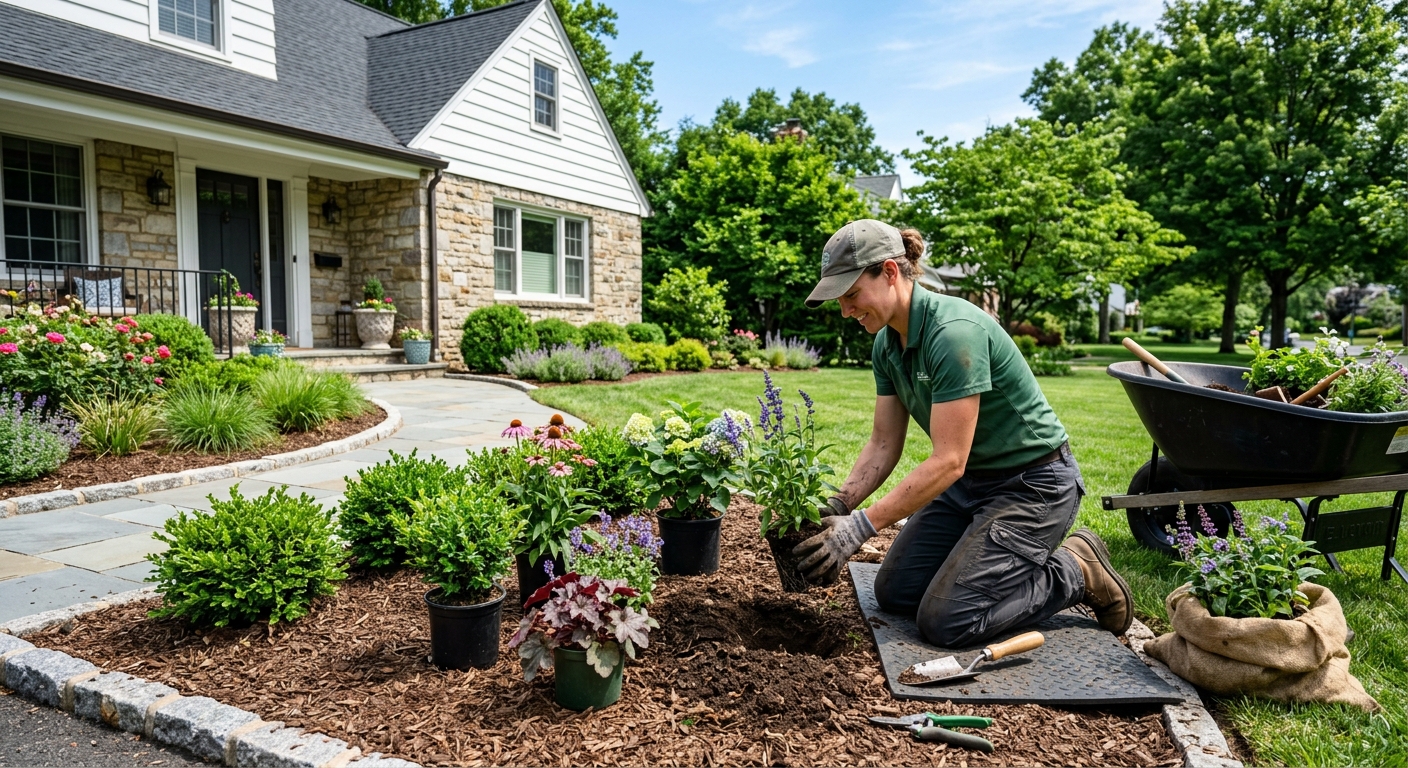
Landscaping options and costs in Coquitlam
Coquitlam homeowners have a wide range of landscaping options, and costs typically start low and climb fast once you add drainage fixes, interlocking, or a full design-and-install package. With 148,625 people in the city (Statistics Canada, 2021 Census) and 38,790 homeowner households (69.3% of households own), it’s common to see longer-term yard upgrades—especially on single-detached lots where there’s more space to stage planting, paths, and softscape. In Coquitlam, 35.2% of dwellings are single-detached houses, so contractors are used to designing layered, “lived-in” landscapes that look good from the street and stand up to wet winters.
In the Lower Mainland–Southwest (plant hardiness zones 7–8), mild, wet winters and long, cool summers help keep the working season moving—so installation schedules can be steadier than in shorter-season provinces. That said, Lower Mainland projects still need freeze–thaw planning: structural work like patios and retaining walls requires proper base depth, drainage, and compaction to reduce frost heave and wall movement on sloped sites. Availability of crews is also strong in areas like Westwood Plateau and parts of north Coquitlam, where family homes tend to refresh their yards more often.
To compare common project types and budget expectations, use the table below as a starting point for quotes in Coquitlam.
| Service |
Description |
Season |
Price Range |
| Full landscape design and installation |
Site review, concept-to-final plan, plant list, grading/drainage coordination, installation of planting + hardscape as scoped |
Spring–fall (often year-round for planting; weather limits heavy hardscape) |
$7,500–$45,000 |
| Sod installation (supply, grade, lay, roll) |
Minor grading, soil prep, sod supply and installation, rolling, starter fertilizer |
Late spring–early fall (avoid extreme wet weeks and heavy rain) |
$2,500–$8,000 |
| Lawn seeding (grade, seed, starter fertilizer) |
Topdressing, grading to remove low/high spots, seed + starter fertilizer, light raking/coverage |
Spring (best) and early fall |
$1,800–$5,500 |
| Interlocking patio or walkway |
Excavation, base rock, compaction, geotextile, interlocking pavers, edging, finish grading |
Spring–fall (with rain-day planning for base prep) |
$10,000–$35,000 |
| Retaining wall (interlocking block) |
Excavation, base preparation, block installation, drainage gravel/weep management, steps if scoped |
Spring–fall |
$12,000–$55,000 |
| Tree and shrub planting |
Soil conditioning, planting layout, stake/secure as required, mulch ring, first-watering guidance |
Spring–fall (winter planting limited by soil conditions) |
$1,200–$14,000 |
Prices are estimates only and vary by project scope, site access and material selection.
What affects the price of landscaping in Coquitlam
In Coquitlam and across the Lower Mainland–Southwest, you can see quotes for the “same” landscaping idea come in 30–50% apart because each contractor prices risk and site conditions differently—especially around drainage, access, and material tier. Labour rates in the Lower Mainland tend to be steady, but the scope can expand quickly once we factor in what’s happening under the grass. For example, a straight planting job is very different from one that includes grading, a drainage bed, or changing downspout routing.
Across British Columbia, plant hardiness zones and frost dates shape both what grows and how long crews can work. Coastal BC’s zones 7–8 allow a longer growing season than Prairie zones 2–4, so planting palettes can be more lush in Coquitlam. However, coastal rain doesn’t eliminate the need for proper drainage—soil can stay wet, which increases the time spent on excavation, base prep and curing. In heavy-rainfall areas, good drainage beds and French drains can push a project toward the higher end of the “retaining walls & hardscaping” band, which typically sits around $10,000–$80,000, even when the visible wall looks modest.
Two concrete cost examples from Coquitlam: (1) If your property has a slope or low spots near a foundation, adding grading and drainage often turns a $5,000–$50,000 design-and-install concept into a larger hardscape scope because we may need re-sloping, edge drains and base rock. (2) Homes built before 1981 make up 29.6% of housing stock (Statistics Canada, 2021 Census); older lots frequently have unknown fill or mature root systems, which can raise excavation labour and stump grinding time.
Next, use the factors below to understand what typically changes the final number.
| Price Factor |
Why It Matters |
Cost Impact |
| Yard size in sq ft — the primary cost driver for softscape |
More area means more soil prep, mulch, plants, and/or turf product |
$1,000–$15,000 swing depending on acreage |
| Grading and drainage work — slope corrections add significant cost |
Fixing pooling and redirecting runoff affects excavation depth, compaction and base thickness |
$2,000–$20,000 |
| Drainage bed or French drain installation |
Needed when downspouts and surface water can’t move away from structures |
$1,500–$12,000 |
| Plant material tier — native shrubs vs. ornamental vs. mature specimen trees |
Mature plants cost more and require larger planting pits and sometimes cranes/rigging |
$500–$10,000+ |
| Hardscape vs. softscape ratio — walls and patios cost more per sq ft than lawn |
Pavers, base rock, labour time, and edge restraints raise per-square-foot totals |
$3,000–$35,000 |
| Irrigation system design and installation |
Drip lines, zones, smart controllers and testing increase up-front cost but reduce waste |
$1,500–$8,000 |
| Soil amendment and topsoil required |
Coastal clay-heavy or compacted soils often need structured amendments for root growth |
$800–$6,000 |
| Tree removal or stump grinding before new planting |
Grinding affects excavation planning and disposal; removal can add access/safety time |
$400–$6,000 |
Permits & regulations in British Columbia
In British Columbia, most typical landscaping activities—planting, sodding, and most softscape work—do not require a permit. That includes tasks like shrub and tree planting, mulching, lawn installation, grading limited to creating proper drainage for your landscape, and installing gardens/groundcovers. The work that more often triggers permits is structural: retaining walls above a municipal height threshold (commonly around 1.0 m or 3.3 ft in many BC municipalities) typically require a building permit and, in some cases, engineered drawings—especially if the wall is on a slope or is supporting more substantial surcharge.
Also note that changes to lot grading can trigger approval when they meaningfully affect drainage toward neighbouring properties or storm sewer connections. Before digging any planting holes or wall footings, contractors should complete utility locates so you don’t hit buried services. Finally, confirm local water-use bylaws for irrigation—Coquitlam homeowners don’t face the same constant watering bans as the drier BC Interior, but efficient irrigation still matters as water costs rise and municipalities tighten rules during dry periods.
To verify a contractor’s compliance, ask for: (1) their British Columbia licence/registration details if applicable (many landscape contractors have business registration even when a trade licence isn’t required), (2) a certificate of liability insurance naming you as additional insured, and (3) proof they’re set up for required workplace coverage (WSBC/WCB). Where to look: request a copy of their certificate of insurance and clearance documentation before work starts, and verify any online public listings they provide. If anything is missing, you’re better off pausing and moving to a contractor who can document it clearly.
Planning a landscape that thrives in Coquitlam's climate
To plan a landscape that thrives in Coquitlam, design with our hardiness zone 7–8, frequent coastal moisture, and early spring frost timing in mind. Start with plant selection: choose native and zone-appropriate species that handle cool, wet winters and don’t demand constant summer watering. Pair evergreens and structured shrubs with long-blooming perennials for year-round depth, but still keep a clean drainage strategy so roots don’t sit in saturated soil.
Next, decide between sod and seed. Sod gives instant results and strong curb appeal, but it costs more per sq ft—commonly about 3–4x the material price of seeding once you include prep. In many Coquitlam yards, seeding is a smart way to stay within budget if you can tolerate temporary patchiness while it establishes. A practical example: if your goal is to cover a mid-sized lawn area, a seeding approach that lands near $1,800–$5,500 can justify itself if you’re also budgeting for drainage improvements. If the lawn needs to look “complete” quickly for a sale, stepping up into sod territory around $2,500–$8,000 is often worth the premium.
Drainage and grading are critical in the Lower Mainland–Southwest. Plan for downspout discharge, remove pooling, and keep planting beds from directing water toward foundations. For hardscape—patios and retaining walls—base preparation must account for freeze–thaw cycles: deeper excavation, proper base rock, geotextile, and compaction help prevent heave and settlement. Finally, go low-maintenance without looking bare: mulch layers, groundcovers, and well-spaced shrubs reduce weeding, while perennials provide seasonal colour without constant re-planting. Rain-garden style planting pockets and targeted xeriscape (where possible) can also help manage water—especially on slopes where runoff controls are needed.
| Element |
Climate Consideration |
Maintenance Level |
Price Band |
| Sod lawn installation |
Roots establish during mild spring/fall; needs good prep so it doesn’t stay waterlogged |
Low after establishment; higher effort first season |
$2,500–$8,000 |
| Native perennial garden |
Zone-appropriate selections handle cool wet winters; supports year-round structure |
Moderate (seasonal pruning/weeding) |
$3,000–$10,000 |
| Mulched shrub border |
Mulch protects soil temperature and reduces splash erosion in heavy rain |
Low (top up mulch once or twice yearly) |
$2,000–$8,000 |
| Interlocking stone patio |
Base must resist freeze–thaw; edge restraints help lock in alignment |
Low (occasional cleaning and joint sand checks) |
$10,000–$35,000 |
| Retaining wall (block) |
Needs proper base depth and drainage gravel/weep management |
Low (visual inspection and clearing weep areas) |
$12,000–$55,000 |
| Drip irrigation system |
Supports efficient watering during dry spells; drip reduces runoff in wet season |
Low (seasonal adjustments and controller checks) |
$1,500–$6,500 |
How to choose a landscaping contractor in Coquitlam
Choosing the right contractor in Coquitlam starts with proof, not promises. For British Columbia work, ask for a copy of their certificate of liability insurance (you should see your address or be listed as an additional insured, depending on the insurer’s process). Then confirm workplace coverage documentation for their workers (WSBC/WCB clearance where applicable). For licensing: while landscaping is often not a single universally licenced trade, any contractor should be able to show the correct business registration and—where specialty scopes apply—trade licences or certifications (for example, for certain hardscape machinery or any regulated work tied to their subcontractors). If they can’t clearly explain what’s covered, ask for it in writing.
Next, get 2–3 itemised written quotes—not just a lump sum. You want a labour + materials breakdown so you can compare like-for-like. Confirm what’s excluded: permit pulling, disposal, stump grinding, soil amendments, irrigation tie-ins, and whether minor grading changes are included. Make sure the quote states what’s included in drainage work and how runoff will be managed away from foundations and neighbouring properties.
Warranty matters: ask for workmanship warranty length (commonly 1 year for many installations, longer for some components), product/manufacturer warranty, and whether warranties transfer if you sell your home. For payment, never pay more than 10–15% upfront; use progress payments and a holdback until the punch list is complete and clean-up is verified. Finally, request a start date and completion estimate in writing—especially around wet-season constraints in the Lower Mainland.
- Ask for insurance documents before signing (liability certificate and endorsements if offered).
- Verify workplace coverage paperwork and clearance status for their crews/subcontractors.
- Request 2–3 itemised quotes with labour and materials listed separately.
- Confirm disposal included for topsoil, old sod, stump grindings, and excavation spoils.
- Clarify what grading and drainage changes are included (and what triggers extras).
- Look for a written schedule and weather contingency plan for heavy-rain weeks.
- Check that the scope specifies base rock/geotextile/compaction for patios/walls.
- Ask for plant lists with common + botanical names and mature spacing.
- Confirm irrigation scope: supply only vs. supply + install + programming/testing.
- Review warranty details in writing (workmanship, products, and transferability).
- Use a payment schedule with a holdback until final completion and walkthrough.
- Ensure the contract includes access limitations, protection of existing landscaping, and cleanup standards.
In Coquitlam, 4–5 common red flags include: quotes that omit drainage details for sloped or pooling sites, no written scope (only “allowances”), refusal to provide insurance/WCB/WSBC clearance documentation, payment demands above 15% upfront, and vague warranties that don’t specify workmanship coverage or start/end dates.
Frequently asked questions — landscaping in Coquitlam
Do I need a permit for a retaining wall in British Columbia?
In British Columbia, many retaining walls require a permit once they exceed your municipality’s threshold height—often around 1.0 m (3.3 ft), depending on local bylaws and wall conditions. In Coquitlam, the exact requirement can vary by site specifics like slope, height, and whether the wall supports additional loads. Typical steps are: confirm the wall height and proposed placement, ask your contractor whether they’ll pull a permit, and provide the basic wall layout and drainage plan. If your contractor is installing a block wall with proper drainage gravel and weep management, that doesn’t automatically remove permit needs when height thresholds are crossed. If approval is required, engineered drawings may be requested for certain configurations.
How do I improve drainage in my yard?
Drainage improvements in Coquitlam usually start with identifying where water goes during the wet season—near foundations, along fences, or in lawn depressions. The most cost-effective approach is often targeted: regrading to move runoff away from structures, adding proper topsoil slope, and incorporating mulch basins/plant beds that can handle rain without pooling. Where you see persistent soggy ground, a drainage bed or French drain is commonly recommended, especially if downspouts discharge toward the yard. This type of work can also protect hardscape investment, because patios and retaining walls fail faster when water undermines base material. Your contractor should explain whether you’re adding a drainage system versus only adjusting surface grading.
What is xeriscaping and does it suit Coquitlam?
Xeriscaping is landscaping designed to reduce water use through drought-tolerant plants, smart irrigation, and soil practices that keep moisture where it’s needed. In Coquitlam and the Lower Mainland–Southwest (zones 7–8), we typically get enough rainfall that “true” xeriscape may not be necessary for the whole yard. That said, xeriscaping principles still help—especially in sunny, wind-exposed corners or areas with compacted soils where plants struggle. A blended approach often works best: use moisture-loving plants where the ground stays wet, and select more water-efficient shrubs/perennials on raised or well-drained slopes. If you’re comparing budgets, a drip irrigation upgrade (often $1,500–$6,500) can be a smart investment when combined with the right plant palette, even if you’re not going fully drought-focused.
How do I plan a low-maintenance yard?
A low-maintenance yard in Coquitlam is usually planned around fewer, better-performing plantings and more stable soil moisture conditions. Start by improving drainage and soil structure so plants aren’t constantly stressed by pooling or dryness. Then choose a layered design: evergreen backbone shrubs, native perennials for seasonal colour, and mulch in beds to suppress weeds. Groundcovers can reduce edging and re-planting, while well-placed trees reduce mowing demands over time. If you’re building a lawn, remember that sod (often $2,500–$8,000) gives quick visual results but still needs establishment; seeding is typically cheaper (often $1,800–$5,500) but takes longer to fill in. For curb appeal without constant upkeep, consider adding a patio or walkway with durable base preparation so you’re not redoing mud-prone paths every rainy season.
How deep should a retaining-wall base be for local frost?
For retaining walls in Coquitlam, base depth is determined by wall height, block type, and—most importantly—drainage and freeze–thaw resilience. While contractors can’t rely on a single number for every project, the key is that the base and supporting materials must be excavated and compacted properly below the level where freeze–thaw forces can destabilize the wall. In the Lower Mainland–Southwest, frost isn’t as severe as prairie zones, but freeze–thaw cycling still occurs, and improper base prep can lead to settlement or wall movement over time. Your contractor should specify the base construction in the quote: excavation depth, geotextile use, base rock depth/type, compaction method, and how they’re managing drainage gravel and weep holes behind the wall.
How much does professional landscape design cost?
Professional landscape design costs in Coquitlam vary based on whether you’re buying a concept-only layout or a full plan with plant schedules and installation-ready details. Many homeowners end up bundling design with installation, and that’s where pricing becomes more predictable. For context, full landscape design and installation commonly falls into the broad $5,000–$50,000 band used by contractors for scope levels ranging from planting-only refreshes to integrated grading, hardscape, and irrigation. If you only need design without installation, the price is often lower, but you should still expect a site review and a plan that addresses drainage and hardscape elevations. Ask for what’s included: site measurements, concept iterations, CAD drafts, plant lists, and how the design handles Coquitlam’s wet winters and freeze–thaw considerations.