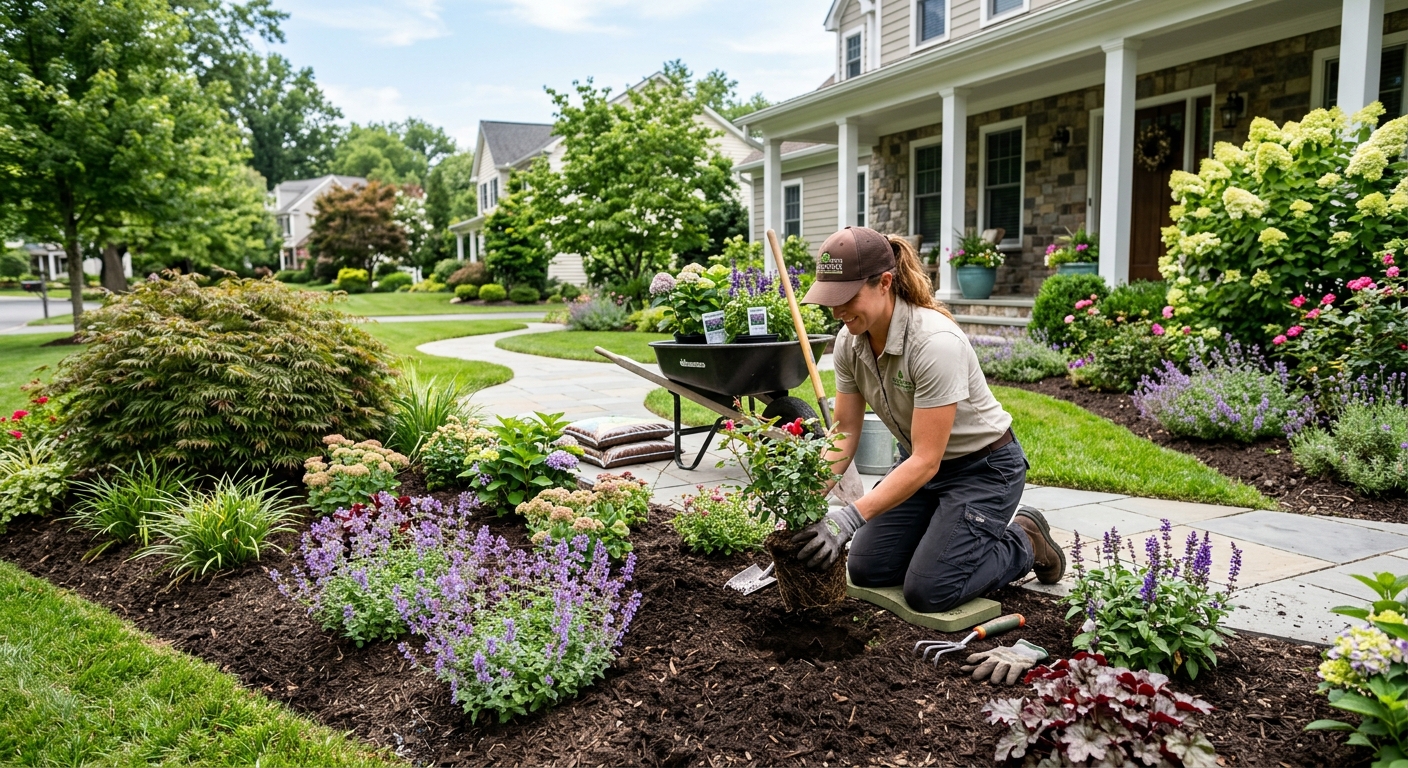
Landscaping options and costs in West Point Grey
Landscaping in West Point Grey often starts with a simple question: what’s realistic for your budget and timeline? With a population of 13,065 (Statistics Canada, 2021 Census), the neighbourhood’s steady demand for tidy curb appeal and walkable outdoor spaces means reputable crews stay busy, especially around family-oriented streets and the older housing stock where yards need both drainage fixes and refreshed planting. It also helps that West Point Grey’s Lower Mainland–Southwest climate sits in plant hardiness zones 7–8—mild, wet winters and long cool summers—so you can plan for a longer working and growing season than many parts of British Columbia.
Costs in this region are shaped by wet-weather scheduling and drainage requirements. Contractors can build and plant for more months of the year, which supports lush designs, but the ground can stay heavy and saturated during winter storms, affecting mobilization and material delivery. On many sloped lots and garden beds near foundations, grading and water management become a core part of the price instead of an “add-on.” In areas like Kitsilano-adjacent pockets and along Broadway/30th Avenue corridors where properties typically have meaningful front-and-back yard space, we frequently see clients invest early because the yard is a daily living space, not just a border.
Below are common options homeowners ask for in West Point Grey, with typical price ranges to help you benchmark quotes—then you can decide what fits your goals.
| Service |
Description |
Season |
Price Range |
| Full landscape design and installation |
Site visit, layout & plant plan, grading/drainage coordination, planting, and softscape + select hardscape |
Year-round (softscape best in spring/fall; hardscape avoids the wettest weeks) |
$15,000–$50,000 |
| Sod installation (supply, grade, lay, roll) |
Topsoil/soil base prep, grading, supply and install sod, light starter fertilizer, roll and water plan |
Late spring to early fall (avoid waterlogged days) |
$3,000–$8,000 |
| Lawn seeding (grade, seed, starter fertilizer) |
Re-grade, seed blend selection, starter fertilizer, seed-to-soil contact, first watering guidance |
Spring or early fall |
$2,000–$5,500 |
| Interlocking patio or walkway |
Excavate, base prep, compaction, paver placement, edging, and joint sand |
Late spring to fall |
$10,000–$35,000 |
| Retaining wall (interlocking block) |
Excavation, proper drainage layer, block installation, caps/finishes, backfill compaction |
Late spring to fall (weather-dependent for compaction) |
$15,000–$65,000 |
| Tree and shrub planting |
Soil conditioning, planting, staking (if needed), mulch ring, and watering plan |
Spring and fall (spring is busiest) |
$3,000–$15,000 |
Prices are estimates only and vary by project scope, site access and material selection.
What affects the price of landscaping in West Point Grey
In West Point Grey, the same “basic” project can come in 30–50% apart between contractors, even when both teams use similar brands. The main reason is that landscaping quotes are very sensitive to soil conditions, drainage scope, and how much of the work is included (haul-away, base preparation, irrigation tie-ins, and labour time waiting for workable weather). In the Lower Mainland–Southwest—zones 7–8—there’s a longer growing season and crews can work through more of the year, but heavy rain can still compress the days when bases can be excavated, compacted, and paved properly. That scheduling reality shows up as labour rates and minimum mobilization charges.
Plant hardiness and frost dates also influence both what can be planted and how early you can start. Coastal BC generally allows planting close to year-round, but structural work still has to handle freeze–thaw cycles. Even though the Lower Mainland doesn’t have the same deep frost pressure as Prairie regions (zone 2–4), retaining wall bases must still be dug with proper drainage and compaction so water doesn’t freeze in voids and push walls out of alignment. Meanwhile, in dry BC Interior and Alberta, water restrictions shape irrigation design and reduce the lawn footprint; in West Point Grey, we can still build lush layered borders, but we often bias toward efficient drip and smarter controllers to avoid wasted runoff and to stay ahead of local water cost concerns.
Concrete examples we see locally: (1) A sloped front yard that needs grading corrections can push a “simple planting” into a retaining wall + drainage package, moving costs toward the $10,000–$80,000 hardscaping band. (2) If you’re replacing a struggling lawn, sod can be significantly more expensive than seeding—often justifiable when you need immediate cover for erosion control. For many homeowners, the best value is combining a smaller hardscape element (like a patio) with a larger planting plan rather than chasing every feature at once, staying closer to the $5,000–$50,000 full design/install band.
Finally, housing context matters. Older West Point Grey homes often have established planting beds and mature roots, so adding topsoil or relocating planting without disrupting existing structures can add labour—and sometimes excavation—by hundreds to thousands of dollars depending on access.
| Price Factor |
Why It Matters |
Cost Impact |
| Yard size in sq ft — the primary cost driver for softscape |
More area means more topsoil, seed/sod, mulch, and labour hours |
Often scales linearly; larger yards commonly move projects between budget and premium design/install bands |
| Grading and drainage work — slope corrections add significant cost |
Proper slopes prevent pooling, foundation moisture, and runoff issues |
Can add $2,000–$12,000+ depending on excavation and re-contouring |
| Drainage bed or French drain installation |
Helps move water away from beds and structures in wet coastal soils |
Frequently adds $1,500–$8,000 based on length/depth and outlet complexity |
| Plant material tier — native shrubs vs. ornamental vs. mature specimen trees |
Premium cultivars and larger sizes cost more and can require specialized handling |
Mature specimens can add thousands compared to starter stock; planting budgets may swing within the $1,000–$15,000 range |
| Hardscape vs. softscape ratio — walls and patios cost more per sq ft than lawn |
Pavers/blocks require base excavation, compaction, and precise alignment |
Swapping lawn for patio/walls can shift the project toward the $10,000–$80,000 hardscaping band |
| Irrigation system design and installation |
Drip, bubblers, and smart controllers improve efficiency and plant survival |
Often adds $1,500–$6,500 depending on zones, backflow needs, and trenching |
| Soil amendment and topsoil required |
West Coast soils can be dense or inconsistent; amendments improve rooting |
Commonly adds $500–$4,000+ if significant import or compost blends are needed |
| Tree removal or stump grinding before new planting |
Stumps affect grading and prevent new root zones from forming properly |
Can add $500–$5,000+ depending on stump size and access |
Permits & regulations in British Columbia
In British Columbia, most routine planting, sodding, and softscape work typically does not require a permit. That includes laying sod, installing garden beds, and planting shrubs and trees as part of normal landscaping. However, retaining walls can be a different story. In most municipalities, retaining walls above a height threshold—commonly around 1.0 m (3.3 ft)—may require a building permit and, in some cases, engineered drawings. If your project involves significant changes to lot grading—especially where drainage could be directed toward a neighbouring property or connected to storm sewer locations—you should expect approval requirements or at least additional checks.
Before any digging for planting holes, footings, or wall drainage, call for utility locates. Even in a landscaping-only scope, hidden services can be in unexpected places around older neighbourhood yards.
How to verify a West Point Grey contractor is properly set up in British Columbia:
- Check the contractor’s trade credentials through the relevant online registry where applicable (for the trades they’re actually performing).
- Request a current certificate of insurance showing general liability—confirm the policy covers the work you’re hiring them to do.
- Ask for proof of workers’ compensation coverage (WSIB/WCB) for their employees; request the clearance letter or the coverage documentation they provide.
- Verify the scope matches the insurance (e.g., if excavation or heavy base works are included, ask how those tasks are covered).
Also confirm water-use and irrigation requirements for your address and any bylaws that may tighten during drought conditions, even though West Point Grey’s coastal climate is generally wetter than the BC Interior.
Planning a landscape that thrives in West Point Grey's climate
Designing for West Point Grey means working with zones 7–8, a wet coastal pattern, and a frost calendar that typically supports planting from spring through fall. Start with plant selection: choose native and zone-appropriate perennials, broadleaf evergreens, and shrubs that tolerate winter damp. This reduces reliance on winter protection and helps you avoid “fragile” ornamentals that struggle in consistently wet soil or in poorly drained beds.
Next, decide between sod and seed. Sod gives instant green cover and better erosion control, but it typically costs 3–4 times more per sq ft than seeding because you’re buying turf rolls and labour for installation. If your priority is immediate traffic-ready coverage for a walkway edge or to prevent washout during early rains, sod can be worth the premium. If you can tolerate a longer “fill-in” period, seeding generally keeps you closer to the $2,000–$5,500 lawn seeding band.
Drainage and grading are where many coastal yards succeed or fail. Plan to prevent pooling near foundations: correct slopes, add compost/topsoil where needed, and include drainage beds or French drains if the site holds water. For patios and retaining walls, base prep should account for freeze–thaw cycles: excavate to a stable subgrade, use compactable base materials, and maintain proper outlets so water doesn’t sit in the base layer. In the Lower Mainland–Southwest, that moisture management is especially important because soils can stay saturated.
Low-maintenance design strategies also fit the area: use mulch, groundcovers, and layered perennials to reduce weeding, then back them with a drip irrigation plan sized for real plant needs. Many clients add a rain garden or a bioswale-style planting pocket to capture roof runoff and reduce lawn reliance—an approach that aligns with water efficiency goals without sacrificing curb appeal.
As a practical example: if you’re comparing a sod lawn replacement versus seeding, choosing seeding can save you several thousand dollars and reallocate that budget to drainage fixes or a better planting palette—often the difference between “pretty for a season” and “still thriving next year.”
| Element |
Climate Consideration |
Maintenance Level |
Price Band |
| Sod lawn installation |
Instant cover in wet coastal soils; avoid installation on waterlogged days |
Low–moderate (watering to establish; mowing after rooting) |
$3,000–$8,000 |
| Native perennial garden |
Zone-appropriate species tolerate cool, damp winters with less winter protection |
Low (seasonal pruning and weed control) |
$4,000–$12,000 |
| Mulched shrub border |
Mulch improves moisture stability and reduces weed pressure in winter/wet spells |
Low (refresh mulch 1x/year) |
$3,500–$10,000 |
| Interlocking stone patio |
Proper base drainage prevents movement during freeze–thaw and wet winters |
Low (occasional joint sand top-up) |
$10,000–$35,000 |
| Retaining wall (block) |
Backfill compaction and drainage layers reduce water pressure in wet conditions |
Low (periodic inspection of alignment and weep holes/drain outlets) |
$15,000–$65,000 |
| Drip irrigation system |
Efficient delivery during cool summers; helps you avoid overwatering in coastal damp cycles |
Moderate (seasonal checks and controller programming) |
$1,500–$6,500 |
How to choose a landscaping contractor in West Point Grey
Choosing the right landscaping contractor in West Point Grey starts with proof, not promises. First, verify British Columbia coverage documents: request their liability insurance certificate and confirm it’s current and tied to the work you’re hiring them for. Next, check workers’ compensation coverage (WSIB/WCB). Ask for their clearance letter or coverage verification they provide for active projects. If a contractor is using subcontractors for excavation, hardscape base work, or utility connections, ask who is responsible for coverage and equipment on site.
Then get 2–3 itemised written quotes—labour and materials broken out, not just a lump sum. A proper quote should list excavation quantities, base materials, topsoil/compost amounts, paver/block specifics, plant counts and sizes, irrigation components (if included), and disposal/haul-away. Read the scope carefully: is permit pulling included where retaining walls cross the height threshold, and are utility locates included before digging? Confirm what’s excluded (for example, removal of mature trees beyond a stated diameter, or additional trucking if site access is constrained).
Warranty matters. Ask for a workmanship warranty length (how long they stand behind labour), and whether the product/manufacturer warranty applies to plants, interlocking blocks, and irrigation components. Find out if warranties are transferable if you sell the home—this can matter to buyers in West Point Grey.
Payment schedule should be reasonable: never pay more than 10–15% upfront. Use holdback until the job is complete and deficiencies are corrected. Finally, insist on a written timeline with a start date and realistic completion estimate, factoring in wet-weather delays common in coastal BC.
- Ask who will be on site daily and what crew size to expect for your project.
- Confirm insurance and workers’ compensation are valid for the exact job dates.
- Require an itemised quote with quantities (sq ft, linear feet, plant counts) and unit prices.
- Check that drainage and grading scope is clearly defined and included.
- Verify base preparation details for patios/walkways (excavation depth, compaction method, base spec).
- Confirm disposal/haul-away is included—avoid surprise “extra truck” charges.
- Ask about utility locates and when they’re scheduled before digging.
- Make sure irrigation tie-ins include controllers/smart adjustments if they’re part of the plan.
- Confirm planting warranty coverage (and what counts as replacement vs. watering guidance).
- Get warranty terms in writing, including exclusions and response time.
- Use a payment schedule with milestones; keep a holdback until final walkthrough.
- Request photos of similar nearby projects in the Lower Mainland–Southwest for quality matching.
Common red flags we see with landscaping contractors in West Point Grey include: vague scope items (“as per plan” without quantities), no written timeline, refusing to provide insurance/coverage documentation, asking for large upfront payments, and quoting without mentioning drainage—especially on sloped or foundation-adjacent lots.
Frequently asked questions — landscaping in West Point Grey
How much does professional landscape design cost?
In West Point Grey and the Lower Mainland–Southwest, landscape design pricing varies based on how detailed the drawings are and whether you’re hiring the same contractor for installation. Many homeowners budget within the broader “design & installation” planning band, because design and construction are often bundled—especially when drainage, grading, and planting layout need coordination. As a ballpark, if you’re doing a full landscape, projects often fall into the $15,000–$50,000 range once execution is included, with the design portion typically representing a meaningful fraction of that scope. If you only need a planting plan, expect a smaller but still structured budget because you’re paying for site measurements, plant lists suited to zones 7–8, and a realistic installation layout that accounts for coastal wet winters.
How do I compare landscaping quotes?
Compare West Point Grey quotes like-for-like: ask each contractor to itemise labour and materials, list quantities (sq ft, linear feet, plant counts), and state what’s included for grading, drainage, and disposal. A quote that looks cheaper on paper can be missing key scope items—often drainage bed work, base preparation depth for patios, or irrigation tie-ins. Look for clarity around the seasonality constraints in coastal BC; “we can do it anytime” without specifying weather-dependent scheduling is usually unrealistic. Also check pricing against your target outcome: if you’re replacing lawn, a sod option can shift you toward the higher end of the lawn band, while seeding typically comes in lower. For example, sod is often closer to the $3,000–$8,000 range, whereas seeding commonly falls around $2,000–$5,500, depending on grading complexity.
How long does a landscaping project take in West Point Grey?
Timelines in West Point Grey depend on scope and wet-weather interruptions. Softscape work (planting, mulching, seeded lawns) is often scheduled for spring and fall when the ground is workable. Hardscape like patios and walkways usually needs a dry window for excavation, base compaction, and paver setting. Typical projects can range from a few days for straightforward planting and mulching to several weeks for full landscape installs that include grading/drainage, retaining walls, and irrigation. If your project involves freeze–thaw-sensitive structural bases—like interlocking retaining walls or patios—the contractor should explain how they manage compaction and drainage so water won’t sit in the base during cool, wet cycles. A detailed, written schedule is the best way to avoid surprises, because coastal rain can delay truck deliveries and working hours.
What is the best grass type for a West Point Grey lawn?
For British Columbia coastal lawns, most successful options are the cool-season turf grasses used for shade-to-part-sun conditions. Your “best” choice depends on sun exposure, drainage, and foot traffic. In many West Point Grey yards with mixed light, homeowners do well with perennial ryegrass blends for quick germination and good wear resistance, often paired with fine fescue-type grasses for resilience in cooler conditions. If you have heavier, damper soil, a blend that includes fescue components can help reduce the risk of turf decline from staying too wet. Whichever seed or sod is chosen, the biggest driver of long-term success is preparation: correct grading, soil amendment if needed, and a watering/establishment plan that doesn’t overwater in coastal damp spells. A well-prepped lawn—whether seeded around the $2,000–$5,500 band or sodded nearer $3,000–$8,000—will outperform “premium seed” installed on poor soil.
When should I aerate and overseed my lawn in West Point Grey?
For West Point Grey, a common approach is to aerate and overseed in early fall, when temperatures are cool and the ground still has enough warmth to support germination before winter wet sets in. A second opportunity is late spring after the soil has warmed and before peak summer stress. Aeration is most helpful when thatch is thick or when traffic compacts soil, restricting root growth. On lawns that are already healthy and not overly compacted, light overseeding can be enough without aggressive aeration. Either way, follow up with good seed-to-soil contact and a controlled watering schedule so seeds germinate without staying waterlogged. If you’ve struggled with pooling after rain, address grading and drainage first; otherwise, overseeding often underperforms even with good seed.
What trees grow best in West Point Grey's climate zone?
In West Point Grey’s zone 7–8 conditions, many broadleaf and hardy ornamentals perform well, especially if your site has decent drainage. Homeowners commonly choose trees like Japanese maple (for colour and smaller yard fits), serviceberry (Amelanchier) for seasonal interest and wildlife value, and hardy magnolia types where there’s shelter from strong wind. For structure and evergreen presence, consider species that tolerate coastal moisture without remaining soggy at the root zone. The “best” tree also depends on mature size, overhead clearance, and whether you’re near foundations where drainage and grading must be protected. If you’re also planting shrubs and perennials in the same redesign, group plants by their soil needs so you’re not compensating for a damp foundation pocket with constant watering. Tree and shrub planting projects in the Lower Mainland–Southwest often fall around the $1,000–$15,000 band depending on number and size of trees.