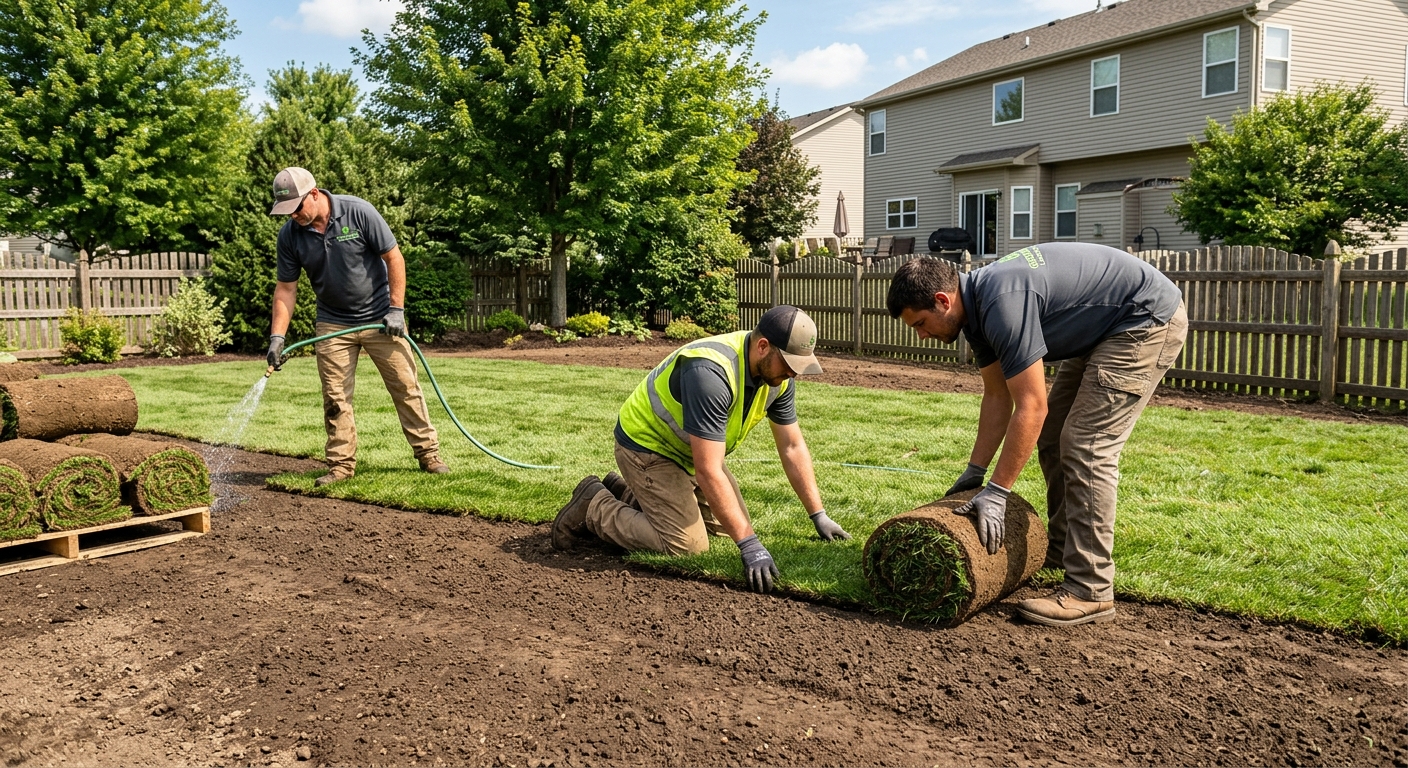
Landscaping options and costs in Kimberley
Kimberley is a mountain community where homeowners typically want curb appeal, safer walkways, and yards that can handle freeze–thaw cycles without constant repairs. With 76.6% of dwellings in Kimberley being single-detached homes, many properties have enough open yard space to invest in softscapes, drainage fixes, and layered planting beds. Just as important, about 78.2% of households own their homes—so landscape improvements are often treated as long-term value, not quick cosmetics. That ownership mix tends to support higher demand for full-service design-and-build in neighbourhoods around Rotary Park and the older residential pockets closer to town core, where frontage slopes and aging drainage systems are common.
In the Kootenay region, landscaping pricing is shaped by our climate and working season. We generally plan installations from mid-April through October, but last spring frost and first fall frost tighten the window for sod, seed, and new beds. Labour availability also fluctuates in shoulder months, because crews need to coordinate excavation, hardscape curing times, and planting readiness. Freeze–thaw means patios and retaining-wall bases require deeper excavation, proper compacted gravel, and drainage to prevent heaving—work that adds cost compared with milder regions. And because Interior BC has water-use scrutiny during dry spells, drip irrigation design, mulch, and lawn alternatives often replace high-input turf-heavy plans.
Below are realistic local price ranges to help you compare quotes for common Kimberley projects before you speak with a designer or contractor.
| Service |
Description |
Season |
Price Range |
| Full landscape design and installation |
Site visit, concept + layout, plant selections, grading/drainage plan, hardscape and softscape build-out |
Mid-April to October |
$8,000–$60,000 |
| Sod installation (supply, grade, lay, roll) |
Basic grading, topsoil, sod delivery and layout, rolling, starter fertilizer |
Late April to early September (weather dependent) |
$6–$14 |
| Lawn seeding (grade, seed, starter fertilizer) |
Light grading, seed mix, starter fertilizer and tackifier where needed |
Late April to late August (seed establishment dependent) |
$4–$10 |
| Interlocking patio or walkway |
Excavation, base, edging, interlocking stone installation, jointing and cleanup |
May to September |
$120–$400 |
| Retaining wall (interlocking block) |
Block wall with compacted base, drainage gravel, and weeping provisions |
May to September (curing and install timing) |
$160–$380 |
| Tree and shrub planting |
Soil prep, digging, amendments, staking where required, initial watering setup |
May to early October |
$500–$15,000 |
Prices are estimates only and vary by project scope, site access and material selection.
What affects the price of landscaping in Kimberley
Across Kootenay and the rest of British Columbia, it’s common to see quotes for the “same job” land 30–50% apart. The swing usually comes from differences in site conditions, how the contractor handles drainage and frost depth, and the level of detail in the scope (soil amendments, removal/disposal, and irrigation design). Even within the same province, one property may be a simple flat yard that’s ready to seed, while another needs excavation for a drainage bed, regrading to protect foundations, and a hardscape base built for our freeze–thaw reality.
Hardiness zones and frost dates shape both what grows and what’s feasible during the working season. In Kootenay (roughly Zone 5–6), plants must survive cold winters and late spring frosts, which pushes homeowners toward zone-appropriate shrubs and trees rather than “quick wins” that may fail in year two. Prairie regions (Zone 2–4) often require wind- and drought-tolerant species plus more winter protection, and retaining-wall base depth typically has to go below the frost line too—so frost-ready construction can keep labour costs elevated. Coastal BC (Zone 7–8) can extend planting windows and supports lush palettes, but heavy moisture makes drainage and erosion control non-negotiable, particularly for patios and slopes. In the dry BC interior, water restrictions and higher summer evapotranspiration drive efficient irrigation (zoned drip, smart controllers, and mulching), which affects line items and can move a project from “basic” to “value-engineered.”
Two local examples from Kimberley that commonly raise cost: (1) yards with compacted soil or old downspout runoff often require drainage work; adding a French drain or drainage bed can shift a mid-sized project closer to the higher end of hardscape and full-install bundles (and those full installs sit in the $8,000–$60,000 range). (2) Homes built before 1981 are more likely to have older grading patterns toward foundations; correcting that slope can add excavation and topsoil—often the difference between a lean lawn install versus a complete regrade-and-plant plan. In other cases, if your site is clean, accessible, and you choose a lawn alternative, you can keep costs closer to the lower bands for planting-only scopes.
| Price Factor |
Why It Matters |
Cost Impact |
| Yard size in sq ft — the primary cost driver for softscape |
More area means more labour hours for prep, planting, and cleanup, plus more materials |
$1,500–$12,000 |
| Grading and drainage work — slope corrections add significant cost |
Regrading must move water away from foundations and prevent pooling |
$2,000–$18,000 |
| Drainage bed or French drain installation |
Requires trenching, perforated pipe, drainage gravel, and routing options |
$1,800–$10,500 |
| Plant material tier — native shrubs vs. ornamental vs. mature specimen trees |
Specimens can be 3–10x the material cost and need careful handling |
$500–$15,000 |
| Hardscape vs. softscape ratio — walls and patios cost more per sq ft than lawn |
Stone base prep, compaction, and edging increase unit costs |
$1,200–$35,000 |
| Irrigation system design and installation |
Sprinkler heads vs. drip lines, zoning, valves, and smart controller complexity |
$900–$7,500 |
| Soil amendment and topsoil required |
Interior BC soils often need improvement for roots and drainage stability |
$600–$6,000 |
| Tree removal or stump grinding before new planting |
Removal/disposal and access planning can be labour-intensive |
$300–$4,500 |
Permits & regulations in British Columbia
In British Columbia, most typical landscaping and planting work does not require a permit—especially sodding, planting beds, lawn seeding, and routine softscape installation. For example, installing new trees/shrubs, placing mulch, and laying sod are generally treated as minor property improvements. However, retaining walls above a height threshold—commonly around 1.0 m (3.3 ft) in many municipalities—often require a building permit, and sometimes engineered drawings depending on wall height, soil conditions, and reinforcement needs.
Also watch lot grading: if a project changes the drainage pattern so water is directed toward neighbouring properties or toward storm sewer connections in a way that affects flow, approvals may be triggered. Before digging for planting holes, trenches, or wall footings, confirm utility locates to avoid striking buried lines (call before you dig). Finally, check irrigation and water-use bylaws—especially during drought conditions common in the dry BC interior—because irrigation schedules can affect how you plan start dates and whether you need smart zoning or drought-tolerant planting substitutions.
To verify a contractor in Kimberley, ask for three things and check them yourself: (1) a valid BC business/contractor registration where applicable and any trade-specific authorization they rely on; (2) a current certificate of insurance showing liability coverage and coverage dates; and (3) proof of work coverage (WSIB/WCB coverage) or an acceptable exemption letter if they claim one. Look for these documents in their proposal package first, then cross-check the certificate for named parties and effective dates; also request the clearance letter if they state they are exempt.
Planning a landscape that thrives in Kimberley's climate
Planning in Kimberley works best when you design for our hardiness zone and frost-defined season rather than trying to fight it. With our Zone 5–6 conditions, plant success comes from choosing species that tolerate cold winters, late spring frosts, and freeze–thaw soil movement. Start with a foundation of native, zone-appropriate trees and shrubs—then layer in perennials and hardy groundcovers that hold soil in windy, exposed spots. If you want less watering, prioritize plants with proven regional survival and build in winter protection where needed (mulch depth, windbreak placement, and correct planting depth).
For turf, sod can give an instant, finished look, but in Kimberley it’s usually higher cost and more sensitive to timing—install after soil temperatures warm and before hot/dry stretches stress the new roots. In many cases, seeding offers the best value because you’re paying less per square foot for materials and labour. Sod can cost roughly 3–4x more than seeding in practice, so a dollar-saving approach is to sod a narrow “arrival strip” (front steps/drive approach) and seed the broader lawn areas.
Drainage and grading are critical in Kootenay to prevent pooling and foundation moisture, especially on older lots. Use proper base prep and compacted aggregate under patios and any hardscape near foundations; that base needs to be built for frost movement. A smart low-maintenance yard also reduces annual cleanup: mulch rings, dense groundcovers, and repeat-blooming perennials limit bare soil and curb weeds—while still giving seasonal colour.
Where water is a concern, xeriscaping doesn’t mean “no life.” In Kimberley it can mean a drought-tolerant planting plan with drip irrigation, mulch, and lawn reduction. If you’re debating a full lawn replacement, consider that the savings on turf maintenance can offset part of the hardscape budget—particularly when patios or pathways prevent muddy traffic patterns.
Dollar example: If a full sod lawn install is priced around $6–$14 per sq ft, switching 500 sq ft of turf from sod to seeding can be a meaningful reduction, allowing you to reallocate budget toward drainage bed work (often needed anyway) so the new planting actually survives long term.
| Element |
Climate Consideration |
Maintenance Level |
Price Band |
| Sod lawn installation |
Root establishment during frost-risk shoulder season; needs correct watering window |
Medium (watering until rooted) |
$6–$14 |
| Native perennial garden |
Hardiness Zone 5–6 selection improves winter survival and reduces replanting |
Low to Medium (seasonal pruning/refresh) |
$1,500–$8,000 |
| Mulched shrub border |
Mulch buffers freeze–thaw; shrubs handle cold and wind better when spaced correctly |
Low (weed suppression + periodic mulch) |
$1,200–$6,500 |
| Interlocking stone patio |
Requires compacted base for frost movement and drainage; avoid low spots that hold water |
Low (occasional joint top-up) |
$120–$400 |
| Retaining wall (block) |
Freeze–thaw control through proper base and drainage gravel behind the wall |
Low (visual checks + drainage monitoring) |
$160–$380 |
| Drip irrigation system |
Improves water efficiency; helps with shoulder-season establishment without waste |
Medium (seasonal adjustments for winterization) |
$900–$7,500 |
How to choose a landscaping contractor in Kimberley
Choosing the right contractor in Kimberley starts with proof and process. In British Columbia, verify they carry the right coverage and can show it to you: request a current certificate of insurance (liability coverage) and confirm the effective dates match your project timeline. For work coverage, ask specifically whether they are insured under WCB/WSIB and request proof (or a clearance letter if they claim exemption). Don’t accept “we’re covered” without documentation.
Next, get 2–3 itemised written quotes. You want labour and materials broken down (excavation, base materials, drainage components, paver stone and edging, topsoil/compost, plants by size, and irrigation materials if included). A lump-sum quote can hide omissions—like whether disposal is included, whether topsoil is imported, or whether drainage gravel and proper geotextile are part of the job. Read the exclusions line by line: ask if permits are the homeowner’s responsibility or included, and clarify who hauls away spoil and old turf.
Warranty matters too. Ask for a workmanship warranty length and confirm product/manufacturer warranties for plants, stone, and irrigation equipment. Find out if warranties are transferable when you sell the house. For payment, don’t pay more than 10–15% upfront; hold a portion until completion and walkthrough. Finally, ask for a written timeline with a start date and realistic completion estimate based on planting and curing windows.
- Confirm insurance certificate dates and that you’re listed appropriately for the job.
- Request proof of WCB/WSIB coverage (or a clearance letter) before work starts.
- Ask for an itemised quote (labour vs. materials) rather than one total number.
- Confirm what excavation, base prep, and compaction include (especially for patios/walls).
- Clarify disposal: dump fees, hauling, and whether contaminated soil is handled separately.
- Check plant list specifics: species names, sizes (e.g., caliper/height), and quantities.
- Ask about irrigation coverage if included: drip vs. sprinkler, zoning, and controller type.
- Verify drainage plan details: French drains, gravel depth, and where water will go.
- Confirm topsoil depth and whether soil is screened/amended for roots.
- Ask for a written warranty for workmanship and whether it covers settlement or heaving.
- Ensure the contract specifies payment schedule and a final holdback until completion.
- Get start and completion dates in writing, with weather contingency notes.
Red flags we see in Kimberley include: contractors who won’t provide insurance/coverage documents in advance; “allowance” lines with no material specs (no stone thickness, no drainage layers); vague scopes like “we’ll fix drainage” without describing the method; rushing early-season installs without discussing frost/seasonality; and demanding large upfront payments beyond 10–15%.
Frequently asked questions — landscaping in Kimberley
How much does a retaining wall cost in Kimberley?
In Kimberley, an interlocking block retaining wall typically comes in around $160–$380 per unit range depending on wall height, length, excavation depth, and how much drainage is required behind the wall. The big cost drivers are frost-related base preparation and drainage: freeze–thaw cycles mean the base and compacted aggregate can’t be “thin.” If your site also needs regrading and added topsoil, that usually pushes the project toward the higher end. If you’re considering wall work as part of a broader backyard refresh, full landscape design and installation projects often start in the $8,000–$60,000 band because grading, walkways, and planting are commonly done together.
When is the best time to landscape in Kimberley?
For Kimberley and much of Kootenay (Zone 5–6), the best window is generally mid-April through October, but timing is weather-dependent. Sod and new seed need soil that’s warm enough to establish roots before late spring frosts and before stress from early heat. Hardscape like patios and interlocking walkways is usually easiest in late spring through summer when base materials can be properly compacted and stone can cure without excessive moisture. Planting is often successful from spring into early fall, because the ground is workable and plants can take advantage of cooling temperatures before winter. A good contractor will schedule excavation and drainage earlier, then move into planting and finishing work once conditions are right.
Do I need a permit for a retaining wall in British Columbia?
Often, yes—depending on the wall height and how the municipality treats retaining structures. In British Columbia, planting and most softscape work usually doesn’t require a permit, but retaining walls above a height threshold (commonly around 1.0 m/3.3 ft in many municipalities) typically require a building permit and may require engineered drawings depending on conditions. Also, if your project includes lot grading changes that affect drainage toward neighbouring properties or storm infrastructure, it can trigger approval requirements. In Kimberley, the practical step is to ask your contractor what height they’re building and whether they include permit handling. If you’re pulling permits yourself, confirm requirements ahead of excavation.
How do I improve drainage in my yard?
In Kimberley, drainage improvements usually start with identifying where water is coming from and where it’s going—downspouts, surface runoff, and soil compaction all matter. The most reliable approaches are often grading corrections and a properly installed drainage bed or French drain with geotextile and drainage gravel. If you’re dealing with pooling near a foundation or a slope toward the house, fixing drainage before you plant is key because freeze–thaw can amplify heaving and root stress. Ask your contractor to describe the method in layers (trench depth, pipe type, gravel size, outlet route) and to explain how the design avoids directing water onto neighbours. A well-planned drainage step can also protect the longevity of patios and retaining walls.
What is xeriscaping and does it suit Kimberley?
Xeriscaping is a landscaping approach that reduces water use by choosing drought-tolerant plants, using mulch, improving soil structure, and installing efficient irrigation like drip—rather than relying heavily on high-input turf. It suits Kimberley because our interior climate includes dry stretches and strong temperature swings, and water-efficient designs can reduce long-term maintenance. That said, “xeric” doesn’t mean no colour: you can use hardy shrubs, native perennials, and groundcovers that handle cold winters well in Zone 5–6. In many projects, homeowners replace part of the lawn and redirect budget toward planting and drainage so the yard looks good and stays functional. If you’re comparing options, even a lawn change can help fund smarter irrigation and mulch that supports new plants through establishment.
How do I plan a low-maintenance yard?
A low-maintenance yard in Kimberley focuses on reducing bare soil, limiting lawn area, and choosing hardy plants that can handle freeze–thaw. Start with a shrub border and native perennial beds mulched with a consistent depth; mulch suppresses weeds and buffers temperature swings. Consider an interlocking patio or walkway so people aren’t constantly tracking mud across planting areas. If you want turf, seeding can be a cost-effective route to $4–$10 per sq ft in many cases, while sod may be $6–$14 per sq ft when you want instant coverage in a smaller zone. For irrigation, drip with zoned controls helps you water only where needed and keeps maintenance routines manageable. Since many Kimberley homes are older, pay special attention to drainage first so plants don’t struggle in wet or heaving spots.