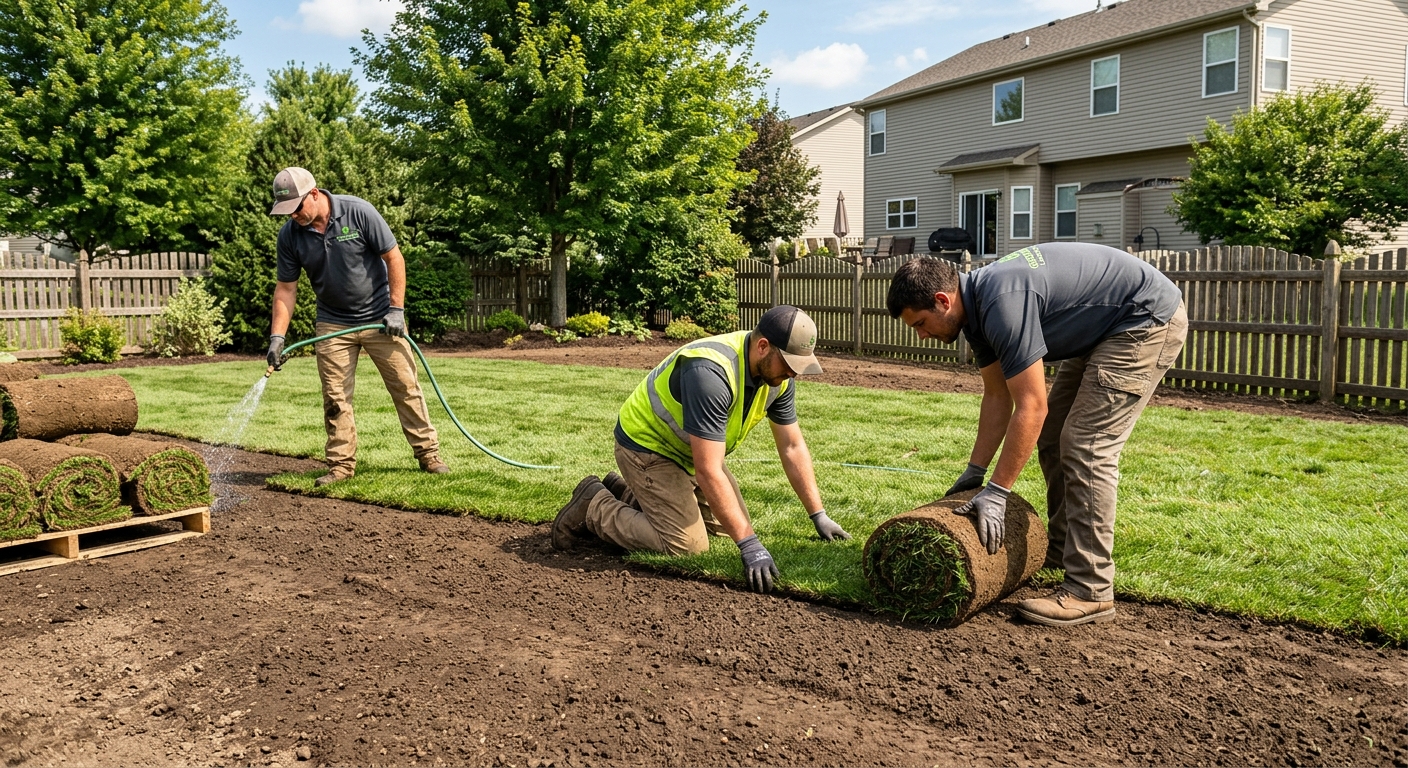
Landscaping options and costs in Ladysmith
Ladysmith homeowners typically have two things going for them when they plan a yard upgrade: many households own their homes (80.8% of households are owner households, Statistics Canada, 2021 Census), and a large share of local housing stock is single-detached (67.5% of dwellings). That matters because detached properties usually have the frontage, side yards, and soil access needed for patios, planting beds, and proper drainage work—so you’ll see more full-scope landscaping proposals, not just “cosmetic” refreshes.
On Vancouver Island and the Coast, landscaping costs are shaped by a long working window and mild coastal plant hardiness zones (7–9). Contractors can typically plan and install from early spring through late fall, and that helps firms stay consistent on scheduling—one reason Ladysmith projects often land in the mid-range of typical provincial pricing instead of being pushed into a short, weather-stressed rush. That said, wet winters and occasional heavy rainfall still make drainage and soil preparation non-negotiable, especially on sloped yards common around areas like the Departure Bay/Deep Bay influence and hilly pockets you’ll notice around downtown Ladysmith’s older neighbourhood edges.
Because you’re balancing softscape (planting and lawn) with hardscape (patios and retaining walls), the same “total makeover” can land anywhere from a simpler spruce-up to a higher-impact install that corrects grading and adds efficient irrigation. Use the table below as a realistic starting point for comparing scopes and aligning expectations before you request quotes.
| Service |
Description |
Season |
Price Range |
| Full landscape design and installation |
Site visit, grading/drainage plan, planting plan, soil amendments, labour for beds, lawn, and hardscape coordination |
Early spring to late fall |
$5,000–$40,000 |
| Sod installation (supply, grade, lay, roll) |
Remove old turf (if needed), final grade, soil base/compaction, supply and installation of sod, light topdressing |
Spring and early fall |
$1,500–$8,000 |
| Lawn seeding (grade, seed, starter fertilizer) |
Fine grading, seed blend, starter fertilizer, light raking/rolling for seed-to-soil contact |
Spring (weather-dependent) and early fall |
$750–$4,500 |
| Interlocking patio or walkway |
Excavation, compacted base, edging, geotextile, interlocking stone pavers, jointing sand |
Summer through early fall |
$4,000–$25,000 |
| Retaining wall (interlocking block) |
Layout, excavation and base, drainage layer/weep provisions, block placement, backfill compaction, cap/finish |
Summer to early fall |
$4,000–$60,000 |
| Tree and shrub planting |
Plant supply (from native shrubs to trees), layout, soil prep, amendments, staking, mulching |
Spring and fall |
$800–$15,000 |
Prices are estimates only and vary by project scope, site access and material selection.
What affects the price of landscaping in Ladysmith
If you get two quotes in Ladysmith for what sounds like the “same” landscaping job, it’s normal to see swings of 30–50% across Vancouver Island and Coast contractors, and even more when comparing broader British Columbia pricing. The main reason is that the visible work (plants, sod, patios) depends on the invisible work (grading, drainage, soil quality, and site access). Labour availability also matters: on Vancouver Island the installation season is longer than in short Prairie windows, which can stabilize scheduling—but heavy rainfall periods still impact excavation productivity and crew days.
Plant hardiness zones and frost dates shape both what grows and what contractors can install. In coastal BC’s Zone 7–8, you can build lush mixed palettes with evergreens and ornamental grasses, but you still must plan for drainage so beds don’t stay saturated through winter. In contrast, Prairie regions (Zone 2–4) often need drought-tolerant, wind-hardy choices and deeper frost-resilient base work for hardscaping, while southern Ontario (Zone 5–6) typically sees less severe cold but still needs summer irrigation design during drier stretches. For Ladysmith, that means you’ll often pay for proper subgrade preparation and drainage components, even if the plant list looks straightforward.
Concrete local examples: (1) a sloped front yard that requires regrading can push you from a mid-range patio into the higher band because excavation and compaction take more time; (2) adding a French drain or drainage bed under a retaining-wall segment can change the job from “a wall” to a full drainage-and-backfill system, which affects retaining-wall budgets in the $4,000–$60,000 band. (3) If your home is older—44.7% of dwellings were built before 1981 (Statistics Canada, 2021 Census)—utilities, unknown service runs, and legacy drainage patterns can force careful excavation, which adds labour. A practical takeaway: if you’re comparing a full design-and-install scope in the $5,000–$40,000 band versus smaller add-ons, the bigger projects usually bundle the groundwork that smaller quotes can’t.
| Price Factor |
Why It Matters |
Cost Impact |
| Yard size in sq ft — the primary cost driver for softscape |
More area means more labour, soil, mulch, and plant material; lawn area drives sod/seeding quantities. |
Typically the largest swing—small changes in area can move you into a different band. |
| Grading and drainage work — slope corrections add significant cost |
Even mild slopes can create pooling near foundations or walkways if not corrected. |
Can add days of excavation/haul and increase overall project cost by tens of percent. |
| Drainage bed or French drain installation |
Under rainy-season loads, drainage systems protect walls, beds, and foundations. |
Often a key upsell that substantially increases hardscaping and retaining-wall budgets. |
| Plant material tier — native shrubs vs. ornamental vs. mature specimen trees |
Specimen sizes cost more up-front and require better soil prep, staking, and handling labour. |
Mature plants can shift “planting-only” work from mid-range into upper-range pricing. |
| Hardscape vs. softscape ratio — walls and patios cost more per sq ft than lawn |
Stone and block work depend on base thickness, compaction, and drainage details. |
Higher hardscape percentages quickly move projects toward the top of the $4,000–$60,000 wall band. |
| Irrigation system design and installation |
Efficient drip and smart controllers improve establishment and handle occasional dry spells. |
Adds cost but reduces plant loss and repeat visits; pricing varies with zoning complexity. |
| Soil amendment and topsoil required |
Coastal soils can be heavy, and poor infiltration increases the need for amendments and improved base. |
Often moderate cost, but essential when beds fail or water pools. |
| Tree removal or stump grinding before new planting |
Clearing affects excavation access, safety, and replant spacing. |
Can add standalone days and equipment costs, changing the total scope. |
Permits & regulations in British Columbia
In British Columbia, most landscaping work—like planting, sodding, and typical softscape installations—generally does not require a permit. For Ladysmith homeowners, that usually means you can proceed with new garden beds, lawn replacement, mulch work, and installing non-structural edging without municipal approval. However, retaining walls are where permitting questions often come up.
Work that DOES typically require a permit includes retaining walls above the local threshold (often around 1.0 m / 3.3 ft in many municipalities) and any work that may need engineering or structural confirmation depending on height, soil conditions, and how close it is to property lines or foundations. Also consider permits or approvals if your proposed grading changes surface-water flow—especially if it redirects runoff toward neighbouring properties or ties into storm connections. If your project involves digging for wall footings, irrigation lines, or planting holes, call for utility locates before anyone excavates.
For irrigation, confirm water-use bylaws and any restrictions during dry conditions (those rules tend to tighten in the BC interior and may influence how you set up timers and watering days province-wide). Finally, verify your contractor properly: check their provincial business and trade qualifications if applicable, request a Certificate of Insurance for liability, and confirm worker coverage documentation (commonly WSIB/WCB coverage depending on the setup). Ask them to provide clearance/coverage proof in writing before work starts.
Tip: Don’t rely on verbal assurances—your contractor should be able to show documents on request, and your quote should clearly list what’s included (permit pulls, disposal, and any required utility coordination).
Planning a landscape that thrives in Ladysmith's climate
Planning a yard that thrives in Ladysmith means designing for our coastal mildness (plant hardiness zones 7–9) but respecting wet winters, fall growth spurts, and the reality that freeze–thaw can still stress bases and roots. Start with plant selection: choose zone-appropriate species and lean into native or well-adapted plants that handle our shoulder seasons with less watering and less winter protection than tender exotics. You’ll get steadier establishment and fewer “dead patches” that show up after our damp months.
For turf, the sod vs. seed decision is often budget-driven. Sod gives instant curb appeal and quick erosion control on sloped areas, but it typically costs about 3–4x more per sq ft than seeding and is best when soil moisture is supportive. If you’re reworking grading anyway, seeding can be a smarter early phase approach—then thicken with plugs or overseeding once beds settle.
Drainage and grading are the make-or-break items on Vancouver Island and the Coast. Proper slope away from foundations, a functioning drainage layer, and well-compacted subgrade protect both lawns and hardscape from pooling and premature failure. With hardscape—patios and retaining walls—base preparation matters: the base must be built for local frost effects so pavers and block walls don’t heave or shift. In low-maintenance design, use groundcovers, mulched shrub borders, and perennials that repeat your structure year-round—these reduce annual upkeep without sacrificing a polished look.
On water context, consider rain-garden pockets or xeriscape-style planting in drier, south-facing zones using efficient drip and drought-tolerant choices. As a dollar example, if you’re deciding between a full sod lawn ($1,500–$8,000) versus seeding plus a smaller targeted sod strip at a doorstep, you may keep your total turf budget nearer the mid-range while still achieving “instant” visuals where they matter most.
| Element |
Climate Consideration |
Maintenance Level |
Price Band |
| Sod lawn installation |
Best in spring or early fall when moisture helps roots establish; requires correct grade to avoid puddling. |
Low to moderate (watering until roots knit; seasonal mowing). |
$1,500–$8,000 |
| Native perennial garden |
Handles local wet/dry swings better and supports year-round structure in coastal Zone 7–9. |
Moderate (weeding first season, then reduced upkeep). |
$2,000–$12,000 |
| Mulched shrub border |
Mulch buffers soil moisture during damp winters and helps moderate summer drying. |
Low (mulch top-ups and light pruning). |
$800–$6,500 |
| Interlocking stone patio |
Needs solid base and proper drainage so surface water doesn’t undermine pavers during heavy rain. |
Low (occasional joint sand and cleaning). |
$4,000–$25,000 |
| Retaining wall (block) |
Drainage and compaction are critical on slopes; proper base construction reduces frost-related movement. |
Low once built (periodic inspection of drainage points). |
$4,000–$60,000 |
| Drip irrigation system |
Efficient watering supports plant establishment while respecting watering-day limitations when restrictions apply. |
Moderate (seasonal checks and adjustments). |
$1,200–$7,500 |
How to choose a landscaping contractor in Ladysmith
Choosing a contractor in Ladysmith is mostly about proof: proof of coverage, proof of competence, and proof that the scope matches what you think you’re buying. In British Columbia, verify liability insurance before anyone starts. Ask for a Certificate of Insurance that lists your address and shows current limits. Also confirm worker coverage documentation—commonly WSIB/WCB coverage depending on the contractor’s structure—and ask for a clearance letter or comparable proof. If a contractor won’t provide paperwork, that’s a red flag.
Next, get 2–3 itemised written quotes, not one-page lump sums. A good quote separates labour and materials and clearly lists inclusions such as excavation depth, base thickness, geotextile/gravel layers, drainage components, plant quantities, and whether disposal is included. Pay attention to exclusions: some quotes omit topsoil, sod removal, permit coordination, or utility locate fees. If you’re adding hardscape or grading, confirm whether the contractor coordinates utility locates before digging.
For warranties, ask what workmanship warranty is offered (length and what it covers—settlement, heaving, plant replacement policy). Distinguish between workmanship and product warranties, and ask if any manufacturer warranty is transferable to you. For payment, keep it conservative: never pay more than 10–15% upfront, and hold a portion until the job is complete and cleaned up. Finally, timeline matters—get a start date and completion estimate in writing so weather delays are managed, not disputed.
- Request proof of liability insurance and worker coverage (WSIB/WCB) before signing.
- Confirm the contractor’s experience with drainage and retaining-wall base preparation on sloped yards.
- Get 2–3 itemised quotes (labour + materials) with quantities listed.
- Ensure the quote states what’s included for excavation, base build-up, and compaction.
- Ask if utility locates are included and confirm they will be called before digging.
- Check whether disposal/hauling of removed turf, soil, and debris is included.
- Confirm topsoil/soil amendment type and depth for beds and lawn areas.
- For irrigation, confirm zones, controller type, and whether drip is supply-and-install.
- Clarify sod vs. seed expectations, including seeding rate/seed blend and germination assumptions.
- Ask for a workmanship warranty term and a plant replacement policy (if plants don’t establish).
- Review payment schedule: 10–15% max upfront; holdback until completion.
- Make sure the timeline includes key milestones (rough grading, base, planting/finish).
In Ladysmith, common red flags include: contractors who won’t provide insurance/coverage documents; vague scopes that don’t specify drainage components or base thickness; quoting sod or seeding without discussing grade corrections; starting without utility locates; and requesting large deposits (well above 10–15%) before any groundwork is done.
Frequently asked questions — landscaping in Ladysmith
When is the best time to landscape in Ladysmith?
The best time in Ladysmith is typically from early spring through late fall, because Vancouver Island’s mild coastal conditions (plant hardiness zones 7–9) allow steady growth and a long installation window. For lawn work, sod is usually strongest in spring and early fall when moisture helps roots establish quickly. Seeding can also work well in early fall, when weeds are less aggressive and temperatures are still mild. Planting trees and shrubs is often done in spring and fall as well, which helps reduce transplant stress. Even with a long season, wet weather can affect excavation and base compaction—so a contractor who builds in weather contingencies will protect your budget and result.
Do I need a permit for a retaining wall in British Columbia?
In British Columbia, most typical softscape work (like planting and sodding) usually doesn’t require a permit, but retaining walls often do once they exceed the local threshold that many municipalities treat around 1.0 m (3.3 ft). In Ladysmith, the exact requirement can depend on the wall height, location relative to property lines and drainage, and whether the design needs engineering. If your project includes significant grading changes or drainage redirection, that can also trigger approval requirements. Your contractor should be able to tell you whether a building permit is likely, but you should also confirm with local requirements before construction. Always ask what the quote includes for permit pulls (if needed) so you don’t get surprised.
How do I improve drainage in my yard?
Drainage improvements in Ladysmith usually start with correcting grading so water moves away from the foundation and hardscape. From there, contractors often add a drainage bed or install a French drain where water actually collects, not just where you see it on the surface. On sloped yards, proper backfill compaction behind retaining-wall sections and including drainage layers/weep provisions is critical to avoid wall pressure and damp soil. If you’re planning beds or lawn replacement, you may also need soil amendments to improve infiltration. A well-designed system may include downspout ties and efficient drip where appropriate, but the “core” is subgrade and drainage—not extra watering. Ask for a simple sketch showing where water will go after the work.
What is xeriscaping and does it suit Ladysmith?
Xeriscaping is a drought-wise approach that uses drought-tolerant plants, smart irrigation (or no irrigation in some areas), efficient mulching, and soil improvements to reduce water demand. In Ladysmith and broader coastal BC, it still makes sense—especially in exposed, south-facing areas that dry faster—but you don’t want to overcorrect and ignore our wet winters. The goal is balanced: plants and groundcovers that handle both damp periods and occasional dry spells, plus rain-friendly drainage so saturated zones don’t rot roots. Many yards pair “rain-garden” pockets with xeriscape-style borders. Budget-wise, you can often keep costs closer to the mid-range planting bands (for example, tree and garden planting commonly falls in the $800–$15,000 range) while reducing future maintenance and watering.
How do I plan a low-maintenance yard?
A low-maintenance yard in Ladysmith is usually planned around three things: soil quality, repeatable plant structure, and hard-working mulch/groundcovers. Choose zone-appropriate plants that stay attractive year-round and reduce the need for frequent replanting. Use mulched shrub borders and groundcovers to suppress weeds and moderate moisture through both rainy and drier stretches. If you’re installing turf, consider whether sod or seeding matches how quickly you need coverage—sod can cost more (often $1,500–$8,000 depending on area) but it can stabilize slopes and reduce erosion right away. For hardscape, investing in a properly built base helps prevent paver shifting and routine repairs. Finally, efficient irrigation design (often drip with a controller) reduces hand-watering and helps new plants establish without constant supervision.
How deep should a retaining-wall base be for local frost?
There isn’t one universal depth for every retaining wall, because wall height, soil conditions, and engineering requirements matter. That said, for Ladysmith and coastal BC, the principle is that the base must be built below the zone where frost-related movement can undermine compaction and drainage. Contractors typically design around local frost effects by excavating to suitable native material, then building a compacted granular base with proper drainage layers behind the wall. This is one reason retaining-wall pricing can jump into the higher bands (commonly $4,000–$60,000) when there’s slope correction, drainage beds, or complex base requirements. Ask your contractor to specify excavation depth, base material, drainage layer details, and compaction testing/approach in writing before you approve the scope.