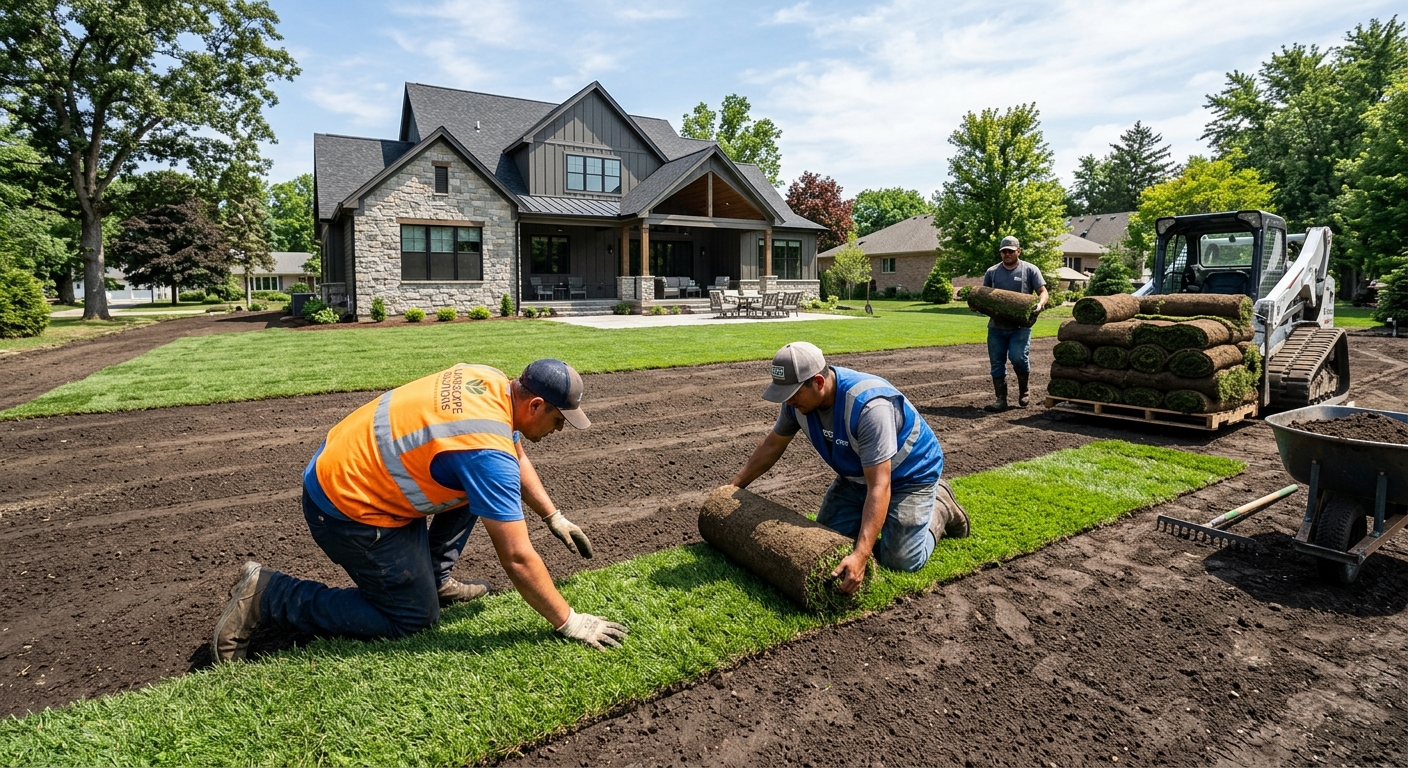
Landscaping options and costs in Princeton
Princeton homeowners typically have a few go-to landscaping paths, ranging from a full yard refresh to targeted upgrades. Because 66.2% of the area’s dwellings are single-detached homes, most projects start with meaningful outdoor space to work with, and homeowners (74.5% owner households) are more likely to invest in long-term improvements rather than quick fixes. You’ll also notice many properties were built before 1981 (66.2%), which often means older drainage patterns and compacted soil—both of which can increase costs when we need to correct grade and improve soil structure.
In the Thompson–Okanagan (plant hardiness zone ~5–6), landscaping budgets are shaped by shorter, more “spring-to-fall” installation windows than coastal BC, plus freeze–thaw cycles that demand deeper bases under patios, steps and retaining walls. During hot, dry stretches, irrigation design and plant selection directly affect ongoing watering costs, so projects in summer often focus on maintenance and irrigation tweaks rather than heavy planting. Labour availability can also tighten in the busiest spring months, which is one reason design-led work booked earlier often comes in with better scheduling and more reliable material ordering.
In Princeton, these trades tend to be especially active around the downtown and residential pockets where lots are close to existing services and access is tighter—meaning more time spent on protection, staging and efficient excavation. Next, here’s a practical comparison of typical scopes and price bands you’ll see from local contractors.
| Service |
Description |
Season |
Price Range |
| Full landscape design and installation |
Site meeting, concept + layout, grading/drainage plan, planting, turf selection, hardscape coordination, final clean-up |
Spring or early fall |
$8,000–$40,000 |
| Sod installation (supply, grade, lay, roll) |
Soil prep, regrading as needed, supply and install sod, roll and initial watering guidance |
Late spring to early fall |
$6,000–$14,000 |
| Lawn seeding (grade, seed, starter fertilizer) |
Light grading/topping, seed selection, starter fertilizer, seeding and first maintenance window |
Spring or early fall |
$2,000–$6,500 |
| Interlocking patio or walkway |
Excavation, base/gravel compaction, edging, interlock, jointing sand, leveling |
Spring or early fall |
$3,500–$18,000 |
| Retaining wall (interlocking block) |
Block wall installation with drainage backfill, geotextile, weep/weep holes where required |
Spring to summer (or fall depending on staging) |
$8,000–$22,000 |
| Tree and shrub planting |
Plant supply, amendments, planting and staking where needed, mulch installation |
Spring or early fall |
$500–$6,500 |
Prices are estimates only and vary by project scope, site access and material selection.
What affects the price of landscaping in Princeton
If you compare quotes for the “same” job in Princeton, it’s common to see swings of 30–50% across the Thompson–Okanagan and the broader British Columbia market. The difference usually isn’t the brochure—it’s labour time, excavation risk, soil condition, and whether the contractor is building for the Interior’s winter realities (freeze–thaw, variable soils) versus a longer, wetter-season coastal approach. In zone ~5–6, the frost calendar and hardiness requirements define both what survives and what can be installed safely. Prairie regions (zone 2–4) can push budgets higher for drought- and wind-hardy choices and deeper frost-consistent bases; coastal BC (zone 7–8) often allows lush growth but can add cost where drainage must handle heavy rainfall and near-year-round planting demand. In the BC interior, water restrictions and metered usage shape irrigation design, which can add material and control costs even when planting costs look similar. Southern Ontario (zone 5–6) tends to have a moderate season but still needs summer irrigation during dry spells.
In Princeton specifically, older lots built before 1981 often need added topsoil, regrading, and sometimes drainage corrections before any sod or planting works reliably. For example, replacing poor drainage under a patio can move a project from the “paver-only” mindset into the $8,000–$40,000 full-install band because the base is what fails in freeze–thaw. Similarly, a retaining wall isn’t just block—if the contractor must rebuild subgrade and install drainage backfill, you’ll see pricing closer to the $80–$220 per square foot hardscaping band (or the higher end of the retaining-wall estimate range) rather than a minimal wall scope. Use the site: even a small slope, if it causes runoff toward a foundation or neighbour’s line, can quickly add time and equipment.
Next up: the specific price factors that most often explain those quote differences.
| Price Factor |
Why It Matters |
Cost Impact |
| Yard size in sq ft — the primary cost driver for softscape |
Most costs scale directly with turf, planting area, and labour hours to prep and install |
Low for small updates; can dominate totals on whole-yard rebuilds (often the biggest swing) |
| Grading and drainage work — slope corrections add significant cost |
Interior freeze–thaw punishes weak drainage and poor slope away from foundations |
Can raise a lawn/planting quote by 20%–40% when significant regrading is required |
| Drainage bed or French drain installation |
Reduces pooling, foundation moisture risk, and washouts under patios/walls |
Often adds several thousand dollars depending on trench length and outlet complexity |
| Plant material tier — native shrubs vs. ornamental vs. mature specimen trees |
Mature trees cost more and require proper root-zone handling and sometimes staking/rigging |
Small shrub changes are modest; specimen trees can be a major line-item jump |
| Hardscape vs. softscape ratio — walls and patios cost more per sq ft than lawn |
Excavation depth, base materials, edging, and compaction drive hardscape pricing |
Shifting 200 sq ft from lawn to patio can meaningfully increase the total budget |
| Irrigation system design and installation |
In dry BC interior summers, efficient controls (drip/smart controllers) affect both performance and water use |
Can add moderate-to-high cost, especially with zones, wiring, and controller programming |
| Soil amendment and topsoil required |
Compacted/rocky soils may need amendments or import to support sod and root health |
More import material = higher trucking and spreading costs |
| Tree removal or stump grinding before new planting |
Clearing changes excavation plans and adds disposal and equipment time |
Often adds a noticeable chunk of cost even when the rest of the landscape is small |
Permits & regulations in British Columbia
In British Columbia, most typical landscaping activities—like planting new trees/shrubs, sodding, seeding, and most softscape installations—generally do not require a permit. Retaining walls are where homeowners need to pay closer attention: walls above a local height threshold (commonly around 1.0 m or 3.3 ft in many municipalities) typically require a building permit, and some projects may need engineered drawings depending on height, soil conditions, and surcharge (loads above the wall).
Also watch for grade and drainage approvals. Changes to lot grading that affect how water drains toward neighbouring properties or storm sewer connections can trigger approval requirements, especially if the work alters flow patterns. Before any digging for planting holes or wall footings, call utility locates so you don’t strike buried services. For irrigation, confirm local water-use bylaws and seasonal restrictions—Interior communities in BC (and across Alberta) can impose limits during drought conditions.
To verify a contractor in Princeton, ask for three things and check them directly: (1) proof of British Columbia business/labour coverage (and any trade registration if applicable), (2) certificate of insurance for general liability (and request adequate limits for excavation/hardscape), and (3) coverage for workers—commonly via WCB (Workers’ Compensation Board) in BC. Where to look: the contractor’s online listings/registry details, and their insurance certificate (your copy should list you as an interested party/holder if offered). A clearance letter may be provided where requested by a homeowner or project coordinator.
Planning a landscape that thrives in Princeton's climate
In Princeton, the best landscapes aren’t “against” the climate—they match it. With Thompson–Okanagan hardiness around zone 5–6, you want plants that tolerate winter lows and occasional deep cold snaps, plus a layout that handles water during freeze–thaw. Start with plant selection: choose hardy natives and zone-appropriate ornamentals that establish well in our shorter growing season. Add winter structure through shrubs and perennials that hold up under wind and cold; then reduce watering stress with mulch and efficient irrigation. Where possible, use xeriscape principles (drought-tolerant plants, improved soil, and limited turf).
Next, turf choice matters. Sod gives instant curb appeal, but it’s usually about 3–4x the cost per sq ft versus seeding once you factor in prep and installation—so it’s best for visible, high-use areas where you’ll maintain watering during establishment. For example, a typical sod installation for a small front yard might land in the $6,000–$14,000 range, while lawn seeding often fits budgets closer to a few thousand depending on area and site prep. If you’re okay waiting for a full green-up and can manage moisture, seeding is often the wiser value.
Drainage and grading are the foundation for everything: prevent pooling away from foundations, and build bases deep enough for freeze protection under patios, steps and retaining walls. In the Interior, we rely on proper base compaction and drainage backfill so freeze–thaw doesn’t heave pavers or shift blockwork. Finally, low-maintenance design strategies—mulched shrub borders, groundcovers, and perennials—reduce annual upkeep without sacrificing appeal. Consider a rain-garden style swale or drip zones along downhill areas where runoff naturally collects.
| Element |
Climate Consideration |
Maintenance Level |
Price Band |
| Sod lawn installation |
Establishes best in spring/early fall; needs consistent watering through heat and dry spells in zone ~5–6 |
Medium (weekly watering during establishment) |
$6,000–$14,000 |
| Native perennial garden |
Hardy species handle cold snaps; improved soil and mulch help them ride out freeze–thaw |
Low to medium (spring tidy-up, occasional weeding) |
$1,500–$6,000 |
| Mulched shrub border |
Mulch moderates soil temperature and moisture; shrubs offer winter structure |
Low (annual refresh and light pruning) |
$800–$3,500 |
| Interlocking stone patio |
Needs proper base depth, compaction, and drainage to prevent heaving from freeze–thaw |
Low (occasional joint sand top-up) |
$3,500–$18,000 |
| Retaining wall (block) |
Drainage backfill and weep management are critical for freeze–thaw stability |
Low (routine inspection and weep/edge checks) |
$8,000–$22,000 |
| Drip irrigation system |
Hot, dry Interior summers respond well to targeted moisture delivery and efficient controls |
Medium (seasonal programming and checks) |
$1,500–$6,500 |
How to choose a landscaping contractor in Princeton
Choosing a contractor in Princeton starts with verification. First, confirm the contractor has appropriate British Columbia business presence and current liability insurance. Ask for a certificate of insurance before work begins; it should clearly show general liability coverage, project/territory coverage where applicable, and your property details as an interested party if available. Second, verify workers’ coverage—typically WCB in BC—by requesting proof or a clearance letter. Don’t accept vague emails; request documents with current policy dates. If the crew will be lifting materials, excavating, or operating equipment, liability limits matter.
Then get 2–3 itemised written quotes. You want a labour + materials breakdown (not just one lump sum): excavation and disposal, base materials, drainage components, plant quantities/sizes, irrigation parts and controller, and any soil import. Carefully read exclusions: is permit work included where required, are utility locates included, and is topsoil disposal/haul-away included? Ask about warranty specifics: workmanship warranty length, product/manufacturer warranty details, and whether warranties transfer if you sell the home.
For payment schedule, aim for no more than 10–15% upfront, then progress payments tied to milestones. Hold back until completion and final grading/cleanup are confirmed. Finally, timeline matters in the Interior: request a start date and completion estimate in writing, with notes on weather-dependent parts (like sod establishment).
- Provide BC insurance certificate before signing anything.
- Provide WCB proof/clearance letter for worker coverage.
- Use itemised quotes: quantities, unit pricing, and line-item totals.
- Confirm whether utility locates are included.
- Ask who supplies topsoil/soil amendments and whether import is included.
- Confirm disposal/haul-away of excess soil and stump debris.
- Verify drainage scope: grading plan and whether French drains/bed are included.
- For hardscape, confirm base depth, compaction method, and edging details.
- For walls, confirm geotextile, drainage backfill, and weep provisions.
- Confirm plant sizes/species and whether substitutions are allowed—and at what price.
- Get a written workmanship warranty and product warranty terms.
- Payment schedule capped at 10–15% upfront, with a completion holdback.
Red flags in Princeton include: quotes that won’t list quantities and unit costs; promises of “no drainage needed” under patios or walls; reluctance to show insurance/WCB documentation; vague timelines with no written weather contingencies; and change orders that aren’t explained in writing when scope changes.
Frequently asked questions — landscaping in Princeton
What is xeriscaping and does it suit Princeton?
Xeriscaping is a landscape approach that reduces irrigation demand by pairing smart site design with drought-tolerant plants, efficient irrigation, improved soil, and good mulching. In Princeton and the broader Thompson–Okanagan (zone ~5–6), xeriscaping typically fits very well because summers can be hot and dry and water can be metered. The key is not to eliminate all “green,” but to replace water-hungry areas with plants that tolerate dry periods and to route irrigation only where it’s needed (often drip zones). If you compare options, many homeowners find value in a mulched shrub border and native perennial beds rather than trying to keep a large sod lawn alive in peak summer heat. For budgeting, sod-based projects commonly land in the $6,000–$14,000 range, while planting-focused upgrades can often be a smaller portion of that if drainage and grading are already solid (Statistics Canada, 2021 Census).
How do I plan a low-maintenance yard?
A low-maintenance yard in Princeton starts with reducing the causes of work: weeds from bare soil, stress from poor drainage, and constant watering needs. Begin with a drainage-and-grading check—if water pools after storms or melts, maintenance becomes ongoing. Then build the structure: mulch shrub borders, groundcovers, and hardy perennials that re-establish reliably in zone ~5–6. Use drip irrigation (or zone smart controllers) so you’re not overwatering lawns and borders; this also supports drought-tolerant planting choices during Interior dry spells. Turf should be limited to where you truly use it—some homeowners choose seeding for budget flexibility (often a few thousand depending on area), then concentrate spend on planting beds and hardscape that carry curb appeal with less annual labour. Because many homes in the area were built before 1981, expect older soil compaction and plan for soil amendments and top-up where needed to avoid “fix it every year” routines (Statistics Canada, 2021 Census).
How deep should a retaining-wall base be for local frost?
For Princeton’s Thompson–Okanagan climate (zone ~5–6) and typical freeze–thaw conditions, the retaining-wall base needs to be built below the frost-affected zone and supported by proper drainage. In practical terms, that usually means excavation to a deeper, compacted gravel base with geotextile separation and drainage backfill behind the blocks; exact depth depends on wall height, soil type, and whether there’s surcharge (like a driveway or stored material above the wall). This is why experienced contractors design around frost heave risk instead of guessing. When quotes differ, the difference is often in how they specify base prep and drainage—some “cheaper” approaches cut corners there and can fail sooner. If your project is in the retaining wall range (commonly $8,000–$22,000 for typical residential scopes), ask the contractor to show the section details: base thickness, compaction, and drainage (and whether a permit is required under BC municipal thresholds).
How much does professional landscape design cost?
In Princeton, professional landscape design is usually priced as part of a full-service project or as a standalone design fee, depending on the contractor. For budgeting purposes, the most common approach is to treat design as the first step toward the installation scope—especially when grading, drainage, irrigation, or hardscape are involved. Full landscape design and installation projects for residential properties typically fall in the $8,000–$40,000 band, with the design component varying based on how many drawings/iterations you need. If you only want a planting plan and small changes, costs can land below that band, particularly when the site doesn’t require extensive drainage corrections. Because your yard choices must match zone ~5–6 hardiness and shorter planting windows (spring/fall focus), good design can prevent expensive rework. If your home was built before 1981, design may also include soil and drainage improvements that protect foundations and reduce future maintenance (Statistics Canada, 2021 Census).
How do I compare landscaping quotes?
Comparing landscaping quotes in Princeton is about comparing scopes, not just totals. Ask each contractor for an itemised quote with quantities: labour line items, excavation and disposal, base materials for patios/walkways, drainage components (French drain vs. drainage bed), irrigation parts and controller programming, and the exact plant sizes/species. Verify what’s included for site prep—grading and topsoil import often explain large swings between quotes. Also confirm warranty terms and workmanship length. If you’re comparing turf options, note that sod installation commonly prices in the $6,000–$14,000 range, while seeding may be a few thousand depending on grading and seed mix. Finally, check regulatory details: some retaining wall projects require permits in BC depending on height, and grading changes may also trigger approval—your quote should state whether permit work is included. Any quote that can’t clearly explain inclusions/exclusions or refuses to itemise should raise concern.
How long does a landscaping project take in Princeton?
Timelines in Princeton usually depend on weather windows, site access, and how much excavation and base work is involved. In the Thompson–Okanagan, most heavy installation is concentrated in spring and early fall because freeze risk and establishment needs limit mid-winter work. A small planting-only or mulching refresh can be done in a day or two once materials arrive. Turf projects (especially sod) require soil prep and careful establishment timing, so plan for several days on-site plus follow-up watering guidance. Interlocking patios and retaining walls take longer because excavation, base compaction, and drainage steps must be built correctly; project schedules can stretch from about a week for smaller footprints to several weeks for bigger regrades or multiple areas. If your home has older drainage patterns (many properties in the area were built before 1981), additional grading and drainage work can extend timelines—but it’s often what prevents paver heaving and shifting in freeze–thaw cycles (Statistics Canada, 2021 Census).