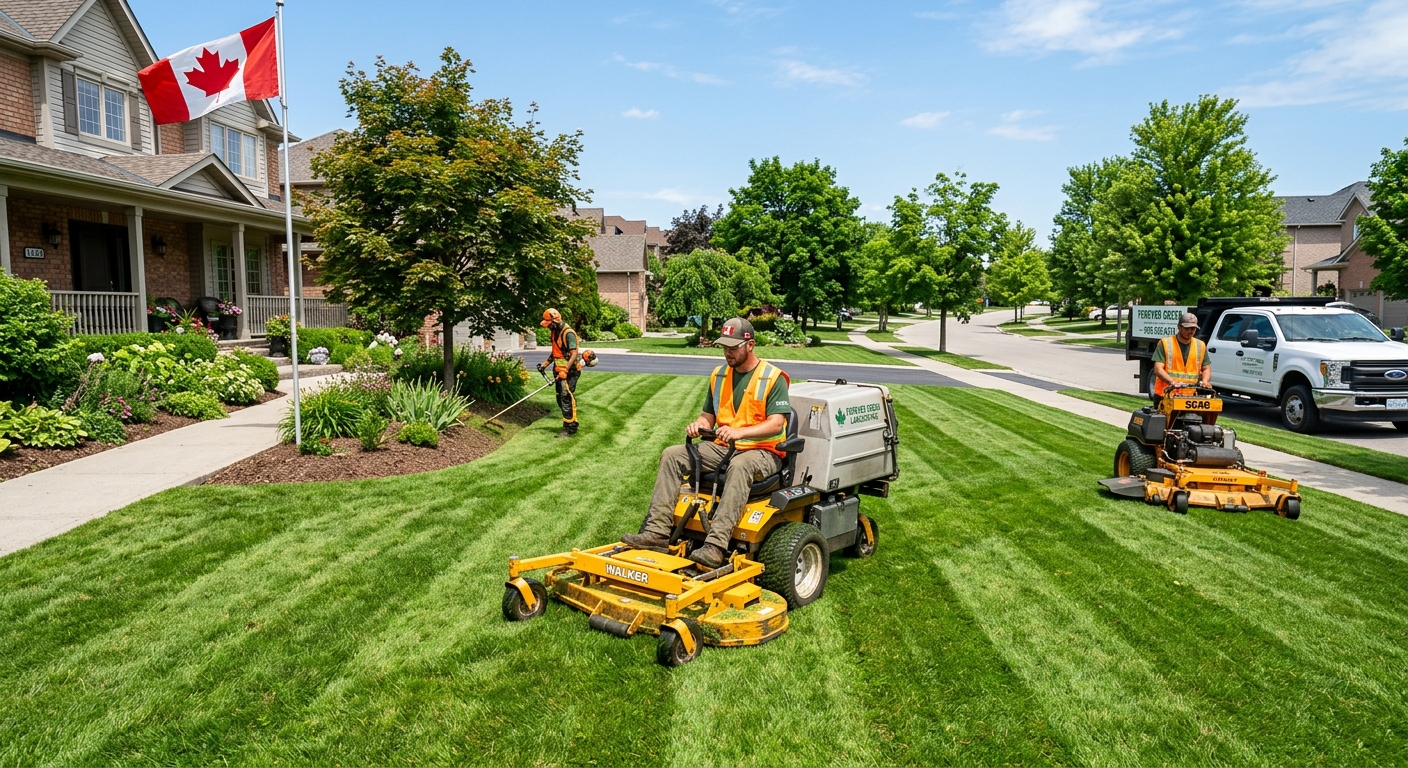
Landscaping options and costs in Murrayville
Murrayville is a growing community in the Lower Mainland–Southwest, and homeowners here often want a yard that looks established quickly while still handling the region’s wet winters and long, cool growing season. With a population of 11,420 (Statistics Canada, 2021 Census), demand for landscaping services is steady year-round, especially for projects that improve drainage near foundations and add layered planting for curb appeal. Just as importantly, many houses have the space to invest in softscape upgrades—detached neighbourhoods across Murrayville’s residential pockets tend to see more backyard renovations, new patios, and refreshed planting beds than townhome-heavy streets.
In this zone 7–8 climate, contractors can install and plant over a wider calendar than in most of Canada, but structural work still needs freeze–thaw planning. Pricing is shaped by labour availability in Surrey/Abbotsford corridors, material lead times, and how much grading or drainage correction your site needs. That’s why two homeowners with “similar” yards can receive quotes that differ widely when one needs a drainage bed or French drain to stop pooling and the other doesn’t.
Because of that, it helps to compare common service bundles before you request a quote. Below are typical Murrayville price ranges to support early planning and budgeting, followed by how factors like yard size, drainage, and irrigation drive final costs.
| Service |
Description |
Season |
Price Range |
| Full landscape design and installation |
Site visit, concept + planting plan, grading/drainage coordination, planting, mulch, and selected hardscape/irrigation as scoped |
Spring–Fall (year-round for many tasks) |
$5,000–$50,000 |
| Sod installation (supply, grade, lay, roll) |
Finish grading, soil prep, sod supply, lay/roll, light start-up fertilization |
Late spring to early fall (best in warmer windows) |
$2,000–$8,000 |
| Lawn seeding (grade, seed, starter fertilizer) |
Fine grading, seed selection, seeding, starter fertilizer, light covering where required |
Spring–early fall |
$1,200–$6,000 |
| Interlocking patio or walkway |
Excavation, compacted base, edging, interlocking stones/pavers, jointing stone; optional steps |
Spring–Fall (avoid saturated base conditions) |
$10,000–$65,000 |
| Retaining wall (interlocking block) |
Excavation, geotextile, compacted granular base, drainage gravel/weep provisions (if needed), block + caps |
Spring–Fall |
$10,000–$80,000 |
| Tree and shrub planting |
Plant supply, digging, amendments, staking (as required), watering-in plan |
Spring–Fall |
$1,000–$15,000 |
Prices are estimates only and vary by project scope, site access and material selection.
What affects the price of landscaping in Murrayville
In Murrayville and the wider Lower Mainland–Southwest, you’ll sometimes see the same “type” of project come in 30–50% apart between quotes. The reason is usually not marketing—it’s how much hidden site work is included (grading, drainage, and soil correction), how the crew sizes the labour schedule, and whether the contractor specifies higher-tolerance materials that perform better in wet winters and freeze–thaw conditions. In Canada more broadly, climate and frost timelines strongly affect both plant choice and construction sequencing, which can inflate or reduce costs even when the surface look is similar.
Here’s how climate directly changes the quote. In coastal BC (Lower Mainland–Southwest), long growing seasons and zone 7–8 hardiness allow lush planting palettes, but you still pay for drainage solutions in heavy-rainfall spots and for proper base preparation on patios and retaining walls. Retaining walls also need correct excavation depth and compaction to reduce movement from freeze–thaw cycles. Contrast that with Prairie regions (zone 2–4), where short frost-free windows and drought stress push clients toward drought-tolerant, wind-hardy species—and retaining wall footing design must reach below the frost line, often increasing earthworks. In the dry BC Interior and parts of Alberta, irrigation design is cost-critical due to water restrictions, while in southern Ontario (zone 5–6) summer dry spells drive irrigation or more drought-tolerant seeding decisions.
Concrete examples in Murrayville: (1) If your lawn area is 1,500 sq ft and needs regrading to fix slope, grading + topsoil correction can add thousands on top of typical sod pricing in the $2,000–$8,000 band. (2) A small patio that’s built on firm native ground can stay closer to the low end of $10,000–$65,000, but if the base needs expanded excavation and drainage, you’ll move toward the upper range. (3) Older homes with mature beds often require stump grinding or tree removal first—when included, that shifts the planting total within the $1,000–$15,000 range because labour and disposal scale quickly.
| Price Factor |
Why It Matters |
Cost Impact |
| Yard size in sq ft — the primary cost driver for softscape |
More area increases labour hours, material quantities, and amendments/topsoil needs |
Often changes total by 20–60% depending on lawn/bed footprint |
| Grading and drainage work — slope corrections add significant cost |
Correcting runoff paths prevents foundation moisture and pooling |
Can add $2,000–$15,000+ on larger, problem sites |
| Drainage bed or French drain installation |
Targets saturated soils and standing water near downspouts or low points |
Frequently adds $3,000–$20,000+ depending on trench length and depth |
| Plant material tier — native shrubs vs. ornamental vs. mature specimen trees |
Size at delivery and greenhouse cost differences show up immediately in the quote |
Can shift planting budgets by 30–100% between options |
| Hardscape vs. softscape ratio — walls and patios cost more per sq ft than lawn |
Interlocking pavers and retaining walls require excavation, base, and higher labour intensity |
Higher hardscape mix pushes projects toward the top end of price bands |
| Irrigation system design and installation |
Drip zones, hose bib tie-ins, and smart controllers prevent waste during wet/dry swings |
Often adds $1,000–$8,000+ depending on complexity |
| Soil amendment and topsoil required |
Improves rooting in clay-heavy or disturbed soils from prior renovations |
Can add $500–$7,000+ based on replacement volume |
| Tree removal or stump grinding before new planting |
Clears space and reduces regrowth; disposal and extra labour apply |
Commonly adds $500–$6,000+ per tree/stump |
Permits & regulations in British Columbia
In British Columbia, most standard landscaping and planting work typically does not require a permit—this includes planting trees and shrubs, sodding, seeding, mulching, and many softscape upgrades like garden bed installation and irrigation for landscaped areas. However, retaining structures and drainage-related grading can cross into permit territory.
What commonly does require a permit in many BC municipalities: retaining walls above a threshold—often around 1.0 m (3.3 ft)—and sometimes engineered drawings depending on height, soil conditions, and design. Also, changes to lot grading that alter drainage direction (for example, pushing water toward a neighbouring property or affecting how runoff connects to storm systems) may trigger approval requirements. Because thresholds and triggers can vary, you should confirm with the local permitting office before signing off on the final scope.
Utility locates are another must. Call before digging for planting holes, trenching for drainage, or installing wall footings so you don’t hit buried services.
To verify a Murrayville contractor properly, ask for three items and check them methodically: (1) Licence/registration in BC—look for their business listing in the province’s online registry; (2) Liability insurance—request a current certificate of insurance (COI) naming you as an additional insured if possible; and (3) Work coverage—confirm whether they have applicable worker protection coverage (WSIB/WCB for eligible trade work). Finally, ask for a written clearance letter or proof document for the coverage period before work starts.
Planning a landscape that thrives in Murrayville's climate
To plan a landscape that thrives in Murrayville, start by working with zone 7–8 conditions: mild, wet winters, long cool seasons, and frost typically spanning late fall into early spring. The goal is to pick plants that root well without constant winter protection and to design drainage so your foundation and soil profile stay stable through rainy weeks and freeze–thaw cycles. In practical terms, you want a yard that handles both saturation and occasional dry spells.
Plant selection: choose native and zone-appropriate perennials, grasses, and shrubs that tolerate periodic wet feet and cold snaps without special winter blankets. Sod vs. seed: sod gives instant curb appeal and erosion control, but it’s usually about 3–4x the per-sq-ft material cost compared with seeding—so seeding can be the better budget choice if you can live with a longer “establishing” phase. Drainage and grading: in the Lower Mainland–Southwest, pooling is a common frustration; even lush planting can fail if water sits at the wrong elevation. Hardscape base prep: for patios and retaining walls, proper excavation depth, granular base, and compaction matter as much as the final surface because frost heave is a real concern in structural areas.
Low-maintenance strategies: use mulched shrub borders, groundcovers, and layered perennials to reduce weeding and water loss. For water context, you can also incorporate rain-garden zones or selective “xeriscape” plant groupings—especially in areas where the soil drains fast or where homeowners want fewer lawn hours.
Example: if you have a small lawn repair, moving from seeding to sod can push you from roughly $1,200–$6,000 toward the $2,000–$8,000 band for sod once you include prep and finishing. That premium is justified when you need erosion control quickly, when weeds are a constant issue, or when timing matters for a family move—otherwise, seeding plus weed control often delivers better long-term value.
| Element |
Climate Consideration |
Maintenance Level |
Price Band |
| Sod lawn installation |
Establishes quickly in cool coastal spring windows; requires good drainage to avoid winter matting |
Low-to-moderate during establishment; moderate long-term |
$2,000–$8,000 |
| Native perennial garden |
Zone-appropriate plants handle wet winters and mild cold snaps with less protection |
Low after the first growing season |
$2,000–$10,000 |
| Mulched shrub border |
Mulch improves moisture balance during dry streaks and reduces winter soil splash in heavy rain |
Low; occasional pruning and refresh mulch |
$1,500–$9,000 |
| Interlocking stone patio |
Base must manage moisture and frost movement; proper drainage prevents settling |
Very low (periodic joint/edge checks) |
$10,000–$65,000 |
| Retaining wall (block) |
Freeze–thaw and saturated soils require drainage provisions behind the wall |
Low (monitor for minor settlement and vegetation management) |
$10,000–$80,000 |
| Drip irrigation system |
Drip reduces waste and helps during occasional dry periods without fighting wet-season conditions |
Low; seasonal tune-ups and controller settings |
$1,000–$8,000+ |
How to choose a landscaping contractor in Murrayville
Choosing the right landscaper in Murrayville starts with verification, not promises. First, confirm BC licensing/registration for the business online, then ask for a current certificate of liability insurance (COI). Read the dates and limits, and ensure the coverage is active for your project start-to-finish window. Next, request proof of applicable worker protection coverage (commonly WSIB/WCB depending on eligibility and trade scope) and look for a clearance letter or coverage document your contractor can provide for the period of the job. If anything is vague—“we have it” without documentation—pause and request specifics in writing.
Second, get 2–3 itemised written quotes. You want labour + materials breakdowns, not a lump sum with no explanation. Scope clarity matters: check whether permits are included (if required), whether disposal/haul-away is included, and what’s excluded (topsoil, excavation depth, drainage upgrades, irrigation parts, or replacement turf/seed if patching is needed). Ask how they handle unforeseen conditions like hidden roots, soft subgrade, or waterlogged soil.
Third, confirm warranty. Ask for the workmanship warranty length in months/years and whether it covers both material installation and plant replacement (where applicable). Also ask whether product warranties are transferable to you.
Finally, protect your cash flow. A typical best practice is to pay no more than 10–15% upfront, then hold back a portion until completion and final inspection. Get the timeline—start date and estimated completion—put in writing, and make sure the crew schedule matches the season (especially for sod and drainage work).
- Ask for an itemised quote: labour, materials, equipment, and disposal/haul-away.
- Confirm site access plan (driveway protection, walkways, hoisting or small machinery limits).
- Request drainage details in writing (where water goes, included French drain vs. “allow for”).
- Verify insurance COI and that it covers the project period.
- Request proof of worker protection coverage (WSIB/WCB clearance documents where applicable).
- Check product lists: sod/seed type, block/paver specs, and soil amendment grade.
- Ask who will manage utility locates before digging.
- Confirm the permit responsibility: who pulls it if a retaining wall triggers requirements.
- Ensure base preparation specs are included for patios and retaining walls (depth and compaction).
- Clarify warranty terms for workmanship and plant materials, including replacement policy.
- Use a payment schedule with a holdback; avoid large deposits.
- Get a written start date and weather contingency plan for wet periods.
Red flags to watch in Murrayville: (1) “We’ll do it without paperwork” language for retaining walls or major grading, (2) quotes with no drainage plan for wet or sloped yards, (3) no written scope/specs for base depth or soil amendment, (4) refusal to provide COI and coverage proof, and (5) demanding more than 30% upfront without a signed, detailed contract and schedule.
Frequently asked questions — landscaping in Murrayville
When should I aerate and overseed my lawn in Murrayville?
In Murrayville (Lower Mainland–Southwest, zone 7–8), aerating and overseeding works best in the cool, growing windows—typically spring (late March through April) or early fall (September into early October), when the soil isn’t bone-dry and temperatures support germination. Because winters are wet, avoid aerating right before extended saturated periods when soil is easily churned. Plan to mow slightly higher than normal, keep foot traffic off for a bit, and use a starter fertilizer designed for seeding. If your lawn is patchy, overseeding plus correct soil prep can be more cost-effective than sodding; for reference, seeding/repair projects often land in the $1,200–$6,000 band depending on area and amendments.
What trees grow best in Murrayville's climate zone?
For Murrayville’s zone 7–8 conditions, you can successfully grow many broadleaf trees and evergreen options, especially when planted in well-draining soil with proper spacing. Common choices homeowners like include species that tolerate coastal winters and summer coolness, such as certain ornamental and shade trees adapted to the Lower Mainland. The best results come from matching the tree to your yard conditions: sun exposure, wind exposure, and drainage away from foundations. If you’re replacing older, stressed trees, consider whether compacted soil or poor runoff contributed—fixing drainage can be as important as choosing a new specimen. A planting plan that mixes structure (trees) with layered shrubs often fits within the $1,000–$15,000 planting budget, especially when root-balls and mature sizes vary.
How much does sodding a yard cost in Murrayville?
Sodding costs in Murrayville typically depend on lawn size, how much grading is required, and whether existing soil is being amended. As a planning benchmark, sod installation projects commonly fall in the $2,000–$8,000 range when prep and finish grading are included for typical residential footprints. If you need significant regrading or drainage correction to stop pooling, the total can climb because earthworks and drainage work are priced separately from turf supply and laying. Also note that timing matters—ordering sod and laying it within the recommended window helps prevent root stress in cooler wet periods. A reliable quote should specify sod type and include soil prep details, not just the turf square footage.
How do I prevent weeds in my Murrayville garden?
Weed prevention starts before planting: remove roots/weed mat properly, then build good soil health so new plants can compete. In Murrayville’s wet winters, weed seeds can germinate quickly in disturbed or thin mulched areas, so consistent mulch depth matters. Use landscape fabric only when the planting design calls for it—otherwise it can trap moisture or reduce long-term soil benefits. A strong approach is: proper edging, 2–3 in (about 5–7 cm) of quality mulch on beds, and “dense layering” with groundcovers and perennials to leave fewer bare soil patches. For lawns, aeration and overseeding with good seed-to-soil contact reduces weed takeover. If you’re resetting beds, ask about soil amendments and pre-plant weed control in the scope, because those line items often determine whether weeds return next season.
How do I design a low-water yard in Murrayville?
Even though Murrayville gets reliable rainfall, many homeowners still want lower water bills and better tolerance during occasional restrictions. Start by reducing lawn footprint and increasing mulch-based planting—shrub borders, native perennials, and groundcovers often use less water than grass while still looking lush in zone 7–8. Where water-saving matters most (hot corners near driveways, fast-draining slopes, or windy spots), consider drip irrigation with a smart controller and soil-based scheduling. A rain-garden or bioswale design can also capture runoff from downspouts and prevent pooling without constant hose use. If you want an example of what’s “worth it,” spending on a targeted drip system can be justified when it protects new plantings and reduces manual watering; irrigation add-ons can commonly land in the $1,000–$8,000+ range depending on coverage and controller/zoning.
How do I find a licensed landscaper in Murrayville?
To find a qualified landscaper in Murrayville, begin by asking for documentation before you compare prices. Verify the contractor’s business listing/licensing status through BC’s online registry (and ensure it matches the company name on the quote). Request a current certificate of liability insurance (COI) and confirm the coverage period aligns with your project dates. Next, ask for worker protection coverage proof where applicable (WSIB/WCB clearance documents depending on scope). Then compare quotes using the same checklist: itemised labour/materials breakdown, drainage and base-prep specs (especially for patios and retaining walls), and whether disposal and any required permits are included. Be cautious of quotes that only list a single total with no scope—clarity protects you. For budget context, a small planting refresh might fit around the $1,000–$15,000 band, while patios and retaining walls can move higher quickly.