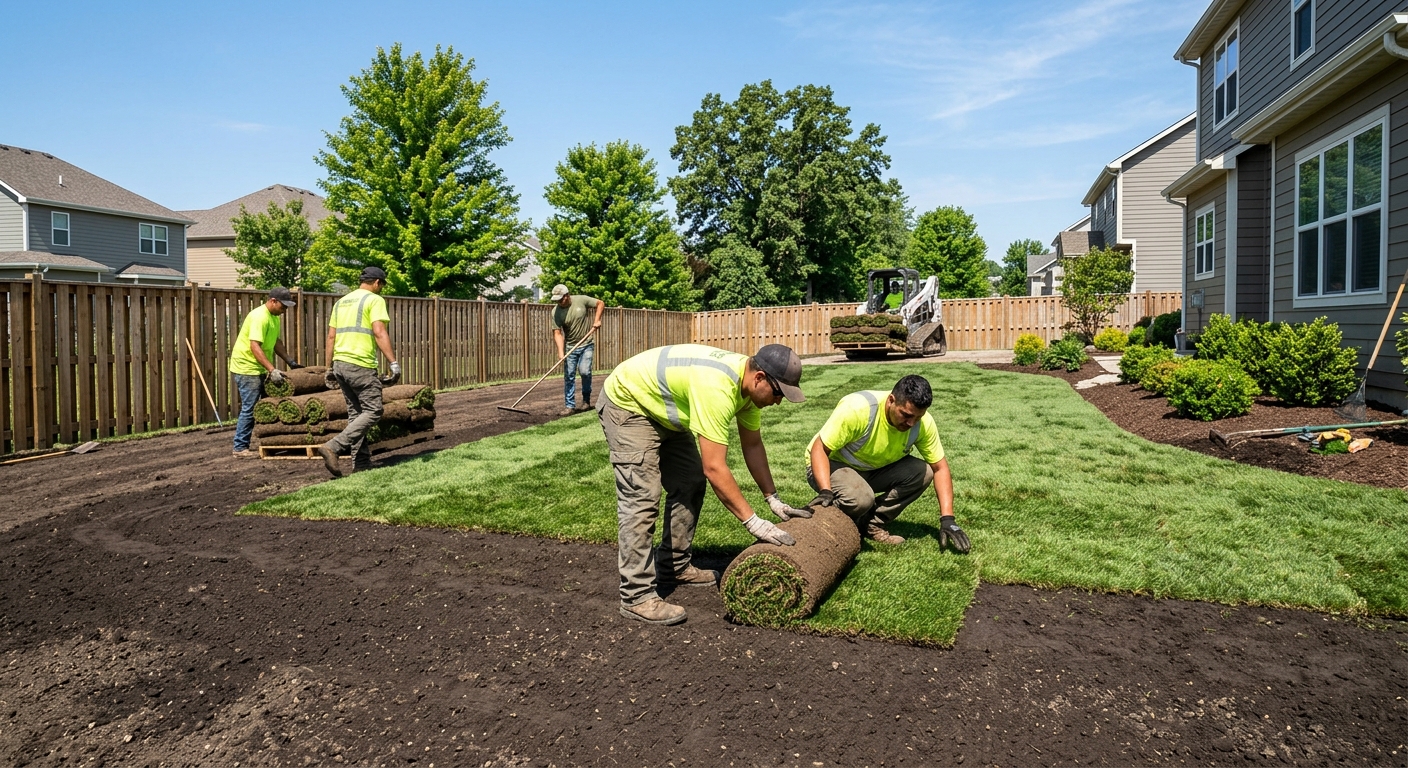
Landscaping options and costs in Richmond
Richmond homeowners typically have more yard-space decisions to make than in many apartment-heavy cities—especially given that 30.1% of dwellings are single-detached homes, and 71.3% of households own their properties (Statistics Canada, 2021 Census). That ownership mindset, combined with a competitive local contractor market, is why you’ll see everything from quick curb-appeal upgrades in Broadmoor to full-property transformations in West Cambie and Steveston.
In Richmond (Lower Mainland–Southwest), most areas sit in plant hardiness zones 7–8, with mild, wet winters and long, cool summers. That means you can install softscapes and plantings across a broad window—generally from late winter through fall—so labour scheduling tends to be steadier than in colder Prairie climates. Costs still rise when projects require freeze–thaw-safe base preparation for patios and retaining walls, because even coastal areas experience seasonal ground movement and heavy rainfall that must be managed with proper drainage and compaction.
When you compare quotes, think in terms of “what you’re actually building”: lawn work is priced by area and surface prep; layered gardens are priced by plant quantities, soil amendments, and labour for spacing and installation; and hardscaping jumps quickly with base depth, subgrade removal, and drainage. Use the table below as a practical baseline for typical Richmond scopes, then align your quote with your yard size, access, and desired plant maturity.
| Service |
Description |
Season |
Price Range |
| Full landscape design and installation |
Site visit, concept + planting plan, grading/drainage coordination, softscape + hardscape install |
Late winter through fall (with rain-pauses in winter) |
$15,000–$50,000 |
| Sod installation (supply, grade, lay, roll) |
Remove old turf (if needed), rough grading, base prep, soil amendments, sod delivery + lay + roll |
Spring to early summer; early fall where water access is stable |
$4,000–$8,000 |
| Lawn seeding (grade, seed, starter fertilizer) |
Fine grading, seed/cover, starter fertiliser, light mulch, establishment care |
Spring or early fall |
$2,000–$6,000 |
| Interlocking patio or walkway |
Excavation, compacted base, interlocking pavers, edging, drainage considerations |
Spring to fall (best drying windows) |
$10,000–$35,000 |
| Retaining wall (interlocking block) |
Block wall build with base, compaction, drainage gravel, weep holes where needed |
Spring to fall |
$12,000–$55,000 |
| Tree and shrub planting |
Soil prep, spacing, staking (if required), mulch rings, watering plan |
Spring to fall |
$1,500–$12,000 |
Prices are estimates only and vary by project scope, site access and material selection.
What affects the price of landscaping in Richmond
In the Lower Mainland–Southwest, you can see landscaping quotes swing by 30–50% for “the same” project because the baseline work—soil prep, drainage, excavation depth, and how the crew manages wet weather—changes the true labour hours and disposal/material costs. Even within British Columbia, this is amplified by what contractors can source and the local pace of construction. In coastal zones like Richmond (generally Zone 7–8), the long growing season supports lush, layered planting palettes and more frequent planting installs, but it also means many homeowners choose to upgrade the look rather than minimize scope. In contrast, Prairie regions (Zone 2–4) often require drought-tolerant and wind-hardy plant choices and compressed timelines due to shorter frost-free windows; structural work also has to be built to frost-depth expectations.
Two Richmond examples that commonly move costs: first, drainage corrections. When a yard slopes toward a house or toward a neighbour’s property, contractors often add grading, a drainage bed or French drain, and adjustment to downspout routing. That can push a “simple lawn refresh” toward a full landscape package within the broader $5,000–$50,000 range. Second, hardscape foundations: a patio or retaining wall needs proper base prep for freeze–thaw movement—even with Richmond’s milder winters—so excavation, compaction, and weeping/drainage gravel increase material and labour.
Local housing age also matters. With 25.9% of homes built before 1981 (Statistics Canada, 2021 Census), older lots often have more buried utilities, mature roots, or non-uniform soils, which can add $1,000–$5,000 to excavation and soil replacement/soil amendment for planting and turf. Finally, irrigation strategy changes price: a basic hose-tap plan might cost a little, but drip with a smart controller (increasingly requested due to efficiency) is a more substantial line item.
| Price Factor |
Why It Matters |
Cost Impact |
| Yard size in sq ft — the primary cost driver for softscape |
Labour and materials (topsoil, seed/sod, mulch) scale directly with area |
$2,000–$20,000+ difference depending on turf footprint |
| Grading and drainage work — slope corrections add significant cost |
Correcting low spots and directing water away prevents pooling and foundation moisture |
Often adds $1,500–$8,000 |
| Drainage bed or French drain installation |
Subsurface drainage reduces saturation; requires trenching and proper discharge |
Typically $3,000–$15,000 depending on length and outlet complexity |
| Plant material tier — native shrubs vs. ornamental vs. mature specimen trees |
Small container sizes cost less; mature specimens and premium cultivars cost much more |
Can shift the planting line item by $1,000–$10,000 |
| Hardscape vs. softscape ratio — walls and patios cost more per sq ft than lawn |
Patios/walls need deeper excavation, heavier base, and stricter compaction |
Projects can move toward $10,000–$80,000 territory quickly |
| Irrigation system design and installation |
Efficient drip layout, zoning, and controllers improve plant survival and water use |
Often adds $1,500–$6,500 |
| Soil amendment and topsoil required |
Coastal soils can be heavy or compacted; amendments improve root establishment |
Commonly adds $800–$4,000 |
| Tree removal or stump grinding before new planting |
Disposal and grinding labour can be unpredictable based on root structure |
Often adds $800–$5,000+ |
Permits & regulations in British Columbia
In British Columbia, most homeowners are pleasantly surprised: planting, sodding, and the majority of softscape work typically do not require a permit. That usually includes things like garden beds, shrub and tree planting, seeding, mulch installation, and normal turf replacement—assuming you’re not changing drainage in a way that impacts neighbouring properties or storm systems.
Work that does typically require a permit is retaining-wall construction above the municipal threshold (commonly around 1.0 m (3.3 ft) in many municipalities). Depending on height, design, and site conditions, you may also need engineered drawings. In addition, changes to lot grading that affect drainage direction—especially toward a neighbouring property or toward storm sewer connections—can trigger approval requirements. Before digging for planting holes, footings, trenches, or drainage lines, have utilities located to avoid damaging underground services.
To verify a Richmond contractor, ask for three things in writing and check them yourself: (1) BC licence/registration status (where applicable based on trade category) via the relevant online registry; (2) liability insurance—request a current certificate of insurance showing your address and coverage limits; and (3) WSIB/WCB coverage—obtain proof of coverage or a clearance letter (worded as applicable) from the contractor. If they won’t provide documents promptly, that’s a red flag.
Planning a landscape that thrives in Richmond's climate
Planning for Richmond means working with hardiness zone 7–8 conditions and a wet-cool winter rhythm, not against it. Richmond’s longer growing season lets you establish perennials and broadleaf evergreens with less winter-protection than you’d need farther inland, but the trade-off is that drainage and soil health still decide whether your garden looks great for years. Start with plant selection: choose zone-appropriate and often native or naturally adapted species that handle our winter moisture and spring shoulder seasons with minimal fuss. If you include layered evergreens, you’ll keep structure even when deciduous plants look tired.
On turf, sod is the fast path to curb appeal, but it’s typically about 3–4x more per sq ft than seeding because you’re paying for turf production plus installation labour. If your goal is a quick sell-ready look for a property in West Cambie, sod can be justified—particularly when you pair it with correct grade so water doesn’t pool. If you can wait through establishment, seeding is usually a better value for the same overall lawn coverage.
Next, drainage and grading: Lower Mainland–Southwest yards commonly see downspout runoff and spring saturation. Build a gentle positive slope away from foundations, keep topsoil depth consistent, and consider a French drain where you’ve got persistent damp areas. For patios and retaining walls, base preparation must be deep enough to manage seasonal movement; proper compaction and drainage gravel reduce frost-heave risks and wall movement. Finally, low-maintenance design strategies—mulch, groundcovers, and perennials with repeating textures—reduce annual upkeep without flattening the visual impact. Add rain-garden elements where feasible to capture runoff and reduce reliance on supplemental watering.
Example: if a sod lawn refresh lands in the ballpark of $4,000–$8,000, switching to seeding might fall closer to $2,000–$6,000. Paying the higher sod price is most justified when you need instant coverage, have limited establishment time, or can’t easily control washouts during germination due to your yard’s slope.
| Element |
Climate Consideration |
Maintenance Level |
Price Band |
| Sod lawn installation |
Needs clean grade and fast establishment in Richmond’s spring/fall windows; avoid laying during the wettest stretches |
Low after rooting; higher during the first 2–6 weeks |
$4,000–$8,000 |
| Native perennial garden |
Handles local winter wet and provides year-round structure with zone-appropriate species |
Low to moderate (weeding first year, then mostly seasonal tidy) |
$3,000–$12,000 |
| Mulched shrub border |
Mulch buffers moisture swings and suppresses weeds through cooler, wetter seasons |
Low (refresh mulch 1x per year) |
$2,500–$10,000 |
| Interlocking stone patio |
Base prep and slope matter for drainage during Pacific rainfall |
Low (occasional cleaning; joint sand upkeep if needed) |
$10,000–$35,000 |
| Retaining wall (block) |
Drainage gravel and weep management reduce hydrostatic pressure in wet seasons |
Low (inspection after heavy rains) |
$12,000–$55,000 |
| Drip irrigation system |
Supports efficient watering during occasional restrictions and helps plants recover quickly |
Low (seasonal controller checks) |
$1,500–$6,500 |
How to choose a landscaping contractor in Richmond
Choosing the right landscaping contractor in Richmond starts with proof, not promises. First, verify BC licensing/registration where applicable for the work being quoted (hardscape trades and landscape services may fall under different trade categories). Second, request liability insurance—you should receive a certificate of insurance with your property name/address listed as the certificate holder or additional insured where appropriate. Third, confirm worker coverage: ask for WSIB/WCB clearance or proof of coverage so you know the contractor’s workers are covered in the event of an incident on your site.
Get 2–3 itemised written quotes that break labour and materials apart (for example: excavation, base material, drainage gravel, pavers, edging, soil, mulch, plants, and irrigation components). Avoid a single “lump sum” number with unclear scope. Read what’s excluded: is old turf removal included? Is topsoil disposal included or billed separately? Are utility locates included, or do you pay? If permits are required for a retaining wall, ask whether permit pulling is included and who is responsible for revisions. For warranties, ask for the workmanship warranty length, the manufacturer warranty for products (pavers, plants, and irrigation parts where applicable), and whether anything is transferable if you sell.
Payment schedule matters: never pay more than 10–15% upfront. Use milestone payments tied to completed phases, and hold back a portion until final grading, cleanup, and “hand-off” (watering guidance and as-built notes if applicable) are complete. Finally, confirm a start date and an estimated completion timeline in writing—Richmond winter weather can slow outdoor work, so strong schedule planning is part of professional service.
- Provide insurance certificate and confirm coverage dates before work starts
- Show proof of worker coverage (WSIB/WCB clearance or equivalent)
- List licence/registration details relevant to the quoted scope
- Use itemised quotes with labour + material breakdowns (no vague allowances only)
- Include site conditions notes: access, slopes, drainage concerns, and disposal plan
- State whether utility locates are included and when they’re booked
- Confirm grading responsibility: final slopes and where water will drain
- Specify base thickness/compaction expectations for patio and block walls
- Confirm drainage details: gravel blanket/French drain/weeping options
- Provide a planting plan detail level (plant sizes, quantities, spacing, and substitutes)
- Write warranty terms clearly (workmanship and product warranty) and how claims are handled
- Agree on payment milestones and retainage (holdback) until final inspection
Concrete red flags in Richmond: (1) they won’t share insurance or WSIB/WCB proof; (2) the quote has no allowances or is missing disposal/grading/drainage specifics; (3) they start without confirming utility locates; (4) they ask for large upfront payments (beyond 10–15%); and (5) no written start date/timeline or a “verbal-only” schedule that doesn’t account for winter rain delays.
Frequently asked questions — landscaping in Richmond
How much does sodding a yard cost in Richmond?
Sodding costs in Richmond typically depend on yard size, the condition of the existing lawn, and how much grading and soil preparation is required before the first strip of sod goes down. As a realistic baseline, many residential sod installs fall around $4,000–$8,000 for standard backyard coverage, assuming normal access and minimal surprises. If your lot has low spots or needs drainage correction, the price can move upward because excavation, topsoil/soil amendments, and sometimes a drainage bed add labour and materials. Richmond’s wet winters and cool shoulder seasons also mean your timeline matters: sod tends to establish best when installed in the workable spring/early summer windows or in early fall with stable conditions.
How do I prevent weeds in my Richmond garden?
Weed prevention in Richmond is mostly about timing, soil prep, and staying ahead during the first growing season. Start by removing established weeds thoroughly before planting, then improve soil so plants fill in quickly (bare soil is where weed seeds thrive). Use a thick, consistent mulch layer (usually several centimetres) around shrubs and perennials, and refresh it annually to keep light from reaching weed germination zones. For beds, consider weed barrier only if your installer and plant layout work together—poorly installed barriers can trap moisture and create maintenance headaches. Finally, use dense planting design: native perennials and layered evergreen shrubs can reduce open space, which lowers weed pressure without relying on frequent herbicide use. (Statistics Canada, 2021 Census)
How do I design a low-water yard in Richmond?
A low-water yard in Richmond starts with plant selection and efficient irrigation layout, not just “less grass.” In our Lower Mainland–Southwest conditions (zones 7–8), you can still design lush-looking gardens with species that tolerate occasional dryness while handling winter wet without constant fuss. Replace high-maintenance lawn areas with mulched shrub borders, groundcovers, and native perennial gardens so you’re not watering large turf zones. If you keep lawn, target irrigation to the lawn footprint and use drip or low-flow soaker lines for beds. Many Richmond homeowners also choose drip irrigation with smart controllers to reduce waste during periods when rainfall covers needs. If you’re comparing options, converting a turf refresh from sod toward seeding can reduce upfront cost (often $2,000–$6,000 for seeding scopes) and free budget for irrigation efficiency that sustains plant survival.
How do I find a licensed landscaper in Richmond?
In British Columbia, the easiest way to find a qualified Richmond landscaper is to verify documents before signing. Ask for their current insurance certificate (liability) and proof of worker coverage (WSIB/WCB clearance or equivalent). Then confirm the contractor’s relevant BC licence/registration for the trade category that matches the work being proposed, and request that details appear on the quote. Next, compare quotes that are itemised—labour plus materials breakdown—so you can tell what’s included (grading, drainage, disposal, and whether permits apply). Professional contractors won’t be hesitant to explain scope and warranty terms, and they should coordinate utility locates before digging planting holes or wall footings.
How much does landscaping cost in Richmond?
Landscaping costs in Richmond vary widely based on how much you’re changing: turf only, planting only, or a full design-and-build with drainage and hardscape. Many homeowners land somewhere between softscape refreshes and full project builds, with design & installation commonly ranging from $5,000–$50,000 depending on scope. For example, a small planting and mulch refresh might sit near the lower end, while patios, retaining walls, and drainage upgrades push budgets higher because excavation, base material, and compaction are labour-intensive. If you’re also adding irrigation, budget another line item for efficient systems. Site access and older-home lots (many pre-1981) can add unpredictability due to soil differences and buried remnants, so clear site photos and a detailed walk-through are essential to get a quote that holds.
What plants thrive in Richmond's climate zone?
Richmond’s coastal Pacific climate supports a broad range of plants in hardiness zones 7–8, and that’s why layered gardens with broadleaf evergreens stay attractive longer through winter. Homeowners commonly do well with zone-appropriate evergreen structure (for year-round form), native or naturally adapted shrubs, and long-blooming perennials that tolerate wet winters once established. Your best “thrive factor” depends on your drainage: if your yard stays soggy, you’ll want plants that handle winter moisture and you may need drainage improvements to prevent root decline. If your yard dries out more in summer, add mulch depth and use drip irrigation rather than frequent overhead watering. A contractor can also suggest mature specimen sizes and spacing so your garden fills in faster, reducing weeds and maintenance.