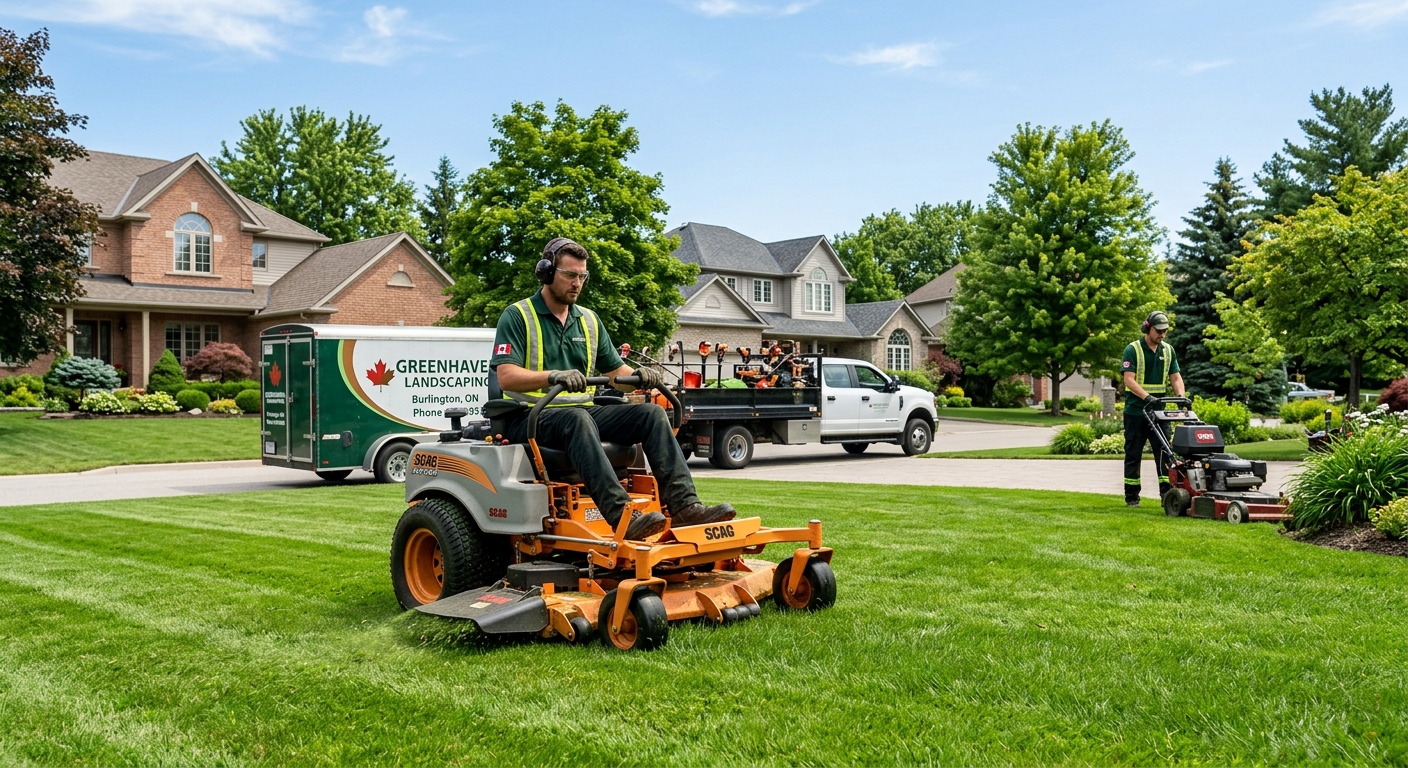
Landscaping options and costs in North Vancouver
North Vancouver homeowners typically choose between softscape-focused upgrades, hardscape features, or a full design-and-build package—often depending on how quickly they want results and how much yard complexity they’re dealing with. With the city’s population at 58,120 (Statistics Canada, 2021 Census), demand is steady, and in many neighbourhoods single-detached homes are a minority of dwellings (10.7%), which pushes competition for contractors toward the projects with the most outdoor “daylight”—long driveways, sloped lots, and rear-yard renovations. At the same time, homeowner households make up 53.3% of households, so a lot of landscaping is treated as long-term value, not a short-term cosmetic refresh.
Lower Mainland–Southwest conditions (plant hardiness zones 7–8, mild wet winters, and long cool growing seasons) keep crews working longer than in colder provinces. That can help moderate total project timing and allow more planting windows, but it doesn’t eliminate costs: freeze–thaw cycles still happen, so patios, steps, and retaining wall bases need deeper drainage and proper compaction. If you’re near Lower Lonsdale or climbing-slope areas above the harbour, access constraints—narrow lanes, steep grades, and vehicle limits—can raise labour and equipment costs. When homeowners want a curb-to-backyard refresh in one season, full landscape design and installation packages often land in the middle of the regional design band and include the planning that reduces costly rework.
Below is a practical starting point for comparing quotes before you meet a designer/contractor.
| Service |
Description |
Season |
Price Range |
| Full landscape design and installation |
Concept + layout, plant list, grading/drainage plan, hardscape/softscape installation, and site cleanup |
Mar–Nov (softer weather in shoulder seasons possible) |
$8,500–$45,000 |
| Sod installation (supply, grade, lay, roll) |
Soil prep, minor grading, lime/fertilizer as needed, sod delivery and rolling |
Apr–Jun & Sep–Oct |
$3,000–$8,000 |
| Lawn seeding (grade, seed, starter fertilizer) |
Top up/grade, seed selection, starter fertilizer and light tack/cover where appropriate |
Apr–Jun & Sep–Oct |
$2,000–$6,000 |
| Interlocking patio or walkway |
Excavation, base, edging, interlocking stone/asphalt pavers, jointing sand, leveling |
Mar–Nov (best in drier stretches) |
$7,500–$35,000 |
| Retaining wall (interlocking block) |
Block wall with drainage backfill, weep holes, base preparation, and steps/caps if needed |
Mar–Nov |
$12,000–$55,000 |
| Tree and shrub planting |
Planting layout, soil amendments, staking (as required), and initial watering plan |
Apr–Jun & Sep–Nov |
$1,500–$14,000 |
Prices are estimates only and vary by project scope, site access and material selection.
What affects the price of landscaping in North Vancouver
In North Vancouver and across the Lower Mainland–Southwest, you can see quote differences of 30–50% for what looks like the “same” landscaping job. One contractor may price a simpler version (basic topsoil and a standard plant palette), while another includes engineering-level drainage, larger plant sizes, or a full grading plan. Labour and material costs also swing with seasonality and demand: when crews are booked out for patios and retaining walls, scheduling and crew allocation affect rates even before you touch your material choices.
Climate drives both plant selection and work windows, which is why the Lower Mainland–Southwest cost profile differs from other Canadian regions. Here, plant hardiness zones 7–8 and last spring frost that typically lands early March to early April near the coast supports lush palettes and longer planting runs. But coastal BC still requires good drainage because heavy rainfall can keep soil saturated. If you’re comparing to Prairie cities (Zone 2–4), the shorter frost-free window forces drought-tolerant, wind-hardy selections and tighter scheduling; for retaining walls, Prairie-style base depth is critical because frost penetrates deeper. On the BC coast, the long growing season can lower the “reschedule risk,” while still leaving hardscape excavation and freeze–thaw-safe base construction as a constant cost item.
Two concrete North Vancouver examples: (1) a small slope correction that moves drainage 6–12 inches can add significant excavator time and disposal, pushing softscape elements toward the upper end of the $5,000–$50,000 design & installation band; (2) upgrading from basic lawn seeding to sod on a 600–800 sq ft area can be a budget jump, because sod supply and prep typically cost more per square foot than seeding. Housing age matters too—44.0% of homes were built before 1981 (Statistics Canada, 2021 Census), so older properties often have older drainage patterns, compacted soils, or mature shrubs that need removal, increasing soil amendment and sometimes requiring tree/stump work before planting.
| Price Factor |
Why It Matters |
Cost Impact |
| Yard size in sq ft — the primary cost driver for softscape |
More area means more soil prep, more plants, more mulch, and more time |
Large yards can move total cost by $5,000–$20,000+ |
| Grading and drainage work — slope corrections add significant cost |
Correcting runoff prevents foundation moisture and pooling |
Often adds 15–35% to overall landscape scope |
| Drainage bed or French drain installation |
Captures water and redirects it safely |
Commonly adds $2,500–$10,000 depending on length/complexity |
| Plant material tier — native shrubs vs. ornamental vs. mature specimen trees |
Specimens increase material and labour (lifting, staging, staking, warranty) |
Can swing $1,000–$12,000+ on planting packages |
| Hardscape vs. softscape ratio — walls and patios cost more per sq ft than lawn |
Stone base prep, compaction, and edging increase labour and material |
Turning a “planting-only” plan into a patio/wall plan can double cost |
| Irrigation system design and installation |
Drip and properly zoned systems reduce waste and handle coastal moisture |
Typical additions of $1,500–$7,500+ depending on zones |
| Soil amendment and topsoil required |
Healthy soil drives root establishment and reduces plant failure |
Often adds $500–$4,000 depending on volume |
| Tree removal or stump grinding before new planting |
Access, debris haul-off, and disposal time increase costs |
Can add $800–$6,000+ depending on size/access |
Permits & regulations in British Columbia
In British Columbia, most routine landscaping work—planting beds, sodding, seeding, and most softscape installs—typically does not require a permit. However, retaining walls are the big exception. In many municipalities around North Vancouver and the Lower Mainland, retaining walls above a height threshold (often 1.0 m / 3.3 ft) generally require a permit, and sometimes engineered drawings depending on height, soil conditions, and whether the wall supports surcharge (like a driveway, patio, or built-up area above).
Also watch grading: if you’re changing lot grading in a way that affects how water drains toward neighbouring properties or into storm connections, approval requirements can come into play—especially where new swales, downspout ties, or redirecting drainage are involved. Before digging for any planting holes, drainage runs, or wall footings, ensure you have utility locates (for gas, power, telecom, and any buried services).
To verify a contractor in North Vancouver, ask for three things and check them in writing: (1) a British Columbia business licence/contractor registration where applicable for the work they’re doing; confirm the business details match the quote; (2) current liability insurance—request a certificate of insurance naming you/your property as additionally insured if your contract requires it; (3) proof of workers’ coverage—WSIB/WCB coverage or equivalent proof of coverage/clearance where applicable. A legitimate contractor should provide these documents quickly, before you sign.
Planning a landscape that thrives in North Vancouver's climate
Designing for North Vancouver’s climate (coastal Zone 7–8, mild wet winters, and cool summers) is about working with moisture patterns and frost timing—especially on slopes and near foundations. Start with plant selection: choose native and zone-appropriate species that handle winter wet and occasional dry spells without heavy winter protection. In practice, layered planting—broadleaf evergreens plus long-blooming perennials—often looks fuller and survives better than a “single-season colour” approach that costs more to replace.
Sod vs. seed is also a climate-fit decision. Sod gives instant coverage and helps reduce erosion on exposed slopes, but it costs roughly 3–4x more per sq ft than seeding once you include prep and labour. Where a lawn must be usable quickly (kids’ play areas, entry paths), sod can be worth it; where timeline flexibility exists, seeding is usually the better value.
Drainage and grading are non-negotiable in Lower Mainland–Southwest projects. Pooling after rain can keep roots oxygen-starved and cause foundation moisture issues. For patios and retaining walls, base preparation must account for freeze–thaw cycles: deeper excavation, proper base depth, and controlled drainage reduce frost heave and wall movement. Lastly, low-maintenance strategies—mulch, groundcovers, and spaced perennials—keep annual upkeep reasonable without sacrificing curb appeal. If water restrictions tighten during dry periods, rain-garden swales or xeriscape-style borders can reduce reliance on supplemental irrigation while still fitting the lush coastal look.
For a concrete example: if you’re reseeding a 700 sq ft lawn, seeding often fits in the $2,000–$6,000 band, while sod on a similar area is typically closer to the $3,000–$8,000 band. If your priority is “usable immediately,” that premium can be justified; if not, seeding usually delivers the most budget-efficient path to a durable lawn.
| Element |
Climate Consideration |
Maintenance Level |
Price Band |
| Sod lawn installation |
Rapid root establishment after early spring frost; avoid prolonged wet periods for best take |
Low–moderate (watering during establishment, then typical lawn care) |
$3,000–$8,000 |
| Native perennial garden |
Handles cool, wet winters and benefits from improved drainage; good winter structure |
Low (mulch refresh, light pruning) |
$2,500–$9,500 |
| Mulched shrub border |
Great for slope edges and foundation lines; reduces weed competition in coastal moisture |
Low (seasonal tidy-up) |
$2,000–$8,000 |
| Interlocking stone patio |
Base and drainage must manage freeze–thaw and heavy rain runoff |
Low (occasional sand re-leveling and cleaning) |
$7,500–$35,000 |
| Retaining wall (block) |
Needs drainage backfill and stable base to handle wet soils and temperature swings |
Low (periodic inspection of drainage and mortar/blocks as applicable) |
$12,000–$55,000 |
| Drip irrigation system |
Efficient watering during longer dry spells and establishment; reduces waste in wet seasons |
Moderate (controller maintenance, season changes) |
$1,500–$7,500+ |
How to choose a landscaping contractor in North Vancouver
Choosing the right North Vancouver contractor starts with verification. Ask who holds responsibility for the work: confirm British Columbia licensing/registration where applicable for the scope they’re bidding (especially if they’re doing hardscape excavation, drainage, or permitted retaining work). For insurance, request a certificate of liability insurance and ensure coverage is active for the project dates. For workers, confirm WSIB/WCB coverage (or provide the appropriate coverage documentation/clearance where applicable). Don’t rely on “we’re covered” answers—get the documents.
Next, get 2–3 itemised written quotes. You want labour and materials broken out (excavation, base material, drainage rock/fabric, stone units, plant list with sizes, and any disposal/haul-away). A lump-sum quote can hide missing scope, and that’s where cost creep happens. Read exclusions carefully: is permit pulling included for retaining walls that exceed the local threshold, is disposal included, and is there allowance for additional excavation if soil is wetter/poorer than expected?
Warranty matters in coastal freeze–thaw and wet soil conditions. Ask for a workmanship warranty length for drainage, grading, and hardscape installation, and confirm whether product/manufacturer warranties apply to specific materials. Also ask if warranties are transferable to future owners if you sell. For payment, keep it practical: never pay more than 10–15% upfront; hold back a portion until key completion milestones and punch-list items are done. Finally, get the timeline in writing—start date and completion estimate—so your yard work doesn’t drag into the wettest windows.
- Provide insurance certificate (liability) and workers’ coverage documentation before you sign
- Show a written scope of work with quantities (sq ft, linear ft, plant counts/sizes)
- Include disposal/haul-away details (and where debris goes)
- Clarify who pulls permits if required for retaining walls above the local height threshold
- List your plant material by genus/species (not just “evergreen”)
- Confirm base and drainage specifications for patios/walls (fabric, base depth, compaction)
- Ask what happens if rain delays installation—rescheduling plan in writing
- Require a schedule for watering/establishment responsibilities for planting and sod
- Demand product/manufacturer warranty terms and workmanship warranty terms separately
- Keep payment milestones small (10–15% upfront max) and holdback until final inspection
- Check references from nearby North Vancouver neighbourhoods and ask about drainage performance
- Ensure the quote matches the site conditions discussed (slope, access, utilities)
Red flags in North Vancouver: (1) refusing to share insurance/coverage paperwork; (2) quoting without a site visit despite slope or drainage concerns; (3) vague plant selections with no species/sizes; (4) no mention of drainage backfill/weep systems for retaining walls; (5) requiring large upfront payments or giving only verbal timelines.
Frequently asked questions — landscaping in North Vancouver
What plants thrive in North Vancouver's climate zone?
In North Vancouver and the rest of coastal British Columbia (plant hardiness zones 7–8), you’ll generally do well with broadleaf evergreens, shade-tolerant understory plants, and perennials that handle wet winters. Good performers often include deer-tolerant choices and natives for low-maintenance structure—think options like sword fern, evergreen huckleberry-type shrubs, and other region-appropriate evergreens depending on sun exposure. Because many homes were built before 1981 (Statistics Canada, 2021 Census), older yards can be compacted or have drainage issues; in those cases, the “best plant” is the one matched to soil moisture and light, plus proper soil amendment.
If you’re planning a planting package, budgeting around $1,500–$14,000 helps cover soil prep and plant sizes that actually establish quickly.
Sod vs seed — which is better for a North Vancouver lawn?
For North Vancouver, sod and seed both work, but “better” depends on your timeline and erosion risk. Sod gives instant coverage and helps stabilize soil—useful if your lawn is sloped, near a new patio, or you want visual results right away. The trade-off is cost: sod projects commonly land in the $3,000–$8,000 range (site prep included), while seeding typically fits the $2,000–$6,000 band. Seeding is more budget-friendly and can establish well in the cool, moist seasons, especially when grading and starter fertilizer are done correctly.
Because you’re dealing with wet winters and spring thaw, avoid heavy foot traffic right after installation and confirm your drainage isn’t keeping the ground saturated.
How much does a retaining wall cost in North Vancouver?
Retaining wall pricing in North Vancouver varies mainly with wall length, height, site access, and the amount of drainage work required behind the wall. For interlocking block retaining walls, a realistic installed budget often falls in the $12,000–$55,000 range. That band reflects typical Lower Mainland–Southwest conditions: wet soils, freeze–thaw-safe base preparation, and the need for proper drainage backfill and weep drainage so hydrostatic pressure doesn’t push the wall forward.
If your wall exceeds the local permitting threshold (often around 1.0 m / 3.3 ft in many municipalities), permitting and possible engineering can add cost—so it’s best to clarify height and whether there’s surcharge above the wall early in the quoting process.
When is the best time to landscape in North Vancouver?
The best time is usually spring through fall, when soils are workable and plants can root before winter weather. In North Vancouver, last spring frost near the coast often falls in early March to early April, which opens the door for grading, base prep, and planting in shoulder periods. Most contractors concentrate major planting and softscape installs from late April through June, then again from September into early November—especially to catch the cool, steady moisture that supports establishment.
Hardscapes like patios and walkways can be done from March through November, but crews avoid the wettest stretches because waterlogged excavation delays compaction and base stabilization. If you’re targeting a fast full makeover, ask for a schedule early—demand can be strong around neighbourhoods such as Lower Lonsdale.
Do I need a permit for a retaining wall in British Columbia?
In British Columbia, many softscape projects don’t require permits, but retaining walls often do depending on height and conditions. In many Lower Mainland municipalities, retaining walls above a height threshold—commonly around 1.0 m (3.3 ft)—require a building permit, and some cases may need engineered drawings based on wall stability, soil type, and whether there’s load/surcharge above the wall. Grading changes that affect how water drains toward neighbours or storm systems may also require approval.
Because rules can vary by site specifics, the safest approach for a North Vancouver homeowner is to ask the contractor to confirm the permitting path during the quote stage. A reputable contractor should clearly state whether permit pulling is included and who is responsible.
How do I improve drainage in my yard?
Improving drainage in North Vancouver starts with understanding where water actually goes during heavy rain. Common fixes include correcting grading so runoff doesn’t pond near foundations, adding a drainage bed or French drain to intercept subsurface water, and installing proper surface flow (swales, catch points) tied to safe discharge locations. The key is base prep and compaction: drainage failures often come from “band-aid” grading that doesn’t account for subsoil and compaction.
For yards with soft soils or slope, it’s also important to ensure downspouts discharge appropriately and that new landscaping doesn’t block existing flow paths. If you’re planning hardscape or a retaining wall, budget for drainage work as part of the foundation of the project, not as an afterthought—those elements often determine whether your landscape performs for years.