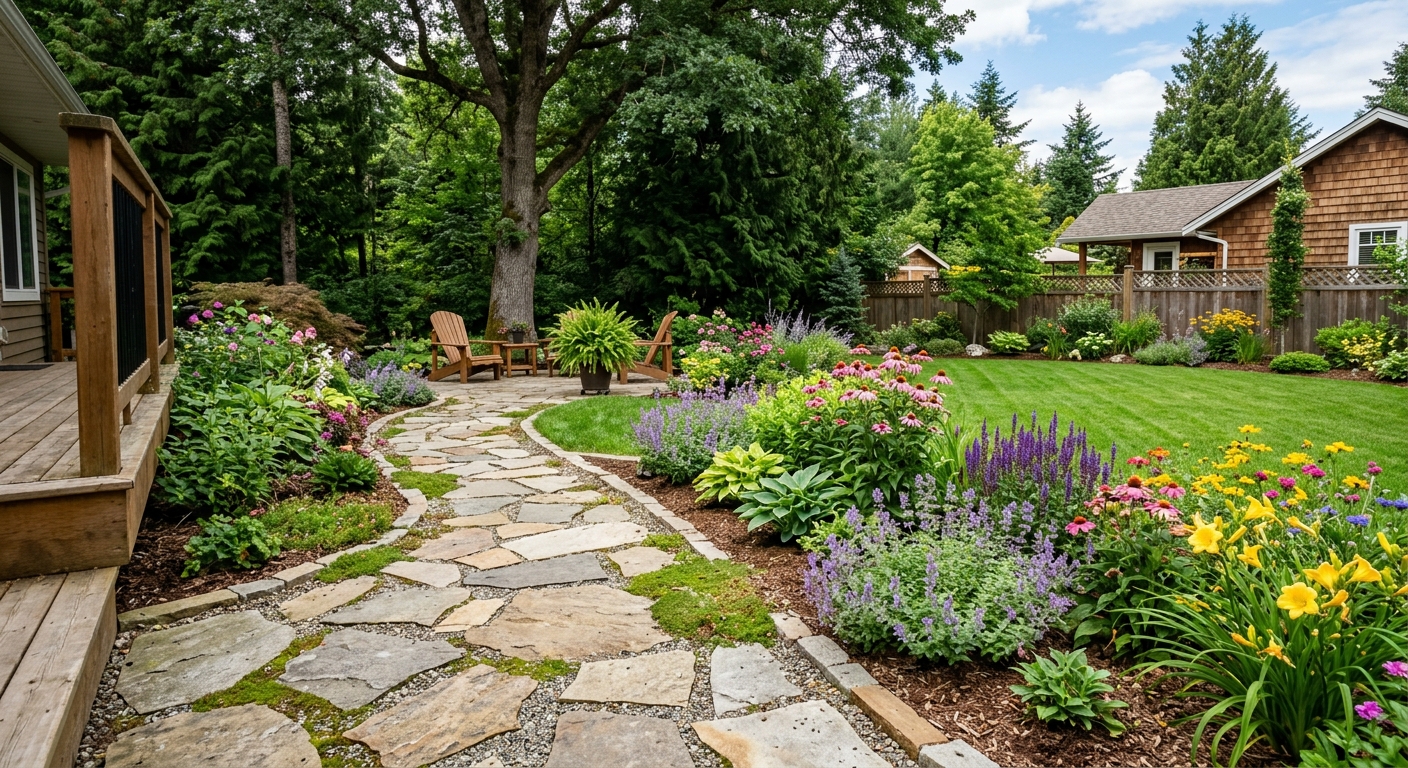
Landscaping options and costs in Binbrook
Binbrook homeowners typically have two goals when they start calling landscapers: boost curb appeal and keep the yard usable through wet springs and freeze–thaw winters. With a population of 8,796 (Statistics Canada, 2021 Census), the area is small enough that contractor availability can tighten during peak season, but close enough to the Hamilton–Niagara labour market that pricing stays consistent with Southern Ontario. Binbrook’s housing mix also matters—most single-detached areas have the yard space to justify proper grading, drainage, and planting beds, so many projects go beyond “cosmetic” updates. That said, the Hamilton–Niagara Peninsula climate (hardiness zones 6b–7a) supports a broader plant palette than prairie regions, yet it still punishes sloppy base prep. Frost and repeated freeze–thaw drive the need for compacted base aggregates, proper base depth for patios and retaining walls, and drainage that keeps water from working toward foundations. In practice, that’s why a “similar-looking” backyard upgrade can vary in cost quickly: excavation, disposal, and higher-quality stone aren’t optional if you want movement-free performance.
In Binbrook, trades are especially busy in the established residential pockets near the commercial strip and along the Main Street corridor, where driveways and walkways often need retrofits to handle runoff. If you’re comparing options, the best way is to anchor on typical price bands for design, softscape, and hardscape—then adjust based on yard size, soil conditions, and access. Use the table below to frame your budget before you request itemised quotes.
| Service |
Description |
Season |
Price Range |
| Full landscape design and installation |
Site visit, concept + grading/drainage plan, plant layout, then installation of beds/softscape and select hardscape |
Late April/early May to mid-October |
$8,000–$35,000 |
| Sod installation (supply, grade, lay, roll) |
Remove existing turf, minor grading, add topsoil/compaction, lay sod, roll, and first watering guidance |
May to September (best in spring/fall) |
$2–$7 |
| Lawn seeding (grade, seed, starter fertilizer) |
Light soil conditioning, seed mix, starter fertiliser, and a maintenance pass for establishment |
April/May and September |
$1.50–$4 |
| Interlocking patio or walkway |
Excavation, geotextile, base + compaction, stone/sand bedding, edge restraints, and jointing |
May to October (weather permitting) |
$40–$120 |
| Retaining wall (interlocking block) |
Wall layout, base prep below frost influence, drainage gravel + weep path, block set, cap and backfill |
May to September (best for proper compaction) |
$70–$150 |
| Tree and shrub planting |
Soil amendment, planting, mulching, staking as needed, and establishment watering guidance |
Spring and fall plant windows |
$150–$1,200 |
Prices are estimates only and vary by project scope, site access and material selection.
What affects the price of landscaping in Binbrook
The same backyard “look” can come in 30–50% apart across the Hamilton–Niagara Peninsula and broader Ontario because landscaping is labour- and excavation-driven, not just material-driven. In Binbrook (zones 6b–7a), frost-free working typically runs from late April/early May to mid–October, which concentrates scheduling and raises labour demand when multiple crews are chasing similar jobs. Contractor availability can tighten in mid-summer, and that impacts how quickly you can secure a design date and install window—sometimes adding cost even before materials arrive.
Local climate and hardiness zoning also define both what we can install reliably and how long products must establish before winter. Frost and freeze–thaw govern base depth and drainage design: retaining walls and patios need compacted base aggregates sized for Ontario conditions, otherwise heaving and settlement can show up after the first couple of winters. Compare this to prairie regions (Zone 2–4) where the short season and harsher winter winds often require drought-tolerant, wind-hardy selections and deeper “just to be safe” base work; you’ll also see more cost pushed into hardy plant choices and soil amendments. On the other hand, coastal BC’s long, lush growing season can reduce the “race against the calendar,” but it often shifts cost toward drainage engineering in heavy rainfall. In our Southern Ontario reality, we usually balance spring saturation and summer dry spells with targeted irrigation and grading fixes.
Concrete examples in Binbrook: (1) a backyard that needs regrading so water flows away from a foundation will cost more than a flat site—grading and minor excavation alone can move a project from the mid-band toward higher $5,000–$50,000 landscape design & installation ranges. (2) a modest interlocking patio on clay soil with poor drainage may require a deeper base and drainage bed, increasing hardscape cost within the $40–$150 per square-foot style band. (3) choosing a mature specimen tree (balled and burlapped) instead of smaller nursery stock can quickly shift planting budgets within the $50–$1,500 tree and garden planting band because the equipment, planting hole size, and staking all increase.
| Price Factor |
Why It Matters |
Cost Impact |
| Yard size in sq ft — the primary cost driver for softscape |
More area means more excavation, soil, aggregate, seed/sod, and labour time |
Can change total project cost by 20–60% |
| Grading and drainage work — slope corrections add significant cost |
Fixes pooling, foundation moisture risk, and runoff routing |
Often adds several thousand dollars on sloped or wet sites |
| Drainage bed or French drain installation |
Captures groundwater and directs it safely away |
Can increase costs by roughly 10–30% depending on trench length |
| Plant material tier — native shrubs vs. ornamental vs. mature specimen trees |
Higher-tier plants cost more and require more labour and sometimes equipment |
Can swing planting portion by 30–200% |
| Hardscape vs. softscape ratio — walls and patios cost more per sq ft than lawn |
Excavation, base aggregates, stone cutting, and restraint systems increase cost |
Higher hardscape ratio pushes pricing toward the upper band |
| Irrigation system design and installation |
Drip lines, timers, backflow protection considerations, and zoning affect material + labour |
Often adds $1,000–$6,000 depending on coverage |
| Soil amendment and topsoil required |
Clay and mixed glacial soils may need more amendment for root health |
Can add $500–$3,000+ depending on depth and volume |
| Tree removal or stump grinding before new planting |
Impacts excavation planning, disposal, and site prep time |
Can add $300–$2,500+ based on access and size |
Permits & regulations in Ontario
In Ontario, most landscaping updates don’t require a permit—planting, sodding, and the majority of softscape work (mulch, grading at a small scale, and installing garden beds) generally fall under routine yard improvements. Retaining walls are the common exception. While rules vary by municipality and wall height, walls above a typical threshold of 1.0 m (3.3 ft) often require a building permit and sometimes supporting documentation such as engineering drawings. If your wall will retain soil at a meaningful height—or if you’re working near structures, walkways, or driveways—assume permitting will be part of the process.
Also watch grading and drainage changes. If the work changes how water moves across the property—especially if it’s being redirected toward a neighbour’s lot or toward storm connections—approval requirements can trigger. Before any digging for planting holes, trenching for drainage, or wall footings, call utility locates to mark buried services. This isn’t optional; it’s a safety step that protects homeowners and contractors.
For drought and water-use rules, it’s worth confirming local irrigation and any applicable water-use bylaws—even though Hamilton–Niagara typically isn’t under the same strict outdoor limits as dry interior regions. In Binbrook, your best practice is to ask your contractor how they’ll manage watering during the initial establishment period and whether the plan aligns with current local guidance.
Homeowners can verify a contractor properly by checking (1) Ontario licence details (where applicable for the scope), (2) certificate of liability insurance showing adequate limits and effective dates, and (3) WSIB/WCB coverage for workers. Ask for a clearance letter or current coverage evidence, and keep a copy with your signed quote and payment records.
Planning a landscape that thrives in Binbrook's climate
Designing for Binbrook means working with zones 6b–7a, managing wet spring conditions, and planning for winter wind and freeze–thaw cycles. Start with plant selection: choose native and zone-appropriate species that establish quickly and don’t demand constant winter protection. In practice, that usually means hardy flowering shrubs, ornamental grasses, and perennials that tolerate Ontario temperature swings once established. For lawns, decide early whether you want “instant” results or long-term value. Sod gives immediate coverage and erosion control, but it typically costs about 3–4x more per square foot than seeding when you compare supply and installation.
Drainage and grading are the biggest make-or-break items in Hamilton–Niagara. If water pools near a foundation after spring rains, you’ll see foundation moisture risk and soil movement over time—then even a good-looking patio can settle unevenly. For hardscape like interlocking patios and retaining walls, base preparation should be engineered for frost influence: correct excavation depth, geotextile placement, properly compacted base, and well-built drainage layers reduce the chances of heaving. Low-maintenance design strategies help you keep curb appeal without weekly labour: mulched shrub borders, groundcovers, and layered perennials reduce weeding and moderate soil moisture.
Where water context matters, consider a rain-garden at the downspout outlet or a small drainage feature that captures runoff and filters it into planting areas. If you’re adding irrigation, drip systems in planting beds can be efficient during summer dry spells without wasting water.
On cost justification: if your goal is new lawn coverage quickly before guests arrive, sod can be worth it. If your budget is tight and the site soil is workable, seeding can deliver a strong lawn for much less—especially when combined with topsoil conditioning and proper watering for establishment. For example, an average-sized softscape refresh may move from a “value” approach into the higher range once you add hardscape edging, because patios and walkways require deeper base work than lawn alone.
| Element |
Climate Consideration |
Maintenance Level |
Price Band |
| Sod lawn installation |
Best installed when frost risk is low; establishment watering needed during May–September dry spells |
Low to moderate (mostly watering + mowing) |
$2–$7 |
| Native perennial garden |
Hardy in zones 6b–7a; tolerates Ontario winters once established |
Low (mulch, occasional weeding, seasonal tidy) |
$3,000–$12,000 |
| Mulched shrub border |
Winter wind resistance plus mulch helps stabilize soil during freeze–thaw |
Low (spring clean-up and top-up) |
$1,500–$8,000 |
| Interlocking stone patio |
Needs correct base depth and drainage to prevent movement in freeze–thaw winters |
Low (periodic joint sand checks) |
$40–$120 |
| Retaining wall (block) |
Drainage gravel and weep path reduce hydrostatic pressure during spring saturation |
Low (visual inspections) |
$70–$150 |
| Drip irrigation system |
Efficient during summer dry periods; supports consistent establishment after planting |
Low once set up (seasonal adjustments) |
$1,000–$6,000 |
How to choose a landscaping contractor in Binbrook
Choosing the right landscaping contractor in Binbrook starts with proof—not promises. First, verify Ontario licensing where it applies to the specific work scope (especially if the contractor is offering excavation-heavy hardscaping or any regulated components tied to their trades). Next, request a certificate of liability insurance and confirm the effective dates cover your project duration and that the limit is appropriate for construction work. For worker coverage, ask for WSIB/WCB clearance evidence or an up-to-date coverage letter showing their account is active. If they can’t provide it, or if coverage doesn’t match the work they’re doing on your property, get another quote.
Then move to the quotes. Ask for 2–3 itemised written quotes that break labour and materials down—don’t accept vague lump sums like “landscape install, materials included.” The scope should list what’s included and what’s excluded: permit pulls, utility locates, disposal/haul-away, base aggregates and compaction method, drainage rock, and whether grading adjustments are included. Good quotes also specify soil amendment/topsoil quantities and any allowance for unforeseen conditions (like buried obstructions or unsuitable subgrade).
Warranty matters in Ontario winters. Confirm the workmanship warranty length for installations (often separate from plant warranties). Product/manufacturer warranty may cover plants or materials, but workmanship is what you’ll care about when freeze–thaw causes settlement or edge movement. Ask if warranties are transferable if you sell your home.
For payment, never pay more than 10–15% upfront. Use a holdback until key milestones are completed, then pay the remainder after final grading/cleanup. Finally, get a start date and a realistic completion estimate in writing—weather can affect hardscape, but reliable contractors will plan around it.
- Ask for their WSIB/WCB clearance letter or proof of current coverage before work begins.
- Confirm liability insurance and that your address is covered for the project period.
- Require 2–3 itemised quotes with labour + materials, not just a single number.
- Check whether excavation, disposal/haul-away, and utility locates are included.
- Ensure base depth, drainage layers, and compaction methods are described for patios/walls.
- Verify what soil amendment and topsoil quantities are included (and to what depth).
- Ask who is responsible for permit pulls if a retaining wall exceeds the local threshold.
- Get warranty terms in writing for workmanship and clarify plant/material coverage.
- Agree on a payment schedule with only small upfront deposit (10–15%).
- Request a project timeline with start date and completion target in writing.
- Look for a clear cleanup and final grading plan (including edges and sodded areas).
- Confirm how irrigation or watering guidance will be handled during establishment.
Red flags in Binbrook include: vague scope language with no drainage/base detail, refusing to show insurance/WSIB/WCB proof, asking for large upfront payments, quoting without any site visit (especially for patios and retaining walls), and promising “same-season” installation of hardscaping without weather/compaction planning.
Frequently asked questions — landscaping in Binbrook
How deep should a retaining-wall base be for local frost?
For Binbrook (zones 6b–7a), the retaining-wall base needs to be designed to resist Ontario freeze–thaw and movement, not just “set it level and go.” In practical terms, good wall builds typically excavate to the right depth for a stable granular base, with proper compaction, and they include drainage gravel behind the wall so water doesn’t build up and heave the system. Exact depth depends on wall height, soil type (clay vs. sand vs. mixed glacial soils), and drainage conditions, so you shouldn’t rely on a single “one size” number. During quoting, ask your contractor to specify their base depth, the type/size of drainage rock, and how they’ll construct the weep path. If the quote is missing these details, you’re not getting a wall built for local conditions—regardless of whether the price sits near the $70–$150 per square-foot style band.
How much does professional landscape design cost?
Professional landscape design in Southern Ontario (including Binbrook) can range widely based on whether you’re getting concept-only ideas or a full plan set with grading and planting layouts. As a useful budget frame, many homeowners spend within the broader landscape design & installation backbone of $5,000–$50,000 once design is paired with construction, especially when drainage and hardscape are part of the plan. If you’re hiring design as a standalone service, expect a separate fee, but it’s still typically driven by yard size and how detailed the drawings need to be. For example, a smaller planting refresh may be manageable, but when you add interlocking patio edges, retaining walls, or drainage corrections, the design effort (and contractor coordination time) increases. The best approach is to ask for an itemised quote that clearly separates design scope from installation scope.
How do I compare landscaping quotes?
Start by comparing quotes on apples-to-apples details: ask each contractor to itemise labour and materials, and verify included site prep. In Binbrook, the biggest differences usually come from drainage and base construction—especially for patios and retaining walls. Compare whether each quote specifies excavation depth, geotextile use, base aggregate type, compaction method, and drainage rock/weep path. Also check soil amendment and topsoil quantities for planting beds and lawns. Don’t just compare total cost—evaluate whether one quote is truly “complete” or if it excludes disposal, utility locates, or grading adjustments. A good quote will also state the season/weather assumptions for the work window (late April/early May to mid–October) and outline a timeline. If one quote lands much lower than the typical hardscape bands (like patio-style ranges commonly associated with the $40–$120 band), find out what was cut before you sign.
How long does a landscaping project take in Binbrook?
Timelines in Binbrook depend on scope, site access, and how much earthmoving is required for drainage. Softscape-only jobs like a shrub border installation or planting can often be scheduled relatively quickly once materials arrive. Lawn work and seeding are seasonal—best in spring/fall for establishment. Hardscape projects take longer because excavation, base prep, compaction, and curing conditions can slow progress, especially with Ontario spring rain or freeze–thaw transitions. As a rule of thumb, a small interlocking walkway/patio can be completed within about several days of on-site labour, while larger patios, retaining walls, and regrading can extend to 1–3 weeks depending on sequencing and weather. Your quote should include a realistic start date and completion target in writing, and a reliable contractor will plan for waiting on weather windows rather than pushing through and risking settlement.
What is the best grass type for a Binbrook lawn?
For Binbrook lawns, homeowners usually do best with cool-season grasses designed for Ontario winters and typical summer dry spells. In practice, many “best” mixes use tall fescue, with blends that can include Kentucky bluegrass for density and visual quality. The right mix depends on sunlight (full sun vs. shade), foot traffic, and whether you’re planning to seed or sod. Sod can be a quicker route to coverage, commonly priced in the $2–$7 range per square foot installed, while seeding often costs less and is a good option for larger areas if you can commit to establishment watering. If your yard has drainage issues or heavy clay, the “best grass” still won’t perform without grading and soil conditioning. So when comparing contractors, ask how they’ll prep the soil and whether they’ll address compaction or drainage first.
When should I aerate and overseed my lawn in Binbrook?
In Binbrook, the usual timing for aeration and overseeding aligns with the growing season where grass can repair roots before winter stress. Many homeowners do aeration in spring (after the soil is workable) or in early fall, with overseeding shortly after aeration so seeds sit in direct contact with soil. Early fall is often a sweet spot because temperatures are cooler and the grass has time to establish before freeze conditions. If you overseed in spring, you need to protect new seedlings through May heat and drying periods; if you do it in fall, you still need to keep it evenly moist during germination. The biggest success factor is soil contact and coverage, not just seed purchase. If your contractor only offers “seed and hope” without discussing soil prep, you’ll likely see patchiness and poor density later, even if the lawn approach sounds cheaper within the seeding price band.