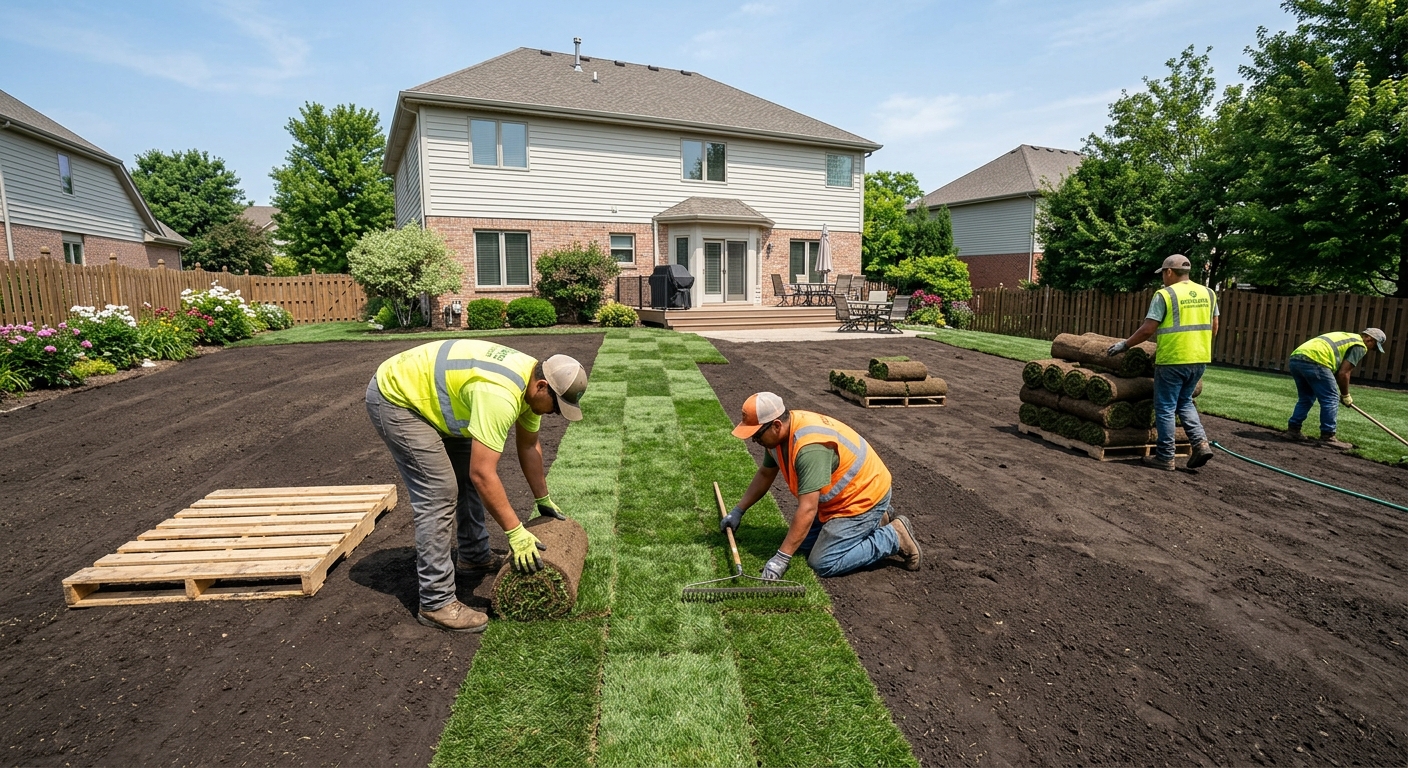
Landscaping options and costs in Dunnville
Dunnville homeowners usually start with a “what can we do with this yard?” question, and the answer is: you can go as simple as fresh sod or as transformative as a full design with patio, grading, drainage upgrades, and planting. With Dunnville’s population at 5,907 (Statistics Canada, 2021 Census), the local contractor base is smaller than larger cities, so scheduling can be tighter in peak season—especially in neighbourhoods where owners routinely refresh front curb appeal and backyards. Also, most homes here are detached or semi-detached, which means owners typically have enough yard area to justify longer-term improvements (and budget comfort) versus smaller urban lots.
On the Hamilton–Niagara Peninsula, landscaping pricing is shaped by our zone 6b–7a climate and the work window. Frost-free growing typically runs from about late April/early May to mid–October, which affects when softscape can be installed and how many crews are available during those months. Winters are mild by Canadian standards, but freeze–thaw and winter wind are still real—so drainage and base depth for patios and retaining walls directly influence labour hours and material depth, not just appearance. That’s one reason Dunnville quotes can spread widely even for “similar” patios or wall jobs.
Demand is especially strong around downtown-adjacent streets and established residential pockets where mature trees and older grading lines can create foundation moisture or low spots after spring melt. If you’re comparing bids, the fastest way is to line up scope and unit rates—then use the table below as a practical baseline.
| Service |
Description |
Season |
Price Range |
| Full landscape design and installation |
Site visit, layout and planting plan, grading/drainage allowance, softscape and hardscape install, cleanup |
Spring to early fall (late Apr–Oct) |
$5,000–$50,000 |
| Sod installation (supply, grade, lay, roll) |
Topsoil/fine grading, soil prep, sod install, rolling and initial watering guidance |
Late spring to early fall (weather-dependent) |
$2–$7 |
| Lawn seeding (grade, seed, starter fertilizer) |
Light top-dressing, seed selection, starter fertiliser, mulching where needed |
Spring or early fall |
$2–$7 |
| Interlocking patio or walkway |
Excavation, base compaction, stone/concrete edging, paving stone install |
Spring to fall (best in dry weather) |
$40–$150 |
| Retaining wall (interlocking block) |
Excavation, engineered-style base build (drainage layer + geotextile), wall block and cap |
Spring to fall |
$40–$150 |
| Tree and shrub planting |
Planting holes, amendments, staking (if needed), mulching and first-season watering plan |
Late spring to early fall |
$50–$1,500 |
Prices are estimates only and vary by project scope, site access and material selection.
What affects the price of landscaping in Dunnville
In Dunnville and across the Hamilton–Niagara Peninsula, it’s common to see bids for the “same” job vary by about 30–50%. The reason isn’t just contractor profit—it’s that scope details get interpreted differently (base depth, drainage inclusions, excavation limits, haul-away, plant size, and how much regrading is truly required). When you hear “we’ll do a patio” or “we’ll re-sod,” ask whether the quote includes proper sub-base compaction, edge restraints, and drainage beds; missing items can shift costs dramatically.
Climate and frost are also cost drivers. Our zone 6b–7a frost and freeze–thaw cycles influence what contractors need for base depth and drainage design, even with milder winters. That’s why prairie regions (Zone 2–4) often need drought- and wind-tolerant selections and short-season strategies, and why retaining wall base depth must reach below the frost line there. Coastal BC’s long growing season (Zone 7–8) supports lush plant palettes, but heavy-rain areas push drainage and sub-base quality costs; in the BC dry interior, irrigation design changes because water restrictions can limit watering timing. For Southern Ontario, the season is moderate, but we still plan for summer dry spells with efficient irrigation—so irrigation design can add cost, though it often pays back in plant survival.
Two concrete Dunnville examples: (1) If your property has clay or mixed glacial soils and you need drainage correction, grading and a drainage bed/French drain can add thousands before a single stone gets laid—often moving a simple install toward the higher end of the $5,000–$50,000 landscape band. (2) If you’re upgrading from lawn seeding to sod for an immediate look, sod commonly costs several times more per square foot, and that can justify the difference only if timing matters (for example, before a family event). For older housing stock, foundation moisture issues after spring melt often mean more excavation and base preparation, which is where patios and walls can land closer to the higher $40–$150 per-unit hardscape ranges.
| Price Factor |
Why It Matters |
Cost Impact |
| Yard size in sq ft — the primary cost driver for softscape |
More area means more excavation, soil prep, materials, labour time, and final cleanup |
Can shift quotes by several thousand dollars even with the same plant package |
| Grading and drainage work — slope corrections add significant cost |
Fixing low spots and redirecting runoff affects foundations and prevents pooling |
Often increases labour and aggregate costs the most on “ponding yard” jobs |
| Drainage bed or French drain installation |
Performs under freeze–thaw only when installed with correct materials and outlets |
Commonly a high-impact add-on versus simple topsoil/seed work |
| Plant material tier — native shrubs vs. ornamental vs. mature specimen trees |
Availability, size, and transplant success rates vary widely |
Mature trees and premium specimens can dominate the material portion of the quote |
| Hardscape vs. softscape ratio — walls and patios cost more per sq ft than lawn |
Hardscape requires excavation, base compaction, and precise edges |
Switching even 100 sq ft of lawn to patio can noticeably raise the total |
| Irrigation system design and installation |
Adds reliability during summer dry spells and improves survival for new plantings |
Can move a design from “basic install” to “maintainable landscape system” pricing |
| Soil amendment and topsoil required |
Poor structure increases settling and reduces root growth |
Delivery/haul and labour can add meaningfully if existing soil is compacted or rocky |
| Tree removal or stump grinding before new planting |
Roots and stumps affect excavation depth and replanting success |
Can add days to the schedule and increase equipment/labour costs |
Permits & regulations in Ontario
In Ontario, most basic landscape work—like planting beds, sodding, seeding, and installing typical softscape features—usually does not require a permit. Your spring replanting, new lawn areas, mulch, and low retaining garden borders are typically “no permit” scope in most cases. However, retaining walls can trigger permit requirements when they exceed local thresholds. As a practical rule of thumb, walls around or above about 1.0 m (3.3 ft) in many municipalities are where permitting and sometimes engineered drawings come into play—especially if the wall is supporting soil or is near property lines and structures. In Dunnville, still confirm with the municipality because interpretations can vary by site conditions.
Also, if a project changes lot grading in a way that affects drainage toward a neighbour or a storm sewer connection, approvals may be required. Before digging for planting holes or wall footings, contractors should arrange utility locates (e.g., marking buried services) to protect you and avoid service strikes. And while water bylaws are province-wide in spirit (with local enforcement), always confirm any irrigation restrictions for timing and method if drought conditions occur elsewhere in Ontario.
To verify a contractor in Dunnville step-by-step: (1) check Ontario business/licensing information through the relevant provincial online registry (company name, address, status); (2) request a current certificate of insurance showing general liability coverage; (3) confirm WSIB/WCB clearance or coverage where applicable; and (4) ask for the insurance clearance letter/documentation before work starts, not after.
Planning a landscape that thrives in Dunnville's climate
Planning in Dunnville means working with zone 6b–7a performance, a frost calendar, and the Hamilton–Niagara Peninsula’s freeze–thaw reality. The goal is to choose plants that overwinter reliably without excessive winter protection, and to build hardscape bases and drainage that won’t heave or shift. First, plant selection: lean toward native and proven-hardy species (shrubs and perennials that tolerate spring melt and winter wind) and avoid overly delicate “souvenir plants” that look great in year one but struggle after repeated temperature swings.
Second, sod vs. seed: sod gives instant curb appeal, but it typically costs about 3–4 times more per square foot than seeding. That price difference is usually justified when timing is critical (front yard for curb appeal quickly, or you need a usable play space right away). If timing isn’t urgent, seeding is often the smarter value—and in Ontario’s shoulder seasons you can still get good establishment.
Third, drainage and grading: Hamilton–Niagara Peninsula soils can hold water in spring, so keep runoff away from foundations. For patios and retaining walls, base preparation must account for the local frost line and repeated freeze–thaw; contractors should include correct base aggregates, compaction, and drainage layers to reduce movement.
Finally, low-maintenance design: build curb appeal with mulch, groundcovers, and a repeatable perennial rhythm. For water-smart options, consider rain gardens in low spots and xeriscape-style plantings where conditions are naturally drier—though in Dunnville you’ll still want plants that can handle occasional saturated spring soils.
As a dollar example, moving from seeding to sod can quickly add up if your lawn area is large, but it can be worth it if your family needs the space by late spring. Otherwise, invest that budget into drainage correction and proper hardscape base work—those choices protect the yard’s look for years.
| Element |
Climate Consideration |
Maintenance Level |
Price Band |
| Sod lawn installation |
Needs consistent establishment during late spring/early fall, and good grading to prevent ponding through freeze–thaw |
Low after established; moderate initial watering |
$2–$7 per sq ft (typical band) |
| Native perennial garden |
Hardy to zone 6b–7a; benefits from mulch to buffer winter temperature swings and spring freeze–thaw |
Low to moderate (weeding first season, then lighter upkeep) |
$50–$1,500 per planting/zone-based install |
| Mulched shrub border |
Improves soil moisture stability and reduces winter heaving risk around roots |
Low once plants knit together; occasional pruning |
$50–$1,500 per border segment |
| Interlocking stone patio |
Requires proper base depth and drainage to handle Ontario freeze–thaw and snow load |
Low (periodic joint sand/top-up and seasonal cleaning) |
$40–$150 per sq ft (typical band) |
| Retaining wall (block) |
Needs drainage layer and correct base build to reduce movement in freeze–thaw years |
Low (occasional inspection of drainage and cap) |
$40–$150 per sq ft (typical band) |
| Drip irrigation system |
Targets root zones during Ontario dry spells and improves survival for new plantings |
Moderate (winterization and occasional seasonal adjustments) |
$5,000–$50,000 (project-level allowance depending on layout) |
How to choose a landscaping contractor in Dunnville
Choosing the right landscaping contractor in Dunnville is about verifying capacity and reducing surprises. Start by confirming Ontario licensing information for the business (where applicable) and requesting documentation for liability insurance. Ask for a current certificate of insurance showing general liability coverage and the insured interest. Next, verify WSIB/WCB coverage: a legitimate contractor should either have active coverage or provide the appropriate clearance documentation. Don’t accept “we’re covered” verbally—ask for the clearance letter or proof you can reference.
Then get 2–3 itemised written quotes. You want a breakdown that separates labour and materials (excavation, base aggregates, pavers or block, geotextile, drainage components, topsoil, disposal) rather than a single lump sum that hides assumptions. Read the scope line-by-line: what’s excluded (tree removal, disposal/haul-away, permits, site access limitations, grubbing extent)? Make sure disposal and haul-away are clearly stated, especially in yards with mature trees where debris volume is higher.
Warranty matters too. Ask for a workmanship warranty length (how long they stand behind installation) and clarify the difference between workmanship warranty and product/manufacturer warranty. If there’s a transfer question—especially for trees and shrubs—ask whether coverage continues after the initial installation period. For payment, never pay more than 10–15% upfront. Hold back the remaining balance until key milestones are complete and you’re satisfied with grading, base compaction, and planting.
Finally, insist on a written timeline: confirmed start date, weather contingency notes, and a realistic completion estimate.
- Provide business details and verify online status before signing anything
- Request certificate of insurance (liability) and confirm coverage limits
- Verify WSIB/WCB coverage via clearance documentation
- Use itemised quotes (labour vs materials vs disposal vs equipment)
- Confirm base depths and compaction method for patios/walkways
- Confirm drainage inclusions (geotextile, base, outlet, cleanout access)
- Spell out soil prep: existing soil test notes, topsoil depth, amendments
- Clarify plant sources and whether substitutions are allowed (with price impact)
- Confirm warranty: workmanship term, exclusions, and who the warranty covers
- Ask whether retaining wall drainage is included (behind-wall drainage layer)
- Agree on payment schedule: ≤10–15% upfront and milestone-based holdback
- Get a written schedule with weather delays stated explicitly
Red flags I see too often in Dunnville: quotes that omit drainage details for patios and walls, refusing to provide insurance/WSIB documentation, a “lump sum with no scope” approach, starting without a written schedule, and asking for most payment upfront without milestones or clear completion criteria.
Frequently asked questions — landscaping in Dunnville
When is the best time to landscape in Dunnville?
For Dunnville, the most reliable window is late April/early May through mid–October, aligning with our zone 6b–7a season. That timing matters because new sod, seed, and planted shrubs need steady soil conditions to root before cold snaps. If you’re doing lawn work, seeding is often strongest in spring or early fall, while sod tends to be best when temperatures are consistently supportive and you can manage initial watering. For hardscape like patios or interlocking walkways, contractors generally prefer stretches of dry weather so base materials compact properly. If you’re budgeting, a full landscape plan can range widely (often $5,000–$50,000), and scheduling in peak months can affect availability and crew efficiency.
Do I need a permit for a retaining wall in Ontario?
In Ontario, many straightforward landscape projects don’t require permits, but retaining walls are the one area homeowners should not guess on. As a practical guideline used in many municipalities, retaining walls around or above 1.0 m (3.3 ft) often require a permit, and sometimes engineered drawings depending on soil conditions, height, and location relative to property lines and structures. Also, if your wall and grading changes impact drainage direction toward a neighbouring lot or storm connection, approval may be triggered. For your Dunnville project, ask your contractor to confirm what’s required before mobilizing. A good quote will identify whether permit support is included—so you’re not surprised later by delays.
How do I improve drainage in my yard?
Drainage improvements start with understanding where water pools after spring melt or heavy rain. In Dunnville, freeze–thaw and saturated soils can worsen foundation moisture if runoff paths are blocked or if grading is sloped toward the house. Typical solutions include regrading (correcting slopes so water moves away), adding a drainage bed or French drain, and ensuring downspouts discharge to appropriate locations rather than low garden depressions. A quality drainage design also uses geotextile and properly sized aggregate so it performs through winter cycles. Budget-wise, drainage is often a major driver of total cost; it can move a project closer to the higher end of typical landscape installs (often within $5,000–$50,000 depending on excavation and outlet complexity).
What is xeriscaping and does it suit Dunnville?
Xeriscaping is a water-wise landscaping approach that uses drought-tolerant plants, efficient layouts, mulch, and (when needed) irrigation methods designed to reduce water use. In Dunnville, it can suit portions of a yard—especially sunny, well-drained areas—because our planting zone supports many hardy shrubs and ornamental grasses. That said, Hamilton–Niagara Peninsula yards can still see saturated spring soils, so “full desert look” isn’t usually ideal. A smarter approach is “drought-smart where dry, drainage-correct where wet.” If you’re comparing options, keep your expectations realistic: reducing watering doesn’t remove the need for good drainage and correct base prep for patios and walls, which protect against freeze–thaw movement.
How do I plan a low-maintenance yard?
A low-maintenance yard in Ontario starts with reducing ongoing tasks, not skipping quality. Use mulch and groundcovers to suppress weeds, group plants by similar water needs, and choose zone-appropriate species that overwinter well in our Dunnville climate. For lawns, sod is fast but requires establishment and ongoing care early on; seeding can be a simpler long-term option if you don’t need instant coverage. For beds, a mulched shrub border with a controlled planting layout is usually easier to maintain than scattered singles. If you’re adding hardscape, invest in proper base preparation and drainage—this prevents settlement and cracking that create future maintenance. If your budget is tight, you may prefer starting with planting and grading before expanding hardscape, where typical ranges often sit around $40–$150 per sq ft depending on scope and finish.
How deep should a retaining-wall base be for local frost?
For Dunnville and the Hamilton–Niagara Peninsula, retaining wall performance depends on an installed base that accounts for freeze–thaw and winter soil movement, which is why “standard guess depth” is risky. In practice, contractors build a granular base and drainage layer based on the wall height, soil conditions, and the expected frost-impacted zone—then compact in lifts to limit settlement. Many projects include geotextile and a behind-wall drainage system (drainage stone and weep/drain outlet) so water doesn’t build pressure behind the wall during freeze cycles. Because permitting may apply for walls around or above 1.0 m, the safest approach is to have the contractor confirm the design depth in the scope and align it with local requirements for your specific wall height and site conditions.