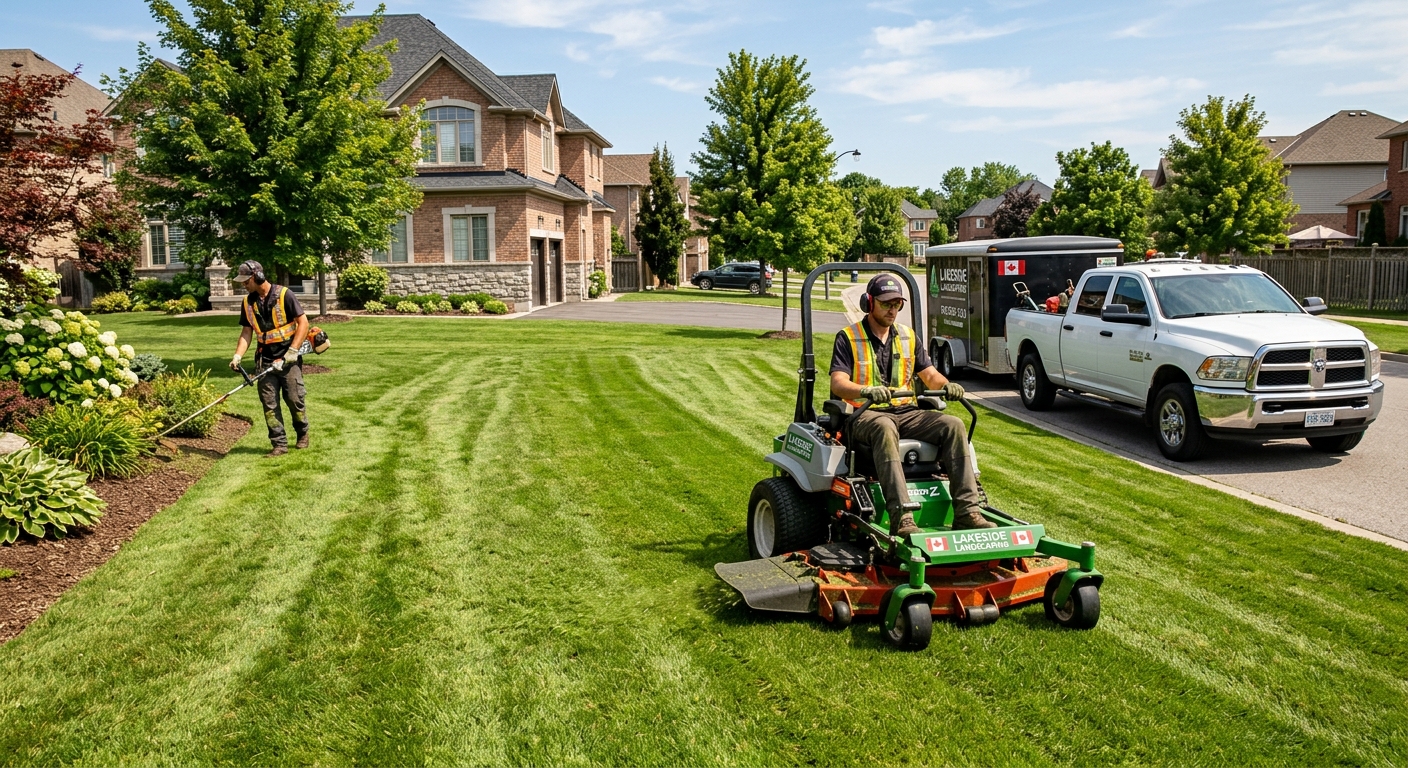
Landscaping options and costs in Agincourt South-Malvern West
Agincourt South-Malvern West is a neighbourhood where landscaping demand stays high because many homeowners are actively improving curb appeal and backyard usability. With a population of 23,757 (Statistics Canada, 2021 Census), the Toronto-area labour market supports frequent installs, but it also means crews book up quickly during the May–October frost-free window. In this part of Toronto, the housing stock is often older with established trees and mature beds, so projects commonly include pruning, re-grading, or replacing worn-out soil and edging before anything new can go in.
Toronto-area landscaping costs are shaped by both climate and soil. We’re usually working in plant hardiness zones 6a–7a with winter lows near –23 to –18°C and recurring freeze–thaw cycles, so hardscape and retaining-wall work needs deeper, properly compacted granular bases and sound drainage. Local clay and fill soils often require excavation and soil amendment, which can push the scope beyond “surface changes.” That’s one reason you can see quote differences of 30–50% for the same general idea.
Where it’s especially in demand: along the busiest residential streets and near commercial nodes around Malvern Town Centre, homeowners often prioritize interlocking patios, steps, and front-bed updates to keep walkways safe through winter. If you’re considering a full refresh, the quickest way to compare options is to look at today’s typical ranges for design, softscape, and hardscape—see the comparison table below.
| Service |
Description |
Season |
Price Range |
| Full landscape design and installation |
Site walk, layout plan, planting palette, grading/drainage coordination, sod/seed, mulching, edging, and selected hardscape |
May to October |
$8,000–$40,000 |
| Sod installation (supply, grade, lay, roll) |
Soil prep, topsoil/leveling, sod supply, lay/roll, starter fertilizer, cleanup |
Late April to early June; September to early October |
$2,500–$8,000 |
| Lawn seeding (grade, seed, starter fertilizer) |
Light grading, seed blend, starter fertilizer, covering/rolling as needed, light watering guidance |
May; August to early September |
$1,200–$4,500 |
| Interlocking patio or walkway |
Excavation, compacted base, geotextile/stone, leveling sand, pavers, edging, slope to drain, jointing |
April to November (weather permitting) |
$6,000–$20,000 |
| Retaining wall (interlocking block) |
Excavation, proper base depth, drainage gravel/weep protection, block system, cap stones, backfill and stabilization |
April to November (weather permitting) |
$6,000–$30,000 |
| Tree and shrub planting |
Soil improvement, amendments, digging, planting, staking (if required), mulch rings, first watering plan |
Spring and fall |
$800–$6,000 |
Prices are estimates only and vary by project scope, site access and material selection.
What affects the price of landscaping in Agincourt South-Malvern West
In Agincourt South-Malvern West and the wider Toronto region, it’s common for quotes for the same “end result” to differ by 30–50%. The reason isn’t just contractor pricing—it’s scope and assumptions. One quote may include proper drainage and granular base engineering; another may price the visible parts only, then add costs later once we uncover clay, buried services, or soft/unstable areas. Labour availability also matters in Toronto: during peak install months, crew time gets expensive and schedules tighten, which increases day rates and makes mobilization charges more noticeable.
Climate and soil play a big role too. In the GTA (zones 6a–7a), frost dates and freeze–thaw cycles determine both what plants reliably survive and how long contractors can work without damaging fresh soil grades or uncured concrete. Compare this to Prairie regions (zone 2–4): there, shorter seasons and frequent drought push designs toward drought-tolerant species and simpler palettes, while base work for hardscapes still needs robust frost protection. Coastal BC (zone 7–8) offers a longer growing season and lush planting, but heavy-rain drainage detailing becomes the cost driver. In southern Ontario, we typically face moderate summer dryness spells that make irrigation a practical expense.
Two local examples from my work in Agincourt South-Malvern West: (1) A backyard with compacted clay often needs more excavation and soil amendment before sod will root evenly—this can move a project from the lower end of a $2,500–$8,000 lawn band toward the mid to upper range. (2) Retaining walls placed on poor drainage sites can require an added drainage bed or French drain; that’s how a $6,000–$30,000 wall budget becomes the larger number even when block quantity looks similar on paper. Housing age can affect this as well—older properties may have settled patios or deteriorating drainage paths, adding labour to correct grades before new work.
| Price Factor |
Why It Matters |
Cost Impact |
| Yard size in sq ft — the primary cost driver for softscape |
More area means more excavation, soil, seed/sod, and labour hours |
Often +20% to +60% as you scale up |
| Grading and drainage work — slope corrections add significant cost |
Fixing water flow affects patios, lawns, beds, and foundation moisture risk |
Can add several thousand dollars depending on excavation |
| Drainage bed or French drain installation |
Helps control saturated clay and freeze–thaw heaving |
Commonly increases cost by a noticeable mid-project amount |
| Plant material tier — native shrubs vs. ornamental vs. mature specimen trees |
Specimens cost more upfront and require handling, staking, and higher labour |
Can swing the planting scope by thousands |
| Hardscape vs. softscape ratio — walls and patios cost more per sq ft than lawn |
Stone, base material, compaction, and protection increase unit costs |
Hardscape-heavy plans often move budgets upward quickly |
| Irrigation system design and installation |
Needs layout planning, zone heads, piping depth, and controller setup |
Often adds meaningful project cost but reduces long-term watering risk |
| Soil amendment and topsoil required |
Clay/fill may need import material and conditioning for roots and drainage |
Can be a major driver for sod/seed failures if under-scoped |
| Tree removal or stump grinding before new planting |
Grinding prevents regrowth and creates stable planting pockets |
Often adds a separate, time-and-equipment cost |
Permits & regulations in Ontario
In Ontario, most day-to-day landscaping work—planting, seeding, sodding, mulching, and routine softscape installs—typically does not require a building permit. Where permits start to matter is with structural elements and drainage/grade changes. For example, retaining walls above a height threshold (often around 1.0 m / 3.3 ft in many municipalities) generally require a permit, and sometimes engineered drawings, because the wall is acting as a structural support retaining earth. Exact thresholds can vary by municipality, so you should confirm with the City of Toronto or your local permitting office.
Changes that affect drainage can also trigger approvals—especially if grading changes direct water toward a neighbouring property or storm sewer connection. Before digging for any planting holes, footings, or drainage lines, request utility locates to mark buried services. You don’t want surprises under lawns, sidewalks, or along foundations.
For Agincourt South-Malvern West homeowners, a practical step-by-step check is this: (1) ask for the contractor’s Ontario business/contracting credentials where applicable and confirm they’re legitimate via the appropriate provincial registry; (2) request a certificate of insurance (general liability, and proof of coverage limits) and verify the expiry date; (3) ensure they carry WSIB/WCB coverage for their workers—either a clearance letter or current account verification; and (4) keep your permit documentation (if required) and verify whether permit pull is included in the quote scope.
Planning a landscape that thrives in Agincourt South-Malvern West's climate
The goal in Agincourt South-Malvern West is to plan for our zone-appropriate hardiness and the reality of Toronto’s freeze–thaw winters, not fight them. With hardiness zones 6a–7a, you can use a mix of native and well-adapted perennials and woody plants that handle winter lows near –23 to –18°C, then return strongly in spring. Choose plants that tolerate humid summers and don’t require constant watering to survive—this reduces both labour and seasonal stress.
For turf, sod gives instant curb appeal, but it’s a costlier pathway. In practice, sod can cost roughly 3–4x more per sq ft than seeding once you include prep and disposal. A concrete budgeting example: if you’re considering a 500 sq ft lawn area, seeding might fit a lower band (often starting around $1,200–$4,500 for smaller scopes), while sod for the same size often lands closer to the middle of the $2,500–$8,000 sod band depending on soil prep and access. If you need “use it this season” results, sod can be justified; if you can tolerate a longer establishment timeline, seeding is typically better value.
Drainage and grading are where Toronto projects succeed or fail. Clay and fill can hold water; without correct slope and drainage, you’ll see pooling, poor rooting, and even foundation moisture. For hardscape and retaining walls, base preparation must consider frost: compacted granular layers, proper geotextile separation where required, and drainage behind walls prevent heaving during repeated freeze–thaw.
For low-maintenance curb appeal, build structure with mulched shrub borders, groundcovers, and perennials that don’t demand constant deadheading. If you want to reduce watering demands, consider rain-garden style planting in low spots and targeted irrigation only where it’s needed—xeriscape concepts work best when translated to “water-smart” planting rather than removing all greenery.
| Element |
Climate Consideration |
Maintenance Level |
Price Band |
| Sod lawn installation |
Need firm, level grading and good drainage so roots establish before summer heat or late-season frosts |
Medium in first season (watering/monitoring), then low |
$2,500–$8,000 |
| Native perennial garden |
Zone-appropriate plants handle winter lows and humid summers with less winter protection when mulched |
Low to medium (seasonal pruning and occasional weeding) |
$800–$6,000 |
| Mulched shrub border |
Mulch buffers freeze–thaw and reduces soil moisture swings in clay soils |
Low (replenish mulch as needed, tidy edges) |
$1,200–$7,500 |
| Interlocking stone patio |
Base depth and slope control prevent heaving and water pooling through winter |
Low (occasional joint cleaning) |
$6,000–$20,000 |
| Retaining wall (block) |
Drainage behind wall reduces saturation and freeze–thaw movement |
Low once built correctly |
$6,000–$30,000 |
| Drip irrigation system |
Targets watering to planting root zones; helpful during summer dry spells and humid disease seasons |
Low (seasonal checks and winter blowout) |
$1,500–$6,500 |
How to choose a landscaping contractor in Agincourt South-Malvern West
Choosing the right contractor in Agincourt South-Malvern West starts with verification. First, request proof of Ontario licensing where applicable for their work scope. Next, ask for a certificate of insurance (general liability) and confirm it covers your property and has not expired. Then verify WSIB/WCB coverage for their workers: ask for a current clearance letter or account verification and ensure subcontractors are also covered if they’ll be on site.
For pricing, don’t accept a single lump-sum number without a breakdown. Get 2–3 itemised written quotes with labour and materials separated (and ideally line items for excavation, soil/topsoil, drainage components, plants, sod/seed, and hardscape base materials). Read the scope carefully: what’s excluded—permit fees, disposal, hauling, utility locates, core aeration, topsoil quantities, or irrigation installation? Confirm whether disposal of excavated material is included, and whether the contractor allows for clay removal and re-import.
Warranty matters. Ask for the workmanship warranty length, plus the manufacturer warranty on products (and whether it’s transferable to you). For payment scheduling, never pay more than 10–15% upfront; hold back a portion until the job is complete and you’ve reviewed final grading, drainage, and planting establishment requirements. Finally, insist on a written timeline with a start date, weather contingencies, and an estimated completion window—peak-season delays are real in Toronto.
- Confirm WSIB/WCB clearance or coverage verification for their workers before work begins.
- Verify general liability insurance limits and that your address is properly covered.
- Insist on an itemised quote: materials quantities, labour hours, and unit rates.
- Ask who pulls permits (if needed) and whether the permit cost is included.
- Require utility locate coordination before digging footings or drainage.
- Check drainage/grading details in writing (slopes, outlets, and what happens to runoff).
- Confirm base construction specs for patios and retaining walls (compaction and granular layers).
- Ask for plant list specifications (botanical names, sizes at install, and spacing).
- Request a soil amendment plan (topsoil depth, compost type, and whether clay is treated).
- Clarify cleanup and disposal: where waste goes and whether hauling is included.
- Review warranty terms in plain language: what’s covered and for how long.
- Ensure payment terms match your risk tolerance—avoid large upfront deposits.
Red flags in Agincourt South-Malvern West: refusing to provide insurance/WSIB documentation; quoting “flat” without measuring yard size or site conditions; vague drainage promises like “we’ll make it slope” without details; swapping plant sizes or sod thickness after pricing; and asking for heavy upfront deposits (beyond 10–15%) without a signed, detailed contract.
Frequently asked questions — landscaping in Agincourt South-Malvern West
Do I need a permit for a retaining wall in Ontario?
In Ontario, most landscaping like planting and sodding typically doesn’t need a permit, but retaining walls are different. In Agincourt South-Malvern West, a retaining wall above a common threshold (often around 1.0 m / 3.3 ft, depending on the municipality) usually requires a permit, and sometimes engineered documentation. Exact rules can vary, so the safest approach is to confirm with the City of Toronto before construction. When you request a quote, ask whether permit pulling is included and who is responsible for documentation. Also remember that drainage design behind the wall may be scrutinized—walls built without proper drainage can move during Toronto’s freeze–thaw cycles, which creates long-term costs.
How do I improve drainage in my yard?
Drainage problems in Agincourt South-Malvern West are often clay or fill-related, which can hold water and worsen freeze–thaw movement. The right fix depends on where the water is coming from—downspouts, lawn grading, or seepage near foundations. A common, cost-effective first step is re-grading to ensure water flows away from buildings, plus adding proper slope around walkways and beds. If you have persistent soggy zones, a drainage bed or French drain can be installed to intercept water and move it to an outlet. For budgeting, drainage work is frequently what separates a basic softscape refresh from a larger hardscape/retaining wall project, especially when you’re moving into the $6,000–$30,000 range for structural elements.
What is xeriscaping and does it suit Agincourt South-Malvern West?
Xeriscaping is a water-smart approach that reduces irrigation needs using drought-tolerant plants, mulch, and efficient layouts—rather than removing all greenery. In Ontario’s GTA climate (zones 6a–7a), you can absolutely use xeriscape principles, but it has to be adapted to local winters and humid summers. I recommend “water-smart planting” with a native or zone-appropriate palette, thicker mulch layers, and drip irrigation targeted to root zones if you use irrigation at all. Toronto homeowners often still need supplemental watering during summer dry spells, so the goal is not zero water—it’s avoiding unnecessary weekly watering of high-stress areas like slopes or full-sun beds. For lawns, seeding or sod choices still matter because turf establishment determines how much supplemental watering you’ll need early on.
How do I plan a low-maintenance yard?
A low-maintenance yard in Agincourt South-Malvern West starts with planting choices that handle our winter lows near –23 to –18°C and return reliably after freeze–thaw. Use a structured mix: mulched shrub borders, durable groundcovers, and perennials that don’t need constant deadheading. Reduce weeding by improving soil and using the right mulch depth, and group plants by moisture needs so you’re not watering everything equally. For turf, consider whether sod or seeding matches your timeline—sod gives quicker curb appeal but is typically higher cost than seeding. For hardscape, a properly built interlocking patio with correct base and slope reduces maintenance (no sinking edges or standing water). If your budget is tight, start with drainage + a clean planting framework, then add upgrades later from the $800–$6,000 planting band.
How deep should a retaining-wall base be for local frost?
The exact base depth depends on the wall height, soil conditions, and the block system, but frost in the GTA and freeze–thaw cycles make “proper base construction” non-negotiable. In Agincourt South-Malvern West, retaining walls need a stable, well-compacted granular base designed to prevent movement and protect against water saturation behind the wall. Practically, that means excavating to a depth that supports compaction, adding drainage gravel and suitable geotextile where appropriate, and using backfill that drains rather than trapping water. Don’t rely on a shallow base—movement often shows up after winter freeze–thaw seasons. When you compare quotes, ask for the base spec, compaction approach, and drainage plan; this is a major part of why retaining walls can land anywhere in the $6,000–$30,000 band.
How much does professional landscape design cost?
Professional landscape design pricing varies with scope, but a full design-and-install project in the Toronto area commonly sits in the broader $8,000–$40,000 range when you include planting layouts, grading coordination, and installation work. Some companies separate “design only” from “design and install,” and that can change what you pay upfront. In Agincourt South-Malvern West, design is especially valuable when drainage, clay soils, or existing patios and steps need reworking—because the expensive mistakes usually come from under-scoping drainage and base preparation. When you request quotes, ask whether the design is tied to a fixed install plan, whether there’s a planting palette with sizes, and what assumptions were used for grading, topsoil depth, and irrigation if required.