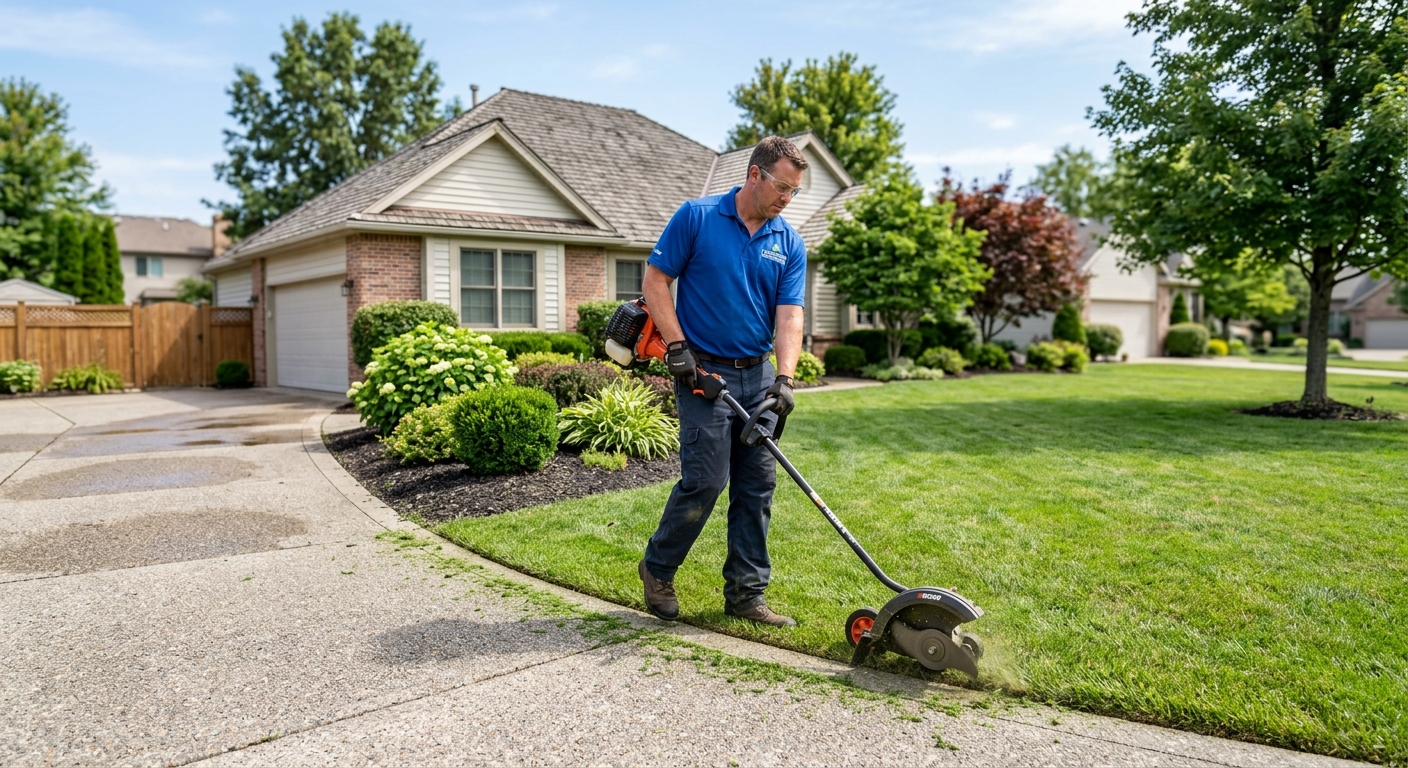
Landscaping options and costs in Simcoe
Simcoe homeowners typically have a wide range of landscaping goals, from a clean front walk to full-yard makeovers, and that shows up directly in how we price projects. With a 2021 population of 13,922 (Statistics Canada, 2021 Census), the local contractor base is smaller than larger cities, so demand can spike in busy spring and early summer—especially around moves and curb-appeal refreshes. Many homes in this area also sit on detached properties where owners can justify investing in long-term improvements to lawns, trees, and hardscape. In the Hamilton–Niagara Peninsula market, we work mainly in plant hardiness zones 6b–7a, with a practical frost-free window that usually runs from late April/early May to mid–October, which shapes what we can install and how fast crews can complete excavation, base prep, and planting. That working season is “solid, not endless,” so scheduling matters: rush jobs cost more because crews are already booked. You’ll feel this most in neighbourhood pockets like East Ward and the south end around Veterans Boulevard, where families often prioritize walkways, drive-thru curb improvements, and shrub borders.
Because freeze–thaw and spring saturation are real here, the foundation work behind patios and retaining walls (base depth and drainage) often drives cost more than the visible materials. Next, use the ranges below to compare common options in Simcoe—then we can narrow your estimate once we see site access, soil condition, and your preferred palette.
| Service |
Description |
Season |
Price Range |
| Full landscape design and installation |
Site visit, concept + planting plan, grading/drainage outline, softscape and hardscape install, labour and basic materials coordination |
Late April/early May to mid–October |
$10,000–$45,000 |
| Sod installation (supply, grade, lay, roll) |
Minor grading, topsoil adjustment, base prep, sod supply, lay/roll, starter fertilizer and initial watering plan |
May to September (best window after soil warms) |
$2,500–$6,500 |
| Lawn seeding (grade, seed, starter fertilizer) |
Rough grading, seed selection, starter fertilizer, light topdressing if required |
April to early July (or fall timing based on turf condition) |
$1,000–$3,500 |
| Interlocking patio or walkway |
Excavation, compacted base, edge restraints, sand setting bed, pavers, leveling and cleanup |
May to September |
$6,000–$18,000 |
| Retaining wall (interlocking block) |
Excavation + approved base, geotextile, drainage gravel behind wall, block installation, cap and final grading |
May to September (weather-dependent) |
$8,000–$35,000 |
| Tree and shrub planting |
Soil improvement, planting holes, root prep, staking where needed, mulching and initial care plan |
Early spring to late fall (frost permitting) |
$1,000–$8,000 |
Prices are estimates only and vary by project scope, site access and material selection.
What affects the price of landscaping in Simcoe
In Simcoe and across the Hamilton–Niagara Peninsula, quotes for the same “look” can easily vary by 30–50% because landscaping pricing isn’t just about materials—it’s about how much prep, drainage work, and skilled labour it takes to build it to last. The region’s plant hardiness zones 6b–7a and the frost timetable (late April/early May to mid–October working season) determine both plant survival and what crews can physically install each month. When you compare options in this region versus prairie areas (Zone 2–4), costs can jump or shift in different ways: prairie projects often require drought- and wind-tolerant species and deeper consideration for establishment, while freeze–thaw still affects patios and walls. Coastal BC (Zone 7–8) may allow lush growth, but projects can be driven by heavy-rain drainage design. In Southern Ontario, we typically see a moderate growing season—yet summer dry spells still require irrigation for good establishment, and winter freeze–thaw makes base construction and drainage non-negotiable.
In Simcoe, concrete cost examples are common. First, if your patio base needs expanded excavation to reach proper compacted layers, you may move from a “simple” interlocking project into hardscape pricing closer to the upper end of the $6,000–$18,000 band. Second, grading corrections—especially around downspouts or low spots—can turn into major rework: slope adjustments, hauling, and replacement topsoil drive costs even if the final lawn area looks unchanged. On the softscape side, choosing seed versus sod can swing budgets: sod installation is often about 3–4x the cost per sq ft of seeding, and that shows up quickly when you’re trying to cover a full front yard.
Finally, local housing stock matters. Older lots often have heavier fill, established tree roots, and historical drainage patterns, which can add demolition and soil amendment costs—sometimes hundreds to a few thousand dollars—before planting even starts. With winter wind exposure and freeze–thaw cycles, we also plan for more reliable root establishment and compacted base performance, which affects labour intensity and the materials mix.
| Price Factor |
Why It Matters |
Cost Impact |
| Yard size in sq ft — the primary cost driver for softscape |
More square footage increases labour time, materials, and installation labour, especially for turf and borders |
$500–$12,000+ depending on coverage area |
| Grading and drainage work — slope corrections add significant cost |
Correct slopes and redirect runoff away from foundations requires excavation, re-compaction, and hauling |
$1,000–$8,000 common for medium regrading |
| Drainage bed or French drain installation |
Where water pools after spring melt, you need a properly built drainage system under/adjacent to patios and beds |
$2,500–$12,000 based on length and outlets |
| Plant material tier — native shrubs vs. ornamental vs. mature specimen trees |
Mature trees cost more and may require different equipment, staking, and handling |
$500–$10,000+ for upgrades to specimen size |
| Hardscape vs. softscape ratio — walls and patios cost more per sq ft than lawn |
Interlocking base prep, edge restraint, and paver setting are labour-heavy |
$1,500–$25,000 as patios/walls expand |
| Irrigation system design and installation |
Zone planning, trenching, pipe runs, and heads require careful layout; add-ons are not “free” |
$1,200–$6,500 depending on zones |
| Soil amendment and topsoil required |
Compacted or clay-heavy soils often need amended layers for rooting and to reduce surface heaving |
$400–$3,500 typical for amendment/topsoil packages |
| Tree removal or stump grinding before new planting |
Stumps and root systems can block drainage improvements and planting layout |
$300–$2,500+ based on access and stump size |
Permits & regulations in Ontario
In Ontario, most landscaping work—like planting beds, sodding, seeding, and standard softscape installation—typically does not require a permit. If you’re adding an interlocking walkway or patio at grade, that’s also usually handled as a straightforward landscaping scope. Where permits and added approvals become common is with retaining walls and with grading changes that can affect drainage. In most municipalities, a retaining wall above a threshold—typically 1.0 m (3.3 ft)—will require a building permit and sometimes engineered drawings, particularly if the wall is supporting additional loads. Also watch for any work that changes lot grading in a way that redirects water toward neighbouring properties or into storm connections; that kind of drainage impact may trigger requirements.
Before digging any planting holes, footing trenches, or drainage lines, arrange for utility locates. This is a must for safety and to prevent damage to buried services. For homeowners: confirm your contractor’s familiarity with local water-use rules and irrigation practices. While Ontario doesn’t typically run the same strict rationing approach as the dry BC interior, irrigation habits still matter during drought conditions.
To verify your contractor in Simcoe, ask for three things, then check them directly: (1) their Ontario licence—look up their business details through the provincial registry or any publicly listed contractor information; (2) their liability insurance—request a certificate of insurance and confirm it’s current and includes landscaping/hardscape activities; and (3) their WSIB/WCB coverage—request clearance information (or the documentation they provide to show coverage status). Then ensure the insurance names the right legal entity that will be doing the work at your address.
Planning a landscape that thrives in Simcoe's climate
Planning for Simcoe means designing with Zone 6b–7a conditions, freeze–thaw cycles, and a working season that usually runs from late April/early May to mid–October. The goal is simple: plants establish reliably, drainage directs water away from foundations, and hardscape base layers stay stable through winter expansion and spring thaw. Start with plant selection. Use hardy, zone-appropriate perennials and shrubs, and lean on native or well-adapted species that handle local winter wind and recover after spring temperature swings with less intensive watering. For turf, decide early whether you want instant coverage or long-term cost efficiency—because sod is typically about 3–4x the cost per sq ft of seeding, even though it looks finished right away.
Next, get drainage right. In the Hamilton–Niagara Peninsula, pooling after spring melt can cause foundation moisture problems and can undermine lawn and bed edges. Grade gently away from the house, keep downspouts extended where possible, and consider a drainage bed or French drain where low spots appear. For patios and retaining walls, base preparation and drainage must be built for frost movement—proper compacted layers and drainage materials help prevent heaving and shifting. Lastly, keep upkeep realistic: mulch, groundcovers, and seasonal perennials can reduce annual labour without sacrificing curb appeal. Where summer dryness becomes noticeable, a rain-garden approach (in a controlled area) or targeted drip irrigation can improve performance while avoiding wasteful watering.
Example: if you’re trying to repair a damaged front lawn, seeding might land in the $1,000–$3,500 band, while sod for the same approximate area may push toward the $2,500–$6,500 range. That cost difference is justified when you need quick curb appeal for a listing or when existing soil is ready for immediate turf establishment. If timing isn’t urgent, seeding often offers better value and lets the soil recover while the lawn establishes.
| Element |
Climate Consideration |
Maintenance Level |
Price Band |
| Sod lawn installation |
Best after soil warms; needs consistent watering during establishment and good drainage to avoid winter dieback |
Medium (watering + first mowing schedule) |
$2,500–$6,500 |
| Native perennial garden |
Zone-appropriate plants handle freeze–thaw; mulching protects roots through winter wind |
Low to medium (spring cleanup + occasional weeding) |
$1,500–$7,000 |
| Mulched shrub border |
Mulch buffers temperature swings and reduces soil heaving around shrub crowns |
Low (top-up mulch and seasonal shaping) |
$1,000–$6,000 |
| Interlocking stone patio |
Requires proper frost-resistant base and edge restraint to reduce movement during freeze–thaw |
Low (occasional joint sand/top-up) |
$6,000–$18,000 |
| Retaining wall (block) |
Drainage gravel behind the wall is essential to prevent hydrostatic pressure through freeze–thaw |
Low (inspection and keeping weep paths clear) |
$8,000–$35,000 |
| Drip irrigation system |
Improves establishment during summer dry spells without waste; plan winter shut-down and backflow protection |
Medium (seasonal maintenance + occasional head checks) |
$1,200–$6,500 |
How to choose a landscaping contractor in Simcoe
Choosing the right contractor in Simcoe starts with proof, not promises. For Ontario coverage, ask for (and then review) your contractor’s liability insurance—the certificate should list current dates and match the legal business name on the quote. For work coverage, request evidence of WSIB/WCB clearance (or the documentation they use to show coverage status). For licensing, verify their business registration and confirm they’re eligible to perform the specific scope you’re hiring for (especially hardscaping involving permits, excavation, or drainage changes).
Next, get 2–3 itemised written quotes. A quality quote breaks down labour and materials (base aggregate, pavers/block, topsoil, drainage gravel, fabric/geotextile, labour hours, and any equipment like saws or compaction). Be strict about scope: does the price include permit pulling (if required), waste disposal, and utility-locate costs? If they exclude haul-away or compaction, you’ll see surprises during construction. Also confirm start date and completion estimate in writing—weather and curing time matter for bases, concrete edge restraints, and seeding/sod establishment.
Warranty matters too. Ask for two layers: the workmanship warranty (how long, and what defects are covered) and any product/manufacturer warranty on pavers, blocks, or sod/seed mixes. Finally, keep the payment schedule controlled: never pay more than 10–15% upfront. Hold back a portion until the job is complete and cleaned up to your expectations.
- Provide certificate of insurance showing current liability coverage
- Show WSIB/WCB clearance or coverage evidence before work begins
- Quote is itemised: materials + labour + equipment + disposal
- Explicitly lists exclusions (permit fees, topsoil depth, drainage additions)
- Includes utility-locate responsibility and confirms locate date timing
- States drainage plan: where water goes after grading
- Confirms base spec for patios/walls (compaction, aggregate layers, geotextile)
- Identifies plant list with sizes and whether substitutes are allowed
- Includes irrigation scope if drip/smart zones are in the plan
- Provides workmanship warranty length and what voids it
- Payment schedule: only small deposit, staged progress payments
- Written timeline with milestones and weather contingencies
Red flags I see too often in Simcoe: (1) quotes that are only lump sums with no base/grading details, (2) refusal to provide insurance or WSIB/WCB evidence, (3) “we’ll handle permits” without written clarity on who pulls them and what’s included, (4) large deposits beyond 10–15%, and (5) no written start/completion dates or workmanship warranty terms.
Frequently asked questions — landscaping in Simcoe
How deep should a retaining-wall base be for local frost?
For Simcoe projects, the retaining-wall base needs to be built to resist frost movement and spring saturation, not just “whatever fits.” In practice, we design the base and drainage components so the wall sits on a properly compacted granular layer and that water can drain safely behind the wall. Because frost depth planning is tied to soil and wall height, I can’t give one universal number without your wall height, soil type, and drainage conditions. However, any reputable contractor will describe the base layers and compacted aggregate depth in the proposal, and will include drainage gravel plus geotextile where appropriate to prevent hydrostatic pressure that freeze–thaw can worsen. If your wall is in the permit-trigger range (often around 1.0 m), expect more formal specs in the plan and stronger documentation from the installer.
How much does professional landscape design cost?
Professional landscape design in Simcoe is usually priced as a standalone service or bundled into a design-and-install package. If you’re hiring full-service, the total landscape project band commonly sits within $10,000–$45,000 depending on yard size, drainage work, and whether hardscape is included. The design component itself is often scaled based on complexity—simple planting plans cost less than full concept-to-install drawings with grading and drainage notes. In the Hamilton–Niagara Peninsula, design time also increases when existing slopes and foundation drainage issues must be corrected. If you’re comparing bids, look for deliverables: a planting plan with quantities/sizes, a site layout, and clear installation notes—not just a sketch. That transparency is what prevents cost jumps later.
How do I compare landscaping quotes?
To compare landscaping quotes fairly in Ontario, start by ensuring each bid covers the same scope. Ask for itemised labour and materials—not only a lump sum. For hardscape and drainage, compare excavation depth, base aggregates, compaction expectations, and whether geotextile and drainage gravel are included. For lawn work, compare whether sod includes grade prep, topsoil adjustment, and starter fertilizer. Then check exclusions: disposal/haul-away, utility locates, permit pulling (if needed), and additional topsoil depth can all change the final price. If one quote lands near $2,500–$6,500 for sod while another is higher, the difference is often the amount of grading, soil amendment, or turf prep included. Finally, confirm warranty terms and the payment schedule—credible contractors will put key details in writing.
How long does a landscaping project take in Simcoe?
Timeline in Simcoe depends on season, weather, site access, and how much excavation or drainage work is needed. With our late April/early May to mid–October working window, most installs—sod, planting, patios, and walkway work—can typically be scheduled within weeks rather than months if your site is ready. A full landscape design-and-install can take longer because of drawing approval, material lead times, and staged work (grading first, then base/hardscape, then planting and turf establishment). As a rule of thumb: smaller planting jobs can happen quickly in a single day to a few days; turf and softscape may need a couple of visits for prep and initial watering setup; patios and retaining-wall builds usually require multiple stages for excavation/compaction and final finishing. Ask your contractor to provide a written schedule with weather contingencies.
What is the best grass type for a Simcoe lawn?
For Simcoe, the “best” grass choice usually means a blend that tolerates cold winters, handles freeze–thaw stress, and can recover from spring melt conditions. Many homeowners do well with a cool-season turf approach using blends suitable for Southern Ontario conditions, especially when paired with correct soil prep and a realistic mowing height. The practical difference isn’t only the species—it’s whether you seeded or sodded with the right starter fertilizer and whether drainage issues are corrected. If your lawn site holds water after heavy rain or spring melt, even the best grass can thin out. When you get quotes, ask what seed blend or sod cultivar they use and whether topdressing or soil amendment is included. For lawn replacement, you’ll often see seeding budgets around $1,000–$3,500, with sod typically higher; the best grass is the one that matches your site conditions and establishment plan.
When should I aerate and overseed my lawn in Simcoe?
In Simcoe, aeration and overseeding are most effective when the soil is workable and the grass can establish before cold stress. Many homeowners time core aeration to late spring or early fall—then overseed right after, with light topdressing and consistent watering during germination. Late spring helps if you have bare spots from heavy use or winter thinning; early fall helps because soil temperatures still support root growth while weeds are less aggressive. The exact timing depends on your lawn’s condition and whether you’re dealing with compaction from vehicles or poor drainage. If your yard is consistently saturated after spring melt, fix grading or drainage first; otherwise, overseeding can fail. When comparing quotes for full turf renewal, remember lawn seeding typically sits in the $1,000–$3,500 range, while sod is higher, but overseeding plus aeration can often improve results over time.