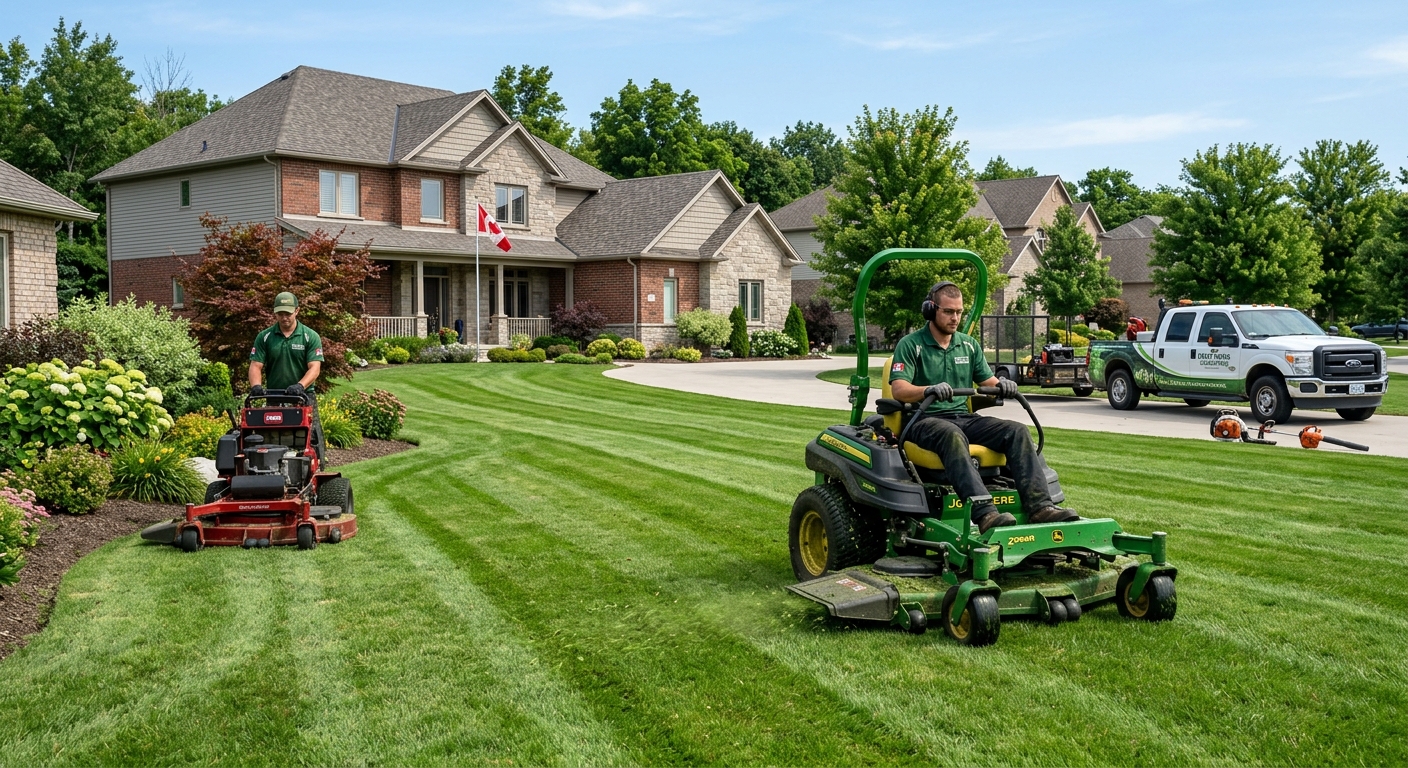
Landscaping options and costs in Whitchurch-Stouffville
Whitchurch-Stouffville homeowners typically have a lot to work with: with 14,695 homeowner households (87.9% of households own) and a housing stock where single-detached homes make up 74.3% of dwellings, many yards are large enough to justify a full regrade, new walkways, and updated planting beds. That investment mindset is part of why the Toronto-area landscaping market is busy, especially in established pockets where older homes need modernization of drainage, patios, and foundation planting. For context, 22.4% of homes were built before 1981, which often means more mature trees, older clay fill, and drainage patterns that no longer match how families use the yard today.
In the GTA (plant hardiness zones 6a–7a), winter lows roughly between –23°C and –18°C and frequent freeze–thaw cycles affect both plant survival and hardscape longevity. Those freeze–thaw cycles also raise costs for patios, retaining blocks, and steps because contractors need proper base thickness, compaction, and drainage so structures don’t heave or settle. Labour availability is generally strongest from late April into October, when the frost-free period supports soil work, seeding, sod install, and most planting. In Whitchurch-Stouffville—particularly around historic cores like Stouffville’s downtown area and along the corridor toward Main Street—demand is especially high for interlocking stone, backyard privacy planting, and “fix-the-drainage” projects after spring thaw.
Below is a practical price comparison to help you budget before you request quotes.
| Service |
Description |
Season |
Price Range |
| Full landscape design and installation |
Site walk, concept-to-drawing design, grading/drainage plan, hardscape and softscape install, planting plan, topsoil/soil amendment, and cleanup |
Apr–Oct (design can start in winter) |
$8,000–$40,000 |
| Sod installation (supply, grade, lay, roll) |
Light regrade, soil prep, sod supply, laying, rolling, and initial watering instructions |
May–Sept |
$2,500–$8,000 |
| Lawn seeding (grade, seed, starter fertilizer) |
Scarify/light grade, seed and starter fertilizer application, light topdressing where needed |
Apr–June and Sept (best for germination) |
$1,800–$6,000 |
| Interlocking patio or walkway |
Excavation, geotextile, granular base, edge restraints, pavers, compaction, and final leveling |
Apr–Oct |
$6,000–$30,000 |
| Retaining wall (interlocking block) |
Excavation and compacted base, drainage rock, weep system (as needed), block installation and finishing |
Apr–Oct |
$6,000–$30,000 |
| Tree and shrub planting |
Soil prep, amended planting holes, staking/anti-wobble where needed, and initial watering plan |
Apr–May and Sept–Oct |
$800–$6,000 |
Prices are estimates only and vary by project scope, site access and material selection.
What affects the price of landscaping in Whitchurch-Stouffville
In Toronto and across Ontario, you can see the same “yard refresh” priced 30–50% apart because contractors price risk and logistics differently. Two crews can both install a patio, but one price can include subdrains, haul-off disposal, and a deeper, properly compacted base to manage freeze–thaw movement—while another quote may assume “standard” excavation. The product choices (standard vs. premium pavers, nursery stock size, or irrigation upgrades) also swing totals quickly. With median household income around $122,000 (2020), many Whitchurch-Stouffville homeowners are willing to pay for longer-lived drainage and hardscape, especially where older homes and clay-heavy soils create persistent spring pooling or shifting foundations of walkways.
Climate drives the technical requirements. In the GTA’s zones 6a–7a, frost depth and freeze–thaw cycles mean wall footings and patio bases need careful preparation, drainage, and compaction to reduce heaving. In Prairie regions (zone 2–4), short seasons and frequent drought push designs toward drought-tolerant species and simpler layouts, and retaining wall base depth must go below the frost line due to colder, more rigid freeze conditions. Coastal BC (zones 7–8) can support lush palettes, but heavy-rain drainage still matters. Dry BC interior municipalities often require efficient irrigation layouts (drip and smart scheduling) because water restrictions change what “good watering” looks like. In Whitchurch-Stouffville, Southern Ontario’s moderate season still brings hot, humid stretches—so irrigation and soil amendment choices can change labour time and material needs.
Concrete Whitchurch-Stouffville examples: (1) If your lawn area is on a slope or has existing clay that traps water, grading and drainage revisions can move you toward the higher end of hardscaping pricing—often aligning with retaining-wall/hardscape estimates that sit in the $6,000–$30,000 band. (2) If you’re choosing sod for a large surface area, many jobs land in the $2,500–$8,000 range, but seeding can be materially less for the same square footage when site conditions are suitable. (3) Older pre-1981 lots often have unknown fill or buried debris—when excavation reveals it, disposal and soil amendment can add noticeable cost to a “full landscape” that might otherwise target the $8,000–$40,000 range.
| Price Factor |
Why It Matters |
Cost Impact |
| Yard size in sq ft — the primary cost driver for softscape |
More area increases topsoil, seed/sod, mulch, edging, and labour hours for prep and finish |
Typically the biggest swing; can change totals by thousands |
| Grading and drainage work — slope corrections add significant cost |
Correcting drainage toward the right outfall reduces pooling and protects foundations |
Often adds a major portion of the job cost on “wet yard” sites |
| Drainage bed or French drain installation |
Subsurface drainage requires excavation depth, stone, and proper pipe layout |
Can push hardscape projects toward the upper end of bands |
| Plant material tier — native shrubs vs. ornamental vs. mature specimen trees |
Larger, more established plants cost more and require extra handling and sometimes staking |
Can double planting-line items compared to smaller stock |
| Hardscape vs. softscape ratio — walls and patios cost more per sq ft than lawn |
Pavers/blocks require granular bases, restraints, and compaction |
Shifts budgets quickly into $6,000–$30,000 territory |
| Irrigation system design and installation |
Nozzles, zones, and trenching labour increase complexity; seasonal tuning matters |
Can add thousands depending on number of zones |
| Soil amendment and topsoil required |
Clay soils need amendment for rooting; underbuilding leads to settlement and poor turf |
Small yards still add noticeable material + labour |
| Tree removal or stump grinding before new planting |
Root disturbance, disposal, and grinding change access and prep time |
Can materially increase the cost of a planting project |
Permits & regulations in Ontario
In Ontario, most planting, sodding, and routine softscape work typically does not require a permit. For example, replacing turf, installing garden beds, planting trees/shrubs, laying interlocking pavers at grade (without structural retaining features), and adding mulch are generally treated as landscaping rather than construction. The work that DOES commonly trigger permitting is retaining-wall construction above the municipal threshold—often around 1.0 m (3.3 ft)—because it can be considered a structural element. In those cases, you may need a building permit and, depending on wall height and site conditions, engineered drawings.
Another area where approvals can come up: changes to lot grading or drainage patterns that affect how water runs toward neighbouring properties or storm connections. If the project involves redirecting drainage, adding a subdrain, or re-contouring to correct runoff, ask your contractor to clarify whether they anticipate any approval requirements. Also, before any digging for irrigation lines, planting holes, or wall footings, ensure utility locates are completed—this prevents surprises with buried services.
For Whitchurch-Stouffville homeowners, verify the contractor’s paperwork step-by-step. First, confirm their Ontario licence/registrations where applicable through the appropriate online provincial business listings for contractors (and any professional memberships they claim). Second, request a certificate of insurance showing liability coverage and that landscaping-related work is included. Third, ask for WSIB/WCB coverage documentation (or an exemption letter, if applicable). Review the documents for validity dates before work starts, and keep copies with your contract.
Planning a landscape that thrives in Whitchurch-Stouffville's climate
Designing for Whitchurch-Stouffville means working with the local reality: GTA zones 6a–7a, winter freeze–thaw, and a growing season that generally supports installation from spring through early fall. Start with plant selection. Choose hardy, zone-appropriate species (including native options) so plants establish without excessive winter protection. This usually means less watering stress in summer and fewer replacement cycles after harsh winters.
Sod vs. seed is another decision that impacts both cost and results. Sod gives instant curb appeal and immediate erosion control, but it’s typically about 3–4x more expensive per square foot than seeding once you factor in materials and install labour. If you want fast results for a high-traffic area, sod can be worth it. For most homeowners, seeding works beautifully for budget-friendly recovery—especially when you seed in the right windows (spring or early fall) and keep moisture consistent until germination.
Drainage and grading are critical in Toronto’s freeze–thaw environment. Pooling water and foundation moisture can undermine both lawns and hardscape. Ensure downspouts discharge away from foundations and that any grading slopes water toward appropriate outlets. For patios, retaining walls, and steps, base prep should be planned for frost movement—proper compaction, drainage layers, and edge restraints are non-negotiable.
To reduce annual upkeep, use mulch strategically, plant groundcovers, and group perennials so weeds are shaded out. Consider rain-garden areas where downspouts discharge (and xeriscape principles—efficient planting and minimal turf—where watering is a concern).
Dollar example: if you’re treating a 600 sq ft front lawn, sod might land in the $2,500–$8,000 band, while seeding could be less for the same footprint if the soil is receptive and grade is corrected. Paying for sod only makes sense when you need immediate coverage or rapid erosion control—otherwise, seeding + soil amendment often delivers better value.
| Element |
Climate Consideration |
Maintenance Level |
Price Band |
| Sod lawn installation |
Establishes quickly in the warm season; still needs moisture management during GTA summer dry spells |
Medium (watering until established, then routine mowing) |
$2,500–$8,000 |
| Native perennial garden |
Hardy to zones 6a–7a, often better winter performance and more resilient in variable rainfall |
Low to Medium (weeding first year, then mulch refresh) |
$1,500–$6,000 |
| Mulched shrub border |
Winter-friendly structure with good root protection; reduces freeze-thaw stress through consistent soil moisture |
Low (pruning + mulch top-ups) |
$800–$4,500 |
| Interlocking stone patio |
Needs frost-resilient base prep to resist heaving and settling through freeze–thaw cycles |
Low (occasional leveling checks and joint maintenance) |
$6,000–$30,000 |
| Retaining wall (block) |
Requires proper base depth and drainage rock to manage water behind the wall during spring thaw |
Low (periodic inspection of drainage and surface) |
$6,000–$30,000 |
| Drip irrigation system |
Helps manage summer humidity swings and watering needs efficiently |
Medium (winterization + seasonal adjustments) |
$2,000–$7,500 |
How to choose a landscaping contractor in Whitchurch-Stouffville
Choosing the right contractor in Whitchurch-Stouffville is mostly about verification and clarity. Start with Ontario licensing/coverage checks. Ask for proof of liability insurance (certificate of insurance with appropriate limits) so you’re protected if anything is damaged on-site. Next, request WSIB/WCB coverage documentation or an exemption letter where applicable—this matters for worker safety and jobsite accountability. If the company advertises specific credentials (for example, arboriculture or design credentials), ask for the exact certificate and confirm it matches the work they’ll perform.
Then, get 2–3 itemised written quotes. Good quotes separate labour and materials, and they list line items such as excavation, granular base, geotextile, drainage stone, plant quantities/sizes, soil amendment volume, and disposal/haul-off. Avoid lump-sum quotes that don’t show what’s included. In particular, confirm whether permits are your responsibility or handled by the contractor, and whether disposal, topsoil replacement, and cleanup are included. For example, a retaining-wall project price can swing significantly if drainage rock and a weeping/drainage plan are included versus omitted.
Warranty matters for both craftsmanship and products. Ask: what is the workmanship warranty length, and what does it cover (settlement, compaction issues, plant replacement rules)? Also ask whether manufacturer warranties apply to plant material or components and whether they transfer to you. Payment schedule should be conservative—never more than 10–15% upfront. Hold back payment until the job is complete and you’ve confirmed final grading, drainage function, and cleanup.
Finally, demand a written timeline with a start date and an estimated completion window based on weather. In the GTA, wet soil can extend timelines even when workmanship is excellent.
- Request proof of liability insurance before signing anything.
- Confirm WSIB/WCB coverage (or documented exemption) for all workers.
- Get quotes itemised by labour vs materials, not only a single total.
- Ask what’s excluded: permits, disposal/haul-off, topsoil changes, irrigation tie-ins.
- Verify project scope includes drainage correction if pooling exists.
- Require a base/build spec for patios and retaining walls (geotextile, compaction, drainage layers).
- Ask for plant lists with quantities and mature sizes, not just “assorted shrubs.”
- Confirm irrigation coverage: zones, control method, and winterisation steps if installing.
- Check workmanship warranty terms in writing (not verbal promises).
- Review the payment schedule and insist on a small deposit (10–15% max).
- Set a clear completion standard: final grade, edge lines, and debris removal.
- Ask for references from nearby Whitchurch-Stouffville or York Region jobs with similar site conditions.
Red flags I often see in Whitchurch-Stouffville: skipping insurance/WSIB documentation, quoting with vague scopes (“we’ll prep as needed”), refusing to put workmanship warranty in writing, requiring large deposits up front, and promising unrealistic start dates during peak wet-spring conditions without a written contingency plan.
Frequently asked questions — landscaping in Whitchurch-Stouffville
How deep should a retaining-wall base be for local frost?
For Whitchurch-Stouffville, retaining-wall base depth is about more than a single “rule of thumb”—it depends on wall height, soil type (often clay/fill), and whether drainage behind the wall is properly installed. In practice, reputable Ontario crews design the base to resist frost movement by building a properly compacted granular foundation and placing drainage layers so water doesn’t build pressure during spring thaw. If your wall is above the typical 1.0 m threshold, permitting/engineering requirements can apply, and that design will specify depth more precisely. As a homeowner, ask your contractor to describe base build-up (excavation depth, granular layers, compaction method, and weeping/drainage rock). A well-built base is one reason retaining-wall budgets often land in the $6,000–$30,000 range.
How much does professional landscape design cost?
In Ontario, professional landscape design pricing varies with how detailed the drawings are and whether the contractor also installs the work. For many projects in Whitchurch-Stouffville, design is bundled into a full-service “design & install” package, which commonly starts around the $8,000–$40,000 band depending on scope. If you hire design-only, expect to pay based on how many concepts, site measurements, and planting plans you need. For older properties built before 1981, designers often spend extra time diagnosing drainage, sun/shade patterns, and existing root zones—those factors can increase design effort. The best way to compare is to ask for a line-item design scope: site visit, base plan, concept layout, planting plan, and a build-ready spec list.
How do I compare landscaping quotes?
Compare Whitchurch-Stouffville landscaping quotes using the same checklist. First, confirm the project scope is identical: is drainage correction included, is disposal/haul-off included, and are topsoil/soil amendment quantities stated? Second, compare material tiers: sod type, interlocking paver thickness and base materials, and plant sizes/mature spread. Third, look for base preparation details—freeze–thaw performance depends on granular base specs and compaction, not just the paver surface. Finally, check payment schedule and warranty. If one quote is much lower, it often omits drainage layers, reduces excavation depth, or uses smaller plant stock. If you’re budgeting, use the typical bands: sod installs often fall within the $2,500–$8,000 range, while patios and retaining walls commonly sit in the $6,000–$30,000 range.
How long does a landscaping project take in Whitchurch-Stouffville?
Most Whitchurch-Stouffville landscaping projects take anywhere from a few days to several weeks, depending on weather and complexity. During the frost-free window (roughly May to October), crews can typically complete planting and most hardscape work faster because soils are workable and drainage plans can be executed reliably. Sod and seeding jobs can be quicker—sod installs may take just a few days for grading prep and laying, while large areas may stretch longer if haul-off and soil amendment are extensive. Full design-and-install projects take longer because layout, ordering plants/materials, and coordinating trades must happen in sequence. If your job includes retaining walls, expect additional time for excavation, granular base build-up, and proper drainage rock installation. Always request a written timeline with start and completion estimates based on the contractor’s planned crew schedule.
What is the best grass type for a Whitchurch-Stouffville lawn?
For lawns in Whitchurch-Stouffville, cool-season turfgrasses typically perform best because our winters and seasonal temperature swings favour species adapted to zone 6a–7a. Many homeowners choose a quality blend that includes Kentucky bluegrass for density and recovery, with complementary grasses for durability. The “best” choice also depends on whether you’re installing sod or seeding, and how much sun your yard gets. For shady areas, you’ll want a blend geared toward shade tolerance and strong establishment. For full sun, you can use blends that handle mowing and summer heat. If you’re choosing between seeding and sod, remember that sod (often $2,500–$8,000 depending on size/scope) gives quicker results, while seeding can be a cost-effective path when soil prep and moisture management are handled correctly.
When should I aerate and overseed my lawn in Whitchurch-Stouffville?
In Ontario, the best aeration and overseeding timing is usually during shoulder seasons when temperatures are mild and grass can establish—commonly spring or early fall. In Whitchurch-Stouffville, early fall is often a strong window because cooler nights reduce stress, while daytime warmth supports germination. If you aerate too late in the season, seedlings can struggle before winter; if you aerate in the hottest part of summer, you risk compaction and weaker regrowth. After aerating, overseed with a suitable blend for your sun/shade conditions and apply starter fertiliser as recommended by the product label. Keep the top layer lightly moist until germination, then transition to normal mowing heights. If your lawn is severely thin or uneven due to drainage issues, fix grading and drainage first—otherwise aeration and overseeding won’t hold.