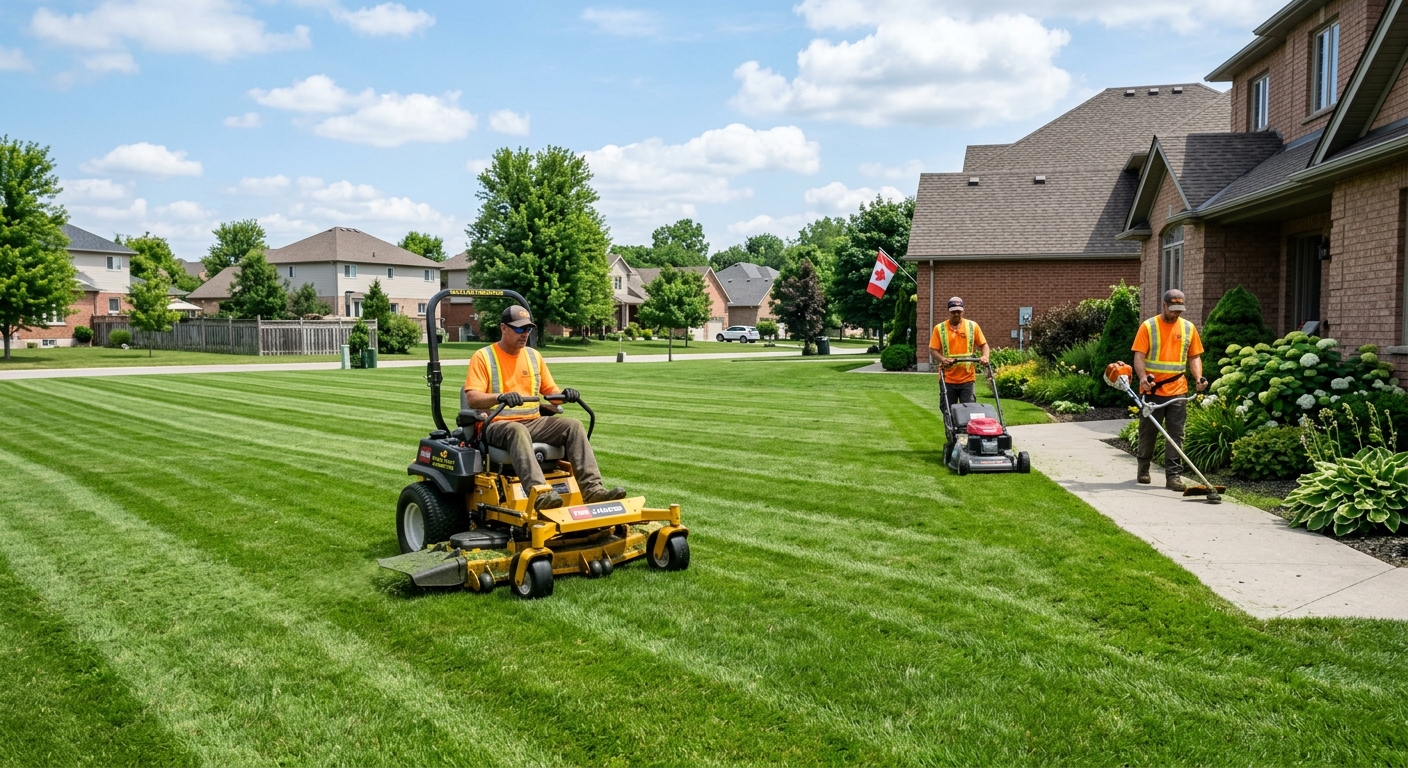
Landscaping options and costs in Devon
Devon, Alberta has a lot of yard space to work with—most homes are single-detached (78.4% of dwellings), and most households own their homes (77.2% ownership in the 2021 Census). That combination typically drives homeowners to invest in curb appeal: fresh sod, upgraded walkways, and thoughtful planting that can handle prairie winds and winter lows. It’s also why you’ll notice particular demand in family-focused pockets like Devon’s older central residential blocks near the town core, where many properties built before 1981 (46.6%) have older drainage grades and established trees that often need updates.
In the Edmonton region, landscaping costs are shaped by a short prairie growing season, freeze-thaw cycles, and generally drier conditions. Those factors affect both material choices and labour timing—contractors often schedule stripping, grading, base prep, and planting around frost dates to prevent soils from heaving or settling. Retaining walls and hardscape base construction are labour-intensive because proper drainage and engineered-depth footings protect against movement when the ground expands and contracts. Availability of experienced crews for interlocking and drainage work can also tighten pricing late in the season.
Below is a realistic range of what homeowners in Devon commonly budget, then you can dial up or down based on yard size, access, soil condition, and whether you’re aiming for fast results (sod) or lower upfront cost (seed and planting).
| Service |
Description |
Season |
Price Range |
| Full landscape design and installation |
Site assessment, grading plan, planting/hardscape layout, material list, labour, and installation for a complete front/back yard concept |
Late spring to early fall |
$8,000–$45,000 |
| Sod installation (supply, grade, lay, roll) |
Remove debris/old turf, confirm base grade, supply and lay sod, roll/compact, and establish watering plan |
May to early September (timing matters) |
$3,000–$8,000 |
| Lawn seeding (grade, seed, starter fertilizer) |
Light grading, seed selection, starter fertilizer, rake-in, and recommended watering/maintenance plan |
Late spring or early fall |
$2,200–$5,500 |
| Interlocking patio or walkway |
Excavate, compact sub-base, lay bedding sand, install interlocking stone, edge restraints, and clean-up |
Late spring to early fall |
$5,000–$25,000 |
| Retaining wall (interlocking block) |
Wall layout, excavation, base and drainage gravel/weep provisions, block installation, backfill, and landscaping tie-ins |
Late spring to early fall (often staged) |
$45–$120 |
| Tree and shrub planting |
Soil assessment, planting layout, excavation, amendments, staking where needed, and establishment watering guidance |
May to early September |
$500–$5,000 |
Prices are estimates only and vary by project scope, site access and material selection.
What affects the price of landscaping in Devon
In Devon and the broader Edmonton region, two homeowners can receive quotes that differ by 30–50% for similar “curb refresh” projects because the price is driven less by the word “landscaping” and more by what each yard demands: soil quality, grading complexity, drainage needs, access for equipment, and how much hardscape vs. softscape you’re replacing. In practice, labour rates and material delivery costs can also swing through the season, and crews may spend extra time where freeze-thaw has already compacted or heaved soils.
Plant hardiness and frost timing directly affect both plant selection and the working window. Devon sits in a cold prairie environment, so contractors typically plan around prairie-style hardiness (commonly Zone 2–4 across Alberta) and local frost dates—meaning establishment work is staged to avoid frost heave and winter kill. Coastal BC (Zone 7–8) can support lush palettes for longer, while Edmonton’s shorter season generally pushes drought-tolerant, wind-hardy species. That difference matters for cost: many Edmonton designs rely on resilient shrubs and groundcovers that are cheaper to maintain, but they still require correct planting depth and soil preparation. Retaining wall base depth also has to reach below the frost line to prevent shifting.
Two common examples that raise cost in Devon: (1) older properties built before 1981 often have subtle grade issues toward foundations, so correcting slope or adding a drainage bed can add significant labour and excavation; (2) if interlocking patios require relocating downspout discharge or adding a sub-drain, the scope expands beyond “just stone.” On the other hand, costs can be lower when your existing grade is already serviceable and the project is mostly softscape—think lawn refresh within the “$3,000–$8,000” sod band. When you add drainage, hardscape base prep, and retaining walls, budgets more often move toward the “$8,000–$45,000” full design/install range.
| Price Factor |
Why It Matters |
Cost Impact |
| Yard size in sq ft — the primary cost driver for softscape |
More area means more material (sod/seed, topsoil, mulch) and more labour (prep, install, clean-up) |
Can increase costs by 25%–200% depending on square footage |
| Grading and drainage work — slope corrections add significant cost |
Fixing pooling/low spots and reshaping to shed water is labour- and equipment-heavy |
Often adds 10%–40% to the overall project |
| Drainage bed or French drain installation |
Excavation, pipe placement, gravel bedding, and tie-ins require correct fall and backfill |
Frequently adds 20%–60% when required unexpectedly |
| Plant material tier — native shrubs vs. ornamental vs. mature specimen trees |
Hardy, zone-appropriate native plants are typically less expensive than large, mature specimens |
Can swing planting budgets by $500–$5,000+ for the same number of plants |
| Hardscape vs. softscape ratio — walls and patios cost more per sq ft than lawn |
Hardscape needs excavation, compacted base, sand bedding, and stone/block material |
Shifts projects toward the upper end of typical landscaping budgets |
| Irrigation system design and installation |
Zone planning, tubing placement, controller wiring, and efficient heads add labour and parts |
Can add $2,000–$8,000 depending on number of zones and complexity |
| Soil amendment and topsoil required |
Poor subsoil and clay compaction may need imported topsoil and amendments for healthy roots |
Often adds 5%–30% based on haul distance and depth |
| Tree removal or stump grinding before new planting |
Root disruption, stump grinding, and debris disposal are separate work scopes |
Can add hundreds to thousands depending on size and access |
Permits & regulations in Alberta
In Alberta, most typical landscaping and planting work—like sodding, seeding, shrub/flower bed installation, and most softscape upgrades—generally does not require a permit. A homeowner can usually hire a landscaping contractor to install grass, plantings, mulch, and walkway improvements without stepping into the municipal permitting process. However, a few categories commonly do require a permit, depending on how your municipality regulates them.
Work that typically DOES require a permit (or pre-approval): retaining walls that exceed a local height threshold—often around 1.0 m (3.3 ft) in many municipalities—may require a building permit, and in some cases engineered drawings. Also, major lot grading changes that affect drainage direction (for example, pushing water toward a neighbour’s property or toward a storm connection) may trigger approval. Utility impacts are another big one: before digging planting holes, trenching for drains, or installing wall footings, you should ensure utility locates are completed.
Work that typically DOES NOT require a permit: lawn seeding or sod installation, typical shrub and tree planting, mulching, and most patio/walkway upgrades as long as you’re not creating structural retaining features or altering drainage in a way that affects services.
To verify your Devon contractor’s credentials, do this in writing: (1) check the contractor’s Alberta business and licensing status via applicable government/registry listings; (2) request a current certificate of insurance (liability) naming you as applicable and confirming coverage limits; (3) ask for proof of WCB/WSIB coverage (as required for the province) and keep a clearance letter or current coverage proof on file. Finally, confirm irrigation and water-use rules with your contractor—water-smart establishment watering is critical in prairie conditions, and rules can be stricter during drought periods.
Planning a landscape that thrives in Devon's climate
Planning a landscape in Devon works best when you design for Alberta’s cold winters, freeze-thaw ground movement, and the region’s precipitation pattern—not against it. Start with plant selection: choose hardy, zone-appropriate trees and shrubs and build in a winter-protection plan (mulch depth, windbreak placement, and spacing that reduces heaving). Second, decide how you want your lawn to establish. In our market, sod gives instant results, but seeding is often the better fit if you’re working within a tighter budget and can manage early-season watering. Third, pay attention to drainage and grading. Edmonton-area yards can develop pooling near foundations or low corners; correcting slope and ensuring water moves away is one of the best “long-term cost controls” you can make. Fourth, plan hardscape base preparation correctly. Patios and retaining blocks need compacted bases and drainage layers so freeze-thaw doesn’t lift or shift them. Fifth, aim for low-maintenance structure: groundcovers, layered perennials, and mulch reduce weeding and annual upkeep while keeping curb appeal strong.
Because Devon is prairie and water-smart planning is common during establishment, xeriscape and rain-garden concepts can be very effective—just be realistic: you’re still watering new plants to get roots established, then backing off to drought-tolerant coverage. If you’re choosing between sod and seeding, the cost difference can be justified. For example, sod installation in the $3,000–$8,000 band may be worth it when you need quick closure for family use or curb appeal, while seeding typically sits lower if your grade is right and you can maintain watering through germination.
| Element |
Climate Consideration |
Maintenance Level |
Price Band |
| Sod lawn installation |
Establishing new roots before cold weather; proper base grade reduces winter heaving |
Medium (watering/rolling checks first season) |
$3,000–$8,000 |
| Native perennial garden |
Hardy, wind-tolerant plants handle short growing windows and winter stress |
Low to medium (weed control first year) |
$1,200–$4,500 |
| Mulched shrub border |
Mulch buffers soil temperature swings and improves moisture retention |
Low (seasonal refresh and prune cycles) |
$900–$3,500 |
| Interlocking stone patio |
Compacted base and proper drainage prevent frost heave and edge shifting |
Low (occasional joint sand top-up) |
$5,000–$25,000 |
| Retaining wall (block) |
Base depth below frost influence and drainage gravel help prevent movement |
Low (inspection after freeze-thaw seasons) |
$45–$120 |
| Drip irrigation system |
Efficient establishment watering in drier prairie summers; reduces waste |
Medium (winterization and controller settings) |
$2,000–$8,000 |
How to choose a landscaping contractor in Devon
Choosing the right landscaping contractor in Devon starts with verification. First, confirm Alberta licensing/business registration as applicable, and ask for proof before work begins. Next, request a current certificate of insurance (liability) and verify the coverage is active for the project dates. You also need to confirm WCB/WSIB coverage (workers’ compensation) for the crews who will be on site. A simple best practice: ask for a certificate and a clearance/coverage confirmation letter or equivalent proof you can keep on file.
Then, get 2–3 itemised written quotes. Don’t accept a single lump sum without breakdown. Look for labour and materials separated—excavation/haul, soil/topsoil, stone/block quantities, bedding sand/gravel, planting material, disposal fees, and any irrigation components. Carefully read the scope for what’s excluded: is demolition included? Are tree removals included or treated as an add-on? Is permit pull included where required (for example, structural retaining wall permitting if your wall exceeds the threshold)? Is disposal (dump fees) included, or will you pay extra based on weight?
For warranty, confirm a workmanship warranty length and whether it applies to settlement, drainage performance, and plant establishment. Also confirm the product/manufacturer warranty for items like irrigation components, and whether any warranty is transferable to you. Payment should be staged; never pay more than about 10%–15% upfront, and use a holdback until the job is complete and cleaned. Ask for a start date and completion estimate in writing so you can avoid mid-season delays.
- Provide an itemised quote with quantities (sq ft, linear ft, number of plants/trees).
- List which tasks include excavation, compaction, and disposal.
- Include drainage details (slope, outlets, French drain plan if needed).
- Confirm frost-aware scheduling: sod/seed timing and wall/base sequencing.
- Show proof of liability insurance and WCB/WSIB clearance for crews.
- Ask who will be the site lead and how changes are approved.
- Request a soil amendment/topsoil plan if existing soil is poor or compacted.
- Check that the quote states edge restraints and base thickness for pavers.
- Verify plant list: species, size (caliper/height), and hardiness expectation.
- Confirm irrigation coverage: controller location, zones, and winterization responsibility.
- Get warranty details in writing (workmanship and product coverage).
- Use a payment schedule with a holdback until final walkthrough and corrections.
Red flags to watch for in Devon: (1) “We’ll figure drainage later” or no mention of slope/outlets; (2) quotes that are not itemised (especially for sod prep, wall base, and disposal); (3) no insurance/WCB proof or reluctance to provide certificates; (4) a request for large upfront payments; and (5) vague timelines like “sometime this summer” without start/completion estimates.
Frequently asked questions — landscaping in Devon
How do I improve drainage in my yard?
In Devon, drainage fixes usually start with confirming where water is actually going during a heavy rain or snowmelt. A common issue on older properties (many built before 1981) is subtle grade toward foundations or a low spot where water pools. A contractor should be able to explain and show a plan for regrading (slope corrections), along with whether you need a drainage bed or a French drain tie-in. Because freeze-thaw affects soil movement, drainage work should include proper base preparation, correct pipe fall, and backfill that won’t settle unevenly. If you’re also considering hardscape, ask if downspout discharge or patio runoff will be directed away from the foundation before installing stone.
What is xeriscaping and does it suit Devon?
Xeriscaping is landscaping designed to reduce watering by using drought-tolerant, zone-appropriate plants, efficient irrigation (or no irrigation in mature areas), and soil strategies like mulch and proper planting density. In Devon and the Edmonton region, it can absolutely suit your yard because summers are often dry and establishment watering is the main challenge. The key is to be realistic: new plantings still need establishment watering through the first season, even if the plan becomes low-water later. A good xeriscape often includes hardy shrubs, groundcovers, and targeted turf reductions (for example, seeding or smaller sod areas only where you need active use). If you’re budgeting, sod in the $3,000–$8,000 range may make sense for quick play areas, while broader borders can shift toward lower-water planting.
How do I plan a low-maintenance yard?
A low-maintenance yard in Devon is planned around structure and fewer “maintenance cycles.” Start by selecting hardy, zone-appropriate shrubs and perennials so plants survive Alberta winters without constant replacement. Use mulch in beds to suppress weeds and regulate soil moisture—this reduces weeding and watering frequency. For lawn, decide whether sod or seed fits your lifestyle: sod is faster but typically costs more upfront (often within the $3,000–$8,000 band), while seeding is slower but can be easier to maintain within a budget if you manage early watering. For drainage-heavy lots, make sure grading and base prep are done right before plants go in; otherwise you’ll pay later in rework. Finally, reduce hard edges and add groundcovers where you’d otherwise fight persistent weeds.
How deep should a retaining-wall base be for local frost?
For Devon and the broader Edmonton region, the correct retaining-wall base depth must be planned below the frost-affected zone, and the details depend on your wall height, soil conditions, and whether engineered requirements apply. In many practical builds, contractors design the footings and base so they’re not simply “shallow and hope for the best,” because freeze-thaw can push or shift blocks if the base isn’t properly prepared and drained. A reputable contractor will address both the mechanical base (excavation, compacted base, bedding) and drainage behind the wall (gravel, weep provisions, and backfill strategy). If your wall exceeds typical permitting thresholds (often around 1.0 m (3.3 ft)), permit requirements and possible engineered drawings can affect the final design depth.
How much does professional landscape design cost?
Professional landscape design in Devon is often packaged with installation, and in the Edmonton region you’ll commonly see total “design & installation” budgets ranging from about $8,000–$45,000 depending on scope. If you separate design only, some companies price it differently, but homeowners usually find the value when the design includes grading/drainage planning, plant selections suited to prairie conditions, and a phased construction schedule. Design cost swings because of yard complexity: drainage correction, hardscape layout, and the amount of soil/topsoil import or hardscape material are where drawings stop being cosmetic and start affecting longevity. A well-scoped design can also prevent costly rework when freeze-thaw or drainage problems appear after installation.
How do I compare landscaping quotes?
To compare landscaping quotes in Devon, insist on the same scope across bidders. Start by asking for itemised breakdowns: labour and materials, including excavation, grading corrections, soil/topsoil, bedding sand/gravel, plant quantities and sizes, disposal/dump fees, and any irrigation components. Confirm whether permits are included when required—for example, retaining walls that exceed local thresholds. Next, check what’s excluded: who is responsible for locating utilities, what happens if subsoil is unexpectedly poor, and whether regrading adjustments are covered. Compare warranty terms and payment schedules too: a credible contractor shouldn’t request more than about 10%–15% upfront. Finally, schedule a walkthrough to ask the contractor to explain their drainage plan and base preparation—these are often the differences that drive quote variations of 30–50%.