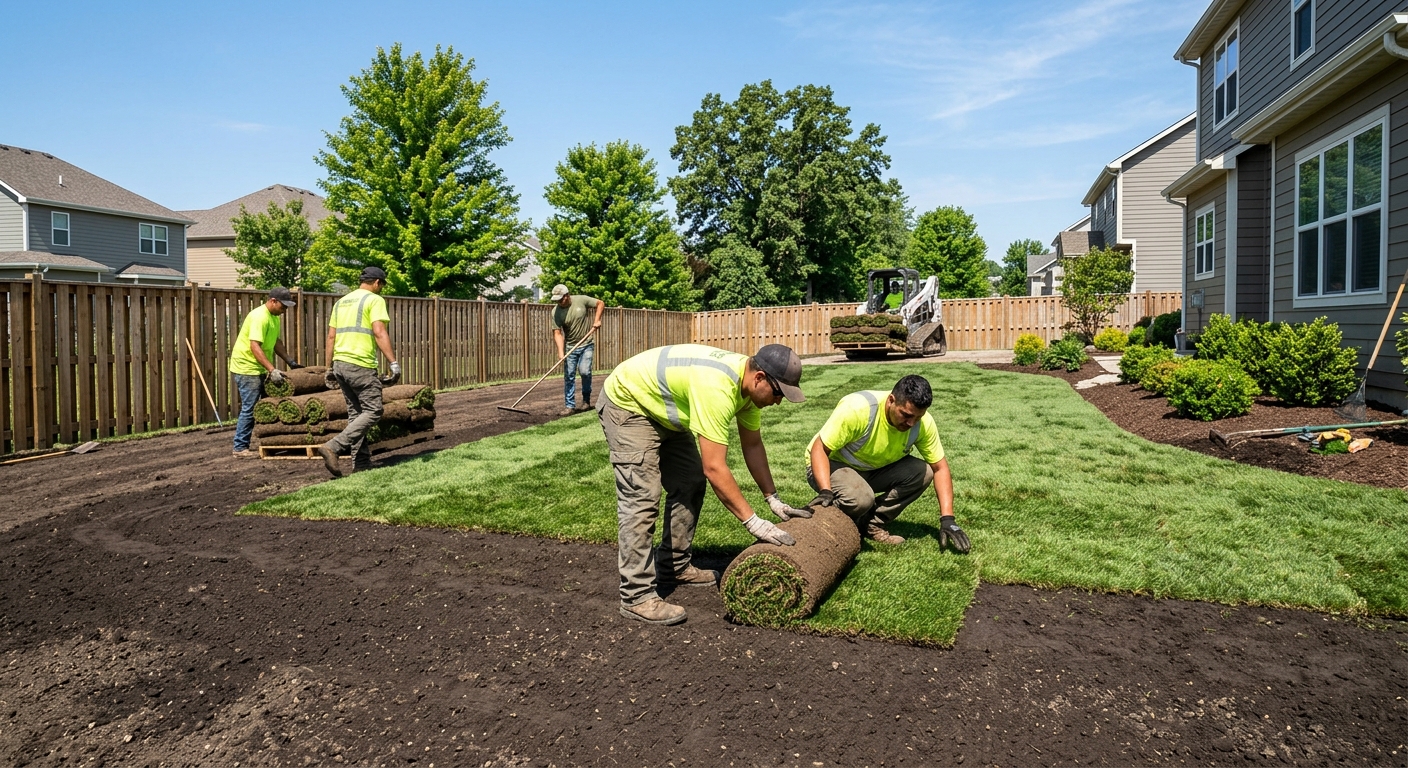
Landscaping options and costs in Rundle
In Rundle, Alberta, homeowners typically invest in landscaping because detached properties bring more yard space and a strong payoff in curb appeal and daily comfort. With a population of 10,545 in the area (Statistics Canada, 2021 Census), there’s steady demand for reliable crews—especially in established pockets where families are updating older lots. In the Calgary region, late-spring frosts and early fall cold snaps tighten the working season, so pricing can reflect both weather risk and contractor availability. Freeze–thaw cycles also drive up costs when projects require deep, well-compacted bases and robust drainage to prevent heaving around patios, walkways, and retaining walls.
Trade demand is especially noticeable in high-traffic residential areas like Taradale and neighbourhood-adjacent streets, where homeowners often upgrade front entries, sidewalks, and back-yard hardscape before or during summer. If your lot needs grading or drainage correction, contractors spend more time preparing foundations for hardscape and for soil profiles that can handle Alberta’s semi-arid conditions. That’s why two homes with similar square footage can land in very different budget bands—your access, slope, and how far the base prep goes under the frost line all matter.
Below is a practical comparison of common landscaping scopes so you can benchmark what you’ll likely receive in Rundle quotes, then we’ll break down exactly what shifts the final number.
| Service |
Description |
Season |
Price Range |
| Full landscape design and installation |
Site walk, design, grading/drainage plan, plantings, hardscape, and irrigation (as applicable) |
Late spring to early fall (weather permitting) |
$8,500–$32,000 |
| Sod installation (supply, grade, lay, roll) |
Soil preparation, grading for slope, sod delivery and installation, rolling and initial watering plan |
May to early September |
$2,000–$6,000 |
| Lawn seeding (grade, seed, starter fertilizer) |
Light grading, seed selection, starter fertiliser, seeding, and germination protection |
Mid spring to early fall (as temperatures allow) |
$1,500–$3,500 |
| Interlocking patio or walkway |
Excavation, deep base, geotextile, compacted layers, pavers, edge restraints, and cleanup |
Late spring to late summer |
$8,000–$24,000 |
| Retaining wall (interlocking block) |
Excavation, compacted wall base, drainage gravel, weeping provisions, and block installation |
Late spring to early fall |
$12,000–$38,000 |
| Tree and shrub planting |
Soil amendments, layout, planting, staking (when needed), and an establishment watering plan |
Spring and fall (best establishment windows) |
$1,200–$14,000 |
Prices are estimates only and vary by project scope, site access and material selection.
What affects the price of landscaping in Rundle
In Rundle and across Calgary, it’s common to see quotes for the “same” landscaping project vary by 30–50%. The biggest drivers aren’t just the look of the design—they’re how much hidden work is required to make it last through Alberta’s freeze–thaw cycles and wind-driven conditions. Two contractors may propose different depth of base prep, drainage layers, and soil amendments, which directly affects labour hours and material quantities. In a tight late-spring schedule, availability also changes pricing because crews prioritize multi-trade projects that keep work efficient.
Prairie plant hardiness zones (3–4) and typical frost timing dictate both what can be planted and how long contractors can safely work on site. That means soil preparation and planting windows are more time-sensitive than in coastal climates (Zone 7–8), where the long growing season supports broader palettes and longer installation seasons. In the dry interior, including southern Alberta, smart irrigation design matters because even when restrictions aren’t as strict as parts of BC’s interior, efficient watering prevents waste and improves establishment. For work that borders foundations, the same drainage principle holds: the base needs to reach below frost and the yard must shed water properly.
Concrete examples you’ll feel in Rundle: (1) If your yard has a slope or downspouts route toward the foundation, adding grading and drainage bed work can shift a mid-band hardscape job upward into the higher end of the $8,000–$40,000 retaining wall and hardscaping budget. (2) If you want sod instead of seed, you may pay about 3–4x more per square foot for instant coverage—often pushing lawn budgets within the $1,500–$6,000 range depending on size and site prep. (3) Older housing lots sometimes have compacted fill; bringing in topsoil and amendment for drainage and root zone depth costs more but reduces long-term patching.
| Price Factor |
Why It Matters |
Cost Impact |
| Yard size in sq ft — the primary cost driver for softscape |
More square footage means more excavation/prep, soil, seed/sod, mulch, and plant material |
Often the biggest single line-item swing |
| Grading and drainage work — slope corrections add significant cost |
Calgary-area pooling and foundation moisture issues require recontouring and re-compaction |
Can add thousands if excavation is extensive |
| Drainage bed or French drain installation |
Freeze–thaw performance depends on water management and proper filter layers |
Mid-project increase in labour + aggregate |
| Plant material tier — native shrubs vs. ornamental vs. mature specimen trees |
Starter shrubs cost less; larger specimens require heavier equipment and more planting time |
Major swing, especially for trees |
| Hardscape vs. softscape ratio — walls and patios cost more per sq ft than lawn |
Pavers/blocks need deep base, restraints, and careful compaction |
Shifts the project toward the hardscaping price bands |
| Irrigation system design and installation |
Zoned coverage and drought-appropriate heads reduce waste and improve establishment |
Can add a noticeable budget line depending on complexity |
| Soil amendment and topsoil required |
Better drainage and root development often require amended topsoil and compost blends |
Often required on older or compacted lots |
| Tree removal or stump grinding before new planting |
Clearing and disposal add equipment time and scheduling overhead |
Can move a planting project into a higher price tier |
Permits & regulations in Alberta
For most landscaping in Alberta—like planting beds, sodding, seeding, and typical softscape work—permits are usually not required. However, the rules can change when your project touches structural elements or lot drainage. In most municipalities, a retaining wall above a threshold—commonly around 1.0 m (3.3 ft)—often triggers a permit and, in some cases, engineered drawings. Also consider permits if you’re making changes to lot grading that meaningfully alter how water drains toward a neighbouring property or a storm connection.
Before anyone digs in Rundle, insist on utility locates. That applies to planting holes, trenching for drainage, and wall footings—utility lines run where you least expect them. For water-use rules, confirm your local irrigation expectations and any restrictions around drought periods. Even when the strictest rules aren’t always the same year to year, Alberta homeowners should expect tighter watering schedules during dry stretches.
To verify a contractor properly, do this in order: (1) Check their Alberta licence/registration status through the appropriate provincial licensing resources for their trade. (2) Request a certificate of insurance showing general liability coverage and ensure the policy is active for your project dates. (3) Ask for confirmation of WSIB/WCB coverage for their workers (or the appropriate coverage status if they’re exempt). Then (4) request a written contract that identifies what’s included (grading, drainage, disposal, and any permit assistance).
Planning a landscape that thrives in Rundle's climate
Planning for Rundle means working with Alberta’s hardiness zone conditions—typically Zone 3–4—and the realities of late frosts, early cold snaps, and harsh freeze–thaw cycles. Start with plant selection: choose native or proven cold-hardy species with good wind tolerance, and include winter structure (evergreens, sturdy grasses, and shrubs that hold form). That reduces watering and winter protection effort compared with tender ornamentals that struggle after chinook temperature swings.
Next, decide between sod vs. seed. Sod gives instant curb appeal, but it generally costs about 3–4x more per square foot than seeding once you include prep and proper rolling. Seeding fits better when you can wait for establishment and you’re okay with patch-by-patch growth in the first season. For a budget reality check: if a homeowner is considering bringing a lawn area into shape quickly, sod for a small front lawn may land near the upper $1,500–$6,000 band, while seeding for the same footprint is often closer to the lower end depending on grading needs.
Drainage and grading are the difference between a yard that looks good for a year and one that lasts. Calgary pools freeze, expand, and can heave surfaces—so base prep for patios and retaining walls must be deep and well-compacted, with proper drainage gravel and slope corrections. For low-maintenance design, use mulched shrub borders, durable groundcovers, and perennial groupings that can survive Alberta winters with minimal fuss. Add xeriscaping elements like drought-tolerant perennials and a rain-garden style swale where water naturally accumulates—this supports infiltration and reduces irrigation reliance.
| Element |
Climate Consideration |
Maintenance Level |
Price Band |
| Sod lawn installation |
Needs quick establishment before cold snaps; freeze–thaw makes proper base prep critical |
Medium (initial watering and monitoring) |
$2,000–$6,000 |
| Native perennial garden |
Zone-appropriate plants handle winter better and tolerate dry, windy spells |
Low (seasonal cleanup, occasional weed control) |
$1,800–$7,500 |
| Mulched shrub border |
Mulch moderates soil temperature; wind-hardy shrubs reduce winter damage |
Low to medium (pruning and replenishing mulch) |
$1,500–$6,500 |
| Interlocking stone patio |
Requires deep, compacted base to prevent heaving; proper slope manages water |
Low (occasional joint cleaning) |
$8,000–$24,000 |
| Retaining wall (block) |
Drainage gravel + weeping provisions reduce freeze-related movement |
Low (periodic inspection) |
$12,000–$38,000 |
| Drip irrigation system |
Helps with water efficiency during Alberta dry periods and supports zoned planting |
Low to medium (spring startup and winterisation) |
$1,500–$8,500 |
How to choose a landscaping contractor in Rundle
Choosing the right contractor in Rundle starts with verifying credentials and then tightening the paperwork. In Alberta, confirm licensing/registration appropriate to their trade and ask for proof of general liability insurance (certificate of insurance should match your project address and dates). Next, verify WSIB/WCB coverage for their workers—request written confirmation and ensure it’s current. A legitimate contractor won’t hesitate to provide documentation before you sign.
Get 2–3 itemised written quotes that separate labour and materials (and ideally break out grading/drainage, base prep, plant quantities, and irrigation components). Don’t accept a vague lump sum where key steps are unclear. Read the scope carefully: is permit assistance included (if applicable), is disposal of excess soil included, and does the price include topsoil/soil amendment and compaction verification? Ask whether there are allowances for uncertain site conditions (like hidden rock or unexpected drainage issues).
Warranty matters in Alberta’s freeze–thaw environment: request the workmanship warranty length, confirm whether it covers settlement/heaving issues, and ask about product/manufacturer warranties for pavers/blocks, plants (where offered), and irrigation components. Also confirm the payment schedule—never pay more than 10–15% upfront, and use a holdback until the job is complete and cleaned. Finally, get the start date and completion estimate in writing, tied to weather allowances.
- Provide a certificate of insurance with your address and job dates
- Show WSIB/WCB coverage confirmation for their crews
- Include an itemised breakdown (labour, materials, equipment, disposal)
- List exactly what’s included in base prep depth and compaction steps
- State how drainage is handled (slope, drainage gravel, weeping provisions)
- Confirm plant lists with quantities and common/scientific names
- Specify sod/seed mix, seed rate, and sod thickness/type
- Clarify irrigation scope: supply, layout, zones, and controller
- Define warranty coverage and exclusions in plain language
- Set a payment schedule with a holdback until final walkthrough
- Confirm who pulls locates and who is responsible if utilities are damaged
- Provide a written timeline with weather contingencies
In Rundle, avoid contractors who (1) won’t share insurance/coverage documents, (2) offer a single “best price” without itemised scope, (3) skip drainage details for patios and retaining walls, (4) ask for large upfront payments, or (5) can’t explain how they’ll handle freeze–thaw-proof base prep and compaction.
Frequently asked questions — landscaping in Rundle
When is the best time to landscape in Rundle?
In Rundle, the best window is usually late spring through early fall. Planting typically performs best when soil is workable but not frozen—so spring and fall installations often establish well in Alberta’s Zone 3–4 conditions. For sod, aim for May through early September so roots can knit before cold snaps. Hardscape work (patios and interlocking walkways) is usually safest when the ground isn’t frozen and drainage layers can compact properly; crews often prefer late spring and summer for this reason. If you’re planning a full project with grading and irrigation, book early because labour availability in Calgary can tighten once the weather stabilizes (Statistics Canada, 2021 Census).
Do I need a permit for a retaining wall in Alberta?
Often, typical planting and softscape work does not require a permit, but retaining walls are a different category. In many Alberta municipalities, walls above a threshold—commonly around 1.0 m (3.3 ft)—may require a building permit, and sometimes engineered drawings depending on height and site conditions. It’s also possible for grading changes that affect drainage toward a neighbouring property or storm connections to trigger approvals. For your Rundle project, ask your contractor to confirm the expected height and proposed drainage approach before work starts. If the wall pushes your budget toward the retaining-wall hardscaping range of $12,000–$38,000, clarifying permit responsibility early can prevent delays and unexpected costs.
How do I improve drainage in my yard?
In Rundle, drainage improvements usually fall into two categories: regrading and adding subsurface drainage. Regrading redirects surface water so it doesn’t pool near foundations—this matters because freeze–thaw cycles can worsen heaving and surface failure. If water still doesn’t move properly, a contractor may install a drainage bed or a French drain with filter fabric and proper aggregate layers. The key is slope and outlet control (where water goes) so you’re not pushing the problem onto your neighbour. Before any digging, ensure utility locates are completed. If you’re also planning hardscape, drainage needs to match the base prep depth so your patio or walkway doesn’t lift over time.
What is xeriscaping and does it suit Rundle?
Xeriscaping is a landscaping approach designed to reduce irrigation and improve drought resilience by using zone-appropriate plants, efficient irrigation (like drip), and soil improvements. In Rundle and the broader Calgary area, it suits many yards because Alberta’s semi-arid conditions and windy winters can dry out soils and stress plants. The goal isn’t “no plants”—it’s the right plants in the right soil with the right watering strategy. A xeriscape plan often includes mulched shrub borders, drought-tolerant perennials, groundcovers, and sometimes a rain-garden style swale to capture and infiltrate runoff. If you’re comparing budgets, sod may land in the $2,000–$6,000 range for small-to-mid lawns, while a native perennial/xeriscape bed with mulch often fits lower-maintenance long-term goals.
How do I plan a low-maintenance yard?
A low-maintenance yard in Rundle starts with reducing the things that create ongoing work: compacted soil, weeds, and plants that require frequent watering or seasonal protection. Choose cold-hardy, wind-tolerant plants for Zone 3–4 and group them by water needs so you don’t overwater everything. Use mulch in planting beds to control weeds and moderate soil temperature. Consider fewer lawn areas and more resilient bedscapes—especially where grading and drainage are tricky. For hardscape, invest in proper base prep so you’re not dealing with cracked joints or lifted pavers after freeze–thaw cycles. If you’re building a patio or walkway, many homeowners weigh higher upfront costs against low long-term upkeep in the $8,000–$24,000 band, especially when drainage is corrected at the same time.
How deep should a retaining-wall base be for local frost?
There isn’t one universal depth for every retaining wall, because base depth depends on wall height, block system, soil conditions, and how drainage is detailed. In Calgary-area freeze–thaw conditions (Zone 3–4), the practical requirement is to build a deep, well-compacted base and drainage layer so water doesn’t sit and freeze behind or under the wall. Contractors typically excavate beyond surface soil and compact engineered layers, then add drainage gravel and proper drainage provisions (like weeping paths) to reduce hydrostatic pressure. For the “how deep” answer, the correct depth should be specified in your wall’s design and installation plan, and it’s one reason permits/engineering may be triggered for taller walls. Use a contractor who can explain their proposed base section and compaction steps rather than guessing.