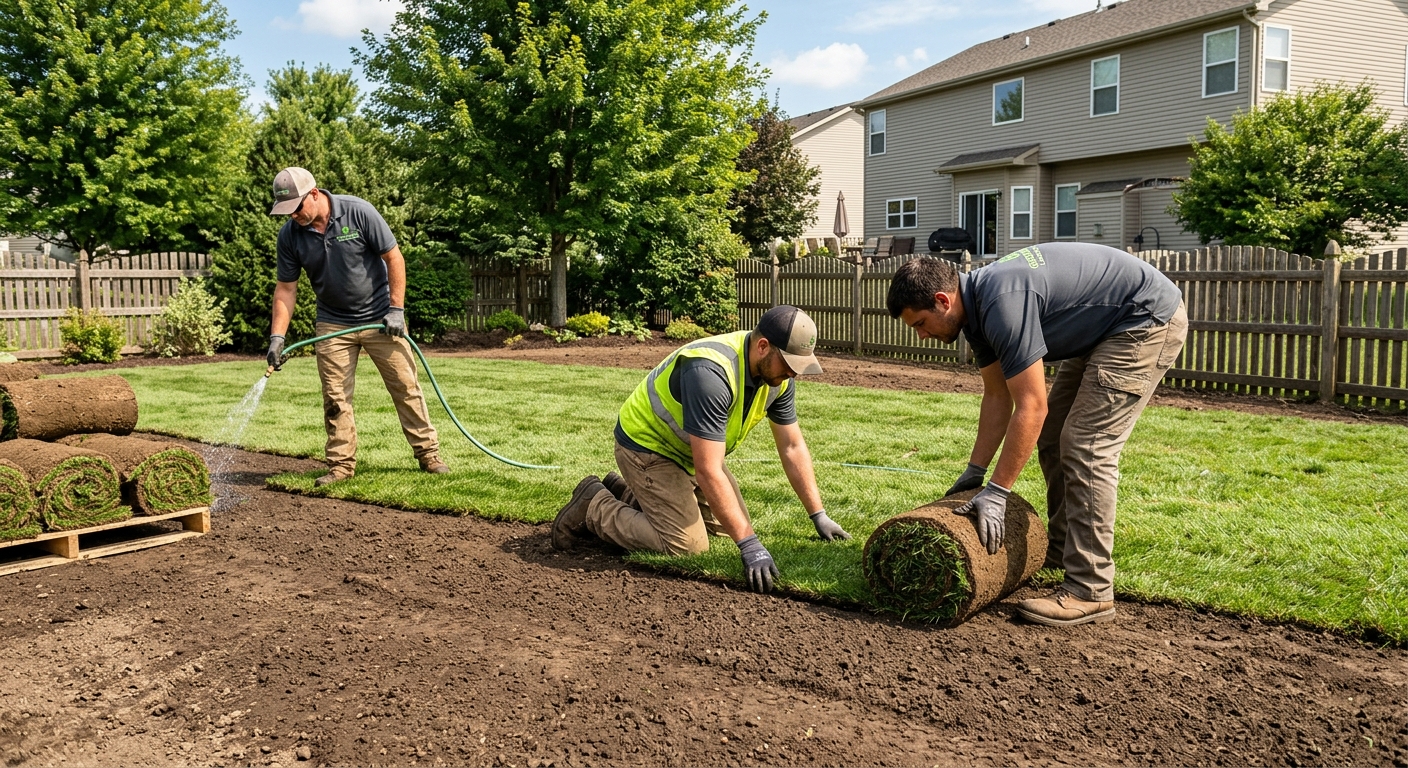
Landscaping options and costs in Esquimalt
Esquimalt homeowners typically have the motivation and yard space to invest in landscaping—especially when your neighbourhood surrounds the City with established housing stock. With 23.2% of dwellings being single-detached homes and roughly 48.9% of households owning their home (Statistics Canada, 2021 Census), many projects start with upgrades to curb appeal, drainage corrections, and adding usable outdoor living space. In a coastal market like the Vancouver Island and Coast region, mild, long seasons (generally allowing early spring through late fall work) help contractors schedule more efficiently than in colder, shorter-season regions. That availability can keep pricing more predictable, but the trade-off is higher costs for premium plants, stone, and quality labour as demand stays active across many months.
In practical terms, the biggest price swing in Esquimalt comes from how much earthwork, drainage, and hardscaping you need—particularly on the slopes and uneven lots common around parts of “Rock Heights” and other hillside areas where water management matters. Homes built before 1981 are still common locally (70.3%), and older foundations or existing grading sometimes require corrective drainage and deeper base preparation before new patios or retaining features can be installed. If you want a full, cohesive look, full landscape design and installation usually bundles plant palettes, irrigation planning, and the sequence of trades into one streamlined scope. If you prefer targeted improvements, you can price elements separately and build toward a complete yard over time. Below is a comparison of typical options and budget ranges so you can line up quotes and expectations.
| Service |
Description |
Season |
Price Range |
| Full landscape design and installation |
Site walk, concept plan and planting plan, grading/soil prep, drainage if required, planting, hardscape coordination, and installation |
Early spring to late fall |
$7,500–$28,000 |
| Sod installation (supply, grade, lay, roll) |
Remove existing turf, fine grade, soil amendments as needed, sod supply, placement, rolling, and initial watering guidance |
Late spring to early fall |
$2,000–$7,500 |
| Lawn seeding (grade, seed, starter fertilizer) |
Light grading/tilling, seed and starter fertilizer, seeding, light cover, and establishment watering plan |
Spring or early fall |
$1,500–$4,500 |
| Interlocking patio or walkway |
Excavate, compacted base, edge restraint, stone or interlocking pavers, joint sand, and compaction/finishing |
Late spring to fall |
$6,500–$24,000 |
| Retaining wall (interlocking block) |
Base excavation to frost-depth planning, compacted granular base, block system installation, drainage gravel and weep details |
Spring to fall |
$8,000–$45,000 |
| Tree and shrub planting |
Soil prep, compost and amendments, planting, staking as required, mulching, and establishment watering setup |
Late spring to early fall |
$1,200–$12,000 |
Prices are estimates only and vary by project scope, site access and material selection.
What affects the price of landscaping in Esquimalt
Landscaping quotes for the “same” yard can vary by 30–50% across Vancouver Island and Coast depending on how contractors measure scope, handle drainage, and price materials. In British Columbia, the long working season can keep labour availability steadier than in short-season regions, but the cost of quality plants, stone, and skilled installation still pushes totals upward when a project includes grading, drainage, and structural work. Vancouver Island and Coast sit in mild coastal hardiness zones 7–9, so you can plant lush four-season options, yet wet winters mean contractors often need to design around saturation, not just frost. In the Prairies (Zone 2–4), the shorter season and drought/wind stress lead to different species selection and faster, more conservative installation schedules. In Southern Ontario (Zone 5–6), a moderate season still requires attention to summer dry spells for irrigation. These climate differences affect both what grows and how long a contractor can actually work, which changes cost.
Concrete examples in Esquimalt: first, a site with slope correction and re-grading commonly increases costs because labour time and disposal add up quickly—especially when you’re trying to fix pooling near a foundation. Second, drainage beds or French drains can turn a “planting-only” job into a full hardscape/earthworks scope, even if the visual finish stays similar. Third, older lots (70.3% of homes built before 1981 in the area profile) may have legacy grading patterns that don’t match today’s foundation moisture control, which can push retaining-wall base and drainage detail requirements into higher price bands. As a result, you may see small upgrades cluster near the $5,000–$40,000 design-and-install band, while wall-and-stone projects can move toward the upper end when base depth, drainage, and stone quantities climb.
| Price Factor |
Why It Matters |
Cost Impact |
| Yard size in sq ft — the primary cost driver for softscape |
More area means more soil prep, labour hours, and material quantities (topsoil, amendments, seed/sod, mulch) |
Low to moderate increases; can double totals when lawns scale up |
| Grading and drainage work — slope corrections add significant cost |
Changing surface elevations affects water direction, requires equipment time, and often exposes/handles uneven soils |
Can add a large portion of the budget in sloped Esquimalt yards |
| Drainage bed or French drain installation |
Requires trenching, specified granulars, geotextile, and correct tie-in to outlets |
Often one of the biggest “hidden” cost jumps beyond planting |
| Plant material tier — native shrubs vs. ornamental vs. mature specimen trees |
Specimen sizes and sourcing vary; larger stock needs more labour, staking, and careful planting holes |
Low tier stays budget-friendly; premium trees can push toward the top of planting bands |
| Hardscape vs. softscape ratio — walls and patios cost more per sq ft than lawn |
Pavers, block systems, base layers, and compaction are labour- and material-intensive |
Shifts cost upward quickly even when the yard “looks similar” |
| Irrigation system design and installation |
Drip lines, zones, backflow protection components, and controller setup require planning and testing |
Moderate add; can be justified for slope, tree borders, and water efficiency |
| Soil amendment and topsoil required |
Coastal soils and older sites may need compost, grading, and drainage-friendly mixes |
Often increases for yards with poor structure or construction impacts |
| Tree removal or stump grinding before new planting |
Removal adds equipment time, disposal, and safety controls |
Can significantly change both schedule and overall price |
Permits & regulations in British Columbia
In British Columbia, most planting, sodding, and typical softscape work generally does not require a permit. That usually includes laying sod, seeding lawns, installing mulch and shrub borders, and planting trees and perennials. However, retaining walls above the local height threshold—commonly around 1.0 m in many municipalities—typically require a building permit and may call for engineered details depending on the wall height, location, and soil conditions. Any change to lot grading that can affect how water drains (especially toward neighbouring properties or storm drainage connections) may also trigger approval requirements.
For Esquimalt homeowners, the safest approach is to confirm two things before excavation begins: (1) whether your retaining-wall height and location require permitting or engineering, and (2) whether your drainage tie-in or grading change needs municipal review. Also, call for utility locates before digging planting holes, trenching for drip lines, or installing wall footings. Even “small” digs can hit buried services.
To verify a contractor’s compliance in BC, follow this simple sequence: (1) licence/standing: check the contractor’s registration and business details via the appropriate provincial online resources; (2) liability insurance: request a current certificate of insurance showing adequate coverage and the effective dates; (3) WSIB/WCB-style coverage: ask for proof of their workers’ coverage and keep a clearance letter or proof document for your records. If they can’t provide documents promptly, assume you’ll be the one managing risk.
Planning a landscape that thrives in Esquimalt's climate
Planning for Esquimalt means working with coastal hardiness (zone 7–9) and a yard that stays wet in winter. That’s why the best results come from designing drainage first, then selecting plants and surfaces that tolerate damp winters and mild, growing-season conditions. Start with plant selection: choose zone-appropriate, preferably native or region-adapted species that handle moisture variability. Proper mulch thickness, spacing, and soil structure reduce winter stress and can lower watering needs once established. If you’re seeding or sodding, align with the cooler, longer establishment windows typical of coastal BC.
Sod gives instant curb appeal, but it’s usually more expensive than seeding because you’re paying for labour and supply of installed turf. As a rule of thumb, sod often costs about 3–4x per sq ft compared with seeding when you compare equivalent grass coverage; for example, if your small front lawn needs a quick “finished look,” a sod installation around $2,000–$7,500 can be justified. If timing is flexible, lawn seeding around $1,500–$4,500 stretches the budget and still looks great once established.
Next, drainage and grading: Vancouver Island yards commonly see pooling from seasonal rainfall and down-slope runoff. Correcting grades and installing a drainage bed or French drain—when needed—prevents foundation moisture issues and protects paver bases and retaining walls. For hardscape, base preparation is critical: compacted base and frost-aware construction keep patios and block walls from heaving or settling.
Finally, low-maintenance strategies reduce annual upkeep. Use groundcovers, mulched shrub borders, ornamental grasses, and perennials with strong structure in winter. Rain-garden concepts and xeriscape-adjacent planting (like drip irrigation with drought-tolerant choices in exposed south-facing pockets) can reduce irrigation demand while still supporting a lush coastal aesthetic.
| Element |
Climate Consideration |
Maintenance Level |
Price Band |
| Sod lawn installation |
Establishes best in the mild coastal seasons; requires careful watering through rooting in wet-to-dry transitions |
Medium (watch for drainage and early establishment) |
$2,000–$7,500 |
| Native perennial garden |
Zone-appropriate plants handle cool winters and damp spells with less need for heavy winter protection |
Low to medium (mulch refresh and light pruning) |
$1,800–$9,500 |
| Mulched shrub border |
Mulch improves soil moisture stability during wet winters and cooler shoulder seasons |
Low (weed control and seasonal tidy-up) |
$1,200–$6,500 |
| Interlocking stone patio |
Requires compacted base and proper edging for coastal freeze–thaw movement control |
Low (occasional joint sand/top-up as needed) |
$6,500–$24,000 |
| Retaining wall (block) |
Needs correct base and drainage (weeps/gravel) to handle winter saturation |
Low (periodic inspection) |
$8,000–$45,000 |
| Drip irrigation system |
Efficient irrigation supports borders and trees while reducing waste during drier spells and exposed sites |
Low (seasonal controller checks) |
$1,000–$6,000 |
How to choose a landscaping contractor in Esquimalt
Choosing the right contractor matters in Esquimalt because drainage, base preparation, and proper planting technique are where good work holds up through wet winters and repeated freeze–thaw. Start by verifying British Columbia compliance and coverage. Ask for: (1) licence/registration details appropriate for landscaping contractors in BC (verify it using the online registry or business listing they provide); (2) liability insurance—request a current certificate of insurance with effective dates and coverage limits; and (3) WSIB/WCB coverage proof—ask for a clearance letter or equivalent documentation, and keep copies for your records.
Next, request 2–3 itemised written quotes. You want a breakdown that separates labour and materials (stone, block, sod/seed, topsoil, drainage gravel, geotextile, pipe/emitters for drip). Compare like for like: ask what’s included and what’s excluded (haul-away/disposal, utility locates, permit pull, topsoil quality, soil amendment rates, and whether irrigation is installed or capped for future hookup). Good contractors list preparation steps clearly—like base thickness, compaction requirements, and drainage tie-ins—because those details drive long-term performance.
Look at warranty terms: confirm workmanship warranty length, whether the manufacturer warranty applies to plants/products (and whether it’s transferable to you), and what happens if plants fail to establish under their care plan. For payments, never pay more than 10–15% upfront. Hold back a portion until completion and walkthrough items are addressed. Finally, get the start date and an estimated completion window in writing so you’re not negotiating schedule changes mid-project.
- Provide a written scope with dimensions (sq ft, linear ft, wall height) and material specs
- Show evidence of BC licence/registration and current liability insurance
- Confirm workers’ coverage (WSIB/WCB-style documentation) before work begins
- List disposal/haul-away costs separately (and confirm where debris goes)
- Include drainage plan details if you have slopes, downspout runoff, or ponding
- Specify soil amendment and topsoil type/quantity, not just “add compost”
- For patios/walls: state base depth, compaction method, and edge restraint
- For planting: list plant sizes and whether replacements are included for fails
- Include irrigation scope: supply/installation, zones, and controller features
- Provide a timeline with weather contingency notes common to coastal BC
- Answer questions about utility locates and confirm excavation practices
- Keep colour/plant lists documented so the installer can’t “substitute” later
Red flags in Esquimalt include: quoting only a lump sum with no breakdown of drainage/base prep, refusing to provide proof of insurance/coverage, promising retaining-wall heights/engineered performance without documentation, starting excavation before utility locates are confirmed, and asking for large deposits (well beyond 10–15%) before any materials are on-site or work begins.
Frequently asked questions — landscaping in Esquimalt
How much does professional landscape design cost?
In Esquimalt and the Vancouver Island and Coast region, professional landscape design is often bundled with installation, but standalone design can still be quoted depending on the scope. For many typical homeowner projects, the design-and-install budget lands in the $5,000–$40,000 range, with full design plus planting and coordination usually sitting closer to the middle when drainage corrections or hardscaping are included. If your yard is mostly planting and light edging, you may be able to stay toward the lower end; if you need grading, retaining walls, and irrigation planning, costs move toward the upper range. Because 70.3% of local homes were built before 1981 (Statistics Canada, 2021 Census), older grading and foundation drainage can add design hours and detail requirements.
How do I compare landscaping quotes?
To compare landscaping quotes in Esquimalt, start by insisting on itemised pricing—labour and materials broken out separately. Make sure each quote includes the same scope: excavation depth, base build-up for patios/walls, drainage elements (geotextile, granular types, and outlets), soil amendment quantities, and whether disposal/haul-away is included. Compare what’s excluded too, such as permit pulls (for retaining walls above local thresholds), utility locates, and irrigation tie-ins. A good way to normalize quotes is to compare per-element costs: for example, sod installation may fall into the $2,000–$7,500 band, so a “cheaper” quote that omits grading or proper prep might understate true costs. Finally, check payment schedule and warranty terms—these often reveal whether the contractor is serious about workmanship and plant establishment.
How long does a landscaping project take in Esquimalt?
Project length in Esquimalt depends on how much earthwork and hardscaping is involved, but the coastal climate helps because contractors typically work from early spring through late fall. A planting-focused job can be fast—often a few days to a week—while sod or seeding plus prep may take about a week or two including establishment protection steps. Interlocking patios and walkways usually require more time for excavation, base compaction, stone setting, and curing/finishing, commonly stretching to 1–3 weeks depending on size and access. Retaining walls add scheduling complexity due to base requirements and drainage details, and may take several weeks when multiple trades coordinate. If your property is in a slope-heavy area near downtown services, plan extra time for equipment access and staging. Always ask your contractor for a written start date and completion estimate, plus weather contingency notes.
What is the best grass type for a Esquimalt lawn?
For Esquimalt lawns in British Columbia’s mild coastal conditions, many homeowners do well with cool-season turf grasses because they handle our cooler, wetter winters and still grow well through the mild seasons. In practice, contractors often recommend a blend suited for shade/traffic if your yard is partly covered by mature trees, which is common in older neighbourhoods. If the area is sunny and you mow consistently, a tighter-growing fine fescue–dominant blend can create a dense lawn. If you’re establishing from seed, ask the contractor for a coastal-appropriate seed mix designed for good rooting and disease resistance rather than a “generic” blend. If you want instant cover for visible front areas, sod can be installed in the right seasons (typically late spring through early fall) with successful rooting as the priority. Your best choice ultimately depends on sun exposure, drainage, and whether the lawn is reclaimed from compacted soil.
When should I aerate and overseed my lawn in Esquimalt?
In Esquimalt, the ideal timing for aeration and overseeding is usually aligned with our mild coastal growing windows—spring or early fall—when temperatures are moderate and the grass can recover quickly. If you overseed in mid-summer, germination can be uneven if you get hot/dry spells; if you wait until late fall, growth may be too slow before winter moisture swings. Aerate first to relieve compaction and improve seed-to-soil contact, then apply starter fertilizer and keep establishment watering consistent (not flooding). A practical schedule is to aerate when the lawn is actively growing but before heavy summer stress, then overseed soon after. If you’re comparing renovation costs, note that seeding-and-prep projects often fall around the $1,500–$4,500 band depending on yard size and soil prep needs, while sod replacements are usually a larger investment.
What trees grow best in Esquimalt's climate zone?
Esquimalt sits in a mild coastal hardiness range (zone 7–9), so you can grow many ornamental and structural trees that tolerate damp winters and coastal conditions. Commonly successful options include maples (for structure and fall interest), flowering cherries (where space and soil drainage are suitable), and ornamental or native-leaning conifers depending on your light exposure. Coastal yards also often benefit from evergreen structure for year-round presence, especially when you want a “finished” look through winter. The exact best tree depends on your yard’s sun/shade, wind exposure, and whether you have drainage issues near foundations—especially important on older properties where grading may not match modern drainage expectations. A good contractor will recommend sizes and species that fit the mature canopy plan (to avoid conflicts with overhead lines and roots). For planting budgets, tree and shrub planting commonly ranges from $800–$15,000 depending on tree size and number of specimens.