Landscaping options and costs in Mission
In Mission, British Columbia, homeowners typically have the space to do more than just “tidy up” because a large share of local housing is single-detached (64.7% of dwellings), and a strong majority of households own their homes (76.9%). That ownership mix matters: the average property plan often includes softscape refreshes—new beds, irrigation, and lawn replacement—plus at least one hardscape feature like a patio or retaining wall to manage the region’s natural slopes.
Because the Lower Mainland–Southwest sits mostly in plant hardiness zones 7–8, you can usually plant broaderleaf evergreens and long-blooming perennials with lower winter-damage risk than colder parts of Canada. Mild, wet winters and a longer working/growing season also influence pricing: crews can schedule planting and soil work for more months, but structural work still needs to account for freeze–thaw cycles. On sloped lots common around Mission’s neighbourhoods such as Silverdale, contractors price drainage, base prep, and compaction carefully to reduce settling and frost heave.
For most projects, the cost isn’t one single line item—it’s the mix of design, site preparation, labour-intensive installs (like interlocking and block walls), and the final plant/irrigation spec. Use the ranges below to compare common approaches before you request a detailed, itemised quote.
| Service |
Description |
Season |
Price Range |
| Full landscape design and installation |
Site assessment, concept + planting plan, grading/drainage coordination, hardscape and softscape install, and cleanup |
Mar–Nov (most work); some winter prep depends on weather |
$5,000–$50,000 |
| Sod installation (supply, grade, lay, roll) |
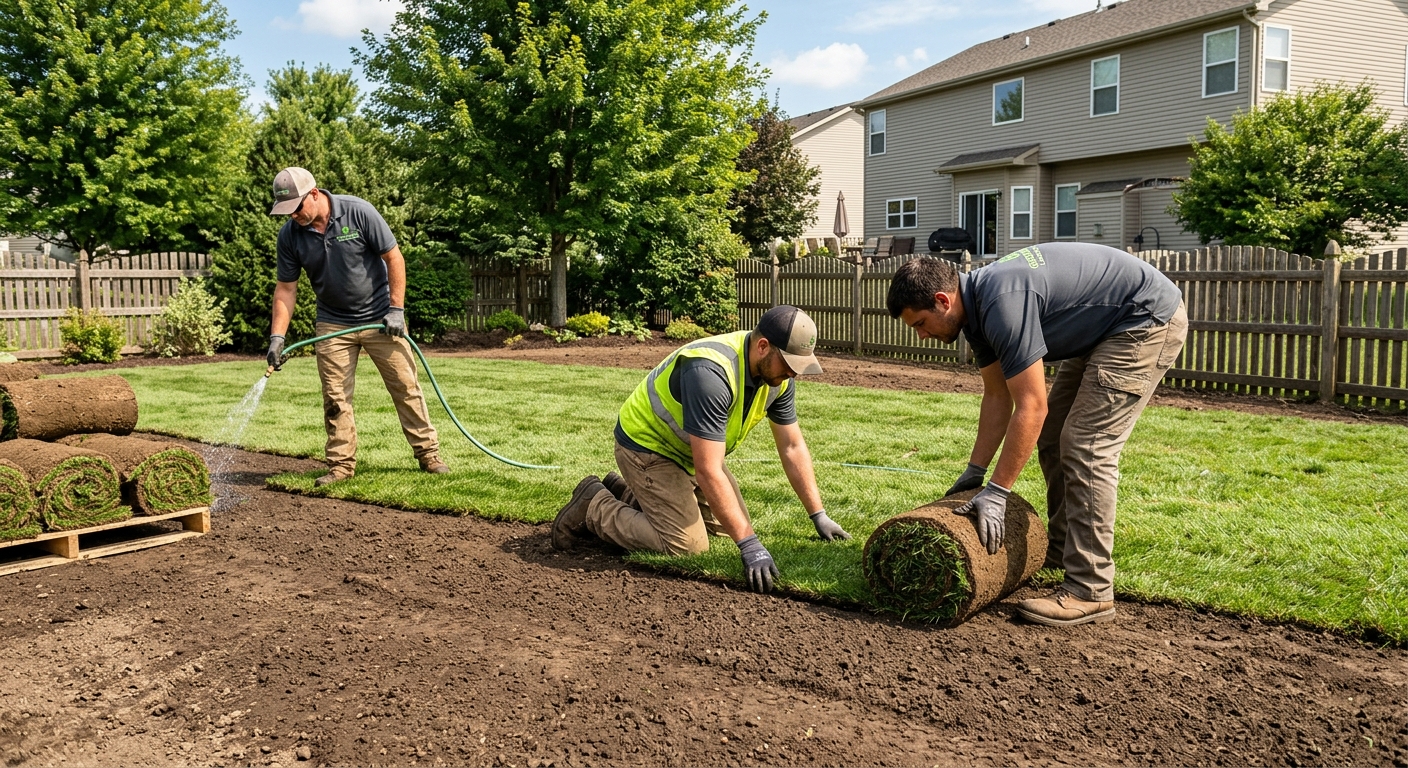
Remove/prepare existing grade, soil conditioning, lay sod, roll, initial watering setup |
Apr–Oct |
$2,000–$8,000 |
| Lawn seeding (grade, seed, starter fertilizer) |
Light topdressing/grade smoothing, seed selection, starter fertiliser, first growth support |
Mar–May and late Aug–Sep |
$1,200–$5,000 |
| Interlocking patio or walkway |
Excavation, base (crushed rock), edge restraint, sand setting bed, pavers, leveling |
Mar–Nov (weather-dependent) |
$10,000–$35,000 |
| Retaining wall (interlocking block) |
Block system, proper base depth, geotextile/backfill, drainage rock/weep measures |
Mar–Nov |
$10,000–$80,000 |
| Tree and shrub planting |
Plant supply (nursery-grown), soil improvement, planting, staking where needed, initial watering plan |
Apr–Nov (best in spring/fall) |
$1,000–$15,000 |
Prices are estimates only and vary by project scope, site access and material selection.
What affects the price of landscaping in Mission
In Mission and the broader Lower Mainland–Southwest, two homeowners can receive quotes that differ by 30–50% for what sounds like the same job—because the real cost drivers are site conditions, drainage complexity, and how “custom” the plant and hardscape package is. Labour rates and material pricing also move around across British Columbia, and projects in heavy-rain, sloped areas require extra time for excavation, base preparation, and longer haul/disposal runs.
Climate matters too, even when Mission feels mild. In plant hardiness zones 7–8, the long growing season makes planting and maintenance more flexible, but freeze–thaw cycles still affect structural installs. That means retaining wall base prep can’t be guessed: excavation and compaction have to reach below frost depth considerations to prevent movement. Meanwhile, Prairie regions (Zone 2–4) typically pay more attention to drought-tolerant, wind-hardy species and compress schedules into a shorter window. Coastal BC lets us choose a wider palette (often reducing the need for ultra-hardened substitutes), but drainage design must handle persistent moisture. In contrast, water restrictions in the dry BC interior and Alberta often force irrigation downscaling and more drought-tolerant planting choices. Southern Ontario (Zone 5–6) usually has a moderate season but faces dry spells that still demand irrigation planning.
Here in Mission, I commonly see costs rise when: (1) the yard has a steeper grade that requires grading and reconfiguration (often a major portion of the budget within a full install), and (2) the project needs drainage beds or French drains to stop water migrating toward foundations. On older homes—42.4% built before 1981—utility locations and older drainage patterns can also complicate excavation. A simple sod refresh can be comparatively straightforward (often within the $2,000–$8,000 range), while adding an interlocking patio or block wall is where budgets typically jump into the multi-thousand territory (and can escalate toward $10,000–$80,000 depending on height, length, and drainage).
| Price Factor |
Why It Matters |
Cost Impact |
| Yard size in sq ft — the primary cost driver for softscape |
More area means more topsoil, amendments, seed/sod, mulch, and labour time |
Can swing 20–60% depending on footprint |
| Grading and drainage work — slope corrections add significant cost |
Correct grade prevents ponding and protects foundations and neighbouring areas |
Often adds 15–40% on sloped lots |
| Drainage bed or French drain installation |
Under wet conditions, reliable sub-drainage prevents repeat softscape failure |
Can add $2,000–$15,000 depending on length and outlet |
| Plant material tier — native shrubs vs. ornamental vs. mature specimen trees |
Mature specimens cost more and may need staking, protection, and extra labour |
Can change the planting line by 25–100%+ |
| Hardscape vs. softscape ratio — walls and patios cost more per sq ft than lawn |
Excavation, base material, and paver/block installation are labour-intensive |
Hardscape-heavy projects typically rise faster in total price |
| Irrigation system design and installation |
Drip lines, zones, controllers, and testing must match plant density and soil |
Commonly adds $1,500–$8,000+ depending on zones |
| Soil amendment and topsoil required |
Compacted or rocky soil needs conditioning for roots and long-term stability |
Can add several thousand dollars on poor native soils |
| Tree removal or stump grinding before new planting |
Disposal, stump grind time, and root clearance affect scheduling and labour |
Often adds $500–$5,000+ depending on scope |
Permits & regulations in British Columbia
In British Columbia, most typical yard work—planting, sodding, seeding, and the majority of softscape upgrades—usually does not require a permit. Where permits commonly come into play is with retaining walls above the municipal height threshold (often around 1.0 m / 3.3 ft in many areas). If you’re planning a block wall that’s taller than the local limit, expect that a building permit may be required and, in some cases, engineered drawings.
Also consider grading. If your project includes lot grading changes that alter drainage pathways—for example, directing water toward a neighbouring property or modifying the way runoff reaches storm sewer connections—approvals may be triggered. Before any digging for planting holes, drain rock, or wall footings, confirm utility locates (it’s essential for safety and to avoid damage to buried services).
Licensing and coverage checks are part of good due diligence in Mission. Here’s a practical step-by-step: (1) ask for the contractor’s British Columbia licence details (and verify through the applicable online registry for their business category), (2) request a certificate of insurance showing liability coverage and that you’re listed or can be added as additional insured where appropriate, and (3) confirm clearance/coverage for workers through the provincial system for WSIB/WCB-type coverage—don’t accept a verbal statement. A reputable contractor will provide documents quickly and in writing.
Planning a landscape that thrives in Mission's climate
Designing for Mission works best when you plan around the yard you have—not a “copy-paste” plan. Mission sits largely in hardiness zones 7–8, so you can use winter-capable broadleaf evergreens, shade-tolerant perennials, and layered shrub borders with less winter protection than colder provinces. The goal is to pick plants that can handle wet winters and long, cool periods, then pair them with drainage and soil prep so roots aren’t sitting in saturated ground.
Start with plant selection: choose zone-appropriate, ideally native or proven-to-local conditions species to reduce long-term watering and winter dieback. Next, decide sod versus seed. Sod gives instant curb appeal and good results when the grade is correct, but it costs about 3–4x more per sq ft than seeding in typical Lower Mainland pricing once material and labour are included. Seeding is budget-friendlier and can work well for recovery—especially when soil prep is done well—though it takes longer to look “finished.”
For drainage and grading, treat it as the foundation of the landscape. On sloped lots, correct grade and sub-drainage prevent pooling near foundations and reduce the chances of repeated lawn/plant failure. For hardscape like patios and retaining walls, base preparation must respect frost-related movement—proper excavation depth, compaction, and drainage layers protect the investment over freeze–thaw cycles common in the region.
Finally, use low-maintenance strategies: mulch with a consistent depth, groundcovers in tough areas, and perennials that return reliably. Rain-garden style beds or carefully planned downspout soakaways can also help manage moisture while keeping the yard attractive during wet seasons.
Dollar example: If you budget $4,000 for a smaller lawn area, you might spend that on sod for a fast result. The same $4,000 could cover topdressing and seeding for a larger area, plus enough mulch and planting to improve appearance immediately—often the better value when the real bottleneck is drainage rather than grass type.
| Element |
Climate Consideration |
Maintenance Level |
Price Band |
| Sod lawn installation |
Works well in Mission’s long season, but requires correct grade and consistent early watering |
Low-to-medium after establishment; higher during establishment period |
$2,000–$8,000 |
| Native perennial garden |
Zone-appropriate planting handles cool seasons; reduces winter losses when sited correctly |
Medium (spring cleanup and occasional watering year 1) |
$3,000–$12,000 |
| Mulched shrub border |
Mulch buffers wet/dry swings; evergreen structure looks good through winter in zones 7–8 |
Low (weeding control and seasonal fertilising) |
$2,000–$10,000 |
| Interlocking stone patio |
Base prep and drainage matter for freeze–thaw stability on coastal BC soils |
Low (occasional joint sand top-up and cleaning) |
$10,000–$35,000 |
| Retaining wall (block) |
Correct base depth and wall drainage prevent movement during winter cycles |
Low (periodic inspection of drainage and edges) |
$10,000–$80,000 |
| Drip irrigation system |
Efficient watering supports shrubs/perennials with less waste during possible water-cost changes |
Low (set-and-forget with seasonal adjustments) |
$1,500–$8,000+ |
How to choose a landscaping contractor in Mission
Choosing the right contractor in Mission, British Columbia, comes down to verification, written detail, and realistic scheduling. Start with licensing and coverage. Ask for their BC licence information (or the appropriate registration for their work category), then confirm a certificate of insurance with liability coverage that matches the job size and insured contact details. For worker coverage, verify WSIB/WCB-type clearance through the province’s clearance process—don’t rely on a screenshot sent later or a verbal promise. A legitimate contractor will provide documents before work begins.
Next, request 2–3 itemised written quotes. You want labour and materials separated (excavation, base rock, sand, blocks/pavers, topsoil, mulch, plant material, irrigation components) rather than one lump sum. Ensure the scope is explicit: what’s excluded (tree removal, disposal, relocating existing plants, site clean-up beyond final sweep)? Is a permit required—and if so, is the permit pull included? Also confirm disposal and haul-away for excess soil.
Warranty matters. Ask for the workmanship warranty length, what it covers (settlement, failed grade, paver/block movement), and whether product warranties are manufacturer-backed and transferable to you. For payment, don’t pay more than 10–15% upfront; hold back a portion until completion and final grading/clean-up. Finally, get the timeline in writing: start date, milestones, weather contingencies, and expected completion date.
- Ask who the project manager is and when you’ll receive scheduling updates
- Confirm licensing/registration details in British Columbia before signing
- Verify liability insurance certificate and coverage limits
- Request worker coverage clearance (WSIB/WCB-type) in writing
- Get itemised pricing for labour vs. materials (not lump sum)
- Require a written scope: excavation depth, base type, and compaction steps
- Clarify whether drainage rock, geotextile, and weep details are included
- Confirm topsoil quality and soil amendment specs (type and depth)
- Ask about plant sizes and whether substitutions are allowed (with price adjustments)
- Ensure disposal/haul-away is clearly included or excluded
- Review warranty terms for workmanship and materials separately
- Use a staged payment schedule with a holdback until final acceptance
Red flags in Mission: contractors who won’t provide insurance/coverage proof, quotes that omit drainage/base preparation details, “free” design with no accountability for revisions, cash-only payment requests or large upfront deposits beyond 10–15%, and vague timelines that change day-by-day without written weather contingencies.
Frequently asked questions — landscaping in Mission
How do I plan a low-maintenance yard?
For a low-maintenance yard in Mission, British Columbia, start by designing for the site: correct grade and drainage first, then choose plants that thrive in zones 7–8. Use mulch (not bare soil), group plants by water needs, and prioritise proven evergreens and perennial structure so your beds look good even in wet winter weeks. If you’re replacing lawn, compare sod vs. seed based on your tolerance for establishment time: sod is typically in the $2,000–$8,000 band for many Mission projects, while seeding can stretch the same budget further if the grade and soil prep are done properly. Finally, consider drip irrigation for shrubs/perennials so you’re not running sprinklers constantly.
How deep should a retaining-wall base be for local frost?
Retaining-wall base depth depends on wall height, soil conditions, and the block system’s engineering requirements. In coastal BC, freeze–thaw cycles still matter, so the base can’t be shallow “by feel.” In Mission, we typically excavate to achieve stable, well-compacted base material and to keep the drainage layer functioning during wet months, with depth increasing for taller walls and weaker subgrade. Your contractor should propose a base section that includes geotextile, proper backfill, and drainage rock/weep provisions—those details prevent movement more reliably than guessing depth alone. If your wall is at or above the local permit threshold (often around 1.0 m), you should expect stricter requirements for the design.
How much does professional landscape design cost?
Landscape design pricing varies depending on whether you’re commissioning concept-only or a full design-and-install package. In Mission, many homeowners end up comparing “design included” offers versus separate design fees because design scope affects the construction budget. As a planning range, full landscape design and installation projects commonly sit within $5,000–$50,000 depending on hardscape extent, drainage work, and planting tiers. If your goal is to control costs, ask for an itemised plan with clear assumptions (plant quantities, irrigation zones, and grading/drainage boundaries). A proper site assessment also reduces change orders later, which is often where costs creep upward.
How do I compare landscaping quotes?
To compare landscaping quotes in Mission, British Columbia, look beyond the total price and compare the scope line-by-line. Ensure each quote lists what’s included: excavation depth, base material type and thickness, compaction method, drainage rock/geotextile, disposal/haul-away, and topsoil/soil amendment specifications. For lawn work, confirm whether sod is “supply, grade, lay, roll” or if grade prep is an extra charge; sod and seeding can look similar on paper but differ in prep. For patios and walls, make sure base preparation and drainage are spelled out—those details drive long-term performance. Finally, check payment schedules and warranty terms so you’re comparing “like for like,” not shortcuts.
How long does a landscaping project take in Mission?
Most Mission landscape projects are scheduled around weather and crew availability, and the Lower Mainland–Southwest climate generally offers a longer working window than colder regions. Typical timelines depend heavily on how much demolition/grading is needed and whether drainage or a retaining wall is included. A smaller planting refresh or mulch-and-edge update can take days, while a full design-and-install with hardscape and drainage often takes several weeks from the start date. Structural work (patios, retaining walls) needs proper base installation, compaction, and cure/settle time for materials. Ask your contractor for a written start date, milestone plan, and weather contingency notes so you can budget for the wettest weeks.
What is the best grass type for a Mission lawn?
In Mission, the “best” lawn grass is usually the one matched to your sun exposure, traffic, and ability to maintain early establishment rather than a single magic variety. Many local lawns use cool-season turf because Mission’s conditions align with long cool periods and manageable winters in zones 7–8. If you’re seeding, ask for a seed blend appropriate for your light level and weed pressure, and confirm starter fertiliser is included. If you’re going with sod, ensure grade is correct so roots contact soil and water can infiltrate instead of pooling. Your installer can also recommend an irrigation approach (often drip for beds, targeted watering for turf) to support healthy establishment.