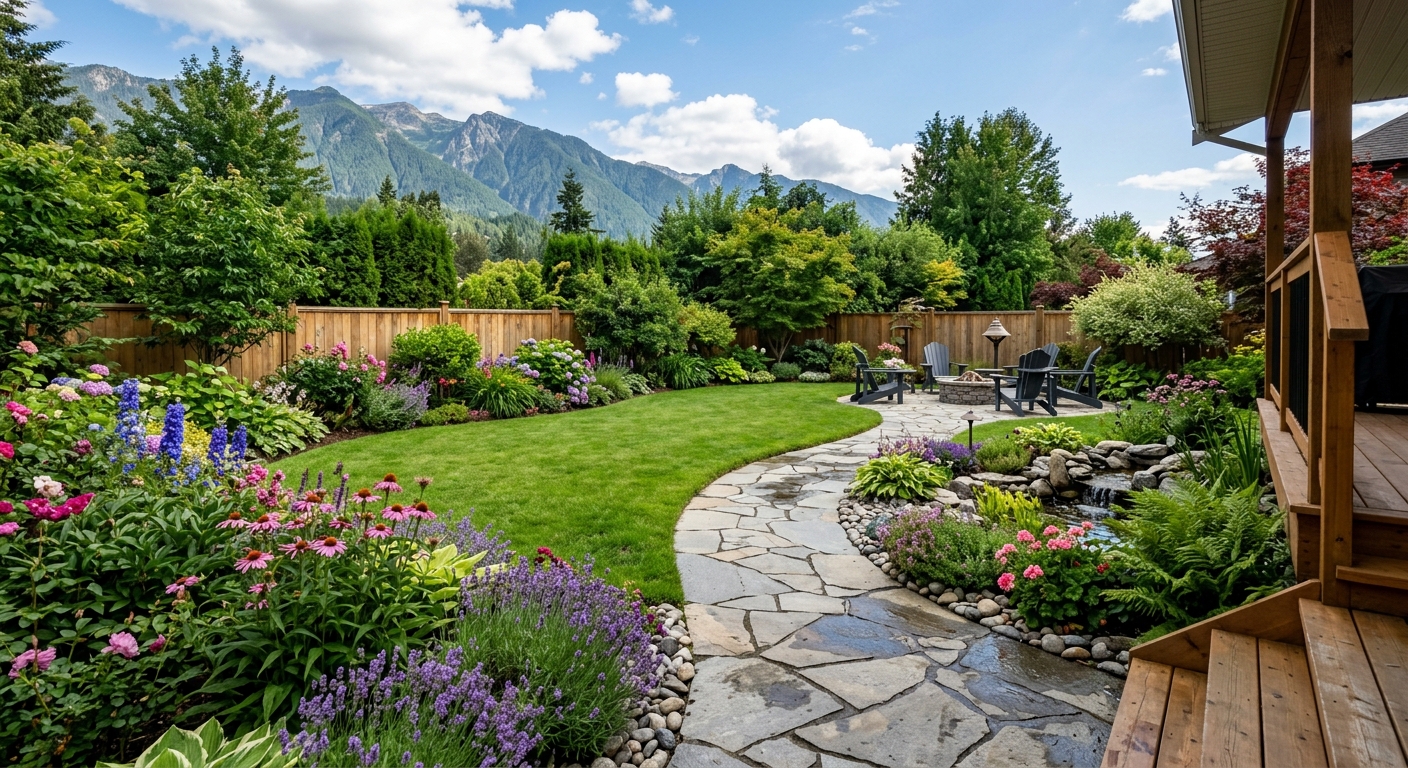
Landscaping options and costs in Cobourg
Cobourg is a water-and-park town where homeowners often want their yards to look crisp in summer yet survive our winter freeze–thaw cycles. With 6,275 homeowner households (68.7% of households own) and single-detached homes making up 57.5% of dwellings, there’s a real incentive—and plenty of yard space—to invest in long-lasting curb appeal improvements. The median household income in 2020 was $77,000, which typically supports a mix of upgrades: entry walkways, planting beds, and some hardscape, rather than one-size-fits-all “show gardens” for every lot.
In the Muskoka–Kawarthas region (hardiness zones 4b–5b), costs are shaped by a compressed working season, with last spring frost usually landing early to mid-May and first fall frost around late September to early October. Contractors also price in deeper base preparation to handle frost heave, plus reliable aggregate and drainage solutions for patios and retaining walls. Because labour can run roughly 50–100/hour for skilled crews, “simple” projects still cost real money when the site has slopes, old drainage issues, or tight access for bobcats and delivery trucks.
In Cobourg, demand is especially strong around the downtown and harbour-adjacent neighbourhoods where curb appeal matters and lots often have established trees, older grading, or more walk-in access. If you’re planning a makeover, the quickest way to compare apples-to-apples is to start with the scope and budget ranges below, then match them to your site conditions.
| Service |
Description |
Season |
Price Range |
| Full landscape design and installation |
Site walk, concept and planting plan, grading and drainage plan, softscape + hardscape install (typical entry + lawn + beds) |
May–September (sometimes early October for planting if conditions allow) |
$8,000–$35,000 |
| Sod installation (supply, grade, lay, roll) |
Remove/adjust topsoil, base prep, level grading, supply and lay sod, roll and initial watering plan |
Late April–early October |
$2,000–$8,000 |
| Lawn seeding (grade, seed, starter fertilizer) |
Light grading, seed selection, starter fertilizer, mulch/blanket where required, initial care guidance |
Early May–mid-June and late August–mid-September |
$1,200–$6,000 |
| Interlocking patio or walkway |
Excavate, compacted base, polymeric sand/setting, labour for pattern lay, edge restraints |
May–September |
$6,000–$18,000 |
| Retaining wall (interlocking block) |
Layout, footing/gravel base, block + caps, drainage layer and weep provisions, minor regrading |
May–September (footing work limited by ground conditions) |
$6,000–$40,000 |
| Tree and shrub planting |
Soil prep, planting holes, amendments, mulching, staking as required, watering plan |
May–June and September |
$1,000–$8,000 |
Prices are estimates only and vary by project scope, site access and material selection.
What affects the price of landscaping in Cobourg
Even when two homeowners describe the same “front yard refresh,” quotes in Muskoka–Kawarthas can land 30–50% apart because pricing reflects more than aesthetics—it’s about site complexity, schedule risk during a short season, and the labour hours needed for proper drainage and base construction. In Cobourg, that gap is most noticeable between softscape-only work and projects that include hardscape foundations (patios, walkways, retaining walls). In simple cases you might see total budgets near the lower end of the $8,000–$35,000 full design-and-install band; once you add structured drainage and heavier stonework, you’re often closer to the mid-to-upper range.
Climate and season matter. Our zone 4b–5b conditions mean plants must tolerate winter desiccation and spring frosts, and the working window is typically May through September for most installs. Frost heave also forces contractors to dig deeper, compact better, and use the right aggregate for bases—especially under patios and retaining walls. Compare this to Prairie regions (short season and wind/drought needs) or coastal BC (long season with lush growth)—in both cases, the plant palette and irrigation approach change. Here in southern Ontario, you still need irrigation planning for July dry spells, but the bigger cost driver is usually drainage stability and frost-safe installation depth.
Concrete examples from Cobourg site visits: (1) a gentle slope that needs regrading and topsoil import can add significant truck-load and machine time, pushing a planting project toward the $1,000–$8,000 planting band but sometimes also affecting lawn and drainage costs; (2) installing a block retaining wall without a properly sized drainage bed can cause movement—so good contractors price the drainage system in; (3) older homes built before 1981 (52.1% of homes) often have dated downspout discharge patterns, so foundation moisture fixes can become part of the landscaping plan rather than a separate contractor issue.
| Price Factor |
Why It Matters |
Cost Impact |
| Yard size in sq ft — the primary cost driver for softscape |
More area means more topsoil, seed/sod, mulch, and plant quantities |
Low-to-high impact depending on square footage; often the single biggest variable |
| Grading and drainage work — slope corrections add significant cost |
Fixing ponding and directing flow requires excavation, re-compaction, and soil import |
Can move a project by 20–40% on sloped or poorly drained lots |
| Drainage bed or French drain installation |
Controls water under patios, along foundations, and behind walls |
Moderate-to-high impact; materials + labour + outlet details |
| Plant material tier — native shrubs vs. ornamental vs. mature specimen trees |
Mature trees and premium ornamentals cost more and may need staking and extra labour |
Low for basic borders; high for multi-stem or larger caliper trees |
| Hardscape vs. softscape ratio — walls and patios cost more per sq ft than lawn |
Compacted bases, restraints, and drainage layers increase material and labour |
High impact; even small patios can raise totals quickly |
| Irrigation system design and installation |
Coverage, backflow prevention, and zone planning; more nozzles and trenching increase cost |
Moderate-to-high; varies with number of zones and water source |
| Soil amendment and topsoil required |
Healthier soil supports lawns and reduces failure rates; poor soil may need wholesale import |
Moderate; spikes with sandy/compacted or contaminated soils |
| Tree removal or stump grinding before new planting |
Site prep time and disposal for debris or roots |
Moderate-to-high; can add days and equipment costs |
Permits & regulations in Ontario
In Ontario, most routine landscaping work—such as planting new trees and shrubs, sodding and seeding lawns, and building typical softscape beds—generally does not require a permit. For example, if you’re adding mulch rings, grading a planting bed slightly, or installing a walkway/patio at grade without major structural changes, it’s typically treated as ordinary landscaping.
Where permits commonly come into play is retaining walls. In most municipalities, retaining walls above a threshold height (often around 1.0 m or 3.3 ft) can require a building permit, and sometimes engineered drawings, depending on height, soil conditions, and how the wall supports the surrounding grade. Another situation is significant changes to lot grading—especially if you’re redirecting drainage toward neighbouring properties, affecting a storm connection, or altering the way water leaves the property.
Before any digging for planting holes, footings, or drain lines, a homeowner should confirm utility locates have been requested (the contractor should handle this and document it). Also check water-use rules: while those are most prominent in Alberta and parts of dry interior BC, Ontario can still impose watering restrictions during dry spells.
Step-by-step for Cobourg homeowners:
- Confirm the contractor’s Ontario business details on their official listings and request their insurance certificate.
- Ask for proof of liability insurance (and ensure the job is covered at your address).
- Request WSIB/WCB clearance or coverage documentation—good contractors can provide current evidence.
- Have them list any exclusions in writing (for example, permits, disposal, or utility-locate fees).
- Verify the workmanship warranty terms before signing.
Planning a landscape that thrives in Cobourg's climate
Design your Cobourg yard around our winter survival realities (zone 4b–5b and frequent freeze–thaw). Start with plant selection: choose native and zone-appropriate species that can handle spring cold snaps and winter drying winds with less labour for protection. For curb appeal with fewer headaches, mix hardy shrubs, perennials, and grasses that establish well under local precipitation patterns.
On turf, sod versus seed is often the first cost-and-timeline decision. Sod gives instant “finished” curb appeal, but it usually costs about 3–4 times per sq ft compared to seeding once you factor in supply and labour. If your priority is speed—say you need the front looking good for an upcoming event—sod can be worth it. If you can tolerate a slower timeline, seeding is typically the better value.
Drainage and grading are make-or-break in Muskoka–Kawarthas. When water pools near foundations, you’ll see foundation moisture issues and uneven frost heave under hard surfaces. Under patios and retaining walls, base preparation has to be frost-safe: excavate to appropriate depth, compact correctly, and include proper drainage layers so water doesn’t freeze and push materials upward.
For low maintenance, aim for groundcovers, mulch, and perennial structures that suppress weeds and reduce annual upkeep. Rain-garden pockets and smart grading can also help manage runoff without turning your yard into a perpetual watering project. Xeriscape-style thinking still matters here: use drought-tolerant plants where irrigation is limited, then target irrigation only where it truly pays off.
Example: if you’re restoring a 500 sq ft lawn area, a basic seeded approach can fall within the lawn seeding band (often around $1,200–$6,000 depending on prep), while sod on the same footprint can land closer to the sod band (often $2,000–$8,000). If your grading is sound and you’re not in a rush, seeding usually gives the better return; if you have bare patches from winter and need immediate coverage, sod can justify the extra spend.
| Element |
Climate Consideration |
Maintenance Level |
Price Band |
| Sod lawn installation |
Establishment during frost-safe windows; winterkill risk if drainage is poor |
Low-medium (watering early then periodic mowing) |
$2,000–$8,000 |
| Native perennial garden |
Hardy to zone 4b–5b; better winter resilience and year-to-year structure |
Low (mulch + seasonal cleanup) |
$1,500–$6,500 |
| Mulched shrub border |
Mulch buffers freeze–thaw and reduces heaving around roots |
Low-medium (weeding first year, then selective pruning) |
$1,000–$5,500 |
| Interlocking stone patio |
Needs frost-safe base and drainage to prevent movement |
Low (occasional sand top-ups and cleaning) |
$6,000–$18,000 |
| Retaining wall (block) |
Drainage behind the wall prevents freeze expansion and wall shifting |
Low (inspect weep drainage and vegetation) |
$6,000–$40,000 |
| Drip irrigation system |
Targets root zones efficiently during dry spells; helps reduce winter stress from uneven moisture |
Low (seasonal adjustments + check for leaks) |
$1,800–$7,500 |
How to choose a landscaping contractor in Cobourg
Start by verifying coverage. In Ontario, ask the contractor for (1) their liability insurance certificate (name your address as the job site where possible), and (2) proof of WSIB/WCB coverage. A reputable Cobourg landscaper won’t hesitate to provide current documentation—request it before work begins. If you’re comparing firms, also confirm they have a clear business identity (legal name, address) and a contact process that matches the quote documents.
Next, get 2–3 itemised written quotes. You want labour and materials broken out, not just one lump sum. Ask whether the quote includes: excavation and disposal, topsoil/sod or seed supply, compaction, edge restraints, drainage bedding, utility locates, and any permit fees if a retaining wall crosses the usual height threshold. If the company says “we’ll handle everything,” make sure that’s stated explicitly—otherwise it’s easy to end up with change orders mid-project.
Warranty matters in our climate. Ask for a workmanship warranty length (how long the firm covers settlement, soft spots, or plant failures due to installation). Confirm the difference between product/manufacturer warranty and contractor warranty, and whether any warranty is transferable if you sell the home.
For payment, use a staged schedule: never pay more than 10–15% upfront, then hold back until key milestones and final grading are verified. Also insist on a written timeline with a start date and an estimated completion window—because spring frost and wet ground can shift crews in Cobourg.
- Confirm liability insurance certificate is current and covers landscaping operations.
- Request WSIB/WCB clearance or proof of coverage before work starts.
- Ask for 2–3 recent Cobourg-area references with similar scope (patios/walls/planting).
- Insist quotes are itemised: materials, labour hours, equipment, and disposal.
- Clarify what’s excluded (permits, utility locates, tree removal, soil hauling).
- Check base specs: minimum excavation depth, aggregate type, and compaction method.
- Ask about drainage: slope direction, French drain details, and outlets.
- Confirm sod/seed specifications and maintenance requirements for warranty.
- Get a written start date and completion estimate (and rain/freeze contingencies).
- Use a payment schedule with 10–15% max upfront and holdback until close-out.
- Verify warranty terms in writing, including transferability on sale.
- Ensure the contract includes site protection (walkways, driveway protection, cleanup).
Red flags in Cobourg: quotes that aren’t itemised (no drainage/base details), refusal to provide WSIB/WCB or insurance proof, “one price covers everything” without listing exclusions, no written warranty terms, or asking for a large upfront deposit beyond 10–15%.
Frequently asked questions — landscaping in Cobourg
How do I compare landscaping quotes?
In Cobourg, compare quotes like-for-like by matching scope first: base prep depth, drainage provisions, disposal, and the exact plant/turf specs. Ask for an itemised breakdown (labour, materials, equipment, and any trucking/topsoil allowances) rather than a lump sum. Also compare timing: a crew offering to do everything in one rush may skip proper compaction or drainage checks, which matters with freeze–thaw cycles. Finally, look at warranty terms. For example, if one quote offers sod in the $2,000–$8,000 band but excludes grading corrections and drainage, it may look cheaper but can cost more later if the lawn fails. (Statistics Canada, 2021 Census) shows many Cobourg households are homeowners, so you’ll often have long-term investment—make sure the quote supports longevity.
How long does a landscaping project take in Cobourg?
Project length depends on scope and site conditions, not just square footage. Softscape-only planting can often be done in a few days once soil prep is ready, while patios, walkways, and retaining walls typically take longer because excavation, base compaction, and curing time are involved. In Cobourg’s zone 4b–5b climate, wet spring ground and late frost can push start dates; crews generally plan for May through September for most installs. A reasonable expectation: a small interlocking walkway can take roughly 2–5 working days, while a retaining wall with proper drainage and regrading can be a week or more. If your project touches drainage near foundations, add time for troubleshooting and adjustments.
What is the best grass type for a Cobourg lawn?
For Cobourg lawns, homeowners typically do best with cool-season grasses that handle our winters and spring variability. Most contractors use a blend suitable for southern Ontario, often including varieties of Kentucky bluegrass, perennial ryegrass, and/or fine fescues depending on sun exposure and traffic. If your yard is shadier or needs lower water use, fine fescues can help reduce maintenance. If it’s a sunny, high-use area, ryegrass-based blends establish quickly, which pairs well with seeding schedules in spring or late summer. The key is to match the grass to your drainage and sunlight; even the best seed struggles on low spots that hold water. Planning around the early–mid May last frost and late September first frost helps you avoid winterkill risk.
When should I aerate and overseed my lawn in Cobourg?
In Cobourg, aeration and overseeding usually works best in two windows: early to mid-spring (after you’re past the risky cold) and late summer into early fall, typically around late August through mid-September. Those timings let seed germinate and establish roots before the first fall frost window (late September to early October). Aeration should be done when the lawn can recover quickly—if the ground is waterlogged or rock-hard, it’s better to wait. After overseeding, keep moisture consistent for germination but avoid saturating low areas that can freeze–thaw unevenly. If your lawn is thin from winter stress, seeding is often a cost-effective repair within the $1,200–$6,000 lawn seeding band, depending on prep.
What trees grow best in Cobourg's climate zone?
In Cobourg’s zone 4b–5b conditions, many hardy deciduous trees perform well if planted with proper spacing, soil preparation, and drainage. Common reliable choices include serviceberry, chokecherry, and hardy ornamental options like little-leaf varieties where appropriate. For larger specimens, contractors often recommend species suited to southern Ontario’s cold winters and periodic spring frosts. The best tree for you also depends on sun, soil type, and whether the site is near a foundation where drainage must remain stable. Because 52.1% of homes were built before 1981, some yards have older grading and downspout discharge patterns—choose trees with root habits that won’t crowd drains or foundations. A good landscaper will also recommend a planting depth and mulching approach to reduce winter heaving.
How much does sodding a yard cost in Cobourg?
Sodding in Cobourg commonly lands in the $2,000–$8,000 band, depending on yard size, how much grading correction is needed, and whether there’s drainage work before sod goes down. Sod itself is only part of the total—base prep, soil import, compaction, and initial watering guidance often determine long-term success, especially with freeze–thaw cycles. If your lawn has low spots or poor runoff, expect grading and drainage adjustments to add cost, because skipping that step can lead to uneven settlement and patch failures. If you’re dealing with a larger area and just need a quicker visual, ask for a phased approach: sod where traffic is highest and seed in broader sections to balance budget and results.