Landscaping options and costs in Kapuskasing
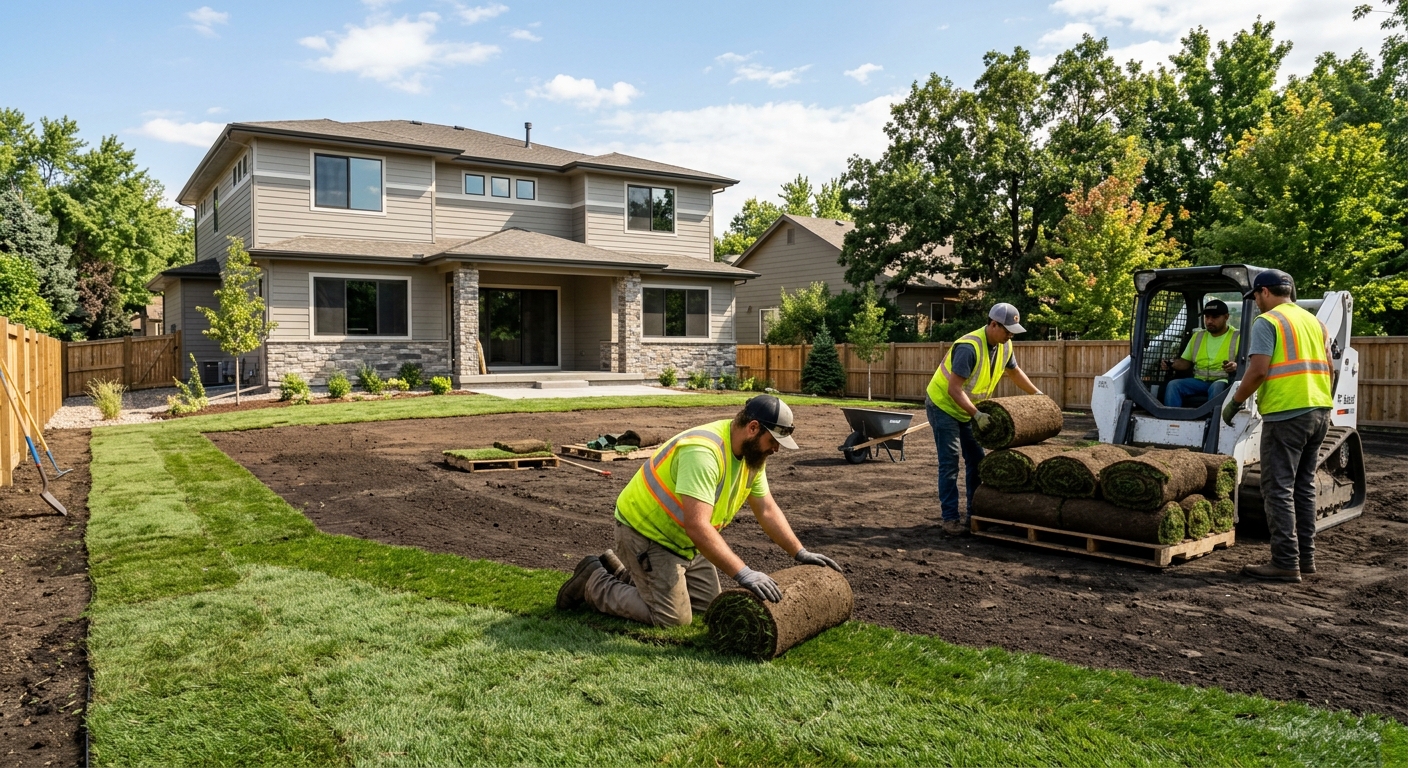
Kapuskasing is a working northern community where landscaping has to perform through freeze-thaw winters, wind, and a short practical planting window. With 62.1% of area homes being single-detached, most homeowners have the yard space to invest in curb appeal—especially since 85.4% of homes were built before 1981, meaning many properties have older drainage patterns, worn lawn edges, and mature trees that may need selective pruning or replacement. In the Northeast, labour and material costs tend to run higher than you’d expect because projects must be timed to a tight season and crews need deeper excavation and better bases for hardscape. Even simple upgrades like regrading a walkway or installing sod can cost more when the ground is heavy, frozen deeper, and drainage details must be engineered for pooling prevention.
Demand is especially strong around the older residential pockets near the downtown core and along the residential lanes in the north end, where curb appeal upgrades are common before the winter push. In practice, you’ll see quoted ranges that still fit the regional price bands: landscape design & installation often lands anywhere from $8,000–$30,000, while focused work like planting typically sits in a narrower band. Use the table below to compare typical scopes and seasonal timing, then talk to contractors about what they’ll include—soil prep, drainage, and plant hardiness for our climate first.
| Service |
Description |
Season |
Price Range |
| Full landscape design and installation |
Site walk, grading concept, plant palette suited to hardy northern species, hardscape/softscape coordination, and installation with cleanup |
Mid-late spring through early fall |
$8,000–$30,000 |
| Sod installation (supply, grade, lay, roll) |
Minor regrade, weed control, soil amendment as needed, sod supply and install with rolling/edge finishing |
Late spring to early September (weather-dependent) |
$3,000–$9,000 |
| Lawn seeding (grade, seed, starter fertilizer) |
Topdressing/grade correction, seed mix selection, starter fertilizer, light raking, and mulching |
Late spring to early August |
$1,200–$5,500 |
| Interlocking patio or walkway |
Base excavation, compacted granular base, edging, pavers, bedding sand, jointing and final leveling |
Late spring through early fall |
$6,000–$25,000 |
| Retaining wall (interlocking block) |
Block wall layout, compacted base, drainage stone and weep provisions, geotextile, block installation |
Late spring through early fall |
$7,000–$22,000 |
| Tree and shrub planting |
Soil prep, planting, staking as required, watering plan, mulch rings, and initial aftercare guidance |
Late spring through early fall |
$1,500–$8,000 |
Prices are estimates only and vary by project scope, site access and material selection.
What affects the price of landscaping in Kapuskasing
In Kapuskasing, homeowners can see the same general landscaping “look” quoted 30–50% apart, even when the yard size is similar. The main reasons are hard-to-spot details: how much base work is required, what drainage is included, whether the contractor is building for freeze-thaw stability, and how the plant list is matched to what can survive our northern winters. Contractors also price risk differently in a short season—mobilization, crew availability, and scheduling premiums can increase costs when timelines compress.
Across Ontario, the plant hardiness zone and frost dates shape both what grows and what the working season allows. Prairie-like climates (Zone 2–4) favour drought-tolerant, wind-hardy species and require more careful frost-depth base preparation for pavements and retaining walls. In contrast, coastal BC’s longer growing season supports lush palettes, but heavy-rainfall sites demand drainage design—so costs shift from planting difficulty to water management. Water restrictions in the dry BC interior push contractors toward drip or zoned irrigation layouts. Southern Ontario (Zone 5–6) offers a more moderate season with summer dry spells, so irrigation and seeding schedules matter, but frost-depth penalties are typically less intense than in the north.
Here in Kapuskasing, older homes (many built pre-1981) often have buried grading issues; correcting slope and adding drainage beds can add significant labour and gravel. A regrade plus drainage could move a “simple” lawn or border project up into the $6,000–$25,000 hardscape/retaining band, while a well-scoped planting refresh may still stay near the $1,500–$8,000 planting range. For example, if you replace a failing edge line with proper under-drainage and compacted base, you’re paying for the unseen stability that prevents sinkholes and winter heaving.
| Price Factor |
Why It Matters |
Cost Impact |
| Yard size in sq ft — the primary cost driver for softscape |
Larger areas require more materials (topsoil, seed/sod, mulch) and more labour hours |
Often the biggest swing; can change total by thousands |
| Grading and drainage work — slope corrections add significant cost |
Fixing grade helps prevent pooling near foundations and reduces freeze-thaw damage |
Can add a major premium, especially on older lots |
| Drainage bed or French drain installation |
Under-drains require excavation, fabric, proper aggregate, and outlet planning |
Frequently pushes projects into higher hardscape/installation bands |
| Plant material tier — native shrubs vs. ornamental vs. mature specimen trees |
Mature trees cost more, require larger excavation and better root-ball handling |
Can double plant budget versus smaller native stock |
| Hardscape vs. softscape ratio — walls and patios cost more per sq ft than lawn |
Pavers, block, and bases require deeper excavation and compaction |
Higher ratio typically increases total by 20%+ for similar footprints |
| Irrigation system design and installation |
Drip zoning and backflow prevention planning affects materials and labour |
Can add mid-project cost; lowers long-term watering risk |
| Soil amendment and topsoil required |
Compacted or poor native soils may need imported topsoil and amendments |
Material delivery and spreading can add noticeable totals |
| Tree removal or stump grinding before new planting |
Grinders, hauling, and disposal time are real labour drivers |
Often adds “surprise” cost if not planned early |
Permits & regulations in Ontario
In Ontario, most routine landscaping work—like planting shrubs, sodding, seeding, mulching, and installing typical softscape—usually does not require a permit. Retaining walls can be different. As a practical rule of thumb used in many Ontario municipalities, retaining walls above about 1.0 m (3.3 ft) often require a building permit and sometimes supporting details (and sometimes engineering depending on design and site conditions). Also, if you plan major grading changes that could redirect drainage toward a neighbouring property or toward storm infrastructure, permits or approval may be triggered, particularly where drainage could be affected.
Before digging for plants, irrigation lines, or wall footings, call for utility locates and ensure the contractor has done the appropriate marking. This is especially important in older areas where buried services can be unpredictable. Confirm any local irrigation or water-use bylaw requirements with your municipality; while Kapuskasing is not typically under the same strict drought regimes as some western interior communities, local rules can still restrict watering during certain conditions.
To verify an Ontario contractor in steps, ask for their licence details (and check their standing in the appropriate online registry for their trade), request a current certificate of liability insurance (with your address listed), and confirm they carry WSIB/WCB coverage where applicable to the work and workers. If you’re hiring subcontractors, insist on their insurance paperwork too. Finally, request a signed clearance or proof of coverage that matches the dates of your project and the scope you’re paying for.
Planning a landscape that thrives in Kapuskasing's climate
Planning for Kapuskasing means selecting plants that can handle our local hardiness realities and designing for drainage and frost movement instead of trying to fight winter. Start with plant selection: choose hardy, native and locally proven species that can survive wind and cold without constant winter cover. In practice, this reduces watering and failure rates, so your budget is spent on healthy growth rather than replacements.
Next, decide sod versus seed. Sod gives instant visual results, but in our northern climate it’s typically more expensive—often 3–4x the cost per installed square foot compared with seeding once you include removal, grade prep, and installation labour. Sod can still be justified if you need quick curb impact for an upcoming sale or if you have erosion-prone slopes where immediate cover matters, but if your priority is budget and long-term resilience, seeding plus good soil prep is usually the smarter path.
Drainage and grading are non-negotiable in the Northeast. Poor slope correction can lead to winter pooling, then freeze-thaw heaving that undermines edging and base material. For hardscape, base preparation needs to be built for the frost line: deeper excavations, thicker granular layers, and proper compaction are what keep patios and interlocking paths level year after year.
For low maintenance, aim for mulch, groundcovers, and perennials that establish quickly. Consider xeriscape-style ideas in drier pockets (right plant, less water) and rain-garden zones where runoff naturally collects. Example: if you’re choosing between seeding and sod for a front lawn, spending the extra sod cost might be justified for a narrow “statement” strip near the entrance, while seeding the rest gives you the same overall look for less—while still letting the plants root into the soil through the season.
| Element |
Climate Consideration |
Maintenance Level |
Price Band |
| Sod lawn installation |
Establishes quickly but needs proper grading and timely installation before cold sets in |
Medium (initial watering/aftercare, then seasonal mow) |
$3,000–$9,000 |
| Native perennial garden |
Hardier species reduce winter kill and wind burn; mulch helps buffer temperature swings |
Low to medium (spring cleanup, occasional weeding) |
$2,500–$7,500 |
| Mulched shrub border |
Mulch moderates freeze-thaw and moisture; choose shrubs that tolerate cold and dry periods |
Low (top up mulch and prune as needed) |
$1,800–$6,200 |
| Interlocking stone patio |
Requires frost-stable base depth, compacted layers, and proper edge restraint |
Low (seasonal cleaning, joint topping as required) |
$6,000–$25,000 |
| Retaining wall (block) |
Block walls need drainage stone/weep provisions and solid base below frost influence |
Low (periodic inspection of drainage outlets/settlement) |
$7,000–$22,000 |
| Drip irrigation system |
Helps manage watering efficiently during short growing season; supports drought-tolerant planting |
Medium (seasonal adjustments and blowout for winter) |
$2,000–$8,000 |
How to choose a landscaping contractor in Kapuskasing
To choose a contractor you can trust in Ontario, verify three things early: licensing/registration for the trade they perform (as applicable), liability insurance, and WSIB/WCB coverage. Ask for a certificate of insurance before work starts—make sure it’s current and lists your property address if required by your contract. For WSIB/WCB, request proof of clearance or coverage status for the period of your job, and confirm it aligns with the crew working on your site (not just the owner). If a contractor can’t provide documentation promptly, treat that as a red flag.
Get 2–3 itemised written quotes, not just a lump sum. A good quote clearly separates labour and materials: excavation/base materials, geotextile and drainage stone, sod/seed or plant supply, delivery charges, disposal, and any taxes. Check inclusions and exclusions line-by-line. Does the quote include permit pulls if required for a retaining wall, and does it include disposal of excess soil? If you’re removing a stump, is grinding included or billed separately?
Warranty matters: ask for a workmanship warranty length (and what it covers—settlement, heaving, plant establishment practices), plus manufacturer warranties for products like pavers/blocks or specific irrigation components. Confirm whether warranties are transferable if you sell your home. For payment, never agree to more than 10–15% upfront; hold back a portion until the job is fully completed, cleaned, and inspected.
Finally, require a written timeline with a start date and an estimated completion window, so the short Northeast season doesn’t turn into open-ended delays.
- Ask for current liability insurance certificate and confirm it covers landscaping/hardscape work.
- Request WSIB/WCB coverage proof or clearance letter for the dates your project runs.
- Get 2–3 itemised quotes with labour + materials separated (no “mystery” totals).
- Verify what’s included for excavation, base materials, compaction, and drainage provisions.
- Confirm disposal/hauling is included (or provide a clear allowance).
- Check permit responsibility for retaining walls near/above the ~1.0 m threshold.
- Confirm plant lists are based on hardiness and local performance, not just photos.
- Ask about soil testing or at least a soil/grade assessment in the scope.
- Set a written start date and completion estimate (seasonal weather windows).
- Require a workmanship warranty statement (what happens if settlement/heaving occurs).
- Use a payment schedule with 10–15% maximum upfront and holdback until final walkthrough.
- Require a site contact plan: who you call for changes during installation.
Red flags to watch for: (1) a quote that doesn’t mention drainage/base preparation, (2) refusal or delay providing insurance and WSIB/WCB documentation, (3) no written scope for what gets hauled away versus reused, (4) demanding large upfront payments (well beyond 10–15%), and (5) vague timelines like “sometime in spring” without start/completion dates.
Frequently asked questions — landscaping in Kapuskasing
What is xeriscaping and does it suit Kapuskasing?
Xeriscaping is a landscaping approach that reduces water use by matching plants to site conditions, using efficient irrigation, and improving soil structure so it holds moisture longer. In Kapuskasing and across northeastern Ontario, it can absolutely suit your yard—especially for borders that dry out fast or for homeowners who want fewer watering emergencies during the short growing season. The key is choosing hardy, wind-tolerant plants that can survive cold and don’t rely on frequent summer spray watering. A drip irrigation system is often more effective than sprinklers when you’re trying to be water-efficient. Cost-wise, a basic installation plan may fit under typical tree and shrub planting budgets, while a full design plus irrigation can move closer to the mid-range hardscape/installation numbers—often within $8,000–$30,000 if multiple zones and base work are included. (Statistics Canada, 2021 Census)
How do I plan a low-maintenance yard?
A low-maintenance yard in Kapuskasing starts with reducing “high-touch” areas: fewer lawn hours, fewer fragile plantings, and fewer drainage problems. Aim for a structure of groundcovers, mulch, and hardy perennials in groups rather than scattered single plants. Use proper edging so mulch stays where it belongs and grass doesn’t creep into beds. Focus on drainage and grading first—if water pools near a foundation, plants fail and maintenance increases. For turf, consider seeding for broad areas and reserving sod only for entry strips or areas prone to erosion where you need quick establishment. If you’re working from an older lot (many homes were built before 1981), you may need regrading to stop run-off from washing beds. Budget-wise, sod-only projects tend to land in the $3,000–$9,000 range depending on size, while a shrub border and planting plan may be closer to $1,500–$8,000 when the scope is focused. (Statistics Canada, 2021 Census)
How deep should a retaining-wall base be for local frost?
For a retaining wall in Kapuskasing, base depth is driven by frost influence, soil type, and wall height, so there isn’t a single number that fits every backyard. In general, contractors excavate deeper than “looks enough” because freeze-thaw and water can destabilize an under-designed base. You should expect a proper compacted granular base and drainage stone with geotextile separation, and the base should be set below frost-impacted movement for your soil conditions. A reputable wall builder will explain the wall design, the compaction method, and how they’re addressing drainage behind the wall (weep holes and a functioning outlet matter). If your wall approaches the typical 1.0 m threshold, ask about permits and whether engineering is required for the proposed design. Prices for a block wall in the north often sit within $6,000–$25,000, largely because the deeper excavation and drainage provisions are labour- and aggregate-intensive.
How much does professional landscape design cost?
Professional landscape design costs in Kapuskasing vary depending on whether you’re buying design only or design plus full installation. As a homeowner-friendly reference, full landscape design and installation packages often fit within the broader band of $8,000–$30,000, especially when the scope includes grading, plant palette selection suited to cold winters, and coordination with hardscape. Some companies separate design into a stand-alone fee, but once excavation and installation are involved, the design is usually integrated into the project plan. What matters most is that the designer accounts for drainage patterns and frost-stable base preparation—otherwise you’ll pay twice when areas settle or heave. Given Kapuskasing’s housing stock (with many homes built before 1981), design that addresses existing grading and foundation moisture can be especially valuable, because it prevents recurring maintenance costs.
How do I compare landscaping quotes?
Comparing quotes in Kapuskasing is less about finding the lowest number and more about checking what each price includes. First, insist on itemised quotes: labour hours, excavation/base materials, drainage stone, geotextile, plant quantities/species, and disposal/hauling. Second, compare “like for like”: one contractor may quote a narrow wall height or omit a drainage bed behind a block wall, while another includes full drainage provisions. Third, look for evidence the proposal is built for local conditions—proper base prep for hardscape, frost-stable compaction, and hardy plant selection instead of tender ornamentals. Fourth, confirm warranty terms and workmanship coverage. Finally, don’t ignore documentation: a contractor should provide liability insurance and WSIB/WCB coverage proof. If one quote is in the low end of the typical bands (for example, closer to $1,500–$8,000 for focused planting) but doesn’t mention soil prep or drainage, it may be missing key scope.
How long does a landscaping project take in Kapuskasing?
Project timelines in Kapuskasing are driven by the short practical season and by ground conditions. Most installation work—like planting, sod/seed, and many hardscape projects—tends to be scheduled from mid-late spring through early fall. Smaller jobs such as tree and shrub planting can often be completed in a matter of days once materials arrive. Sod installation and interlocking patios may take longer because excavation, base building, and compaction must be done in proper layers, then protected during setup. Retaining walls typically require staged work: layout, deeper excavation, base and drainage layers, then block installation. If your project includes drainage correction or grading, that adds time. On top of that, weather windows matter: if soils are too wet or freezing begins early, crews may pause to protect the base and ensure proper compaction. A clear written start date and completion estimate is the best way to avoid overruns.