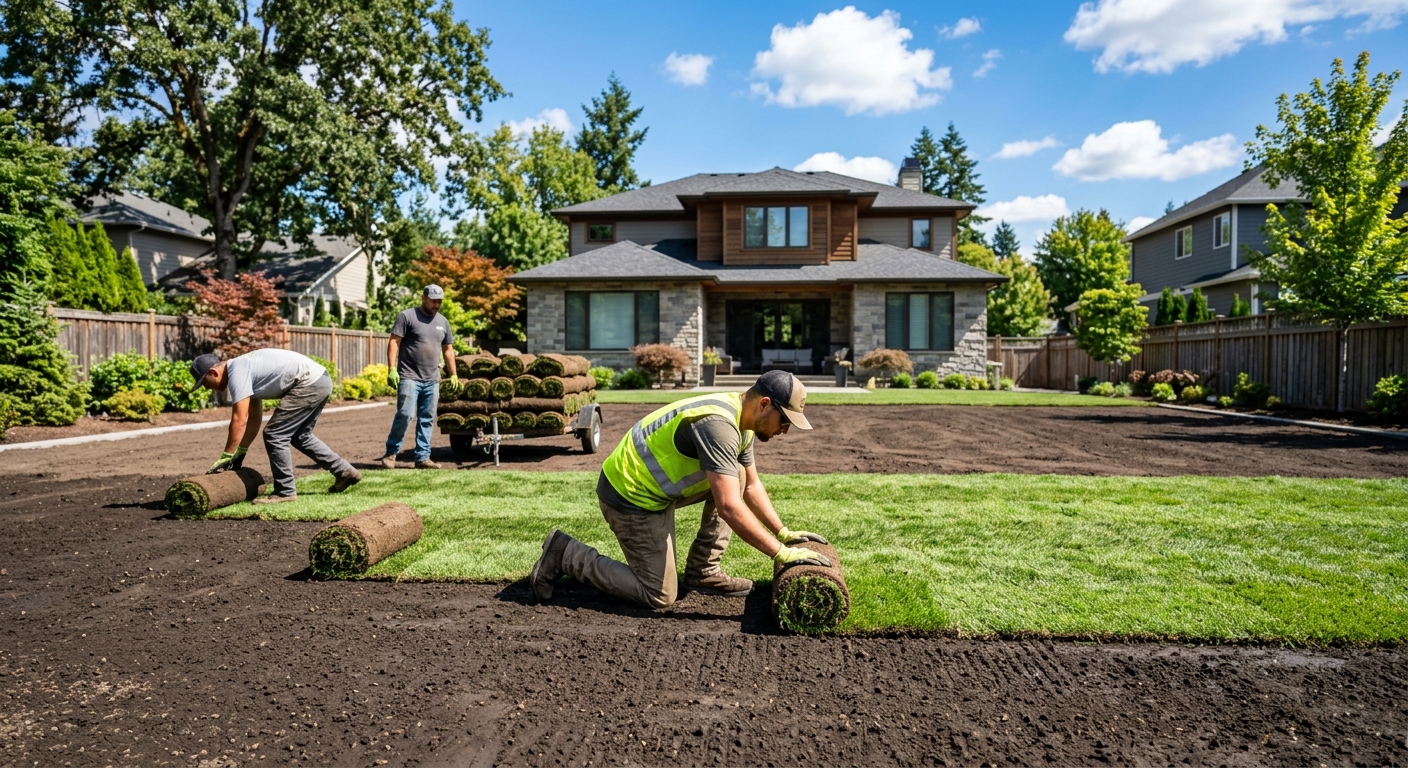
Landscaping options and costs in Midland
Landscaping in Midland is a smart way to make daily living better and boost curb appeal—especially when you consider how many homes have yard space to work with. In Midland, single-detached houses make up about 65.0% of dwellings, and homeowner households are 65.7% of all households (Statistics Canada, 2021 Census). That mix of detached homes and owner-occupiers is why we see consistent demand for new sod, interlocking, planting refreshes, and full front-yard makeovers in neighbourhoods like College Park and around the downtown corridor.
In the Kitchener–Waterloo–Barrie economic region, we’re mostly in Zone 5b–6a, with cold winters and a defined frost window. That matters for costs because patios, walks, and retaining-wall footings need deep, compacted granular bases and reliable drainage to prevent freeze–thaw heave. Labour availability is generally strongest from mid-April through October, so quotes for full rebuilds often price heavier work into the driest months. Summer dry spells also influence how much you’ll spend on irrigation design versus drought-tolerant plant palettes.
Because many yards in Midland have older housing stock—61.6% of homes were built before 1981 (Statistics Canada, 2021 Census)—we commonly find legacy grading and drainage issues that add excavation and re-build time. That’s why two neighbours can receive quotes that differ substantially even when the finished look seems similar. Below is a practical comparison table to anchor your budget for your scope.
| Service |
Description |
Season |
Price Range |
| Full landscape design and installation |
Site walk, grading concept, planting plan, base prep, sod/seed, hardscape allowance, irrigation if needed, project management |
Mid-April to October |
$8,000–$60,000 |
| Sod installation (supply, grade, lay, roll) |
Soil testing (where needed), remove/prepare existing surface, granular base where required, sod supply, layout, roll and first watering |
Late April to September |
$5,000–$10,000 |
| Lawn seeding (grade, seed, starter fertilizer) |
Re-grade minor low spots, seed selection for Zone 5, starter fertilizer, light topdressing/rolling and establishment watering plan |
April/May or early fall (best) |
$500–$2,500 |
| Interlocking patio or walkway |
Excavation, compacted base, edging, interlocking stone installation, slope/drainage considerations, jointing and cleanup |
May to September |
$2,500–$8,000 |
| Retaining wall (interlocking block) |
Layout and base, interlocking block system, weeping tile/stone drainage (as required), backfill, compaction, finishing and planting strip allowance |
May to September |
$6,000–$14,000 |
| Tree and shrub planting |
Soil preparation, planting holes, amendments, staking (if needed), mulch ring, watering plan, and establishment care |
Spring to early fall |
$1,000–$12,000 |
Prices are estimates only and vary by project scope, site access and material selection.
What affects the price of landscaping in Midland
In Midland and the broader Kitchener–Waterloo–Barrie region, quotes for the “same” landscape can still differ by 30–50%. The main driver is that the visible finish is only part of the job—subsurface work (grading, drainage, and frost-safe bases) often changes once a contractor evaluates your yard. Material quality also varies: “starter” shrubs and small caliper trees can look similar to higher-tier stock until you factor in long-term growth and how quickly a planting bed needs replacing.
Climate and schedule directly influence labour cost. With Midland sitting in Zone 5b–6a, plant hardiness and frost dates affect what can be installed and how much winter protection is needed. The working season is mostly mid-April through October; anything that requires structural base work or careful compaction must be planned when ground conditions allow. Freeze–thaw also increases base depth requirements for retaining walls and patio assemblies, so excavation and granular supply can add cost fast. By contrast, Prairie regions (Zone 2–4) often need drought- and wind-tolerant species and tighter scheduling for a shorter growing season, while coastal BC (Zone 7–8) typically supports lush palettes longer—but demands excellent drainage in heavier rainfall pockets. In southern Ontario, we have a moderate season, yet summer dry spells still push irrigation and soil strategies.
Two concrete Midland examples: (1) If your existing yard has a slope toward the foundation, you may need drainage corrections before sod or planting—this can add several thousand dollars to the total, shifting a project from the “intermediate” end of the $8,000–$60,000 design-and-install band to the upper mid-range. (2) If you switch from seeding to sod, the budget can jump significantly; sod is commonly 3–4 times the per-square-foot cost of seeding, so a large front lawn can push you into a higher overall spend even before hardscape is added.
| Price Factor |
Why It Matters |
Cost Impact |
| Yard size in sq ft — the primary cost driver for softscape |
Larger areas require more topsoil/grading, seed/sod, mulch, and labour hours |
Often the biggest variable; can change total cost by several thousand dollars |
| Grading and drainage work — slope corrections add significant cost |
Fixing ponding, redirecting runoff, and creating proper slopes protects foundations and turf |
Commonly adds a major portion of the budget compared with “cosmetic” work |
| Drainage bed or French drain installation |
Captures subsurface water and reduces freeze–thaw movement |
Material + excavation drives mid to high added costs |
| Plant material tier — native shrubs vs. ornamental vs. mature specimen trees |
Hardiness and final size determine how quickly you achieve the look |
Low-to-mid plants stay budget-friendly; mature specimens can multiply planting costs |
| Hardscape vs. softscape ratio — walls and patios cost more per sq ft than lawn |
Stone, base prep, and edge restraints require more labour and engineered assembly |
Shifts project toward the higher end of full-install pricing |
| Irrigation system design and installation |
Zoned coverage, winterization, and efficient heads prevent water waste and plant stress |
Increases upfront cost but reduces maintenance and replanting failures |
| Soil amendment and topsoil required |
Improves rooting and turf/plant establishment on compacted or poor soils |
Can be modest for small touch-ups or substantial when re-building soil depth |
| Tree removal or stump grinding before new planting |
Access, disposal, and equipment time add complexity |
Often a meaningful add-on, especially for larger removals near structures |
Permits & regulations in Ontario
In Ontario, most planting, sodding, and typical softscape work usually does not require a permit. You generally do not need approval for tasks like mulching, planting trees and shrubs, laying sod, seeding, installing garden edging, or building standard flower beds. However, work that changes site conditions or involves structural elements can trigger permitting.
Typically, a retaining wall above a municipal threshold (commonly around 1.0 m, or 3.3 ft, in many jurisdictions) may require a building permit and sometimes engineering documentation, especially if the wall is retaining significant height or is near property lines. Also, grading changes that alter drainage patterns—particularly if runoff is redirected toward a neighbour’s property or toward storm connections—can require approval. Before any digging for wall footings, French drains, or planting holes, contractors and homeowners should arrange utility locates to mark buried services.
For Midland homeowners verifying a contractor, ask for three things in writing and confirm them yourself: (1) the Ontario contractor licence/registration (use the province’s online business/licence registry); (2) a current Certificate of Insurance showing general liability (and named insured, jobsite details); and (3) evidence of WSIB/WCB coverage for the workers (or confirmation of exemption where applicable). If you’re unsure, request the clearance letter/coverage document before work starts and keep copies for your records.
Planning a landscape that thrives in Midland's climate
Planning a landscape that thrives in Midland means working with our Zone 5b–6a conditions: cold winters, freeze–thaw cycles, and a season that’s long enough for meaningful growth but still bracketed by spring and fall frost. Plant selection should prioritize native and zone-appropriate species because they establish faster, typically require less watering, and are more resilient through winter wind and snow-load conditions. For curb appeal that lasts, choose shrubs and perennials that tolerate Ontario temperature swings and that don’t demand heavy winter protection.
When deciding between sod and seed, understand the value trade-off. Sod gives instant coverage and can look finished the same week, but it often costs roughly 3–4 times per square foot compared with seeding due to material cost and labour. That’s where a higher upfront spend is justified—if you’re redoing a front lawn before a sale season, sod can prevent erosion and create an immediately presentable yard. If the goal is budget control, seeding plus soil prep usually performs better as a longer-term plan.
Drainage and grading are non-negotiable in this region. In Kitchener–Waterloo–Barrie, pooling water promotes frost damage and can undermine turf and beds. For patios and retaining walls, base preparation must be built for the frost line: deep, compacted granular layers and correct slope/drainage protect the assembly from heave. For low-maintenance design, lean on mulch rings, groundcovers, and hardy perennials to reduce annual upkeep, and consider rain gardens or drought-tolerant “xeriscape-style” planting zones where dry spells hit hardest. Efficient irrigation (zoned controllers and smart scheduling) can also make a big difference during summer dry periods without overwatering.
If you’re comparing options: a lawn-scope project can sit around the $5,000–$10,000 range for sod in many mid-sized Midland yards, while seeding may come in far lower—helpful if you plan to build soil quality over 1–2 seasons before investing in hardscape or a larger planting refresh.
| Element |
Climate Consideration |
Maintenance Level |
Price Band |
| Sod lawn installation |
Freeze–thaw-safe soil prep and proper rolling reduce winter lift; best installed during favourable growing stretches |
Low to moderate after establishment (mowing, occasional watering in dry spells) |
$5,000–$10,000 |
| Native perennial garden |
Zone-appropriate roots handle winter cold; mulch and hardy selection improve survival |
Moderate (seasonal pruning, spring tidy-up) |
$1,500–$6,000 |
| Mulched shrub border |
Mulch moderates soil temperature and reduces moisture loss through summer dry spells |
Low (weeding reduction, periodic mulch top-ups) |
$1,000–$5,500 |
| Interlocking stone patio |
Compacted base and correct slope prevent pooling and frost-related movement |
Low (occasional cleaning and joint maintenance) |
$2,500–$8,000 |
| Retaining wall (block) |
Deep, well-compacted base and drainage behind the wall reduce freeze–thaw heave |
Low once built correctly (inspection and drainage upkeep) |
$6,000–$14,000 |
| Drip irrigation system |
Zone-based watering protects plant roots while reducing waste during heat dry stretches |
Moderate (seasonal settings checks; winterization) |
$1,200–$4,500 |
How to choose a landscaping contractor in Midland
Choosing the right landscaping contractor in Midland starts with proof. First, verify Ontario business licensing/registration where applicable, and confirm the company operates legitimately in the province. Next, request a current Certificate of Insurance showing general liability coverage for property damage and bodily injury; it should list your job address or at least include jobsite coverage. For worker protection, ask for WSIB/WCB coverage documentation. Contractors should be able to provide a clearance letter or proof of coverage for the specific period of the project—don’t rely on verbal assurances.
Then compare quotes properly. Get 2–3 itemised written quotes, not one lump-sum number. A solid quote separates labour and materials (excavation, base stone, edging, sod/seed, planting stock, irrigation components) and clearly notes any allowances. Read the scope line-by-line: what’s excluded (tree removal? disposal of excess soil? utility locates?), whether the contractor pulls any required permits, and how they handle site cleanup at completion.
Warranty matters too. Ask for a workmanship warranty length for installation, plus the product/manufacturer warranty where applicable. Some plant warranties are limited to planting season and don’t replace established loss from drought or improper watering, so make sure expectations are written. For payments, never pay more than 10–15% upfront; use progress payments and hold back the final portion until the work passes inspection and cleanup is complete. Finally, insist on a written timeline with a realistic start date and completion estimate, since Midland’s spring ground conditions can shift.
- Confirm Ontario licence/registration and that the business name matches the quote and invoices.
- Request Certificate of Insurance and check expiry dates before work starts.
- Verify WSIB/WCB clearance or coverage proof for the workers assigned to your project.
- Get 2–3 itemised quotes with labour/material breakdown and clear inclusions/exclusions.
- Ask if topsoil/soil amendment is included and what spec or depth is being used.
- Confirm disposal: where excess soil, roots, or old sod is taken and whether dump fees are included.
- For hardscape, require base build-up details (granular layers, compaction, and slope).
- For retaining walls, confirm drainage behind the wall (weep tile/stone) is included.
- Request a written planting plan with plant sizes/cultivars and spacing expectations.
- Ask about irrigation: whether it’s included, and if included, the zoning and winterization plan.
- Check warranty terms for installation and clarify what “establishment” means for plants.
- Use a payment schedule that protects you: small deposit, then staged payments with a final holdback.
Red flags I see in Midland: quotes that don’t list base prep details for patios/walks; “tree and stump included” promises without specifying what size or disposal is covered; no proof of WSIB/WCB or insurance; vague scopes that lump drainage/grading into “miscellaneous”; and contracts that ask for a large upfront payment with no written milestones.
Frequently asked questions — landscaping in Midland
Do I need a permit for a retaining wall in Ontario?
In Ontario, many softscape and planting jobs don’t need permits, but retaining walls often do depending on height and municipal requirements. In many Midland-area situations, a wall above roughly 1.0 m (3.3 ft) can require a building permit, and more complex walls may require engineered drawings—especially if the wall retains significant soil or is near property lines. The key is that it’s not only the wall material (block) that matters; it’s the structural height and drainage implications. To be safe, ask your contractor to confirm the local requirement before they start. Also ensure utility locates are done before digging footings or drainage trenches, since that’s a practical safety step and commonly part of compliant job setup.
How do I improve drainage in my yard?
If water is pooling near your foundation or repeatedly saturating the same spots in Midland, drainage improvements usually start with correcting grading and then adding targeted subsurface collection. Common solutions include re-grading to direct surface water away from the house, installing a French drain or a drainage bed, and adding a proper discharge path (often to a lawful storm outlet). Freeze–thaw in Zone 5b–6a makes drainage even more important, because trapped water can contribute to heaving and long-term turf failure. If the problem is small, you might see results with localized rework, but if it’s widespread, expect the project to fall into the higher ranges typically seen in full landscape installations (for example, the broad $8,000–$60,000 band for design-and-install work).
What is xeriscaping and does it suit Midland?
Xeriscaping is a water-wise landscaping approach that uses drought-tolerant plants, efficient irrigation, and soil amendments to reduce watering demand. In Midland (Zone 5b–6a), it can suit portions of your yard well—especially sunny, fast-draining areas and zones where summer dry spells are noticeable. That said, Ontario winters mean you still need winter-hardy plants and mulch/winter prep, not just “dry” plants year-round. Many homeowners benefit from a mixed design: drought-tolerant perennials and shrubs paired with rain-garden-style pockets where runoff can be managed. If you’re comparing budgets, note that water-wise planting can reduce ongoing maintenance, but it won’t eliminate the need for proper grading and drainage where frost and pooling are issues.
How do I plan a low-maintenance yard?
A low-maintenance yard in Midland usually comes from reducing the number of “high-touch” surfaces and choosing plants that match our climate. Start with a drainage-first mindset: if your yard stays wet, no amount of mulch will prevent weeds or patchy lawns. Then select zone-appropriate shrubs and perennials, use groundcovers and thick mulch layers to suppress weeds, and group plants by water needs so you don’t have to babysit every section. Many people choose mulch shrub borders and native perennial beds because they tidy up quickly each spring. For turf, seeding or sod can both work—just be realistic: sod gives faster coverage but costs more upfront, often landing in the $5,000–$10,000 range for many Midland lawns, while seeding is usually less expensive. Finally, plan seasonal tasks (spring tidy, fall leaf management, irrigation winterization) and keep them predictable.
How deep should a retaining-wall base be for local frost?
There isn’t one universal “magic depth” that fits every Midland retaining wall because it depends on wall height, soil conditions, frost exposure, and the manufacturer’s system requirements. What matters is that the base must be built for stability and frost resistance, using deep, well-compacted granular layers and correct backfill. Contractors typically excavate to a depth that supports a properly engineered base assembly and then compact granular materials in lifts, rather than creating a shallow base that can shift during freeze–thaw cycles. This is also why drainage behind the wall is critical: trapped water can increase pressure and movement. If your wall is above common thresholds (often around 1.0 m / 3.3 ft), permit/engineering requirements may apply, and the foundation design should follow those specs.
How much does professional landscape design cost?
Professional landscape design cost varies in Midland based on how detailed the scope is—concept-only versus full planting layout, hardscape dimensions, and material selections. In practice, design and installation are often bundled when you’re moving from concept to build, especially for homeowners planning a full front-yard transformation. For budgeting, a useful anchor is the regional full-service landscape band, commonly starting around $8,000–$60,000 for design and installation depending on yard size, hardscape scope, drainage complexity, and planting tiers. If you’re only doing a smaller planting refresh, you may see much lower totals, but you still want the design to include practical decisions for Zone 5b–6a—plant hardiness, seasonal colour planning, and frost-safe base considerations where applicable.