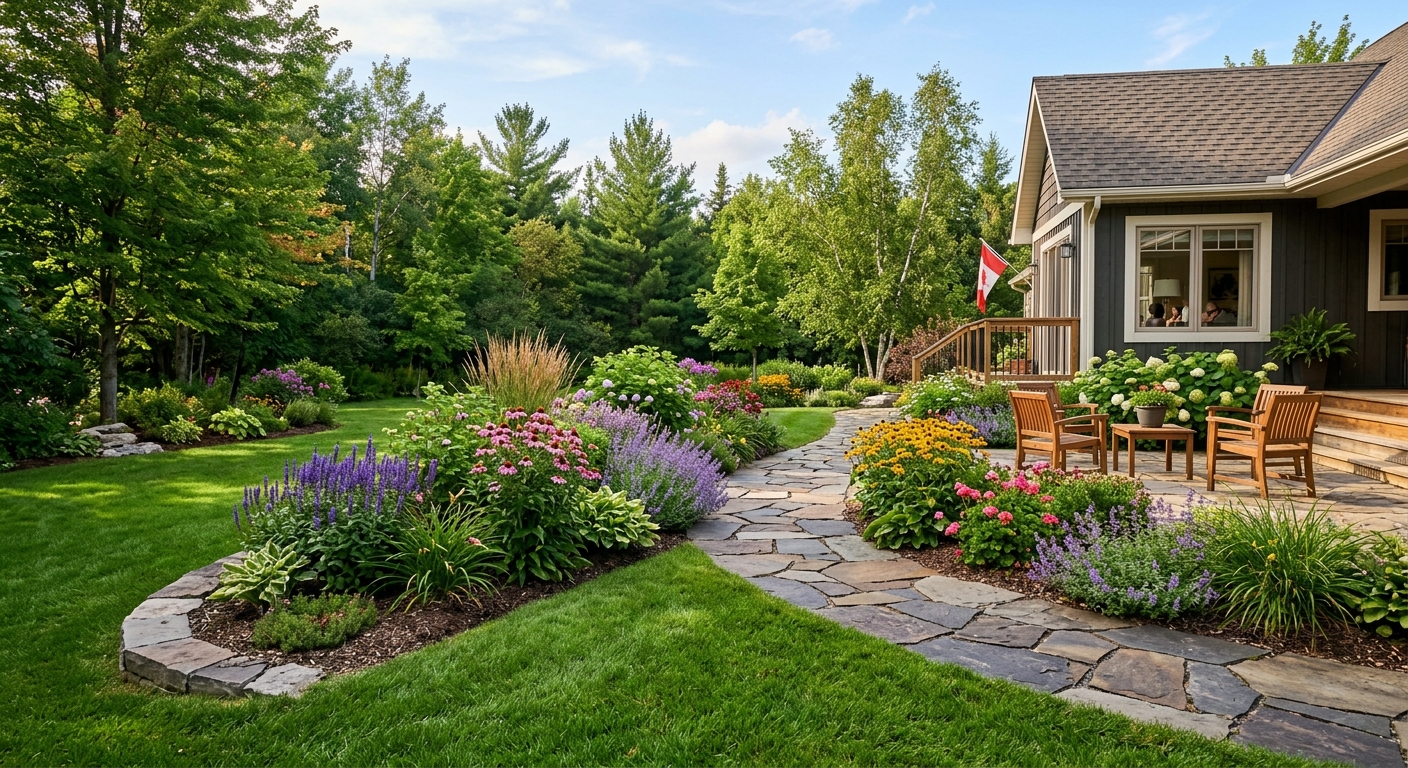
Landscaping options and costs in Thorncliffe Park
Thorncliffe Park is a neighbourhood where people want their yards to look great and work hard—especially because many homes sit on compact lots and share close proximity with neighbouring properties. With a population of 21,108 (Statistics Canada, 2021 Census), Toronto demand stays steady year-round, and that means more choice in contractors during spring and early summer, but also tighter scheduling once frost comes out. Housing stock matters too: in Toronto, the blend of smaller lots and larger family properties creates yard variety, from “quick curb upgrades” to full multi-zone makeovers—each detached property type tends to come with more yard space and a stronger incentive to invest in long-term landscaping improvements.
In the GTA, costs are shaped by climate and soil. We commonly work in plant hardiness zones 6a–7a, and freeze–thaw cycles push up structural costs: patios, steps, and retaining walls need deeper, well-compacted granular bases and solid drainage. Local clay and fill soils often require excavation, soil amendment, and sometimes subdrains to protect both softscape and hardscape. That’s why “same-looking” projects can land far apart in price—drainage details and base depth are where quotes diverge most.
If you’re in a busy pocket such as the Thorncliffe Park–Leaside corridor (fast-turnover family homes and frequent renos), landscaping labour tends to book quickly. The table below breaks down common options and realistic Thorncliffe Park price ranges so you can compare quotes apples-to-apples.
| Service |
Description |
Season |
Price Range |
| Full landscape design and installation |
Site visit, grading/drainage plan, plant selection, softscape + hardscape build (excluding major structural engineering) |
Mid-April to October (best results May–September) |
$8,000–$40,000 |
| Sod installation (supply, grade, lay, roll) |
Minor grading, soil preparation/loam top-up, deliver & lay sod, rolling and starter fertilizer |
Late April to early July; touch-ups in August (weather permitting) |
$2,500–$8,000 |
| Lawn seeding (grade, seed, starter fertilizer) |
Light grading, seed blend, starter fertilizer, seed/loam coverage, first watering plan |
April–June and early fall (recommended) |
$1,800–$5,500 |
| Interlocking patio or walkway |
Excavation, compacted base, interlocking stone, edge restraints, polymeric sand, clean-up |
May to September (freeze–thaw risk lower once soils dry) |
$6,000–$30,000 |
| Retaining wall (interlocking block) |
Block wall build with proper base/granular drainage, backfill, geotextile and weep provision |
May to October (allow cure/settlement before winter) |
$6,000–$30,000 |
| Tree and shrub planting |
Soil amendment, planting holes, staking (if needed), mulch rings, watering plan |
Spring and fall (with summer watering for new installs) |
$800–$6,000 |
Prices are estimates only and vary by project scope, site access and material selection.
What affects the price of landscaping in Thorncliffe Park
In Thorncliffe Park, even “similar” landscaping projects can vary by 30–50% across Toronto and the broader Ontario market because the scope rarely matches. Two quotes can both list a patio and planting, but one may include full excavation and drainage correction while the other assumes existing base conditions are adequate. In practice, the big levers are soil, grade, frost performance, and how much hand labour is required to get clean lines on a compact, urban lot.
Climate and season also drive cost. The GTA sits in plant hardiness zones 6a–7a with a frost period that effectively limits reliable installation windows. That matters for both what grows and how fast crews can work without damaging sod, perennials, or fresh granular bases. Prairie regions (Zone 2–4) face shorter growing seasons, colder winters, and frequent drought—so designs shift toward ultra-hardy, drought-tolerant species and simpler palettes, and the working season can be several weeks shorter. Coastal BC (Zone 7–8) typically supports lush, broadleaf structure and a longer install window, but heavy-rainfall areas demand good drainage detailing. Dry BC interior municipalities often require water-wise irrigation (drip systems and low-precipitation heads). In Southern Ontario, summer dry spells still require irrigation planning, but the main structural cost pressure is freeze–thaw cycling.
Local examples that commonly raise cost in Thorncliffe Park: (1) clay or compacted fill that needs deeper excavation and soil amendment before sod; (2) downspouts and grading that funnel water toward foundations, forcing regrading and sometimes a subdrain; and (3) retaining walls where the wall base must extend below the frost line performance needs, plus additional granular drainage layers. If your plan includes a retaining wall, you’ll often see totals line up with the $6,000–$30,000 band. If drainage and replanting are minimal, a curb-focused softscape may stay nearer the $8,000–$40,000 design-and-install band only when the scope truly expands to multiple zones and hardscape.
| Price Factor |
Why It Matters |
Cost Impact |
| Yard size in sq ft — the primary cost driver for softscape |
More area means more topsoil/loam, more seed/sod, more edging and more labour days |
Low yards can add up quickly; doubling square footage can noticeably multiply total cost |
| Grading and drainage work — slope corrections add significant cost |
Fixing pooling or directing runoff away from foundations requires excavation, reshaping, and verification |
Can swing quotes by 20%–40% depending on how much removal and rework is needed |
| Drainage bed or French drain installation |
Captures subsurface water and reduces freeze–thaw heaving in wet clay conditions |
Material + labour increases; often moves a job into higher tiers |
| Plant material tier — native shrubs vs. ornamental vs. mature specimen trees |
Smaller stock is cheaper and easier to transplant; mature specimens cost more and need larger planting prep |
Can add or remove thousands, especially for larger trees and layered borders |
| Hardscape vs. softscape ratio — walls and patios cost more per sq ft than lawn |
Patios/walkways/blocks demand excavation, base material, compaction, and precision base thickness |
Higher hardscape mix typically pushes projects toward the upper $6,000–$30,000 ranges and beyond |
| Irrigation system design and installation |
Sprinkler layouts, valves, backflow considerations, and coverage testing add planning and labour |
Often increases costs but protects turf and new plantings during summer dry spells |
| Soil amendment and topsoil required |
Clay/fill may need loam delivery, compost, and proper layer prep for rooting and drainage |
Frequent in Thorncliffe Park; can be the difference between “seeding takes” and “patchy lawn” |
| Tree removal or stump grinding before new planting |
Access, stump disposal, and root/grade repair influence both schedule and base prep |
Often adds a separate labour track and increases cleanup and regrading costs |
Permits & regulations in Ontario
In Ontario, most landscaping work like planting, sodding, and typical softscape installation does not require a permit. Where homeowners get tripped up is structural hardscape and grading. Retaining walls above a commonly used threshold—typically 1.0 m (3.3 ft) in many municipalities—often require a building permit and sometimes engineered drawings, especially if the wall is supporting surcharge loads or is on/near property lines. Also, if you’re changing lot grading in a way that affects drainage toward neighbouring properties or storm sewer connections, approvals may be required.
Before any digging (planting holes, trenching for French drains, or wall footings), always plan for utility locates. Digging without confirming buried services can lead to delays and safety issues. For irrigation, confirm water-use bylaws and restrictions—particularly during drought conditions. While those are more widely emphasized in other provinces, Toronto can still tighten watering expectations in hot, dry periods.
To verify contractor compliance in Thorncliffe Park, have the contractor provide: (1) proof they’re licensed/authorized for the specific work they’re doing (where applicable), (2) liability insurance certificate, and (3) WSIB coverage or a clearance letter if required for their work category. Step-by-step: ask for the certificate directly with dates matching the project period, check the coverage limits, and ensure the name/addresses on insurance match the company issuing the quote. If they can’t supply documentation quickly, consider it a process red flag.
Planning a landscape that thrives in Thorncliffe Park's climate
Designing for Thorncliffe Park means working with a freeze–thaw cycle and a temperate, humid summer—rather than fighting it. Thorncliffe Park falls in GTA plant hardiness zones 6a–7a, so choose plants that can handle winter lows near the –23 to –18°C range and a growing season roughly May to October. Start with plant selection: favour native and zone-appropriate shrubs and perennials that establish quickly, then add winter structure with woody forms. Where possible, group plants by water needs so you’re not overwatering everything to keep one thirsty area alive.
On turf, sod and seeding are not interchangeable. Sod gives instant visual coverage but costs about 3–4x more per sq ft than seeding, and you still need proper grade and soil prep so it roots instead of shrinking or lifting. In Toronto, drainage and grading are critical: pooling near foundations can undermine both lawns and wall bases during freeze–thaw. For hardscape like patios and interlocking walkways, base prep must be built for frost performance—adequate granular layers, compaction, and edge restraints prevent shifting over time.
Low-maintenance strategies work well here: mulch rings, groundcovers where lawn struggles, and perennial massing reduce annual labour while keeping curb appeal. If you have a runoff issue or want to reduce summer watering, consider a rain garden or xeriscape-adjacent zones (not “full desert,” but drought-aware planting with deeper mulch and targeted irrigation).
Example of where the price difference is justified: if you want fast use of a backyard patio zone and it’s visible from the front, investing in a built interlocking patio rather than patchy repairs can move you into the $6,000–$30,000 band—because the base and drainage make it last through winter. If you’re simply filling a thin lawn patch, seeding at the $2,500–$8,000 turf band’s lower end is usually the better value when prep is done right (grade, seed, and starter fertilizer).
| Element |
Climate Consideration |
Maintenance Level |
Price Band |
| Sod lawn installation |
Needs solid grading before spring growth; roots must establish before summer stress and winter dormancy |
Medium (watering + first mow window) |
$2,500–$8,000 |
| Native perennial garden |
Zone-appropriate plants handle winters; mulch helps moderate soil freeze–thaw in clay |
Low to medium (spring clean-up, occasional weeding) |
$1,800–$6,000 |
| Mulched shrub border |
Deep mulch reduces moisture swings and protects crown/root zones through winter cold |
Low (refresh mulch yearly or as needed) |
$1,200–$5,000 |
| Interlocking stone patio |
Requires frost-safe base, compaction, and drainage to prevent heaving |
Low (occasional joint sand top-up) |
$6,000–$30,000 |
| Retaining wall (block) |
Backfill + drainage layers are essential on clay soils to prevent water pressure and shifting |
Low (monitor weeping/drain areas after heavy rains) |
$6,000–$30,000 |
| Drip irrigation system |
Helps reduce summer watering on targeted beds; supports deep watering vs. shallow sprinkling |
Medium (seasonal checks and winterizing) |
$1,500–$7,500 |
How to choose a landscaping contractor in Thorncliffe Park
Start by verifying the contractor’s Ontario coverage and working credentials. For the basics: ask for (1) a certificate of liability insurance, (2) WSIB/WCB coverage or a clearance letter (as applicable), and (3) any licence/authorization that matches the scope—especially if they’re doing structural work like larger retaining walls. How to check: confirm the insurer details and coverage dates align with your project timeline, and that the certificate names the correct legal entity (the company on your quote). Don’t accept “we’re covered” without documentation.
Next, get 2–3 itemised written quotes. You want labour + materials breakdown, not one lump-sum number that hides what’s included. Ask whether the quote includes excavation depth, base layers for patios/walls, soil amendments/topsoil quantity, drainage components, disposal of removed material, and whether permits (if required) are pulled by them or by you. For warranties: request workmanship warranty length in writing, confirm product/manufacturer warranty terms, and ask whether the warranty is transferable to you as the homeowner. Finally, payment schedule matters: never pay more than about 10–15% upfront; use holdback until the job is complete and the site is cleaned, graded correctly, and surfaces are finished as agreed.
Get a timeline in writing—start date target and completion estimate—so you can plan around Toronto’s spring soil conditions and the growing season. In Thorncliffe Park, a delayed start often means a rushed finish before weather cools, which can affect turf establishment and plant settling.
- Provide insurance certificate showing liability coverage and dates covering your project period
- Provide WSIB/WCB clearance letter or evidence of coverage matching the work scope
- Use an itemised quote (labour, materials, drainage components, base layers, disposal)
- Clarify exclusions: what they will NOT do (subdrain testing, hauling, topsoil depth, irrigation supply)
- Confirm permit responsibility for retaining walls above typical thresholds
- Request a detailed description of patio/walkway base (granular depth, compaction, edge restraints)
- Ask for soil amendment and topsoil quantities (by depth and area, not “included”)
- Check plant list: species names, sizes, and whether substitutions are allowed
- Confirm watering plan for new sod and planting (initial schedule and responsibility)
- Ask for workmanship warranty (length and what it covers), plus product warranty terms
- Payment schedule: limit upfront to 10–15% and set a holdback until completion
- Timeline: written start and completion dates, plus weather contingency notes
Red flags in Thorncliffe Park include: quoting a patio or retaining wall without describing the base depth/compaction and drainage layers; refusing to show a current insurance certificate or WSIB/WCB clearance letter; offering “seasonal discounts” that require bulk prepayment; using vague language like “topsoil as needed” with no quantities; and starting without confirming utility locates or digging permits when required.
Frequently asked questions — landscaping in Thorncliffe Park
What plants thrive in Thorncliffe Park's climate zone?
Thorncliffe Park sits in the GTA’s plant hardiness zone range (typically 6a–7a), so the best performers are hardy shrubs and perennials that can handle winter cold and spring freeze–thaw. I generally steer homeowners toward zone-appropriate, disease-tolerant options and native-leaning selections that establish faster in Toronto soils, especially where clay needs amendment. Good yard choices often include hardy shrubs with strong structure (for year-round form), plus perennials that can tolerate humid summers and periodic dry spells. If you want less watering, group plants by water need and use mulch—this reduces soil temperature swings that stress roots after cold nights. For a clear plan, a basic planting package is often in the $800–$6,000 band depending on whether you’re adding a few shrubs or building a layered border.
Sod vs seed — which is better for a Thorncliffe Park lawn?
For Thorncliffe Park lawns, sod is best when you want instant visual coverage or when you’re repairing a high-visibility area quickly. It usually establishes well if the grade is corrected and the soil prep is done properly, but it costs more—sod installation commonly lands in the $2,500–$8,000 band. Seeding is typically better value for larger lawns or when you can wait for establishment; it’s also more forgiving if you’re working with the natural spring/fall window and can maintain watering during germination. The key is the prep: if your underlying soil is compacted or draining poorly, both sod and seed can struggle. If drainage is a concern, prioritize grading and amendments first, then choose sod for speed or seed for budget.
How much does a retaining wall cost in Thorncliffe Park?
Retaining wall costs in Thorncliffe Park commonly fall into the $6,000–$30,000 range, depending on wall height, length, excavation needs, and how complicated the drainage and backfill details are. The biggest cost driver is not just the blocks—it’s the base and drainage system required to handle freeze–thaw and water pressure in wet clay. If the wall needs more excavation, additional granular layers, or corrections to existing grading, the project can move toward the upper end. Accessibility also matters: narrow gates, removal of existing materials, and disposal can increase labour time. When comparing quotes, ensure the drainage/backfill spec and excavation depth are described—not just “materials included.”
When is the best time to landscape in Thorncliffe Park?
In Thorncliffe Park, the most reliable window is late spring through summer—roughly May to September—when soil conditions are workable and plants can establish before winter dormancy. Spring is great for planting shrubs and trees and for seeding, while sod and hardscape are typically best installed once frost risk is lower and the ground is stable. Fall can be excellent for planting and sometimes seeding, because cooler temperatures reduce stress on new roots. Avoid installing stone bases or doing heavy excavation too early when freeze–thaw is still active; it can compromise compaction and increase settlement risk. Scheduling also matters because Toronto contractors often get booked quickly in peak weeks, especially for interlocking patios and wall builds.
Do I need a permit for a retaining wall in Ontario?
In Ontario, typical softscape work like planting or sodding usually does not require a permit, but retaining walls are different. Many municipalities require a building permit for retaining walls above a common height threshold—often 1.0 m (3.3 ft)—and may require engineered drawings depending on the situation and loading. If your wall project changes lot grading or affects drainage toward neighbouring properties or storm connections, approvals can also be triggered. Since exact thresholds can vary by circumstances, the practical approach is to ask your contractor to confirm the permit requirement before work starts and to provide that plan in writing. A contractor who can’t clarify permit responsibility is a risk—especially because drainage failures can worsen with time and winter freeze–thaw cycles.
How do I improve drainage in my yard?
Improving drainage in Thorncliffe Park usually starts with a simple assessment: where water pools after rain, whether downspouts discharge near foundations, and how water behaves during freeze–thaw in clay. Common fixes include regrading the yard so runoff flows away from the house, adding proper topsoil/loam layers, and installing a drainage bed or French drain where subsurface water is an issue. If water is coming from downspouts, ensure leaders discharge at a safe distance and consider splash pads. For yards that stay wet, prioritize drainage before seeding or sod; otherwise you can end up with patchy turf and stressed plants. A drainage-focused plan is frequently bundled into full landscape design and installation projects (often $8,000–$40,000), because the excavation and base work are what make long-term improvements stick.