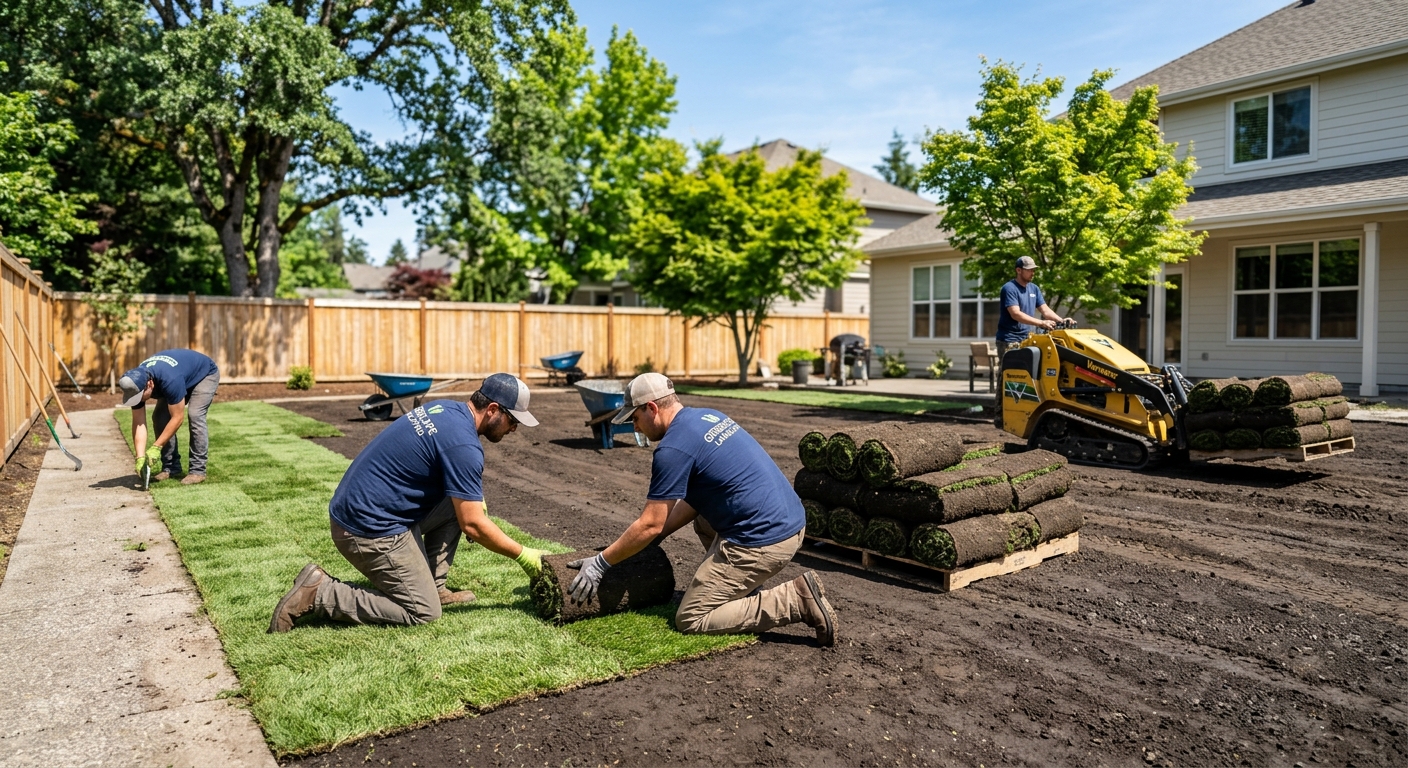
Landscaping options and costs in North Bay
North Bay homeowners have plenty of options when it comes to updating a yard, but costs depend on how much work is truly required—not just how it looks on day one. With 48.7% of dwellings in the area being single-detached homes, many properties have the space for proper drainage grading, lawn replacement, and planting beds that can be built to last through winter. And because 59.2% of households own their homes, it’s common to see larger, longer-term investments in hardscape, tree planting, and “usable yard” layouts around neighbourhoods like West Ferris, where front-yard curb appeal and accessibility improvements are in steady demand.
Pricing in the Northeast is shaped by a short planting window and freeze-thaw cycles that are hard on bases for patios and retaining walls. In practical terms, contractors need deeper excavation, thicker compacted base aggregates, and more careful drainage detailing than you’d plan for a mild coastal site. That increases material handling, skilled labour time, and mobilization premiums, especially when crews are already booked for spring sod and grading projects. Labour availability can also tighten during mid-late spring, when many jobs hit the ground at once.
Most homeowners start with either a full design-build package or targeted upgrades. Below is a realistic cost snapshot to help you compare proposals and scope before you ask for quotes.
| Service |
Description |
Season |
Price Range |
| Full landscape design and installation |
Site visit, concept + layout, planting plan, grading/drainage coordination, hardscape and softscape install |
Mid–late spring to early fall |
$8,000–$30,000 |
| Sod installation (supply, grade, lay, roll) |
Minor grading, soil prep, sod delivery and installation, rolling and initial watering guidance |
Late spring to early summer; overseed spot-touches in fall |
$3,000–$9,000 |
| Lawn seeding (grade, seed, starter fertilizer) |
Top dressing/grade correction, seed selection, starter fertilizer, light raking and seeding |
May to early June or early fall (short season planning) |
$1,800–$6,000 |
| Interlocking patio or walkway |
Excavation, compacted base, geotextile, edging, pavers, leveling and final sand |
June to September (weather and cure times) |
$6,000–$25,000 |
| Retaining wall (interlocking block) |
Block wall layout, proper drainage behind wall, base prep and reinforcement where needed |
June to September |
$7,000–$22,000 |
| Tree and shrub planting |
Soil amendments, planting pits, mulch rings, staking/water plan, basic pruning |
Spring planting and early fall |
$1,500–$8,000 |
Prices are estimates only and vary by project scope, site access and material selection.
What affects the price of landscaping in North Bay
In North Bay and across Ontario’s Northeast, you can see the same general job come in 30–50% apart. The biggest reason isn’t the “markup”—it’s scope and risk. A contractor pricing a yard for freeze-thaw durability will spend more on grading, base thickness, drainage beds, and compacted foundations. If another quote assumes a shallower base or minimal drainage corrections, it may price lower today but fail sooner after winter heave or spring melt.
Even though the province is different from the Northeast economic region’s cold continental climate described for western Canada, the practical drivers are similar: plant hardiness and frost dates control what survives and how long crews have to work. Prairie-like conditions (Zone 2–4) require drought-tolerant, wind-resistant species and efficient irrigation zoning; in Ontario’s North Bay, we plan for a moderate season but with winter extremes and freeze-thaw cycles that still demand overbuilt bases. Where some coastal BC sites (Zone 7–8) can support lush layered planting and long build windows, North Bay work is typically compressed—meaning fewer days to schedule excavation and curing, which tightens labour capacity. That’s why a redesign that includes hardscape—often in the $6,000–$25,000 band—usually has a higher “total project” cost than an equivalent area of lawn, even if the backyard looks similar.
Concrete examples that commonly raise cost in North Bay: (1) a larger yard footprint—since softscape scales quickly with square footage—can push sod or seeding to the higher end of the $3,000–$9,000 range; (2) grading that corrects water flow away from foundations adds machine time, hauling, and labour; and (3) changing the plan to include a retaining wall shifts the project into a more engineering-aware build with drainage behind the wall. With 69.7% of homes built before 1981, older drainage patterns and compacted soils are frequent, so expect more soil correction and foundation-safe drainage detailing.
| Price Factor |
Why It Matters |
Cost Impact |
| Yard size in sq ft — the primary cost driver for softscape |
More area means more topsoil prep, seed/sod, mulch, and labour hours |
Low to high swing depending on total coverage (can change the quote by thousands) |
| Grading and drainage work — slope corrections add significant cost |
Fixing pooling or foundation run-off requires excavation, rework, and compaction |
Often adds a major premium versus “level lawn” sites |
| Drainage bed or French drain installation |
Under-paving or under-lawn drainage is labour-intensive and requires proper outlets |
Can move a project from mid-range into the upper band |
| Plant material tier — native shrubs vs. ornamental vs. mature specimen trees |
Larger caliper trees and premium ornamentals cost more and take longer to install safely |
Mature specimens can add substantial material cost |
| Hardscape vs. softscape ratio — walls and patios cost more per sq ft than lawn |
Pavers, base materials, and labour for excavation and placement raise unit cost |
More hardscape usually increases total project cost materially |
| Irrigation system design and installation |
Zones, backflow prevention needs, trenching, and controller setup affect labour and materials |
Often a noticeable add-on, especially for lawns + beds |
| Soil amendment and topsoil required |
Clays and compacted soils need amendments for healthy roots and stable grading |
Hauling and labour for import material can increase the quote quickly |
| Tree removal or stump grinding before new planting |
Stump grinding, debris haul-out, and patching disrupt timelines |
Can add cost and scheduling risk, especially in busy spring windows |
Permits & regulations in Ontario
In Ontario, most routine planting and softscape work typically does not require a permit—this usually includes sodding, seeding, laying mulch, installing garden beds, and planting trees and shrubs. Many homeowners also don’t need approvals for regular grading on their own property, as long as drainage isn’t redirected in a way that could affect neighbouring lots. The area where you must be more careful is retaining walls and any work that changes how water leaves the property.
Retaining walls above a common municipal threshold—often around 1.0 m (3.3 ft) in many municipalities—may require a building permit and, in some cases, engineered drawings depending on height, location, and soil conditions. Also consider that changes to lot grading that could push stormwater toward a neighbour or toward a storm sewer connection may trigger approval requirements, even if the work is “just moving soil.” Before any digging for planting holes or wall footings, ensure utility locates are completed.
To verify a contractor in North Bay: (1) check their Ontario licence/registration status using the appropriate provincial listings where applicable for your contractor type; (2) request a current certificate of liability insurance showing adequate limits for your job; and (3) confirm WSIB/WCB coverage. Ask for clearance letters or direct proof documents before work begins, and make sure the certificate dates cover your installation window.
Planning a landscape that thrives in North Bay's climate
Planning a yard for North Bay means designing with cold winters, spring melt, and the freeze-thaw cycle in mind—not against it. Start with plant selection: focus on native, zone-appropriate shrubs, perennials, and hardy grasses that can handle winter cold and wind. For lawns, decide whether you need immediate coverage or you can build gradually. Sod gives instant visual results, but in our market it typically costs about 3–4 times more per square foot than seeding; that’s why it’s usually best for small high-visibility areas or when you need a “done by a specific date” finish. Seeding is a better choice for larger areas where you can manage weeds and keep soil moisture during establishment.
Drainage and grading are critical in the Northeast: pooling water and foundation moisture are the two biggest causes of early landscape failure. A good rule is to plan for slope away from the house and to include drainage beds or French drains where low spots develop. If you add hardscape like patio or retaining walls, base preparation must be built to resist winter movement—meaning proper depth excavation, compacted base layers, and drainage behind wall systems. Low-maintenance design can still be attractive: use mulch rings, groundcovers, and perennial structure so you’re not replanting every spring.
Where it pays financially: if you have a small patchy lawn area, paying for sod may be justified—spending toward the $3,000–$9,000 band can fix curb appeal quickly. But for a larger lawn replacement, spending those dollars on drainage and seeding often delivers better long-term value and fewer repeat repairs.
| Element |
Climate Consideration |
Maintenance Level |
Price Band |
| Sod lawn installation |
Needs stable moisture during establishment; timing matters to avoid winter stress |
Medium (watering establishment, seasonal mowing) |
$3,000–$9,000 |
| Native perennial garden |
Better survival with hardy root systems; designed to handle cold and short seasons |
Low to medium (spring cleanup, occasional weeding) |
$1,500–$8,000 |
| Mulched shrub border |
Mulch buffers freeze-thaw and reduces winter desiccation; choose hardy shrubs |
Low (top-up mulch, light pruning) |
$2,000–$7,000 |
| Interlocking stone patio |
Base must be engineered for frost movement and drainage to prevent heave |
Low (routine cleaning, reset sand as needed) |
$6,000–$25,000 |
| Retaining wall (block) |
Drainage behind the wall and proper base depth are essential for winter performance |
Low (periodic inspection) |
$7,000–$22,000 |
| Drip irrigation system |
Efficient for short-season growth; reduces water waste and helps establish new plants |
Medium (seasonal adjustments, winterization) |
$2,500–$9,000 |
How to choose a landscaping contractor in North Bay
Choosing the right contractor matters more in North Bay because winter performance depends on build quality—especially drainage and base preparation. First, verify licensing and insurance. Ask for proof of Ontario liability insurance (certificate of insurance with coverage limits appropriate for your project). For coverage, request confirmation of WSIB/WCB status; reputable contractors can provide a clearance letter or current certificate documentation. Don’t accept “we’re covered” without documents—dates must match your scheduled work window.
Next, request 2–3 itemised written quotes. You want labour + materials broken out: excavation and haul-away, base aggregates, drainage components, pavers/blocks, soil amendments, plant material, and irrigation parts if included. Ensure the quote states what’s excluded: removal of existing trees, disposal fees, soil import quantities, and whether utility locates are included. Confirm if permits (when required for retaining walls) are pulled by the contractor or by you, and clarify whether inspections or any engineering documents are included.
Warranty should be in writing: workmanship warranty length, what product/manufacturer warranties cover (and whether they transfer to you), and what happens if settlement or heave occurs. For payments, don’t pay more than about 10–15% upfront; use a holdback until the job is complete and cleaned up. Finally, get a start date and completion estimate in writing so you can plan around North Bay’s shorter construction window.
- Insurance documents provided before signing
- WSIB/WCB clearance letter or current proof requested and verified
- Itemised quote (no single lump sum only)
- Drainage plan described (not just “we’ll level it”)
- Base depth and compaction steps for patio/walkways mentioned
- Retaining wall includes drainage behind wall (weeping tile/gravel layer)
- Disposal/haul-away specified (where and how waste is handled)
- Utility locates process confirmed before digging
- Permit responsibility clarified for retaining walls where applicable
- Warranty terms stated for materials and workmanship separately
- Payment schedule with holdback until final walkthrough
- Written timeline that matches weather realities (spring through early fall)
Concrete red flags: a contractor who won’t share insurance/WSIB documents; quotes that omit drainage details or base prep thickness; vague scope language like “deal with grading as needed” without numbers; pushing for large upfront payments; and promising “year-round” installs in a climate where frost limits the work window.
Frequently asked questions — landscaping in North Bay
Do I need a permit for a retaining wall in Ontario?
In Ontario, planting and most softscape work generally doesn’t require a permit, but retaining walls are where it often changes. Many municipalities require a building permit for retaining walls above a common height threshold (commonly around 1.0 m / 3.3 ft), and some projects may also need engineered drawings depending on location, wall length, and soil conditions. For North Bay homeowners, this matters because freeze-thaw performance depends on proper drainage and base preparation; permits and engineering aren’t “paperwork only”—they help ensure the wall is built to handle winter movement. Before you sign a contract, ask the contractor whether they will confirm permit requirements, and clarify who submits the paperwork. If your wall brings the project into the retaining-wall budget band (often roughly $7,000–$22,000), it’s especially worth confirming the approval path early.
How do I improve drainage in my yard?
Drainage improvements usually start with a site assessment: where water pools during spring melt, how the yard slopes, and whether downspouts discharge near foundation edges. In North Bay, that “spring melt pooling” often points to grading issues, compacted soils, or missing/ineffective subsurface drainage. A common, cost-effective approach is to correct the grade so runoff moves away from the house, then add a drainage bed or French drain where low spots persist. If you’re planning a patio or retaining wall, integrate drainage from day one—don’t treat it as an afterthought. You can also reduce water-loving failure points by using mulch and planting in raised beds where appropriate, and by avoiding soil compaction during planting/maintenance. Your contractor should be able to describe where the water will go, what outlet is used, and how the work prevents future freeze-thaw heave.
What is xeriscaping and does it suit North Bay?
Xeriscaping is a water-wise landscaping approach that uses drought-tolerant plants, efficient watering, and soil amendments to reduce water demand. In North Bay, it can suit many yards, especially where you want less maintenance and more dependable plant survival during dry spells. That said, you still need to account for freeze-thaw and winter moisture patterns: a xeriscape plan shouldn’t be “no water ever,” but rather “right water, right plants, right placement.” Strategies that work locally include mulched shrub borders, hardy perennials, and efficient drip irrigation with proper winterization. If you’re budgeting, xeriscape often pairs well with planting-focused upgrades (commonly around $1,500–$8,000 for tree and garden planting), because it avoids high-cost lawn replacement everywhere. A good design will also protect roots with mulch and ensure drainage doesn’t send water into foundations.
How do I plan a low-maintenance yard?
A low-maintenance yard is planned, not “minimised by accident.” Start with fewer, stronger plant groupings: use native or proven-hardiness shrubs and perennials arranged in beds that grow together over a few seasons. Add a consistent mulch layer to reduce weeds and buffer temperature swings. Choose groundcovers where grass struggles or where foot traffic doesn’t justify seeding/sod. For turf, decide early whether you need sod for quick curb appeal; otherwise, seeding can reduce cost and still establish a stable lawn over time. Drainage and grading are part of low maintenance too—when water pools, plants fail and you spend the next seasons redoing. If you’re considering hardscape for usability, build it correctly the first time since patios and walkways require a proper base for frost movement. Many homeowners land in the design-build range of $8,000–$30,000 when they want a full, cohesive plan that reduces future touch-ups.
How deep should a retaining-wall base be for local frost?
The correct retaining-wall base depth depends on wall height, soil conditions, and drainage design, but the principle is consistent: the base should extend below frost-affected movement and be supported by well-compacted aggregate. In cold, frost-active areas like North Bay, freeze-thaw cycles can destabilize walls if the base and backfill aren’t built to resist winter heave. A properly designed wall system also includes drainage behind the wall (often a gravel drainage layer and appropriate water control) to reduce hydrostatic pressure during thaw periods. Rather than guessing, ask your contractor to explain their proposed excavation depth, base material, compaction steps, and how they handle drainage outlets. If your plan includes a wall in the retaining-wall budget range of $7,000–$22,000, you should also expect the quote to reflect engineering-aware prep, not just the block and labour.
How much does professional landscape design cost?
Professional landscape design cost varies by scope, but many North Bay homeowners think of design as part of a larger design-build project rather than a standalone expense. Typical full design and installation projects often fall within the broad market band of $8,000–$30,000, reflecting not only sketches and plant layout, but also the coordinated installation decisions that protect against frost and drainage issues. Some contractors offer design-only services for smaller projects, but the most practical approach in North Bay is often to bundle design with execution so the grading, drainage, and plant selections match the reality of the site. You’ll get better value when the designer addresses what will grow reliably in the local cold-season conditions and when installation methods are planned for freeze-thaw durability. If your home was built before 1981, it’s especially important to factor in older drainage patterns and compacted soils during design.